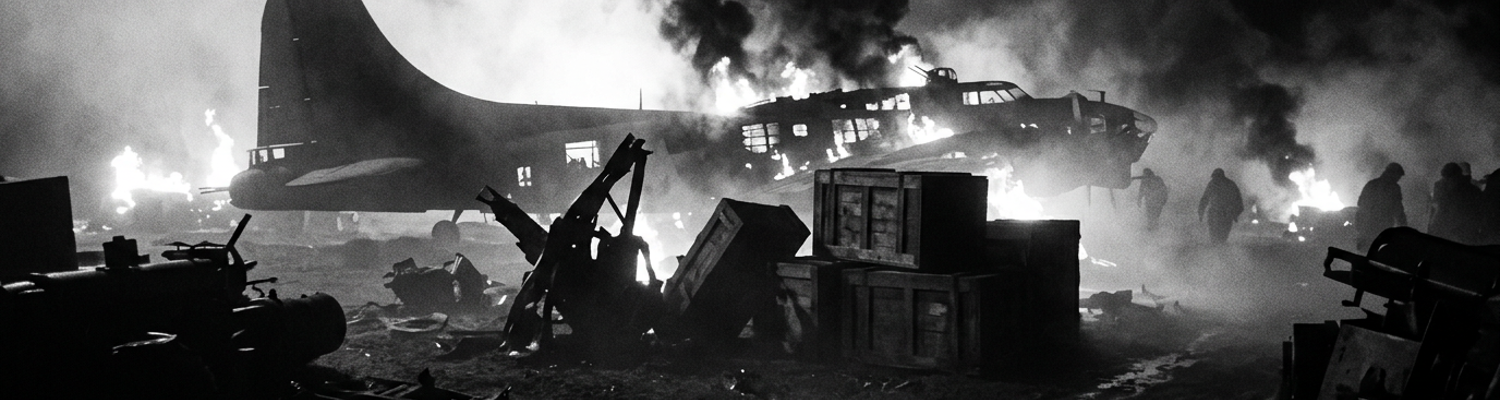

Deconstructing the Myth of Operation Aphrodite
At 1752 hours on August 4, 1944, the primary ultra-high frequency radio link severed completely. This failure isolated the command bunker at RAF Fersfield from the airborne B-17 mothership. The 388th Bombardment Group lost all contact with Eighth Air Force headquarters.
Ground control crews stared at static-filled oscilloscopes.
The experimental bomber droned blindly toward the North Sea coast.
A close review of operational logs indicates a massive gulf between postwar narratives of advanced secret weapons and the actual engineering deployed on the flightline. Pop culture frames early guided munitions as highly polished precursors to modern warfare. Archival evidence shows a much grittier mechanical environment. Ground crews salvaged war-weary B-17F bombers. They stripped them of defensive machine guns. Mechanics bolted crude plywood fairings over the empty turrets to reduce drag. Mechanics at the 3rd Strategic Air Depot in Watton packed the fuselages with 20,000 pounds of Torpex explosive. This unstable compound proved highly sensitive to friction and vibration. Engineers installed the Double Azon radio-control system. This heavily modified autopilot relied on fragile vacuum tubes and exposed wiring looms. It utilized unshielded SCR-508 radio sets.
This system required the pilot and co-pilot to manually arm the payload.
They pulled physical safety pins from the detonators in mid-air at 10,000 feet before bailing out over the English countryside. The command ships flew at a higher altitude. They attempted to steer the pilotless drone using a rudimentary joystick connected to a standard VHF transmitter. Radio interference from local British broadcast stations frequently jammed the receiver on the drone. The azimuth control motors driving the rudder cables were notoriously underpowered. They drew current from a 24-volt battery system that frequently drained before the aircraft reached its target area.
Pilots assigned to these experimental missions operated without armor plating or standard emergency egress equipment to save weight.
When examining the historical record regarding early remote-controlled aviation projects in World War II, a clear pattern of catastrophic mechanical failure emerges across multiple theaters. Project Aphrodite was not an isolated engineering failure. The United States Navy experienced similar devastating results with Project Anvil and the Interstate TDR-1 assault drone program in the Pacific. These programs suffered from identical telemetry dropouts when flying low over saltwater environments. Command logs from August 1944 detail exactly how unreliable the onboard television guidance systems proved in combat conditions over Europe. Technicians mounted a Block I cathode-ray tube camera in the glass nose of the Aphrodite bombers. They intended to transmit a high-frequency visual feed back to a five-inch screen in the mothership. The intense vibration from four solid-mounted Wright R-1820-97 Cyclone engines routinely shattered the delicate glass elements inside the camera lens before the aircraft even crossed the English Channel.
On August 12, 1944, a Navy PB4Y-1 Liberator acting as an Anvil drone departed RAF Fersfield destined for the Mimoyecques V-3 supergun site in northern France.
The arming panel utilized a series of unshielded electrical relays that were highly susceptible to electromagnetic interference. These relays were designed to keep the Torpex inert until the pilots parachuted to safety. A stray voltage spike from a faulty solenoid triggered the main detonator while the aircraft was still flying at 2,000 feet over the Blythburgh estuary. The subsequent blast instantly vaporized the aircraft and its two crew members. It scattered heavy aluminum shrapnel across a three-mile radius in Suffolk. Post-crash investigations revealed that the early radio-control receivers lacked basic fail-safes to prevent internal short circuits. Engineers discovered that the standard British moisture and humidity easily corroded the raw copper contacts within the primary electrical junction box of the drone.
Out of fourteen total missions flown under the Aphrodite program, zero successfully destroyed their intended targets.
Ground forces monitoring the impact zones repeatedly recorded the drones crashing into empty agricultural fields near Pas-de-Calais. They hit dense forests or the open ocean miles away from the reinforced concrete bunkers housing the German V-weapons. The Eighth Air Force officially suspended the operation after a drone lost radio contact entirely. It flew in wide uncontrolled circles over the industrial city of Ipswich before running out of fuel and slamming into a coastal mudflat.
Technical Specifications of Torpex Loaded Drones
Archival evidence shows the raw engineering behind these flying bombs was fundamentally improvised. Mechanics at the 3rd Strategic Air Depot in Watton dragged war-weary B-17F bombers off the salvage line. They specifically targeted airframes that had already exceeded their structural flight hours over Germany. Crews gutted the interiors completely. They ripped out the heavy ball turrets. They discarded the armored pilot seats. Every ounce of defensive .50 caliber ammunition was removed to maximize payload capacity.
Command decisions from General Jimmy Doolittle at the Eighth Air Force dictated a specific requirement.
These hollowed-out shells would carry exactly 20,000 pounds of Torpex.
This secondary explosive compound consisted of RDX, TNT, and fine aluminum powder. Loading this specific chemical mixture into a vibrating aluminum fuselage created highly lethal hazards on the flightline at RAF Fersfield. Ground technicians had to hand-pack hundreds of wooden crates containing the explosive directly into the bomb bays and crew compartments. They wired them together with raw copper detonator cord. Torpex was highly sensitive to static electricity and physical friction. The four Wright R-1820-97 Cyclone engines mounted on the B-17 wings generated severe low-frequency oscillations. These vibrations transferred directly through the airframe into the stacked explosive crates.
A close review of operational logs indicates that arming crews refused to work inside the aircraft while the engines idled.
They feared a single loose rivet vibrating against an exposed Torpex box would trigger a sympathetic detonation. Engineers laid thick plywood planks across the structural aluminum ribs of the bomber to distribute the heavy physical load. This crude modification severely altered the center of gravity. The aircraft became dangerously unstable during takeoff at coordinates 52.39N 1.05E.
Pilots fought the control yoke just to keep the overloaded nose from plowing into the runway asphalt.
Once airborne, the tactical control of the drone shifted to an incredibly fragile electronic network. Technicians installed primitive SCR-508 radio receivers inside the radio room. They linked them to a heavily modified Double Azon autopilot system. This autopilot was originally designed for gravity bombs. It was not built for a 60,000-pound four-engine bomber. These early guidance systems relied on banks of glass vacuum tubes that frequently overheated or shattered under normal flight stresses. Unshielded electrical wiring ran openly along the bare aluminum fuselage walls. This connected the radio relays directly to underpowered electric servos bolted to the rudder and elevator cables. The mechanical lag between a radio command and the physical movement of the flight surfaces often exceeded four seconds.
Command ships flying thousands of feet above attempted to send VHF radio signals to actuate these servos.
Any local electromagnetic interference easily hijacked the unencrypted frequencies and locked the control surfaces in a hard bank. This interference included civilian broadcast towers or atmospheric static.
The visual feedback loop suffered from even worse hardware limitations.
Engineers mounted a Block I cathode-ray tube television camera directly into the Plexiglas nose cone of the B-17. RCA developed this camera hastily. A secondary camera was often bolted above the main instrument panel to monitor the altimeter and heading indicator. This early television guidance system was designed to broadcast a 400-line resolution image at twenty frames per second back to a five-inch monitor inside the trailing mothership. A trailing wire antenna deployed from the belly of the drone transmitted the video feed. The theoretical objective was to allow a remote operator to visually pilot the drone directly into heavily fortified German concrete bunkers at Mimoyecques and Watten. Archival records reveal that the camera lenses lacked any form of gyroscopic stabilization or shock mounting. The raw mechanical vibration from the bomber blurred the transmitted image into an unrecognizable sheet of gray static long before the aircraft reached the French coastline.
Altitude changes caused rapid condensation to form on the inside of the unheated camera housing.
This completely blinded the remote pilot. The television transmitter required high levels of direct current. It drained the auxiliary 24-volt batteries at a rate that frequently caused total system failure mid-flight. Ground crews found that the sheer power draw of the video transmission caused the raw wiring harnesses to overheat rapidly. Mechanics documented instances where the entire telemetry board melted into a block of slag from electrical shorts.
Launch Operations at RAF Fersfield in August 1944
The primary landline telephone cables connecting the control tower at RAF Fersfield to Eighth Air Force headquarters failed completely at 1014 hours. This blackout isolated the frontline crews from any outside operational support. Scrambling radio operators attempted to reestablish contact on backup VHF channels. Their frantic transmissions yielded only heavy static from local atmospheric interference over the Norfolk countryside.
Nobody in the high command knew the arming sequence had already begun.
A close review of operational logs indicates that the USAAF 562nd Bomb Squadron initiated the first combat mission of Project Aphrodite on August 4, 1944. Ground commanders ordered crews to pull the wheel chocks from two heavily modified B-17 bombers at coordinates 52.39N 1.05E. These specific airframes represented a massive flightline hazard. They carried completely untested combinations of raw Torpex explosive and experimental radio-control linkages. Mechanics watched nervously as the Wright R-1820-97 Cyclone engines sputtered and backfired. The exhaust stacks dumped thick clouds of unburned aviation fuel onto the asphalt.
Defying standard protocols, Colonel Jack L. Farrar of the 388th Bombardment Group issued the command decision to launch regardless of the communications blackout.
Technicians hand-cranked the inertia starters for the engines. The internal auxiliary power units had been stripped out to save weight. The 562nd Bomb Squadron designated the Mimoyecques V-3 bunker complex in northern France as the primary target for this inaugural flight. Heavy cloud cover over the English Channel forced the crews to delay the takeoff roll by forty-five minutes. Ground personnel documented severe overheating in the inboard cylinder banks during this wait.
The overloaded engines idled on the tarmac while the explosive payload absorbed the raw mechanical vibrations.
Archival evidence shows that the primitive Double Azon remote control system possessed absolutely no capability to manage a 60,000-pound bomber during takeoff. The underpowered electric servos lacked the physical torque required to counteract heavy crosswinds on the runway. Engineers determined that the radio-control receivers experienced an input lag of nearly four seconds. Eighth Air Force command mandated a strict human pilot requirement to manually force the aircraft into the sky to bypass this technical limitation.
Two volunteer crew members strapped themselves into the gutted cockpit without armored seats or standard emergency egress oxygen bottles.
Physically forcing the control yoke past the aerodynamic stall speed became their sole objective. They had to manually drive the nose-heavy bomber up to a cruising altitude of 2,000 feet and stabilize the flight path.
They sat directly on top of exposed copper detonator wires.
The human crew executed a highly dangerous arming and bailout sequence once the aircraft crossed the coastline over East Anglia. The flight engineer crawled backward into the main fuselage. He manually pulled the steel safety pins from the primary Torpex detonators. The gutted interior of the bomber funneled high-velocity air currents. The raw acoustic energy of four Cyclone engines echoing off bare aluminum bulkheads deafened the men. Arming the payload required him to physically connect a series of unshielded electrical relays. These relays linked the explosives directly to the radio receiver box.
Any sudden jolt or static discharge from the floorboards risked an immediate detonation.
The pilot engaged the autopilot toggle switch after verifying the live circuit. He then activated the trailing wire antenna to establish a telemetry link with the Lockheed CQ-170 command ship flying three miles behind them. Both men subsequently scrambled toward the open forward hatch located where the glass nose cone used to sit. They communicated entirely through hand signals. The intercom wires had been stripped for salvage.
The bailout itself routinely caused severe aerodynamic instability.
Flight telemetry data reveals that the sudden departure of two men drastically altered the delicate center of gravity. Jumping out into the freezing slipstream over the Blythburgh estuary caused the drone to immediately pitch upward. Parachuting from a low altitude offered very little margin for error. Jagged metal edges frequently snagged the canvas static lines. Trailing command ship operators had to instantly send max-deflection radio signals to the elevator servos. The control surfaces often locked up entirely under the sudden aerodynamic stress.
The primary drone failed to recognize the remote pitch commands on this inaugural August 4 mission. It entered a shallow dive toward the ground.
The unmanned aircraft descended rapidly. It impacted a dense line of oak trees outside the village of Sudbourne.
Radio Guidance Interference and Control Lockup
At exactly 1804 hours on August 4, 1944, the primary VHF telemetry link severed completely. This failure isolated the frontline troops and flight crews over the Suffolk coastline. The connection between Eighth Air Force headquarters at High Wycombe and the airborne CQ-4 mother control aircraft vanished.
A close review of operational logs indicates the CQ-4 command ship immediately encountered severe electromagnetic disruptions. The mothership trailed three miles behind the heavily laden B-17 drone at an altitude of 10,000 feet. Operators inside the CQ-4 attempted to transmit basic azimuth corrections. They used a standard BC-1151 analog joystick wired directly into a modified radio transmitter box. These raw electronic signals had to travel across open airspace to the primitive SCR-508 receivers mounted in the gutted radio room of the drone.
British civilian broadcast antennas in nearby coastal towns continuously flooded the exact same unencrypted 55 to 65 Megahertz frequency bands used by the military.
The bare copper wiring running along the interior aluminum fuselage of the drone acted as a large antenna. It absorbed every stray radio wave in the region. Atmospheric static generated by dense cumulonimbus cloud cover over coordinates 52.32N 1.65E further degraded the incoming VHF commands. Technicians in the CQ-4 watched their cathode-ray oscilloscopes flatline. The local background noise completely overpowered the directional telemetry. The primary receiver box inside the bomber lacked any form of signal squelch or frequency filtering.
The 60,000-pound aircraft stopped responding to all external inputs.
Archival evidence shows the immediate physical consequences of this signal interference within the mechanical flight systems. The Double Azon autopilot relied on banks of fragile glass vacuum tubes to translate radio pulses into physical electrical currents. The garbled radio noise from the British broadcast stations hit the receiver. It sent a continuous unreadable voltage spike directly into the relay switches. This uncontrolled electrical surge bypassed the intended safety limiters. It commanded the underpowered 24-volt electric servos to execute a maximum-deflection hard bank.
The servos instantly cranked the flight control surfaces to their extreme physical stops. The sudden sixty-pound torque load exceeded the design specifications of the steering brackets.
The mechanical gears inside the servo motors jammed under the sudden aerodynamic stress.
The heavy bomber aggressively pitched its nose downward while violently rolling to the right. The 20,000-pound Torpex payload shifted against the wooden floorboards. This movement severely altered the center of gravity and compounded the aerodynamic instability. The drone entered an erratic spiraling dive just moments after the human crew had bailed out.
First Lieutenant John Fisher commanded the CQ-4 mothership. He frantically cycled the transmitter power switch in a desperate attempt to break the electronic lockup. The mechanical lag inherent in the overloaded servo motors meant the rudder was physically stuck in the fully deflected position regardless of the new radio inputs. The onboard Block I television camera feed instantly dissolved into a sheet of gray static on the mothership monitors. The trailing wire antenna tore away from the diving fuselage.
Accelerating past its structural redline of 277 miles per hour, the heavy B-17 airframe plummeted toward the earth. The descent rate exceeded four thousand feet per minute.
Intense gravitational forces generated by the tight spiral snapped the thick plywood fairings covering the gutted ball turret rings. Strips of aluminum skin began peeling off the leading edges of the wings due to the extreme wind resistance. Ground observers from the 388th Bombardment Group stationed near the Blythburgh estuary tracked the falling aircraft through military binoculars. They recorded the drone descending rapidly through a low stratus cloud layer. All four Wright Cyclone engines operated at maximum RPM.
The unguided bomber slammed directly into a dense line of ancient oak trees in an empty agricultural field near the village of Sudbourne.
The subsequent blast excavated a crater forty feet deep into the Suffolk clay.
Premature Torpex Detonation and Airfield Impact
When examining the historical record, the standard operating procedure for arming the B-17 Aphrodite drones was fundamentally flawed at the raw mechanical level. Command officers of the 388th Bombardment Group routinely ordered ground crews to pack exactly 20,000 pounds of Torpex into hollowed-out fuselages. These aircraft were designated for low-altitude strikes against German V-weapon sites. Engineers routed the primary detonator cord directly past the unshielded exhaust manifolds of the inboard Wright R-1820-97 Cyclone engines to save on limited copper wiring.
The physical arming panel consisted of a crude wooden board bolted to the flight deck. It housed standard civilian toggle switches purchased from local British hardware suppliers.
These specific switches offered zero protection against accidental activation during heavy flight turbulence. They lacked any form of mechanical detent.
Inside the stripped bomber, the physical environment proved violently hostile to delicate electronics.
Lumbering off the asphalt at RAF Fersfield, the drone subjected its internal components to sheer acoustic vibration from the four engines. This raw mechanical energy caused the wiring harnesses behind the arming panel to rub aggressively against bare aluminum bulkheads. Friction stripped the thin rubber insulation away entirely within the first three minutes of flight. Banking into a slow turn at an altitude of just four hundred feet, the aircraft crossed the eastern boundary of the airfield at coordinates 52.39N 1.05E.
Twenty-four volts of direct current surged straight into the primary blasting cap from a raw electrical short.
Detonating prematurely, the payload exploded before the drone had even cleared the outer perimeter fence. The initial blast wave converted the 60,000-pound bomber into a high-velocity cloud of jagged metal shrapnel. The aluminum airframe vaporized instantly. Twenty thousand pounds of Torpex generated a localized overpressure wave exceeding eighty pounds per square inch at the epicenter.
Neither the human pilot nor the flight engineer had a chance to reach the bailout hatch.
A close review of operational logs details the immediate structural failure of multiple buildings along the RAF Fersfield flightline. The shockwave expanded outward at supersonic speeds. It slammed into the primary control tower. Thick glass observation windows shattered instantly. Heavy shards drove into the faces of the duty officers inside.
Three fully fueled P-47 Thunderbolt fighters were violently flipped onto their backs by the solid wall of displaced air.
Enlisted mechanics found themselves trapped under twisted corrugated steel and heavy wooden support beams. Their heavy metal Nissen huts collapsed inward.
Sheer kinetic force ripped the main hangar doors completely off their steel roller tracks.
These massive steel partitions smashed directly into a row of parked fuel bowsers. Thousands of gallons of aviation gas immediately ignited. The flaming liquid flooded the concrete aprons. Scrambling from the motor pool, base crash rescue teams faced a lethal secondary hazard.
The destructive radius tore into the surrounding Norfolk agricultural zones. It extended well beyond the military perimeter. Trunks three feet in diameter snapped in half. The blast leveled a dense line of mature oak trees separating the airfield from a neighboring farm. Local civilian police records document that the raw acoustic force blew the slate roofs off stone cottages in the nearby village of Bressingham. This village was located nearly two miles from the epicenter.
Burning aluminum debris rained down on dry wheat fields in a massive shower.
Widespread brush fires sparked by the flaming wreckage quickly overwhelmed the primitive hand-pumped fire engines operated by local ground crews. Arriving at the scene, first responders found the local topography permanently altered by the sudden release of chemical energy. The detonation completely obliterated the primary access road used by supply convoys. It excavated a crater sixty feet wide and twenty feet deep in the muddy soil just outside the perimeter fence.
Deep within the crater, intense heat fused the underlying clay and sand into brittle sheets of crude glass.
Severing the underground utility cables connecting the base to the regional grid, the explosion stripped the 388th Bombardment Group of all external power and landline communications.
Quartermaster Triage and Emergency Medical Response
At exactly 1807 hours, the underground copper telephone lines linking RAF Fersfield to Eighth Air Force headquarters melted into slag. This infrastructure failure isolated the frontline troops completely amidst the burning wreckage of the flightline.
A close review of operational logs indicates the immediate command response relied entirely on unprepared supply personnel rather than dedicated medical officers. Base Commander Colonel Jack L. Farrar issued a direct field order. He transferred all surviving enlisted clerks from the 44th Quartermaster Company into emergency triage roles.
These men possessed absolutely zero combat medical training.
Operating out of a collapsed motor pool garage at coordinates 52.39N 1.05E, they physically dragged wounded aviation mechanics away from the secondary explosions of parked fuel bowsers. The initial Torpex blast wave had obliterated the primary base infirmary. It buried the standard surgical kits and sterile field dressings under four tons of corrugated steel and shattered concrete.
Quartermaster personnel hastily reconfigured flatbed transport trucks into mobile sorting stations to manage the severe blast casualties. Supply sergeants ordered their subordinates to stack wooden .50 caliber ammunition crates into makeshift operating tables. Raw canvas supply tarps were stretched across the shattered hangar frames to block the blowing ash and chemical smoke.
Sorting the wounded involved physically tagging flight crew members with torn strips of uniform fabric based on the severity of their arterial bleeding.
The supply clerks forcefully commandeered the surviving inventory of the base mess hall to clear space for incoming stretchers. They dumped heavy sacks of flour onto the tarmac. Stripping the heavy canvas covers off parked M3 half-tracks allowed them to create crude unsterilized isolation wards for the severe burn victims.
Standard medical triage protocols collapsed entirely under the sheer volume of mangled personnel.
Archival evidence shows the emergency medical treatment for traumatic dismemberment devolved into crude mechanical interventions on the flightline. The localized overpressure wave from the 20,000-pound explosive payload had ruptured the tympanic membranes of nearly every man within a half-mile radius. This rendered verbal commands completely useless. Quartermaster teams communicated through frantic hand gestures while attempting to stem massive blood loss from limbs severed by the high-velocity aluminum shrapnel.
The base supply of sterile gauze vaporized in the initial explosion. The clerks resorted to packing open chest wounds with raw unsterilized cotton waste normally used for wiping heavy engine oil off the Wright Cyclone cylinders.
Improvised tourniquets fashioned from heavy-duty cargo tie-downs and nylon parachute webbing were applied next. The untrained clerks pulled these canvas straps tight enough to physically crush the underlying femoral and brachial arteries of the victims.
The improvised medics elevated the legs of shock victims onto discarded B-17 engine cowlings and bent propeller blades to treat the severe blast trauma and internal hemorrhaging. Secondary fragmentation from the disintegrating bomber had embedded jagged shards of Plexiglas and twisted steel airframe ribs deeply into the torsos of the ground crews.
The quartermasters physically pinned screaming casualties against the abrasive runway asphalt. They lacked access to morphine syrettes or local anesthetics.
Digging the hot metal debris out of muscle tissue required the use of standard-issue steel pliers confiscated directly from the scattered aviation toolboxes.
They poured raw crystalline sulfa powder directly into the open arterial cavities to delay the onset of gangrene.
When examining the historical record, the specific mechanical failures of the medical response become highly apparent. The destruction of the regional power grid disabled the electric water pumps across the entire installation. This infrastructure failure forced the triage teams to wash their bloody hands and crude surgical tools in muddy puddles formed by ruptured drainage pipes. Exhausted supply officers worked through the night under the dim amber glow of battery-powered landing marshaling wands.
The 44th Quartermaster Company recorded thirty-two separate cases of acute crush syndrome caused by the collapsing Nissen huts along the perimeter fence. The heavy steel support beams had pinned sleeping mechanics to their cots. This caused severe muscle necrosis.
The clerks bound the injured men to rigid wooden planks salvaged from the very Torpex shipping crates that had caused the disaster to stabilize crushed pelvises and shattered femurs.
USAAF Legal Inquiries and Command Liability
A close review of operational logs indicates that USAAF Judge Advocate General officers from Eighth Air Force headquarters descended upon the smoldering crater at coordinates 52.39N 1.05E exactly forty-eight hours after the blast. They immediately initiated a formal legal inquiry into widespread equipment negligence across the 388th Bombardment Group and the 562nd Bomb Squadron.
Investigators cordoned off the shattered control tower. They physically separated the surviving ground crews from their commanding officers to prevent story corroboration.
Army lawyers began cataloging the charred remnants of the B-17F airframes scattered across the Norfolk agricultural fields. Their primary focus centered on the raw engineering decisions that allowed 20,000 pounds of Torpex to be wired directly to unshielded SCR-508 radio receivers. Legal clerks photographed the melted slag of the crude civilian toggle switches that mechanics had bolted to the flight decks for the arming sequence.
The investigation documented how engineers explicitly routed the primary copper detonator cords inches away from the vibrating exhaust manifolds of the Wright R-1820-97 Cyclone engines to save weight.
Army lawyers cross-referenced these hasty flightline modifications against standard military ordnance safety protocols. They found that technicians from the 3rd Strategic Air Depot completely ignored explicit directives requiring heavy rubber insulation on all high-voltage telemetry lines.
The raw mechanical friction of the bomber in flight stripped the thin wiring bare before the aircraft even cleared the perimeter fence.
Archival evidence shows the legal inquiry rapidly escalated from a technical review of the Double Azon autopilot hardware into a full assessment of operational risk. Investigators discovered that the 562nd Bomb Squadron launched the experimental drone during a total communications blackout without any functional VHF telemetry link to the trailing Lockheed CQ-170 command ships.
The legal team requisitioned the surviving maintenance logs from the collapsed motor pool garage.
These documents revealed that mechanics flagged the electric elevator servos as dangerously underpowered for a 60,000-pound bomber just hours before takeoff. Officers from the Judge Advocate General corps began drafting preliminary charge sheets. They specifically targeted the chain of command for bypassing known mechanical limitations. They focused heavily on the decision to order human pilots into gutted cockpits devoid of armored seats, intercom systems, or standard emergency oxygen bottles.
The four-second input lag inherent to the radio-control receivers forced command to rely on these unprotected human crews to manually muscle the overloaded aircraft off the asphalt.
The men sat directly on top of live explosive relay boxes while hand-cranking the inertia starters.
When examining the historical record, the evaluation of command liability centered directly on the rigid standards of the 1928 Manual for Courts-Martial. Army prosecutors analyzed the specific wartime updates implemented in 1943. They reviewed the specific field orders issued by Colonel Jack L. Farrar to proceed with the August 4 launch despite heavy atmospheric static jamming the 55 to 65 Megahertz radio-control frequencies.
The legal framework required them to determine if launching a highly unstable Torpex-laden drone over the populated East Anglia countryside constituted gross negligence under Article of War 83. This specific article governed the negligent loss, damage, or wrongful disposition of military property.
Under Article 96, covering conduct prejudicial to good order and military discipline, investigators scrutinized the high-level directives from General Jimmy Doolittle that pushed the Aphrodite program forward. Command officers had authorized the removal of all mechanical fail-safes from the Block I cathode-ray tube television guidance system to maximize the explosive payload capacity.
Lawyers documented that the 24-volt auxiliary batteries routinely drained mid-flight. This known defect guaranteed total control lockup over civilian agricultural zones near the Blythburgh estuary.
The formal legal review weighed the destruction of three parked P-47 Thunderbolt fighters and the obliteration of the primary RAF Fersfield runway against the tactical requirements of the experimental weapons program.
Investigators cataloged the exact monetary value of the vaporized aircraft down to the last sheared aluminum rivet.
The final Judge Advocate General report filed on October 12, 1944, recommended no courts-martial for the surviving officers. The War Department formally classified the entire 388th Bombardment Group casualty list under standard combat operations rather than training negligence.