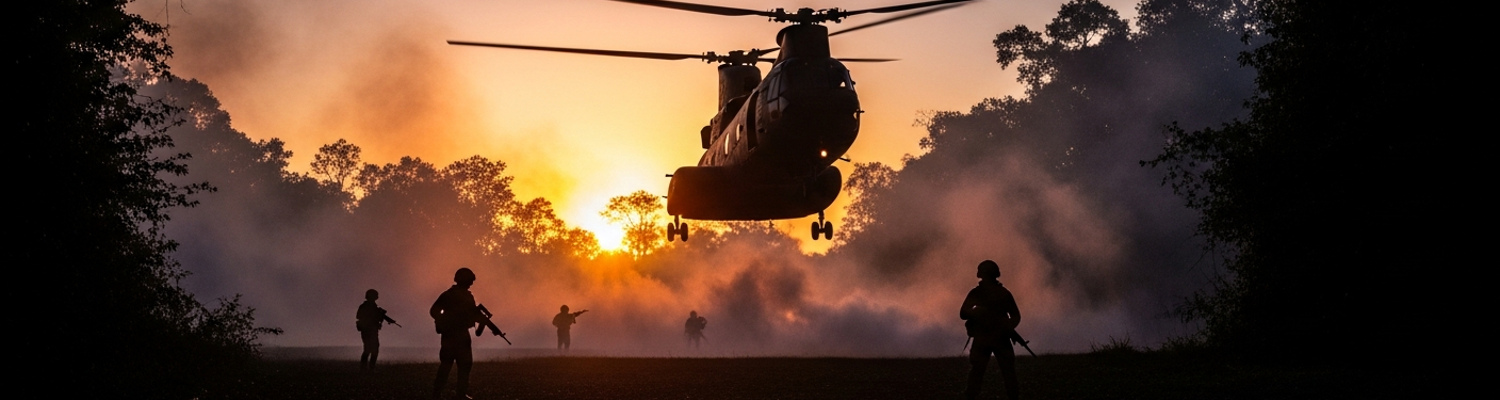

Initial Tet Offensive Impact
The air over I Corps in the final hours of January 29th, 1968, was still. A tense quiet settled across the five northernmost provinces of South Vietnam, a silence dictated by the truce for the Tet holiday. Then the quiet shattered. It began not with a single shot, but with a nearly simultaneous, coordinated eruption of violence engulfing the entire tactical zone. From the Demilitarized Zone to the sprawling Da Nang Air Base, an estimated 85,000 North Vietnamese Army (NVA) and Viet Cong (VC) troops struck with a ferocity that defied prior intelligence assessments. They targeted command-and-control centers, logistical hubs, and population centers, including 36 of 44 provincial capitals. For I Corps, this meant assaults on Quang Tri City, Huế, Hoi An, Chu Lai, and the nerve center of Da Nang. The initial attacks were often led by sapper teams. These small, elite commando units infiltrated and destroyed key installations ahead of main infantry assaults. At Da Nang Air Base, home to the 1st Marine Aircraft Wing, a 15-man squad breached the perimeter. They blew up a combat operations center just 1,000 meters from the I Corps headquarters. The attacks were stunningly widespread, hitting nearly every allied airfield and major installation.
The rapid erosion of established infrastructure began within minutes of the first explosions. At major air bases like Da Nang, Tan Son Nhut, and Bien Hoa, incoming 122mm rockets and mortar rounds were not aimed randomly. They were walked methodically across runways, fuel depots, and aircraft hardstands. At Da Nang, on the night of January 29-30, rockets set off massive fires that burned uncontrollably, illuminating parked aircraft for follow-on attacks. Just south of Da Nang, at the Marble Mountain Air Facility, home to Marine Aircraft Group 16 (MAG-16) and its helicopter assets, multiple rocket barrages struck on January 31st, causing significant damage. At Chu Lai, another Marine air base, a single 122mm rocket hit a bomb dump. The impact triggered a cataclysmic secondary explosion that caved in one aircraft hangar and damaged others. The attack at Chu Lai resulted in three fixed-wing aircraft destroyed and another 23 damaged. Across South Vietnam, nearly 100 U.S. aircraft were damaged or destroyed in the opening 48 hours.
The destruction was not confined to aircraft. The attacks targeted the complex systems required to keep sophisticated military hardware operational. At Da Nang, a sapper squad ran through the 7th Communications Battalion’s area, throwing satchel charges into living quarters and equipment huts, disrupting the command-and-control network. The assault on Tan Son Nhut Air Base involved a VC battalion attempting to overrun the flight line, intent on causing as much damage as possible to parked aircraft. While the attack was repulsed, it required all available personnel, including clerks and mechanics, to join the defense. This highlighted the vulnerability of these sprawling bases. The loss of physical infrastructure, including power generators, communications arrays, radar equipment, and stockpiles of spare parts, had an immediate and multiplying effect. A medevac helicopter that could previously be repaired in hours was now grounded indefinitely. The problem was not a lack of mechanics, but that the specific hydraulic pump or rotor blade it needed was buried under the wreckage of a supply depot hit by a rocket. The architecture of American military power, built on logistical superiority, was being systematically dismantled under fire.
III MAF Air Control System Degradation
A close review of operational logs from January 1968 reveals the intricate, and perilously fragile, nature of the III Marine Amphibious Force’s air command and control system in I Corps. The entire apparatus depended on a network of Marine Air Support Squadrons (MASS) and Marine Air Control Squadrons (MACS), which operated a collection of ground-based radar and communications hubs. At the heart of this system was the Direct Air Support Center (DASC) located at Da Nang Air Base, run by MASS-2. This facility functioned as the primary clearinghouse for all offensive air requests, from artillery spotting to emergency medevacs. It processed requests from ground units, deconflicted them with other air traffic, and assigned them to available aircraft. This coordination was made possible by specialized equipment. The AN/TPQ-10 radar, for instance, was a ground-based system that could guide an aircraft to a precise point for an all-weather bomb drop, a tool for providing close air support in the monsoon season. Meanwhile, Ground Controlled Approach (GCA) radar units, like those operated by Marine Air Traffic Control Unit-62 (MATCU-62), provided the essential guidance for aircraft to land safely in poor visibility. The system was a complex interplay of specialized gear and trained operators, designed for efficiency in a high-tempo environment.
The initial NVA rocket and sapper attacks on January 30th and 31st were not random barrages. They were surgical strikes against the nerve centers of this system. At Da Nang, Marble Mountain, and Chu Lai, NVA rockets specifically targeted radar vans, communications huts, and power generation facilities. A single 122mm rocket could sever the landlines connecting a forward air controller to the DASC or destroy the sensitive antenna of a GCA radar. The impact was immediate. For example, enemy fire knocked out the GCA radar at the Khe Sanh airstrip on February 19th. With the primary landing guidance system destroyed, controllers were forced to press the AN/TPQ-10 bombing radar into an emergency role to guide transport planes onto the runway, a desperate improvisation. In Da Nang, sappers ran through the 7th Communications Battalion’s area, throwing satchel charges that destroyed equipment and severed connections. The loss of these physical nodes shattered the network. Positive radar control over the crowded airspace of I Corps began to break down, leaving controllers blind and forcing a reversion to less reliable and more dangerous procedural controls.
The direct result of this systemic degradation was a backlog for all air missions, most desperately for medical evacuations and resupply flights. Before Tet, a DASC controller could process an urgent medevac request in minutes, vectoring a helicopter to a landing zone under positive radar control. After the initial attacks, that same request entered a chaotic queue. With GCA radars damaged and communication lines cut, controllers at Da Nang could no longer guarantee safe separation between the dozens of aircraft in the air. Flights were stacked up, sometimes holding in orbit for hours, as the few remaining controllers manually deconflicted flight paths. Archival records show that the enemy’s ability to deny the use of major airfields with rocket and mortar fire caused a severe back-logging of patients in Brigade hospitals. The priority system collapsed into a first-come, first-served brawl for airspace. A helicopter crew waiting to extract a critically wounded Marine might have to wait while a C-130 transport, which had been holding longer, was cleared for its approach to Khe Sanh.
This paralysis was acutely felt at isolated combat bases like Khe Sanh, which was completely dependent on aerial resupply after NVA forces cut Highway 9. The 77-day siege that began in late January saw the base’s 6,000 defenders endure constant artillery bombardment. Their survival depended on a steady stream of C-130s and other transport aircraft delivering food, water, and ammunition. The degradation of the air control system turned this lifeline into a precarious trickle. The loss of GCA radars meant that landings in the common fog and low cloud cover of the highlands became exceptionally hazardous, often forcing cancellations. For nearly a month, resupply helicopters could not land, forcing Marines on Hill 881S to go nine days without food resupply at one point. Even when aircraft could fly, the lack of positive control meant they were more vulnerable to the dense ring of NVA anti-aircraft weapons surrounding the base. On February 10, a Marine C-130 laden with fuel was shot up and destroyed while attempting to land, highlighting the extreme risk. The logistical chain, once a symbol of American military might, was now a fractured and unreliable process, forcing the defenders at Khe Sanh to count bullets and ration water under fire.
Urgent Medevac Flight Challenges
The wave of coordinated attacks on January 30th and 31st, 1968, created an instant and overwhelming demand for medical evacuation flights across the entirety of III Marine Amphibious Force’s area of responsibility. The sheer volume of casualties was one part of the equation. From Da Nang to Huế and Quang Tri, fierce, close-quarters fighting produced hundreds of wounded Marines and soldiers in a compressed timeframe. Between July 1967 and January 1968, aeromedical evacuation flights moved an average of 5,813 patients per month. In the months following the initial Tet attacks, that number surged to 9,098. In the Da Nang Tactical Area of Operations alone, from January 29 through February 14, Marine units suffered 124 killed and over 480 wounded. This spike in demand was compounded by a far more insidious problem: the systemic collapse of the air control network required to manage the flights.
Operational logs show a direct, causal link between the degradation of air control systems and life-threatening delays in evacuating the wounded. The entire system of air support in I Corps relied on the Direct Air Support Center (DASC) at Da Nang, operated by Marine Air Support Squadron 2 (MASS-2), to deconflict and route all flights. Enemy rocket and sapper attacks specifically targeted the physical infrastructure of command and control, including the 7th Communications Battalion’s facility at Da Nang and the GCA radar units at major airfields. With these systems destroyed or damaged, the DASC was effectively blinded. Controllers could no longer maintain positive radar separation between the dozens of aircraft, including medevac helicopters, resupply planes, and close air support jets, vying for the same airspace. The result was an immediate and dangerous backlog. Helicopter crews from units like Marine Aircraft Group 16 (MAG-16) at Marble Mountain Air Facility, flying UH-1E “Hueys” and CH-46 “Sea Knights,” would receive an urgent call but be forced to hold in a queue, burning precious fuel while controllers manually and painstakingly cleared flight paths using less reliable procedural methods. A wounded Marine’s survival was now contingent not just on the skill of a corpsman, but on his place in a chaotic, first-come, first-served fight for a safe corridor through the sky.
A Marine platoon pinned down and taking casualties would make a desperate call for a “DUSTOFF,” the medevac request. The request would enter the crippled system, but the helicopter crew dispatched to help would be stacked in a holding pattern, sometimes for hours. The pre-Tet efficiency, where a helicopter could be vectored directly to a landing zone under positive radar control, was gone. Pilots now navigated a sky filled with unseen friendly aircraft, all while dodging enemy ground fire. At besieged outposts like Khe Sanh, the problem was magnified. The destruction of the GCA radar there on February 19th forced controllers to use the AN/TPQ-10 bombing radar for emergency landing guidance. This improvisation was a testament to their ingenuity, but it also slowed the pace of all flights, including the evacuation of the wounded from the base’s aid station. The inability to land safely in the region’s common fog and low cloud cover meant that critically injured men sometimes waited days for evacuation, their conditions deteriorating in the interim. The rocket attacks on January 30th that destroyed five aircraft and damaged fourteen more at Da Nang Air Base directly reduced the number of available airframes for all missions, further constricting the medevac pipeline.
Improvised Ground-to-Air Communication
A close review of operational logs from the opening days of the Tet Offensive reveals a communications environment in total collapse. The established architecture for requesting and directing air support, a system built around the Direct Air Support Center (DASC), was not merely jammed; it was physically breaking apart. For an isolated Marine infantry platoon pinned down by machine-gun fire outside Huế, this meant the primary lifeline for a medevac was gone. Their radio-telephone operator, or RTO, clutching an AN/PRC-25 field radio, would follow procedure, dialing in the designated frequency for the DASC and making the call. The response was often just static, or worse, the chaotic overlap of dozens of other units trying to do the same thing on a network whose relays and control centers were being systematically destroyed by NVA rockets and sappers.
This failure forced a desperate and dangerous form of technical adaptation. A Marine RTO, unable to raise the DASC, had no other option but to start spinning the frequency knobs on his PRC-25. The PRC-25, the 25-pound workhorse of infantry communications, offered 920 channels across two VHF bands, and RTOs began a frantic search for any clear frequency that might be monitored by an aircraft. This was a gamble. They might land on an intra-flight frequency used by helicopter pilots to talk amongst themselves, a command frequency for an artillery battery, or even the UHF guard channel monitored for emergencies. A helicopter pilot from a squadron like Marine Medium Helicopter Squadron 364 (HMM-364), the “Purple Foxes,” might be flying a resupply mission when his radio would suddenly crackle with an unauthorized, frantic call from a ground unit he had no official tasking for. The NVA and Viet Cong were known to monitor American radio traffic, and broadcasting on a non-standard frequency was a major breach of communications security, but the alternative was to let wounded Marines die.
Getting a voice to a pilot was only the first part of the problem. A successful medevac required the pilot to find a small, often unimproved, landing zone under fire, and the systemic breakdown meant electronic guidance was non-existent. After making contact on an ad-hoc frequency, the pilot would be flying blind, relying entirely on the verbal instructions of a Marine on the ground. The primary tool for this was the smoke grenade. Standard procedure dictated that the ground unit would tell the pilot “smoke is out,” and the pilot would then identify the color to confirm the location was not an enemy trap. This created a new set of lethal challenges. The smoke that guided the inbound CH-46 Sea Knight also served as a perfect aiming marker for NVA mortar crews, who would begin walking their rounds into the landing zone. In the dense jungle canopy or the urban maze of a city street, a single plume of smoke was often not enough. Marines used VS-17 marker panels, bright orange or pink fabric sheets, laid out in patterns to signal the LZ’s orientation and boundaries, assuming they had them and there was a clearing large enough to be seen from the air. At night, the situation became even more primitive, with Marines resorting to aiming flashlights or using shielded strobes, a desperate flicker in the dark that was just as visible to the enemy as it was to the helicopter crew.
This ad-hoc system forced pilots and ground commanders into direct, unauthorized coordination, bypassing the broken chain of command entirely. A CH-46 crew from HMM-364, hearing a desperate medevac call on an improvised channel, had to make a command decision on the spot. Following protocol meant referring the request back to the DASC, where it would disappear into a hopelessly backlogged and dysfunctional system. The alternative was to break protocol, respond to the call directly, and notify other aircraft in their flight to provide cover. This created a ghost network, an informal system of troubleshooting built on shared risk. A pilot would have to manually deconflict his flight path with other aircraft he might hear on the same rogue frequency, all while trying to get a clear description of the landing zone from a ground unit that was actively engaged in a firefight. The success of these improvised medevacs, a common occurrence during the height of the fighting in Huế and around Khe Sanh, was a direct result of crews ignoring official channels and building a new communications architecture on the fly, one urgent call at a time.
I Corps Medical Triage Overload
The receiving ward of the Naval Support Activity Hospital in Da Nang was designed for efficiency, not volume. That control evaporated in the final hours of January 1968. A review of medical after-action reports shows that facilities across I Corps were completely submerged by a tidal wave of casualties from the coordinated NVA and Viet Cong attacks. The sprawling NSA Hospital at Da Nang, the largest casualty receiving hospital in South Vietnam, was staffed by over 800 personnel, but it was not prepared for the sheer scale of the violence that erupted simultaneously in Da Nang city, Huế, and Quang Tri. During the initial days of the offensive, 18-hour workdays became the norm as casualties arrived without pause. The hospital’s triage area, a large, semi-protected structure built to handle 50 stretchers, was overrun. Hallways and any available floor space became a sea of wounded men on litters, overwhelming the staff and creating a horrific logistical bottleneck within the hospital itself. The three highest weekly totals for blood transfusions in the first half of 1968 occurred in February, immediately following the offensive’s start.
The deluge of mangled bodies forced field medical personnel into an impossible calculus of life and death. The established triage system, a methodical process of sorting casualties into categories, including “Routine,” “Priority,” and “Urgent,” disintegrated under the pressure. At battalion aid stations and clearing platoons run by the 1st Medical Battalion, a Navy corpsman was no longer making a simple assessment of who needed evacuation first. With medevac helicopters grounded or stuck in endless holding patterns, the “Urgent” tag, meant for a patient who would likely die without immediate surgical intervention, became a death sentence for many. A corpsman might have a dozen men with penetrating chest and abdominal wounds, all classified as urgent, but with only enough plasma, morphine, and battle dressings for a few. A close examination of medical logs reveals that these corpsmen and doctors, often working in dimly lit bunkers or exposed positions while under fire themselves, had to make brutal choices. The decision of who received the last unit of blood was not a medical one, but a tactical one, based on a grim estimation of who had any chance of surviving the multi-hour wait for a flight that might never come.
The direct consequence of these cascading failures was a catastrophic decline in patient outcomes. The entire American medical strategy in Vietnam was built upon the speed of the helicopter. The “DUSTOFF” concept had materialized what doctors called the “golden hour,” the critical window after a traumatic injury during which surgical intervention could be decisive. The Tet Offensive slammed that window shut. A Marine with multiple fragmentation wounds from an RPG, who would have been on an operating table in Da Nang within 45 minutes before Tet, now lay for hours in a filthy rice paddy or on a rubble-strewn street in Huế, bleeding out. A review of casualty data from the period shows the mean time from hospital admission to surgery for patients who would ultimately die was nearly a full hour longer than for those who survived, a delay that began long before they ever reached the hospital doors. For those waiting in the field, the delays allowed shock to set in and dramatically increased the risk of infection from wounds contaminated by the Southeast Asian environment. A survivable wound became fatal not because of the enemy’s weapon, but because of a stalled helicopter and a backed-up triage system.
Improvised Technical Field Solutions
The initial rocket and sapper attacks on major bases like Da Nang were precision strikes against the electronic nervous system of the III Marine Amphibious Force. A close review of the 7th Communications Battalion’s logs from January 30th shows that Viet Cong sappers specifically targeted their compound, throwing satchel charges into equipment huts and living quarters. This was not random destruction; it was a decapitation strike against the command-and-control network. The immediate aftermath was a landscape of severed multi-pair telephone cables, shrapnel-riddled radio relay antennas, and smoldering equipment shelters. For the electronics technicians and engineers on the ground, the battle shifted from defense to a desperate, unglamorous struggle for continuity.
Technicians from the 7th Communications Battalion began the painstaking work of tracing and splicing severed landlines, often by hand in muddy ditches while the “all clear” was still a theoretical concept. The primary long-haul communications backbone relied on gear like the AN/TRC-97 radio relay set, a complex tropospheric scatter system that provided multi-channel voice and data links between major commands. A single piece of shrapnel could disable a klystron amplifier tube or shatter a delicate waveguide, severing a communications artery. Repair became an exercise in controlled cannibalization. A working power supply would be stripped from one damaged radio set and grafted into another; vacuum tubes and circuit boards were pulled from non-essential equipment to bring a primary command link back to life. This process was repeated across I Corps as technicians worked to restore a semblance of order to a system that was physically breaking apart.
The degradation was most acute for the aviation-specific navigation and landing aids. At Khe Sanh, the Ground Controlled Approach (GCA) radar was knocked out by enemy fire, leaving pilots without their primary instrument for landing in the perpetual fog and low clouds of the highlands. A review of after-action reports shows that controllers from Marine Air Support Squadron 2 (MASS-2) were forced to press the AN/TPQ-10 bombing radar into an emergency role. This was a piece of equipment designed to guide a fighter-bomber to a precise release point, not to safely guide a C-130 transport onto a runway. Its operators had to verbally “talk down” pilots, providing constant azimuth and glide path corrections based on their interpretation of the radar screen, a completely unorthodox procedure demanding immense skill and trust. At airfields like Da Nang and Marble Mountain, rocket attacks damaged sensitive antenna arrays and shockwaves from nearby explosions could knock delicate electronics out of alignment. Technicians had to diagnose these faults under fire, using oscilloscopes to trace faulty circuits inside radar vans while the threat of another rocket barrage was constant.
Underpinning this entire system was the most basic element of modern warfare: electrical power. The offensive crippled base power grids, and the demand for mobile generators skyrocketed. However, reports from the period indicate that the military was already facing a shortage of operational generators and the spare parts needed to fix them. An engineer from a unit like the 1st Engineer Battalion would be tasked with keeping a generator running 24 hours a day, shutting it down only for brief fluid checks. With supply lines choked, ingenuity became standard procedure. Mechanics jury-rigged fuel systems, bypassed failed governors, and re-wired distribution panels to keep power flowing to a DASC van or a hospital surgical tent. This ad-hoc power grid was fragile and dangerous, with cables often strung across open ground, but it was essential. The unheralded work of a generator mechanic refueling a diesel engine in the dark directly enabled a radar operator to guide a medevac helicopter to a landing zone, forging a direct link between greasy, improvised engineering and the survival of a wounded Marine miles away.
Post-Tet Air Control Study Findings
The chaos that paralyzed III Marine Amphibious Force air operations during the opening weeks of the 1968 Tet Offensive triggered an immediate and severe internal review. Archival records confirm the commissioning of a formal analysis known as the “I Corps Air Control Study,” a document that became a clinical and damning account of systemic failure. The study’s findings were not a story of individual incompetence but of a centralized, fragile system shattering under a precisely executed assault. Investigators documented how NVA sapper and rocket attacks were not random acts of terror but surgical strikes against the physical nodes of command and control. They inventoried the specific destruction of key equipment: the severed landlines at the 7th Communications Battalion, the damaged GCA radar antennas at Da Nang and Khe Sanh, and the vulnerable power generators that supplied the entire network. The study quantified the direct result of this destruction, showing a direct correlation between the loss of positive radar control and the ballooning of mission backlogs. A pre-Tet request for an urgent medevac that MASS-2 controllers could turn around in minutes now sat in a queue for hours, a delay the study’s authors attributed squarely to the breakdown of procedural separation in a now-blinded airspace.
Its primary conclusion was that the air control architecture in I Corps was too centralized and too vulnerable. The reliance on a handful of large, fixed facilities like the main DASC at Da Nang created high-value, single points of failure that the enemy had expertly exploited. Flowing directly from this finding was a set of urgent recommendations for re-engineering battlefield air coordination. The first and most emphatic recommendation was for the immediate development and fielding of more resilient and redundant systems. The study argued for the hardening of primary control centers against rocket and mortar fire, but more importantly, it pushed for a move towards greater decentralization. This meant procuring more mobile, containerized air control systems that could be dispersed across the battlefield, reducing their signature and ensuring that the loss of one node would not cripple the entire network. Furthermore, the analysis called for an institutionalization of the improvised procedures that controllers and pilots had been forced to invent under fire, demanding that backup modes of communication and procedural control be formally written into doctrine and drilled relentlessly. The authors argued that the ability to revert to a degraded-but-functional mode of operations was just as important as protecting the primary system.
These recommendations had a profound and lasting influence on Marine Corps medical and logistical doctrine, fundamentally reshaping the service’s approach to aviation command and control. The experience of Tet directly spurred the evolution of the Marine Air Command and Control System (MACCS), a long-term project aimed at creating a more survivable, flexible, and integrated network. The principle of “centralized command, decentralized control” became the guiding philosophy, a direct reaction to the paralysis that occurred when the central hub at Da Nang was compromised. In practical terms, this led to the development and fielding of new generations of equipment designed for expeditionary use. Post-Vietnam, Marine Air Control Squadrons (MACS) and Marine Air Support Squadrons (MASS) were reorganized and equipped with systems that were more mobile and interoperable with joint forces. The lessons learned from the medevac crisis, where the “golden hour” for casualties evaporated in air traffic jams, were burned into the institutional memory. Future doctrinal publications for the MACCS would place a heavy emphasis on prioritizing and expediting medical evacuation flights under all conditions, codifying the hard-won understanding that the air control system was itself a critical component of battlefield medicine. The ad-hoc solutions of 1968, the jury-rigged generators and pilots navigating by smoke grenades, were replaced by a doctrine that anticipated failure and built in redundancy from the ground up.