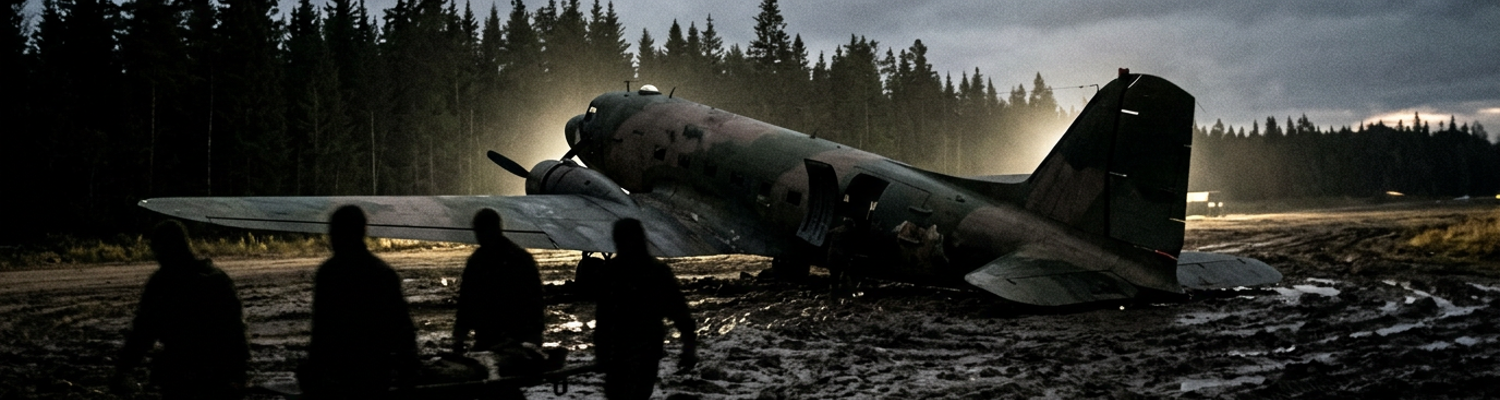

Seventh Army Intelligence Failures
Before the first rounds tore through the damp spring air, a heavy silence hung over the Jagst river valley. American infantrymen from the 10th Armored Division crouched along drainage ditches outside Crailsheim. They listened to condensation dripping off abandoned farm roofs. Engines were cut. Radios crackled with static. The valley felt completely empty.
Thousands of concealed men waited for someone to make a lethal mistake.
A close review of operational logs indicates that this silence masked an intelligence failure at the highest echelons of the Seventh Army. Headquarters G-2 section under Colonel William Quinn operated on a flawed assumption. Staff officers believed German resistance east of the Neckar had fractured into scattered stragglers. The American armored thrust had actually driven twenty-two miles deep into a narrow pocket. This maneuver left American flanks exposed to professional forces. Seventh Army G-2 failed to identify surrounding German Flak regiments. They also missed flanking SS Kampfgruppen around the improvised landing strip north of the town.
Flak-Regiment 45 had already established overlapping kill zones across the approach corridors. They supplemented their lines with motorized batteries pulled from the Stuttgart air defense network. These units deployed dual-purpose 88mm FlaK 36 and rapid-firing 20mm FlaK 38 guns. Combat groups assembled from the 17th SS Panzergrenadier Division Götz von Berlichingen moved quietly through the dense evergreen treelines of the Burgberg forest. Remnants of the 2nd SS Panzer Division Das Reich joined them. They positioned assault guns and mortars in defilade. Staff officers in the rear interpreted empty aerial reconnaissance reports as evidence of clear terrain. They mistook German camouflage discipline for an absence of defensive firepower.
The corridor was an unmapped trap.
Archival evidence shows that this intelligence blindness triggered catastrophic operational choices on the morning of April 8, 1945. The 435th Troop Carrier Group received orders to fly unarmed C-47 Skytrain transports into the contested pocket. Task Force Hankins was short of fuel, medical supplies, and ammunition. Scores of wounded soldiers required immediate surgical intervention unavailable inside the perimeter. Planners directed twin-engine cargo planes into an airstrip measuring less than three thousand feet of rutted turf near Altenmünster. This field sat directly beneath elevated German gun positions.
The Douglas transports carried highly volatile cargo.
Flight crews loaded five-gallon jerrycans of 80-octane gasoline and crates of 105mm artillery shells. They stacked these supplies to the roof bulkheads without defensive armor plate or self-sealing fuel tanks. Flight leaders received flight plans calling for standard traffic patterns at low altitude. These patterns routed them directly over ridges held by veteran anti-aircraft batteries.
No fighter escorts were assigned to suppress the ridge guns.
When the leading C-47s throttled back and dropped flaps for their final glide paths into the valley, the pre-battle quiet vanished under coordinated crossfire. High-explosive 20mm shells ripped through the duralumin skins of the low-flying transports. The rounds severed hydraulic control lines. They ignited fuel lines inside the wings. Several transports pancaked into the muddy meadows short of the dirt strip. They burned where they hit. Surviving aircraft rolled to a halt under direct mortar registration and 88mm flat-trajectory fire. Ground crews from the 10th Armored Division had to drag wounded men from open cargo doors into nearby slit trenches. Armor-piercing rounds walked down the length of the landing area. The incoming fire shredded transport tail assemblies. The improvised evacuation zone became a stationary killing ground. Field hospital stretchers loaded with casualties were splintered by shrapnel yards from the open cargo doors. Thirty-six C-47 aircraft had been committed directly into the sights of concealed anti-aircraft regiments. Headquarters staff had insisted these regiments did not exist.
C-47 Transports and Improvised Dirt Strips
When examining the historical record of the 435th Troop Carrier Group, flight logs reveal a mechanical nightmare. Pilots were forced to commit their Douglas C-47 Skytrains into a narrow agricultural terrace running alongside the winding Jagst River. The terrain near Altenmünster had received nearly two solid days of cold spring downpours. The rain transformed the local red-clay subsoil into a waterlogged slurry. Combat engineers from the 10th Armored Division lacked bulldozers. They had no heavy rollers or pierced steel planking to stabilize the ground before the planes appeared overhead.
Flight leaders held their twin-engine transports at stall speeds barely above seventy miles per hour. They crabbed sideways against blustery crosswinds pouring down from the adjacent bluffs. Pilots brought thirty-one-ton gross weights down across uneven drainage furrows. They lacked flare-out margins or stabilized approaches. Saturated red earth sprayed upward across the lower cowlings of the twin Pratt & Whitney R-1830 engines the instant rubber made contact with the surface. The riverbed slope offered no prepared runoff margins. Pilots dropped their tailwheels instantly onto the uneven turf. They initiated emergency differential braking before running out of cleared pasture.
Unprepared red clay offered no structural resistance against thirty-thousand-pound aircraft.
A close review of operational logs indicates that the touchdown dynamics exceeded every structural design tolerance listed in the technical orders for the Douglas airframe. Saturated red mud seized the heavy main tires. The wheels could not spin up freely. This generated extreme rotational resistance against the dual oleo strut shock absorbers. Flight crews fought against violently shaking control yokes. Thick red sludge jammed into the wheel wells. The mud locked the mechanical brake assemblies and prevented standard ground rolls. The earth alongside the Jagst River lacked drainage culverts. Hidden subterranean water pockets collapsed under the heavy weight of the cargo planes. These collapses created foot-deep trenches the moment each tire tracked forward.
Crew chiefs in the forward cockpits felt the landing gear shears twist. Side-loads sheared torque links. The strain snapped hydraulic pressure lines feeding the Cleveland pneumatic assemblies. The soft soil decelerated planes from sixty knots down to an abrupt dead stop across less than sixty yards of sod.
Every transport became a static target before its engines could be cut.
Archival evidence shows that the landing gear assemblies immediately sank past their thirty-six-inch wheel hubs into the freezing mud. This immobilized transport fuselages inside pre-sighted enemy impact zones. The landing struts bottomed out on the buried crossbeams. The belly skins of the transports settled directly onto the frigid muck. The mud anchored each C-47 firmly to the valley floor. German forward observers stationed on the heights of the Burgberg had spent the preceding forty-eight hours registering their battery targets against specific landmarks along the river terrace. They plotted exact map coordinates down to single-meter increments.
Mortar crews from the 17th SS Panzergrenadier Division dropped heavy 81mm mortar bombs and 120mm Granatwerfer rounds into the field. They fired with mechanical consistency. Observers adjusted trajectories from clear observation posts less than fifteen hundred yards away. High-explosive shells exploded in the freezing mire around the immobilized transports. The blasts flung frozen clay across the aluminum skins. Shrapnel perforated the unarmored cargo doors where enlisted combat medics were attempting to unload emergency ammunition crates. Ground crews from the 54th Armored Field Artillery Battalion attempted to attach towing cables from M3 half-tracks to the tailwheel assemblies. The heavy vehicles spun their tracks uselessly in the red mire without dislodging the suction holding the metal bellies down.
German 88mm high-velocity rounds from Flak-Regiment 45 began striking the stranded C-47 airframes. The rounds arrived on flat trajectories directly through the unarmored engine nacelles. One direct hit tore the left engine off aircraft serial number 42-100874. The impact sprayed flaming 80-octane aviation fuel across the churned clay. The fire instantly set off stacked wooden crates of 60mm mortar ammunition waiting on the cargo floor.
Litter Loading Under Direct Autocannon Fire
When examining the historical record of the 816th Medical Air Evacuation Squadron, operational logs show extreme exposure. Flight nurses and surgical technicians stepped out of the narrow aft doorways into sustained fire. German 20mm FlaK 38 batteries positioned on the nearby Kreckelberg heights poured flat-trajectory rounds across the field. Shrapnel from 81mm mortar rounds whistled across the mud flats near Altenmünster. Medical personnel immediately established an open-air triage perimeter within twenty paces of the idling propellers.
Enlisted surgical technicians dragged canvas stretchers through deep clay furrows. They checked tourniquets and field dressings while automatic cannon shells detonated against the perimeter dirt banks. Triage protocol forced the flight nurses to separate head trauma cases, penetrating abdominal wounds, and shattered extremities into distinct evacuation priorities within seconds of contact. Technicians had to kneel directly in standing surface water to administer morphine syrettes. They tightened severed arterial clamps while working without sandbags or earthworks to deflect fragmentation.
German gunners had registered the flat river meadow hours before. They walked high-explosive 20mm rounds into the assembly points. Litter bearers from the 10th Armored Division had staged incoming casualties in these exact spots. Splinters from high-explosive antiaircraft shells cut down two litter bearers as they hauled an unconscious infantryman toward the waiting port-side door of an unarmored transport.
Open mud flats offered zero ballistic cover.
Archival evidence shows that loading teams hauled casualties upward through thirty-inch-wide rear openings. Pilot crews kept the twin Pratt & Whitney engines throttled at high manifold pressure. This thrust prevented the landing gear from sinking deeper into the soft subsoil. The engine power caused the entire duralumin fuselage to shake violently. Harmonic vibrations ran through the airframe and complicated every mechanical adjustment. Medical teams worked against the violent airframe shudder to hook aluminum stretcher handles into the three-tiered litter suspension straps.
Webbing suspension brackets bolted along the internal ribs had to be latched by hand. Technicians forced them into spring-loaded floor cups and overhead structural trusses while the floor plates bucked underfoot. Surgical technicians positioned the heaviest abdominal and chest cases onto the lowest tier. These patients rested eighteen inches off the vibrating floorboards. Teams then lifted the next tiers toward the cabin roof. Securing each four-point canvas litter required technicians to drive locking pins through cold-rolled steel brackets. Casualties slipped against wet canvas webbing soaked in blood and freezing clay. A sudden slip risked dumping a critical casualty six feet onto the metal cargo deck.
High-velocity tungsten-core rounds chewed through the empennage.
A close review of operational logs indicates that rapid-fire 20mm rounds penetrated the unarmored cargo doors. Projectiles punched through internal forward bulkheads while nurses were securing the third tier of wounded men. Solid shot and explosive projectiles pierced the thin aluminum skin without meeting resistance. The rounds punched ragged four-inch entry holes and sprayed duralumin slivers through the interior. One high-explosive incendiary round blasted through the forward navigation bulkhead. The explosion severed the primary rudder control cables. It shattered the oxygen regulator manifold mounted beside the radio compartment.
Flying metal fragments pierced plasma bottles hung from the overhead structural ribs. Intravenous fluid spilled across the casualties lashed to the center tier. Flight nurses stayed between the vertical rack straps. They used their own bodies to shield exposed patient faces from jagged metal fragments tearing through the ceiling panels. Enlisted technicians ignored burning duralumin shards smoldering in the cabin insulation. They replaced torn webbing with emergency cargo lashing lines. Hydraulic oil from ruptured flap supply lines misted down the center aisle.
Flight logs confirm that transport serial number 42-93096 lifted off under direct autocannon deflection fire. Twenty-four immobilized casualties were strapped into punctured racks. Nine separate shrapnel holes ventilated its left engine cowling.
Aircraft Losses Along the Jagst River
German grenadiers crawled through drainage ditches less than two hundred yards from the parked transports.
When examining the historical record of the 10th Armored Division defensive positions, company records reveal rapid deterioration. The security line around the Altenmünster meadow collapsed into fragmented strongpoints by mid-morning on April 8. Infiltrating infantry squads from the 17th SS Panzergrenadier Division Götz von Berlichingen pushed through willow thickets flanking the Jagst River. They dragged MG 42 machine guns and StG 44 assault rifles into dead ground between forward American outposts. These German fire teams advanced within seventy-five yards of the turf runway. They set up bipods on riverbank knolls with clear fields of fire across the dispersal area.
Transport pilots kept their twin Pratt & Whitney R-1830-92 Twin Wasp radial engines turning over at roughly 1,200 RPM. This sustained vacuum for cockpit flight instruments. It prevented spark plugs from fouling on wet meadow soil. German machine gunners deliberately bypassed cockpit glass. They concentrated 7.92x57mm steel-jacketed bursts into these revolving cylinder banks. Armour-piercing SmK rounds punctured thin aluminum teardrop cowlings. The bullets sliced through stainless-steel oil distribution lines and punctured ignition harnesses.
Twin Wasp cylinder heads fractured under sustained automatic fire. The broken blocks dumped boiling lubricating oil onto superheated exhaust manifolds. Thick plumes of white-gray petroleum smoke erupted from engine cowls. Broken pushrods jammed rocker arms. The damage seized propeller shafts mid-stroke and left multi-ton transports completely immobile in the churned clay.
Rifles disabled aircraft faster than artillery.
Archival evidence shows that surviving airframes faced direct fire from German anti-tank guns. 20mm FlaK cannon positioned on the rising ridge south of Tiefenbach joined the barrage. Douglas C-47 transports lacked self-sealing fuel tanks. They carried internal wing fuel cells holding over eight hundred gallons of volatile aviation gasoline. High-explosive 20mm incendiary shells from FlaK 38 quadruple mounts struck the center wing root sections between the engine nacelles and fuselage ribs. The rounds tore directly into pressurized fuel delivery pipes and rubber-fabric transfer bladders.
Detonation followed instantly. Atomized vapor pockets ignited inside the partially drained aluminum wing tanks. Catastrophic overpressure blew upper wing skins off their structural rivets. Sheets of burning high-octane gasoline poured directly into passenger cabins through torn cargo bulkheads. In three separate instances, primary structural center sections collapsed immediately under the thermal blast. The fires melted aluminum alloys at temperatures exceeding 1,100 degrees Fahrenheit. The resulting infernos reduced entire fuselages of aircraft assigned to the 76th Troop Carrier Squadron down to charred titanium steel firewall brackets. Blackened landing gear struts were all that remained after less than four minutes. The flames incinerated medical supplies and heavy ammunition reserves still lashed to cabin floors.
Evacuation teams watched metal melt into the soil.
A close review of operational logs indicates that the concentration of destroyed airframes choked the usable strip. The wreckage reduced the available roll distance to under twelve hundred feet. Armor-piercing 75mm rounds fired by StuG III assault guns of SS-Panzerjäger-Abteilung 17 struck methodically along the western edge of the pasture. The gunners targeted transports immobilized by engine seizures. One solid-shot round punched through the radio operator compartment of C-47 serial number 43-15073. The shell entered the port fuel tank from behind. The impact triggered a fuel-air deflagration that blew the main cabin door fifty feet across the riverbank.
Combat engineers from the 51st Armored Engineer Battalion attempted to bulldoze burning wing sections off the runway surface using an unarmored tractor. Direct sniper fire killed the driver before the blade engaged the smoldering wreckage. Four transports were completely consumed by fire. Five others were crippled by perforated engine blocks. The strip became impassable for inbound formations. The 435th Troop Carrier Group command post had to abort subsequent supply lifts. Infantry squads contested the perimeter tree line at hand-grenade range.
Emergency Mud Liftoffs and Evacuation Sorties
Saturated clay along the Jagst riverbank anchored the multi-ton transports to the valley floor.
When examining the historical record of the 816th Medical Air Evacuation Squadron, maintenance logs demonstrate severe overloading. Evacuation weights routinely exceeded safe field limitations for short unimproved strips. Each wounded soldier secured to the internal four-tier stanchions added up to two hundred and twenty pounds. This weight factored in field dressings, heavy plaster casts, blood plasma units, and sodden woolen blankets. The effective runway roll was reduced to under twelve hundred feet by burning wreckage. Enlisted surgical technicians and crew chiefs began stripping the aircraft interiors to basic structural ribs.
Ground crews wrenched heavy auxiliary radio sets out through the aft double doors. They removed spare aircraft batteries, maintenance tool chests, and steel flak vests. They dumped this gear directly into the mire beside the landing gear. Enlisted medical technicians discarded extra canvas litters. They threw out wooden splint boxes, emergency rations, and personal flight bags. They dropped every possible pound of dead weight. Mechanics unbolted heavy bronze cabin fire extinguishers. They removed steel tie-down chains and auxiliary fuel pumps from the cargo floors. Litter teams carried twenty-four critically injured soldiers with penetrating chest and abdominal trauma into the stripped cabins. Every pound tossed into the mud reduced the required acceleration distance. Runway overruns on this airfield meant direct contact with German machine gun nests.
Suction along the saturated belly skins still pinned the main landing gear fifty inches into the subsoil.
A close review of operational logs indicates that flight crews had to push their Pratt & Whitney R-1830-92 Twin Wasp radial engines far past authorized technical specifications. They had to tear the airframes free. Standard operating procedures established maximum takeoff power at forty-eight inches of manifold pressure at twenty-seven hundred revolutions per minute. War emergency power was capped at fifty-two inches. Pilots from the 435th Troop Carrier Group broke the mechanical throttle stops. They stood on the toe brakes while shoving the levers forward. The cockpit needles pegged past sixty inches of manifold pressure.
Overstressed superchargers forced dense air-fuel charges into the fourteen air-cooled cylinders. This produced intense mechanical strain that warped exhaust valve stems. Cylinder head temperatures climbed past the two-hundred-and-sixty-degree operating ceiling. Engine cowlings rattled against mounting studs. Unburned aviation gasoline ignited inside exhaust collector rings. The engines trailed flames six feet long beside the landing gear. Pilots released the mechanical brakes. The massive rotational torque twisted the airframe against the drag of the clay. The strain burned out generator armatures. It stretched landing gear oleo struts to their absolute mechanical extension limits before the tires tore out of the deep ruts.
Twin propellers hammered standing water into thick red spray across the cockpit windshields.
Archival evidence shows that several transports suffered catastrophic mechanical breakdowns during the initial seconds of acceleration. The planes lumbered down the narrow track toward Altenmünster. Superheated oil foamed in fractured crankcases. The pressure blew past nose-case oil seals and coated windshield panels in black petroleum sludge. Pilots lost forward visibility. They opened side storm windows to track the tree lines of the Kreckelberg bluffs. German 20mm automatic cannon shells burst across the open meadows.
Transport aircraft serial number 42-100905 lifted off at seventy-five knots. Its tires shed thick slabs of sod that battered the underside of the horizontal stabilizer. The debris jammed the lower elevator hinge. Inside the vibrating fuselage, medical technicians gripped the tubular frame of the litter racks with both hands. They fought to keep critical patients from breaking loose during the high-angle climb-out. Blown cylinder head gaskets dropped engine output seconds before clearing the ridge. The stripped transport cleared the German anti-aircraft positions by twenty feet. It banked westward toward field hospitals behind the Rhine.
Flight logs record that the final overloaded transport left the turf strip with zero oil pressure in its starboard engine at 1420 hours.
Ninth Air Force Forward Evacuation Doctrine Revisions
Five Douglas C-47 airframes sat burned down to their steel axle assemblies in the Altenmünster pasture.
When examining the historical record of the IX Troop Carrier Command, casualty and equipment logs sent to Ninth Air Force headquarters at Vittel detailed an unacceptable rate of airframe attrition. The seventy-two-hour engagement devastated the transport squadrons. Operating transport aircraft within small tactical pockets had stripped the 435th Troop Carrier Group of scarce twin-engine planes. Five transports were completely destroyed. Five were heavily damaged by small arms and autocannon shrapnel. Dozens of trained aircrew and 816th Medical Air Evacuation Squadron personnel were wounded or dead.
Major General Hoyt Vandenberg and his operations staff reviewed the disaster. The forward aeromedical doctrine developed during the rapid push across northern France was fatally flawed when applied to semi-encircled perimeters. That doctrine relied on the premise that divisional armor could suppress perimeter fire long enough for twenty-ton unarmored transports to land. The planes were supposed to offload ammunition and fill litter tiers with severe casualties. Along the Jagst River, the absence of secure terrain turned unarmored transport bellies into static target plates. German 20mm FlaK 38 autocannons, 81mm mortars, and hidden sniper nests had clear lines of sight. Shrapnel tore through magnesium-alloy control pulleys and hydraulic pressure lines. The damage crippled airframes before takeoff rolls could begin.
The loss of these irreplaceable transports directly threatened supply schedules for impending operations across southern Germany. Catastrophic transport losses along the Jagst River forced the Ninth Air Force to abandon forward-strip aeromedical evacuation doctrine in contested sectors.
Doctrine written for coordinated fronts shattered against the tactical geography of isolated river meadows.
Archival evidence shows that IX Troop Carrier Command issued immediate tactical directives on April 11. These orders fundamentally overhauled transport operations across the entire Western Front. Standard operating procedures were formally revised. Unarmed multi-engine transports were restricted to secure rear-echelon airfields outside light artillery range. Air planners established rigid geographic restrictions. C-47 Skytrains and C-46 Commandos were barred from touching down within fifteen miles of any active frontline boundary or uncontained flank. Field commanders received instructions that strips selected for aeromedical evacuation had to sit beyond the 10,600-meter maximum range of German 10.5cm leFH 18 light field howitzers. These strips required confirmed physical perimeters manned by dedicated corps-level infantry elements.
Flight paths were locked to surveyed approach corridors cleared by Allied fighter-bombers. This ended the practice of individual pilots picking visual routes over unsuppressed ridge positions. Emergency forward casualty collection shifted onto Stinson L-5 Sentinel and Piper L-4 Grasshopper liaison planes. Artillery observation squadrons operated these light aircraft. They could negotiate tiny fields without risking multi-engine equipment or full medical flight crews. If heavy transport planes could not land in zones guaranteed free of direct fire, casualties had to travel in standard M3 half-tracks or field ambulances. They rode over ground routes until reaching surveyed asphalt runways or pierced steel plank strips in the corps rear.
Flight nurses were permanently barred from frontline airheads lacking established defensive envelopes.
A close review of operational logs indicates that the revised directives took effect within forty-eight hours of Task Force Hankins withdrawing from the Crailsheim pocket. Ninth Air Force circulars instructed base commanders at advanced landing grounds, including Y-55 at Haguenau and R-10 at Illsheim. They were ordered to reject all forward flight clearance requests from division commanders that lacked corps-level counter-battery clearances. Maintenance depots stopped fitting field kits for short-run mud liftoffs onto troop carrier aircraft. Pilots caught exceeding authorized manifold pressure limits to break free of unpaved surfaces faced immediate grounded status.
The subsequent air evacuation of wounded personnel from Seventh Army units advancing toward Nuremberg was rerouted. Casualties went through rear holding facilities at Nancy, Toul, and Épinal. Patients arrived by rail and heavy truck convoys rather than combat transports. Technical order revisions distributed to the 435th Troop Carrier Group on April 14, 1945, formally eliminated contested-zone landings from all future flight training curricula.