
National Intelligence Estimate 11-14-71 and Southern Flank Defense
Radios hissed into dead silence across the forward command post in Turkish Thrace, cutting off frontline maintenance officers and medical teams from regional headquarters in Izmir. Staff sergeants immediately switched to local signal lamps and paper dispatch runners to keep vehicles moving, relying entirely on their own initiative to maintain defensive perimeters. Later popular accounts transformed this communications blackout into a dramatic tale of rogue commandos operating in secret, but official records document a strictly defensive response to Allied command warnings. The United States intelligence community promulgated National Intelligence Estimate 11-14-71 on September 9, 1971, warning that Warsaw Pact armies could mount rapid multi-division thrusts through Bulgaria with little strategic warning. Intelligence analysts determined that these eastern bloc formations maintained round-the-clock readiness, threatening to overwhelm the forward garrisons guarding the northern approaches to the Mediterranean.
Soviet and Bulgarian armored divisions stood positioned directly opposite those northern border garrisons, threatening the narrow coastal plains that controlled access to the Aegean Sea and the Turkish Straits. Military planners recognized that a sudden armored drive through the Thracian gap could sever the land bridge between Greece and Turkey within forty-eight hours, trapping frontline defenders against the coast. Control of the Bosporus and the Dardanelles remained the core objective of any such offensive, because seizing those waterways would grant the Soviet Black Sea Fleet unrestricted passage into the Mediterranean basin. Mechanized columns advancing down the Maritsa and Evros river valleys would also cut directly across the fragile Aegean littoral corridors, splitting southern NATO forces into isolated pockets before main battle tanks could deploy from rear depots. Turkish and Greek field commanders along the frontier therefore faced the immediate task of fortifying exposed choke points while calculating how to patch together air and ground defenses without guaranteed reinforcements.
NATO command authorities answered this strategic peril by issuing urgent southern flank mobilization directives that ordered high-tempo field testing under simulated invasion conditions. Allied commands required ground units, aviation detachments, and support crews to conduct continuous round-the-clock maneuvers in the rocky Thracian dust to evaluate how quickly emergency assets could redeploy under heavy electronic jamming. Modern films regularly depict these maneuvers as effortless displays of air power where heroic pilots flew solo rescue runs across burning skies, but declassified operational reports reveal a gritty struggle of logistics and equipment maintenance. Ground crews worked through choking dust clouds to service transport helicopters, clean sand-fouled carburetors, and troubleshoot faulty power units on portable radio shelters. Medical personnel and mechanical engineers adjusted their standard operating procedures on the spot, converting cargo bays into emergency triage stations while testing casualty flow rates along rough dirt airstrips.
Mechanics clamped steel repair sleeves onto fractured hydraulic lines and rigged auxiliary generators to keep field operating tables illuminated as night fell over the exercise zones. Flight surgeons worked alongside infantry sergeants to load simulated casualties onto canvas stretchers, timing every movement against the stopwatch of a theoretical mechanized breakthrough. When the electrical relays inside the main transmitter vans blew out during the simulated air strike, maintenance technicians bypassed the melted circuit boards using jumper wire and spare fuses scavenged from transport trucks. Company officers assigned fresh teams of motorcycle couriers to run blood plasma crates and tactical updates between forward collection points and camouflage-netted clearing stations until line communications were restored the next morning.
Exercise Deep Furrow 71 Operational Planning
Motorcycle engines sputtered across the rutted dirt tracks as couriers handed packet envelopes containing fuel manifests and casualty reports directly to field planners coordinating the broader theater scenario. Allied Forces Southern Europe activated the extensive maneuvers of Exercise Deep Furrow 71 across northern Greece and Turkish Thrace in late September and October 1971 to test how allied forces would halt an armored thrust from the north. NATO planners mapped out defensive sectors stretching from the rocky ridges of Greek Macedonia to the dry rolling hills of Turkish Thrace, treating the entire frontier as an interconnected combat zone. Staff officers drew red boundary arrows over terrain models to coordinate the integration of United States Army airborne forces alongside Greek and Turkish ground units to counter simulated armor advances sweeping toward the Mediterranean coast. Paratroopers from American staging areas had to mesh their air-drop timelines with Turkish infantry regiments and Greek mechanized battalions, forcing three distinct military structures to share identical road junctions, fuel depots, and radio frequencies under rigid exercise constraints.
Teletype machines at regional headquarters ignored the mounting congestion at those shared supply junctions, churning out statements that framed the multinational exercise as an illustration of rapid, friction-free strategic deterrence. Official briefings presented Deep Furrow 71 as direct proof that NATO could parachute combat-ready battalions into Mediterranean crisis zones without suffering logistical snarls or mechanical delays. Press releases distributed to international journalists portrayed synchronized Allied air and ground movements, claiming that transport planes and front-line armor operated with complete precision against simulated aggressors. Popular news reports and later dramatizations embraced this sanitized version, depicting airborne units that dropped into contested valley corridors and established defensive perimeters within minutes. News cameras and official observers documented staged demonstrations on prepared airfields where clean transport planes unloaded troops on schedule, omitting the broken axles and clogged fuel injectors that actually stalled vehicles on the frontline support routes.
Mechanics tackled those clogged fuel injectors and cracked gear struts along primitive forward airstrips, wrestling heavy wrench sets in blinding dust storms to keep transport wings flight-worthy. Allied flight schedules called for mass drops across the open plains of Thrace, requiring American paratroopers to land directly into defensive sectors already occupied by Greek and Turkish infantrymen. Ground commanders positioned these combined drop zones along suspected armor corridors to evaluate how fast airborne soldiers could deploy anti-tank missiles and recoilless rifles alongside Turkish tanks and Greek motorized companies. Tactical confusion arose as soon as the jump formations took off, because the different national forces relied on incompatible radio sets, differing field wire, and separate code sheets that prevented direct voice communication between cockpits and frontline trenches. Jumpmasters aboard the transport aircraft could not confirm friendly ground positions across the landing sectors, forcing navigators to guide pilots using handheld binoculars and paper maps instead of automated radio homing beacons.
Signal sergeants on the landing grounds solved the beacon failures by igniting colored smoke pots and staking orange nylon panels across the rocky perimeter ditches. Airborne commanders inside the transport planes spotted these physical markers through cargo bay doors, directing pilots to adjust drop headings seconds before paratroopers leaped into the gusting crosswinds. Heavy equipment pallets carrying motorized gun carriages and mortar ammunition landed across the scrub, where rough stones sheared restraining cables and jammed weapon trailers into hidden irrigation ditches. Infantry squads scrambled out of their parachute canopies to dig out the buried equipment with entrenching shovels while Turkish tank crews maneuvered recovery tractors to pull the stuck trailers onto solid ground. Allied officers then ran telephone wire along roadside fence posts and established combined perimeter strongpoints, readying their forward defenses for simulated mechanized counter-attacks before darkness covered the frontier.
Mass Tactical Drops Over Northern Greek Karst Ridges
Lockheed C-130 Hercules transport aircraft rattled the newly strung wire lines along the perimeter fence posts as their four turboprop engines roared over northern Greece to execute mass tactical drops near Thessaloniki and remote Thracian border sectors. Tactical jump schedules had been designed to beat modeled Warsaw Pact mechanized advance timelines toward strategic Aegean port facilities, requiring pilots to deliver complete infantry battalions within minutes of reaching the coastline. Computerized exercise projections showed that Bulgarian armored columns driving down the Struma and Nestos river gaps could reach the Aegean Sea within thirty-six hours unless airborne units blocked the mountain corridors immediately. Postwar popular accounts often showed paratroopers floating smoothly onto marked drop zones in perfect formation, but real flight crews faced severe navigational turbulence that disrupted their approach routes. Jumpmasters shoved sticks of sixty combat-loaded paratroopers out the open troop doors while pilots fought violent downdrafts over the Macedonian foothills, scattering men across jagged karst ridges rather than open assembly fields.
Limestone karst ledges across those ridges broke the falls of incoming jumpers across severely arid drop zones characterized by fractured rock and minimal soil cover. Sheer elevation changes between mountain crests and dry valley floors produced five-hundred-foot drops that gave jumpers very little time to steer their olive-drab T-10 parachutes away from sharp boulders. Shifting Mediterranean wind patterns complicated every descent, blowing hot thermal gusts off the Aegean coastal plains and channeling turbulent crosswinds into the narrow mountain passes. Paratroopers struck the sun-baked stone terraces with full ninety-pound field rucksacks, rolling over loose rocks that tore through jump trousers and damaged reserve chute assemblies. Squad leaders blew brass whistles through the swirling chalk dust to gather their scattered elements, discovering that dozens of men hung trapped in scrub pine branches along vertical cliff faces.
Paratroopers cut their suspension lines with pocket knives to break free from those pine branches, dropping straight onto the loose rocks below to join their squads. Company medics moved rapidly between jagged limestone crevices to set wood splints on broken ankles and clean out deep gouges before heat exhaustion set in. Airborne companies had to assemble at forward rally points within two hours to meet their defensive timelines against the simulated enemy advance, leaving no room to search for lost gear. Infantrymen dragged heavy 106-millimeter recoilless rifles up forty-degree inclines on foot after parachute pallets tumbled into deep erosion gullies. Gun crews mounted the weapons onto steel tripod bases behind ancient field terraces, aligning their sights to cover the northern asphalt roads before the next flight wave appeared overhead.
Aluminum cargo pallets dropped by that incoming flight wave slammed onto the hard limestone plateaus, tearing through their green nylon cargo chutes. Maintenance mechanics sprinted across the scrub with crowbars, socket wrenches, and bolt cutters to free bent trailer tongues and crushed vehicle frames from the wreckage. Riggers pulled intact radio batteries, five-gallon water cans, and rolls of telephone wire from cracked wooden crates, passing them directly to waiting motorcycle couriers. Battalion commanders reviewed paper maps on jeep hoods and ordered their companies to dig defensive trenches across the limestone saddles, securing the mountain passes ahead of the modeled enemy armor thrust. Mortar platoons hammered heavy steel baseplates into the fractured bedrock and aimed their tubes north toward the frontier valleys, establishing direct firing perimeters across the heights.
Orthopedic Drop Traumas and Jump Casualty Realities
Gunners securing those forward firing perimeters had to abandon their aiming stakes almost immediately as injured paratroopers called for medical help across the rocky drop zone. Combat-loaded soldiers descending onto the Thracian plateau slammed directly into razor-sharp limestone shelves at descent rates exceeding twenty feet per second. Paratroopers carrying ninety-pound combat rucksacks could not execute proper parachute landing falls on the stepped terraces, because their heavy equipment harnesses pulled their bodies forward and drove their boots directly onto unyielding stone ledges. Impact forces generated a massive wave of severe orthopedic injuries across the jump fields, driving jagged bone ends through skin in compound lower-extremity fractures, pulverizing heel bones against solid bedrock, and crushing lumbar vertebrae in painful spinal compressions. Peacetime planners at Allied headquarters in Izmir had based their operational invasion timetables on administrative casualty estimates of less than one percent, assuming jumpers would land on soft agricultural soil. Actual trauma counts recorded on the jagged karst surfaces rose above ten percent in several airborne companies, leaving dozens of immobilized men scattered across the stone plateaus.
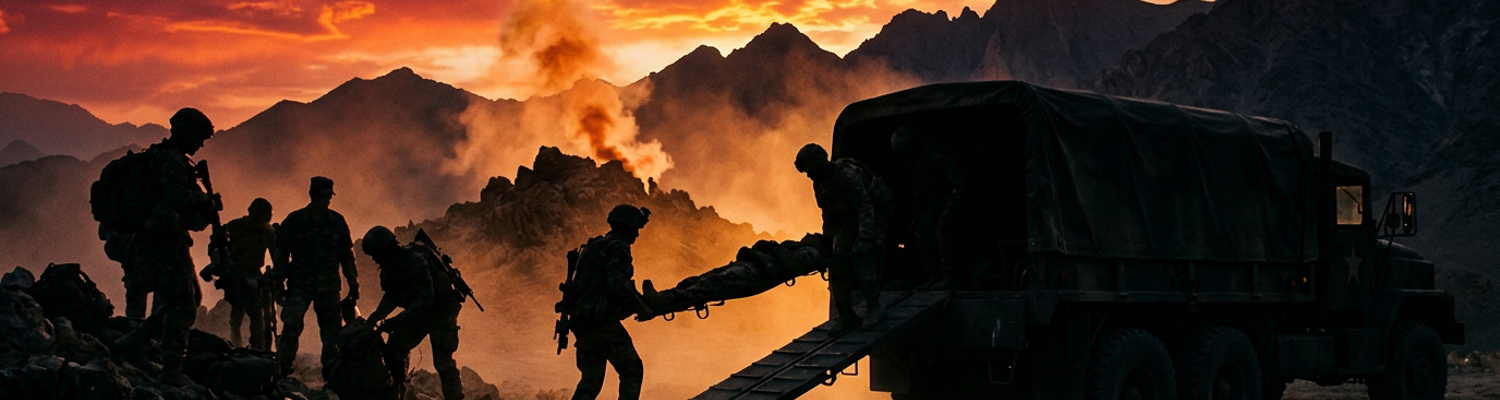
Medics struggled to organize company-level aid stations behind low stone boundary walls as non-battle landing casualties saturated every triage point within the opening hours of the jump. Corpsmen quickly exhausted their standard allotment of Thomas splints, wire ladder splints, and plaster bandages, forcing them to lash broken legs to birch limbs and rifle cleaning rods with rolls of friction tape. Orderlies scavenged nylon parachute suspension lines and cargo straps to rig improvised traction devices between steel tent poles, keeping shattered leg bones aligned until regional ambulances could reach the ridge. Stretcher teams dragged groaning soldiers with shattered pelvises and fractured kneecaps into shallow ravines to protect them from rotor wash and dust clouds kicked up by passing utility helicopters. Aid station sergeants administered syrettes of morphine to control traumatic shock, writing dosage times directly on the foreheads of immobilized men with red grease pencils to keep track of medication schedules. Flight surgeons drained their limited supplies of human serum albumin on severe compound fractures that bled profusely through torn combat trousers, completely filling the forward medical tents with crippled jumpers before the battalion had fired a single simulated defensive salvo.
Drivers backed quarter-ton utility trucks directly up to the flaps of those overwhelmed aid stations to begin emergency evacuation runs toward rear staging areas. Tactical company commanders had to pull able-bodied riflemen away from their newly dug defensive foxholes to carry stretchers across the rocky terrain, because each spinal compression casualty required four men to prevent further nerve damage during transit. Ground commanders acknowledged that the high casualty rate had immobilized an entire rifle company worth of personnel, forcing frontline officers to halt their planned counter-attack drills toward the frontier borders. Radio operators transmitted urgent supply requisitions for extra traction splints, blood expanders, and plaster casts instead of coordinating artillery fire missions with Turkish and Greek regional commands. Mechanics stripped canvas tarps and cargo frames from three-quarter-ton transport trucks, bolting wooden planks across the steel truck beds to keep multiple orthopedic litters secure during the rough haul down rutted mountain tracks. Infantry captains reassigned their remaining mortar crews to guard the growing casualty collection points, leaving forward pass perimeters undermanned while vehicle drivers navigated narrow dirt trails to deliver the injured to provincial Greek and Turkish civilian clinics.
Frontline Medical Triage and Evacuation Gridlock
Hellenic aid stations along the northern frontier buckled under the sudden influx of injured soldiers arriving from those mountain trails. Forward medical tents designed to process minor training scrapes were swamped with open fractures, torn ligaments, and head injuries within ninety minutes of the drop. Doctors and corpsmen at these forward posts quickly burned through their operational cabinets, causing the complete exhaustion of basic medical consumables, traction splints, and whole-blood reserves across forward Hellenic aid posts. Orderlies ran out of standard Thomas traction splints after immobilizing the first dozen casualties, forcing medical personnel to bind fractured femur bones using scrap lumber slats and heavy canvas utility belts. Glass bottles holding refrigerated whole blood ran dry during the initial wave of trauma surgeries, leaving Greek physicians with only standard salt water infusions to treat severe arterial bleeding. Field directors recognized that their primitive aid shelters could not manage complex orthopedic surgeries or internal vascular trauma, prompting them to radio rear staging fields for tactical aeromedical helicopters to airlift the worst cases directly to regional military hospitals.
Bell UH-1 Iroquois helicopters dispatched from southern air bases immediately ran into severe delays in tactical aeromedical casualty evacuation caused by unpredictable mountainous downdrafts and dust clouds. Violent gusts of cool air rolled down the Thracian mountain faces, shearing across narrow valleys and dropping transport helicopters dozens of feet in seconds. Rotor blades beat against the parched limestone floor, kicking up thick blinding clouds of white dust that completely engulfed the landing zones. Flight crews lost all sight of ground reference stakes and signal panels the instant their skids neared the ground, risking catastrophic crashes into surrounding boulders and scrub oaks. Mountain downdrafts threatened to slam descending aircraft into rocky ridges, while heavy chalk grit clogged engine intake filters and threatened mechanical turbines with overheating. Flight leaders had to abort repeated approach passes and hold their aircraft in holding patterns miles away from the drop sectors, completely halting air evacuations while desperate medical teams waited on the ground.
Ambulance drivers had to take on the entire evacuation mission when those grounded helicopters turned away, beginning protracted overland transport over unpaved primitive mountain tracks hindering patient stabilization and transfer to secondary hospitals. Wheeled military ambulances and requisitioned cargo trucks rattled down washed-out logging paths and unpaved goat trails littered with sharp shale and exposed tree roots. Every hard bump and violent jolt through the vehicle chassis transferred directly into patients lying on metal litters, jarring broken bones out of alignment and reopening delicate vascular wounds. Medics clung to the interior steel ribs of bouncing truck bodies, struggling to keep plastic airway tubes clear and reinsert intravenous needles that popped loose from shaking arms. Drivers fought steering wheels over steep unpaved switchbacks where wheels slipped in loose gravel, extending forty-minute transit routes into five-hour endurance runs that drove several trauma patients into irreversible shock. Motor pool sergeants at intermediate road checkpoints met the arriving convoys with fresh jerrycans of water and grease guns, reinforcing bent leaf springs with steel clamps before sending the battered trucks back into the mountains.
Quartermaster Resupply Disruptions Across Rugged Hellenic Zones
Supply trucks grinding back up those rocky mountain roads carried only emergency vehicle spare parts and light rations, leaving forward rifle companies entirely dependent on heavy parachute bundles dropped from the sky. Popular historical films later depicted these resupply drops as clean pinpoint deliveries that landed directly into unit perimeters, but physical records tell a far grimmer story. Violent mountain air currents shoved incoming transport planes off their flight paths, resulting in the widespread dispersal and destruction of heavy-drop cargo pallets containing critical rations, field gear, and communication equipment across mountain crevices. Wooden platforms rigged with heavy cardboard crush pads snapped upon striking limestone crags, spilling hundreds of cardboard ration cases down sheer vertical drops where cans split open on bare rock. Canvas duffel bags packed with warm jackets, spare boots, and entrenching tools snagged on high branches and ripped open, while fragile radio sets inside padded transport boxes shattered into useless metal fragments against jagged boulders. Soldiers scrambled along unstable shale ledges with nylon ropes to retrieve what they could find, recovering only dented water cans and cracked battery casings from the deep rocky fissures.
Signalmen working among those rocky fissures tried to establish contact with overhead aircraft using their few surviving backpack transmitters, but severe terrain-induced radio interference in deep ravines complicated aerial delivery tracking and joint emergency resupply runs. Massive limestone walls bounced and absorbed high-frequency tactical radio waves, producing radio dead zones that completely severed ground-to-air voice contact. Transport pilots flying Hellenic and American cargo planes could not pinpoint smoke signals or receive accurate grid coordinates from the trapped soldiers down in the shadows of the gorges. Navigators attempted to track secondary drop points by visual observation alone, but swirling valley turbulence threw the planes off course and scattered emergency food bundles across inaccessible mountain peaks miles away from target zones. Ground crews watched helplessly as bundle after bundle drifted into unmapped ravines, leaving pilots with no choice but to terminate their joint emergency delivery missions and return to base with empty fuel tanks.
Quartermaster distribution units operating from rear staging depots attempted to bypass the air-drop failures by pushing supply convoys and foot teams along the mountain slopes, but these efforts triggered the complete failure of quartermaster distribution channels to reestablish physical contact with isolated airborne platoons. Muddy landslides and deep karst ditches blocked three-quarter-ton trucks miles short of the company command posts, forcing support personnel to transfer dry rations, water bladders, and spare batteries onto pack mules and wooden pack boards. Local mule drivers refused to lead their animals across crumbling shale edges above the gorges, and heavy rockfalls severed the only marked trails leading into isolated sector outposts. Isolated rifle squads spent days without fresh bread, clean water, or operational batteries, surviving entirely on wild vegetation, melted stream water, and whatever salvageable rations they had scavenged from the destroyed pallets. Frontline lieutenants finally redrew their local perimeter maps, pulled their forward outposts back toward defensible intermediate ridges, and established round-the-clock physical runner relays to share their last operational radio batteries across company lines.
Strategic Reassessment of NATO Airborne Rapid Deployment
Couriers carrying those depleted radio batteries delivered grease-penciled casualty tally sheets directly into the hands of theater inspectors arriving at forward brigade command posts. These classified after-action documentation files dismantled the cinematic depictions of flawless tactical airdrops that civilian newsreels and commercial films routinely presented to western publics. Observers logged that the jump zones suffered high attrition rates, with nearly ten percent of the airborne force incapacitated by bone fractures and concussions before firing a single blank training round. Maintenance officers documented rows of shattered weapons bundles, cracked mortar baseplates, and overturned jeep trailers across the Thracian scrub, proving that mass drops under realistic conditions generated severe operational friction. Intelligence officers collated these field tallies into detailed damage matrices, demonstrating that forward rifle companies had lost operational cohesion through physical trauma rather than simulated enemy fire. Frontline doctors submitted matching medical ledgers that showed emergency aid kits exhausted within hours, leaving jump units unable to care for their own injured while attempting to hold defensive lines.
Flight safety engineers at Allied Air Forces Southern Europe evaluated those damaged equipment pallets and orthopedic trauma logs to overhaul jump protocols across the Mediterranean theater. NATO operational commands subsequently implemented stricter environmental criteria for all mass airborne maneuvers, barring high-volume paratrooper drops whenever surface winds exceeded fifteen knots over jagged karst plateaus. Aviation directives established higher drop-altitude limits for transport aircraft flying over Mediterranean mountainous terrain, giving jumpers critical extra seconds to control their descent oscillations and spot hazardous obstacles beneath their boots. Engineering teams equipped with surveying instruments were assigned to inspect future training zones on foot, mapping rock ledges and deep gullies so transport navigators could avoid dropping troops over broken stone. Quartermaster riggers also redesigned parachute shock harness webbing and integrated honeycomb cardboard crushing blocks beneath heavy equipment sleds, ensuring that artillery pieces and cargo trucks could survive hard ground impacts without snapping their suspension assemblies.
Infantry tacticians at Allied Land Forces Southeastern Europe used this concrete drop data to conduct a sweeping doctrinal reevaluation of whether light airborne formations could credibly survive and delay mechanized armor forces without early overland relief. Post-exercise war games demonstrated that paratroopers armed only with light anti-tank missiles, bazookas, and shoulder-fired rifles could not stop high-speed Soviet and Bulgarian armored divisions driving through open river valleys. Tactical planners recognized that scattered rifle platoons without armored mobility or steady resupply would run out of ammunition and be overrun within forty-eight hours of landing. Command staffs eliminated earlier assumptions that airborne units could operate independently for five to seven days behind enemy lines in rugged frontier terrain. Theater defense plans were redrawn to mandate that any future parachute insertion along the Thracian or Macedonian borders must synchronize with heavy mechanized columns advancing rapidly along overland relief corridors to secure the paratroopers before hostile armor could isolate them.