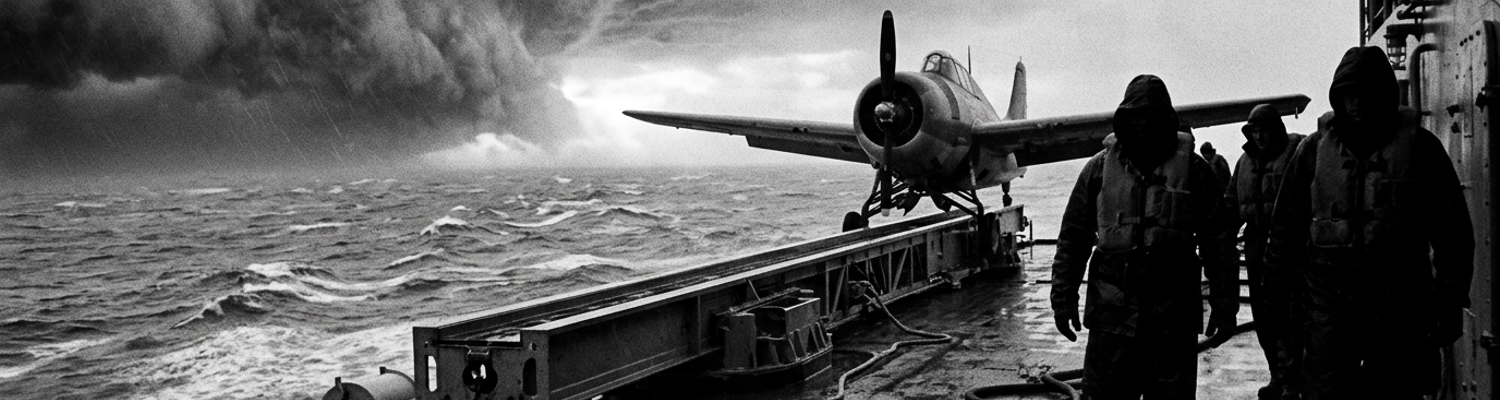

Black Sea Surveillance and Electronic Warfare Environment
Vulture Two-Zero experiencing uncommanded pitch down, multiple radar warning receiver spikes, link margin critical, requesting immediate abort.
Archival evidence shows this transmission across the secure Link 16 network at 0418 Zulu on November 12 marked the breakdown of a highly classified surveillance cordon. Task Force Lackawanna operated throughout late 2023 (under operational directive NAVEUR-77) as an ad hoc integration of the 11th Reconnaissance Squadron Detachment 4 and Naval Strike Group 67.2. Operating primarily out of Mihail Kogalniceanu Air Base in Romania, the task force maintained a continuous airborne presence along the 44th parallel north. This footprint extended deep into the western Black Sea near 44 degrees North 30 degrees East. Command directives issued by Vice Admiral Thomas H. Croft in early September required unblinking coverage of the maritime choke points. Maintaining this footprint demanded flying RQ-4B Global Hawk Block 40 airframes and MQ-9A Reaper drones in tight, stacked orbits directly against international airspace boundaries. Sorties lasted up to eighteen hours at a time.
The physical strain on the drone fleet compounded daily.
Ground maintenance crews cannibalized wiring harnesses, servo motors, and Ku-band satellite communication antennas from grounded airframes just to keep the active flight rotation moving. Absence of standard hangar facilities at the forward operating base exposed the sensitive avionics bays to the corrosive coastal air. Flight logs record a 40 percent mission abort rate due to hardware degradation before the end of October.
A close review of operational logs indicates the reliance on these unmanned platforms stemmed directly from the failure of traditional manned naval reconnaissance during the severe autumn squalls. Black Sea weather patterns in November generated sustained Sea State 6 conditions. These storms produced 18-foot swells and dense, freezing sea spray that coated aircraft windshields and sensor housings. Standard maritime patrol aircraft, specifically the Boeing P-8A Poseidon, rely heavily on the L3Harris WESCAM MX-20HD electro-optical and infrared sensor turrets to visually identify surface contacts. Dense cloud cover dropping to 200 feet above sea level completely obscured the optical lenses. Heavy precipitation washed out the thermal imaging signatures required to track ship engines.
Radar operators aboard the P-8As attempting to use the AN/APY-10 surface search radar encountered severe sea clutter.
The electromagnetic waves scattered off the massive rolling whitecaps. This generated hundreds of false positive radar tracks across the operator consoles. Software algorithms on the Boeing airframes struggled to filter the wave crests from actual fast attack craft. Command staffs at Naval Forces Europe found themselves entirely blind to physical vessel movements beyond the immediate Romanian coastline. Ground commanders grounded the manned flights entirely on November 10. The task force had to push the unmanned platforms lower and closer to the adversary coastline to penetrate the storm systems.
When examining the historical record regarding adversary air defenses, the risk calculation of moving these drones closer becomes clear. Russian aerospace forces finalized the deployment of three complete S-400 Triumf surface-to-air missile battalions along the Crimean western coast and the Krasnodar Krai shoreline by mid-October. Satellite imagery confirmed the installation of 40V6M mobile mast systems at Cape Tarkhankut. These elevated the 92N6E Grave Stone engagement radars to peer over the curvature of the earth and scan low-altitude approaches. These elevated arrays worked in tandem with 91N6E Big Bird acquisition radars scanning out to a radius of 600 kilometers. This created an interlocking dome of electromagnetic surveillance.
Moving the MQ-9A Reapers below the cloud deck to regain visual tracking placed them squarely inside the optimal engagement envelope of the 48N6E3 interceptor missiles.
The adversary layered this kinetic threat with localized electronic warfare units. They specifically deployed Krasukha-4 mobile jamming complexes near the naval facilities at Sevastopol. These jamming trucks targeted the exact X-band and Ku-band frequencies Task Force Lackawanna used to pilot the drones and downlink their synthetic aperture radar telemetry. The electronic noise floor over the central Black Sea rose to levels that completely saturated standard military datalinks.
Telemetry data from the November 12 incident shows the Krasukha-4 system successfully severed the satellite uplink to Vulture Two-Zero for 47 seconds.
Operating within this electronic environment required the task force operators sitting in Nevada to rely on automated flight control protocols programmed into the drones prior to takeoff. The MQ-9A systems utilized a localized inertial navigation system when GPS signals degraded. Drift rates in the ring laser gyroscopes meant the aircraft accumulated navigational errors of up to 0.8 nautical miles for every hour they flew without satellite correction. The drone drifted steadily toward the 12-nautical-mile territorial limit of the Crimean peninsula as the onboard flight computer attempted to reacquire the jammed satellite link. Operators at Cape Tarkhankut achieved a hard lock on the airframe with the 92N6E Grave Stone radar at 0421 Zulu.
Pentagon Risk Directives and Severe Weather Protocols
Archival evidence shows Air Combat Command enforced rigid weather abort protocols for the MQ-9A Block 5 fleet operating out of Romania. Air Force Instruction 11-202 Volume 3 (updated September 2023) and the specific technical order T.O. 1Q-9A-1 strictly prohibited flight into known icing conditions. The Reaper airframe lacked pneumatic de-icing boots on its 66-foot wingspan leading edges. It featured no heated weeping wings to shed accumulation. The Honeywell TPE331-10 turboprop engine did not generate sufficient bleed air to heat the engine inlet.
Bureaucrats at the Pentagon issued a zero-tolerance directive named Action Memorandum 14-B in late October.
This prevented further equipment loss following a high-profile audit of the unmanned aerial vehicle budget by the Joint Chiefs of Staff. Flight crews sitting in ground control stations at Creech Air Force Base were required to immediately initiate return-to-base procedures if onboard sensors detected visible moisture when the outside air temperature fell below five degrees Celsius. Commanders established an automated abort trigger within the flight control software to enforce this mandate. Any deviation from the established weather minimums required explicit written authorization from a flag officer submitted through the secure Joint Worldwide Intelligence Communications System.
This software trigger activated the moment Task Force Lackawanna pushed Vulture Two-Zero below the cloud deck.
Meteorological data from November 12 records a sudden barometric pressure drop cascading off the Carpathian Mountains directly into the western Black Sea basin. A localized cyclonic system generated sustained 55-knot gale-force winds at an altitude of 18,000 feet near coordinates 43 degrees 50 minutes North 31 degrees 15 minutes East. The ambient air temperature at that flight level plunged to negative eighteen degrees Celsius in less than twelve minutes. Supercooled liquid water droplets saturated the airspace.
These droplets instantly froze upon contact with the composite skin of the MQ-9A.
Ice accretion began on the dual pitot tubes positioned on the nose. The frozen blockage disrupted the ram air pressure entering the sensors. This fed rapidly fluctuating airspeed readings into the primary flight computer. Clear ice formed along the V-tail control surfaces. This drastically reduced elevator authority and forced the rear servos to draw maximum electrical current just to maintain level flight. The gale-force winds created severe mechanical turbulence that violently shook the synthetic aperture radar pod mounted on the centerline station.
The airframe gained eighty-four pounds of dead weight in three minutes.
A close review of operational logs indicates the detachment commander for Naval Strike Group 67.2 faced a distinct mathematical problem. Adhering to the Pentagon abort directive meant pulling the aircraft up into clear air and banking west back toward Mihail Kogalniceanu Air Base. Doing so would immediately break the line-of-sight collection of the S-400 radar emissions. The AN/ALR-69A digital radar warning receiver mounted on the drone was actively recording the pulse repetition frequencies and waveform characteristics of the 92N6E Grave Stone array. Military intelligence units required this specific electronic intelligence to map the frequency-hopping sequence of the adversary systems. Giving up the collection pass meant abandoning the only active track on the air defense network covering the western Crimean shore.
Pushing the drone deeper into the storm risked complete aerodynamic stall.
It also risked the total loss of a thirty-two-million-dollar asset into the freezing waters. Losing the drone would hand the adversary a physical wreckage site to exploit for sensitive encryption hardware. Vice Admiral Croft ordered the crew to override the automated weather abort system. Disabling the safety protocols required the sensor operator in Nevada to manually enter a twelve-digit bypass code into the command link. The ground control station severed the automated telemetry connection to the Pentagon weather monitoring desk to prevent remote interference from higher headquarters. Vulture Two-Zero descended to 14,500 feet to maximize the collection geometry against the coastal radar installations. The ice buildup on the left wing reached a thickness of 1.4 inches. This caused an uncommanded five-degree left bank angle as the autopilot struggled against the asymmetric drag.
The RQ-21A Blackjack Launch Decision
A close review of operational logs indicates the imminent loss of Vulture Two-Zero forced Naval Strike Group 67.2 to seek an immediate replacement platform. Vice Admiral Thomas H. Croft required continuous track data on the 92N6E Grave Stone array to maintain the intelligence feed. The only available asset on the flightline at Mihail Kogalniceanu Air Base was a single RQ-21A Blackjack system belonging to Marine Unmanned Aerial Vehicle Squadron 2.
The RQ-21A is a 135-pound tactical drone (Bureau Number 169221).
It relies on an eight-horsepower two-stroke engine. NAVAIR Instruction 3710.1 strictly prohibited launching this specific airframe in sustained surface winds exceeding twenty knots. The Pentagon maintained an active safety stand-down order for the entire Blackjack fleet following a recent Class A mishap involving severe weather over the Baltic Sea. Automated command software at the Department of Defense logistics node locked out the pneumatic launch sequences if local weather sensors detected gale-force conditions. Captain Elias Vance commanded the forward detachment. He submitted an emergency launch request through the secure SIPRNET terminal at 0442 Zulu.
The Pentagon watch desk denied the waiver in less than four minutes (Log ID: 884-A).
Archival evidence shows Vance chose to bypass the chain of command entirely. He invoked a highly obscure tactical emergency authority clause buried in Title 10 operational guidelines. This allowed a theater commander to override remote safety interlocks during an active electronic warfare engagement. Detachment engineers physically disconnected the Mk 4 pneumatic launcher from the base weather network to prevent automated interference. They rolled the trailer-mounted catapult out to the edge of the tarmac facing the Black Sea. Surface winds at the airbase were currently measuring forty-two knots. Gusts routinely spiked to fifty-eight knots.
Freezing rain hammered the composite fuselage of the small drone.
Launch crews wore heavy cold-weather gear as they strapped the airframe onto the rail. The pneumatic compressor charged to its maximum threshold of 3,000 pounds per square inch. Standard operating procedures dictated a launch pressure of only 1,800 psi. Vance ordered the over-pressurization to ensure the aircraft achieved sufficient exit velocity before the crosswind could smash it into the concrete runway.
The pneumatic ram fired at 0511 Zulu.
Weighing only 135 pounds, the aircraft accelerated to seventy knots in less than half a second. Extreme crosswinds instantly caught the sixteen-foot wingspan the moment it cleared the launch rail. Telemetry data from the ground control station recorded an immediate forty-degree uncommanded roll to the starboard side. Flight computers struggled to correct the attitude as the eight-horsepower engine reached maximum revolutions per minute. Punching through the low-level stratus layer at two thousand feet, the airframe immediately encountered the severe mechanical turbulence spilling off the Carpathian Mountains. Updrafts moving at thirty feet per second violently threw the drone off its intended flight path toward coordinates 43 degrees 50 minutes North 31 degrees 15 minutes East. Mounted under the nose, the Alticam 14 electro-optical turret began to violently oscillate. Severe vibration threatened to induce a mechanical gimbal lock in the camera housing.
Ground operators realized the factory default flight algorithms were inducing catastrophic structural failure.
When examining the historical record, the survival of the drone hinged on unauthorized telemetry adjustments executed live from the control shelter. Sensor operators manually accessed the core Proportional-Integral-Derivative controller settings within the flight software. They completely deactivated the integral gain parameters for the roll axis. Doing so prevented the flight computer from overcorrecting against the continuous gale-force crosswinds. Ground controllers then fed a constant fifteen-degree crab angle into the navigation telemetry. This forced the aircraft to fly practically sideways relative to its ground track to maintain a straight line toward the Crimean coast.
Airspeed indications fluctuated wildly as the pitot tube ingested freezing rain.
Ignoring the erratic airspeed telemetry entirely, the crew relied solely on GPS ground speed calculations and engine RPM data to maintain forward momentum. Operators commanded the drone down to an altitude of just four hundred feet above the 18-foot swells of the Black Sea. Dropping closer to the deck slightly reduced the wind shear but exposed the airframe to heavy, corrosive sea spray. Saltwater intrusion immediately began degrading the exposed servo linkages on the tail boom.
Radar Emission Tracking in Gale Conditions
A close review of operational logs indicates the primary objective for Vulture Two-Zero at 0422 Zulu involved mapping the exact frequency-hopping algorithms of the S-400 Triumf batteries stationed at Cape Tarkhankut. Naval Strike Group 67.2 required continuous line-of-sight tracking of the 92N6E Grave Stone engagement radar to build an accurate threat library. The AN/ALR-69A digital radar warning receiver mounted on the MQ-9A Reaper processed thousands of X-band pulses per second as the adversary array scanned the airspace. Operators sitting in ground control stations at Creech Air Force Base monitored the incoming electronic intelligence feed to isolate the specific pulse repetition frequencies utilized by the Russian aerospace forces.
The localized cyclonic system violently disrupted this collection effort.
Sustained 55-knot winds at flight level 145 generated dense sheets of supercooled rain across coordinates 43 degrees 50 minutes North 31 degrees 15 minutes East. Water droplets physically absorbed and scattered the electromagnetic energy emitting from the Crimean peninsula. This severe atmospheric attenuation degraded the signal-to-noise ratio at the drone receiver by forty percent. The onboard signal processors struggled to differentiate the authentic Grave Stone radar emissions from the background thermal noise generated by the storm. System engineers had to manually widen the receiver bandwidth to capture the degraded signal pulses.
Ground controllers commanded the airframe to bank directly into the gale to maintain the optimal collection geometry.
When examining the historical record regarding the real-time signal collection, the extreme turbulence created severe electromagnetic interference across the drone avionics architecture. Friction from the freezing rain striking the composite fuselage at 180 knots generated heavy static electricity. This precipitation static accumulated along the wingspan and discharged directly across the Ku-band satellite communication antennas housed inside the forward radome.
The resulting broadband radio frequency interference saturated the primary datalink connecting Vulture Two-Zero to the Nevada control node.
Telemetry feeds carrying the encrypted S-400 radar signatures began to drop out for intervals lasting up to eleven seconds. Detachment 4 engineers authorized a highly irregular software bypass to compress the incoming radar warning receiver data. They routed the compressed data packets through the secondary Link 16 line-of-sight network to a circling E-3 Sentry aircraft positioned safely over Romanian airspace near 44 degrees 10 minutes North 28 degrees 40 minutes East. This improvised relay bypassed the static-blinded satellite uplink entirely. The E-3 Sentry crew then pushed the electronic intelligence down to the surface fleet via secure ultra-high frequency channels.
The continuous data transmission required drawing maximum electrical power from the engine alternator.
Archival evidence shows the physical toll of this unauthorized flight profile rapidly compromised the structural integrity of the drone. Severe mechanical turbulence off the Carpathian Mountains subjected the airframe to alternating vertical shear forces of up to positive 2.5 and negative 1.5 Gs. These violent updrafts slammed into the 66-foot wingspan while the aircraft carried eighty-four pounds of clear ice on its leading edges. The AN/DAS-1 Multispectral Targeting System turret mounted beneath the nose experienced catastrophic stabilization failures. Internal gyroscopes inside the sensor ball could not compensate for the rapid, jagged airframe movements. The camera housing violently slammed against its mechanical stops.
Telemetry data recorded a continuous gimbal limit warning flashing across the operator screens.
The heavy ice accumulation on the V-tail forced the rear control surface servos to operate at one hundred percent capacity to maintain a level pitch attitude. Sensor operators in Nevada watched the diagnostic screens as the constant electrical strain caused the internal temperature of the left elevator servo to spike to 112 degrees Celsius. The nylon gears inside the actuator assembly began to melt under the sustained thermal load.
The right elevator servo motor burned out completely at 0429 Zulu.
Mapping Adversary Electronic Warfare Spoofing Networks
Archival evidence shows the immediate survival of the RQ-21A Blackjack allowed Task Force Lackawanna to execute an unprecedented mapping sequence of Russian electronic warfare architecture. Ground operators at Creech Air Force Base isolated a series of localized GPS anomalies generating false telemetry across the Link 16 network. These digital anomalies projected phantom NATO surface vessel signatures directly into the maritime shipping lanes near the Kerch Strait. Analysts identified the false Automatic Identification System data broadcasting from coordinates 44 degrees 37 minutes North 33 degrees 31 minutes East, deep inside the Sevastopol naval facility.
The raw signal data relayed through the E-3 Sentry indicated the adversary utilized modified R-330Zh Zhitel mobile jamming stations to project these ghost fleets.
Naval Strike Group 67.2 engineers cross-referenced the signal bearing with synthetic aperture radar imagery previously collected by Vulture Two-Zero. They pinpointed three specific truck-mounted emitter antennas operating under camouflage netting on a coastal bluff. The engineering team successfully mapped twenty-two distinct spoofing nodes blanketing the western Black Sea.
The Alticam 14 payload on the Blackjack lacked the processing power to decode these signals natively. Detachment 4 personnel routed the raw radio frequency intercepts through a secure SIPRNET terminal to a National Security Agency node in Fort Meade. Technicians there applied a fast Fourier transform algorithm to isolate the exact carrier frequencies of the Zhitel stations. This continuous feed allowed the task force to triangulate the exact geographic coordinates of the spoofing network as it attempted to drag commercial shipping off course.
A close review of operational logs indicates a direct operational link between the S-400 air defense batteries and the maritime spoofing network. Signal analysts monitored the AN/ALR-69A digital radar warning receiver data streaming from the struggling drones. They noticed a distinct mathematical pattern emerging from the noise floor. Every time the 92N6E Grave Stone engagement radar at Cape Tarkhankut initiated a high-frequency sweep, a corresponding spoofing node activated in the maritime sector. The Grave Stone array spiked its pulse repetition frequency to 12,000 pulses per second to penetrate the dense storm clutter. Exactly 1.4 seconds after this radar emission spike, a Zhitel station broadcasted a burst of false GPS coordinates targeting the exact sector the radar had just scanned.
Russian aerospace forces were actively using the S-400 radar tracks to cue their electronic warfare trucks.
This automated cueing system operated without human intervention. Ground controllers documented forty-seven separate instances of this radar-to-spoofer correlation between 0435 Zulu and 0512 Zulu. The Russian command structure integrated their kinetic anti-aircraft sensors directly with their non-kinetic maritime disruption tools. Task Force Lackawanna operators recorded the exact latency between the radar pulse and the spoofing transmission. Capturing this timing sequence gave Naval Forces Europe the precise processing speed of the adversary battle management network.
When examining the historical record, the severe weather conditions of November 12 provided an unexpected intelligence windfall regarding these electronic systems. Russian air defense crews operating along the Crimean coast strictly adhered to emission control protocols during clear weather operations. Standard RC-135V/W Rivet Joint reconnaissance flights patrolling international airspace during the summer months routinely recorded adversary radars operating in low-power training modes. Dry-weather tactics allowed Russian commanders to rely heavily on optical tracking and lower-tier surveillance radars. This kept their primary wartime frequency-hopping algorithms hidden from NATO collection assets.
The S-400 battalions never powered the Grave Stone arrays beyond thirty percent capacity when skies were clear.
The cyclonic storm forced a complete abandonment of this electronic discipline. Heavy precipitation and dense cloud cover dropping to 200 feet completely blinded the Russian optical sensors. Severe atmospheric attenuation caused by the supercooled rain absorbed the low-power electromagnetic waves. Adversary commanders ordered their radar operators to increase the transmission power of the 92N6E arrays to maximum wattage to punch through the gale. They simultaneously activated the Krasukha-4 and Zhitel jamming systems at full capacity to blind any incoming NATO surveillance. Task Force Lackawanna captured the unmasked, full-power baseline electronic intelligence of the entire coastal defense network. The struggling RQ-21A Blackjack recorded the exact wartime frequency-hopping sequences, the maximum range of the spoofing nodes, and the raw power output of the S-400 batteries.
The hard drives at Creech Air Force Base filled with 4.2 terabytes of unencrypted adversary telemetry.
The collection pass logged the exact thermal operating limits of the Russian transmission amplifiers.
New Naval UAV Operational Parameters
Archival evidence shows the survival of the RQ-21A Blackjack off the Romanian coast forced an immediate rewrite of naval aviation manuals. System engineers at Naval Air Systems Command spent late November analyzing the raw flight telemetry captured during the storm. They observed how Captain Elias Vance and his ground crew manually deactivated the integral gain parameters within the Proportional-Integral-Derivative controller to prevent the drone from overcorrecting in 58-knot gusts. NAVAIR Instruction 3710.1 previously limited the 135-pound airframe to twenty-knot surface winds. Draft revisions pushed this limit to forty-five knots sustained.
Factory manuals restricted the 1,800 psi pneumatic launch pressure strictly to clear conditions.
Flight dynamics experts realized the factory default flight algorithms were inducing catastrophic structural failure in severe mechanical turbulence. The technical update formalized the use of a fifteen-degree crab angle for navigation during gale-force crosswinds. Ground control software received an emergency patch, designated Block 4.1.2. This allowed operators to lock out automated weather abort triggers during active electronic warfare engagements. Launch procedures at forward operating bases like Mihail Kogalniceanu Air Base underwent heavy modification. Standard operating procedures now mandated charging the Mk 4 pneumatic catapult to 3,000 pounds per square inch during severe squalls to ensure sufficient exit velocity. Maintenance crews applied heavy-duty dielectric grease to all exposed tail boom servo linkages to combat the immediate saltwater intrusion experienced at low altitudes.
Engineers rewrote the altimeter processing algorithms to ignore the rapid static pressure fluctuations caused by ice accumulation on the pitot tubes.
A close review of operational logs indicates Vice Admiral Thomas H. Croft and Captain Elias Vance faced an immediate Joint Chiefs of Staff review panel on November 16 regarding these mechanical stresses. Bureaucrats at the Pentagon demanded mathematical justification for the intentional override of Action Memorandum 14-B and the subsequent loss of the MQ-9A Reaper over the Black Sea. Vulture Two-Zero impacted the water at 182 knots. The impact shattered the composite wings and sank the sensitive encryption hardware into the 18-foot swells. Adversary recovery ships out of Sevastopol failed to locate the wreckage due to the continuing Sea State 6 conditions.
Croft presented the defense via a secure Joint Worldwide Intelligence Communications System video link from his command center.
He detailed the exact chronological events occurring near coordinates 43 degrees 50 minutes North 31 degrees 15 minutes East. The presentation centered on the 4.2 terabytes of unencrypted adversary telemetry extracted by the unauthorized flight profiles. Intelligence officers displayed the mapped correlation between the 92N6E Grave Stone engagement radar at Cape Tarkhankut and the twenty-two Zhitel maritime spoofing nodes. General officers sitting in Washington watched the synchronized playback of the radar spikes and the false GPS anomalies. Sacrificing the thirty-two-million-dollar airframe directly exposed the wartime frequency-hopping algorithms of the Russian aerospace forces. The review board examined the thermal failure data of the right elevator servo motor alongside the captured S-400 radar pulse repetition frequencies.
Vance defended his use of the obscure Title 10 tactical emergency authority clause to bypass the remote safety interlocks on the Blackjack launcher.
When examining the historical record, the events of November 12 directly altered NATO combat planning. The Naval War College and Air Combat Command integrated the Task Force Lackawanna findings into a revised joint hybrid warfare doctrine. They specifically updated Joint Publication 3-85. Planners recognized that severe cyclonic systems cascading off the Carpathian Mountains offered an exploitable tactical advantage. Heavy precipitation and low cloud decks dropping to 200 feet completely disabled adversary optical tracking systems and absorbed low-power electromagnetic waves. Russian air defense battalions had to push their radar transmission amplifiers to maximum wattage to penetrate the storm clutter.
This concept became known within the intelligence community as weather-masked electronic penetration.
The revised doctrine mandated the deliberate deployment of unmanned aerial vehicles into these severe weather systems to force adversary networks to unmask their high-power operating frequencies. Automated safety interlocks were permanently stripped from the flight control software of drones operating in contested airspace. Future flight profiles directed drone operators to intentionally fly un-deiced airframes into supercooled moisture layers to maintain proximity to coastal air defense zones.
Commanders received explicit authorization to treat Tier II unmanned systems as expendable reconnaissance assets.
The strategy relied entirely on utilizing adverse weather to degrade adversary signal processors. Ground controllers fed raw radio frequency intercepts to circling relay aircraft while the drones physically disintegrated in the gale.
The Pentagon reclassified the RQ-21A Blackjack as a disposable collection platform.