
Luzon Strait Interception and Radar Tracking
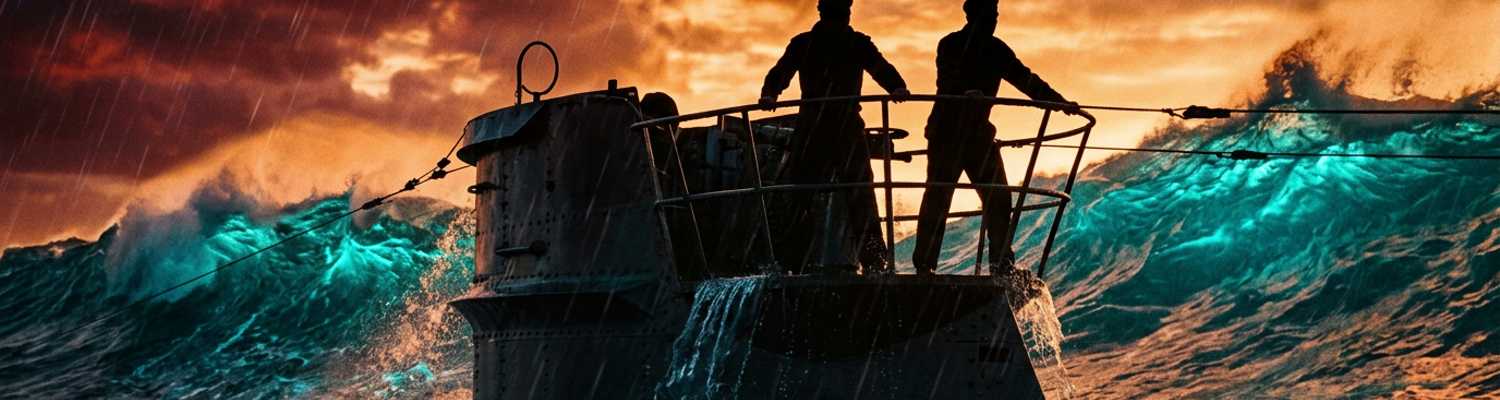
Lieutenant Commander Henry G. Munson gripped the shaking brass rail of the plotting table as USS Rasher plunged through mountainous swells in the Luzon Strait. The Gato-class fleet submarine tracked Imperial Japanese Convoy Hi-71 through the gale in mid-August 1944, struggling against an operational plan that was rapidly falling apart as giant waves washed over the conning tower shears. Munson wiped stinging salt water from his face while his plotting team fought to maintain their footing on the greasy deck plates. Dense humidity and diesel fumes hung heavy in the control room, sickening sailors who had stood at general quarters for hours without relief. Ballast controls shuddered under the immense hydraulic pressure of the surf, forcing the captain to keep the boat surfaced where the storm battered the crew but offered their only hope of holding the pursuit. Heavy seas repeatedly slammed the hull sideways, throwing plotters against steel bulkheads as they struggled to mark the convoy course on wet paper.
Paper charts tore under shaking fingers as the tracking crew plotted the full scale of the approaching enemy armada. Intelligence reports and radar contacts confirmed that Convoy Hi-71 was a high-priority twenty-ship reinforcement armada escorted by the escort aircraft carrier Taiyo, multiple destroyers, and Kaibokan coastal defense vessels bound for the Philippines. This massive reinforcement force carried thousands of Japanese soldiers, aircraft parts, and fuel supplies essential for the defense of the southern islands. Heavy surface escorts formed an aggressive defensive ring around the merchant transports, probing the darkness with sonar and looking for any sign of an American attack. Rasher rolled forty degrees from side to side in the boiling wake of the convoy, threatening to expose its low silhouette to enemy watchmen whenever lightning split the cloud cover. Escort ships zigzagged through the outer squalls only miles away, their churning propellers sending rhythmic clatter through the Rasher hull plates.
Hull plates vibrated continuously while the submarine fought to hold its pursuit angle through blinding rain squalls and zero-visibility typhoon conditions. The weather completely blinded the bridge lookouts, forcing Rasher to maintain contact across multiple shifts using SJ surface-search radar. Technicians pressed their foreheads against the rubber viewing hoods of the radar unit, tracking faint green blips that vanished and reappeared among the sea clutter. Salt water leaked through the upper hatch seals and dripped onto the warm electronics, forcing the electrical crew to dry sensitive wiring with rags while the radar beam swept the waves. Munson knew that submerging would offer the exhausted men a smooth ride, but diving would sever radar contact and let the Japanese transports slip away into the open waters of the South China Sea. Radar technicians rubbed their burning eyes and continually adjusted the sensitivity dials to isolate the carrier blip from the storm noise.
Storm noise and prolonged tracking pushed the crew to the edge of physical collapse as watchstanders fought through debilitating sensory overload. Men suffered from severe nausea and muscular cramps after more than twenty hours of fighting the pitching deck, causing their reaction times to slow during critical course adjustments. Watch officers drank cold, bitter coffee and rotated between stations every thirty minutes to prevent catastrophic plotting errors. The unrelenting fear of being run down by a Japanese destroyer in the blinding rain heightened the psychological strain inside the narrow compartments. Munson checked the radar range one final time, verified the intercept angle on the carrier Taiyo, and ordered the forward torpedo room to flood the outer tube doors for a surface attack.
Nocturnal Surface Attacks in Heavy Typhoon Seas
Seawater rushed into the forward torpedo tubes as Rasher plunged ahead through mountainous typhoon seas on the night of August 18, 1944. Machinists down in the engine spaces forced all four General Motors diesel engines to their maximum revolutions, driving the long steel hull directly through forty-foot swells that threatened to swamp the vessel. Mountains of black water repeatedly crashed over the conning tower shears, completely submerging the bridge watch and forcing water into the air induction piping before hydraulic operators could seal the valves. Bridge lookouts lashed themselves to the superstructure piping with heavy safety lines, knowing that a single slip in the surging wash would mean immediate death in the pitch-black ocean. The shuddering hull groaned under the combined strain of maximum engine output and crushing wave impacts, rattling delicate gyrocompasses and throwing loose equipment across the deck plates. Salt water poured past the bridge hatch seals into the conning tower, while backdrafts from the laboring diesels pushed hot exhaust fumes through the interior ventilation ducts.
Exhaust fumes and trapped diesel vapors sickened the interior watchstanders while severe ship roll, violent waves, and blinding rain caused physical battering, profound motion sickness, and extreme physical fatigue among bridge lookouts and conning tower personnel. Steel bulkheads and heavy brass instrument casings repeatedly struck the crew as the hull rolled through arcs greater than forty degrees, bruising ribs, spraining wrists, and tearing skin. Lookouts gripped the bridge spray shields until their fingers cramped into rigid claws, their eyes raw and swollen from hours of fighting driving rain and whipping saltwater spray. Profound motion sickness ravaged the watch section after hours of violent tossing, forcing officers and enlisted men to vomit into buckets while struggling to keep their footing on greasy, violently tilted deck gratings. Sensory overload and physical exhaustion degraded the reaction time of the fire control party, creating severe psychological strain as plotters fought off vertigo to calculate accurate target angles. These men had reached their absolute breaking point under the relentless pounding, yet they continued to plot bearings because any gap in tracking would allow the armada to escape into the squalls.
Plotters tracked the enemy bearings on the wet charts as Rasher slipped past the outer Japanese perimeter and drove into the center lanes of the enemy formation. Lieutenant Commander Munson leveled the boat on a steady attack heading, aligned the bow tubes with the broad silhouette of the enemy carrier, and ordered the firing sequence to commence. Rasher fired an initial spread of torpedoes into the convoy formation, expelling the Mark 23 weapons into the turbulent whitecaps toward the flagship. The torpedoes streaked through the screen and struck the escort aircraft carrier Taiyo on its starboard quarter, rupturing internal fuel bunkers and destroying the ship steering gear. This massive impact instantly triggered catastrophic aviation fuel explosions in the enclosed hangar spaces below. Enormous fireballs burst through the carrier flight deck and illuminated the surrounding ocean, throwing burning gasoline across the water while the surviving Japanese escorts broke formation and initiated an aggressive search for the American submarine.
Surface Reloads and Japanese Fleet Destruction
Depth charges from the hunting Japanese escorts exploded across the dark water as Rasher maintained its surface assault following the carrier detonation, rapidly maneuvering to fire torpedo spreads into adjacent vessels. Lieutenant Commander Munson refused to dive into the relative safety of deep water, choosing instead to exploit the blinding rain squalls and the burning carrier wreckage as visual cover while tracking the scattered convoy on radar. Conning tower lookouts fought through stinging salt spray and hot diesel exhaust to identify the silhouettes of two massive targets looming through the outer rim of the storm. Fire control technicians spun their mechanical computer dials with raw, bleeding hands, feeding fresh ranges and bearing angles to the bridge while rushing salt water soaked the paper plotting tables below. Munson swung the submarine across the churning wakes of the scattering escorts, brought the remaining loaded tubes to bear on the overlapping enemy shadows, and ordered the firing sequence to commence. Compressed air blasted the final readied torpedoes from their outer tube doors with sharp metallic thuds, driving the high-explosive weapons through the turbulent whitecaps toward the center of the Japanese merchant column.
Torpedo hits slammed into the enemy formation moments later, sinking the giant transport Teia Maru with thousands of Japanese troops aboard and sinking the fleet tanker Teiyo Maru. Secondary explosions shattered Teia Maru as rupturing engine boilers and detonating ammunition stores tore the transport apart, spilling military hardware, supply crates, and hundreds of trapped soldiers into the boiling ocean before the vessel slipped beneath the surface. Thick crude oil from the ruptured fuel bunkers of Teiyo Maru poured across the surrounding swells and ignited, creating an expanding sheet of surface fire that illuminated the American submarine in the darkness. Japanese escorts swung their searchlights toward the burning tanker, firing heavy deck guns into the rain and dropping random patterns of depth charges that sent violent hydraulic shockwaves hammering against the welded steel plates of Rasher. Exhausted bridge watchstanders ducked behind thin steel splinter shields as metal fragments whistled overhead, knowing that every forward and aft torpedo tube on the boat was now completely empty.
Torpedomen in the forward and aft compartments struggled through exhausting manual reloads in suffocating, rolling torpedo rooms while operating under continuous combat alert. Sweat streamed from half-naked crewmen who had worked for more than twenty-four hours without food or sleep, their trembling bodies pushed to the psychological breaking point by crushing humidity and trapped diesel fumes. Handlers hauled on greasy manual chain hoists to wrestle three-thousand-pound replacement torpedoes from the storage racks, slipping on vomit and bilge water as the hull pitched through violent forty-degree rolls. Straining sailors fought off overwhelming sensory overload and rising panic when nearby depth charge detonations violently rattled the compartment, threatening to snap the hoisting slings and crush the men beneath loose steel cylinders. Torpedo mates wept and cursed from sheer physical exhaustion as they forced the stubborn bronze loading skids into alignment and cranked hand winches to guide the weapons into the greased tube barrels. Loaders slammed the heavy bronze tube doors shut and dogged down the locking rings by hand, completing the reload under fire while Munson steered the submarine away from the converging escorts.
Submerged Counterattacks and Severe Hull Pressurization
Kaibokan escort vessels converged on Rasher after the torpedo detonations, forcing an emergency dive into sustained depth-charge counterattacks. Lieutenant Commander Munson ordered the submarine down through the turbulent sea, shouting commands to clear the bridge before the conning tower hatch clanged shut against its rubber gasket. Seawater rushed into the negative ballast tanks, pulling the bow down into the deep water of the Luzon Strait while the crew braced against bulkheads and machinery frames. Japanese warships crossed directly over the white foam of the dive slick, dropping deliberate patterns of explosive canisters along the submarine track. Hydrophone operators pressed their headsets against their ears, reporting the high-speed beat of enemy propellers closing in from both flanks. Exploding depth charges bracketed the descending hull within minutes, sending sharp metallic shocks through the steel plates as the enemy boxed the boat in from above.
Rasher shuddered violently as concussive shockwaves from close depth-charge detonations shattered interior fittings, ruptured pipe joints, and violently threw sailors against steel bulkheads. High-pressure sea lines cracked under the heavy concussions, spraying brine across electrical panels in the maneuvering spaces while engineers struggled to wrap emergency clamps around the leaking pipes. Off-duty sailors thrown from their bunks struck locker frames and deck plates, suffering fractured ribs, severe bruises, and bleeding head wounds in the darkened compartments. Torpedomen clung to overhead piping while underwater blasts lifted the entire hull upward and dropped it back into the displacement trench. Munson ordered the boat rigged for silent running, requiring every man to remove his leather shoes and handle metal tools with cloth wraps. Auxiliary blowers and cooling equipment shut down completely to eliminate mechanical noise, sealing the stagnant atmosphere inside the compartments.
Air in the sealed compartments suffered dramatic atmospheric compression from emergency dives, high-pressure air venting, and silent running, spiking internal hull temperatures above 100 degrees Fahrenheit in saturated humidity. Crewmen stripped off their shirts to work in soaking underwear, their skin covered in prickly heat while sweat poured into their eyes and stung their open cuts. Torpedo rooms and machinery spaces turned into stifling compartments where moisture condensed on cold hull frames and dripped continuously onto hot machinery. Breathing became difficult as oxygen levels fell and carbon dioxide settled along the deck gratings, sickening watchstanders with severe headaches, dizziness, and nausea. Crew members endured hours of sensory strain, listening to the creaking of overstressed hull rivets and the steady pinging of Japanese sonar beams probing the water.
Sailors reached their psychological breaking point as this relentless depth-charging continued for hours without pause. Veteran petty officers who had endured earlier war patrols began trembling uncontrollably, their nerves worn thin by alternating periods of dead silence and sudden violent explosions. Men sat on the deck plates with their jaws slack, fighting rising panic while expecting the pressure hull to cave inward at any second. Munson kept Rasher creeping forward at two knots at deep submergence, altering course toward deeper water while tracking the fading sonar echoes of the surface escorts. Planesmen turned their control wheels with slow movements to avoid motor whines, holding the boat steady at trim depth despite the physical exhaustion pulling at their arms. Watchstanders monitored the silent control board in stillness, waiting for the hunting Kaibokan to exhaust their depth-charge racks and break off the pursuit.
Pharmacist Mate Triage and Combat Exhaustion
Depth-charge concussions continued to hammer the submerged hull, forcing the crew mess into service as an emergency battle dressing station. The sole pharmacist mate aboard Rasher treated crew members suffering from blast concussions, lacerations, severe burns, and acute inner-ear trauma. Bleeding men collapsed onto the stainless-steel mess tables as nearby explosions ruptured steam piping, spraying scalding vapor that seared exposed skin across arms and torsos. Violent pressure pulses from close depth-charge detonations tore eardrums and left men disoriented, with blood trickling from their ears and loud ringing destroying their balance. Working beneath the red glow of emergency battle lanterns, the corpsman cleaned jagged scalp lacerations, applied burn ointments, and bound fractured limbs while bracing his knees against the swaying deck.
Carbon dioxide and depleted oxygen levels severely degraded the cognitive faculties and emotional composure of the crew while depth charges pounded the submarine hull, with toxic gases accumulating rapidly along the deck plates. Internal ventilation remained locked down to eliminate the hum of blower motors that could betray the boat location to hunting Kaibokan sonar gear. Crew members struggled through suffocating air, their temples throbbing with vicious headaches as each shallow breath failed to clear their lungs. Experienced technicians fumbled with routine valve alignments, staring blankly at pressure dials because their depleted brains could no longer process simple mathematical readouts. Irritability and sudden weeping swept through the compartments, breaking down the emotional discipline of veteran sailors who could only sit in the foul air and absorb the hydraulic violence rattling the steel plates.
Watchstanders stationed alone in pitch-black compartments endured hours of mandatory silent running that induced hyperventilation, catatonic reactions, and debilitating psychological collapse. Crewmen assigned to isolated machinery spaces sat in total blackness, ordered not to move or speak while the submarine drifted blindly in the deep water. Absolute darkness and prolonged confinement stripped away the sensory orientation of the men, leaving their minds fixated entirely on the groaning steel frames and the deadly explosions detonating outside. Young sailors locked in these dark pockets began hyperventilating in sudden rushes of terror, gasping for nonexistent air until their lungs seized in painful spasms. Several watchstanders slipped into catatonic states, freezing rigidly over their control stations with unblinking eyes, completely unresponsive to physical touch or verbal commands.
Lieutenant Commander Munson ordered senior petty officers to crawl through the unlit compartments to inspect every remote station and physically extract incapacitated crewmen. Petty officers used strips of cloth to gag panic-stricken sailors who were sobbing loudly, preventing their cries from reaching sensitive enemy listening arrays. Relief watchstanders led trembling men into the forward battery spaces, laying them flat on cork insulation and forcing them to drink salt tablets dissolved in stagnant water. Machinists slapped the faces of catatonic mates, wedging their limp arms around steering levers and air banks to keep essential propulsion systems functional under manual control. Munson kept the submarine creeping south at two knots, holding the vessel at deep trim while the battered crew fought to stay conscious through the final depth-charge barrages.
Thermal Layer Evasion and Patrol Aftermath
Bathythermograph readings showed a rapid drop in water temperature below three hundred feet, signaling a sharp density shift that offered immediate tactical concealment. Commander Munson navigated beneath protective oceanic thermal gradient layers to evade sonar detection and slip clear of the escort screen. Cold, heavy layers of deep ocean water bent the acoustic sound pulses of the hunting Kaibokan upward toward the surface, deflecting the enemy pinging away from the steel hull. Planesmen wrestled the manual control wheels with blistered hands to balance the boat inside this dense water mass, preventing the vessel from rising into the warmer search zone above. Chief petty officers monitored depth gauges and manifold valves in total darkness, checking every packing gland for leaks as the external water pressure mounted against the hull frames while explosions from Japanese depth charges steadily grew fainter across the hydrophones. Munson ordered the ballast tanks blown with low-pressure air after several hours of silent running, bringing the submarine to periscope depth under heavy cloud cover to confirm that the surface was clear of pursuing warships.
Lookouts reported clear horizons in all quadrants, allowing the exhausted crew to assess the physical damage and remaining ammunition inventory of the submarine. Torpedo racks stood completely bare in both rooms after Rasher expended its entire torpedo allowance to sink over fifty thousand tons of enemy shipping during the engagement, marking one of the most successful submarine patrols of World War II. Plotting officers tabulated the verified attack logs on grease-stained charts, confirming the destruction of the escort aircraft carrier Taiyo, the giant troop transport Teia Maru, and the fleet tanker Teiyo Maru amidst the stormy seas. Straining torpedomen secured the empty bronze handling skids and began scrubbing thick layers of grease, sweat, and vomit from the compartment deck plates. Machinists patched cracked salt-water lines, rewired shorted electrical panels in the maneuvering spaces, and vented trapped battery gases from the interior bilges. Engineers restarted all four General Motors diesel engines and locked the shafts into cruising gear, driving the submarine eastward across thousands of miles of open ocean toward Allied territory.
Mooring lines secured Rasher alongside the supply wharves at Midway, where medical officers boarded the silent boat to evaluate the physical condition of the crew. Physicians documented sailors who had lost twenty to thirty pounds during the patrol, their bodies hollowed out by continuous sweating, lack of food, and carbon dioxide poisoning in the pressurized compartments. Veteran petty officers suffered from uncontrollable hand tremors, speech hesitation, and sudden panic reactions whenever harbor cranes dropped metal cargo onto the concrete piers. Watchstanders walked with stiff, uncoordinated gaits after weeks of confinement in foul air, shielding their unaccustomed eyes from the harsh tropical sunlight. Corpsmen carried the most severely incapacitated sailors directly to waiting ambulances on canvas stretchers, while relief crews stepped aboard to begin long-term structural repairs on the battered hull.