
The Monsoon as an Opponent
A close review of operational logs from American units on Mindanao in 1901, specifically elements of the 27th Infantry (Record Group 94, NARA), reveals a force physically broken by the island itself. Sleep was stolen in short, fitful bursts in the oppressive humidity. Hunger became a constant, with supply lines stretched thin and hardtack rations turning to moldy pulp. The simple act of marching was a trial, each step a victory against the sucking mud and cloying vegetation. They were ghosts in khaki, their energy expended not against a human enemy, but against the very ground they sought to conquer.
The northeast monsoon transformed the landscape into an active weapon. Archival evidence shows that jungle trails, many just single-file footpaths, became impassable channels of knee-deep mud. These viscous quagmires exhausted men and pack animals, slowing columns to a crawl of less than a mile an hour. Mules, the logistical spine of these expeditions, would slip, break legs, or become so mired they had to be shot. River crossings presented an even greater obstacle. Waterways like the Rio Grande de Mindanao swelled into violent, debris-choked torrents. Makeshift bamboo bridges, constructed with great effort, were frequently destroyed overnight by flash floods. A patrol from the 27th Infantry operating near Lake Lanao found itself repeatedly isolated, its movements dictated not by tactical orders but by the unpredictable rise and fall of the water. This environmental barrier severed communication, halted the flow of ammunition and medical supplies, and left units vulnerable.
This saturated environment was a perfect incubator for disease. Stagnant pools of rainwater cupped in leaves became breeding grounds for the Anopheles mosquito, the vector for malaria. Military medical records from the period are unambiguous. For every American soldier who fell in combat, many more were incapacitated by sickness. Malaria and dysentery were the two great killers. The former announced itself with shaking chills and a debilitating fever that left a soldier completely combat-ineffective. The latter, caused by contaminated water sources, led to violent cramps and dehydration. While quinine was available as a prophylactic, its supply was inconsistent and its side effects, including tinnitus and nausea, were severe. Hospital returns show that entire companies could be rendered inert, with effective troop strength sometimes falling below fifty percent due to disease alone.
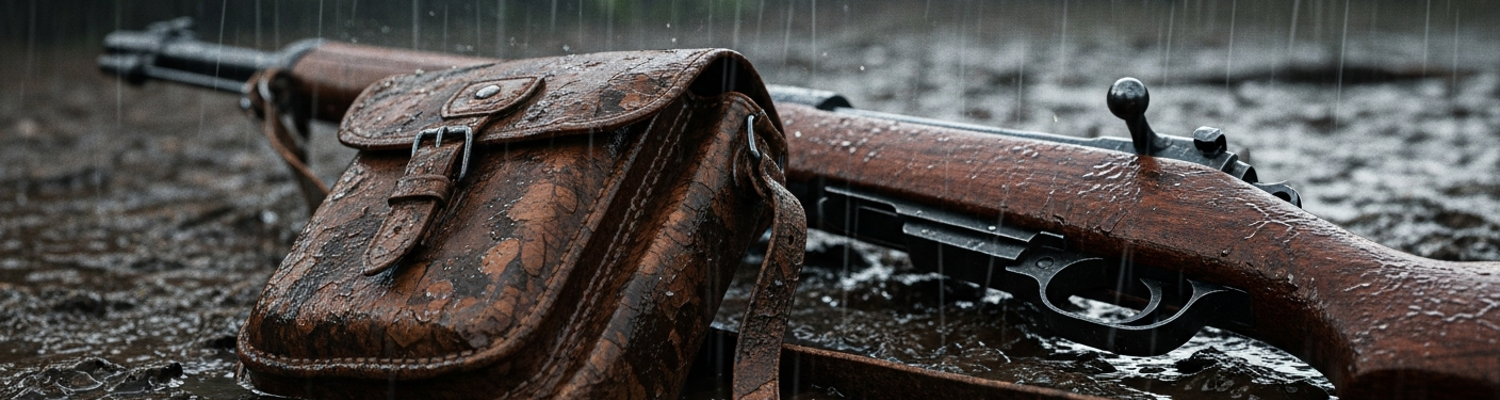
The constant dampness and filth systematically destroyed the tools of war. The standard-issue khaki cotton and wool uniforms were wholly unsuited for the tropics. They never fully dried, leading to a plague of skin ailments and other debilitating fungal infections. Leather equipment, boots, belts, and ammunition pouches, fared even worse, becoming breeding grounds for mold before stretching and rotting away. Soldiers on patrol often found their boots literally disintegrating. The primary service rifle, the .30-40 Krag-Jørgensen, was a mechanical victim of the environment. The bolt-action mechanism, if not obsessively cleaned, would quickly rust, and the unique side-loading magazine gate was susceptible to being jammed by mud and grit. Ammunition stored in damp leather bandoliers suffered from failed primers. Even the more complex Colt-Browning M1895 machine guns were crippled when their fabric ammunition belts swelled with moisture, causing catastrophic jams.
A Failure to Communicate
Operational synchronization in the waterlogged expanse of Mindanao was a study in systemic failure. Command and control hinged on technologies wholly inadequate for the environment. The U.S. Army Signal Corps found its standard equipment and procedures rendered nearly useless. The primary methods of tactical communication were visual and auditory signals never intended for such punishing terrain. On the open plains, a bugler could relay orders over long distances. A signalman with wig-wag flags could coordinate separated columns.
In Mindanao, this was impossible.
The triple-canopy jungle, saturated with monsoon rain, absorbed sound with startling efficiency. Archival accounts show that a bugle call, such as "Charge" or "Cease Firing," could become an indecipherable echo just a few hundred yards away. The dense foliage and mist-shrouded hills offered no clear lines of sight, making flag signals entirely ineffective between units on the march. This forced an almost complete reliance on human runners. These men, often drawn from local auxiliaries or exhausted infantrymen, carried written dispatches through miles of sucking mud, across swollen rivers, and under the constant threat of ambush. A message that would take minutes to transmit by telegraph could take a full day to arrive, by which time the tactical situation it described was dangerously obsolete.
The more advanced technological solutions of the era fared no better. A close examination of Signal Corps operational logs reveals a consistent pattern of environmental attrition against its two key long-range systems: the heliograph and the field telegraph. The heliograph, a device using mirrors to flash sunlight for Morse code transmission, was a proven tool in the arid American Southwest. In Mindanao, it was a useless seven-pound weight. The device required direct, bright sunlight, a rarity during the perpetual gray overcast of the monsoon. On the infrequent occasions when the sun did appear, the jungle canopy blocked its rays. The constant humidity and low-lying fog scattered any potential signal.
Field telegraphs presented a different set of problems. While telegraph wire was available, the act of laying and maintaining a line was a Herculean effort. Teams of signalmen had to hack their way through the jungle, stringing gutta-percha-insulated copper wire from tree to tree. The constant dampness degraded this primitive insulation, causing short circuits. More often, the lines were severed by falling trees, mudslides, or deliberately by Moro warriors who quickly learned that cutting the wires would isolate American patrols. Finding a break in a line that ran for miles through nearly impassable terrain was a slow and dangerous process, nullifying the telegraph's primary advantage of speed.
These systemic communication failures were not mere inconveniences. They were direct contributors to operational blunders. During the 1902 campaign around Lake Lanao, Colonel Frank Baldwin's expedition against the Moro cotta at Bayan was plagued by disjointed communication. Reconnaissance parties operated in a void, unable to report their findings in a timely manner. As the main body of troops advanced on the forts of Pandapatan and Binadayan, they did so with delayed and often garbled intelligence about enemy strength and fortifications. The inability to reliably communicate meant that columns could not support each other, warnings of ambushes arrived too late, and fire support from artillery was uncoordinated.
The Fog of Fratricide
In the perpetual twilight of the Mindanao jungle, amplified by the gray sheet of the monsoon, the senses were a liability. Rain hammered on broad leaves, creating a constant, roaring static that drowned out commands and masked the sound of movement. Visibility, on a clear day, was already restricted by the triple-canopy foliage to a few dozen yards. In the frequent fog and downpours, it shrank to the length of a rifle barrel. A close review of operational logs from the Lake Lanao campaigns shows that patrols moved in a state of near-total sensory deprivation. American soldiers, already exhausted and sick, saw phantoms in the shifting vegetation. The sound of a branch snapping could be a Moro warrior or a falling piece of wood. The flash of movement could be an enemy ambush or a friendly scout circling back. In this environment, positive identification was a luxury combat could not afford. The brain, starved of reliable information, filled in the gaps with fear.
Archival evidence surrounding the Battle of Bayan on May 2, 1902, provides a clear picture of the conditions that fostered fratricide. Colonel Frank Baldwin’s force, composed of elements of the 27th Infantry and the 25th Field Artillery Battery, advanced on the Moro cottas of Binadayan and Pandapatan. After taking the first fort, the main assault began on Pandapatan around 4 PM. As American troops navigated trenches and concealed pits, the weather turned. A combination of creeping darkness, thick fog, and a torrential downpour enveloped the battlefield. The assault on the cotta’s walls descended into close-quarters fighting before the American attack was beaten back, forcing a chaotic retreat. During this withdrawal, units became disorganized and separated in the gloom, attempting to recover their dead and wounded while still under fire. In the near-zero visibility, with rain and battle noise making verbal communication impossible, panicked soldiers fired at any shape that emerged from the fog. It was during this desperate consolidation at the captured Cotta Binadayan that the artillery battery was tasked with retrieving the fallen, including Lieutenant Thomas Vicars, from the field of fire, operating in darkness where friend and foe were indistinguishable.
The very existence of allied Filipino forces created another vector for misidentification. The Philippine Scouts, organized in 1901, were an integral part of the American campaign. These Filipino soldiers, serving in the U.S. Army under American officers, were frequently used for their tracking skills and familiarity with the terrain. However, they were physically and culturally distinct from the American infantryman. Their methods of moving through the jungle, quickly and quietly, could easily be mistaken for insurgent tactics. For a tense American sentry, worn down by disease and the constant threat of ambush, the sudden appearance of a group of armed Filipinos moving swiftly through the undergrowth presented an immediate dilemma. The critical moments needed to verify their identity as allied Scouts were often non-existent in a close-range encounter, leading to tragic instances where fire was exchanged before affiliation could be established.
Jungle combat in Mindanao was defined by sudden, violent encounters at point-blank range. Ambushes were the norm, and firefights often took place across a space of less than 50 feet. The Krag-Jørgensen rifle, while effective, had a magazine that was slow to reload compared to the Mausers used by some insurgents, placing pressure on soldiers to make their first shots count. In the dense vegetation, the smokeless powder of the .30-40 Krag cartridge did not always reveal a shooter's position, but the sound of the report would echo and distort, making it impossible to pinpoint the direction or number of friendly positions. A squad, pinned down and taking fire, would return it toward any perceived threat, a category that could easily include another American unit maneuvering on its flank.
A Disconnected Command
The American command structure in Mindanao was a fractured and incoherent system. A close review of operational records reveals a structure crippled by a lack of unified authority, where parallel and often competing chains of command created paralysis. The Department of Mindanao-Jolo, established on August 31, 1901, and led by Brigadier General George W. Davis, was intended to centralize control. In practice, it was another layer of bureaucracy. Individual regimental commanders, particularly those with strong personalities and distinguished records from the Indian Wars, often operated with an autonomy that undermined any attempt at coordinated strategy. This was most evident in the actions of Colonel Frank Baldwin of the 27th Infantry. A two-time Medal of Honor recipient, Baldwin was a man accustomed to independent command and was known to be impetuous. This created a direct clash with General Davis's more cautious, diplomatic approach, which favored negotiation with the Moro datus, a policy championed by Captain John J. Pershing.
This bureaucratic rivalry was not an abstract administrative problem. It directly led to disastrous tactical decisions. The 1902 expedition to Lake Lanao is the primary case study. Historical records show that General Davis and Major General Adna Chaffee, the overall commander in the Philippines, were angered by what they saw as Baldwin’s insubordination. Baldwin, newly arrived with his 27th Infantry, was tasked with road improvement but viewed his mission through the lens of punitive action. He launched a large-scale expedition against the Moro cottas at Bayan in May 1902, taking his entire 1,025-man command without the full sanction of his superiors. This action directly undercut the ongoing diplomatic efforts of Captain Pershing, who had been making progress in building relationships with influential datus at the north end of the lake. Chaffee later came to believe that only Pershing’s last-minute success in convincing those northern datus to remain neutral prevented Baldwin’s expedition from being annihilated. Information was not shared, but hoarded.
Strategic goals were not unified, but personalized.
The ego of individual commanders proved to be a significant force multiplier for the enemy. Colonel Baldwin’s decision to assault the fort at Bayan was a direct result of his personal drive and experience, honed in the plains of the American West. He was an Indian fighter, and he saw the Moros as another tribe to be subdued through force. His "man on the spot" mentality clashed with the larger strategic picture favored by Chaffee and Davis. The result was a bloody battle that, while a tactical victory in terms of casualties inflicted, was a strategic failure. It inflamed Moro resistance across Mindanao. In the aftermath, Chaffee made an extraordinary decision. Recognizing the damage done, he promoted Baldwin to brigadier general but ensured he was transferred out of Mindanao. He then leap-frogged the entire chain of command, placing Captain Pershing, a junior officer, in charge of the Lanao mission, a stark rebuke to both Baldwin and the rigid seniority-based system. This arrangement, where Pershing reported directly to Chaffee, violated every principle of the Old Army but was deemed necessary to fix the chaos sown by disconnected command.
The Agony of Evacuation
A wound was a probable death sentence.
A close review of operational logs from the 1902 Mindanao campaigns reveals a casualty evacuation system broken at every level by the environment. For a soldier of the 27th Infantry wounded in the assault on a Moro cotta near Lake Lanao, the journey from the battlefield was an odyssey of agony. There was no dedicated corps of stretcher-bearers. The initial transport from the line of fire fell to exhausted, able-bodied comrades who lacked proper equipment. The standard-issue Model 1895 litter was a rare sight in forward positions. Men were carried on improvised stretchers made from rifles and ponchos, or simply dragged. This initial movement was torturous. Monsoon-swollen streams had to be navigated by flimsy, makeshift rafts. Unbridged ravines forced carries down slick, muddy slopes and back up the other side. Trails were viscous channels of mud that sucked at the boots of the bearers, turning a half-mile journey into a multi-hour ordeal.
The problem was compounded by a severe lack of medical capacity where it was needed most. The U.S. Army Hospital Corps, officially established in 1887, was not yet the professional force it would become. A company on patrol might have only one or two Hospital Corps privates attached. These men were equipped with a basic pouch containing little more than bandages, a few antiseptic solutions like carbolic acid, and perhaps morphine tablets for pain. They had no blood plasma, no antibiotics, and no surgical instruments beyond a pocket kit. Their role was limited to staunching bleeding and applying a dressing. This was hopelessly insufficient for the types of severe trauma inflicted by rifle fire or the jagged projectiles from Moro lantakas, bronze swivel cannons. Chaplain George D. Rice of the 27th Infantry, who ministered to the wounded during the Battle of Bayan, documented the grim scenes of men suffering with rudimentary care while awaiting a long and uncertain evacuation.
For the forty severely wounded Americans at the Battle of Bayan, the fight for survival had only just begun when the shooting stopped. The initial assault on the Moro fortress of Pandapatan was repulsed, and the withdrawal in the face of a torrential downpour was chaotic. Recovering the wounded from the field took hours in the darkness. From there, it was a grueling, multi-stage journey back to a place of definitive care. The first stop was a regimental aid station, often little more than a tent miles behind the front. Only after this initial collection point could the journey to a field hospital begin. The hospital established in 1903 at Camp Marahui (later Camp Keithley) by Captain John J. Pershing’s command was a strategic asset, but for a man wounded at Bayan, it was a world away. The critical delay between the time of injury and the arrival at a facility with surgeons and sterile equipment could stretch from hours into days. A gunshot wound to the abdomen or chest was almost invariably fatal. A fracture contaminated by the jungle floor led directly to systemic infection and gangrene.
The Bureaucracy of Suffering
The deadliest enemy was the process. For a Hospital Corpsman serving with the 27th Infantry in the jungles of Mindanao, the fight to save a wounded soldier began long before any battle, waged on paper and lost in transit. A close review of Army administrative procedure from the period reveals a medical supply system fundamentally broken by its own bureaucracy. The primary instrument of this failure was the requisition form, likely a Form 18, a multi-part document that initiated a torturous journey for even the most basic supplies. A request for quinine or carbolic acid, originating from a forward patrol, had to be filled out in painstaking triplicate. It then required the signature of a company officer, the regimental surgeon, and finally a quartermaster officer who determined if logistical assets were even available. This paper then had to physically travel, often by a single runner on foot, from a forward camp near Lake Lanao to a depot like the one at Malabang. There it would be processed, approved, and filed. Only then were the supplies allocated, if they were in stock at all. The entire cycle could take weeks.
This bureaucratic friction was a weapon pointed at their own men.
A sharp line of conflict existed between the priorities of medical officers and those of the line commanders they served. An examination of operational records from Colonel Frank Baldwin’s 1902 Lanao expedition shows a clear and consistent pattern: combat logistics took precedence over medical readiness. A regimental surgeon’s request for dedicated mules to transport medical chests and extra litters was almost always denied in favor of a company captain’s need for mules to carry ammunition, rations, and machine gun components. Baldwin, a commander known for his aggressive, action-oriented approach, viewed his 1,025-man force and its associated pack animals as instruments for closing with and destroying the enemy. Medical support was a secondary concern. This command-level decision forced Hospital Corpsmen to operate with extreme limitations, often carrying a single pouch with rudimentary supplies. It created a situation where the capacity to inflict casualties far outstripped the ability to treat them, a direct result of institutional priorities.
The system was designed for garrison duty, not for a mass casualty event in a monsoon. When Colonel Baldwin’s assault on the Moro cotta of Pandapatan on May 2, 1902, was repulsed, the bureaucratic deficiencies became brutally apparent. In the chaotic withdrawal during a torrential downpour, forty American soldiers were left severely wounded. The field medical teams were overwhelmed. Their pre-battle requisitions for extra bandages and morphine, slowed by the administrative process, had not arrived. The mules that could have carried additional supplies and surgical kits had instead been loaded with .30-40 Krag ammunition. An emergency request for resupply from the battlefield was functionally impossible; it would have required a runner to navigate miles of mud and jungle simply to start a paperwork process that took days under the best of circumstances. The forty wounded men were treated with what little was on hand, their survival dependent not on the full resources of the United States Army, but on the contents of a few leather pouches and the ingenuity of a handful of corpsmen.