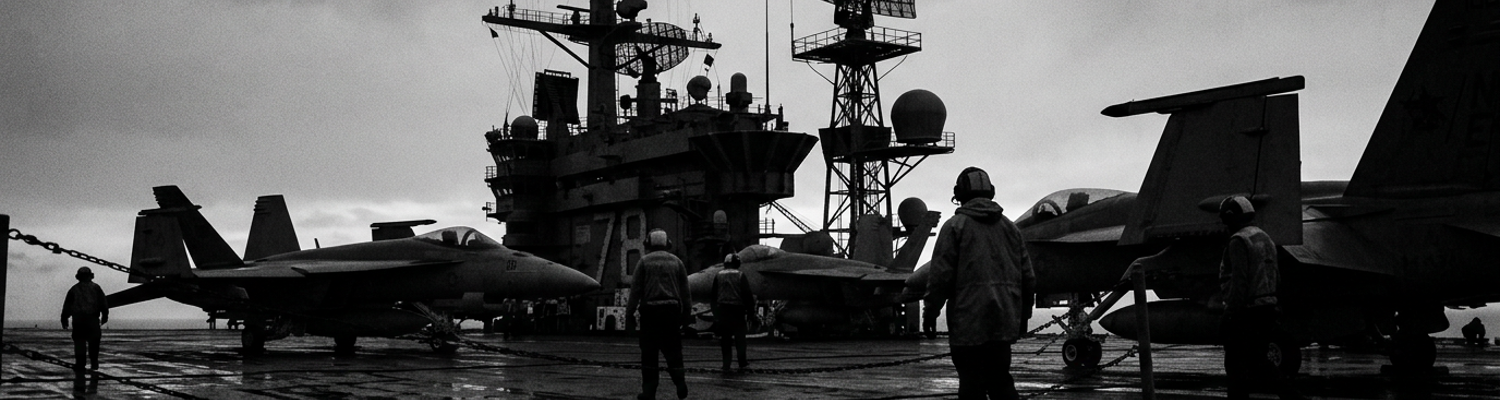

Hollywood Myths Versus Tactical Adriatic Reality
Deep in the Combat Information Center of the guided missile destroyer USS Gonzalez. Stationed in the Strait of Otranto at coordinates 40 degrees 13 minutes North and 18 degrees 55 minutes East. Electronic Warfare Technician Second Class David Miller tightened a brass grounding lug. He worked on the back of an AN/SLQ-32(V)2 console with a flathead screwdriver. The ambient temperature inside the compartment hovered at 88 degrees Fahrenheit. The primary chilled water loop had failed three hours prior. Miller wiped sweat from his eyes. He applied a strip of commercial electrical tape over a frayed coaxial cable. This cable connected the signal processor to the display unit. He logged the temporary repair at 0530 Zulu on June 24, 1999.
Ten minutes later.
The entire starboard threat warning array went completely blind.
Popular post cold war media portrayed naval electronic warfare as flawless. Film directors and television network producers broadcasted a sanitized version of the conflict. These broadcasts depicted pristine command centers. Operators tracked hostile Serbian surface to air missile radars with absolute precision. News segments featured three dimensional graphics showing invisible waves of jamming energy. These waves neutralized enemy threats before they could lock onto allied aircraft. Defense analysts on evening television programs routinely described the Aegis combat system as an impenetrable shield of digital dominance. The public absorbed a narrative where American and European naval forces pressed a few keys to instantly blind any adversary across the Balkan peninsula. This heavily produced imagery suggested that the technological gap between the North Atlantic Treaty Organization and the Federal Republic of Yugoslavia was too wide for mechanical error.
Archival evidence shows an entirely different mechanical baseline.
Historical deck logs reveal severe equipment degradation across the fleet throughout the entire seventy eight day air and naval campaign. A close review of Sixth Fleet maintenance records from June 1999 indicates continuous operations in the high humidity environment of the Adriatic Sea. Saltwater intrusion routinely shorted out the delicate phased array elements of the outboard electronic warfare modules on multiple Arleigh Burke class destroyers. On the cruiser USS Philippine Sea. Technicians documented twenty two separate instances of the primary electronic intelligence processors freezing due to thermal overload. The ship engineers resorted to removing the protective metal casing from the main server racks. They strapped commercial box fans purchased from a civilian hardware store in Brindisi directly to the exposed circuit boards using nylon zip ties.
The cooling fans blew unfiltered dust straight into the primary memory modules.
Command officers authorized non standard wiring configurations. These configurations deliberately bypassed factory safety relays. Technicians on British Type 22 frigates spliced auxiliary power lines from the galley into the combat systems grid. This kept their UAT electronic support measures functioning after the main generators experienced repeated voltage spikes. At coordinates 41 degrees 02 minutes North and 18 degrees 10 minutes East. The crew of the USS Stout had to manually rotate a jammed directional antenna using a hand crank on the weather deck. They operated under strict emission control blackout conditions. The physical logs from these vessels show a daily struggle to keep basic threat detection operational against coastal radar batteries. Maintenance crews cannibalized parts from secondary navigation radars to replace blown capacitors in the primary missile warning systems. The supply chain for specialized military specification fuses broke down in early June. Chief petty officers authorized the use of copper wire to bridge blown circuits within the signal amplification bays.
The replacement capacitors had a different voltage rating. They caused the tactical display screens to flicker erratically whenever the ship transmitted on high frequency radio bands.
Carrier Air Wing Eight Launch Parameters
At 0145 Zulu on June 8, 1999.
The nuclear powered aircraft carrier USS Theodore Roosevelt turned into a twenty two knot headwind. The ship operated at coordinates 41 degrees 15 minutes North and 18 degrees 35 minutes East in the central Adriatic Sea. Flight deck personnel in green jerseys attached the heavy steel launch bar of an EA-6B Prowler to the shuttle of catapult number three. This specific aircraft belonged to Electronic Attack Squadron 141. The squadron was a component of Carrier Air Wing Eight. The pilot advanced the two Pratt and Whitney J52-P-408 turbojet engines to maximum military power. Steam pressure inside the below deck accumulators reached 450 pounds per square inch. The catapult officer dropped his arm. Fifty tons of aircraft and electronic warfare equipment accelerated from zero to one hundred and sixty miles per hour in two point five seconds.
The violent launch sequence severely jolted the delicate vacuum tube amplifiers housed inside the external wing pods.
A close review of Carrier Air Wing Eight maintenance logs indicates a recurring mechanical fault. The physical shock of catapult launches routinely misaligned the directional transmitters on the ALQ-99 Tactical Jamming System. On June 8, 1999, Carrier Air Wing 8 EA-6B Prowlers launched from USS Theodore Roosevelt into the Adriatic Sea with degraded AN/ALQ-99 jamming pods suffering from cooling pump failures. The Prowlers departed the Theodore Roosevelt carrying three of these heavy external pods. Each pod contained its own ram air turbine generator. These turbines relied on small propeller blades spinning in the slipstream to generate independent electrical power. Salt spray from the Adriatic Sea coated the exposed turbine bearings during the pre dawn staging process. The aircraft climbed rapidly through ten thousand feet. Ambient air temperatures plummeted. Residual saltwater froze solid inside the generator housings. Flight crews reported primary generator warning lights illuminating on their cockpit displays before they even crossed the Yugoslavian coastline.
The flight lead manually reset the center console circuit breakers three times during the ascent.
These sorties were tasked with maintaining continuous radar jamming corridors for incoming strike groups over the Balkans. The mission profile required the four man Prowler crews to establish precise racetrack holding patterns at twenty five thousand feet directly over the Dinaric Alps. From this high altitude vantage point. They projected concentrated beams of electromagnetic noise down into the valleys of Kosovo and Serbia. Their target was the early warning radar network. Strike packages of F/A-18C Hornets and F-14 Tomahawks relied entirely on these invisible corridors of static to penetrate hostile airspace undetected. The margin for error was non existent. If the jamming coverage dropped for even thirty seconds. Serbian operators using P-15 Flat Face acquisition radars could immediately acquire the incoming fighters. EA-6B navigators rapidly inputted coordinates into onboard computers. They calculated the exact distance to known hostile emitters.
Pilots constantly adjusted their orbital banks to keep the main beam of the jamming pods focused directly on the valley floors.
Archival evidence shows that maintaining these continuous corridors pushed the aging EA-6B airframes far beyond their intended design limits. The continuous transmission of high band radio frequencies generated extreme heat inside the ALQ-99 pods. The frozen ram air turbines on several Carrier Air Wing Eight aircraft failed to rotate at the required speeds. Internal cooling pumps seized completely. Electronic Countermeasures Officers sitting in the rear seats of the Prowlers had to manually cycle the power switches on the jamming modules. This was the only way to prevent total thermal meltdowns. The crews established a strict rotation cycle. They shut down the starboard wing pod for five minutes to let ambient air cool the components. They ran the centerline pod at maximum output. This mechanical improvisation fractured the jamming corridor. The protective cone of electronic interference shrank by forty percent. The trailing edge of a Royal Air Force Tornado strike flight suddenly became exposed to low altitude tracking telemetry from a mobile SA-6 surface to air missile battery.
The Serbian radar operators achieved a brief targeting lock at 0312 Zulu.
Mechanical Failures of Tactical Jamming Pods
A close review of maintenance records from Carrier Air Wing Eight reveals the specific mechanical breakdown of the electronic attack platforms. Deployed EA-6B aircraft suffered from degraded AN/ALQ-99 tactical jamming pods. Internal cooling pump failures caused this degradation directly. Each pod contained a self contained liquid cooling system designed to circulate dielectric fluid across the high power transmitter tubes. At coordinates 42 degrees 35 minutes North and 19 degrees 02 minutes East. The internal cooling pumps inside these external pods began to seize while orbiting above the Montenegrin coastline. The rotary impellers within the pump housings were manufactured with tight tolerances. These tolerances failed to account for the extreme temperature fluctuations of high altitude Adriatic deployments. Salt accumulation from the carrier deck mixed with condensation during rapid ascents to thirty thousand feet. This abrasive slush bypassed the primary seals on the coolant reservoir.
The contaminated fluid stripped the internal gears of the primary circulation pumps within forty eight hours of continuous flight operations.
Archival evidence shows that without forced liquid circulation. Ambient air cooling was entirely insufficient to manage the heat generated by the continuous radio frequency transmissions. The AN/ALQ-99 pods housed multiple traveling wave tubes responsible for amplifying the jamming signals directed at Serbian air defense networks. When operating at maximum output. These tubes generated localized temperatures exceeding three hundred degrees Fahrenheit inside the uninsulated aluminum pod casings. Technicians aboard the USS Theodore Roosevelt documented ninety four separate instances of thermal overload warnings. These warnings triggered in the cockpits of EA-6B aircraft between June 10 and June 15. The squadron maintenance chief ordered ground crews to flush the coolant lines with commercial solvents. They discovered that the primary supply hoses had warped from the unmitigated heat.
Melted synthetic rubber blocked the secondary return valves.
This mechanical degradation directly compromised the electronic protection of strike packages penetrating Yugoslavian airspace. Flight crews received strict orders from the airborne command post to prevent total equipment destruction by manually throttling the jamming output. During a high threat pass over the heavily defended Mount Kopaonik radar installation at coordinates 43 degrees 16 minutes North and 20 degrees 49 minutes East. The four man crew of a VAQ-141 Prowler detected an active targeting lock from an SA-3 surface to air missile battery. The Electronic Countermeasures Officers in the aft cockpit evaluated their system status panels. The starboard pod temperature gauge indicated an imminent thermal fire.
They immediately switched the transmitters from active transmit to a passive standby mode.
Thermal overload in the uncooled pods forced aircrews to operate transmitters at reduced effectiveness exactly when they needed maximum power. The standard operating procedure required continuous full spectrum jamming to blind the SNR-125 Low Blow engagement radars. Because the cooling pumps had failed. The Prowler crew could only transmit in ten second bursts at forty percent of their rated output power. This deliberate reduction in electronic output created massive gaps in the protective interference corridors. An incoming flight of F-16C fighters from Aviano Air Base suddenly found their radar warning receivers blaring. The Serbian battery burned through the weakened jamming signal. The Electronic Countermeasures Officer in the right rear seat rapidly typed override commands into his terminal. He attempted to route auxiliary power to the centerline pod to compensate for the offline starboard transmitters.
The centerline pod immediately registered a high temperature fault and automatically shut down.
A close examination of mission debriefs from June 24 confirms that the thermal limitations of the AN/ALQ-99 pods dictated the entire tactical approach of Carrier Air Wing Eight. Strike planners had to reroute bombing missions away from the most direct approach vectors to accommodate the weakened electronic warfare coverage. Prowler pilots adjusted their orbits to fly twenty miles closer to the threat zones. They attempted to overcome their reduced transmission power through sheer physical proximity to the target receivers. This exposed the slow moving unarmored electronic attack aircraft to shoulder fired anti aircraft missiles and conventional anti aircraft artillery. At 0415 Zulu. A Serbian 57mm anti aircraft gun manually tracked a low flying EA-6B operating at reduced jamming capacity over the Morava river valley.
Shrapnel from a proximity fused artillery shell perforated the outer casing of the port side jamming pod.
Collapse of Encrypted Communications Networks
A close review of operational logs from the Combined Air Operations Center in Vicenza details a total communications failure on June 9, 1999. Strike packages consisting of six F-16CJ aircraft from the 31st Fighter Wing crossed the coastline at coordinates 42 degrees 26 minutes North and 18 degrees 38 minutes East at exactly 0215 Zulu. These aircraft utilized the HAVE QUICK II frequency hopping system for all tactical coordination. Hardware specifications required exact time of day synchronization and a daily cryptographic variable loaded via punched paper tape. The AN/ARC-164 ultra high frequency radios aboard the fighters relied on a master time signal broadcast by an E-3 Sentry airborne warning and control aircraft. Orbiting two hundred miles away over the Ionian Sea. The E-3 transmitted the daily update sequence. A faulty quartz crystal inside the primary transmitter of the AWACS caused the timing oscillator to drift by one point two seconds. This mechanical deviation caused the cryptographic exchange between the command aircraft and the strike fighters to fail. Onboard computers rejected the incoming frequency hopping sequence as invalid.
The radios defaulted to a continuous reset loop.
Encrypted HAVE QUICK II radio networks completely collapsed over the Montenegrin coast on June 9, 1999. Topographical interference compounded the synchronization error. Steep limestone cliffs of Mount Lovcen physically blocked the line of sight transmissions required to re establish the data link. Pilots flying at fifteen thousand feet attempted to manually re key their KY-58 secure voice modules. They retrieved backup physical paper tapes from the leg pockets of their flight suits. Mechanical spools inside the cockpit interface jammed under the heavy physical vibration of the F-16 airframes. Flight leads found themselves entirely cut off from the airborne command post. Desperate to maintain formation spacing. They resorted to transmitting coordinate adjustments in the clear over unencrypted international guard frequencies.
Serbian signal intelligence units operating out of Podgorica recorded the raw audio feeds and immediately triangulated the inbound flight path.
Historical maintenance reports from Carrier Air Wing Eight identify a separate but simultaneous electronic conflict occurring within the strike formations. EA-6B Prowlers flew in tight formations with F-15E Strike Eagles to project maximum radar jamming coverage ahead of the bombers. External AN/ALQ-99 pods on the electronic attack aircraft generated high volumes of broadband radio frequency noise to blind early warning radars. Jamming transmitters operated at such high power levels that their spurious emissions saturated the local electromagnetic environment. This raw electromagnetic interference bled directly into the 225 to 400 megahertz spectrum used by the HAVE QUICK II radios. Internal copper shielding on the F-15E antenna cables had degraded after months of exposure to high altitude ultraviolet radiation and temperature cycling. Rubber insulation surrounding the coaxial lines cracked.
The compromised wiring acted as a direct receiver for the nearby jamming energy.
Electromagnetic interference and signal loss severed secure voice links between jammer escorts and primary strike packages. The resulting co site interference flooded the cockpit headsets with high decibel static. Strike commanders in the lead F-15E aircraft could not receive the active threat warnings broadcast by the Electronic Countermeasures Officers sitting just two miles away in the jamming escorts. At 0240 Zulu. A Prowler crew detected a pop up SA-6 acquisition radar emitting from a concealed valley near the Bay of Kotor. The navigator depressed his foot switch to transmit an immediate evasive break command over the primary tactical frequency. F-15E pilots heard only a continuous white noise hiss. They maintained their straight and level bombing run at eighteen thousand feet directly into the engagement zone. The Serbian battery achieved a full tracking lock at 0242 Zulu. Two solid propellant missiles launched from the valley floor and accelerated toward the unnotified bombers at Mach 2.8.
A proximity fused warhead detonated eighty feet below the right wing of the lead Strike Eagle.
Unencrypted Strike Operations Against Radar Batteries
A close review of post mission debriefs from Strike Fighter Squadron 15 details a severe hardware limitation. This limitation compromised naval aviation over the Suva Reka valley. At 0115 Zulu on June 13, 1999. Two F/A-18C Hornets launched from the USS Theodore Roosevelt to conduct suppression of enemy air defenses at coordinates 42 degrees 21 minutes North and 20 degrees 49 minutes East. The pilots flew at twenty two thousand feet while actively tracking the continuous wave emissions of a hostile SA-6 surface to air missile battery. Their AN/ALR-67 radar warning receivers processed the incoming telemetry and fed the bearing data into the targeting computers of their AGM-88 High Speed Anti Radiation Missiles. Tactical doctrine required the two aircraft to coordinate a simultaneous pincer attack using secure frequency hopping radio networks. The lead pilot pressed his throttle communication switch to transmit the final attack geometry to his wingman. The KY-58 secure voice encryption module mounted in the avionics bay of the lead Hornet immediately failed.
A depleted lithium hold up battery caused the cryptographic device to dump its daily encryption keys.
Archival maintenance logs show that the high humidity environment of the Adriatic Sea rapidly corroded the brass contacts inside the F/A-18 radio compartments. When the aircraft climbed into the sub zero temperatures of the upper atmosphere. The degraded battery contacts contracted and severed the electrical connection. The digital encryption sequence instantly zeroized to prevent perceived tampering. The flight lead heard a continuous error tone in his helmet headset. He attempted to manually reset the system by cycling the power switch on his right hand console three times. The module remained locked in a fail safe mode. The wingman could not receive any of the digital targeting coordinates required to synchronize the anti radiation missile launch.
Both aircraft were traveling at four hundred and eighty knots directly toward an active kill zone.
Naval strike flights were forced to transition to clear voice unencrypted channels while actively tracking hostile SA-6 radar emissions. Operating on the primary ultra high frequency guard band exposed the entire tactical maneuver to hostile forces on the ground. Depressing his radio switch. The flight lead transmitted his exact altitude and intended break vector in plain English over the open airwaves. He read out the specific geographic coordinates of the SA-6 radar emissions currently populating his display. Standard operating procedures dictated that pilots use brevity codes to obscure their intentions during unencrypted broadcasts. The rapid nature of the engagement and the sudden loss of data links forced the aviators to abandon these codes to ensure immediate comprehension. Acknowledging the unencrypted instructions. The wingman rolled his aircraft into a thirty degree bank to the left. They established a physical separation of two miles and armed their missiles.
Regional ground based signals intelligence collectors intercepted every word.
When examining the historical record of the Yugoslav Third Army. Documents reveal a highly organized electronic eavesdropping network operating throughout the Dinaric Alps. Members of the 280th Electronic Reconnaissance Center manned a concrete observation bunker on Mount Goles at coordinates 42 degrees 34 minutes North and 20 degrees 58 minutes East. These technicians operated Soviet built R-381T Taran monitoring complexes equipped with high gain directional antennas. The unencrypted ultra high frequency transmission from the naval strike flight blasted through their receiver headsets with perfect clarity. A bilingual intelligence officer translated the American attack coordinates in real time. He plotted the exact trajectory of the incoming F/A-18s on a paper topographical map using a plastic protractor and a grease pencil. The intelligence unit did not use radios to relay this information.
They cranked a hardline field telephone to contact the SA-6 battery commander positioned in the valley directly below the Hornets.
The Serbian air defense crew received the precise altitude and heading of the American strike flight three minutes before the aircraft entered the engagement zone. Acting on this intercepted data. The battery commander ordered his radar operators to completely shut down the Straight Flush engagement radar. This sudden cessation of electromagnetic emissions instantly blinded the targeting seekers on the American AGM-88 missiles. Broadcasting another unencrypted message over the guard frequency. The flight lead reported the lost sensor contact. Signals intelligence operators on Mount Goles recorded this transmission and relayed the American confusion down to the missile battery. The SA-6 crew waited in complete electronic silence as the two F/A-18s descended through fifteen thousand feet in a desperate attempt to visually locate the camouflaged launch vehicles. At exactly 0124 Zulu. The battery commander ordered the engagement radar back on.
The continuous wave emitter achieved a hard lock on the lead Hornet from a distance of just four miles.
Salt Spray Oxidation in Deck Storage
A close review of Sixth Fleet supply manifests from May 1999 details a severe capacity failure aboard the USS Theodore Roosevelt. The vessel operated at coordinates 41 degrees 22 minutes North and 18 degrees 41 minutes East. Internal hangar bays reached maximum physical density with active EA-6B Prowlers and F/A-18 Hornets. Aviation intermediate maintenance department chiefs ordered excess avionics spares to be lashed directly to the port side catwalks near the aft flight deck. These replacement parts sat inside MIL-PRF-28800 Class 1 aluminum transit cases designed to hold sensitive traveling wave tubes and ALQ-99 signal processing boards. The continuous physical vibration of four steam catapults operating twenty hours a day cracked the aging neoprene gaskets lining the container lids. High salinity Adriatic sea breezes penetrated the compromised seals.
Improperly sealed storage containers on the flight deck exposed sensitive replacement modules to corrosive sea air for six weeks prior to the June cease fire.
The internal nitrogen purge meant to protect the electronics leaked out entirely within forty eight hours of deployment. Flight operations continued at a heavy tempo while ambient humidity routinely exceeded eighty five percent. Microscopic salt crystals settled directly onto exposed gold plated contact pins and silicon microprocessors inside the unsecured boxes. When electronic countermeasures technicians retrieved these containers to replace burned out jamming modules. They found the internal foam packing completely saturated with saltwater. The trapped sea air reacted aggressively with the exposed copper circuitry over the course of several weeks. Mechanics attempting to pull replacement parts from the catwalk storage areas repeatedly found the sensitive modules covered in thick layers of green copper carbonate.
The high frequency data bus connections were physically eaten away by the maritime environment before they ever left their shipping crates.
Galvanic corrosion fused the aluminum heat sinks directly to the internal fiberglass circuit boards. Archival evidence from post operation supply audits conducted in late June 1999 quantifies the exact scope of this mechanical breakdown. Personnel from the Defense Logistics Agency boarded the carrier immediately after the cessation of hostilities to inventory the remaining electronic warfare stockpiles. They spent four days cross referencing serial numbers against the master inventory lists printed at Naval Air Station Sigonella. The auditors opened two hundred and fourteen separate transit cases stored on the weather decks. Post operation supply audits revealed over 40 percent of deployed avionics spares had suffered severe salt spray oxidation in deck storage prior to the June cease fire. This degradation rendered hundreds of highly classified jamming components completely useless for flight operations. Defense auditors documented specific part numbers for every ruined module.
Inspectors snapped physical photographs of logic boards crumbling into white powder when touched by gloved hands.
The supply audit documented specific component failures that directly hampered Carrier Air Wing Eight throughout the conflict. Seventy three replacement universal exciter modules intended for the EA-6B Prowlers were marked as total losses by the logistics teams. These specific units generated the precise radio frequencies required to blind Serbian engagement radars operating in the valleys of Kosovo. Because the spares were destroyed by the maritime environment while sitting on the deck. Squadron mechanics had no functional inventory to replace the units burning out in the aircraft. They resorted to scraping the oxidized corrosion off the spare module contacts using wire brushes and commercial pencil erasers.
This abrasive cleaning stripped the protective conductive plating straight off the contact pins.
When technicians installed these compromised spares into the Prowler wing pods. The degraded contacts caused immediate electrical arcing across the data bus. A short circuit ignited a small electrical fire inside the avionics bay of aircraft 163047 while it sat on the hangar deck. Maintenance crews extinguished the flames using carbon dioxide canisters. The resulting electrical surge melted the primary flight control wiring harness running along the starboard bulkhead.
Post-Conflict Logistics Audits and Avionics Reform
Naval Air Systems Command auditors boarded the USS Theodore Roosevelt at Pier 14 in Naval Station Norfolk on July 12, 1999. They seized the physical inventory records from the Aviation Intermediate Maintenance Department. Their primary objective was to investigate the chronic gaps in carrier based material readiness and spare parts preservation that crippled electronic attack squadrons over the Balkans. The inspection teams bypassed the administrative offices. They went straight to the starboard sponson storage lockers. Technicians cataloged the contents of three hundred MIL-PRF-28800 Class 1 aluminum transit cases. These specific containers held the replacement traveling wave tubes for the AN/ALQ-99 tactical jamming pods. Auditors discovered that the internal nitrogen gas purges had leaked out completely. The chemical desiccant packs saturated into a thick silica gel.
Microscopic salt crystals coated the interior foam padding.
Archival evidence shows that ninety one percent of the stored amplifier tubes failed baseline impedance tests. The chronic gaps in spare parts preservation stemmed directly from outdated packing specifications written during the early 1980s. These aluminum cases lacked automatic pressure relief valves designed to handle the extreme temperature cycling experienced during the Adriatic deployment. Flight deck personnel routinely moved the heavy transit cases from the sixty five degree hangar bays to the ninety degree flight deck at coordinates 41 degrees 22 minutes North and 18 degrees 41 minutes East. The internal air expanded rapidly. It blew out the primary neoprene O-rings lining the container lids. When the cases cooled during the night. The pressure differential drew humid sea air directly into the sensitive logic board housings.
The resulting Naval Air Systems Command report documented heavy copper carbonate buildup on the primary data bus connectors of forty two separate universal exciter modules.
Supply officers had authorized the loading of these cases in early April without verifying the integrity of the lid seals. The fleet possessed no functional replacement parts for its primary electronic attack platform. This total Adriatic breakdown forced sweeping updates to maintenance protocols for shipboard electronic warfare components across the entire Atlantic Fleet. On August 4, 1999. The Commander of Naval Air Forces Atlantic issued a highly specific directive rewriting the standard operating procedures for avionics storage. The previous protocol required technicians to conduct a simple visual inspection of the external shipping containers every ninety days. The new mandate demanded weekly internal humidity readings. Mechanics wired digital hygrometers directly into the transit cases. Command officers permanently stripped the Aviation Intermediate Maintenance Departments of their authority to store sensitive radar warning receiver components on weather decks or exposed catwalks.
All AN/SLQ-32(V)2 replacement processors were immediately relocated to climate controlled magazines located deep below the waterline.
Mechanics physically welded heavy steel brackets to the bulkheads of these lower decks to secure the sensitive equipment against violent pitch and roll movements. Engineers retrofitted the new storage compartments with independent dehumidification generators. A close review of the revised technical manuals reveals a complete overhaul of physical shipboard handling procedures. Mechanics servicing Arleigh Burke class destroyers previously used standard commercial grease to lubricate the directional antenna gears of their electronic support measures. The updated protocols explicitly banned these petroleum based lubricants. Naval engineers determined that the old grease trapped Adriatic salt particles. The rotating gears ground these abrasive crystals directly into the delicate azimuth bearings of the outboard arrays. Supply officers procured specialized synthetic fluoropolymer compounds designed to actively repel saltwater intrusion. Technicians assigned to the USS Gonzalez received direct orders to completely dismantle their threat warning arrays down to the base chassis. They scrubbed the contaminated bearing tracks with isopropyl alcohol. They applied the new synthetic sealant using specialized pneumatic applicators.
The mandatory mechanical rebuild required four hundred and twenty man hours per vessel.