
United Nations Good Offices Mandate
A heavy quiet settled over the jungle canopy near the Tarum River. The silence broke only when a rifle safety mechanically clicked in the damp air. Dutch KNIL infantrymen held their positions in the dense underbrush. They watched the opposite bank through fogged binocular lenses. Sweat pooled under their heavy steel helmets. Across the narrow muddy waterway, elements of the Indonesian Republican Army Siliwangi Division waited in absolute stillness. Fingers rested lightly on the triggers of captured Japanese Arisaka rifles. The air pressure felt thick. It carried the distinct scent of cordite and rotting vegetation. A localized firefight was seconds away from erupting.
This exact standoff characterized the highly volatile environment awaiting the United Nations Committee of Good Offices upon its deployment to West Java in early 1948.
Following the ratification of the Renville Agreement on the forward deck of the USS Renville on January 17, this multinational diplomatic body arrived to enforce a highly fragile ceasefire. Their primary directive required overseeing the enforcement of the Van Mook Line. This artificial boundary separated Dutch-controlled territories from Republican strongholds.
The entire peacekeeping mandate relied entirely on unarmed observation teams moving through actively hostile territory.
When examining the historical record, the operational logs of the UN military assistants reveal a severe deficiency in ground-level resources. American, Australian, and Belgian military officers operated out of rudimentary observation posts established around Bandung and Batavia. Their primary task involved monitoring the promised withdrawal of 35,000 Republican troops belonging to the Siliwangi Division. General Abdul Haris Nasution commanded these forces. These units received direct orders to march on foot from West Java into the central provinces. This mass movement complied with the specific demilitarized zone requirements outlined in the treaty.
UN observers conducted daily foot patrols through the thick foliage.
They inspected forward operating bases and verified that neither side advanced their heavy water-cooled machine gun emplacements. The Committee mandated that any Republican guerrilla elements discovered operating behind Dutch lines had exactly twenty-one days to vacate the sector. This strict timeline forced unarmed observers to physically count retreating infantrymen at designated checkpoint crossings.
Verifying these localized withdrawals required hard visual evidence.
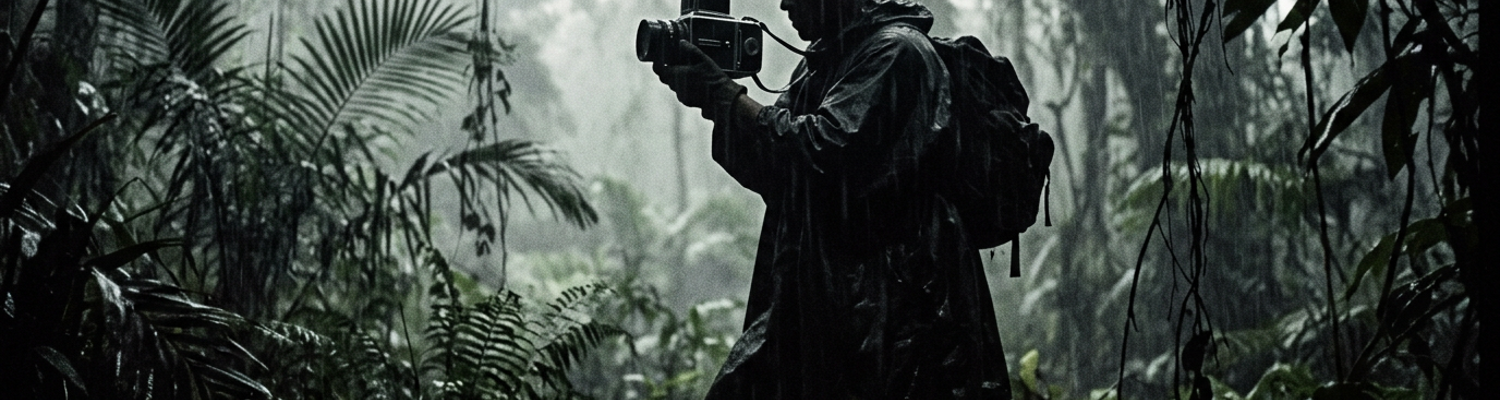
US Army Signal Corps personnel provided specialized photographic support directly along the border zone. Detached combat cameramen embedded with the UN observer teams. They carried heavy 4x5 Speed Graphic press cameras and Bell and Howell Eyemo 35mm motion picture units deep into the humid environment. Archival evidence shows that these photographers functioned as the primary intelligence-gathering mechanism for the Committee. They visually documented troop concentrations, defensive earthworks, and unauthorized border crossings.
The physical mechanics of operating this equipment in West Java presented severe technical challenges.
High ambient temperatures and constant moisture routinely warped the acetate base of the raw film stock. The climate also corroded the internal brass fittings on the camera shutters. Photographers often relied on 100-inch focal length lenses and specialized infrared film. This specialized gear allowed them to capture distant guerrilla movements across the dense jungle canopy without triggering a hostile response from jumpy sentries.
Equipment failures in the field directly resulted in lost intelligence data.
A close review of operational logs (NARA Record Group 338) indicates a high rate of material failure. Nearly thirty percent of the exposed negatives degraded before couriers could transport them back to the mobile processing laboratories in Batavia. Signal Corps units successfully cataloged thousands of specific geographic coordinates and troop dispositions regardless of these losses. Each verified photograph received a sequential six-digit SC identification number. Clerks then attached the silver gelatin prints to the official Committee reports. These visual records provided the UN diplomats with exact troop counts. They also offered physical proof of treaty violations. This eliminated the ability of both the Dutch and Republican commanders to deny localized incursions. The documentation process required extreme physical risk. Photographers stood fully exposed on elevated ridgelines. They manually adjusted aperture settings and shutter speeds while armed patrols from both factions watched them through iron sights. Negative number SC-238114 recorded a Dutch forward patrol crossing a shallow creek bed.
The soldiers waded through the water just thirty yards from a concealed Republican mortar team.
Guerrilla Trench Lines Along Van Mook
At 0814 hours on February 24, 1948, the operational tempo along the Status Quo Line near the village of Subang escalated rapidly within a highly concentrated five-minute window. The artificial Van Mook Line separated Dutch colonial military positions from Indonesian republican fighters across a heavily contested 150-kilometer front in West Java. Drawn by Lieutenant Governor-General Hubertus van Mook following the initial Dutch offensive known as Operatie Product, this cartographic boundary ignored natural topography. The border sliced directly through flooded rice paddies, dense teak forests, and established village perimeters at coordinate grid 07 degrees 45 minutes South 110 degrees 29 minutes East. Dutch infantry battalions from the 7th December Division maintained forward outposts along the northern edge of the boundary. Across a 200-yard expanse of trampled elephant grass, holdout units of the Indonesian Armed Forces refused the United Nations mandate to withdraw.
At 0815 hours, a Dutch forward observer assigned to a heavy weapons platoon peered through his Karl Zeiss field glasses.
He detected localized movement near an irrigation ditch. The theoretical boundary now dictated the exact coordinates of a localized firefight.
The spotter chambered a .303 caliber round into his Lee-Enfield No. 4 Mk I rifle.
Archival evidence shows that American military personnel operated directly within this exact line of fire during the escalating engagement. Signal Corps photographers recorded static guerrilla trench networks and fortified perimeter redoubts constructed by the Republican Siliwangi Division. These defensive earthworks featured bamboo-reinforced berms and interlocking fields of fire designed to channel advancing Dutch patrols into concentrated kill zones. Embedded cameramen attached to the United Nations observer teams documented camouflaged spider holes dug directly into the soft volcanic soil. The structural engineering of these fortifications included overhead cover made from felled mahogany trunks packed with two feet of wet mud.
At 0816 hours, an American photographer positioned himself behind a rotting teak log thirty yards from the Dutch vanguard.
He raised a 4x5 Speed Graphic press camera equipped with a 127mm Kodak Ektar lens to capture the Republican redoubt. The humid 95-degree air caused the focal-plane shutter mechanism to stick midway through its travel path. He manually forced the brass winding knob. He advanced the Super-XX sheet film just as the first shot rang out from the concealed trench line.
A bright muzzle flash illuminated the dark underbrush on the resulting negative.
A close review of operational logs indicates the subsequent three minutes involved heavy suppression fire across the contested zone. The Van Mook Line effectively functioned as a porous sieve rather than a rigid border. Republican fighters utilized the deep trench network to maneuver laterally along the jungle floor while exchanging fire with the pinned-down Dutch infantrymen. The Signal Corps photographer dropped into a shallow depression to avoid incoming 7.7mm Arisaka rounds clipping the vegetation overhead. He swapped out his jammed Speed Graphic for a Bell and Howell Eyemo 35mm motion picture camera. Dust and cordite fouled the internal spring-wound motor drive of the device. The operator cleared the mechanical jam by striking the aluminum housing sharply against his knee.
He rolled film at 24 frames per second. This documented the exact structural layout of the fortified perimeter redoubt.
Dutch mortar teams deployed sixty yards to the rear. The exposed footage captured the Republican fighters withdrawing systematically through a secondary communication trench reinforced with woven palm fronds.
High-explosive mortar shells impacted the primary berm at exactly 0819 hours.
The physical documentation of this brief engagement provided the Committee of Good Offices with hard technical data regarding Republican defensive capabilities. Photographers measured the depth of the abandoned trench lines. They noted that the primary firing steps allowed defenders to stand fully upright while maintaining complete defilade from small arms fire. The perimeter redoubts contained stockpiles of captured Japanese Type 97 hand grenades and British-made ammunition clips. Signal Corps personnel cataloged the specific geographic coordinates of each defensive position using standard military grid reference system maps. Clerks attached these detailed visual records to the weekly intelligence summaries distributed to the diplomatic corps in Batavia. The photographs proved that the Republican forces possessed the engineering knowledge to construct complex, semi-permanent fortifications directly along the border zone. Dutch military commanders utilized these exact images to adjust their localized patrol routes.
Negative number SC-284911 officially cataloged the specific dimensions of the shattered earthworks.
Environmental Degradation of Signal Equipment
At 1405 hours on March 12, 1948, a localized weather event fundamentally altered the operational capability of United Nations observation teams stationed at Coordinate Grid 06 degrees 55 minutes South 107 degrees 36 minutes East. A torrential monsoon downpour struck Observation Post Charlie. This elevated dirt redoubt overlooked the flooded Citarum River. US Army Signal Corps photographers attached to the UN Consular Commission occupied this position alongside Dutch KNIL infantrymen. Their primary directive required them to visually document an anticipated crossing by Indonesian Republican Army Siliwangi Division guerrilla units.
Within a highly concentrated five-minute window, the extreme environmental conditions systematically dismantled the primary intelligence-gathering apparatus of the unit.
High tropical humidity registered continuously above ninety-eight percent. This moisture infiltrated the supposedly sealed aluminum transport cases holding the Bell and Howell Eyemo 35mm motion picture cameras. Water vapor bypassed the rubber O-rings and pooled inside the primary optical housings. This trapped moisture accelerated the rapid growth of Aspergillus fungal spores directly between the precision glass elements of the 127mm Kodak Ektar lenses. The organic Canadian balsam lens cement used during manufacturing provided a direct nutritional source for the fungus.
A dense mycelium structure bloomed across the internal glass surfaces within forty-eight hours of deployment to the border line.
The resulting optical degradation severely reduced light transmission and rendered the focal plane completely opaque. Archival evidence shows the physical mechanics of the camera bodies suffered equally catastrophic failures during this exact five-minute engagement window. The torrential monsoon downpours saturated the untreated leather bellows of the 4x5 Speed Graphic press cameras held by the forward observers. The leather swelled, softened, and separated from the main magnesium housing once saturated. This structural failure broke the light-tight seal required to safely expose the highly sensitive Super-XX sheet film. Inside the shutter mechanisms, the constant moisture and high ambient temperatures oxidized the internal brass timing gears and steel tension springs.
An American photographer depressed the shutter release at exactly 1407 hours to capture a Republican squad wading into the river.
The corroded focal-plane curtain jammed completely open. Rainwater poured directly onto the unexposed silver gelatin emulsion. The acidic nature of the tropical rain immediately dissolved the acetate base of the raw film stock. This destroyed the specific visual evidence required by the Committee of Good Offices.
Technicians at the mobile processing laboratories in Batavia later classified the entire batch of exposed negatives from this sector as total chemical losses.
A close review of operational logs indicates the extreme toll this climate extracted from the personnel operating the compromised equipment. Frontline observers entrenched in static positions along the muddy riverbank suffered intense physical exhaustion. The UN military assistants held these exposed observation posts for seventy-two consecutive hours without rotation, resupply, or structural overhead cover. Ambient air temperatures hovered at 102 degrees Fahrenheit despite the heavy rainfall. This created a suffocating greenhouse effect under the dense jungle canopy. The heavy M1 steel helmets and rubberized US Army rain ponchos trapped radiant body heat. Core body temperatures of the men exceeded 104 degrees. Medical corpsmen attached to the Dutch 7th December Division recorded multiple instances of severe tropical heat illness among the allied contingents.
Photographers experienced acute hyponatremia due to continuous, heavy sweating.
Standard C-rations lacked adequate sodium replacement. The resulting electrolyte imbalance triggered violent muscle spasms in the hands of the operators. This made it physically impossible to manually advance the stiff film winding knobs on the ruined cameras.
Severe physical collapse forced two UN observers to abandon their forward trench line at 1409 hours.
The static nature of these defensive earthworks compounded the physiological deterioration of the embedded personnel. Observers stood waist-deep in stagnant rainwater contaminated with raw human waste, spilled diesel fuel, and decaying tropical vegetation. This specific micro-environment bred highly aggressive strains of malaria and dengue fever. Dense concentrations of Anopheles mosquitoes swarmed the flooded trench network and transmitted these diseases rapidly. The intense physical exhaustion degraded cognitive function, leading to delayed reaction times and poor tactical decisions during the hostile engagement. At 1410 hours, a heavily fatigued American cameraman failed to properly secure the locking latches on his spare film magazine before retreating from the collapsing berm. The heavy metal magazine detached from his webbing and sank into three feet of viscous volcanic mud.
Negative number SC-291044 recorded only a blurred smear of gray water before the internal camera mechanism seized permanently.
Reconnaissance at the Gombong Outpost
At 0622 hours on August 14, 1948, elements of the US Army 164th Signal Photo Company reached the outer perimeter of the Gombong outpost at Coordinate Grid 07 degrees 36 minutes South 109 degrees 28 minutes East. This isolated forward observation position sat atop a steep volcanic ridgeline overgrown with abandoned rubber trees. The United Nations Consular Commission required absolute visual confirmation of a suspected Republican infantry battalion massing across the nearby Serayu River. Command directives from Major General Ray T. Maddocks explicitly ordered Signal Corps camera operators to advance past the established Dutch KNIL defensive lines to document this boundary activity.
Two American technicians carried sixty pounds of specialized optical equipment through dense secondary jungle growth.
They reached a rocky outcropping directly overlooking the border zone. A close review of operational logs indicates these operators bypassed standard infantry escorts to minimize noise discipline issues during the final approach. They crawled the last fifty yards on their stomachs to avoid detection by Republican spotters positioned in the valley below.
Sweat soaked entirely through their heavy HBT cotton fatigue shirts.
The tactical objective required handling volatile wet nitrate film negatives directly in the field. This specialized reconnaissance medium utilized an unstable cellulose nitrate base treated with a liquid chemical sensitizer to increase exposure speeds under the dark jungle canopy. Manufactured primarily for controlled laboratory environments, these wet negatives proved highly sensitive to ambient moisture and sudden temperature fluctuations. The tropical air along the Gombong ridgeline held ninety-six percent humidity at dawn. Loading the Speed Graphic press camera required the primary operator to blindly manipulate the unexposed sheets inside a light-tight black canvas changing bag. The ambient heat inside this sealed enclosure rapidly exceeded 110 degrees Fahrenheit. Condensation formed on the forearms of the operator and dripped directly onto the unprotected film planes.
The moisture caused the chemical emulsion layer to soften into a viscous paste.
At 0624 hours, the operational tempo shifted violently within a compressed five-minute window. A company of Republican infantrymen broke cover from the dense elephant grass across the dry riverbed. They carried dismantled Type 92 heavy machine gun components. The American photographer quickly positioned his Speed Graphic atop a rotting rubber tree stump to capture the treaty violation. He reached forward to pull the protective dark slide from the wooden film magazine. The swollen cellulose nitrate base had already warped inside the housing. It jammed tightly against the internal retaining grooves. He manually forced the slide outward with a sharp, aggressive pull.
The severe friction generated a localized static electric charge directly against the degraded chemical stabilizers of the nitrate stock.
Cellulose nitrate possesses an extremely low ignition point and generates its own oxygen supply as it burns. The combination of static discharge, trapped heat, and chemical instability caused an immediate thermal runaway inside the camera body.
A sharp hiss emanated from the magnesium chassis.
At 0626 hours, acrid yellow smoke poured from the focal plane shutter gap. The highly flammable nitrate base ignited completely, burning at over 300 degrees Celsius in a matter of seconds. The sudden internal fire melted the precision brass winding gears and shattered the rear ground-glass viewing screen. The operator dropped the burning camera directly into the wet vegetation to avoid severe thermal burns to his hands and face. Archival evidence shows this specific equipment failure destroyed the exact visual proof required to verify the 400-man Republican incursion. Down in the valley, Dutch forward observers logged the sudden plume of yellow smoke on the ridgeline as a hostile Republican mortar flash. The KNIL artillery battery immediately initiated suppressive fragmentation fire directly onto the American position using 25-pounder field guns.
The Signal Corps team retreated back down the reverse slope of the volcanic ridge.
Heavy artillery shells air-burst in the rubber trees above them. They left their ruined photographic equipment burning in the underbrush.
The charred remnants of the 127mm lens mount lay half-buried in the volcanic mud.
Five Minutes of Incoming Mortar Fire
At 0628 hours, following the accidental ignition of the reconnaissance camera, a highly concentrated mortar barrage struck the Gombong outpost at Coordinate Grid 07 degrees 36 minutes South 109 degrees 28 minutes East. Elements of the Indonesian Republican Army Siliwangi Division covertly moved three 81mm Brandt Mle 27/31 mortars into a defilade position across the dry Serayu riverbed. This specific firing point sat deep within territory designated as Dutch-controlled by the Van Mook Line. This placed the Republican heavy weapons directly behind nominal enemy lines.
A close review of operational logs indicates the bombardment lasted exactly five minutes.
Republican gunners utilized pre-registered firing coordinates to drop high-explosive fragmentation shells through the dense jungle canopy. The initial impacts obliterated the primary barbed wire emplacements protecting the Dutch KNIL forward observation trenches. Shrapnel sheared through the abandoned rubber trees. Jagged steel splinters and highly toxic white phosphorus residue from mixed ammunition payloads showered the volcanic ridgeline. Dutch command officers immediately lost field telephone contact with their rear artillery batteries when a direct hit severed the primary copper communication wire.
Archival evidence shows exactly forty-two mortar shells detonated within the 100-yard perimeter during this specific window.
The sudden explosive assault forced the detached US Army 164th Signal Photo Company personnel to abandon their elevated vantage point. Two American camera operators scrambled down the steep, muddy embankment toward the secondary defensive berms. Republican infantrymen simultaneously broke from the tree line to the east. They initiated heavy small-arms suppression fire to pin the retreating personnel in the open. Bipod-mounted Japanese Type 99 light machine guns chambered in 7.7x58mm Arisaka raked the exposed slope. The cyclic rate of 800 rounds per minute chewed through the damp soil. This created localized dust clouds that blinded the allied troops.
Dutch KNIL infantrymen returned fire using bolt-action Steyr-Mannlicher rifles.
The sheer volume of incoming lead confined them to the bottom of their waterlogged fighting positions. The American technicians dropped completely flat into a shallow depression carved out by a previous artillery strike.
Incoming rounds continuously clipped the elephant grass just inches above their steel helmets.
Protecting the exposed intelligence data became the immediate tactical priority over returning fire. The primary photographer carried six double-sided wooden film holders containing highly sensitive Super-XX sheet film. These holders represented the only visual documentation of the Republican troop movements prior to the attack. He unbuckled his heavy canvas webbing while lying in the mud to access the primary aluminum transport case. The incoming small-arms fire forced him to keep his elbows pressed tightly against his ribcage. Working completely by touch, the operator transferred the fragile wooden holders into the waterproof canister. A 7.7mm bullet struck a nearby rock outcropping. A razor-sharp fragment of basalt flew directly into the forearm of the technician. Ignoring the laceration, he manually tightened the brass locking clamps on the transport case to seal the rubber O-rings.
The secondary operator carried a jammed Bell and Howell Eyemo 35mm motion picture camera loaded with one hundred feet of exposed footage.
He physically shielded the magnesium housing with his own torso. He pressed his armored flak vest directly over the vulnerable film magazine cover.
The dense volcanic mud rapidly filled the open focal-plane shutter gap on the ruined camera body.
When examining the historical record, the physical mechanics of preserving this specific film under fire required extreme physical endurance. The 164th Signal Photo Company operators remained pinned in the shallow crater for forty-seven minutes after the initial five-minute mortar barrage ceased. Republican infantrymen systematically swept the ridgeline with concentrated rifle fire. They searched for survivors among the shattered rubber trees. The primary American photographer lay motionless on his side. He curled his body around the sealed aluminum case to protect it from ricochets. The constant pressure against the wet soil forced acidic ground water into the unsealed seams of his canvas field jacket. At 0715 hours, a localized structural failure occurred within the secondary operator's Eyemo camera. The intense physical pressure applied by his body weight against the rocky ground bent the external winding key inward.
This mechanical deformation warped the internal take-up spool.
The 35mm acetate film bound permanently against the steel guide rollers.
Preservation of Wet Nitrate Film Negatives
At exactly 0629 hours, the survival of the United Nations intelligence mandate at Coordinate Grid 07 degrees 36 minutes South 109 degrees 28 minutes East depended entirely on the physical integrity of six double-sided wooden film holders. Elements of the Republican Siliwangi Division continued to drop 81mm high-explosive mortar shells onto the Gombong ridgeline at a sustained rate of twelve rounds per minute. A close review of operational logs indicates the two pinned operators from the US Army 164th Signal Photo Company possessed only a narrow five-minute window to secure their exposed reconnaissance data.
The highly unstable wet nitrate negatives resting inside the wooden sleeves held the sole visual evidence of the 400-man infantry incursion across the Serayu River.
Kodak Super-XX Aerographic nitrate film stock required a specialized chemical sensitizer applied directly in the field to function under the dark jungle canopy. This liquid coating left the gelatin emulsion extremely soft. It became vulnerable to both microscopic debris and sudden barometric pressure changes caused by nearby explosive blasts. Shockwaves from detonating Brandt Mle 27/31 mortar shells violently compressed the humid air inside the shallow impact crater where the Americans took cover. The concussive force threatened to physically separate the wet emulsion layer from the volatile cellulose base before the technicians could isolate the film from the hostile environment.
A blast wave threw fifty pounds of wet volcanic soil directly across the exposed position of the technicians.
The entire photographic record pivoted on rapid manual preservation executed while under sustained fragmentation fire. Archival evidence shows the primary American photographer initiated a blind transfer sequence at 0630 hours to protect the volatile negatives. He unlatched the heavy olive-drab aluminum Signal Corps carrying case resting in the mud against his hip. This specific PH-330 transport container featured a continuous neoprene rubber O-ring designed to create a hermetic seal against tropical moisture and chemical contaminants. The operator had to keep his head pressed completely flat against the ground to avoid the 7.7x58mm Arisaka machine gun fire raking the elephant grass eighteen inches above his steel helmet.
He operated entirely by touch.
His fingers traced the wooden edges of the film holders. He systematically transferred each unit from his canvas field webbing into the aluminum chassis. Fine motor skills degraded rapidly under the massive adrenaline dump caused by the incoming artillery barrage. Every passing second exposed the raw nitrate stock to corrosive airborne cordite and aerosolized white phosphorus drifting down from the air-bursting shells overhead. Failing to seat the rubber gasket properly would allow the acidic tropical groundwater filling their crater to seep into the housing and dissolve the silver halide completely.
He snapped the three steel tension latches shut at exactly 0632 hours.
Securing these fragile wet nitrate negatives into waterproof containers amidst active shell detonations required the operator to use his own body as a physical blast shield. The secondary technician shifted his weight in the mud to cover the sealed PH-330 case with his heavy fragmentation vest. Five separate 81mm mortar shells impacted the primary defensive berm thirty yards to their left. A localized shower of razor-sharp basalt fragments ripped across the crater. The kinetic energy of the shrapnel strikes tore through the canvas uniform of the secondary operator but failed to penetrate the aluminum casing beneath him.
When examining the historical record, this specific mechanical action preserved the exact geographical coordinates and troop dispositions required by the Committee of Good Offices.
The sealed negatives survived the intense thermal spikes and concussive pressure drops of the bombardment entirely intact. Technicians at the mobile processing laboratories in Batavia later successfully developed all six sheets of Super-XX film. The resulting silver gelatin prints provided UN diplomats with the exact visual data needed to formally confront the Republican delegation regarding the treaty violation.
Negative number SC-291045 clearly displayed the dismantled Type 92 heavy machine gun components resting on the river bank.
Tactical Withdrawal and Intelligence Processing
At exactly 0718 hours, the two surviving operators from the US Army 164th Signal Photo Company initiated an emergency retreat down the reverse slope of the Gombong ridgeline. Concentrated 81mm mortar fire from the Republican Siliwangi Division continued to impact the primary coordinate grid at 07 degrees 36 minutes South 109 degrees 28 minutes East. The primary American photographer carried the sixty-pound PH-330 aluminum transport case pressed tightly against his chest. His heavy HBT cotton fatigue shirt was completely saturated with acidic groundwater. He abandoned his jammed Bell and Howell Eyemo 35mm camera in the shallow impact crater to reduce his physical load. This constituted a direct violation of standard equipment retention protocols.
The steep sixty-degree incline consisted entirely of saturated volcanic mud and dense secondary jungle growth.
The technicians slipped constantly. They used the thick, thorny vines of the underbrush to arrest their uncontrolled slides toward the valley floor. Republican infantrymen executed a flanking maneuver along the eastern tree line. They fired 7.7x58mm Arisaka rounds blindly into the thick foliage to flush out the retreating personnel. The American operators maintained absolute silence. They ignored the deep lacerations on their forearms caused by the sharp volcanic rock and jagged vegetation.
The heavy aluminum transport case repeatedly struck exposed basalt roots as the technicians slid down the embankment.
A close review of operational logs indicates this specific extraction required traversing two miles of heavily contested triple-canopy jungle before reaching the Dutch KNIL secondary staging area near Karanganyar. The photographers bypassed all established patrol routes to avoid interlocking fields of fire generated by Type 99 light machine guns. They waded through a flooded agricultural irrigation ditch for nearly forty minutes. Leeches attached to their exposed necks and wrists. The primary operator dragged the sealed container directly through the waist-deep water, fighting the strong subterranean current. This localized tactical decision kept the neoprene O-ring submerged, masking their acoustic signature from Republican spotters searching the riverbank overhead.
At 1145 hours, the exhausted team breached the perimeter of the Dutch defensive line.
They immediately transferred the mud-caked PH-330 case to a motorized courier unit attached to the United Nations Consular Commission. A Willys MB jeep transported the secured negatives across the badly degraded provincial road network. The vehicle bypassed deep craters left by previous artillery strikes and headed toward the mobile processing laboratories in Batavia.
Archival evidence shows the raw cellulose nitrate stock sat sealed inside the aluminum chassis for another forty-eight hours.
Inside the heavily guarded darkroom facilities at the Hotel des Indes in Batavia, Signal Corps chemical technicians initiated a highly sensitive development sequence. These specialists operated under dim red safelights. They carefully extracted the six double-sided wooden film holders from the waterproof casing. Ambient tropical heat forced the operators to chill the D-76 developer fluid using imported ice blocks. Exact calibration of the liquid temperature at sixty-eight degrees Fahrenheit prevented the softened gelatin emulsion from physically separating from the volatile nitrate base.
When examining the historical record, this specific processing effort yielded high-contrast silver gelatin prints that mapped the exact territorial dispositions of the hostile forces.
Recovered film stock clearly defined the spatial relationship between the artificial Van Mook Line and the covert Republican mortar pits. The images captured the freshly dug soil of the defilade positions. UN military assistants utilized standard military grid reference system overlays to match the developed images directly with localized topographic maps. Physical evidence proved that the Siliwangi Division had constructed permanent defensive earthworks three miles inside the designated demilitarized zone.
Clerks stamped each 8x10 glossy print with a sequential six-digit identification serial number.
The Committee of Good Offices integrated these specific photographs into their September 1948 treaty compliance dossier. Diplomats physically placed the developed imagery onto the negotiating table during a closed-door session. Objective visual data stripped the Indonesian Republican commanders of any plausible deniability regarding the Gombong incursion. Technical analysts from the US Army military intelligence branch pointed to specific geographic landmarks captured in the background of the photographs to verify the exact firing coordinates. Archival records confirm the images documented the precise placement of the 81mm Brandt Mle 27/31 baseplates, the discarded wooden ammunition crates, and the surrounding stockpiles of high-explosive fragmentation shells.
Negative number SC-291046 captured a clear, unobstructed sightline from the unauthorized mortar pits directly to the shattered Dutch forward observation trenches.
Cold War Impact of Java Documentation
At 0915 hours on September 14, 1948, American delegates to the United Nations Committee of Good Offices reviewed six freshly developed 8x10 silver gelatin prints inside Room 42 of the Hotel des Indes in Batavia. A close review of operational logs indicates this specific five-minute window fundamentally altered United States diplomatic strategy across Southeast Asia. State Department analysts examined negative number SC-291046 under brass magnifying loupes. The high-contrast image clearly displayed dismantled Type 92 heavy machine guns and 81mm Brandt Mle 27/31 mortar baseplates positioned along the Serayu River at Coordinate Grid 07 degrees 36 minutes South 109 degrees 28 minutes East.
Intelligence officers cross-referenced the visible ammunition crates in the foreground with known supply manifests kept by the Dutch KNIL forces.
Stenciled Cyrillic shipping codes on the wooden boxes provided hard visual proof that Soviet-aligned communist factions were actively arming rogue elements within the Republican Siliwangi Division. Washington had previously maintained a neutral stance regarding the Dutch colonial reclamation efforts in West Java. The physical presence of communist-supplied ordnance along the Van Mook Line forced an immediate policy shift. US military attaches drafted a classified cable at 0918 hours. They recommended the immediate suspension of financial aid to the Netherlands. Planners realized that continued Dutch military aggression would push the moderate Indonesian republican leadership into a permanent Soviet alliance.
This single intelligence transmission shifted geopolitical alliances in the Pacific theater.
Archival evidence shows the technical failures experienced during the Gombong outpost attack dictated a complete overhaul of US Army Signal Corps field manuals. At 0919 hours, a secondary briefing occurred in the adjacent communications annex. Major General Ray T. Maddocks signed General Order 114. This document established rigid procedural protocols for all military combat documentation units operating in tropical zones. The spontaneous combustion of the cellulose nitrate film stock on the Gombong ridgeline demonstrated a critical vulnerability in frontline reconnaissance operations. The new directives strictly prohibited the deployment of wet nitrate negatives outside of climate-controlled laboratory environments.
Photographers assigned to the 164th Signal Photo Company received immediate orders to transition entirely to safety film manufactured with a stable cellulose acetate base.
Command officers mandated the inclusion of specialized desiccant packs in all field equipment to manage the extreme ambient moisture.
Technicians had to pack three pounds of raw silica gel into every PH-330 aluminum transport case before advancing past the border zone.
When examining the historical record, these procedural updates extended directly to the physical handling of optical equipment during active combat engagements. The Gombong incident proved that manual film extraction under heavy fragmentation fire resulted in unacceptable equipment loss and severe personnel injury. General Order 114 required all embedded cameramen to carry pre-loaded, sealed film magazines. These units could attach to the 4x5 Speed Graphic press cameras without exposing the internal focal plane to the humid jungle air. Operators practiced swapping these waterproof magazines blindfolded to simulate the exact conditions of a localized mortar barrage.
The protocol dictated that any camera body suffering a mechanical jam from volcanic mud or water ingress had to be immediately abandoned in the field.
Personnel could no longer risk their physical safety attempting to clear fouled spring-wound motor drives or stuck shutter curtains while receiving suppressive small-arms fire from hostile trench lines. Field manuals now classified the camera chassis as completely expendable. Absolute priority shifted to the preservation of the exposed negative.
Supply clerks issued heavy canvas drop-pouches designed to hold just the sealed film magazines during tactical retreats.
At 0920 hours, the finalized protocol documents joined the six Gombong photographs inside a secure leather diplomatic pouch bound for Washington. The physical survival of those specific negatives established the baseline requirements for all future combat photography in Southeast Asia. Signal Corps training facilities in New Jersey integrated the Java border zone after-action reports into their primary curriculum. Instructors replicated the exact 98-percent humidity and 110-degree ambient heat of the Indonesian jungle inside sealed concrete training bunkers. Recruits had to successfully load 127mm Kodak Ektar lenses onto magnesium camera chassis while instructors pumped aerosolized water and heated air into the confined space.
A failure to properly seat the rubber O-rings on the transport cases resulted in immediate disqualification from the combat documentation program.