
Origins and Structural Flaws of Shore Mount Guns
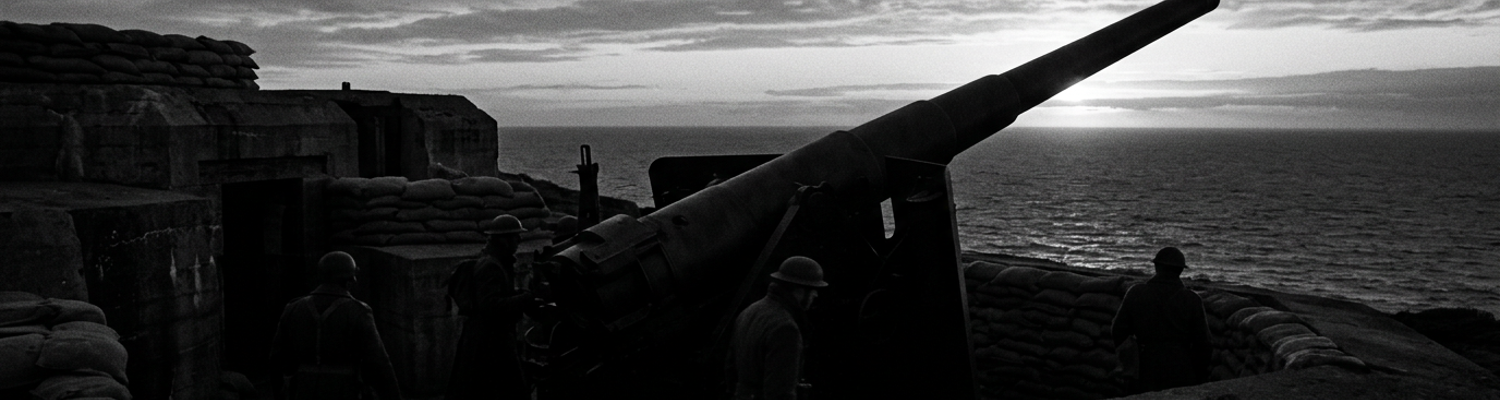
Surface temperatures on the raw coral aggregate exceeded 110 degrees Fahrenheit. Freezing rain and thick mud from sudden squalls battered the isolated Pacific atoll. Abrasive salt spray and fine grit penetrated every exposed surface before any human boot touched the shore. Deep within the United States Navy Bureau of Ordnance in 1910, weapons engineers drafted the blueprints for a heavy naval gun. They designed this weapon to destroy fast surface craft. Designated as the 5-inch/51 caliber Mark 7, the weapon featured a 255-inch barrel built from a central tube, full-length jacket, and heavy reinforcing hoops. Archival evidence shows that designers optimized this barrel for extreme muzzle velocity. The gun pushed a 50-pound armor-piercing shell at 3,150 feet per second.
This aggressive ballistics profile required a massive Welin breech block and Smith-Asbury opening mechanism.
The complete assembly weight exceeded 11,000 pounds.
Navy capital ships required heavy firepower to defeat swarm attacks. Naval architects mounted these 5-inch/51 caliber guns as secondary armament along the central casemates of Florida-class and Wyoming-class battleships beginning in 1911. This weapon excelled against light surface combatants at ranges exceeding 15,000 yards. High chamber pressures of nearly 18 tons per square inch generated exceptional accuracy across flat trajectories. Repeated firings rapidly degraded the gun tubes. Barrel service life was limited to just 900 effective full charges per liner. Wet casemate positions near the waterline plagued battleship crews with heavy sea spray during high-speed maneuvers. By the late 1930s, the Navy began stripping these single-purpose surface guns from older battleships. They replaced them with dual-purpose 5-inch/38 caliber mounts. Depots at Mare Island and Norfolk received hundreds of surplus 5-inch/51 barrels for storage.
Obsolescent naval hardware moved from mothball fleets to coastal defense units.
A close review of operational logs indicates that the United States Marine Corps 1st Defense Battalion received eighteen of these decommissioned 5-inch/51 caliber assemblies in 1940. Naval gunsmiths mated the barrels to heavy, unarmored shore mounts. These pedestals were originally intended for static coastal installations. In late October 1941, civilian contractors and Marines bolted six of these weapons into concrete emplacements across Wake Atoll. The geographic coordinates were 19 degrees 17 minutes North, 166 degrees 37 minutes East. Battery A took position on Peacock Point on Wake Island. Battery B occupied Toki Point on Peale Island. Battery L anchored Kuku Point on Wilkes Island. Lacking overhead armor shields, each installation left gun crews exposed to enemy air attack and naval shell fragments. Static pedestals rested on unyielding concrete foundations.
These foundations transferred all kinetic recoil shock directly into the mounting hardware.
Mechanical friction and structural fatigue plagued the unarmored shore mounts from the moment live firing commenced. Archival evidence shows that shipboard installations absorbed recoil energy through naval deck plating. They also utilized complex hydraulic counter-recoil systems designed to flex under stress. Land-based pedestal mounts lacked the mechanical damping required for high rates of fire. Rapid firing cycles generated intense thermal expansion. Severe shearing forces concentrated along the gun trunnions. Trunnions served as the critical cylindrical pivots holding the 11,000-pound barrel inside the mount carriage. During sustained engagements exceeding six rounds per minute, cast steel trunnion pins experienced catastrophic structural failure. Stress fractures rapidly propagated through the metal bearings under continuous force.
At Kuku Point, the left trunnion pin on Battery L sheared completely off during rapid counter-battery fire.
This failure jammed the elevation gears and locked the barrel at a fixed four-degree angle. Contractors lacked spare trunnion arm castings and replacement recoil cylinders across the entire Wake Atoll defense perimeter. Crews secured broken mount housings using improvised steel straps and timber shims.
Air Strike Damage to Defense Battalion Fire Control
Archival evidence shows that at 1158 hours on December 8, 1941, thirty-four Mitsubishi G3M2 Type 96 attack bombers swept out of low squall clouds. They flew at 1,500 feet above Wake Atoll. The 24th Air Flotilla strike force originated from bases on Roi-Namur in Kwajalein Atoll. They caught the garrison unprepared. The aircraft slipped past visual lookout posts positioned along the outer coral reef. Japanese aircrews executed precision bombing and strafing runs across all three islands forming the atoll perimeter. High-explosive 250-kilogram fragmentation bombs tore through the unpaved runway. They destroyed eight of the twelve Grumman F4F-3 Wildcats belonging to Marine Fighter Squadron VMF-211. The planes idled on the ground. Bomb clusters demolished the main radio transmitter, diesel power generating plants, and aviation fuel storage tanks.
Civilian contractor workshops operated by Contractors Pacific Naval Air Bases sustained heavy damage.
Secondary fires erupted instantly. Dense black smoke drifted over the perimeter. Flying metal fragments pierced wooden command structures and unarmored storage depots. Shattered concrete and burning aviation gasoline filled the central corridor of Wake Island within minutes. When examining the historical record, the most devastating operational disruption occurred below the surface of the coral sand along the primary defense grid. Centralized fire control for the six 5-inch/51 shore guns operated through Ford Instrument Company computers. Optical rangefinders linked to the weapons via heavy multi-conductor communication cables. Technicians had laid these lead-sheathed, rubber-insulated copper lines in shallow, unarmored sand trenches. These trenches ran between command posts and the battery positions. Direct bomb impacts and near-miss shockwaves dug massive craters along the beach roads.
The explosions severed the central fire-control cabling across the entire atoll network.
Main distribution lines connecting the fire-control center at Peacock Point to Battery A were severed in multiple locations. Line breaks completely isolated Battery B at Toki Point and Battery L on Wilkes Island. Electrical telemetry signals driving the remote synchro-receivers on the gun mounts vanished. Without automated fire-control inputs, the electronic feedback loops ceased to function. These loops calculated target range, deflection, and lead angles. The automated targeting mechanism became completely useless.
Copper wire lay severed in the sand.
A close review of operational logs indicates that the destruction of central fire-control cables stripped the Marine defense battalion of its automated surface-firing capability. Gunnery officers could no longer transmit real-time deflection solutions or range corrections directly to the 5-inch/51 gun mounts via dial indicators. Individual gun crews abandoned synchronized battery salvoes. They relied on local manual targeting methods. Gun captains peered through simple ring sights. Some operated portable two-meter optical rangefinders mounted on open wooden stands. Sound-powered telephone wires running along the surface were also broken during the air raid. Marines relayed target ranges by voice across exposed coral ground. Others ran on foot through burning brush. Calculating lead angles for fast-maneuvering enemy warships required manual slide-rule calculations and physical range tables. This introduced severe operator delay. Firing rates dropped from eight synchronized rounds per minute down to two or three uncoordinated shots per gun.
Manual aiming replaced automated computation across every battery on the atoll.
Technicians from the 1st Defense Battalion attempted emergency repairs under continuing air attacks. They searched for severed cable ends buried beneath debris and burning rubble. Marine signalmen attempted to splice multi-conductor rubber wire in open trenches. Salt water from high tide and fuel oil runoff contaminated the exposed copper strands. Moisture quickly short-circuited the internal wiring harnesses. Sensitive junction boxes burned out. Signal crews lacked replacement field wire, insulated junction blocks, or spare synchro-amplifiers. They could not restore automated electrical continuity between the director stations and the guns. The Imperial Japanese Navy task force under Rear Admiral Sadamichi Kajioka appeared on the horizon on December 11. Marine gunners prepared to defend the island using hand-cranked elevation wheels, visual estimation, and individual gun sight optics.
Field Modifications to Sights and Communications
The 11,000-pound naval guns lacked any mechanical targeting input.
When examining the historical record, Marine armorers and civilian technicians from Contractors Pacific Naval Air Bases realized a critical failure point. The standard optical gun sights mounted on the left side of the carriage could no longer track surface contacts without remote director feedback. Between December 8 and December 10, Marines of the 1st Defense Battalion welded jury-rigged iron sights directly to gun barrels across the atoll. At Battery A on Peacock Point and Battery L on Wilkes Island, ordnance crews retrieved electric arc welding rigs from damaged maintenance shops. Mechanics fabricated crude open sights using scrap structural angle iron. They utilized steel band straps and brass rod stock salvaged from pulverized construction staging areas. Gun captains aligned these improvised metal posts along the top centerline of the 255-inch barrels. They affixed a front bead near the muzzle and a notched rear sight plate close to the Smith-Asbury breech block. Boresighting required line-of-sight alignment.
Crew members removed the heavy breech plugs.
They peered directly through the unrippled 5-inch gun bores. They centered the open barrels on distant natural landmarks across the lagoon. Technicians tack-welded the iron sight bases permanently into place. This direct barrel mounting eliminated offset parallax errors caused by carriage slop. Gunners aimed the 50-pound shells using basic visual deflection lead estimates. Deprived of automated fire control, the gun crews needed raw visual data to survive. Archival evidence shows that local targeting required immediate, reliable voice communication between outlying observation posts and isolated gun emplacements. Communication teams hand-spliced field wire to re-establish direct visual spotting networks across the shattered terrain.
Signalmen from the 1st Defense Battalion worked through the night.
They salvaged fragments of W-110 two-conductor field wire and single-core utility line from debris fields. Marines stripped burned rubber and braided fabric insulation with pocketknives. They scraped oxidized copper and galvanized steel strands bare. Technicians twisted the metal cores together using tight Western Union splices. They sealed the raw joints with heavy coats of friction tape and melted tar recovered from roofing supplies. Signal details pulled these hand-spliced lines across sharp coral beds. They anchored wires inside shallow drainage ditches. They draped them through dense scrub brush to prevent vehicle damage. At Toki Point on Peale Island, First Lieutenant Woodrow M. Kessler commanded Battery B. His unit connected its gun pits directly to a 50-foot wooden water tower observation station via point-to-point sound-powered telephone circuits. Spotters equipped with binoculars and handheld grid maps bypassed the destroyed central computer. They shouted target ranges, bearings, and splash corrections directly to gun captains wearing leather headsets.
Raw physical labor restored a fraction of the defensive network.
A close review of operational logs indicates that these improvised modifications transformed the static shore batteries into independent direct-fire combat units. This occurred just hours before the enemy arrived. At 0300 hours on December 11, 1941, lookouts at Peacock Point sighted the silhouette of Rear Admiral Sadamichi Kajioka invasion fleet. The ships approached from the south-southwest at a range of 9,000 yards. Battery A on Peacock Point, Battery B on Peale Island, and Battery L on Wilkes Island held their fire. Major James P.S. Devereux issued explicit orders to wait until the Japanese warships closed to point-blank distance. The light cruiser Yubari and accompanying destroyers reached 4,500 yards. Gun captains lined up their targets using the barrel-mounted iron sights. Spotters on the water towers relayed target adjustments over the spliced field wire. Battery L on Wilkes Island scored multiple hits on the destroyer Hayate. The impacts exploded its aft magazine and sank the vessel in less than two minutes.
Battery L Engagement and Sinking of Hayate
Archival evidence shows that at 0300 hours on December 11, 1941, lookouts stationed on the coral ridges of Wilkes Island detected the dim silhouettes of Japanese warships. The vessels approached from the south-southwest. Rear Admiral Sadamichi Kajioka led the invasion force aboard his flagship, the light cruiser Yubari. Six destroyers, two armed merchant cruisers, and two medium transports carrying naval landing troops accompanied the flagship. Major James P.S. Devereux issued strict orders across the island defense net. He commanded all batteries to withhold fire until the enemy ships closed within point-blank distance. At Kuku Point, located at geographic coordinates 19 degrees 18 minutes North, 166 degrees 38 minutes East on the western tip of Wilkes Island, Marine First Lieutenant John A. McAlister commanded Battery L. His unit operated two functional 5-inch/51 caliber shore guns. Dark ocean water lapped against the coral beach.
The Japanese formation steamed forward at nine knots.
They remained completely unaware that Marine gunners tracked their progress through handheld binoculars. Yubari opened fire at 0522 hours with its twin 140mm turrets. The cruiser dropped high-explosive shells onto the airstrip and oil storage tanks. McAlister kept his gun crews silent inside their unarmored sandbag pits. Silence hung over the Kuku Point emplacements as the lead enemy destroyers turned broadside. A close review of operational logs indicates that Battery L operated under severe physical handicaps. These conditions would normally render naval artillery ineffective. Bomb fragments from the December 8 air raid had completely smashed the primary 3-meter stereoscopic optical rangefinder. Shockwaves had severed the lead-sheathed telemetry cables connecting Kuku Point to the central director station. Deprived of target speed computers and automated range finders, the Marines relied entirely on improvised iron sights.
These sights were welded directly to the 255-inch gun barrels.
Gun captains calculated target speed using basic visual grid lines marked on hand-drawn cardboard charts. Mechanical damage from previous test-firing had sheared the left trunnion pin on one mount. Mechanics jammed steel wedges beneath the carriage to lock the elevation at four degrees. Loaders hand-rammed 50-pound high-explosive armor-piercing shells into the Smith-Asbury breech blocks. They primed the weapons with brass cartridge cases containing 15 pounds of smokeless powder. Spotters perched on open wooden framing yelled estimate adjustments directly to the gun layers turning manual hand wheels. Manual sight alignment replaced electronic targeting across both 5-inch mounts. When examining the historical record, Major Devereux finally authorized Battery L to engage at 0515 hours. The leading Kamikaze-class destroyer Hayate closed the range to four thousand yards. Lieutenant McAlister ordered an immediate two-gun salvo.
The first 50-pound shell splashed short into the surf.
Spotters immediately called out a fifty-yard deflection correction over open telephone wire. A follow-up salvo hit Hayate directly amidships at 0517 hours. The shell punched through the unarmored hull plating near the waterline. A third round struck near the main deck torpedo tubes. This impact ignited armed Type 93 oxygen torpedoes stored along the deck rails. Secondary explosions tore through the internal machinery spaces. The blast set off the aft powder magazine in a massive fireball. The explosion split the 327-foot hull completely in two. Dense black smoke blanketed the water surface. Hayate sank beneath the waves in less than two minutes. All 168 crew members went down with the vessel. Battery L shifted its fire to the destroyer Oite and light cruiser Yubari. They scored secondary hits. Admiral Kajioka ordered an immediate fleet retreat toward Kwajalein Atoll. The loss of Hayate marked the first Japanese surface warship destroyed by coastal artillery during the Pacific Conflict.
Thermal Failure and Obsolescence of Coastal Guns
Archival evidence shows that the defense of Wake Atoll entered its second week following the repulse of Rear Admiral Sadamichi Kajioka invasion fleet on December 11, 1941. Intense fire missions exposed catastrophic heat-induced vulnerabilities within the 5-inch/51 caliber Mark 7 assemblies. Continuous high-tempo firing cycles generated extreme internal chamber temperatures. These temperatures exceeded 2,000 degrees Fahrenheit. The heat drove rapid thermal conduction from the 255-inch steel barrels into the surrounding carriage frames. The static pedestals bolted to concrete foundations at Peacock Point and Toki Point lacked high-volume water cooling channels. They also lacked the shipboard forced-air blowers present in naval casemate housings.
The mounts retained scorching residual heat.
Steel trunnion sleeves expanded rapidly inside their cast-iron housing brackets. They pinched the bronze-bushed elevation pinion shafts. The hand-cranked elevation racks warped under the severe thermal gradient. Civilian contractors had fabricated these racks from soft structural steel using field arc welders. Heat fused the improvised worm gears directly against the tooth profiles of the main elevation arcs. Metal expanded faster than the crude bronze bushings could yield. A close review of operational logs indicates that Marine gunners manning Battery A on Wake Island and Battery B on Peale Island struggled against binding elevation handwheels. This occurred during sustained bombardments against Japanese destroyers and armed merchantmen between December 11 and December 23. When fire rates exceeded five rounds per minute, friction welding seized the elevation gears entirely.
The 11,000-pound weapons locked at whatever angle they occupied when thermal saturation occurred.
Gunnery crews belonging to the 1st Defense Battalion suspended firing. They applied soaked burlap sacks and poured buckets of raw seawater over the glowing breech housings. Marine First Lieutenant Woodrow M. Kessler directed artillerymen at Toki Point to use heavy brass drifts and sledgehammers. They struck the bound elevation gear teeth. They attempted to shatter internal heat welds. Incoming 8-inch naval shells from the heavy cruisers Aoba and Kinugasa exploded along the coral parapets during these repair attempts. At Peacock Point, Battery A lost all vertical movement on its primary gun. Heat expansion jammed the elevation screw shaft inside its threaded sleeve. Marines adjusted range strictly by altering the weight of black powder bags inserted into the Smith-Asbury breeches. Brute physical force remained the only mechanism capable of breaking the binding steel components.
When examining the historical record, the combat action across Wake Atoll demonstrated the mechanical limits of repurposed interwar naval artillery.
Weapons engineers designed the single-purpose 5-inch/51 Mark 7 in 1910 for the wet casemates of Florida-class battleships. The gun possessed effective flat-trajectory ballistics. This allowed a tiny Marine garrison to smash modern warships without director assistance. These same weapons proved structurally incapable of meeting the demands of modern land defense. Their low maximum elevation of twenty degrees prevented gunners from engaging high-altitude Mitsubishi G3M2 bombers. Their total weight of over five tons made repositioning impossible once enemy spotters identified the emplacements. The second Japanese invasion force landed on December 23 under cover of darkness. Marines at Kuku Point on Wilkes Island fired their remaining 50-pound armor-piercing shells at zero elevation directly into beaching barges. Heat-seized carriages and shattered recoil cylinders permanently rendered every barrel useless. Major James P.S. Devereux surrendered the garrison at 1130 hours on December 23, 1941. The 5-inch/51 shore batteries had reached total mechanical exhaustion. Their distorted steel frames rested abandoned in the coral sand.