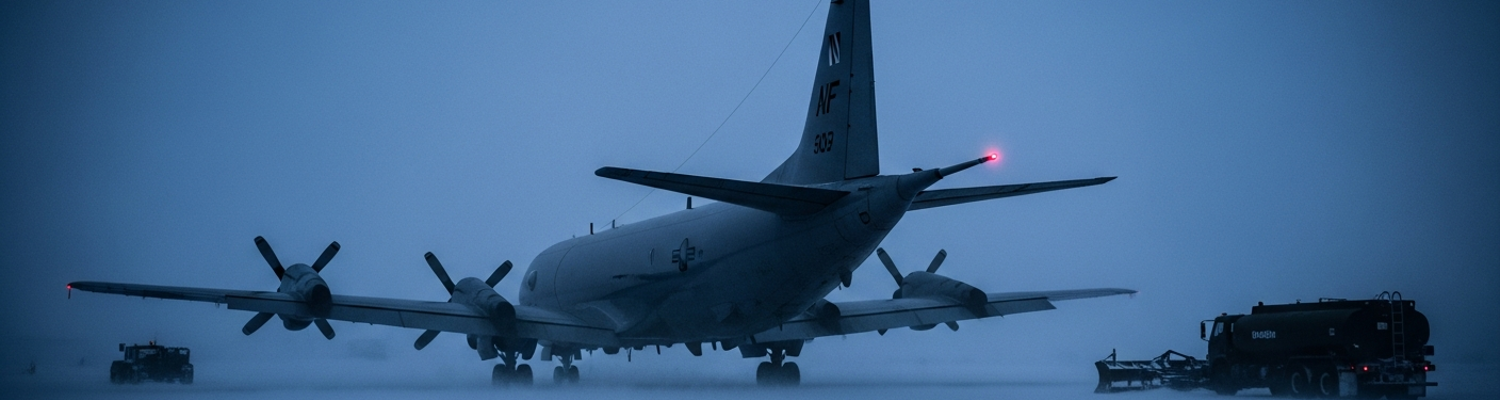

Of the 757 P-3 Orions built, a significant number were lost to operational accidents. This tally reflected the demanding nature of their missions. Developed from the Lockheed L-188 Electra airliner, the P-3 Orion was the U.S. Navy’s principal long-range anti-submarine warfare (ASW) aircraft for the latter half of the Cold War. Its four Allison T56 turboprop engines provided the endurance for flights that could last over twelve hours, much of it spent at low altitudes over unforgiving seas. The operational profile was punishing. A standard mission involved a long transit, followed by hours of methodical, low-level searching, often in severe weather that would ground other aircraft. The crew, a team of officers and enlisted specialists, operated in a cramped tube filled with the glow and hum of electronics. Their primary task was to hunt Soviet submarines, particularly the ballistic missile submarines (SSBNs) that formed a leg of the Soviet nuclear triad. A review of operational logs indicates the hunt relied on a suite of sensors. Sonobuoys, dropped from the fuselage, listened for the acoustic signature of a submerged vessel. The distinctive tail “stinger” housed a Magnetic Anomaly Detector (MAD) designed to register the metallic bulk of a submarine against the Earth’s magnetic field. Using the MAD boom required the Orion to fly extremely low, sometimes just a few hundred feet above the waves, putting immense strain on both the airframe and the pilots. Saltwater corrosion was a constant battle, eating away at control surfaces and engine components. The airframes themselves, subjected to repeated stress from low-level maneuvering, developed fatigue cracks that grounded a substantial portion of the fleet in later years.
Forward Operating Locations were the linchpins of this strategy. None were more critical than Naval Air Station Adak in the Aleutian Islands of Alaska. Little more than a volcanic rock in the Bering Sea, Adak was known as the “Birthplace of the Winds,” a place of perpetual gray skies, horizontal snow, and sudden, violent storms called Williwaws that could generate winds of over 100 knots. For the ground crews and flight crews of patrol squadrons deployed to Adak, life was a cycle of difficult maintenance in sub-zero temperatures and flying missions into some of the most dangerous airspace on earth. From Adak, Orions could patrol the “bastion” in the Sea of Okhotsk, a heavily defended area where the Soviet Navy protected its SSBN fleet. Flights from Adak were launched to track Soviet submarines departing the naval base at Petropavlovsk on the Kamchatka Peninsula. Archival evidence shows these were high-stakes missions. A P-3 from Patrol Squadron 9 operating out of Adak was forced to ditch in the North Pacific in October 1978 after an engine fire, leading to a rescue by a Soviet fishing trawler. The logistical chain to sustain this outpost was tenuous, relying on a long and vulnerable supply line to provide everything from spare engine parts and sonobuoys to food for the thousands of personnel stationed there.
Thousands of miles away, in the tropical heat of Okinawa, Japan, Kadena Air Base served a similar, though climatically opposite, role. As a major hub for U.S. forces in the Pacific, Kadena-based P-3 squadrons monitored the Soviet Pacific Fleet’s movements from Vladivostok and kept watch over growing Chinese naval activity. Instead of ice and arctic winds, maintenance crews at Kadena battled typhoons, high humidity, and the corrosive effects of a salt-laden tropical environment. Patrol squadrons from bases in Florida, Hawaii, and Washington would rotate through these remote assignments, placing a constant strain on personnel and equipment as they maintained a ceaseless, worldwide vigil.
An internal conflict was codified in regulations like Department of Defense Directive 1332.14, first issued in 1981. It stated that homosexuality was incompatible with military service. The Navy implemented this directive through its own instructions and personnel manuals, creating a formal, bureaucratic mechanism for removal. The policy mandated the administrative separation of any service member who engaged in or demonstrated a propensity for homosexual conduct. This created a system where rumor, accusation, or coerced confession could end a career. Investigations were often carried out by the Naval Investigative Service (NIS), an agency that gained a reputation for prioritizing these inquiries. An accusation could trigger a full investigation, pulling maintenance personnel off the flight line for lengthy interrogations. The process was disruptive. It created an environment of suspicion that was toxic to the small-unit cohesion essential for high-stress operations. From 1980 to 1990, an average of 1,500 service members were discharged for homosexuality each year.
The loss of a single experienced technician on a P-3 Orion squadron could have operational consequences far exceeding the individual’s removal. The Orion was a complex machine, a fusion of a durable airframe with highly specialized, often temperamental, electronic and mechanical systems. An Aviation Electronics Technician (AT) specialized in the AN/ASQ-81 Magnetic Anomaly Detector or the AN/AQA-7 acoustic processing system held knowledge that was not easily replaceable. These skills were honed over years of hands-on work in the cramped confines of a P-3, often under the extreme pressure of a deployment cycle. A review of maintenance practices shows that informal knowledge, passed from a seasoned E-6 to junior sailors, was critical for diagnosing recurring gremlins in the complex wiring or the sensitive MAD boom calibration. When an investigation removed such a technician, often with little warning, it created a vacuum of expertise. A GAO report from a later period noted that from 1994 to 2003, nearly 800 separated personnel held critical occupations, costing millions in replacement and training. For a squadron at a forward operating base like Adak, Alaska, or Kadena, Japan, the sudden loss of a senior Aviation Machinist’s Mate (AD) who knew the unique quirks of their assigned Allison T56 engines could mean a reduction in aircraft availability. This directly impacted the squadron’s ability to meet its patrol commitments.
The removal of a skilled technician did not just mean the loss of one person; it meant the degradation of a unit’s collective capability. In the tight-knit world of a deployed patrol squadron, where crews lived and worked in close quarters for months, the policy was a destructive force. The investigative process itself, which could involve questioning dozens of sailors based on a single accusation, sowed mistrust among personnel who relied on each other for their survival. A maintenance chief, already struggling to keep aircraft mission-capable in corrosive salt-air environments or sub-zero temperatures, would suddenly be forced to ground a plane not for a lack of parts, but for a lack of qualified hands. The Soviet submarines continued their patrols, and the demand for Orion missions remained constant. The result was increased strain on the remaining technicians, longer work hours, and the potential for maintenance shortcuts born of desperation. Each factor increased the risk for the flight crews who took these complex aircraft out over the open ocean for 12-hour stretches.
The enforcement of personnel policies regarding homosexuality fostered an internal climate of pervasive fear that directly degraded the operational capability of P-3 Orion maintenance units. A review of the period shows that Naval Investigative Service (NIS) inquiries became a disruptive force on flight lines and in maintenance bays from the Aleutian Islands to Sicily. An investigation could be triggered by something as simple as an anonymous accusation. NIS agents would then arrive at a squadron, often unannounced, and begin pulling personnel off their assigned tasks for lengthy, coercive interrogations. These sessions were designed to extract confessions and, more importantly, the names of other service members, creating a cascading effect of new investigations. The methods employed by NIS were known to be aggressive, with investigators sometimes threatening frightened junior sailors with prison time to secure cooperation. The spectacle of a fellow technician being escorted away for questioning created deep mistrust within the small, interdependent teams responsible for keeping the P-3s airworthy. Cohesion, the bedrock of a high-performing maintenance department, was fractured. In the high-stakes, zero-margin environment of a forward-deployed P-3 squadron, where a single overlooked fault in a hydraulic line or engine turbine blade could be catastrophic, this breakdown in trust was a direct threat to safety and mission execution.
These administrative purges resulted in a catastrophic loss of institutional knowledge. The removal of a single experienced technician was not a simple one-for-one loss; it was the erasure of years of undocumented, hands-on experience that could not be replicated by a technical manual. An Aviation Machinist’s Mate First Class (AD1) with a decade of service knew the specific quirks of the four Allison T56 turboprop engines on each aircraft assigned to the squadron. They knew which engine tended to run hot, which propeller governor was sluggish in the cold of an Adak winter, and the precise feel of a correctly rigged engine control cable. Likewise, a seasoned Aviation Electronics Technician (AT) who specialized in the AN/ASQ-81 Magnetic Anomaly Detector (MAD) or the AN/AQA-7 acoustic processing system held invaluable diagnostic skills. They understood the ghost signals and false returns that plagued the sensitive systems and could differentiate between a genuine sensor fault and simple electronic interference, a skill honed over thousands of flight hours. This informal, unwritten knowledge was the critical lubricant in the Navy’s maintenance machine, passed down from senior petty officers to junior sailors on the flight line. When an administrative separation removed a senior technician, it created a vacuum of expertise.
The operational consequences were immediate. At a forward operating location like NAS Kadena in Japan or NAS Sigonella in Sicily, the operational tempo was relentless, with squadrons tasked to maintain a constant ASW vigil. The sudden removal of a key maintenance chief or a specialized technician could directly impact aircraft availability. A P-3C that required a complex radar alignment or a difficult engine component replacement might be grounded not for a lack of parts, but for a lack of qualified hands with the requisite experience to sign off on the repair. This placed additional strain on the remaining technicians, who were forced to work longer hours under immense pressure. The squadron’s ability to meet its assigned patrol sorties would degrade, creating a tangible hole in the Cold War surveillance network. This pressure increased the likelihood of maintenance shortcuts and errors, elevating the risk for the 11-member aircrews who flew these aircraft on grueling, 12-hour missions over open water, often shutting down one or even two engines to conserve fuel and extend their time on station.
Operational logs reveal the tyranny of logistical distance. An Allison T56 turboprop engine suffering a critical failure on Adak did not simply mean a new engine would be rolled out of a nearby warehouse. The replacement part began a journey thousands of miles away, perhaps at a depot in California, before being loaded onto a Military Airlift Command C-141 Starlifter. That aircraft would then fly a multi-leg route across the vast North Pacific, often facing the same treacherous weather that P-3 crews themselves battled, with potential delays at transit hubs like Elmendorf Air Force Base in Anchorage. A single grounded C-141 due to an Aleutian storm meant a multi-million dollar P-3 Orion remained non-mission capable on the Adak flight line. The impact was profound. Squadrons were forced to ground aircraft for want of specific components, from propeller governors to sensitive circuit boards for the AN/APS-115 radar system. This vulnerability stretched to every aspect of the mission; the entire supply of sonobuoys, the primary tool for hunting Soviet submarines, was dependent on this fragile air bridge. For the ground crews, this meant a perpetual state of cannibalizing parts from one broken aircraft to get another into the air, a practice that created a cascade of maintenance issues and paperwork that further bogged down the system.
This material scarcity was compounded by a severe lack of personnel depth. The maintenance department of a deployed P-3 squadron was a small, specialized ecosystem with almost no surge capacity. The complexity of the Orion’s mission package required a team of highly trained enlisted technicians, each with a narrow and irreplaceable specialty. An Aviation Electronics Technician (AT) who had mastered the temperamental AN/ASQ-81 Magnetic Anomaly Detector (MAD) system, with its complex compensator controls and sensitive helium magnetometer, was one of perhaps only two or three such experts in the entire squadron. These systems required constant, delicate calibration to filter out motion-generated noise and isolate the faint magnetic signature of a submerged hull. Similarly, a senior Aviation Machinist’s Mate (AD) possessed an almost intuitive understanding of the four Allison T56 engines, knowing by sound and feel which one was prone to overheating or which propeller was sluggish in the sub-arctic cold. The loss of a single one of these key individuals, whether to sickness, family emergency, or administrative action, did not just reduce a work center’s capacity. It could eliminate it entirely for a specific, critical system, directly grounding an aircraft.
Maintenance logs from forward-deployed squadrons show a constant battle to keep the aircraft’s complex mission systems operational. The AN/APS-115 maritime surveillance radar, for example, was essential for detecting the minute surface signatures of a submarine’s snorkel or periscope mast against miles of chaotic sea clutter. This system, which entered service with the early P-3C variants in 1969, operated in the X-band and used a high-powered transmitter to achieve its range, but its core components were prone to failure under the punishing conditions of low-altitude maritime patrol. The magnetron and traveling-wave tube, critical for generating and amplifying the radar’s microwave pulses, had a finite service life and were highly susceptible to the constant vibration of turboprop flight. When one failed over the Norwegian Sea, the aircraft was effectively blind. An Aviation Electronics Technician (AT) could diagnose the fault, but replacing it was contingent on a fragile supply chain. A request for a new transmitter module from a base like NAS Adak would trigger a logistical cascade stretching back thousands of miles, a process that could ground a high-value ASW asset for weeks.
To meet relentless operational demands, maintenance chiefs would authorize technicians to pull a working radar transmitter from one aircraft to get another mission-capable. This practice, while keeping sortie rates up in the short term, created “hangar queens,” airframes systematically stripped of functioning components until they were little more than hollow shells. Data from the late Cold War period shows that P-3C squadrons were consistently among those with the highest rates of cannibalization in the Navy. The process doubled the workload; a technician had to perform two removal and two installation procedures instead of one, all while meticulously documenting the movement of parts. This practice created a maintenance nightmare, increasing the risk of collateral damage to wiring harnesses and adjacent components, and leaving a trail of paperwork that further strained an already overtaxed system.
The problem was magnified with the introduction of newer, more integrated digital systems. The AN/AQS-13 sonar system’s technological lineage was shared with the P-3’s acoustic processors, which handled data from dozens of deployed sonobuoys. As these systems evolved through different production blocks and updates, compatibility became a severe operational headache. A squadron might receive a new set of digital signal processor circuit cards for its acoustic analysis suite, intended to provide better detection of quiet Soviet submarines. Archival evidence shows that these new cards were often not “plug-and-play.” An Aviation Electronics Technician would discover that the new card required a different voltage from the aircraft’s existing power supply or used a data bus protocol incompatible with the older display units. There was no simple software patch. The fix required painstakingly re-pinning cannon plugs, running new shielded wires through crowded fuselage conduits, and performing calibrations that were often undocumented in field manuals. This work fell on a small number of senior technicians, often E-6s or E-7s, who possessed years of hands-on experience with the specific wiring and quirks of their squadron’s aircraft. The loss of even one of these specialists could render an entire squadron incapable of performing such an upgrade, forcing them to fly with degraded sensor capabilities.
The institutional climate of fear had a corrosive effect on the technical communication essential for safe flight operations. A deep analysis of maintenance practices from the period reveals how the threat of investigation degraded the accuracy of reporting on component availability and installation. In a deployed P-3 squadron at a location like NAS Sigonella, Sicily, an Aviation Electronics Technician (AT) faced a recurring nightmare: a newly received circuit card for the AN/AQA-7 acoustic processor was physically incompatible with the wiring in his aircraft. The cannon plug on the new unit did not match the airframe’s harness. The official procedure was to file a Quality Deficiency Report (QDR), a step that would ground the aircraft and create a high-visibility paper trail that invited scrutiny. With Naval Investigative Service (NIS) agents known to be on base conducting inquiries, any anomaly could draw unwanted attention. The technician, under pressure to maintain sortie rates, might instead attempt an undocumented field modification, re-pinning the connector himself. He would then sign the logbook, falsely certifying the system as fully mission capable to avoid the risk of a formal inquiry into the supply discrepancy. This act of miscommunication sent an aircraft on patrol over the Mediterranean with a critical, unverified modification to its primary submarine-hunting sensor suite.
This climate also fostered a dangerous reluctance among junior maintenance personnel to report observed problems or ask clarifying questions. A young Airman Apprentice working on the flight line at NAS Adak might notice a senior Aviation Machinist’s Mate (AD) taking a shortcut during a propeller governor adjustment on an Allison T56 engine. Perhaps the senior petty officer, hurried by the freezing Aleutian winds, skips a mandated torque-check sequence, dismissing it as unnecessary. The apprentice, aware of the step from his training manuals, faced a difficult choice. Challenging a respected E-6, who might already be paranoid about the ongoing investigations, was a significant personal risk. It could be seen as insubordination or, worse, an attempt to create trouble that could attract NIS attention to the entire work center. The safest course of action was silence. This silence allowed a potentially hazardous condition, an improperly secured component in the propeller control system, to go uncorrected. The institutional function of peer review and safety cross-checks was effectively neutralized by a personnel policy that made technicians fear each other and the chain of command.
These individual decisions accumulated into a systemic degradation of fleet-wide maintenance integrity. A review of historical maintenance data indicates a pattern of “shotgun” troubleshooting, where technicians would swap multiple components without a precise diagnosis. This happened because properly diagnosing a complex fault in a system like the AN/APS-115 radar often required collaboration between different work centers and a willingness to admit a lack of knowledge, actions that increased a technician’s visibility. The easier, less conspicuous path was to cannibalize parts from another P-3 until the fault disappeared. This approach ballooned the man-hours required for repairs. More critically, it meant that the underlying reasons for component failures were often not discovered. The fear of investigation incentivized a maintenance culture of silence and shortcuts, passing latent mechanical and electronic risks from the maintenance bay directly to the flight crew on their next long-range patrol.
Operational logs from forward-deployed P-3 squadrons during the Cold War reveal a consistent pattern of mission cancellations directly attributable to critical component failures. An anti-submarine warfare patrol scheduled to launch from NAS Adak, Alaska, might be scrubbed hours before takeoff due to a failed propeller pitch control (PPC) unit on one of the four Allison T56 engines. This was not a simple component swap. The PPC was a complex hydromechanical device, and its failure rendered the entire engine, and thus the aircraft, non-mission capable. The request for a replacement would initiate a daunting logistical process, stretching from the desolate Aleutian Islands back to a supply depot in California. The part’s journey depended on Military Airlift Command transport, which was itself subject to the same violent weather that frequently grounded the Orions. A delay of days could easily stretch into weeks, leaving a multi-million dollar ASW asset useless on the flight line.
The lack of qualified hands was just as damaging. The institutional climate of fear surrounding investigations meant that the sudden, administrative removal of a single senior technician could ground an aircraft as effectively as a missing engine. Consider the AN/ASQ-81 Magnetic Anomaly Detector (MAD), the key sensor housed in the P-3’s distinctive tail boom. This system was notoriously temperamental, requiring constant calibration by a seasoned Aviation Electronics Technician (AT) to filter out the noise of the airframe and accurately detect the faint magnetic signature of a submerged submarine. A squadron might only have two or three technicians with the requisite years of experience to properly troubleshoot and repair the MAD system’s complex helium magnetometer and compensator controls. If an investigation by the Naval Investigative Service (NIS) targeted and removed one of these specialists, that specific expertise vanished overnight. A replacement might not arrive for months, if at all during a six-month deployment. Consequently, an Orion with a malfunctioning MAD boom would be officially designated as partially mission capable, but for the primary ASW mission, it was effectively crippled. A unit that was supposed to have nine mission-capable aircraft might, in reality, only be able to generate four or five, creating a significant gap in the surveillance network intended to track Soviet submarine movements in critical areas like the GIUK gap or the Sea of Okhotsk.