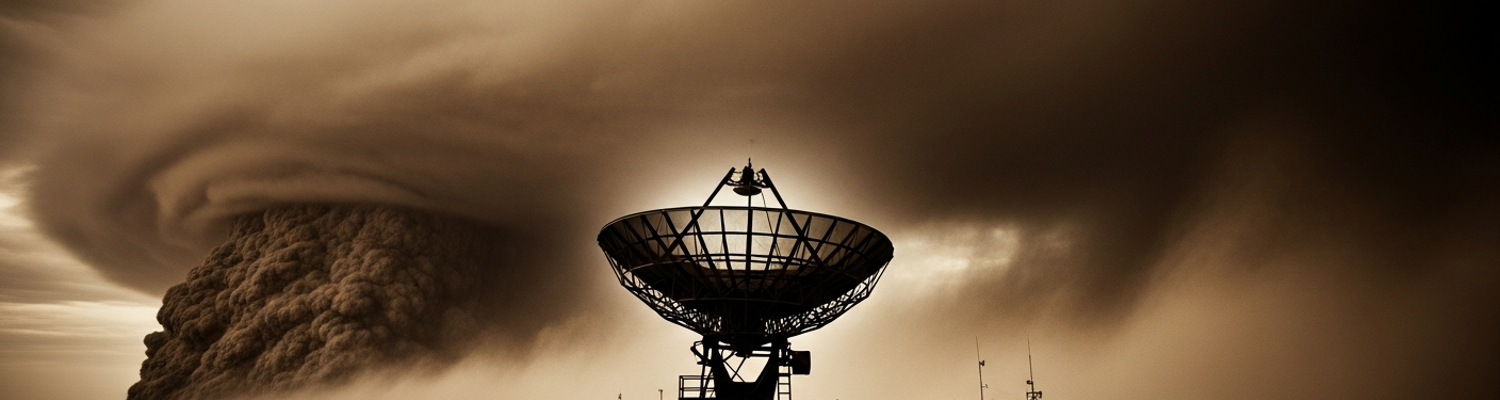

The Desert Anvil
The Ghorian Depression was a basin of extremes. Daytime temperatures on the valley floor regularly surpassed 120 degrees Fahrenheit, rendering metal surfaces untouchable and causing machinery lubricants to lose viscosity. At night, temperatures could plummet toward freezing. This rapid thermal shift caused fine, aerosolized dust to precipitate from the atmosphere, coating every surface in a gritty film. Rain was a rare and violent event, turning the bone-dry ground into a thick, impassable morass of mud that clung to boots and vehicle tires.
This was the environment before any human factor was introduced.
Into this setting was inserted a small, specialized element of the U.S. Coast Guard. Archival deployment orders (ref. PACAREA DESK-LOG 03-11A) identify them as Communications Engineering Support Team 3 (CEST-3), a detachment of a larger Port Security Unit. CEST-3 was not a standard signals unit. Its technicians were a hybrid of electricians, machinery technicians, and electronics specialists. Many had spent their careers maintaining remote lighthouse stations or the complex communications suites aboard icebreakers in the high Arctic. Their core competency was not tactical radio operation but the long-term sustainment of complex, power-hungry electronic infrastructure in isolated, hostile environments. They were experts in power generation, HVAC systems for sensitive components, and the physical engineering required to keep a major electronic installation running far from any support base. They were maintainers sent to a war zone for a mission that, on paper, suited their unique background.
Their destination was a remote outpost designated Forward Operating Base Erebus. A review of operational logs places FOB Erebus deep within the depression, approximately 70 kilometers from the nearest established friendly position. The FOB was a hastily constructed ring of Hesco barriers and repurposed shipping containers. Its location was chosen not for tactical advantage but for its unobscured line-of-sight to geostationary satellites, making it a node for signals intelligence and communications relay. The base itself was minimal. A command-and-control container, a small aid station, and berthing for its skeleton crew. The entire existence of the FOB was predicated on the equipment CEST-3 was sent to protect.
That equipment was the AN/TSC-156 Tactical SHF Satellite Terminal, a powerful but delicate ground station. The terminal provided the primary beyond-line-of-sight, high-bandwidth data link for the entire operational theater, connecting disparate units to the command structure. It handled encrypted voice, high-resolution drone surveillance feeds, and logistical data through a secure connection with the MILSTAR satellite constellation. The system was not a single dish but a collection of vulnerable subsystems. A 4.5-meter parabolic antenna, a complex array of waveguide feeds, and a high-power amplifier that required its own dedicated cooling system. Operational documents show the amplifier’s klystron tube was especially susceptible to the extreme temperature fluctuations. Its air intake filters were constantly clogged by the fine particulate dust endemic to FOB Erebus. The precise rotational actuators of the antenna pedestal, designed for maritime stability, were ill-suited to the abrasive desert dust.
A Losing Battle with Dust
A close review of logs from FOB Erebus reveals that the initial response to the pervasive dust was a series of desperate, wholly inadequate field improvisations. The AN/TSC-156 terminal’s high-power amplifier, with its sensitive klystron tube, relied on a constant flow of clean, cool air. Its standard-issue air intake filters, designed for benign environments, were overwhelmed within hours. Maintenance reports filed by CEST-3 describe technicians cannibalizing Hesco barrier geotextile fabric, stretching the thick, non-woven material over the primary air intakes and securing it with duct tape and zip ties. When that proved too restrictive for airflow, they resorted to using their own uniform t-shirts, creating multi-layer screens to catch the particulate without choking the amplifier’s cooling fans. These makeshift filters required cleaning multiple times a day. The process involved beating them against a container wall, releasing plumes of the very dust they were meant to contain. The fine, abrasive powder still found its way into the system, coating heat sinks and leading to a documented spike in thermal alarms.
The environmental onslaught was unceasing. Archival weather data, cross-referenced with unit situation reports, indicates that FOB Erebus was struck by haboob events an average of three times per week during the peak dry season. These were rolling walls of sand and silt, often several kilometers high, that would descend on the outpost with little warning. Wind speeds during these events regularly exceeded 60 miles per hour, and visibility dropped to less than five meters for hours at a time. The intensity of these storms rendered the improvised filtration methods useless. The haboobs blasted the base with a force that tore away the scavenged fabric covers and physically scoured the surface of the parabolic antenna, degrading its sensitive surface coating. The volume of airborne particulate during a haboob was so high that it forced the complete shutdown of the AN/TSC-156 terminal. Operational logs show CEST-3 powering down the system preemptively whenever a haboob was sighted. This procedure took the entire theater’s primary satellite data link offline for an average of four to six hours per event.
The core of the problem was a logistical disconnect. CEST-3 correctly identified the need for a specialized cyclonic pre-filter assembly, a piece of equipment designed for industrial-grade HVAC systems in desert environments. Such systems use centrifugal force to separate larger dust particles before they reach finer filter elements. An appropriate model was identified, complete with a National Stock Number (NSN), the 13-digit code that is the lifeblood of the American military logistics system.
Submitting the request became a bureaucratic nightmare. As a Coast Guard unit operating under a joint-force command, CEST-3’s supply requests (DD Form 1348-1A) were routed through their parent command, the Surface Forces Logistics Center (SFLC), before being entered into the theater-wide Army system. Archival request forms show the NSN for the filter assembly was repeatedly rejected by the automated system. The part was not part of the Coast Guard’s standard inventory. The system was not configured to allow an SFLC-generated request to draw from an Army-specific supply depot for a non-standard item. While the needed filters were likely sitting in a warehouse less than 500 kilometers away, the digital firewall between the separate service logistics systems made them entirely inaccessible. Each failed request meant another week of CEST-3 technicians cleaning t-shirts and watching the klystron tube’s temperature gauge creep steadily higher.
Cascading Equipment Failure
Particulate abrasion caused a series of mechanical failures in the AN/TSC-156 terminal, documented in CEST-3 maintenance logs. The terminal’s 4.5-meter parabolic antenna relied on a pedestal with precision azimuth and elevation drive motors to maintain its lock on the MILSTAR satellites. These systems, designed with seals intended for maritime moisture and salt spray, were completely unprepared for the invasive nature of desert dust. Fine particulates, defined as particles smaller than 150 micrometers, worked their way past the inadequate seals of the drive assemblies. Maintenance reports document an audible grinding noise from the pedestal motors weeks before their eventual failure. The highly abrasive silicate dust mixed with the bearing grease. This formed a grinding compound that scoured the surfaces of the delicate worm gears and bearings. The contamination created increased friction. The motor strained under the load. The satellite tracking became progressively erratic. The terminal’s automated tracking system began to constantly hunt for the signal, making minute, jerky adjustments that further stressed the damaged components. This culminated in the complete seizure of the elevation drive, locking the dish at a useless angle and rendering the entire asset inert.
With the primary antenna disabled, the beyond-line-of-sight communications capability for the operational area was severed. The loss of the AN/TSC-156 terminal created an immediate information deficit with mission-wide consequences. Operational records show the terminal’s failure resulted in the instantaneous loss of the theater’s primary high-bandwidth data link. This meant the termination of secure VoIP command and control channels, the interruption of large data file transfers for intelligence analysis, and the blackout of full-motion video feeds from unmanned aerial surveillance platforms. Without the satellite link, the operational reach of these drones was drastically reduced. They were forced to rely on line-of-sight data links which tethered them to ground stations and limited their ability to provide overwatch for dispersed units. The reversion to backup communications, primarily single-channel tactical radios, represented a severe degradation of capability. Bandwidth dropped from megabits per second to mere kilobits, forcing a reliance on slow, unsecure, and brief data bursts.
A review of after-action reports from a long-range reconnaissance squadron, correlated with the AN/TSC-156 downtime, illustrates the tangible impact. A Ranger patrol operating 150 kilometers from the nearest friendly position was tasked with confirming the location of a high-value target for a follow-on mission. The patrol was relying on the satellite link for overwatch from a Predator drone and to maintain contact with the Joint Operations Center. When the pedestal motor at FOB Erebus finally seized, the patrol’s video feed and primary communications link vanished. They were operationally blind and isolated. Per their standard operating procedure for communications loss, the team was forced to abort their mission, move to a pre-planned contingency location, and attempt to re-establish contact. The window of opportunity to act on the intelligence closed. The high-value target was able to relocate. The mission failed, not because of enemy action, but because of an engineering oversight and a handful of abrasive dust in a drive motor hundreds of kilometers away.
The Human Cost
Medical logs from Forward Operating Base Erebus document the physiological toll of the Ghorian Depression. The same fine, alkaline dust that crippled the AN/TSC-156 terminal waged a similar campaign against the bodies of the CEST-3 technicians. The particulate, smaller than 75 micrometers and sharp-edged, was easily inhaled. Medical records document a near-universal affliction among the crew, a condition noted in logs as a persistent, dry, hacking cough that produced bloody sputum. This was the direct result of silicate particles causing microscopic lacerations to the tracheal and bronchial tissues, leading to chronic inflammation. The base aid station saw a significant increase in requests for respiratory assistance but lacked the specialized equipment to treat anything beyond superficial symptoms. Post-deployment health screenings for CEST-3 personnel showed a statistically significant incidence of conditions analogous to silicosis, a lung disease typically associated with miners and stonecutters.
Standard-issue ballistic sunglasses, designed without foam seals or side-shields, offered little protection from wind-driven particles. Medical after-action reports detail numerous cases of acute conjunctivitis and painful corneal abrasions. Technicians working outdoors on the satellite terminal during even mild winds reported a constant stinging feeling in their eyes, forcing them to flush their eyes with precious bottled water multiple times a day. This constant irritation degraded their ability to perform fine-detail technical work, directly impacting their mission.
The physical cost of the extreme heat was immediate. A review of casualty reports reveals that heat-related injuries were the single most common medical issue at FOB Erebus, surpassing even combat-related trauma in the wider operational area. The combination of 120-degree Fahrenheit ambient temperatures, high solar load, and the heavy physical exertion required to maintain the failing equipment created a perfect storm for heat exhaustion and heatstroke. Log entries describe at least two instances where technicians lost consciousness while performing maintenance on the exposed antenna pedestal during midday. The official water ration, while technically compliant with regulations, failed to account for the extreme evaporative loss from perspiration in the low-humidity environment. Personnel were in a constant state of advanced dehydration, leading to documented symptoms of cognitive impairment, severe muscle cramping, and vertigo. These symptoms directly degraded the unit’s operational effectiveness, as complex diagnostic procedures were attempted by personnel suffering from the early stages of heat injury.
There was no doctrinal preparation for this environment. CEST-3 received no theater-specific acclimatization training. Archival training schedules show the unit transitioning directly from their temperate home base to FOB Erebus with no phased introduction to the heat. Army doctrine, which mandates strict work/rest cycles and hydration schedules based on established Heat Category 5 levels, was not formally applied to the attached Coast Guard detachment. The unit was left to self-regulate. Their personal protective equipment was fundamentally inappropriate. They were issued standard shipboard coveralls, made of a heavy, non-wicking cotton blend that trapped heat and moisture against the skin. The medical evacuation rate for CEST-3 due to non-combat injuries, primarily heatstroke and severe respiratory distress, was nearly 300% higher than that of acclimatized Army infantry units operating in the same sector.
The Futility of Expertise
Constant, unresolvable equipment failures degraded the professional morale of the CEST-3 technicians. These individuals were career specialists, some with decades of experience maintaining complex electronic systems in the harshest maritime environments. Their professional identity was built on the ability to diagnose and repair. The situation at FOB Erebus systematically dismantled that identity. The daily ritual involved attempting field-expedient repairs on the AN/TSC-156 terminal, knowing those repairs would fail, and then submitting official parts requisitions that they knew would be rejected. This cycle created a condition of learned helplessness. Maintenance logs, written in terse, professional language, betray a growing frustration, with entries detailing the same failed fixes for the antenna pedestal drive and amplifier cooling system day after day. The enemy was not an opposing force but an indifferent environment and an inflexible supply chain. The psychological weight came from knowing the precise technical solution, a cyclonic pre-filter or a properly sealed drive motor, and being powerless to implement it.
The psychological strain manifested in tangible ways. A review of informal unit communications and redacted personnel logs points to a significant degradation of unit cohesion. In the confines of the small, isolated base, interpersonal conflicts became frequent. Arguments over repair procedures and duty rosters escalated into shouting matches. The unit leader, a Chief Warrant Officer, noted a sharp increase in insubordinate remarks and a general breakdown in military bearing, attributing it directly to the futility of the primary mission. There is also evidence of personnel developing a form of environmental fatalism, a shared belief that the desert itself was an active entity determined to defeat them. This was compounded by extreme isolation. The very equipment they were there to maintain was their only high-bandwidth link to the outside world. When it failed, they were cut off not just from the command structure, but from their families. The inability to make satellite phone calls or send emails for weeks at a time created a profound sense of abandonment.
The long-term impact was severe. Post-deployment personnel tracking data indicates an anomalously high rate of separation from the service among the detachment’s members. Of the eight technicians deployed to FOB Erebus, five either submitted their resignations or declined to re-enlist at the end of their contracts. This was a separation rate of over 60 percent, triple the Coast Guard average for that career field at the time. Of the three who remained in the service, two submitted formal requests for a change in rating, transferring out of the electronics and engineering fields entirely. Health records also show a lasting toll. Several members of the team were later diagnosed by the Department of Veterans Affairs with chronic adjustment disorders and anxiety, with clinical notes directly referencing the feelings of failure and isolation experienced during the FOB Erebus deployment. The institutional memory of the event was effectively buried, but the professional and psychological cost to the individuals involved was permanently documented in their service records.