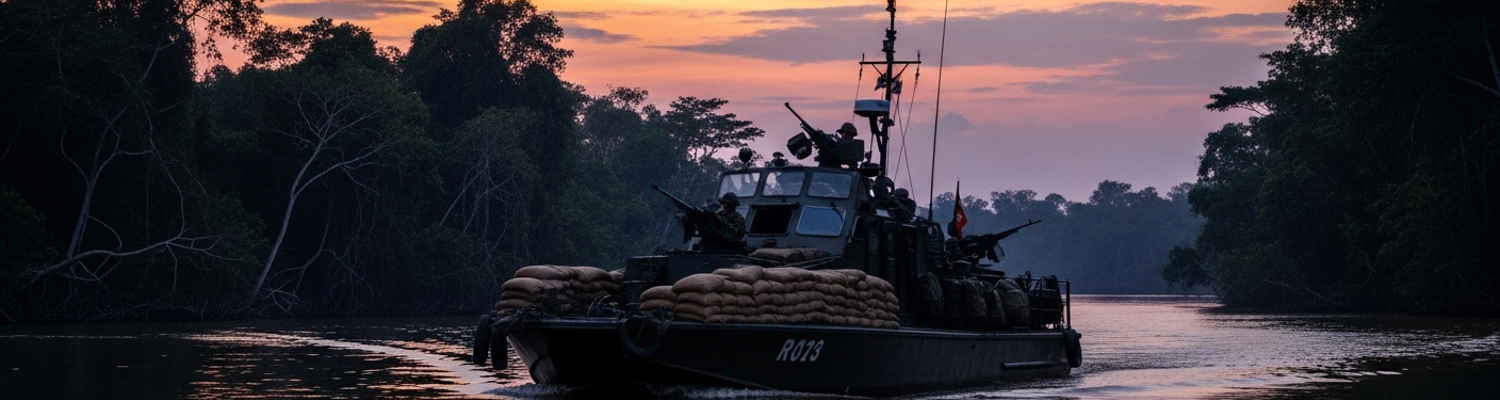

Official Marine Corps doctrine presented riverine warfare as a clean, systematic affair. It was the logical extension of sea power inland, a controlled push up the arterial waterways of an enemy heartland. The reality for the 3rd Battalion, 5th Marines in Quảng Nam Province during July 1970 was something else entirely. It was a grinding, unpredictable contest against an opponent who had weaponized the very water and its banks.
The 3rd Battalion, 5th Marines was a central element in the 5th Marine Regiment’s pacification efforts within the volatile I Corps Tactical Zone. By mid-1970, the policy of Vietnamization was in motion. The battalion’s mission became a difficult mix of offensive action and security for the American withdrawal. A declassified June 1970 command chronology (NARA Record Group 127) confirms 3/5 Marines conducted continuous pacification operations with Army of the Republic of Vietnam (ARVN) units. The battalion’s rear command post sat at the An Hoa Combat Base. Its forward command post occupied Hill 65, a position offering observation over key terrain. This disposition placed the battalion directly across a major enemy infiltration corridor known as the Arizona Territory, a network of villages and hidden paths north of the Thu Bồn River. The mission was not conventional. It was a repetitive cycle of interdiction, aimed at stopping Viet Cong (VC) and North Vietnamese Army (NVA) units from reaching the coastal plains and the Da Nang Air Base. The battalion was a barrier force, constantly reacting to enemy movements in a region it could never fully dominate.
This unending mission played out across a demanding geography. The battalion’s area of operations was defined by the Vu Gia and Thu Bồn rivers, creating a battlespace of rice paddies, scrub, and stream-laced hamlets. The most notorious sections were Go Noi Island and the adjacent Arizona Territory. These were long-established enemy strongholds, providing concealment and staging points for attacks. The river systems were the lifeblood for all forces. For the Marines, waterways like the Thu Bồn were essential supply routes. The Liberty Bridge served as a key logistical link connecting An Hoa to Da Nang. For the VC and NVA, the rivers were covert highways for moving troops and supplies. Dense vegetation along the riverbanks offered perfect concealment for ambushes and for sappers to place mines. The water itself, intended as a medium for maneuver, became a source of constant danger. It was a 360-degree threat environment where an attack could come from a submerged mine below or a rocket-propelled grenade from the shoreline.
The daily existence for a Marine in 3/5 during July 1970 was a sequence of high-stress, repetitive missions. Operational logs detail a routine of security patrols and sweeps. A primary task was providing security for engineer mine sweeps along routes like Route 540 and Route 4, enabling convoys to resupply forward positions. These sweeps were a daily gamble against command-detonated mines and booby traps, the leading cause of Marine casualties. On July 15-16, a platoon from 3/5 was tasked with protecting civilians harvesting corn. The second day of this operation devolved into a nightmare of sniper fire and booby traps that killed or wounded numerous South Vietnamese forces, civilians, and 12 Marines, forcing the mission’s cancellation. Other missions included helicopter-borne forays into enemy base areas and cordon-and-search operations. These actions often involved flushing small enemy groups from concealed spider holes, not engaging in large-scale battles. Every patrol was an exercise in extreme vigilance.
Operational logs and technical intelligence reports reveal the sophisticated nature of Viet Cong waterborne mining. The devices were rarely standard. They represented a form of lethal craftsmanship tailored to the environment. While some purpose-built mines were made from sheet metal, the most common devices were improvised from captured or unexploded American ordnance. A 105mm artillery round, a 250-pound bomb, or a mortar shell could form the core of a powerful waterborne IED. Viet Cong sappers would modify these munitions, fitting them with electrical detonators and waterproofing the assembly with tar or plastic. The trigger was almost always command-detonated. This required hundreds of meters of wire spooled out from the mine to a concealed firing position. This method allowed the VC to be selective, waiting for high-value targets like command boats or the 57-foot fiberglass-hulled Minesweeping Boats (MSBs) that were their direct counter.
The weapons were simple. Their deployment was not.
The placement of these mines was a covert, nocturnal affair. Archival evidence shows sappers, often using small wooden sampans easily mistaken for local fishing traffic, would paddle into the dark channels of the Thu Bồn and Vu Gia rivers. They chose locations with precision: narrow bends that forced boats to slow down, approaches to the Liberty Bridge, or known patrol routes. The mines, weighted to sink into the muddy riverbed, were lowered into the water. The most difficult part was running the thin electrical wire back to shore without detection. The wire would be unspooled along the river bottom and hidden in the foliage or buried in the mud of the riverbank, terminating at a hidden bunker. From this position, a single operator with a battery or generator could observe river traffic and choose the moment to complete the circuit, sending a devastating charge through a vessel’s hull. It was a method that required immense patience and a detailed understanding of Marine operational patterns.
For the Marines of 3/5, this created a state of constant peril throughout July 1970. The threat was an active and recurring feature of their operations in Quang Nam province. Naval intelligence summaries from the period show a distinct upswing in mining activities during July. While a major incident like the one that heavily damaged the USS Krishna (ARL-38) on July 6th demonstrated the potential for catastrophic damage, the more psychologically wearing threat was the frequency of smaller encounters. A channel swept clear in the morning could be compromised by noon. The enemy’s lack of a predictable schedule was a weapon. A week of quiet could lull patrols into a false sense of security, which would then be shattered by a sudden, violent explosion. Every routine mission was conducted under the assumption that a mine could be anywhere. This persistent, invisible threat was a significant contributor to the psychological erosion of troops.
Operational logs for July 1970 show the month as a period of intense and bloody encounters with command-detonated mines for the 3rd Battalion, 5th Marines. The battalion's mission involved securing a complex area of operations south of Da Nang, defined by the Vu Gia and Thu Bồn rivers. This area included the Arizona Territory and Go Noi Island. Large-scale firefights were sporadic. The daily routine was a contest against an invisible enemy whose primary weapon was improvised explosive devices. One violent sequence unfolded during a seemingly routine agricultural support mission. On July 15th and 16th, a reinforced platoon from 3/5 was assigned to protect South Vietnamese civilians harvesting corn in the My Hiep area. The objective was to deny the food source to Viet Cong and North Vietnamese Army units.
The second day of the operation descended into chaos.
Enemy forces initiated a series of attacks using sniper fire and pre-placed booby traps. The engagement resulted in casualties across all friendly elements. Three Popular Forces soldiers were killed, and eight Regional Forces soldiers were wounded. Five civilians were also wounded. The Marine platoon itself suffered twelve wounded in action. The high casualty count forced the cancellation of the operation, leaving a significant portion of the corn in the fields. This incident was a microcosm of the conflict in the region: a mission with a clear objective undone by the effectiveness of low-tech enemy tactics that inflicted a steady, draining cost.
The threat was not confined to land. The battalion’s reliance on the river systems made their watercraft prime targets. On July 30, a patrol from Company E, 2nd Battalion, 7th Marines, operating in an adjacent area, experienced the lethality of riverine combat firsthand. Eight Marines patrolling a gorge of the Thu Bồn River in two small boats were ambushed by an estimated four enemy machine gun positions firing from concealed caves. Both boats were sunk, and two Marines were killed. While not a 3/5 unit, this incident, occurring in the same river system, highlights the shared dangers. These ambushes were often precursors to mining operations. Heavy machine gun fire served to suppress the target, pinning down the crew and preventing them from spotting the wires or identifying the triggerman’s position before the mine could be detonated.
The physical damage from these waterborne mines was catastrophic. The standard Landing Craft Mechanized (LCM), often refitted as Armored Troop Carriers or Tango boats, had steel hulls but were not designed to withstand the focused blast of a large mine. An explosion from a device made with a 105mm artillery shell would not merely damage the vessel; it would tear through the hull plating and flood compartments instantly. The violent upward concussion sent deadly secondary fragmentation through the interior troop spaces and could shatter the lightly armored coxswain’s flat. For the Marines aboard, the effect was devastating, combining the blast wave with the immediate chaos of a sinking, crippled boat, often while under direct fire.
The lethal threat posed by command-detonated river mines demanded a tactical evolution outside of established doctrine. Standard-issue equipment was proving inadequate. A close examination of operational records reveals a pattern of field-expedient innovation, born from necessity and executed at the boat-crew level. This battlefield engineering focused on hardening the watercraft, developing methods for discovering the mines, and refining tactical responses to ambushes.
This was survival, redesigned under fire.
The Landing Craft Mechanized (LCM), particularly the modified Armored Troop Carrier (ATC), became a platform for extensive ad-hoc modification. Boat crews and the Marines they carried began reinforcing their vessels with whatever materials were available. It became common practice to add layers of sandbags to the interior of troop compartments and around the coxswain’s flat to absorb shrapnel. Some units scavenged steel plates and used onboard welding equipment to add an extra skin of armor to critical areas. The armament of these boats was also frequently augmented. While a Tango might officially be armed with .50-caliber machine guns and a 20mm cannon, crews would add additional machine gun pintle mounts, often bringing aboard their unit’s own M60 machine guns and securing them to the railings to increase the volume of suppressive fire. This created a vessel bristling with weaponry, capable of putting out a 360-degree field of fire.
Detecting the mines before they could be detonated was a more complex challenge. The mines were nearly impossible to spot in the murky water. In response, units developed several improvised sweeping techniques. The most common was the use of grappling hooks or crude drags fashioned from bent rebar. These would be tied to a long rope and dragged behind a boat in the hope of snagging a command wire. This was an exceptionally dangerous procedure. The boat dragging the hook had to travel slowly, making it an easy target. If a wire was snagged, the crew faced the difficult decision of attempting to cut it or calling in Explosive Ordnance Disposal (EOD) personnel. Another technique involved dedicated spotters. On every transit through a high-threat area, specific Marines were assigned the sole task of scanning the riverbanks with binoculars, looking for the glint of a wire or any sign of a concealed firing position. This required intense concentration and was psychologically exhausting.
The final layer of adaptation involved tactical responses to ambushes. Riverine units refined their convoy and patrol formations to provide interlocking fields of fire. Rather than traveling in a simple line, boats would adopt staggered formations that allowed them to bring their weapons to bear on either bank without endangering the other vessels. Upon taking fire, doctrine was often to turn toward the ambush, charging the enemy position to bring the heavy forward-facing weapons into play while the flank guns suppressed the shoreline. This aggressive counter-attack aimed to overwhelm the ambushers. Against small, fast-moving enemy sampans, the massed fire from M60s, M79 grenade launchers, and the heavier boat-mounted weapons was used to create a wall of lead and explosives. These were not maneuvers found in any field manual; they were learned through a brutal process of trial and error.
After-action reports and medical literature from the period reveal the insidious onset of combat fatigue among the men of the 3rd Battalion, 5th Marines. By July 1970, the symptoms were unmistakable. They were not the dramatic breakdowns of past wars, but a quiet, corrosive fraying of psychological endurance. Marines exhibited a state of hypervigilance so profound it interfered with sleep. The unresolved tension led to noticeable increases in irritability and sudden anger. Apathy and a sense of disconnection became common, a state identified as a key indicator of combat stress reaction. This was made worse by physical exhaustion and difficulty concentrating. For leaders, these signs were alarming; they pointed to a degradation of fighting efficiency rooted not in a lack of will, but in the depletion of mental reserves. The individual replacement policy common in Vietnam prevented the formation of deep unit cohesion that could buffer men against stress. New replacements were thrust into a high-stress environment without established bonds.
The engine of this psychological erosion was the constant, unseen threat of riverine mines. This was a form of warfare that denied the Marines a tangible enemy. The adversary was the water itself. This created a unique and debilitating form of stress. Unlike a firefight, which has a clear beginning and end, the mine threat was perpetual. It bred a specific kind of fear characterized by helplessness and a lack of control. Any moment of lapsed concentration could result in catastrophic violence. The knowledge that a single hidden observer could obliterate a boat and its occupants at will was a heavy burden. This led to a sense of futility, as even successful sweeps offered no lasting security. The psychological impact was a state of permanent anxiety where true rest was impossible.
This unseen danger was layered upon the physical burden of sustained, high-tempo operations. The daily life of a 3/5 Marine in the Arizona Territory was a repetitive cycle of patrols and security details that rarely resulted in decisive contact. The incident on July 15-16, where a mission was aborted after sniper fire and booby traps wounded twelve Marines, was a textbook example of the frustrating nature of their duties. They were engaged in a war of attrition where success was measured in surviving another day, not in capturing ground. The combination of physical exhaustion, sleep deprivation, and the mental stress of a high-casualty environment with no clear endpoint created the ideal conditions for combat fatigue to take root.
Casualty reports and medical logs from July 1970 offer a visceral window into the operational environment of the 3/5 Marines. The Navy Corpsmen attached to the battalion were the frontline archivists of this suffering. Their casualty tags documented injuries that were qualitatively different from those seen in conventional firefights. The signature wound of the riverine war was blast-and-fragmentation trauma from command-detonated mines. A medic responding to a boat hit on the Thu Bồn River would not be dealing with simple gunshot wounds. They faced catastrophic, multi-system trauma. Reports describe traumatic amputations, severe fragmentation wounds, and profound internal injuries from the concussive force of the blast.
These were scenes of absolute chaos.
The medic’s task was often performed on a sinking or burning platform, while still taking fire. The reports detail the triage process under these conditions: identifying the gravely wounded, applying tourniquets, and packing massive wounds to control bleeding, all while using their own bodies to shield casualties. A recurring theme in the medical documentation is the prevalence of secondary injuries. Shrapnel was not just from the mine but from the disintegrating boat, creating a storm of high-velocity fiberglass and steel. Survivors often suffered ruptured eardrums and concussive brain injuries that were not immediately apparent. For the corpsman, each incident was a race against time.
The documentation of psychological trauma is present in the patterns of behavior recorded by medics. In the terminology of the era, combat fatigue was the diagnosis for men who had reached their breaking point. A corpsman might first notice the signs as a change in a Marine. A Marine might become overly jumpy. Others would withdraw completely, showing a flat affect and an inability to connect with their surroundings, a condition known as dissociation. There were documented instances of Marines freezing during patrols. Others manifested their anxiety in physical symptoms like constant nausea and uncontrollable tremors.
These were not signs of weakness. They were the predictable outcomes of a nervous system worn down by unending hypervigilance. Medics reported treating an increasing number of men for insomnia and severe headaches. In more acute cases, a mine detonation, even one that caused no physical injuries, could trigger a complete breakdown. Marines would be brought to the Battalion Aid Station in a state of uncontrolled panic or catatonic withdrawal. These incidents, while often handled at the unit level, were a clear signal that the psychological cost of the riverine war was mounting.
The correlation between the sustained mine threat and the onset of severe fatigue symptoms is undeniable when analyzing the operational tempo. Unlike a firefight, the mine threat was constant and invisible. This created a unique and corrosive form of psychological stress rooted in helplessness. Medical and command chronologies show that periods of high operational tempo in known mine-infested areas corresponded directly with an increase in fatigue-related symptoms. The physical exhaustion of patrolling was compounded by the intense mental strain of knowing that any moment of lapsed concentration could lead to annihilation for the entire boat crew. This continuous state of unresolved fear was the primary catalyst for the widespread combat fatigue.
Operational summaries detailing the performance of the 3rd Battalion, 5th Marines in July 1970 reveal a measurable degradation in unit effectiveness directly attributable to combat fatigue. The individual replacement system, which fed solitary Marines into depleted squads, was a structural weakness that compromised unit cohesion. Historical analysis shows that units with strong social bonds were more resistant to combat stress. The constant shuffling of personnel in 3/5 prevented the formation of these psychological buffers. This manifested in tangible ways. A close review of after-action reports indicates a pattern of slower reaction times and a general loss of initiative. These were not failures of discipline but symptoms of mental exhaustion. The pressure of operating in the Arizona Territory eroded the ability of small-unit leaders to make rapid, effective decisions. The fighting efficiency of the battalion was being worn down by the cumulative weight of perpetual stress.
This was a war against an invisible enemy.
The cumulative effect of this psychological stress and intense physical exhaustion created a breaking point for the individual Marine. The defining stressor was the threat of command-detonated mines, which induced a state of hypervigilance from which there was no relief. This mental strain was layered upon the physical demands of constant patrolling. The cycle of repetitive, inconclusive operations bred a sense of futility. Marines saw their comrades wounded and killed with no discernible progress. The combination of sleep deprivation, the cognitive load of extreme vigilance, and the emotional toll of daily casualties created the perfect conditions for combat fatigue. Symptoms included an inability to concentrate, irritability, and a disengagement from one’s surroundings, a classic thousand-yard stare that signaled a man had reached his psychological limit.
The nervous system, under such prolonged assault, began to fail.
The broader implications of this unaddressed combat fatigue were severe. While Post-Traumatic Stress Disorder (PTSD) was not formally recognized until 1980, the symptoms were widely observed in returning veterans. The experiences of the men of 3/5 in July 1970 were a direct cause of these long-term health consequences. Research conducted decades after the war established a direct link between the intensity of combat exposure in Vietnam and a higher incidence of chronic health problems, including heart disease and arthritis. Veterans who experienced the heaviest combat were nearly twice as likely to develop heart conditions later in life. The psychological trauma also manifested in higher rates of depression, anxiety, and substance abuse. For many who served on the rivers of Quảng Nam Province, the war did not end when they returned home. The unresolved trauma of their tour became a chronic condition, a hidden wound that would affect their physical and mental health for the rest of their lives.