
The Kola Strait was the single point of failure for the Soviet Union's nuclear second strike. This narrow, 57-kilometer-long inlet was the only year-round, ice-free deep-water passage for the entire Soviet Northern Fleet to access the North Atlantic. From fortified bases burrowed into the rock at Severomorsk, Polyarny, and Gadzhiyevo, the bulk of Soviet naval power had to transit this one channel. By the 1980s, this force represented nearly half of the entire Soviet submarine force and two-thirds of its sea-based nuclear deterrent. The most advanced Soviet submarines, the colossal Typhoon-class and the numerous Delta-class SSBNs, all called the Kola home. Their primary mission was to ensure a devastating second-strike capability, a task that required them to slip out of the Kola Strait undetected, pass through the heavily monitored Greenland-Iceland-UK (GIUK) gap, and vanish into the Atlantic.
The journey was a gauntlet. NATO’s anti-submarine warfare network was layered and sophisticated, beginning with the Sound Surveillance System (SOSUS) hydrophone arrays on the seabed and extending to maritime patrol aircraft and hunter-killer submarines tasked with turning the GIUK gap into a kill zone. A review of operational logs indicates the Kola Strait was an inescapable chokepoint. Every Soviet submarine commander knew that from the moment they cast off, they were likely being tracked. The survival of the Soviet state, in the event of war, depended on these vessels getting through. This placed an almost unbearable burden on the crews and the shore-based personnel tasked with their protection.
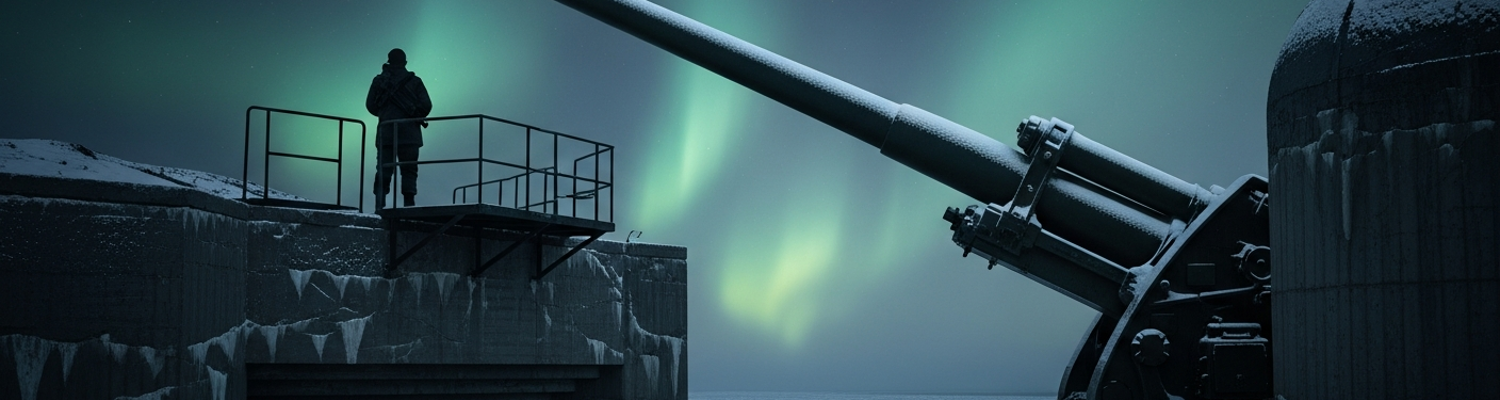
Because the bases themselves were so valuable, they were defended by a dense system of coastal defenses. These were not passive fortifications but active, constantly drilled units living on a perpetual war footing. Batteries of 130mm SM-4-1 and 180mm coastal artillery were dug into the granite cliffs overlooking the strait’s approaches. Their function was to repel any potential NATO amphibious assault aimed at decapitating the Northern Fleet at its moorings, a very real fear in Soviet strategic planning. The crews of these gun positions lived in a state of perpetual readiness. Their existence was a monotonous cycle of maintenance in the arctic climate, punctuated by high-intensity drills simulating an incoming attack. The physical strain of keeping decades-old mechanical equipment functional in freezing temperatures was matched by the mental weight of knowing they were the first line of defense against a surprise strike that could trigger a global thermonuclear exchange.
This entire military-industrial complex served a grand geopolitical purpose: control of the Arctic. As the range of submarine-launched ballistic missiles increased, Soviet strategy evolved. Instead of forcing every submarine to run the dangerous GIUK gap, the bastion concept was developed. The Barents Sea and the adjacent Arctic Ocean would become a heavily fortified sanctuary where SSBNs could patrol in relative safety, protected by a layered screen of attack submarines, surface warships, and naval aircraft, all operating from the Kola Peninsula. The Arctic ice itself was a key component of this defense, masking submarines from many forms of detection. This strategy made the Kola Strait even more important; it was the gate to the bastion. The ability to guarantee the security of the nuclear deterrent fleet inside this protected zone was the foundation of Soviet military power, making the defense of the Kola Peninsula’s bases and its single exit route a task of the highest national importance.
Soviet military doctrine during the Cold War was an exercise in rigid, top-down centralization. This philosophy permeated every aspect of military life, but it found its ultimate expression in material support. For the coastal artillery batteries guarding the Kola Strait, this meant their lifeline did not extend to the nearest friendly unit, but all the way back to the Northern Fleet’s headquarters in Severomorsk, and from there, to the bureaucratic heart of the state in Moscow. A review of operational logs shows the entire supply structure was designed for deliberate, large-scale, and predictable warfare. The Main Missile and Artillery Directorate, or GRAU, and other central bodies dictated the flow of material from factory to frontline. If a critical generator part failed in a battery overlooking the Barents Sea, the unit commander could not simply trade for it with a neighboring infantry platoon. A formal request had to be written, sent up the chain of command, approved at multiple levels, processed by a distant depot, and only then would the replacement part begin its long journey north. This was a push system, designed to ram huge, predetermined quantities of supplies forward, with little regard for the specific, fluctuating needs of individual units. The doctrine prized standardization and control over flexibility, creating a brittle chain that was theoretically robust but practically vulnerable to the friction of real-world operations.
From the perspective of a staff officer in Severomorsk, the resupply of the Kola’s coastal defenses was a problem solved by calendar and map. Archival evidence shows the theoretical framework for support was a model of efficiency. Weekly convoys of Ural-375D and Ural-4320 trucks were scheduled to depart from central depots near Murmansk, each loaded with a pre-calculated manifest of supplies. These convoys carried everything needed to sustain the batteries: crates of 130mm OF-46 high-explosive fragmentation shells, tins of 7.62x54mmR ammunition for the garrison’s machine guns, barrels of diesel fuel for the backup power generators that kept the fire-control systems and heaters running, and pallets of non-perishable food. The routes were pre-planned, following the main artery of the M-18 highway before branching off onto the rough, often unpaved military roads leading to the concealed gun positions. The core assumption of this logistical model was that shortages could be entirely prevented by overwhelming the system with a constant, centrally directed flow of material.
This obsession with protocol extended to the machinery and the men. Established protocols for equipment maintenance were incredibly detailed. Technical manuals for the 130mm SM-4-1 coastal gun, for instance, specified a relentless schedule of upkeep. Gunners were required to perform daily checks of the breechblock and firing mechanism, weekly lubrication of the massive elevation and traverse gears, and monthly verifications of the hydraulic recoil systems. Every action, from cleaning the gun’s bore after firing to topping off the oil in a specific gearbox, was to be logged. Personnel management was just as regimented. The bulk of the garrisons were made up of conscripts serving their mandatory two-year tour of duty. Soviet policy intentionally stationed conscripts far from their homes, turning a posting to the arctic Kola region into a profoundly isolating experience. Rotations were meant to be seamless and impersonal. A group of soldiers nearing the end of their service would be replaced by a fresh group from a training unit, with a minimal handover period. This treated the men like interchangeable parts in the vast military machine, a system that functioned on paper but took a severe mental toll on individuals stationed for years at a time in the frozen, high-stakes frontier of the Cold War.
The clockwork efficiency of the Northern Fleet’s centralized supply system was a fiction. The theoretical schedules crafted in Severomorsk disintegrated the moment they met the physical conditions of the Kola Peninsula. A single, heavy arctic snowstorm in late October could, and often did, render the unpaved military access roads utterly impassable not for days, but for weeks. A convoy of Ural-4320 trucks, loaded with what headquarters deemed a 30-day supply of diesel fuel, spare vacuum tubes for the fire-control systems, and critical lubrication grease for the 130mm SM-4-1 guns’ traverse mechanisms, would become bogged down in snowdrifts dozens of kilometers from its destination. For the gun crews at the end of that chain, the doctrinal promise of a constant push of material was a fantasy. The discrepancy was not a matter of occasional delays; it was a fundamental feature of their existence. The entire top-down command structure was too rigid to adapt, leaving units to face the consequences of its brittleness alone.
The weekly convoy was a month late.
This gap between plan and execution plunged the coastal batteries into a state of acute logistical isolation. Operational logs reveal a predictable cascade of system failures. The first resource to go was always diesel fuel for the primary generators. Without power, the battery went dark and cold. The sophisticated analog fire-control computers, which required a stable temperature to function accurately, were the first casualties. Heaters in the subterranean concrete bunkers cut out, forcing crews to huddle for warmth and rely on inadequate wood-burning stoves that filled the confined spaces with smoke. Food supplies dwindled from standard rations to emergency hardtack and canned fish, items intended for the first 48 hours of a nuclear war, not to sustain a garrison for weeks of routine duty. The failure of a single component could sideline an entire defensive position. A ruptured hydraulic line on a gun’s recoil dampener, a part that was supposed to be in the next delivery, meant that the battery’s primary weapon was now just 300 tons of useless steel. The men were not just cut off from headquarters; they were cut off from the very tools they needed to perform their function, creating a gnawing sense of impotence.
Out of this isolation, a culture of desperate improvisation became a necessity for survival. Unit commanders, faced with the choice between adhering to strict protocols and allowing their positions to become non-functional, consistently chose the latter. This created a thriving, illicit gray market economy along the coastline. Maintenance logs, when cross-referenced with anecdotal post-service accounts, show that crews from coastal artillery units would covertly trade with nearby PVO air defense radar sites, exchanging valuable 130mm high-explosive shells for barrels of diesel fuel or spare electronics. Cannibalization was standard practice. A damaged KRAZ-255 transport truck would be stripped bare for its battery, wiring, and tires to keep a single, critical ZIL-131 radio truck running. A battery commander near the Rybachy Peninsula documented in a private journal how his men fashioned a replacement gasket for a generator’s cooling system out of cured seal leather acquired from local fishermen. These actions were direct violations of military law, punishable by severe disciplinary action, yet they were implicitly encouraged by local commanders who understood the system had failed them. The men learned that their most reliable source of supply was not the Northern Fleet, but their own ingenuity and their willingness to break the rules. Official reports from the period show more man-hours were spent on unauthorized scavenging missions than on scheduled gunnery drills during the winter of 1983.
Land-based convoys were only one point of failure. The peninsula's outer coastline depended entirely on the sea. Northern Fleet records from the period show that the entire supply architecture for the peninsula’s outer coastline was predicated on the successful execution of naval supply runs originating from the main depots in Murmansk and Arkhangelsk. These were not grand naval convoys but small-scale, often solitary transits by general cargo ships like the aging Poltava-class freighters. These vessels were considered ideal for the task, equipped with their own 70-ton derricks and smaller cranes capable of offloading cargo without developed port infrastructure. A typical manifest for a run to the batteries on the Rybachy Peninsula would include hundreds of 130mm artillery shells, crates of small arms ammunition, and barrels of diesel fuel. These ships also carried the most fragile and essential components: replacement vacuum tubes and sensitive electronics for the MR-105 Turel fire-control radars, specialized lubricants that would not freeze solid, and medical supplies. The combat effectiveness of a string of coastal defenses was wholly contingent upon a single freighter successfully navigating the coastline and arriving at a primitive, exposed pier.
The Barents Sea is notoriously unpredictable.
The most acute danger was not the predictable winter ice, but the sudden formation of polar lows. Archival meteorological data, when cross-referenced with ship logs, illustrates the speed of these events. A freighter like the MV Perekop could be steaming in relatively calm seas under a clear sky only to find itself engulfed by a spiraling vortex of hurricane-force winds hours later. These storms, born from the collision of frigid air flowing off the polar ice cap and the relatively warmer sea, were a unique terror of Arctic navigation. They generated chaotic, steep waves and, most dangerously, freezing sea spray. As temperatures plummeted, this spray would instantly turn to ice on the ship’s superstructure, adding hundreds of tons of weight in a matter of hours. This ice accretion raised the vessel’s center of gravity to a perilous degree. The ship became dangerously unstable and at risk of capsizing with every roll. A ship captain, facing such conditions, had no choice but to abandon the mission, turning his vessel back toward the relative safety of the Kola Inlet and leaving the batteries to their fate.
The resupply protocol had officially failed.
The challenges posed to established procedures by this environment were absolute. Soviet doctrine specified a clear, orderly process for offloading supplies: the ship would moor, its onboard cranes would swing pallets of cargo onto the pier, and garrison crews would use trucks to move the material to subterranean bunkers. Post-service accounts reveal this was a fantasy. A delayed ship that finally arrived in the depths of the polar night would find the wooden pier encased in a meter of solid ice, making mooring impossible. The crane’s own hydraulic fluids would be thick and unresponsive, their movements sluggish and weak in the extreme cold. Offloading a single pallet of ammunition, a task that should have taken minutes, could become an all-day struggle by dozens of men, manually wrestling frozen cargo nets in a blizzard with numb hands. More often than not, the attempt was abandoned entirely. The ship was forced to wait for a break in the weather that might not come for weeks, further compounding the shortages on shore.
Logistical failure turned the Arctic night into the primary adversary. With the failure of scheduled resupply, watch rotations designed for a fully manned and functioning battery collapsed into a grueling test of individual endurance. Operational logs from coastal artillery units show that the standard four-hours-on, eight-hours-off schedule became a fiction. Manpower shortages, driven by illness and the need to divert men to manual labor like clearing snow or attempting to repair frozen equipment, meant sentries were often forced into eight or even twelve-hour shifts. They stood these watches exposed on the battery’s perimeter or conducted patrols along trails buried in meters of snow, weighed down by heavy sheepskin coats and valenki boots. The tools of night observation were themselves victims of the supply drought. The standard issue NSPU night vision scope, a power-intensive piece of early-generation technology, consumed batteries that were no longer being delivered. Sentries learned to use them in short, precious bursts, scanning the dead, white landscape for a few minutes before switching off the power, plunging themselves back into darkness to preserve what little energy remained.
The silence was absolute.
This absence of sound became a profound mental weapon. The thick blanket of arctic snow absorbed noise with an unnerving totality, creating an acoustic dead zone where the world seemed to cease existing beyond a man’s vision. In this unnatural stillness, the minds of the sentries began to create their own soundtrack. Post-service medical debriefings indicate a high incidence of auditory pareidolia among troops serving in these isolated posts. Men reported hearing phantom sounds carried on the wind: the distinct metallic click of a rifle bolt sliding home, the rustle of clothing that was not their own, or whispered words just at the edge of comprehension. The visual field was no more reliable. Under the faint, shifting glow of the aurora borealis, the featureless expanse of snow and rock became a canvas for paranoia. A wind-scoured rock formation would resolve into the shape of a crouching man. The shadow of a passing cloud could appear as a squad of figures moving in the distance. The environment was not empty; it felt watchful, and the profound silence was not peaceful but pregnant with an unseen, imminent threat.
They were hunting for ghosts they believed were real.
This pervasive dread was anchored to a specific, credible military threat. Northern Fleet intelligence assessments continuously warned of the operational capabilities of NATO special forces, particularly the British Special Boat Service (SBS) and American Navy SEALs. These units were known to specialize in maritime infiltration and sabotage, the exact type of mission that would target a high-value coastal artillery battery. The doctrinal fear was not of a frontal assault but of a silent, unseen incursion from the sea. A small team, inserted from a submerged submarine and using Klepper kayaks or swimming in dry suits, could land undetected on the frozen shoreline under the cover of a snowstorm. Their objective would be precise: place demolition charges on the 130mm guns’ breechblocks or traverse mechanisms, assassinate the battery commander, or destroy the delicate MR-105 fire-control radar, effectively decapitating the position without firing a shot. This perceived threat turned every strange sound and trick of the light into a potential indicator of a special forces probe. The result was a constant series of false alarms. A logbook from a battery on the Rybachy Peninsula for the winter of 1983 records 47 separate full-scale alerts, almost one every other night, triggered by everything from arctic foxes breaking tripflares to ice sheets calving along the shore. Each alert sent exhausted, freezing men scrambling from their bunkers to battle stations, only to find nothing. This cycle of high-adrenaline panic followed by anticlimactic return to a cold, silent watch frayed nerves to the breaking point.
The constant failures of the supply system directly eroded the mental resilience of the battery crews. Sustained, high-tempo operations, a state of being that doctrine assumed would be supported by a robust supply tail, became a relentless cycle of self-sufficiency and grinding attrition. Post-service debriefings and medical records from the period indicate that the erosion of morale began with the simple, gnawing uncertainty of the next supply convoy. This uncertainty bred a specific form of chronic stress, distinct from the acute fear of battle. It was a low-grade, persistent anxiety born from the dissonance between their high-stakes mission and the daily, humiliating struggle for heat, light, and functional equipment. The men were not just soldiers; they were scavengers, mechanics, and laborers, their military duties often secondary to the all-consuming task of simply surviving the arctic winter.
This chronic stress manifested in a constellation of symptoms that doctors of the era would have recognized as combat fatigue, even far from any active front. The endless polar night, with its disruption of circadian rhythms, was a significant accelerator. Sleep disturbances were nearly universal. Men reported being unable to sleep due to a combination of cold, gnawing hunger, and a state of hypervigilance that would not switch off. Irritability became the default mode of interaction within the close, subterranean confines of the bunkers. Minor disagreements over ration distribution or work details could escalate into open conflict. Mental performance, essential for operating the complex analog fire-control systems, degraded noticeably. An examination of training logs shows a marked increase in procedural errors during gunnery drills, with crews taking longer to achieve target locks and making basic calculation mistakes. The physical symptoms were just as pervasive: constant fatigue, headaches, and digestive issues became common complaints. This was not the sharp, adrenaline-fueled exhaustion of a single battle, but the deep, bone-weary fatigue of a battle of attrition against the environment and their own failing system.
Soviet logistical planning was an exercise in pure mathematics, with a willful disregard for the human variable. Planners calculated resource allocation based on theoretical consumption rates: the number of 130mm shells fired per hour during a sustained engagement, the liters of diesel burned by a generator under full load, the caloric requirements of a single soldier. The entire framework was a push system, designed to ram predetermined quantities of material forward on a rigid schedule, assuming the units on the receiving end were constants in the equation. Planning documents show no metrics for the diminishing mental acuity of a sleep-deprived gun crew or the impact of prolonged cold exposure on a mechanic’s ability to service a complex hydraulic recoil system. This oversight was a direct product of a top-down command philosophy that prized standardization over adaptability. It was simpler to model the performance of a Ural-4320 truck than to quantify the collapsing morale of its driver. The system treated personnel as interchangeable parts, assuming a fresh conscript rotated into a battery on the Rybachy Peninsula would perform at the same peak efficiency as the man he replaced, ignoring that the outgoing soldier had just endured two years of chronic stress, isolation, and malnutrition.
This slow-motion psychological breakdown had a direct and measurable impact on the operational effectiveness of the entire coastal defense network. A review of gunnery logs from the period shows a clear degradation in performance over the long winter months, with a marked increase in procedural errors, slower target acquisition times, and basic calculation mistakes by fire-control crews. The chronic stress and fatigue directly impaired the skills necessary to operate what were, even then, complex analog targeting computers. The culture of scavenging and black-market trading, born of necessity, systematically subverted military discipline. A battery commander who had to tacitly approve an illicit trade of artillery shells for diesel fuel was a commander who had lost genuine authority. This created a parallel command structure based on survival, not military hierarchy. The time and manpower dedicated to unsanctioned scavenging missions were resources stripped directly from training, equipment maintenance, and watch-standing. Official reports from the Polyarny and Gadzhiyevo garrisons show a significant spike in disciplinary infractions for dereliction of duty and insubordination during winter periods, reflecting a force whose faith in the system had evaporated. On paper, the batteries were manned and ready. In reality, they were often barely functional, crewed by exhausted, cynical men whose primary battle was against their own command’s logistical failures.