
Octagon Conference Directives and Tactical Drive
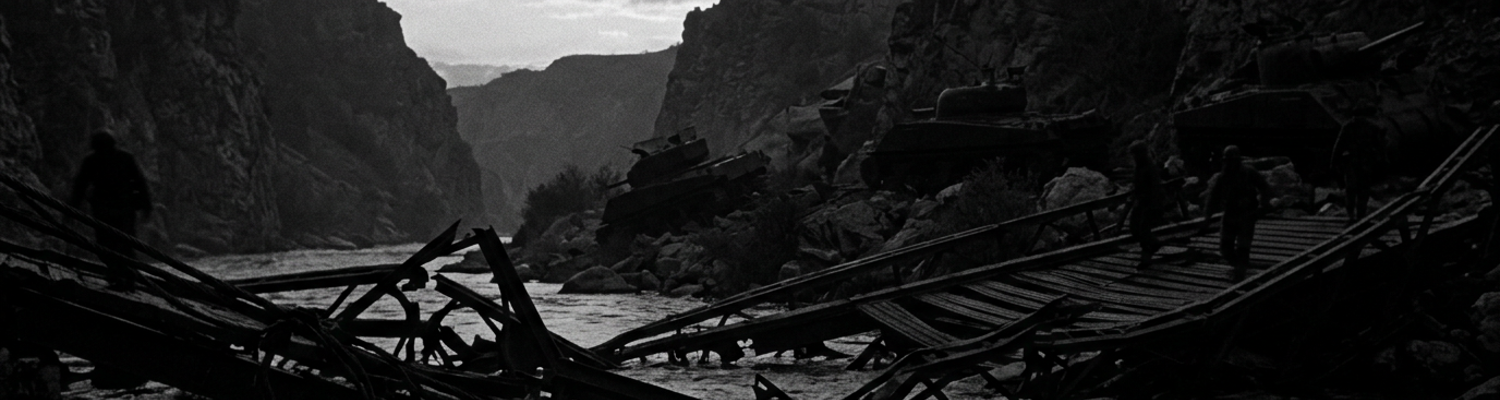
Emergency signal traffic from the 1171st Engineer Combat Group recorded a structural failure on September 20, 1944. Three M2 treadway bridge balks sheared at the Wallendorf crossing site under thirty tons of armor. Heavy artillery rendered repair impossible.
When examining the historical record from the Second Quebec Conference, high-level Allied strategists established an aggressive posture. This demanded unyielding momentum along the western frontier of Germany. Between September 12 and September 16, 1944, President Franklin D. Roosevelt, Prime Minister Winston Churchill, and the Combined Chiefs of Staff met in Canada. They evaluated the Allied advance following the breakout from Normandy. Military strategists calculated that the German army lacked the organized manpower to garrison the Westwall fortifications before winter operations set in. General George C. Marshall emphasized that piercing the Siegfried Line represented the top global operational priority. Supreme Headquarters Allied Expeditionary Force mandated continuous forward movement across all sector boundaries. First Army commander General Courtney Hodges translated this grand strategic mandate into immediate offensive directives. He pressed his frontline corps leaders to probe for structural gaps along the river barriers bordering Luxembourg and Germany.
Strategic planners in Quebec assumed German frontline resistance had permanently dissolved under the weight of the summer pursuit.
Archival evidence shows that Major General Leonard T. Gerow translated these top-level directives into orders for an aggressive penetration into the Eifel sector. He commanded V Corps. Gerow authorized a reconnaissance in force on September 11, 1944. This rapidly evolved into a heavy armored thrust targeted at the confluence of the Our and Sauer rivers near Wallendorf. Combat Command R and Combat Command B of the 5th Armored Division received orders to breach the Westwall pillbox network on September 14. They advanced alongside the 112th Infantry Regiment of the 28th Infantry Division. Supply lines stretched over three hundred miles back to Normandy beachheads. This capped daily gasoline allocations for M4 Sherman tank battalions to severe levels.
Organic engineering formations lacked sufficient heavy bridging material. The 254th Engineer Combat Battalion and attached elements of the 1171st Engineer Combat Group operated with an acute shortage of pneumatic pontons, steel treadways, and timber trestle units. These specific components were required for sustained Class 40 heavy armor crossings over fast-moving river currents.
A single steel treadway span across the Our River quickly became the sole supply artery for two entire combat commands operating inside hostile territory.
Operational logs indicate that the physical terrain surrounding Wallendorf compounded the mechanical liabilities of the assault. The Our River carved a steep gorge flanked by heavily wooded bluffs bristling with concrete bunkers. Heavy rain swelled the waterway to depths exceeding two meters with a current reaching five knots. Combat engineers constructed a single temporary pneumatic M2 treadway bridge at Wallendorf to push armored task forces toward Hill 407 and Mettendorf on September 14 and 15. Positioning on the western Luxembourg bank near Hoesdorf forced heavy tracked vehicles down steep, muddy grades along a narrow approach. This placed severe torsional stress on the rubber pontons and connecting steel pins. German artillery spotters from the 2nd Panzer Division and 352nd Volksgrenadier Division zeroed in on the narrow river bottleneck from high ground near Biesdorf. They targeted the bridgehead with 105mm and 150mm shellfire. Engineer repair crews worked without adequate spare ponton bladders or replacement treadway sections.
V Corps Offensive Across the Our River
When examining the historical record, the initial penetration across the German frontier began at noon on September 14, 1944. Combat Command R of Major General Lunsford E. Oliver's 5th Armored Division advanced across the Our River near Wallendorf directly into enemy territory. Supported by the 1st Battalion of the 112th Infantry Regiment, American armored task forces targeted the confluence of the Our and Sauer rivers. They aimed to punch through the outer pillbox perimeter of the Siegfried Line.
Company B of the 47th Armored Infantry Battalion cleared enemy automatic weapons emplacements inside Wallendorf. Tank columns from the 34th Armor Regiment climbed the wooded bluffs toward Hill 407 and Mettendorf. White phosphorus artillery barrages forced German defenders out of concrete dugouts on the forward slopes. Task Force Anderson secured a three-mile-deep bridgehead inside Reich territory by nightfall.
German commanders from the I SS Panzer Corps responded by directing concentrated 105mm artillery and 120mm mortar fire onto the narrow river gorge from high ground near Biesdorf.
Armor moved forward faster than supply columns could haul structural steel.
Archival evidence shows that bridging units were pushed forward rapidly without sufficient reserve engineer equipment to support a prolonged riverhead operation. First Army headquarters prioritized rapid forward movement. This left the 254th Engineer Combat Battalion and the 996th Engineer Treadway Bridge Company without secondary bridge sets or spare mechanical components. Attached elements of the 1171st Engineer Combat Group deployed a single 180-foot M2 pneumatic treadway span across the Our River at Wallendorf. Reserve ponton bladders, replacement steel balks, and heavy timber trestles remained stalled in supply dumps over two hundred miles away near Paris. Engineers built the sole crossing over a five-knot river current on muddy banks near Hoesdorf without a secondary backup bridge site or additional float assemblies.
Heavy M4 Sherman tanks weighing over thirty tons immediately began crossing the single-span structure. The steel treadway pins and rubber pneumatic floats sustained severe structural vibration under continuous enemy shellfire. German artillery fire punctured several rubber pontons during the night. Engineer repair teams discovered that no replacement pneumatic bladders existed anywhere within the V Corps sector.
Engineers patched shredded rubber bladders with emergency tire repair kits while thirty-ton tanks crossed overhead.
A close review of operational logs indicates that the rapid push left two full combat commands entirely dependent on a single unreinforced crossing. Combat Command B joined Combat Command R across the river by September 16, 1944. This swelled the force inside German territory to over fifteen hundred vehicles without an alternative supply route. Engineer reconnaissance parties investigating nearby stream crossings at Niedersgegen ran into direct small-arms fire at Deadman's Ford. They lost two men. This proved that German infantry had sealed off potential bypass routes.
German artillery spotters zeroed in on the Wallendorf bottleneck with high-explosive shells. This severed supply lines and left forward tank companies short of 75mm ammunition and 80-octane gasoline. The 1171st Engineer Combat Group could not reinforce the sagging M2 span. They lacked spare bridge balks to replace bent structural steel or heavy timber trestles to anchor the muddy river approaches. Additional German armor from the 2nd Panzer Division mobilized to launch counterattacks against the isolated American bridgehead.
M2 Treadway Bridge Deployment at Wallendorf
When examining the historical record, soldiers from the 299th Engineer Combat Battalion moved down the muddy western slopes near Hoesdorf during the early morning hours of September 15, 1944. They constructed an M2 pneumatic treadway bridge under direct combat conditions. Heavy German shellfire from 105mm artillery batteries stationed on the bluffs above Biesdorf slammed into the river gorge. Shell fragments tore through the rubber ponton bladders before the engineers could anchor the first floating section in the five-knot current of the Our River.
Combat engineers inflated heavy rubber floats while working in waist-deep water under mortar barrages. They positioned steel treadway balks over pneumatic saddles and hammered locking pins into place while incoming rounds detonated along the riverbanks. Air compressors rattled along the tree line. Crews patched shrapnel punctures with rubber cold-patches and cement to keep the floats rigid against the swirling current.
Cold river water washed over the steel treadways as mortar shells hit the shore.
Archival evidence shows that assembling the 180-foot span required the 299th Engineer Combat Battalion to secure heavy steel balks capable of sustaining thirty-ton vehicle loads. They had to prevent float saddles from twisting under uneven pressure. Combat engineers manually aligned forty-five-pound steel connecting pins into structural hinges. German sniper fire clipped the metal plating around the air compressors. Shrapnel repeatedly ripped through the outer canvas sleeves of the pneumatic pontons. Two middle floats lost operating pressure within thirty minutes of placement.
Local supply dumps lacked secondary ponton bladders. Soldiers used emergency hand pumps and wood plugs to seal air leaks. They guided heavy winch trucks down the slippery mud slope to push the final floating trestle into position on the eastern bank.
German artillery spotters zeroed in on the exact coordinates of the bridge site.
A close review of operational logs indicates that the completion of the span allowed early armor elements from Combat Command R of the 5th Armored Division to roll across the river. They mounted an immediate assault against the frontline Westwall fortifications. M4 Sherman tanks and M8 armored cars rattled over the narrow steel tracks onto German soil. They climbed the steep wooded bluffs toward Hill 407 to engage concrete pillboxes manned by elements of the 352nd Volksgrenadier Division.
Satchel charges, flamethrowers, and point-blank 75mm high-explosive tank shells smashed into armored embrasures guarding the Wallendorf sector. This neutralized interlocking machine-gun bunkers that had previously pinned down infantry units along the riverbank. Armor crews pushed through anti-tank obstacles. They opened a three-mile corridor inside the Siegfried Line and secured the forward perimeter before German reserve units could seal the gap.
Thirty-ton steel tanks pounded concrete bunkers on the heights above Wallendorf.
Combat Command B followed closely behind the lead tank companies. They pushed hundreds of halftracks, ammunition trucks, and tank destroyers across the single M2 span to reinforce the expanding foothold inside Reich territory. Torsional strain from continuous heavy vehicular traffic caused three steel treadway balks to bend out of alignment near the western bank. Maintenance crews from the 299th Engineer Combat Battalion welded reinforcement plates onto the structural hinges while tracks continued to grind overhead. American armored columns cleared twelve concrete bunkers around Wallendorf by late afternoon on September 15. They established forward defensive positions along the road to Mettendorf. German artillery batteries near Biesdorf intensified their barrages onto the bridge site. They struck the river approach with high-explosive airbursts every two minutes to cut off the lone supply route feeding the armored forces inside the Westwall.
Improvised Anchor Cables and Environmental Stress
Steel cables under high tension break violently when river water rises two meters in six hours.
When examining the historical record, engineers from the 299th Engineer Combat Battalion and attached teams of the 1171st Engineer Combat Group faced a structural crisis within hours of installing the M2 span at Wallendorf. Standard heavy-duty ponton kedge anchors and factory-issued manila guy lines failed to arrive from rear supply dumps near Paris. Forward work crews lacked approved tethering equipment to stabilize the floating bridge against the five-knot current of the Our River. Officers on the bank ordered field units to scavenge raw materials from the immediate countryside. They salvaged heavy 5/8-inch commercial steel wire ropes from abandoned logging sites, winch cables from wrecked M3 half-tracks, and heavy-gauge communication wire left behind near Hoesdorf.
Combat engineers wrapped these improvised field anchor cables around thick oak trees and concrete pillbox foundations on the Luxembourg shore. They secured the lines to the bridle attachments of each pneumatic float. This work occurred along slippery mud banks under airburst fire from 105mm artillery batteries near Biesdorf. This improvised guy-line system temporarily held the 180-foot treadway aligned with the steep western approach. Thirty-ton M4 Sherman tanks of the 34th Armor Regiment continued crossing into Reich territory.
Improvised steel wire kept thirty tons of armor from sliding into the riverbed.
Archival evidence shows that torrential downpours across the Ardennes and Eifel highlands during the night of September 17, 1944, instantly altered the physical mechanics of the watercourse. A sudden flash flood cascaded into the narrow Our River gorge. Water levels drove up by nearly two meters in less than twelve hours. Current velocities accelerated past eight knots. Debris washed downstream from destroyed timber bridges. Uprooted pine trees and swollen logs launched directly toward the M2 treadway structure. Floating trunks slammed into the rubber pontons. The hydrostatic pressure multiplied the dynamic pull resting on the tethering points.
Calculations by engineer officers estimated that the cross-sectional force of the swollen river against the thirty-six rubber float assemblies reached over twelve thousand pounds of horizontal thrust per square foot. Improvised steel cables stretched far past their yield strength and tolerance thresholds. These cables were intended for static tension rather than violent kinetic surges.
A close review of operational logs indicates that the salvage wire snapped at the bridle anchor points along the western shore shortly after midnight on September 18. The structural pontons bowed outward into a sharp downstream crescent. Steel treadway balk pins sheared under the lateral strain. Rubber air bladders tore open. Two ammunition trucks dumped into the fast-flowing torrent near the Hoesdorf bank. Engineers from the 254th Engineer Combat Battalion attached 2.5-ton winch trucks to the shore frames. They made a desperate bid to hold the sagging center section against the current. The mechanical power of the winches could not counteract the river momentum.
Replacement cables or spare treadway balks did not exist anywhere in the V Corps sector. Repair crews worked in waist-deep freezing water to cut tangled wire off surviving floats. German 150mm artillery shells exploded along the narrow riverbanks. Over fifteen hundred American combat vehicles operating east of Wallendorf were instantly cut off from gasoline, 75mm armor-piercing ammunition, and medical evacuation.
The single supply artery feeding two combat commands inside the Westwall snapped under the weight of the river.
German Counter-Battery Fire and Bridge Collapse
German heavy artillery batteries on the high ground near Biesdorf converted the narrow Our River gorge into an absolute kill zone.
When examining the historical record, observers from the 352nd Volksgrenadier Division and the 2nd Panzer Division held clear line-of-sight visual control over the single crossing point at Wallendorf from concrete bunkers on Hill 407. German gunners directed massed concentrations of 105mm leFH 18 and 150mm sFH 18 howitzers against the temporary American bridgehead between September 18 and September 20, 1944. Battery positions hidden behind the ridges near Cruchten fired continuous mixed barrages of high-explosive delay fuzes and time-burst airbursts. V Corps artillery attempted counter-battery missions with 155mm Long Tom guns. Steep Eifel valley topography and severe ammunition rationing prevented American batteries from suppressing the German positions.
Shrapnel swept the muddy approach roads on the Luxembourg shore. This destroyed 2.5-ton supply trucks and killed engineer work crews from the 299th Engineer Combat Battalion. Heavy equipment transports could not push replacement bridging gear toward the water. Direct mortar impacts systematically hit the inflatable rubber floats supporting the M2 treadway. Canvas sleeves tore and inner air chambers punctured faster than repair teams could apply cold patches.
Repair crews watched high-tension steel cables vibrate violently against the rising floodwaters under continuous shellfire.
Archival evidence shows that the dynamic pressure of the swollen river reached a critical tipping point when current speeds accelerated past eight knots. Floating tree trunks and heavy river drift pushed directly against the thirty-six rubber ponton assemblies. This created over six tons of lateral drag force per floating section. The improvised 5/8-inch steel wire ropes and salvaged vehicle winch cables holding the bridge to the western shore were already stretched past their structural yield limit. Direct hit 150mm artillery detonations struck the western shoreline anchor points near Hoesdorf at 1400 hours on September 20. This severed the primary upstream steel guy line where it wrapped around a reinforced concrete deadman.
The remaining improvised cables snapped in rapid succession under the sudden transference of tension. Hydrodynamic force immediately pushed the floating bridge downstream into an uncontrolled curve. The rigid steel treadways bent at extreme angles.
Forty-five-pound steel balk connecting pins sheared across the entire span within seconds of the initial cable failure.
A close review of operational logs indicates that the sudden structural collapse severed all mechanical connections between the floating pontons and the western abutment. Anchor lines could no longer maintain lateral stability. The high-velocity river current flipped four central pneumatic floats upside down. Heavy engineer equipment and two parked vehicle chassis spilled into the riverbed. The remaining steel treadway sections sank into two meters of rushing water or broke apart into individual floating balks that washed downstream toward the Sauer River confluence.
The single physical link connecting Combat Command B and Combat Command R of the 5th Armored Division to their primary supply line vanished by late afternoon on September 20. Over fifteen hundred American soldiers and more than two hundred armored vehicles remained trapped on the eastern bank inside Reich territory. They lacked ammunition resupply, fuel deliveries, or heavy armor support. German counterattacks closed in from three sides.
Isolation of Armor Inside the Westwall
Over fifteen hundred cavalrymen, infantrymen, and tankers held a shrinking perimeter inside German territory.
When examining the historical record, the destruction of the floating bridge at 1400 hours on September 20 immediately converted the forward positions of Major General Lunsford E. Oliver's 5th Armored Division into an isolated pocket. Elements of Combat Command B and Combat Command R were marooned on the eastern bank of the Our River along with the 1st Battalion of the 112th Infantry Regiment. This included the 34th Armor Regiment, the 47th Armored Infantry Battalion, and the 10th Tank Battalion. Two hundred and sixteen armored vehicles found themselves backed against a swollen, eight-knot river current with no physical pathway to return to Luxembourg. They were spread across a three-mile arc from Hill 407 down toward Mettendorf and Niedersgegen.
German infantry squads from the 352nd Volksgrenadier Division immediately swept down the riverbanks to occupy the western approaches near Hoesdorf. They sealed off potential wading sites and pinned American reconnaissance patrols under heavy small-arms fire. Major General Leonard T. Gerow realized at V Corps headquarters that his prime strike force had lost its entire mechanical umbilical cord while deeply embedded inside the Westwall bunker complex.
M4 Sherman engines sputtered and died as fuel gauges dropped to zero along the Mettendorf road.
Archival evidence shows that fuel and ammunition levels among the isolated units plummeted within twelve hours of the bridge collapse. Tank commanders in the 34th Armor Regiment rationed 75mm armor-piercing rounds down to five shells per vehicle. They instructed gunners to hold fire until enemy armor closed within three hundred yards. Heavy M4 Shermans were turned into static firing points near Hill 407 after running completely out of 80-octane motor gasoline. Crewmen dug defensive trenches underneath their tracks.
The German I SS Panzer Corps mobilized armored elements from the 2nd Panzer Division. They sent Panther tanks and StuG III assault guns down the valley from Bitburg to assault the isolated American perimeter. German 120mm mortar crews hit Wallendorf village repeatedly. This destroyed two field medical stations and forced battalion surgeons to treat wounded soldiers inside captured concrete pillboxes without plasma or morphine. Supply quartermasters attempted to rig high-line cable pulleys across the five-knot current to haul individual wooden crates of K-rations and 30-caliber ammunition cans across the gorge.
A close review of operational logs indicates that artillery units of the 5th Armored Division tried to deliver emergency supplies using modified 155mm howitzer smoke shells. They fired hollowed-out projectiles packed with medical supplies across the river. Most of these supply shells embedded themselves deep into the muddy riverbank or exploded upon impact. This destroyed the fragile glass blood plasma containers inside.
German infantry from the 352nd Volksgrenadier Division launched three night assaults against Company B of the 47th Armored Infantry Battalion on the slopes of Hill 407. They used stick grenades and satchel charges under the cover of thick autumn fog. Tankers used their remaining 0.50-caliber heavy machine guns to beat back the German assault waves. They stripped machine gun belts from immobilized half-tracks. Temperature drops in the Eifel valley caused wet uniforms to freeze solid. The trapped task force consumed its last operational C-rations by the morning of September 21. German 150mm artillery batteries near Biesdorf pounded the eastern bank with continuous high-explosive shellfire.
Underground Bunker Triage and HUMINT Intelligence
Two-meter-thick concrete walls offered the only shelter from massed 150mm artillery airbursts sweeping the eastern bank of the Our River.
When examining the historical record, battalion surgeons of the 47th Armored Infantry Battalion and the 112th Infantry Regiment abandoned surface aid tents near Wallendorf on September 20, 1944. They moved emergency medical operations deep underground into captured German Regelbau 102 concrete pillboxes. Continuous shellfire from the 352nd Volksgrenadier Division destroyed outer field ambulances. Corpsmen carried wounded soldiers down steep concrete access shafts into narrow subterranean troop quarters. Flashlights taped to exposed steel structural rebar provided the sole light source. Medical personnel treated blast trauma, shrapnel punctures, and compound fractures.
Archival evidence shows that blood plasma reserves ran out within eight hours of the bridge failure. Battalion doctors administered field dressings without pain medication or IV fluids. Water seepage through shattered concrete ceilings mixed with dirt on the floor. Corpsmen stacked litter cases three levels high on abandoned German steel bunk frames. Surgeons cleaned scalpel blades with aviation gasoline drained from damaged half-tracks. They operated for thirty-six consecutive hours in zero-ventilation rooms filled with gunsmoke and engine exhaust.
Subterranean command posts quickly doubled as frontline interrogation chambers.
A close review of operational logs indicates that tactical Interrogation of Prisoners of War teams established immediate interrogation cells inside captured bunker embrasures along the Hill 407 ridgeline. IPW Team 17 attached to V Corps questioned captured infantrymen from the 352nd Volksgrenadier Division and tank crews from the 2nd Panzer Division. Mortar detonations shook the reinforced ceilings overhead. American radio batteries failed under total isolation. HUMINT specialists pressed prisoners for exact grid coordinates of German assembly areas near Mettendorf and Bitburg. Interrogators mapped out the precise firing positions of German 105mm leFH 18 artillery batteries hidden behind ridges near Cruchten. They passed handwritten target overlays directly to surviving M4 Sherman tank commanders.
Captured paybooks and field orders revealed that German reserve battalions suffered severe fuel shortages. American officers maintained static defense points rather than attempting a high-risk breakout. Language officers conducted these questioning sessions under immediate siege conditions. Small-arms fire rattled off the heavy steel blast doors protecting the bunker entrance.
Archival evidence shows that medical personnel and intelligence teams shared the same cramped, unventilated concrete bunkers as German counterattacks intensified throughout September 21. Medics bandaged wounded German prisoners in the same subterranean rooms where HUMINT officers extracted operational details regarding incoming I SS Panzer Corps armored columns. Air inside the bunkers grew toxic from sulfur fumes and carbon monoxide. Personnel cleared ventilation shafts by hand while German 120mm mortar rounds hit the outer blast walls.
Intelligence reports gathered underground formed the sole basis for targeting data utilized by V Corps artillery batteries firing from long range on the Luxembourg side of the gorge. Resupply flights or ground access across the Our River did not exist. Medical officers recorded seventy-eight successful emergency surgeries inside the captured complex before running out of sterile bandages and morphine.
The last radio battery inside the bunker command post died at midnight on September 22.