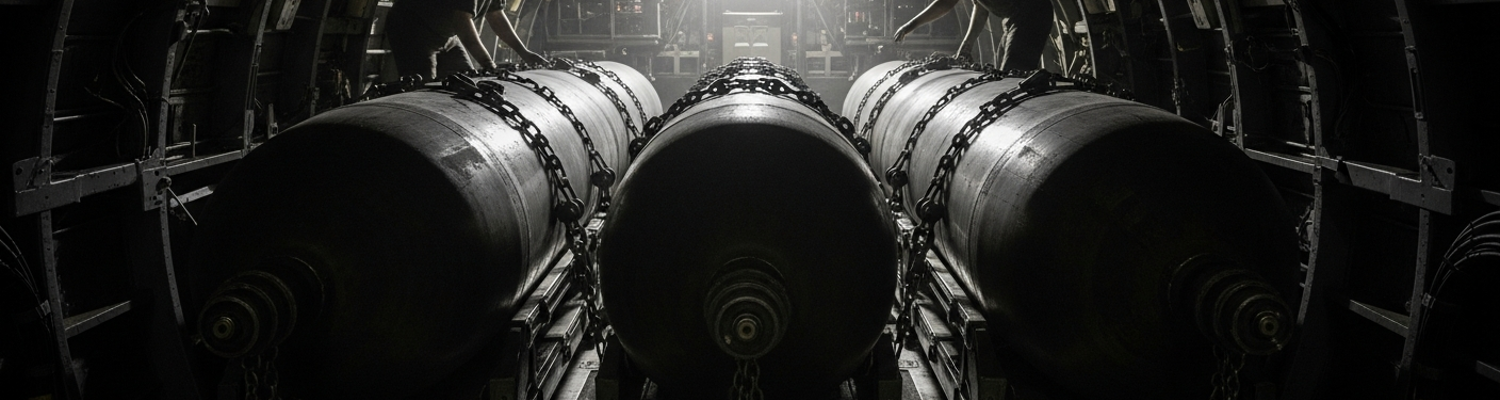

The training manuals promised a clean war. Cadets learned of strategic bombing from the stratosphere, a revolution in warfare that would bring an industrial power to its knees with precision. The lessons of the Pacific, however, were not taught in classrooms. They were learned in the chaos of low-altitude night runs over defended waters, by aircrews discovering their war was one of attrition, fought with weapons barely understood by the command that issued them.
A close review of operational logs (NARA Record Group 18) indicates the United States Army Air Forces entered the conflict with almost no practical experience in aerial mine warfare. During the austere interwar period, responsibility for mine development was a contentious issue, primarily seen as a naval function. This left AAF development in a state of theoretical limbo. The focus was on long-range bombers and pursuit aircraft. The result was an institutional blind spot. When the war began, the AAF possessed the long-range aircraft. The U.S. Navy possessed the mines and the technical expertise. This organizational divide would create significant friction.
The strategic shift was not gradual. It was a violent lurch driven by necessity. Initial high-altitude bombing campaigns against Japan from bases in China and the Marianas failed to produce the crippling industrial blow planners had anticipated. The pivotal moment came at the insistence of Admiral Chester Nimitz, who saw the potential for AAF long-range bombers to augment his naval strategy by blockading Japan’s home waters. General Henry H. Arnold, head of the AAF, was not an initial supporter, viewing it as a diversion from the primary strategic bombing role. The task fell to General Curtis LeMay and the XXI Bomber Command. LeMay, known for his operational efficiency, assigned the 313th Bombardment Wing to execute the mining campaign, codenamed Operation Starvation. This represented a fundamental pivot. B-29 Superfortresses, designed for high-altitude daylight bombing, were repurposed for hazardous, low-level, individual night missions. The goal was no longer destroying factories. It was severing the arteries of an island empire.
This new doctrine was built on early and temperamental technology. The first weapons deployed were the Navy-developed Mk 12 and Mk 13 series mines. The Mk 12, weighing around 1,415 pounds, was adapted from a submarine-launched design, fitted with a parachute pack for aerial delivery. Its magnetic-needle firing mechanism was designed to trigger when a ship’s hull disturbed the Earth’s magnetic field. The more advanced Mk 25, a purpose-built 2,000-pound class aerial mine, introduced a new level of complexity. It incorporated multiple influence fuzes. Magnetic triggers. Acoustic hydrophones tuned to the specific sound frequencies of a ship’s engines. Later, highly sensitive water-pressure detonators detected the hydrodynamic pressure drop from a large vessel passing overhead. Built-in ship counters allowed a set number of vessels to pass before arming, making clearance a nightmare for Japanese minesweepers.
The physical reality of a Mark 25 naval mine was one of dense, dangerous bulk. Nearly 2,000 pounds of high explosives, intricate fuzes, and pressure-sensitive triggers packed into a robust steel casing. Their journey began in stateside depots like Yorktown, Virginia, before a long sea voyage across the Pacific. Their destination was a handful of massive, hastily constructed air bases in the Mariana Islands, primarily North Field on Tinian. Here, the 313th Bombardment Wing waited. Upon arrival at a major port like Guam, the mines were still a world away from a B-29. This final, inter-island leg of the journey represented one of the most severe logistical strains of the Pacific air war.
Moving these weapons from deep-water ports to forward airfields was a constant battle against friction and distance. The primary method for trans-shipping was by sea, using shallow-draft Landing Craft Tank (LCTs) and cargo barges. These were the only craft capable of navigating the reef-strewn waters and primitive docking facilities. The process was perilous. Mines were winched from the holds of Liberty ships and lowered onto barge decks, where ground crews wrestled the multi-ton cylinders into position. The short sea journey to Tinian exposed sensitive fuzing mechanisms to corrosive salt spray. Once beached, there were often no proper cranes. Seabee construction battalions and ordnance crews used improvised ramps, brute force, and heavy trucks to haul the mines from the shoreline to sprawling bomb dumps carved out of the island’s interior. A dropped mine could detonate. A damaged fuze rendered the expensive weapon useless.
Barges handled the bulk transport. Cargo aircraft handled urgent deliveries. The workhorse C-47 Skytrain, capable of carrying 6,000 pounds, was a theoretical option for a single 2,000-pound mine. The sheer dimensions of the mine and the difficulty of side-loading made this an exceptional and hazardous procedure. More commonly, C-47s moved critical personnel and delicate fuzing components between the main depots on Guam and the operational B-29 bases on Tinian. This ad-hoc aerial bridge was essential. It also placed further strain on an overtaxed air transport system simultaneously moving medical supplies, engine parts, and personnel across the theater.
The supply lines feeding Operation Starvation were immensely long and perpetually vulnerable. A mine began on a U.S. production line, traveled by rail to a coastal depot, was loaded onto a cargo ship for a multi-week transit to a central Pacific ordnance facility, and then made its last hop by barge to Tinian. A single B-29 mission carrying seven 2,000-pound mines required 14,000 pounds of ordnance to successfully navigate this entire chain. A group-level mission involving thirty aircraft ballooned to over 210 tons of mines. Any disruption, a storm delaying a convoy or a handling accident at a port, could create a significant bottleneck, idling bombers and their crews.
The operational tempo demanded by XXI Bomber Command created a relentless cycle of labor for the ground crews of the 313th Bombardment Wing. A single B-29 could carry seven 2,000-pound Mark 25 mines. For a group-level mission of 30 aircraft, ordnance crews had to prepare, transport, and load over 210 tons of mines. Ordnance procedure analysis shows this was a physically punishing, round-the-clock process. Working under blackout conditions or in the blinding Pacific sun, teams from service groups like the 72nd and 77th wrestled the cylinders from transport trailers. Equipment was often rudimentary. While training films depicted C-3 bomb hoists, the reality on North Field's sprawling hardstands was one of improvisation. The process was a sequence of dangerous, coordinated movements: positioning the bomb trailer under the open bomb bay, attaching winch cables, and carefully hoisting the 2,000-pound weapon up into its shackles. Any slip or mechanical failure could be catastrophic.
Tinian’s climate was a constant adversary. Ground crews worked twelve-hour shifts, often longer, in temperatures exceeding 90 degrees Fahrenheit with suffocating humidity. Unlike aircrews in the pressurized cabins of the B-29, ordnance teams, mechanics, and armorers were fully exposed. They performed strenuous manual labor on coral hardstands that reflected the sun’s heat, creating a furnace-like environment. The constant sweat, combined with airfield dust and grime, led to widespread skin diseases. Heat exhaustion was a daily risk. Pressure to meet mission timelines meant breaks were short. This continuous physical exertion pushed the men to their absolute limit, degrading both performance and safety.
The combination of heavy objects, relentless demand, and physical exhaustion produced a high rate of injury. Service logs describe a litany of physical trauma. Hernias, slipped spinal discs, and chronic back ailments were common. More severe were crushing injuries. A 2,000-pound mine that slipped from its hoist or rolled off a trailer could sever a limb or kill a man instantly. Fingers and hands were frequently crushed while securing mines into their bomb bay shackles. The lack of sophisticated lifting equipment meant final positioning was done with muscle and pry bars, a hazardous activity in the cramped confines of a B-29’s bomb bay. The ordnance itself was a danger; a 9th Bomb Group B-29 jettisoned its mine cargo on takeoff due to an engine fire, and the subsequent explosion of two mines nearly destroyed the aircraft.
The intricate network of influence fuzes packed into the Mark 25 was far from guaranteed. Operational logs from the 313th Bombardment Wing reveal frequent and inexplicable malfunctions. The magnetic fuzes, designed to detect a ship’s metallic mass, were exceptionally sensitive. This sensitivity was a liability. The natural geology of certain Japanese harbors contained high iron concentrations, creating magnetic distortions that could prevent a mine from arming or cause it to detonate harmlessly. Acoustic sensors, tuned in stateside labs under ideal conditions, listened for the sound profile of a ship’s engines. The chaotic soundscape of a busy harbor, with dredging and small boat traffic, could confuse the hydrophones. A mine might fail to recognize a target or be triggered by ancillary noise.
The result was an unnerving rate of duds. For every minefield laid in the Shimonoseki Strait, an unknown percentage of the weapons were inert from the moment they settled on the seabed. Aircrews flying dangerous low-level night missions had no way of knowing if their efforts had delivered a deadly trap or a collection of useless metal tubes.
Failure often occurred before a mine touched water. A detailed examination of ordnance procedures on Tinian shows the arming and safety mechanisms were a constant source of trouble. Each Mark 25 was secured with safety devices, including cotter pins and arming wires connecting the mine to the B-29’s bomb shackles. The theory was simple. As the mine dropped, the arming wire would be pulled, initiating a timer or hydrostatic switch. In practice, these wires could snag, break, or be improperly seated during the frantic pace of loading. The humid, salt-laden air of the Marianas corroded metal components, causing pins to seize. An ordnance crew might spend hours hoisting seven 2,000-pound mines into a bomb bay, only to have a single, corroded arming wire fail, turning a live weapon into a dud upon impact.
The arming sequence itself introduced substantial risk. The entire process relied on a precise chain of events. The parachute had to deploy correctly. The impact release had to free the parachute from the mine case. A hydrostatic starter had to activate a clock delay at a specific depth. A failure at any point could be disastrous. There were recorded instances of mines detonating prematurely, triggered by the vibration of the B-29’s own engines while still in the bomb bay or shortly after release. More commonly, a faulty parachute deployment caused the mine to tumble, hitting the water at the wrong angle and disabling the delicate internal mechanisms. The B-29 and its crew had flown a 1,500-mile trip and braved anti-aircraft fire to deliver a weapon that was inert before it even began its descent.
Last-minute changes to mission parameters were a constant source of friction. A flight crew would attend a detailed briefing on the target, altitude, and specific mine settings. These settings were a complex menu: which combination of magnetic, acoustic, or pressure triggers to use; how many “safe” ship passages to allow before arming; the duration of a sterilizer clock. Crews would return to their B-29s only to find new orders had come down, mandating a different arming sequence. This forced ordnance specialists to scramble back to parked aircraft and physically alter the settings on loaded mines. The process was ripe for confusion. An armorer, working in the dark under time pressure, might misread a directive or incorrectly set a dial. The flight crew, strapped in and running pre-flight checks, had no way to visually confirm the changes. They were forced to take it on faith.
This created a disconnect between aircrews and ordnance specialists. The two groups operated in different worlds. Ordnance crews worked in sprawling, open-air bomb dumps. Flight crews existed in a cycle of briefings and missions. Communication was often filtered through intermediaries. A bombardier who noticed an anomaly with the bomb release mechanism had to articulate the problem over an intercom to a crew chief, who then had to relay that information to an ordnance expert. Nuance was lost. The armorers and fuze technicians were Navy personnel attached to the Army Air Forces mission, adding another layer of inter-service procedural difference. They possessed specialized knowledge of the firing mechanisms. The flight engineers and pilots often did not. This gap meant a pilot might report a problem in vague terms, making it impossible for ground teams to diagnose the issue without a time-consuming physical inspection.
A significant number of B-29s dispatched on mining missions either turned back or failed to deploy their ordnance effectively. Mechanical failure was a constant threat. The B-29’s Wright R-3350 engines were notoriously prone to overheating and fires, especially on takeoffs with a full load of fuel and fourteen tons of mines. Beyond engine trouble was a deep-seated uncertainty about the ordnance itself. A crew, aware of a last-minute fuze-setting change and unable to get clear confirmation, faced a difficult choice. Dropping mines with the wrong settings could render an entire minefield ineffective. Faced with this ambiguity, some aircraft commanders chose to abort the multi-hour flight. Others, experiencing a flicker on a panel that might indicate a bomb-bay electrical fault, would jettison their entire payload into the Pacific rather than risk a premature detonation or a hazardous landing with armed mines. Each such event represented a colossal waste of fuel, flight hours, and crew fatigue.
An examination of records from the 313th Bombardment Wing’s tenure on Tinian reveals an environment engineered for sensory destruction. The air was a thick, chemical soup. The dominant scent was the sharp tang of 100-octane aviation gasoline, spilled during the frantic refueling of hundreds of B-29s. This volatile smell clung to clothing and tents. It was layered with the industrial bitterness of hot asphalt and tar, used by Navy Seabees to patch the sprawling hardstands and four massive runways of North Field. Under the Pacific sun, these surfaces baked, releasing fumes. A third, more sinister odor came from the ordnance itself. The sharp, acidic scent of TNT and Torpex emanated from the thousands of mines stored in open-air depots. This chemical triad formed the inescapable atmospheric signature of the world’s largest airbase.
This industrial assault was woven into organic decay. Tinian, an island of 39 square miles, had been violently seized only months before. The effort to clear thousands of acres for the airfields left behind vast tracts of rotting tropical vegetation, a process accelerated by a climate where mean annual humidity hovered around 82 percent. The resulting smell was a heavy, sweetish miasma. This was compounded by a more gruesome reality. The nine-day battle for the island had left thousands dead. While Graves Registration units worked to handle remains, the lingering scent of death was part of the island’s atmosphere, particularly in the uncleared jungle fringes.
The auditory onslaught was constant. The primary source was the B-29 Superfortress. Each of the aircraft’s four Wright R-3350 Duplex-Cyclone radial engines produced a thunderous roar, a low-frequency noise felt as much as it was heard. With over 260 bombers based at North Field, the sound of engine run-ups, taxiing, and formation takeoffs was a perpetual, ground-shaking event. Ground crews communicated solely through hand signals. This engine noise was layered with the sharp, metallic sounds of ordnance handling: the clang of hoists, the rumble of bomb trailers, and the hydraulic whine of bomb bay doors. This relentless acoustic pressure, combined with twelve-hour shifts in suffocating heat, induced a state of profound sensory fatigue. This exhaustion was a direct contributor to accidents, degrading situational awareness in an environment where a moment’s inattention could be fatal.
For the ordnance handlers and armorers of the 313th Bombardment Wing, the war was a daily negotiation with death. The acute stress of constant exposure to high explosives created a unique psychological burden. A single Mark 25 mine contained over 1,200 pounds of Torpex, but the primary source of fear was the complex and sensitive collection of fuzes nestled within. These men understood how a simple jarring motion or a corroded arming pin could transform the inert cylinder into an active weapon. Service logs describe a pervasive state of hyper-vigilance among the ordnance crews. They were surrounded by thousands of tons of munitions designed to react to the subtle stimuli of sound, magnetism, and pressure. These stimuli were abundant on the chaotic, metal-filled flight line of North Field.
The operational tempo of Operation Starvation directly attacked the cognitive abilities of the ground crews through chronic fatigue. By May 1945, North Field was the largest airport in the world. Ground personnel worked in grueling twelve-hour shifts. Army studies during the war determined a soldier’s breaking point could be reached in as few as 60 days of intense operations. The pressure on Tinian was relentless from January to August 1945. This exhaustion was a direct threat to safety. A sleep-deprived armorer was more likely to misread a fuze-setting directive. A fatigued bomb hoist operator’s reaction time was slower. The decision-making required for arming a multi-influence mine was complex; performing this task while in a state of physical and mental exhaustion turned every mission preparation into a high-stakes gamble.
Military medicine of the era was only beginning to understand that “combat fatigue” was not a sign of weakness but a predictable wound from prolonged exposure to extreme stress. While aircrews had defined tours of duty, the ground crews’ war was one of indefinite duration. This created a sustained fight-or-flight response that, for many, did not simply switch off. Personnel reports from the period describe symptoms now associated with PTSD: anxiety, insomnia, and a disconnection from one’s surroundings. The constant noise and the ever-present danger of an accidental detonation created an environment where a man’s nervous system was in a perpetual state of high alert. There was no safe rear area; their sleeping quarters were just miles from the bomb dumps and runways that defined their hazardous world.