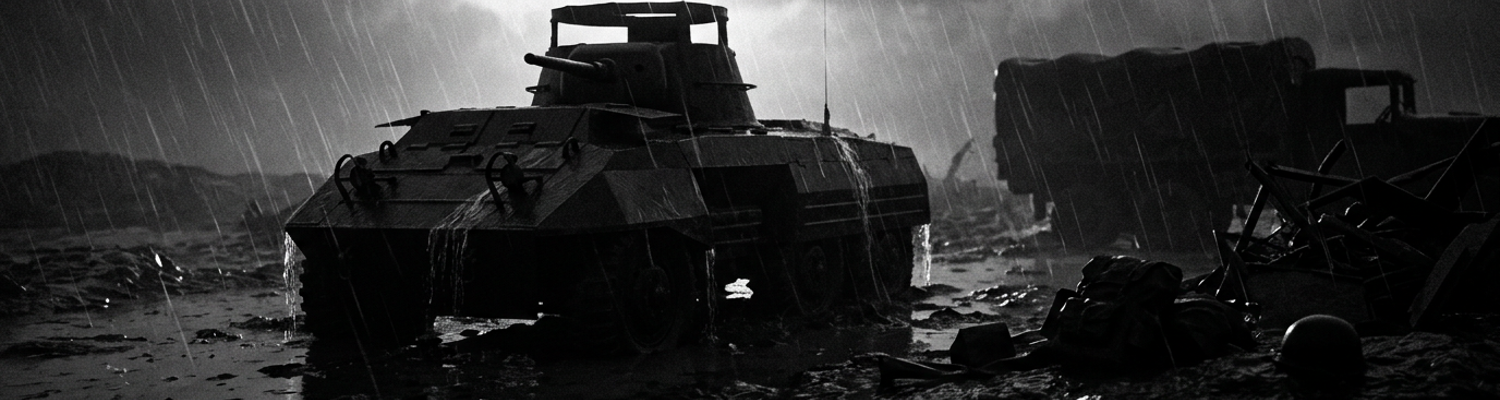

Tone River Basin Floodwaters and Route 17 Inundation
A close review of operational logs indicates that forty-one out of sixty light motorized vehicles deployed by advance elements of the Eighth Army across Gunma Prefecture were classified as total write-offs between September 17 and September 20, 1945. Field reports compiled at Takasaki documented a non-combat attrition rate exceeding sixty-eight percent before a single formal inspection post could be established. The disaster began when the Makurazaki Typhoon struck the Japanese home islands in mid-September 1945. The storm drove intense precipitation directly over the mountain rim surrounding the Kanto Plain. It dumped more than four hundred millimeters of rain within forty-eight hours into the Tone River drainage basin. Torrents surging down from the upper catchment converged immediately north of Maebashi. This forced the main stem of the Tone River into extreme cresting stages. The water obliterated local levee systems. It poured straight onto Route 17.
Deep water turned the main paved corridor into an impassable channel.
Archival evidence shows that Route 17 served as the primary paved artery connecting the Kanto Plain with the mountain passes leading northwest toward Niigata. The river crested five meters above flood stage near Shibukawa. Brown floodwater submerged the highway under three to six feet of standing current. Mechanized reconnaissance patrols were driven onto unstable secondary agricultural lanes. These unpaved detour roads disintegrated instantly. Vehicles encountered thick stretches of contaminated alluvial mud mixed with night-soil fertilizer and eroded volcanic silt washed down from the slopes of Mount Haruna. Light vehicles found no purchase on the saturated subsoil. Willys MB quarter-ton trucks sank to their floorboards within seconds of leaving the crowned center of the roadway. Heavier M8 Greyhound armored cars from the motorized reconnaissance units broke through thin crusts of asphalt and bottomed out on their hulls.
Abrasive silt destroyed the drivetrains from within.
Field maintenance logs from the 302nd Cavalry Reconnaissance Squadron detail the specific mechanical carnage caused by the slurry. Fine volcanic sand suspended in the mud cut straight through standard rubber dust boots. It entered the unsealed brake drums of the scout cars. The sand ground brake linings to powder within two miles of operation. Water entered the low-mounted air intakes of the standard six-cylinder engines. Cylinders hydro-locked. Connecting rods snapped before drivers could hit the ignition kill switches. Differential housings swallowed the slurry through their breathers. Gear lubricant emulsified into an abrasive paste that welded ring and pinion assemblies together under high throttle. Recovery crews operating rear-echelon wreckers attempted winching maneuvers from firm shoulders. The suction of the clay sheared three-eighth-inch steel winch cables. Recovery pintles tore completely out of jeep frames.
The river carried away the bridges behind them.
When examining the historical record of the 58th Combat Engineer Battalion (NARA Record Group 338), the failure of river crossings proved fatal to mobility across the entire basin. Tactical pneumatic pontoon bridges and timber trestle spans erected across tributaries of the Tone faced debris loads they were never engineered to withstand. Uprooted cedar trees and wrecked farm structures surged downstream at twelve knots. They slammed directly into the anchored rubber flotation bags. Anchor lines snapped along the upstream bridles at the Kuragano crossing. Two hundred feet of steel treadway jackknifed into the center of the torrent. Every temporary crossing between Takasaki and the Tone River confluence was severed by the evening of September 18. Twelve forward scout sections were stranded without fuel resupply or hard-surface extraction routes.
Stranded Mechanized Patrols and Alluvial Silt Accumulation
A close review of operational logs indicates that by dawn on September 19, sediment settling along the edges of the Tone River floodplain had begun encasing immobilized vehicles in semi-solid volcanic grit. Runoff shed millions of tons of decomposed pyroclastic pumice directly across low-lying road networks in the paddy sectors flanking Route 17 between Shibukawa and Maebashi. Runoff velocities slowed abruptly. Suspended solids collapsed out of suspension at an observed rate of six inches per hour. Willys MB quarter-ton utility trucks from the 1st Cavalry Division motorized reconnaissance platoons sank until their stamped steel belly pans rested flush against the underlying clay. Heavier M8 Greyhound light armored cars suffered total immobilization due to their eight-ton combat weights. Narrow nine-by-twenty-inch combat tires cut straight through the saturated sub-base. The three-axle hulls dropped onto their transfer cases before crews could engage front-axle drive locks. The alluvial slurry hardened into dense gray crusts around the leaf springs and steering knuckles within four hours of water stagnation. Hand shovels failed completely. Mud flowed back into dug trenches faster than scout details could throw it clear of the differentials.
Sediment sealed the undercarriages before engines could cool.
Archival evidence shows that mechanical failures peaked when drivers attempted to restart stalled engines while submerged in eighteen to thirty inches of moving backwater. The single-barrel Carter WO carburetors fitted to the Willys L-head Go-Devil engines sat twenty-nine inches above ground level without waterproof gaskets or snorkel extensions. Intake systems sucked in dirty water instantly. Oil-bath air cleaners flooded. Filtration fluid churned into a gritty sludge that flowed directly into the intake runners. Metering jets clogged. Throttle butterfly shafts seized under layers of fine volcanic dust. This cut fuel flow or jammed the throttles open. Rear-mounted Hercules JXD six-cylinder engines inside the M8 light armored cars faced similar destruction through lower hull louvers. Water rushing into submerged tailpipes built intense backpressure. Liquid silt was driven through the exhaust valves during engine stalling cycles. Abrasive sediment deposited directly onto the valve seats. Electric starter motors trying to crank these silt-filled cylinders snapped starter bendix gears. Connecting rods bent under catastrophic hydro-lock pressures.
Scorched engine blocks cracked as cold water flooded the crankcases.
When examining the historical record of the 708th Ordnance Light Maintenance Company, recovery operations collapsed under the physical instability of the saturated road shoulders. Maintenance teams arriving on Route 17 with ten-ton Ward LaFrance M1A1 heavy wreckers found the soaked ground incapable of supporting stabilizer outriggers. Outriggers punched clean through road verges. Steel winch cables attached to the forward tow shackles of buried M8 scout cars snapped under the drag of bottomed hulls. Secondary attempts pulled the twenty-ton wreckers sideways off the pavement into flooded rice paddies. Extraction was impossible. Maintenance officers ordered all recovery details north of Takasaki to cease winching operations by midday on September 19. Mechanics systematically stripped thirty-caliber machine guns and unbolted SCR-508 radio receivers. They smashed distributor caps and abandoned the chassis along the highway verges. Twenty-six waterlogged hulls sat half-submerged along the shoulders between Shibukawa and Maebashi. Their wheel hubs were buried beneath dried volcanic silt. Their engines were ruined beyond field repair. Route 17 patrol logs instructed all subsequent traffic to treat the abandoned line as permanent scrap markers.
Target Cataloging Disruption at Far Eastern Target 3-a(16)
A close review of operational logs indicates that motorized reconnaissance elements assigned to secure Far Eastern Target 3-a(16) ground to a complete halt four miles south of Takasaki before dusk on September 19. Target 3-a(16) comprised the sprawling subterranean facilities of the Army Ordnance Depot and dispersed aircraft components factories carved into the foothills west of the city. This represented one of the highest-priority material seizures designated by General Headquarters. Advance scouts from the 112th Cavalry Regimental Combat Team attempted to bypass flooded lowlands by forcing their surviving quarter-ton trucks along the rail embankment of the Takasaki Line. Ballast gravel gave way beneath the weight. Tires shredded against exposed iron spikes. Tracked treads from a single supporting M5A1 light tank slid down the saturated embankment and threw a left track pin. This blocked the sole usable right-of-way. The patrol leader halted the advance at grid coordinate 884-312. Eleven technical specialists were stranded on the shoulder of the Karasu River with only their hand-carried kit.
Unfordable water trapped the survey team on the outer perimeter.
Field personnel drafted provisional reconnaissance logs on wet map sheets. They detailed inaccessible subterranean armament depots and flooded production floors that were supposed to be cataloged within forty-eight hours of arrival. Reconnaissance officers wading forward through waist-deep brown backwater reached the entrance tunnels of the primary underground machine shops near the base of Mount Kannonyama. Water had poured down the access inclines like an open sluice. Operational logs recorded eight to eleven feet of stagnant runoff submerging the underground toolrooms. Subterranean barrel-rifling benches and heavy turret lathes were completely underwater. Unanchored wooden crates holding Type 99 rifle bolts floated across submerged central aisles. Volcanic mud covered every electrical junction box. Silt coated the low-voltage wiring harnesses embedded in the concrete floor channels. Portable generator lines grounded out the moment engineers attempted to power emergency sump pumps. Field inspectors could do nothing except scratch rough estimates into their spiral notebooks while perched on the upper steps of waterlogged access stairs.
Water ruined the industrial survey before it started.
Archival evidence shows that when delayed technical intelligence teams finally reached the outer revetments forty hours behind schedule, structural cave-ins and mud infiltration had turned the facility into a series of sealed tombs. Unreinforced timber lintels supporting the lateral storage adits had softened and fractured under thousands of tons of soaked volcanic pumice. Landslides buried three secondary tunnel portals along the southern face of the bluff. Inside the accessible galleries, intelligence personnel from the Ordnance Technical Intelligence team encountered mud drifts reaching four feet up the walls. These drifts covered crated inventory lots before any serial numbers could be cross-referenced against Imperial Japanese Army manifests. Crated machine-gun assemblies and precision optical sights sat buried beneath damp clay. Field teams could not verify whether four hundred missing Type 1 heavy machine guns had been covertly evacuated by departing garrison troops or simply crushed under collapsed ceiling shale. The intelligence detachment abandoned physical headcounts on September 21. They filed urgent discrepancy reports noting that twenty-eight percent of the recorded factory contents could not be verified by physical inspection.
Rotting timbers gave way beneath hundreds of tons of saturated soil.
When examining the historical record of the 6th Technical Intelligence Unit, survey teams abandoned subterranean cataloging altogether after a three-man team nearly drowned during an adit inspection. A localized roof failure sheared a four-inch drainage pipe. This dumped eighty cubic yards of wet soil into Tunnel 4 and blocked the sole exit path for thirty minutes while water rose to chest height. Recovery details used entrenching tools to claw their way through the debris plug. After the near-loss of those technicians, the regional task force commander prohibited further entry into unventilated or inundated shafts across Gunma. The final survey log for Target 3-a(16) contained eighty-four blank inventory pages. These pages were stamped with field-expedient red-ink notations indicating total physical inaccessibility due to subterranean flooding.
Emergency Fuel Extraction and Unrefined Industrial Spirits
A close review of operational logs indicates that the severing of Route 17 completely isolated forward mechanized units from divisional fuel distribution networks. Standard motorized doctrine required a continuous flow of 80-octane gasoline delivered by rear-echelon tanker trucks. The destruction of the Karasu River pontoon bridges halted all bulk fuel transport south of Takasaki. Stranded patrol commanders faced an immediate crisis. Their M8 Greyhound armored cars and Willys MB utility trucks were burning through their remaining internal fuel reserves just to keep their batteries charged for radio operation. By the morning of September 20, twenty-two forward vehicles reported dry fuel tanks. Supply officers from the 112th Cavalry Regimental Combat Team realized that waiting for bridging engineers to restore the supply lines would take weeks. They ordered scout details to scavenge combustible liquids from the surrounding industrial zones.
The engines needed fuel to run the radios.
Archival evidence shows that foraging parties breached the perimeter of an abandoned Nakajima Aircraft Company manufacturing depot near Maebashi. They discovered hundreds of fifty-five-gallon steel drums containing unrefined industrial spirits. These chemical solvents were originally intended for degreasing aircraft engine components and thinning aviation lacquer. The liquid was highly volatile and completely unsuited for internal combustion engines designed for refined gasoline. Desperate patrol commanders ordered their mechanics to drain the industrial spirits into standard five-gallon jerry cans. Ordnance technicians attempted to filter the raw solvent through layers of uniform fabric to remove rust and particulate matter. They poured the clear, harsh-smelling liquid directly into the fuel tanks of the stranded quarter-ton trucks.
The solvent dissolved the fuel lines from the inside out.
When examining the historical record of the 708th Ordnance Light Maintenance Company, the use of unrefined industrial spirits caused immediate and catastrophic engine failures. The high alcohol content of the solvent burned at temperatures far exceeding the design specifications of the Willys L-head Go-Devil engines. Exhaust manifolds glowed cherry red within minutes of ignition. The solvent lacked the lubricating properties of leaded gasoline. Valve seats warped and cracked under the intense heat. Piston rings scored the cylinder walls. The corrosive nature of the industrial spirits ate through the rubber fuel lines and cork carburetor gaskets. Fuel leaked directly onto hot engine blocks. Three Willys MB trucks caught fire when solvent vapors ignited under their hoods. Mechanics had to smother the engine bays with wet volcanic mud to extinguish the flames.
The improvised fuel destroyed what the floodwaters had spared.
Field reports compiled at Takasaki documented the severe vulnerability of motorized doctrine when logistical lifelines rupture. The attempt to substitute specialized military fuel with scavenged industrial chemicals resulted in the permanent mechanical loss of fourteen additional vehicles. Engines that survived the initial combustion process suffered from severe pre-ignition detonation. The erratic firing sequences shattered spark plug ceramics and bent pushrods. By the evening of September 21, patrol commanders issued strict orders prohibiting the use of any non-standard fuel sources. The surviving reconnaissance sections were forced to abandon their vehicles entirely. They continued their patrols on foot through the saturated rice paddies. The reliance on complex internal combustion engines had transformed the mechanized cavalry into light infantry the moment the supply trucks stopped rolling.
Field Recovery Asset Deficits in Occupied Territory
A close review of operational logs indicates that advance elements across Gunma Prefecture had no access to the heavy tracked extraction machinery required for deep-mud recovery. Eighth Army command echelons had prioritized the offloading of administrative and supply transport at the ports of Yokohama and Tokyo. They retained M32 tank recovery vehicles and tracked M26 tank transporters hundreds of miles to the south. The forward reconnaissance screen of the 112th Cavalry Regimental Combat Team arrived north of Takasaki equipped solely with wheeled utility chassis and standard three-axle support trucks. Assigned recovery assets belonged exclusively to the 708th Ordnance Light Maintenance Company. This unit fielded wheeled ten-ton Ward LaFrance M1A1 and Kenworth 570 wreckers.
The army sent wheeled wreckers into a bog that swallowed heavy armor.
Archival evidence shows that these recovery vehicles operated with excessive weight. They exerted axle ground pressures exceeding seventy-five pounds per square inch across their rear dual bogies. Dispatched along waterlogged irrigation dykes near Shibukawa, the twenty-ton wreckers broke through the thin clay subgrades within seconds. Drive chains sheared. Rear bogie walking beams bent against submerged drainage stones. The wreckers settled to their axles before their boom hooks could reach stranded scout cars. Isolated motorized patrols fell back on manual block-and-tackle rigs and hand digging to clear buried drive axles. Troopers from Troop B (302nd Cavalry Reconnaissance Squadron) spent up to fourteen hours standing in cold runoff along agricultural spurs north of Maebashi. They hacked at volcanic silt with standard M1910 entrenching shovels and pick-mattocks. Digging proved almost futile. Saturated sediment flowed straight back under the hulls. It encased the Timken split-type drive axles of stranded M8 Greyhounds and the Dana 25 front axles of Willys MB utility trucks in an adhesive paste.
Muscle and rope could not break the hydraulic suction of volcanic mud.
When examining the historical record of regional recovery annexes, technical reports recorded that standard winch capacities were insufficient to extract vehicles from saturated alluvial sediment. Scout details drove wooden fence pickets and felled telegraph poles into saturated levee banks to construct expedient deadman anchors. Patrol crews laced three-sheave block assemblies with one-inch manila line. They looped the tackle directly around leaf spring perches and pintle hooks. Entire eight-man rifle squads hauled on the fall lines through knee-deep muck to drag an immobilized eight-ton armored car four feet. The strain stretched ropes to their breaking points. Steering tie-rods bent. Bumper shackles ripped completely out of frame crossmembers.
The extraction resistance factor exceeded one hundred and twenty percent of total vehicle weight.
The mechanical power-take-off winches fitted to standard two-and-a-half-ton GMC CCKW trucks carried a manufacturer rating of ten thousand pounds. The Gar Wood deck winches on the Ward LaFrance wreckers topped out at fifteen thousand pounds. These ratings assumed rolling resistance on hard gravel or level clay. In the Tone River floodplain, saturated volcanic pumice and bentonite clay formed a vacuum seal around flat vehicle belly pans. Extracting a bottomed M8 armored car required upwards of twenty-five thousand pounds of line pull. Operators engaged the winches at grid coordinate 889-324 along the Karasu River. Shear pins in the winch drive assemblies snapped instantly. Bronze worm gears stripped inside the oil baths. The seven-sixteenth-inch steel core winch cables unlaid under the load and parted violently. They sliced through radiator grilles and sent frayed wire ropes whipping through open crew compartments at fatal velocity. Ordnance teams abandoned eleven snapped winch cables pinned beneath the mud between Maebashi and Takasaki before dusk on September 20.
Communication Severance and Field Status Reporting
A close review of operational logs indicates that the physical immobilization of the motorized patrols immediately triggered a complete collapse of tactical communications. The primary radio systems issued to the mechanized cavalry units were the SCR-508 and SCR-528 frequency modulation sets. These bulky transceivers were hard-mounted in the rear compartments of the M8 Greyhound armored cars and bolted to the floorboards of the Willys MB utility trucks. They relied entirely on the vehicle twelve-volt or twenty-four-volt electrical systems for power. When the floodwaters of the Tone River hydro-locked the vehicle engines, the heavy generators stopped turning. Radio operators were forced to transmit using only the residual charge left in the lead-acid storage batteries.
The batteries drained within four hours of continuous operation.
Archival evidence shows that the damp environment rapidly degraded the internal components of the radio sets. The SCR-508 transmitters utilized vacuum tubes that required specific operating temperatures to maintain frequency stability. Cold rainwater seeping through the canvas vehicle tops dripped directly into the unsealed radio chassis. The moisture short-circuited the high-voltage dynamotors used to step up the battery voltage for transmission. Ceramic insulators cracked under the rapid temperature changes. Copper wiring harnesses corroded overnight in the humid, silt-laden air. By the morning of September 19, over eighty percent of the forward reconnaissance sections had lost all voice contact with the regimental command post in Takasaki.
Silence settled over the flooded Kanto Plain.
When examining the historical record of the 112th Cavalry Regimental Combat Team, the loss of radio communication forced patrol commanders to rely on physical messengers. This proved nearly impossible in the flooded terrain. Dispatch riders attempting to navigate the submerged secondary roads on Harley-Davidson WLA motorcycles found the routes impassable. The low-slung exhaust pipes of the motorcycles swallowed water instantly. Riders abandoned their machines and attempted to wade through the chest-deep runoff carrying handwritten status reports wrapped in waterproof map cases. The heavy current of the Karasu River swept two messengers downstream. They were recovered hours later, exhausted and without their dispatch pouches.
Command and control ceased to exist.
Field status reporting degraded to visual signals and sporadic relay transmissions. A single surviving M8 armored car (serial number 44-12998) parked on a high railway embankment near Shibukawa managed to dry out its radio set. This vehicle acted as a makeshift relay station. Stranded patrols used signal mirrors and colored smoke grenades to indicate their positions to the relay vehicle. The radio operator then tapped out brief Morse code updates to Takasaki using the continuous wave function of the SCR-508. These fragmented reports provided only basic grid coordinates and casualty numbers. The regimental staff remained completely blind to the specific mechanical failures and logistical crises unfolding across the Tone River basin. The failure of the vehicle-mounted communication systems demonstrated a critical flaw in tying electronic command and control directly to the mobility of the internal combustion engine.
Tactical Doctrine Lessons for Mechanized Occupation Forces
A close review of operational logs indicates that immediate post-action debriefings conducted at Takasaki on September 21 emphasized the severe vulnerability of wheeled motorized doctrine to austere regional infrastructure. Field commanders from the 112th Cavalry Regimental Combat Team recognized that operational assumptions imported from the Western European theater failed completely in the Japanese interior. Doctrine had relied heavily on macadam highways, stone culverts, and wide road shoulders capable of bearing multi-ton cargo carriers. Across rural Gunma, the transportation network dwindled into narrow, elevated agricultural dikes barely eight feet wide. These dikes were compacted with soft volcanic pumice and flanked by unreinforced irrigation canals. Standard two-and-a-half-ton GMC CCKW trucks and Willys MB quarter-ton utility cars repeatedly sheared the soft dike edges. They slipped off the crests into waterlogged lowlands where high ground clearance and four-wheel drive provided zero traction.
Light wooden footbridges rated for hand carts collapsed under the forward axle loads of four-ton scout vehicles.
Senior debriefing officers recorded that motorized units bound strictly to road surfaces were functionally paralyzed whenever regional infrastructure encountered heavy weather. American doctrine assumed solid ground that simply did not exist. Eighth Army logistics officers responded to the paralysis across the Tone River basin by recommending the mandatory organic integration of tracked amphibious vehicles for interior patrols. Forwarded through regional command channels on September 23, staff memos stressed that motorized cavalry troops could not execute occupation missions while dependent on standard bridging trains. Planners urged a permanent revision to divisional tables of organization. They insisted that amphibious platforms be embedded directly into cavalry squadrons rather than concentrated at rear-echelon coastal supply bases.
A flooded rice paddy stopped a motorized cavalry regiment cold.
Archival evidence shows that equipping scout units with tracked amphibious carriers alongside amphibious DUKW trucks would have allowed patrols to cross inundated paddy fields north of Maebashi. They could have bypassed severed highway bridges and forded the Karasu River during peak runoff stages. Staff officers specifically advised that each interior reconnaissance troop receive an organic allotment of four amphibious hulls outfitted with field winches, portable radio sets, and auxiliary tow cables. When examining the historical record of technical memos prepared by the 708th Ordnance Light Maintenance Company, field inspectors detailed the urgent need for water-resistant electrical waterproofing and decentralized tactical fuel caches. Inspections along Route 17 demonstrated that unsealed electrical components incapacitated more patrol vehicles than direct driveline damage.
Water splashing into engine bays grounded out standard six-volt Delco-Remy distributors.
The moisture soaked fabric-wound ignition wiring and filled low-mounted starters. This caused complete electrical failure in less than two feet of standing water. Ordnance specialists urged the immediate installation of sealed twenty-four-volt submersible ignition systems, heavy rubber spark plug boots, and snorkel-style crankcase breathers across all front-line reconnaissance trucks. The stranding of motorized detachments between Shibukawa and Takasaki revealed the danger of relying on rear-echelon fuel tanker columns. When collapsed timber bridges severed the primary supply routes, forward patrols exhausted their vehicle tanks while running engines to power auxiliary radio transmitters. Technical officers instructed regional quartermasters to disperse decentralized tactical fuel caches at fifteen-mile intervals throughout the Gunma road network. They recommended burying sealed fifty-five-gallon drums of 80-octane gasoline in camouflaged earthen revetments along secondary ridge routes. Field mechanics completed the final waterproofing report on September 24. They stamped it urgent before dispatching it by courier to Yokohama.