
CIA Planning and Baltic Infiltration Mandates
Riggers inspected nylon parachute harnesses and sealed metal equipment containers inside a cold hangar near the Baltic frontier. Operatives checked compasses, waterproof maps of the Estonian marshland, and compact battery sets built to survive hard landings in thick pine bogs. Heavy wool uniforms, leather jump boots, and silenced handguns lay across wooden benches alongside survival kits filled with emergency rations and Soviet ruble notes. Soviet coastal radars, armed border cutters, and searchlight posts watched the dark tree lines and coastal waters just across the dividing line. Planners within the CIA Soviet Russia Division authorized Project AEROOT specifically to pierce these hostile borderlands and establish covert intelligence networks in Soviet occupied Estonia. Headquarters officials demanded reliable early warning networks to report Red Army garrison strengths and airfield construction across the sealed interior.
Recruiters combed through displaced persons camps across Western Europe to find volunteers who could slip through those tight security nets. They focused on Baltic refugees who knew the local dialect, understood the coastal topography, and possessed the physical endurance required for clandestine life behind enemy lines. The CIA selected promising Estonian exile operatives from these refugee centers and moved them quietly into isolated safe houses in West Germany. Specialized tradecraft training began immediately under American instructors who taught the exiles map reading, silent hand to hand combat, lock picking, dead drop servicing, and high speed radio transmission. Trainees spent weeks memorizing complex cipher pads and practicing Morse code keying on compact transmitter sets hidden in the basements of the safe houses.
Command Clashes at West German Airfields
Agency bureaucrats constantly clashed with Army counterintelligence officers over background vetting and clearance access for these new recruits. These administrative disputes created bitter friction between civilian case officers and military administrators, slowing the delivery of signal codes, false identity papers, and cold weather clothing to the training unit. Intelligence planners realized that finished operatives and their delicate radio equipment could never penetrate the fortified land borders or heavily patrolled Baltic shores on foot. Staff evaluations led directly to the formulation of cross border insertion strategies requiring long range covert aerial penetration of Soviet airspace.
Air Force commanders resisted the proposal from the start, refusing to place military flight crews and multi engine transports under civilian CIA control for deniable missions. Generals argued that sending American planes into sovereign Soviet airspace risked provoking an open military conflict with the Red Army. Intelligence officials accused the military of protecting its bureaucratic turf at the expense of national security and critical intelligence gathering. Heated interagency meetings dragged on for weeks in Washington and Wiesbaden as both sides argued over pilot status, aircraft ownership, and operational command. Civilian directors eventually secured high level authorization to commandeer military assets, forcing the Air Force to provide aircraft and flight crews for the hazardous infiltration flights.
Douglas C-47 Modifications and Flight Envelopes
Mechanics at guarded West German airfields took chemical solvents, wire brushes, and spray guns to Douglas C-47 airframes to strip away all standard military markings, national insignia, and unit identification numbers. Intelligence officers stood over the maintenance crews to guarantee absolute operational deniability, demanding that every manufacturer plate, military radio tag, and inspection stamp disappear from the fuselages. Air Force technicians resented these orders, arguing that erasing registration data violated standard flight safety regulations and ruined valuable military property. Civilian case officers ignored those protests and ordered the crews to gut the cargo holds as well, ripping out surplus interior hardware, heavy troop seats, armor plating, and redundant navigation racks. Mechanics unbolted the steel paratrooper benches and tossed the scrap metal onto the concrete apron to shed every possible pound of dead weight.
Rubber fuel bladders hoisted into the cleared cargo holds forced maintenance crews to devise complex plumbing systems that Air Force safety inspectors hated. Civilian planners insisted on installing these high capacity auxiliary tanks directly inside the main cabins so the twin engine aircraft could survive long distance Baltic corridors stretching thousands of miles without refueling. Air Force flight engineers warned that filling flexible rubber bladders with high octane aviation gasoline created extreme fire hazards and threatened the structural balance of the aircraft. Agency project officers dismissed these safety warnings, insisting that operational range mattered more than military flight manuals. Mechanics clamped reinforced fuel lines through the cabin floors, linking the bladders directly to the wing tanks and wing mounted Pratt and Whitney radial engines. Ground crews then loaded manual wobble pumps and cutoff valves into the compartments so flight engineers could transfer fuel by hand during long hours in the air.
Parachute Infiltrations Over Estonian Drop Zones
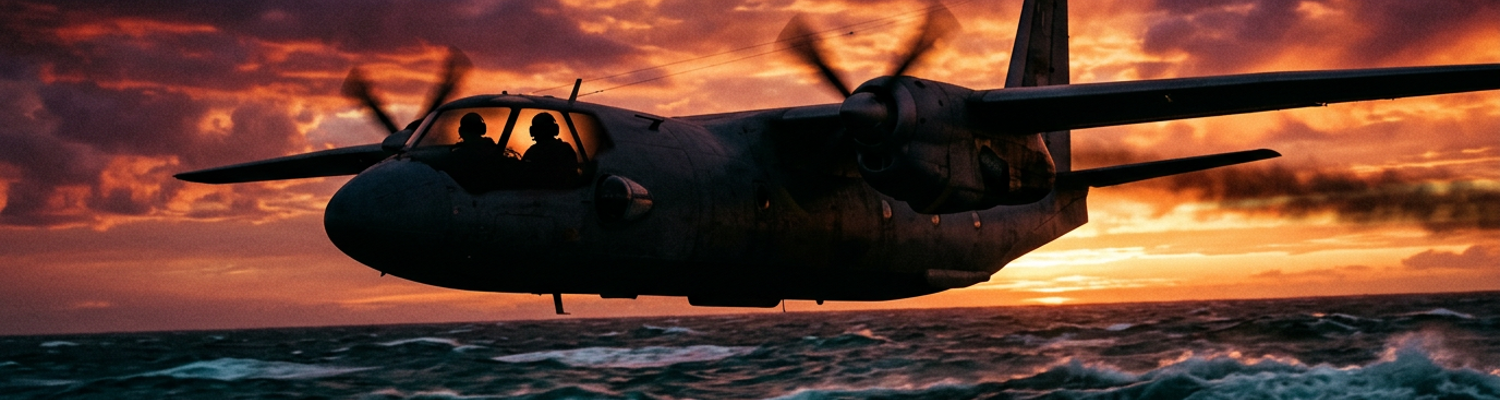
Pilots tested the overloaded transports over the cold water by dropping down to wave top altitudes to evade Soviet coastal radar coverage. Navigators guided the planes through dense sea mist barely fifty feet above the waves, forcing the pilots to fight violent air currents and blinding salt spray that caked the cockpit windshields. Air Force commanders protested that flying multi engine transports at fifty feet above open water violated basic military flight rules and risked crashing the aircraft into swells at night. Civilian mission managers countered that Soviet early warning radar stations along the Baltic coastline scanned high into the sky, leaving blind zones right along the water surface where low flying planes could slip past undetected. Flight crews learned to fly entirely on instruments and radar altimeters in pitch darkness, skimming the dark sea swells while monitoring their fuel gauges.
Navigators marked the exact coordinates where the planes would make landfall over the dark Estonian coastline, locking the low altitude ingress headings into the final mission logs. Pilots steered the stripped transports along those ingress headings straight into freezing sea spray, relying entirely on navigational dead reckoning under heavy maritime overcast and sub zero night flight conditions. Thick clouds blocked the moon and stars, preventing the navigators from taking celestial sightings with their sextants while sub zero moisture coated the cockpit windshields and wing surfaces in clear ice. Air Force pilots fought violent turbulence just fifty feet above the rolling surf, clashing with Agency mission managers in the cockpit over airspeed calculations as magnetic compass needles swung wildly and Soviet jamming stations wiped out radio signals. Navigators worked furiously by red cockpit lights to update dead reckoning logs with pencil and slide rule every three minutes, plotting wind drift against elapsed flight time to calculate their exact distance from the dark coastline. Flight engineers pushed the dual throttles forward as the final coastal timers expired, lifting the roaring transports over the sandy dunes and leveling off at four hundred feet as the black canopy of mainland pines appeared directly beneath the fuselage.
Pine branches whipped beneath the belly of the low flying transports as the jumpmasters slid the main cargo doors open to execute low altitude parachute drops of exile operatives and supply bundles. Sub zero air roared into the stripped cabin, freezing the breath on the operatives faces while Air Force loadmasters struggled against the violent draft to shove heavy equipment canisters toward the gaping hatchway. Agency case officers signaled the green jump light over the preselected drop coordinates, overriding the protests of the military flight crew who warned that dropping men below five hundred feet into dense spruce stands risked catastrophic bone fractures. Static lines snapped taut against the overhead anchor cables as the heavily laden Estonian operatives jumped headfirst into the darkness, followed seconds later by wooden pallets and padded bundles shoved out into the slipstream. Parachutes blossomed briefly in the black sky before crashing down through the dense forest canopy, tearing through pine boughs and plunging the jumpers into deep snowdrifts and frozen peat bogs as the transport engines vanished into the clouds.
MGB Counterintelligence and Radio Playback Operations
Estonian operatives dragged themselves out of the deep snowdrifts to locate the scattered equipment bundles before Soviet border security units and motorized militia could react to the sound of low altitude engines. Jump knives slashed through tangled parachute cords and canvas shrouds to retrieve the delivery of clandestine communication gear, including sealed shockproof containers holding compact RS-1 shortwave radio sets and one time cipher pads. Operatives worked by touch in the freezing darkness to inspect the vacuum tubes, hand crank generators, and spool antennas of the RS-1 sets, checking each component to ensure the heavy impact through the trees had not cracked the transmitter housings. Small waterproof pouches stowed alongside the radios yielded bundles of silk one time cipher pads printed on chemically treated paper that could dissolve in water or burn instantly in an emergency. Agents buried the white nylon parachutes, severed harness straps, and wooden drop pallets beneath heavy layers of forest moss and frozen dirt before hauling the sixty pound radio packs on foot toward their operational bases in the southern marshlands.
Soviet MGB counterintelligence units picked up the trail within hours of the drop, tracking boot ruts, crushed marsh grass, and broken spruce twigs left by the laden operatives across the southern wetlands. Acoustic listening posts and coastal air defense watchers had already plotted the low altitude rumble of the unmarked transport aircraft, prompting Soviet district headquarters to seal local road junctions and dispatch motorized security battalions into the forest. Search teams deployed tracking hounds along drainage canals, cutting off escape routes toward preselected safe houses and partisan hideouts before the infiltrators could establish contact with local sympathizers. Soviet troops ambushed the exhausted Estonian agents as they attempted to cross open peat bogs, pinning them down with automatic weapons and securing them before anyone could swallow their lethal cyanide capsules. Soldiers gathered the discarded sixty pound rucksacks, uncovering intact RS-1 shortwave radios, hand crank generators, dry cell batteries, and silk one time pads hidden inside waterproof linings. Officers loaded the captured agents and their communication gear into canvas covered trucks and delivered them under heavy guard to the MGB security headquarters in Tallinn.
Technicians inside the Tallinn MGB building examined the captured RS-1 transmitters and silk cipher sheets to organize systematic radio playback operations aimed at American intelligence stations. Soviet counterintelligence officers coerced the captured wireless operators under brutal interrogation, forcing them to reveal secret call signs, operational schedules, and personal security keys. Expert Soviet telegraphers sat beside the prisoners, analyzing each captured operator to mimic their individual Morse sending style, rhythm, and cadence so that transmitted signals would match their established personal touch. Encrypted radio transmissions broadcast from the seized equipment fed plausible, fabricated reports back to CIA monitoring stations in West Germany, describing fictional partisan networks and non existent anti Soviet resistance groups operating deep within Estonian territory. American case officers in Munich and Frankfurt celebrated these incoming dispatches as proof of mission success, oblivious to the fact that every character of Morse code came directly under Soviet control.
MGB handlers exploited this operational blindness by using the compromised wireless channels to request emergency supply drops and tactical reinforcements. Dispatches drafted by Soviet planners cited urgent shortages of weapons, medical supplies, compact batteries, and foreign currency needed to sustain the fabricated guerrilla networks. CIA project directors authorized repeated resupply flights without verifying prearranged duress indicators or questioning the unusually cooperative tone of the field reports. Ground units prepared the drop zones in advance, lighting signal fires in precise geometric patterns to guide inbound American transport planes straight to designated forest clearings. Parachutes carrying metal containers packed with submachine guns, ammunition, radio components, and gold coins drifted down directly into the hands of waiting Soviet soldiers, who loaded the cargo onto waiting trucks for forensic analysis in Moscow.
Project AEBASIN and Airborne Sortie Termination
Soldiers waited in concealed foxholes around the drop clearings to trap incoming exile agents flown in on subsequent CIA reinforcement sorties. Estonian operatives dropped into the pitch black spruce forests believing they were reinforcing active partisan detachments, only to find the reception committees composed entirely of MGB assault troops. Soviet soldiers tackled the infiltrators while they were still tangled in their parachute risers, pinning their limbs to the frozen dirt before they could draw sidearms or reach concealment capsules. Captive agents were stripped of their maps, suicide tablets, and cipher material on the spot, then pushed into windowless transport vans for transfer to interrogation cells. Soviet radio controllers immediately incorporated the new arrivals into the ongoing playback scheme, reporting their safe arrival back to CIA handlers and requesting still more equipment drops to perpetuate the deception.
Radio traffic analysts at CIA monitoring posts in West Germany noticed discrepancies in the rhythmic key strokes and missing personal duress codes buried inside the incoming transmissions. Analysts compared the daily signal logs against past transmission recordings, uncovering minute operational flaws that field officers had previously overlooked. Intelligence assessments compiled in Munich and Washington soon confirmed the systematic penetration and compromise of Baltic stay behind networks by Soviet state security. Bureaucratic infighting erupted between civilian case officers who insisted their agents remained active and military intelligence officers who proved the wireless channels were fully manipulated by hostile operators. Agency division chiefs finally recognized that every partisan pocket in Estonia had been rolled up, turning ongoing supply missions into lethal traps for allied flight crews.
Air Force commanders refused to risk more stripped Douglas C-47 airframes and military crews on blind night runs over heavily defended Soviet airspace. Heated meetings broke out between military leaders and civilian intelligence directors at Rhine Main Air Base and Washington headquarters over operational authority. Air Force officers accused the CIA Soviet Russia Division of squandering specialized flight units on phantom guerillas, while Agency planners argued that abandoning Baltic resistance networks damaged Western credibility. Friction between the two bureaucracies stalled collaborative flights until joint review boards signed off on the formal cessation of airborne personnel drops into Soviet Estonia by the CIA and USAF in 1954. Ground mechanics drained the auxiliary cabin fuel bladders and rolled the unmarked transport planes back into military maintenance bays to be repainted with standard Air Force insignia.
Project AEBASIN replaced the failed infiltration sorties with a tactical redirection toward standoff psychological warfare, broadcasting, and balloon borne propaganda. Civilian case officers shifted their operational budget away from parachute drops to reach the Estonian population from secure positions outside Soviet radar reach. Interagency arguments promptly resurfaced over logistics as CIA officials demanded Air Force weather tracking data, wind pattern charts, and launch sites near the Baltic coast. Military meteorologists resented performing support tasks for civilian psychological warfare campaigns, yet high level directives compelled them to map upper altitude wind currents blowing east across the sea. Secure print shops in West Germany ran continuous presses to produce millions of pocket sized leaflets, miniature newspapers, and news bulletins written in the Estonian language to counter Soviet state narratives.
Technicians inflated thousands of large polyethylene balloons with hydrogen gas inside guarded launch enclosures near the Baltic coastline. Riggers strapped heavy cardboard containers filled with the printed leaflets onto automated timing switches beneath each balloon envelope. Launch teams released the gas bags into the dark night sky, watching them rise into the jet stream at high altitudes where strong westerly winds carried the silent payloads straight across the sea toward Soviet Estonia. Mechanical release timers dropped the cargo bundles over Estonian cities and rural settlements, scattering clouds of printed leaflets across rooftops, farm fields, and forest roads below. Shortwave radio transmitters simultaneously beamed uncensored Estonian language broadcasts from coastal antennas, delivering covert messaging into the occupied territory without risking another transport aircraft or paratrooper over hostile soil.