
Army Security Agency Mission
The United States Army Security Agency, the ASA, was formally established on September 15, 1945. Its creation centralized all Army signals intelligence (SIGINT) and communications security (COMSEC) operations under a single command structure. This was a direct result of coordination problems during World War II, where SIGINT assets were divided between theater commanders and the Signal Security Agency. The new ASA, headquartered at Arlington Hall Station in Virginia, inherited the assets of its wartime predecessor but operated under a broader, more autonomous charter, reporting to the Director of Military Intelligence. Its personnel, a select group of highly trained linguists, cryptologists, and radio operators, were sworn to a level of secrecy that set them apart from the conventional Army. ASA units deployed globally, with a heavy concentration in West Germany to monitor the Soviet Union and its Warsaw Pact allies.
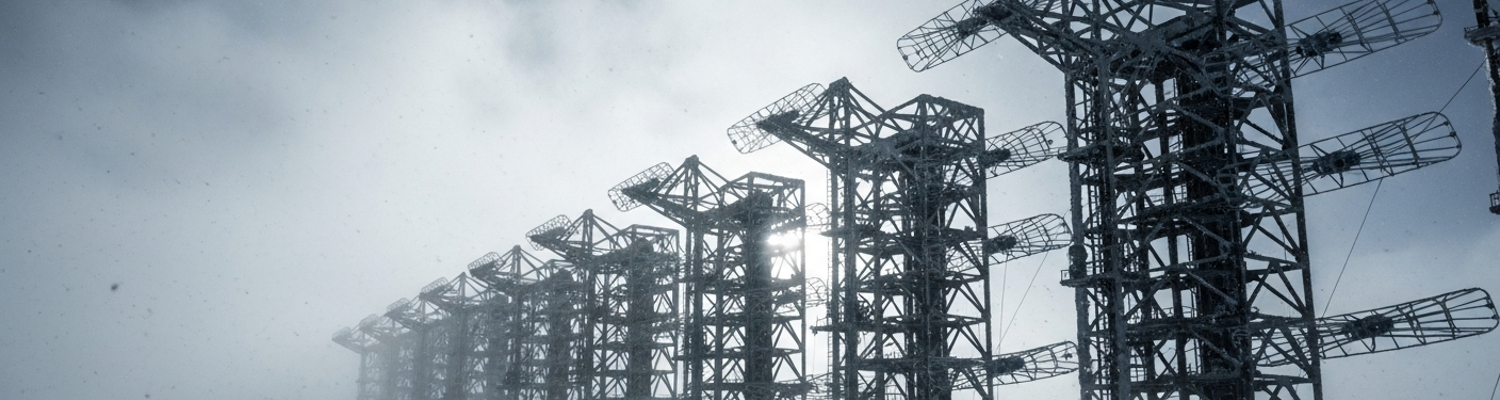
The agency’s primary function along the inner-German border was the interception of Soviet and Warsaw Pact aeronautical radio traffic. This was a relentless, 24-hour-a-day operation. From listening posts perched on strategic high points, such as Teufelsberg in West Berlin, and field stations in Augsburg, Herzogenaurach, and Rothwesten, ASA personnel monitored VHF and UHF frequencies used by Warsaw Pact air forces. A review of operational logs from the period indicates the target set was extensive, including Soviet Air Force, Polish, Czechoslovak, and East German flight operations. Voice intercept operators, many trained at the Defense Language Institute, would listen to transmissions between pilots and their ground-controlled interception (GCI) controllers. They logged call signs, flight paths, and any deviation from standard procedure. The equipment for this task included massive antenna arrays, like the AN/FLR-9 Wullenweber at Augsburg, which covered 32 acres and could locate high-frequency signals from thousands of miles away. Morse intercept operators copied coded messages, while other specialists worked to geolocate the origin of transmissions through radio direction-finding (DF) networks.
The intelligence gathered by the ASA provided NATO and the US European Command with a detailed, near-real-time electronic order of battle for Warsaw Pact air power. This SIGINT formed the backbone of the early warning system designed to detect preparations for a potential surprise attack across the North German Plain or through the Fulda Gap. An increase in radio traffic volume, a change in encryption patterns, or the sudden activation of fighter bases were all indicators that could signal an imminent offensive. Information from the field stations was passed through secure intelligence channels. The most urgent intelligence reached command authorities in as little as ten minutes. This data allowed analysts to track the readiness state of specific air regiments, identify unit movements, assess pilot training exercises, and monitor the deployment of new aircraft or weapons systems. The defensive posture of the West in the heart of Europe was fundamentally dependent on the unseen work of the Army Security Agency.
West German Listening Post Deployment
The strategic logic of Army Security Agency deployments in West Germany was dictated by antenna physics and the topography of the Iron Curtain. To intercept the VHF and UHF line-of-sight radio transmissions favored by Warsaw Pact air forces, ASA listening posts required placement on the highest possible terrain with an unobstructed view to the east. This led to the establishment of small, isolated detachments on exposed hilltops and mountains often battered by extreme weather. These locations were selected not for comfort or safety but for their electronic visibility into East Germany and Czechoslovakia. A close review of declassified site plans shows locations like the one perched atop the Schneeberg, a 1051-meter peak in the Fichtel Mountains, were typical. This position offered a commanding view of Soviet and Czech air training areas, but it was also remote, accessible by a single winding road, and subject to severe winters that could isolate the detachment for days. The equipment was constantly stressed by wind and ice, and the men who operated it were separated from the larger concentrations of U.S. forces in Bavaria. Other stations, like those at Herzogenaurach and Bad Aibling, were larger installations but the principle remained the same: get the antennas as high and as clear as possible.
The primary mission for these outposts was the specific and relentless targeting of Warsaw Pact aeronautical communications. Operators, many belonging to units like the 313th ASA Battalion, worked around the clock in shifts. Their entire world was compressed into the crackle and hiss of radio receivers. Their targets were the fighter pilots, bomber crews, and ground control intercept operators of the Soviet, East German, and Czechoslovak air forces. The work was painstakingly detailed, as linguists trained to recognize individual voices and speech patterns would log call signs, track flight paths, and note any deviation from standard procedures. They listened for the subtle signs of an alert scramble, the activation of specific airfields, or changes in radio protocol that could signal an escalation in readiness. Archival evidence shows that this intelligence was considered time-sensitive, with critical information passed up the intelligence chain to U.S. Army Europe and NATO command in minutes, forming a key part of the West’s early warning system against a surprise attack.
Such high-value, forward-deployed assets were obvious and tempting targets. The threat of a pre-emptive or wartime raid by Soviet Spetsnaz or other Warsaw Pact special forces was a constant planning consideration for U.S. commanders. These Soviet units were explicitly trained to infiltrate behind NATO lines to assassinate leaders and destroy key command, communication, and nuclear facilities. ASA listening posts could not survive without their own dedicated security details. Constant, localized protection was provided by U.S. Army Military Police units, who established a hard perimeter around the sensitive intelligence compounds. These MPs were not garrison police; they were a combat-ready force tasked with defending a fixed position against a determined assault. They manned guard towers, conducted patrols along fence lines, and controlled the single entry points to the sites. The relationship between the highly secretive, top-clearance ASA personnel and their heavily armed protectors was a unique feature of these isolated posts. The signals intelligence specialists inside the operations buildings focused on an invisible electronic war, while the MPs outside stood guard against a physical one. This created a palpable sense of being on a small, fortified island deep in potentially hostile territory.
Military Police Security Mandate
The physical security of Army Security Agency listening posts was a matter of intense and continuous focus. It formed a distinct layer of defense against espionage and sabotage, entirely separate from the electronic battle being waged within. The mandate for the U.S. Army Military Police units assigned to these sites was absolute: prevent any unauthorized access, penetration, or damage to facilities that were among the most sensitive in the American military inventory. A close review of USAREUR security directives from the era shows this mission extended far beyond a simple guard mount. It was an active counter-intelligence function. MPs were trained to recognize and counter tactics favored by Soviet and East German intelligence services, whose agents were known to conduct probing actions and surveillance against U.S. installations. These actions could range from seemingly innocuous civilians attempting to photograph antenna arrays to more sophisticated efforts to compromise personnel or plant listening devices. Security protocols were therefore exhaustive. At facilities like Teufelsberg in West Berlin, this involved multi-layered fence lines, constant patrols, and strict control of the single entry point. The physical integrity of the site was paramount, as even a momentary breach could compromise intelligence operations.
Military Police personnel, drawn from units such as the 527th and 615th Military Police Companies, were a constant, heavily armed presence at these remote outposts. At a station like the one on the Schneeberg massif or the sprawling Teufelsberg complex, MPs were not garrison law enforcement; they were a frontline combat force. They established barracks and command posts often co-located with, but functionally separate from, the ASA operations buildings. Their daily routine was a cycle of vigilance. It consisted of manning guard towers that offered interlocking fields of fire, conducting foot and vehicle patrols along the perimeter wire, and drilling for every conceivable emergency. These were soldiers trained for high-intensity conflict, tasked with protecting specialists whose work was almost entirely cerebral. The MPs provided the bubble of physical security that allowed the ASA linguists and analysts to focus entirely on their invisible targets in the ether. While the SIGINT specialists inside tracked Soviet fighter regiments by their radio traffic, the MPs outside listened for the snap of a twig or the glint of moonlight on a rifle scope.
This constant state of alert was driven by a pervasive and well-founded threat assessment: the risk of a direct assault by Warsaw Pact special forces. U.S. Army planners considered ASA listening posts to be high-priority, first-strike targets for Soviet Spetsnaz units in the opening hours of any conflict. The perceived doctrine for such an attack was clear. It would likely involve a pre-dawn infiltration, possibly by helicopter or a stealthy overland approach, followed by a rapid, violent assault designed to kill the station’s personnel, destroy the sensitive electronic equipment, and sever the intelligence link to NATO command. Defensive plans were therefore built around repelling such a specific raid. Archival evidence shows that site defenses included pre-sighted machine gun emplacements, tripflares, and potentially Claymore anti-personnel mines integrated into a comprehensive security scheme. The on-duty MP contingent was the first line of a defense in depth, trained to hold the perimeter at all costs while awaiting the arrival of a designated Quick Reaction Force (QRF) from a larger nearby installation. The psychological weight of being a first-shot target was a defining feature of life at these isolated posts.
Routine Interception Operations
Inside the Sensitive Compartmented Information Facilities, or SCIFs, the war was fought from a chair. The mechanical heart of the operation was a bank of radio receivers, most often the venerable R-390A/URR. These heavy radios, filled with glowing vacuum tubes, were the primary interface between an ASA operator and the invisible electronic battle space. An operator would sit before a rack of these receivers, often alongside reel-to-reel magnetic tape recorders like the AN/TNH-11. His world was defined by the dim glow of the odometer-style frequency display and the feel of the weighted main tuning knob. Signals were piped in from massive external antenna arrays, such as the AN/FLR-9 circular antenna system covering dozens of acres designed to detect high-frequency signals from thousands of miles away. For line-of-sight VHF and UHF traffic, smaller, more directional antennas were used from hilltop sites. The job was to tune through assigned frequency bands, hunting for the specific electronic signature of a Warsaw Pact transmission.
An operator’s tour was a grueling cycle of rotating shifts, ensuring the target networks were monitored 24 hours a day. A review of unit duty rosters shows that twelve-hour shifts were common, especially during periods of heightened tension or major Warsaw Pact exercises. Personnel, often enlisted specialists in their late teens or early twenties, would spend these long hours tethered to their consoles by a headset, one ear listening to the live feed while the other monitored the room. The environment was one of sensory deprivation and overload. The rooms were kept cold and dim to protect the equipment, the only sounds being the low hum of electronics and the constant hiss of static. Operators endured hours of near-silence, broken only by the crackle of atmospheric noise or the sudden, clear burst of a foreign language. This deep, grinding monotony was punctuated by moments of extreme stress when a potentially important intercept occurred. The psychological toll was significant; the combination of isolation, intense focus, and the secret nature of the work led to high rates of burnout and fatigue.
The core of the mission was the identification and categorization of enemy aeronautical signals. Voice intercept operators, MOS 98G, trained in Russian, German, Polish, or Czech at the Defense Language Institute, had to instantly recognize the language and context of a transmission. Their primary targets were Soviet Air Force and Warsaw Pact pilots communicating with their Ground Control Interception controllers on VHF and UHF frequencies. The operator had to distinguish routine flight training from an operational scramble, a transport flight from a fighter patrol, or a navigation report from the targeting data for an artillery unit. They would log everything: call signs, frequencies, time of intercept, and the content of the transmission. Over time, experienced linguists could recognize the unique speech patterns of individual pilots or controllers. Any deviation from standard procedure, such as a change in call signs, the use of coded language, or unusual radio silence, was a flag. This fragmented data, collected across multiple stations, was pieced together by analysts to build a comprehensive electronic order of battle, allowing NATO to track the readiness and location of specific enemy air regiments. Critical intercepts, such as the activation of an airbase or a change in alert status, were flagged and passed up the intelligence chain within minutes.
Remote Outpost Environmental Stress
The physical environment of the forward-deployed listening posts in West Germany was itself a constant, attritional opponent. At high-altitude sites such as the Schneeberg massif in the Fichtel Mountains, detachments were subject to unpredictable weather that directly impacted mission capability and human endurance. Archival weather data shows that winter conditions were particularly severe. Heavy snows could render the single access roads impassable for days or weeks, effectively cutting the sites off from all ground-based resupply or reinforcement. Even more insidious was the phenomenon of freezing fog, which would coat every exposed surface with thick layers of rime ice. This opaque, milky-white ice accumulated rapidly on the sensitive log-periodic antennas and parabolic dishes that were the station’s entire reason for being. A review of maintenance logs (NARA Record Group 472) indicates the added weight and asymmetrical loading from the ice could cause equipment failure. It could unbalance rotating antenna arrays, distort their reception patterns, or cause structural collapse under the strain. The same ice would snap power and communication lines, forcing the stations onto internal generators and isolating them further. The physical act of de-icing was a hazardous, recurring ordeal for both ASA and MP personnel, requiring them to climb towers in treacherous conditions to manually break the ice from components.
The prolonged isolation, enforced by both remote geography and extreme weather, exerted a heavy psychological toll on the assigned personnel. These were small detachments, often numbering only a few dozen men, living and working in cramped quarters for extended tours. The inherent secrecy of the ASA mission compounded this isolation. Personnel were unable to discuss the nature of their highly classified work, even among themselves in many cases, creating a culture of emotional suppression. This sense of being sequestered was amplified by the physical layout of the outposts. They were small islands of American military architecture surrounded by fences and then by a vast, often intimidating, foreign landscape. The combination of monotony, sensory deprivation inside the windowless operations buildings, and the low-grade, continuous stress of being a frontline target created a pressure-cooker atmosphere. Studies of similar isolated military deployments show that this environment could lead to increased interpersonal friction, chronic anxiety, and a state of hypervigilance that persisted even during off-duty hours. The possibility of being cut off by a blizzard or a Warsaw Pact advance was a constant, unspoken reality.
Physical hardships were a daily feature of life for both the intelligence operators and their military police protectors. For the MPs of units like the 527th and 615th Military Police Companies, duty involved long shifts in exposed guard towers and foot patrols along the perimeter fenceline, regardless of the weather. In winter, this meant enduring sub-zero temperatures and biting winds for hours, a physically draining routine that demanded high levels of endurance. The risk of frostbite and hypothermia was constant. For the ASA technicians and linguists, the hardship was of a different but equally debilitating nature. The cold seeped into the operations buildings and barracks, making sleep difficult and life uncomfortable. Equipment maintenance, a constant necessity for the temperamental vacuum-tube-era electronics, often had to be performed in poorly heated sheds or outdoors. The physical exhaustion from twelve-hour shifts was magnified by the poor living conditions, contributing to a high rate of burnout. The entire logistical chain was fragile. A single snowed-in road meant not just a lack of mail and fresh food, but also a potential shortage of diesel fuel for the generators that powered the entire intelligence-gathering apparatus.
Personnel Psychological Erosion
The sustained, high-tempo intelligence operations in West Germany exacted a severe psychological price from the personnel of both the Army Security Agency and the Military Police units tasked with their protection. This was a unique form of fatigue, born not from kinetic violence but from a combination of intense, monotonous focus and prolonged, low-grade fear. For ASA operators inside the SCIFs, the strain came from the grueling nature of their work. A review of after-action reports shows that twelve-hour shifts spent listening to radio static, punctuated by bursts of foreign language, were standard procedure. This created a state of simultaneous sensory deprivation and hyper-awareness, a condition known to degrade mental resilience over time. The work demanded an unbroken level of concentration, as a missed or misinterpreted signal could have significant intelligence consequences. This cerebral, high-stakes pressure, combined with the isolation and secrecy of the mission, led to documented cases of burnout, anxiety disorders, and depression.
For the Military Police standing guard on the perimeters of these isolated outposts, the psychological burden was different but no less severe. Theirs was a state of constant, grinding vigilance against a physical threat. They were the hard-point defense for the intelligence mission, a fact that placed them on the front line of any potential Warsaw Pact action. The threat of a pre-emptive strike by Soviet Spetsnaz forces was not a hypothetical exercise; it was a core planning assumption that dictated their entire posture. This resulted in a state of hypervigilance that became chronic. Every unexplained sound in the dense German forests or flicker of light on a distant hill could be the precursor to a complex attack. The mental exhaustion from this constant alert status, particularly during long winter nights in exposed guard towers, contributed to fatigue, even in the complete absence of combat.
An increase in disciplinary problems across U.S. Army Europe in the 1970s was a direct reflection of these sustained psychological strains. Archival evidence from the period shows a distinct rise in alcohol-related incidents, insubordination, and inter-personnel violence at remote and high-stress installations. For soldiers at ASA listening posts, the unique stressors of their environment created a difficult atmosphere. With few outlets for stress, many turned to alcohol as a coping mechanism, leading to a predictable spike in disciplinary actions. Reports from the era detail racial strife and fights between soldiers at bars in nearby German towns, often fueled by the frustrations built up during long, tense hours on duty. The high turnover of personnel in Germany during the post-Vietnam era also degraded unit cohesion and discipline, making it harder for commanders to manage the underlying mental health challenges of their troops.
The long-term psychological toll was deeply compounded by the unseen nature of the enemy. ASA and MP personnel were fighting against invisible adversaries. For the SIGINT operators, the enemy was a disembodied voice in a headset, always present but never seen. This created a bizarre, detached form of conflict that lacked the physical release or clear resolution of traditional battle. The other unseen enemy was the constant, latent threat of Soviet special forces. The knowledge that their post was a high-priority target for a surprise attack by Spetsnaz units trained to kill and destroy key facilities was a heavy burden. This fear was made tangible by the defensive preparations at the sites themselves: pre-planned fields of fire, trip flares, and constant drills for repelling a sudden, violent raid. This environment, where the threat was both ever-present and invisible, fostered a deep-seated anxiety and paranoia that could linger long after a soldier’s tour was complete.
Adversarial Signal Disruption
The electronic war fought by the Army Security Agency was a constant, two-way battle of measure and countermeasure. For every signal intercepted, there was a corresponding Soviet effort to blind the listeners.
Soviet and Warsaw Pact electronic warfare units were a dedicated and sophisticated component of their military structure, tasked explicitly with jamming NATO communications and surveillance systems. A review of declassified intelligence assessments shows that these jamming efforts were not random but were instead highly targeted and intensified during periods of political or military tension. The Berlin Crises, particularly between 1958 and 1961, served as a recurring flashpoint for this electronic combat. During these standoffs, ASA listening posts like Teufelsberg in West Berlin, whose antennas had a clear line-of-sight view into East Germany, would experience a dramatic increase in jamming directed at the VHF and UHF frequencies used by Allied and Warsaw Pact air forces. Soviet doctrine recognized several forms of jamming, including spot jamming to block a single frequency, barrage jamming to wash out a wide band of the spectrum with high-powered noise, and sweep jamming, where a powerful interference signal would rapidly move up and down a range of frequencies. For an ASA voice intercept operator, this translated into a sudden degradation of their ability to listen. A clear Russian voice directing a flight of MiGs could be abruptly buried under a roar of white noise, a pulsating shriek, or the garbled sound of another broadcast deliberately transmitted over the target frequency.
The operational impact of this jamming was immediate and severe. It directly threatened the core of the ASA’s early warning mission: the timely reporting of intercepted intelligence. A successful jamming campaign could effectively deafen the listening posts, creating blind spots in NATO’s electronic order of battle precisely when it was most needed. The primary objective of Soviet jamming was to prevent the intercept of transmissions that could signal preparations for a surprise attack, such as the activation of airbases, changes in alert status, or the coordination of ground-attack aircraft. When a target frequency was jammed, the operator’s log would note the loss of signal, but the intelligence itself was gone. This forced ASA units into a frantic and constant series of electronic counter-countermeasures (ECCM). Operators and technicians would attempt to 'burn through' the jamming by using highly directional antennas or by increasing the gain on their receivers, a technical struggle that often failed against high-powered Soviet jammers. The more common tactic was to rapidly hunt for alternate or backup frequencies being used by the target, a practice that required immense skill and familiarity with Warsaw Pact radio procedures. Each minute spent searching for a clear signal was a minute of lost intelligence.
Maintaining the integrity of the ASA’s own communications was an entirely separate and equally difficult challenge. The intelligence collected at remote, forward-deployed sites like the Schneeberg was worthless if it could not be securely relayed to analysis centers and command headquarters. These communication links, often microwave or land-line systems, were themselves high-priority targets for both electronic disruption and physical sabotage. ASA planners operated under the assumption that their own transmissions were being monitored by Soviet SIGINT units, necessitating complex encryption for all outgoing reports. The threat of jamming was not limited to the signals they were trying to intercept; Soviet electronic warfare units possessed the capability to target NATO’s command and control frequencies. To counter this, ASA and its signal support units employed techniques like burst transmission, where data was sent in short, compressed packets to minimize transmission time and exposure. The constant risk of having their intelligence pipeline severed, either by jamming or a direct attack, created a state of permanent vulnerability.
Crisis Command Decision-Making
The officers and senior non-commissioned officers in command of Army Security Agency listening posts bore a unique burden of command. A review of command rosters indicates that these were often junior officers, captains or even first lieutenants, and senior NCOs placed in charge of detachments that were geographically isolated but of high strategic importance. They were the sole authority on fortified hilltops like the Schneeberg or within intelligence factories like Field Station Augsburg. This dual command pressure, originating from both the ASA’s intelligence hierarchy and the local Military Police security structure, created a constant tension. The ASA station chief was responsible for mission success, which meant delivering timely and accurate signals intelligence under all conditions. The MP commander on site was responsible for the physical security of what was considered a first-strike target for Warsaw Pact special forces. In a crisis, these two chains of command had to function as one, but their immediate priorities could diverge. The ASA commander’s imperative was to keep the antennas listening and the intelligence flowing, while the MP commander’s focus was on hardening the site and preparing to repel a ground assault. Any decision, from authorizing a hazardous de-icing mission on an antenna tower to declaring a high-level alert, fell on the shoulders of a commander who was often operating far from direct higher-level support.
High-stakes decisions had to be made with chronically incomplete and often contradictory information. The core of the ASA mission was to provide early warning of a potential attack, a task that required interpreting ambiguous signals from the enemy. An operator might report a sudden increase in Soviet fighter-bomber radio traffic from a specific airfield, a classic indicator of a heightened state of readiness. The station chief had to assess this single data point against a backdrop of noise. Was it the start of a genuine alert, or was it the beginning of a previously unannounced training exercise? Was it a deliberate Soviet feint designed to test NATO response times? The intelligence was a mosaic of fragments, and the picture was almost never clear. Military decision-making models, such as the OODA loop (Observe, Orient, Decide, Act), were standard, but they relied on a continuous flow of information that could be easily disrupted. A commander had to make a judgment call based on the fragments available, knowing that the consequences of being wrong were catastrophic. A failure to report a genuine threat could mean the loss of the ten-minute window NATO command relied upon to react to a surprise attack. Conversely, declaring a false alarm could erode the credibility of the station and have significant political repercussions. This forced commanders into a constant state of risk assessment where every decision carried immense weight and had to be made in minutes.
The entire system was acutely vulnerable to the failure of communications. The intelligence gathered at a remote outpost was worthless if it could not be disseminated securely and rapidly to the analysts and commanders who needed it. Archival evidence shows extensive planning for redundant communication systems, including secure landlines, microwave relays, and high-frequency radio burst transmitters. Yet these systems were fragile. A single act of sabotage, a targeted artillery strike, or even the severe icing conditions common to high-altitude posts could sever the link to the outside world. Such a breakdown created the ultimate command nightmare: the station chief would be unable to send out critical intelligence or receive updates on the wider strategic situation. If Warsaw Pact forces were jamming communications and a ground assault began, the commander would be forced to decide whether to destroy the highly classified cryptographic and intercept equipment. This action would permanently end the station’s mission to prevent it from falling into enemy hands. This decision protocol, known as the Emergency Destruction Plan (EDP), was drilled constantly. The psychological weight of knowing that one’s final command decision might be to obliterate the very mission they were tasked to perform was a defining feature of life for an ASA outpost commander on the Cold War’s front line.