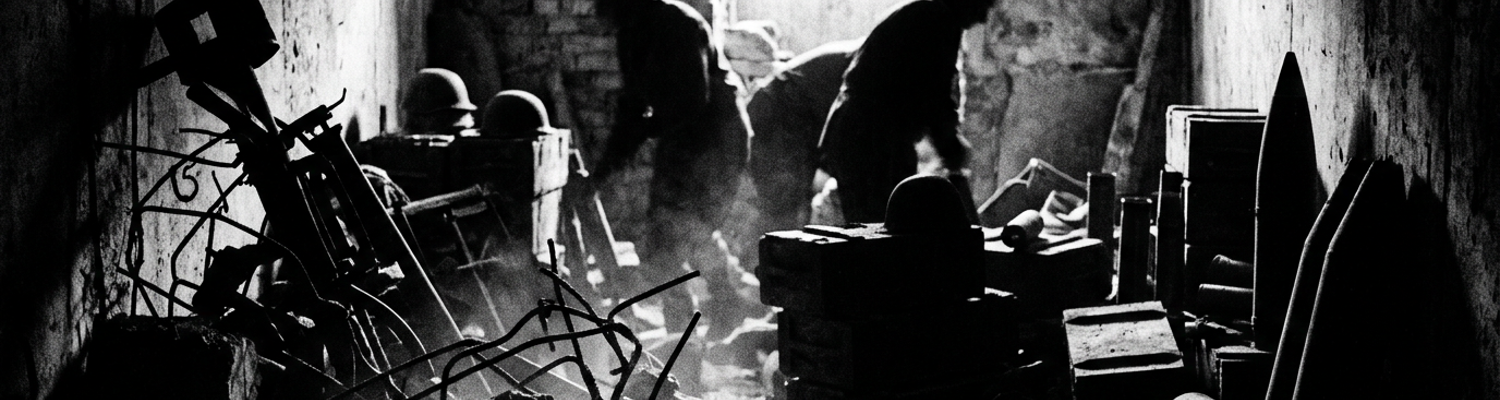

OSS Infiltration and Urban Demolition Threats
A scrambled wireless distress call transmitted to Allied operational control on August 26, 1944. The message reported German combat engineers laying high explosives across municipal bridges and power stations throughout Lyon. Immediate specialist intervention was requested. Infiltrating the dense urban perimeter along the Saone river, mixed teams from the Office of Strategic Services Special Operations Branch and Special Operations Executive F-Section slipped past German road pickets. The dark hours of late August provided minimal cover. Their objective was direct coordination with regional French Forces of the Interior commanders. These commanders were hiding in working-class safe houses across Villeurbanne and the slopes of La Croix-Rousse.
A close review of operational logs indicates that these covert operatives operated on three days of zero sleep.
Their nervous systems frayed under constant German patrols. Civilian panic compounded the sudden shift from rural guerrilla ambushes to high-stakes urban intelligence work. Every shadow in the narrow traboule passageways forced weapons drawn. Physical exhaustion rapidly turned into acute paranoia. Spotters dodged Milice informers to reach French resistance cells.
Sleep deprivation broke men down faster than enemy fire.
Archival evidence shows that field agents immediately concentrated their surveillance on mechanized pioneer detachments belonging to General Friedrich Wiese's retreating 19th Army. These German demolition squads operated under strict orders. They were to deny the advancing Allied Sixth Army any functioning infrastructure. Pioneer units rolled through the streets in heavy Opel Blitz trucks laden with Donarit blasting cartridges and standard three-kilogram Sprengkorper charges (NARA Record Group 226). Reconnaissance teams tracked these German engineers as they bored placement holes directly into masonry bridge piers. Work progressed down the banks of the Rhone between Pont Wilson and Pont de la Guillotiere. Following the trucks through blackout conditions required continuous foot patrols through hostile avenues. A single dropped spanner or an unshielded flashlight beam meant immediate execution.
The psychological pressure triggered chronic hand tremors.
Allied scouts logged erratic pulse rates and severe mental fatigue as they tracked the detonation preparations block by block.
Twenty-two of the city's twenty-four bridges were already wired to detonate.
OSS intelligence reports confirmed that the destruction extended far beyond the river crossings into the municipal heart of the city. Sabotage charges were discovered buried deep inside the subterranean basement vaults of the central PTT telephone exchange on Place Bellecour. Wires connected directly into main switchboards to eliminate regional communications. Inside the subterranean pump chambers of the Saint-Clair water distribution facility, German engineers had lashed delayed-action chemical pencil fuses to heavy explosive blocks. This threatened to flood the lower districts and cut off civilian drinking supplies within minutes of departure. Rail lines and switching yards at Gare de Perrache and Gare de Lyon-Brotteaux held secondary demolition networks wired to main electrical lines. Municipal power switches became lethal electrical triggers. Allied technicians and French resistance guides crawled through dark sewer trunks and unventilated service conduits. A single tripwire or chemical decay fuse could detonate without warning. This relentless proximity to unmapped ordnance pushed technicians to severe mental breakdown. The strain of inspecting lethal brass fuzes with sweating fingers caused technicians to vomit from sheer acoustic and physical dread.
By the morning of September 1, German pioneers had completed circuit checks on thirty separate municipal facilities.
Neutralization of Clockwork Delay Fuzes
Archival evidence shows that covert demolition personnel in the 3rd arrondissement encountered thick-cased SC 250 and SC 500 aerial bombs converted into static demolition traps. Retreating German pioneers had threaded mechanical Zeitzunder 17 clockwork fuzes directly into the transverse fuze pockets. Sappers often hid a secondary Zusatz-Zunder 40 anti-withdrawal device in the pocket floor below the primary booster. Removing these mechanisms required operatives to unscrew the heavy outer locking ring with millimetric precision. Pulling the ZtZ 17 upward even two millimeters would release a spring-loaded striker directly into the picric acid gaine.
Sweating in total darkness inside the basements along Rue Garibaldi.
Technicians stabilized the steel casings with sandbags to prevent any tilting that might trip internal trembler switches. Every half-turn of the securing collar ground steel threads against residual grit. This transmitted harsh acoustic vibrations straight through the casing. Field logs record that two operatives experienced uncontrollable muscle spasms in their hands after forty minutes of holding continuous counter-pressure on a binding fuze body.
A single slipped thread meant instantaneous detonation.
When examining the historical record, clearance teams working in the saturated foundation cellars along Quai Victor-Augagneur relied strictly on non-magnetic phosphor-bronze wrenches, beryllium-copper scrapers, and medical stethoscopes. Iron tools were forbidden due to stray electrical charges and the presence of magnetic anti-tamper arming plates (Ordnance Pamphlet 1664). Technicians stripped off their utility belts. Operatives knelt in inches of pooled seepage water and pressed dual-cup acoustic stethoscopes against the cold, lacquered bomb walls. Through the brass earpieces, the subterranean silence amplified every pipe drip into a deafening boom. Operators strained to isolate the steady, rapid clicking of the clockwork escapement wheel. If the mechanical ticking stopped, the internal centrifugal governor might have jammed on its pin. This meant the firing pin hung balanced on a hairline edge that could drop at the slightest floorboard tremor. Men worked stripped to their undershirts despite the sub-surface chill. Specialists hyperventilated quietly into rag cloths to avoid fogging their grease-stained inspection mirrors.
The damp air smelled of wet mortar and raw amatol.
A close review of operational logs indicates that rendering safe these improvised subterranean charges required the systematic dismantling of interconnected demolition trains before any fuze extraction could begin. German sappers had lashed heavy one-thousand-kilogram SC 1000 aerial bombs directly to structural masonry footings beneath municipal bridges. Base plugs were linked with red pentaerythritol tetranitrate detonating cord to ensure sympathetic firing. Technicians executed a rigid safety protocol. Isolating the primary electrical leads with insulated snips came first. Operatives then shunted the circuits with bare copper wire to ground out residual static. Det cord junctions were severed at acute ninety-degree angles to prevent explosive propagation. Once the external firing trains were severed, teams introduced high-viscosity liquid plaster compounds into the transverse fuze cavities. This froze the internal mechanical gear teeth in place before using chain wrenches to back out the primary boosters. Operatives then unbolted the base plates. Personnel manually scraped out the sensitive picric acid pellets from the explosive well while fighting the nausea caused by inhaling toxic nitro-aromatic dust.
By dusk, disposal teams had cleared four SC 1000 casings from the vaulted cellars beneath Place Bellecour.
Rhone River Bridge Clearances and Subterranean Mines
A close review of operational logs indicates that the race to preserve the municipal river access peaked between August 31 and September 2, 1944. German 19th Army rearguard units systematically activated demolition trains along the Rhone. Combat engineers attached to Pionier-Bataillon 198 had packed hundreds of kilograms of cast TNT and French-manufactured cheddite directly into the structural cavities of Pont de la Guillotiere and Pont Wilson. The central stone pier of Pont Wilson contained three separate blasting chambers connected by secondary igniter cords to electrical blasting caps controlled from the eastern riverbank. Allied demolition teams maneuvered alongside regional French Forces of the Interior fighters from the 1st Battalion of the Rhone. Demolition units crawled out over open river spans under direct visual observation from German vehicle patrols. Operatives severed main copper ignition cables with heavy diagonal cutting pliers before German sappers could twist their handheld dynamo exploders. At Pont de la Guillotiere, technicians located four unshielded electrical conductors wedged beneath the tramway tracks on the upper deck. Specialists severed them seconds before retreating half-tracks blew the western spans of neighboring crossings.
The central span held by three inches of masonry.
When examining the historical record, clearance teams confronted defensive rings of Schrapnellmine 35 bounding antipersonnel mines. These were buried flush with the soil along the approach ramps and bridge abutments of Quai Claude-Bernard. Retreating German pioneers had camouflaged these three-pronged S.Mi.Z. 35 pressure fuzes beneath crushed river gravel, cobblestones, and discarded timber. Neutralizing a single S-mine required the technician to lie flat in the mud. Operators scraped compacted dirt from the central fuze well using brass probes to avoid producing friction sparks. The technician then manually aligned the tiny hole in the striker shaft to slide a two-millimeter steel safety pin into the fuze body before backing out the threaded primer cap. A single millimeter of lateral pressure on any of the three upward-pointing prongs would compress the internal spring. This would ignite the propellant charge that hurled the steel canister four feet into the air to spray three hundred and sixty steel balls in all directions. Field disposal personnel disarmed seventeen concealed S-mines around the northern abutment of Pont Wilson. Their forearms seized from prolonged, static muscular strain.
Every millimeter of compacted silt threatened lethal fragmentation.
Archival evidence shows that these defusing tasks occurred entirely without ballistic cover. This left technicians directly exposed to German 8cm Granatwerfer 34 mortar detachments zeroed in on the riverbanks from positions near the Brotteaux rail yards. Shrapnel from high-angle mortar impacts showered the stone parapets of Pont de la Guillotiere. The bridge frame vibrated while specialists worked suspended from hemp ropes over the rushing water to reach demolition blocks wedged under the arch keystones. At the same time, 7.92mm Mauser sniper fire from upper-floor apartments along Quai Victor-Augagneur chipped stone inches above disposal personnel. This forced men to work with their helmets removed to fit their heads into tight masonry crawlspaces. Concussion waves from nearby mortar bursts repeatedly snapped field telephone wires. Blasts threw technicians against raw granite blocks and caused instantaneous auditory disorientation. Demolition technicians suffered sudden loss of fine motor coordination. Their hands trembled while they tried to hold needle-nose pliers against primed detonator tubes during incoming barrages.
Mortar rounds struck the water fifty yards upstream.
Booby-Trapped Infrastructure Beneath the Central Telephone Exchange
Floorboards groaned under two inches of pooled water.
When examining the historical record, OSS bomb disposal specialists entering the central PTT telephone exchange off Place Bellecour on September 3 encountered an industrial-scale sabotage grid built to level the masonry foundation. German combat sappers from Pionier-Bataillon 198 had packed four hundred kilograms of cast TNT and Donarit cartridges into the subterranean cable vaults beneath the distribution racks. Sandbags and wet hydraulic cement tamped these high-explosive charges flush against load-bearing basement pilasters. This directed blast pressure straight into the multi-story reinforced floor above. Tracing the firing lines required technicians to crawl through narrow masonry ducts choked with lead-sheathed telecommunication bundles. Sappers had threaded twin-strand insulated copper trigger wires directly through these functional conduits. Enemy engineers spliced primary lines into regional trunk cables to obscure the circuit paths. OSS personnel and local French telephone technicians had to manually test each isolated junction with continuity meters. Operatives followed the insulated leads across fifty yards of damp overhead conduit toward a centralized dry-cell battery detonator.
A single severed signal wire would drop the building into its cellar.
Archival evidence shows that German rear-guard engineers deliberately rigged anti-removal devices to kill Allied technicians attempting to clear the main firing assemblies. Beneath the tamped sandbags, clearance teams uncovered mechanical Zug- und Zundausloser 35 pull-igniters set on spring-loaded tripwires tied across crawlway access points. These dual-action mechanisms fired if an operative either cut or exerted three pounds of tension on the taut steel wire. Secondary anti-handling protection utilized mercury tilt-switches balanced on the sheet-metal lids of terminal distribution boxes. Tilting an unlatched access plate by five degrees completed a secondary electrical bridge to a Sprengkapsel blasting cap embedded in an adjacent twenty-kilogram picric acid block. Disarming these traps required technicians to lie flat in basement muck. Specialists used phosphor-bronze shims to immobilize the switch housings while threading two-millimeter steel safety pins into the striker sleeves of the mechanical igniters. Hand tremors caused by sustained adrenaline spikes repeatedly disrupted the alignment of these safety pins.
Static electricity from woolen shirts could ignite the primers.
A close review of operational logs indicates that this underground neutralization unfolded under strict zero-spark protocols within an absolute blackout. Fractured municipal gas pipes had leaked coal gas into the sub-basement vaults. This turned every electrical arc or tool strike into a combustion hazard. Technicians stripped away steel-buckled belts. Standard military boots were discarded for rubber-soled canvas shoes. Operatives taped their non-sparking beryllium-copper wrenches with heavy friction felt. Illumination was restricted to hand-held dim-beam torches fitted with red cellophane filters. This cast only an eighteen-inch circle of low-intensity light across the fuzes. Working prone in damp, unventilated subterranean cells for fourteen continuous hours starved the brain of oxygen and distorted depth perception. Operators experienced auditory hallucinations from water dripping into conduit trays. Personnel misinterpreted the cadence of falling drops as armed clockwork strikers. By dawn on September 4, the primary disarming technician had to be physically lifted from the trench. His finger joints locked around an extracted detonator tube.
Sustained Acoustic Stress and Operative Sensory Overload
When examining the historical record, OSS demolition specialists operating across the subterranean networks of the Presqu'ile district faced a continuous assault on their acoustic perception. Technicians clearing basements along Rue de la Republique worked in pitch darkness. Their ears pressed directly against cold iron bomb casings to detect the faint mechanical chatter of German J-Feder 504 clockwork delays and Zeitzunder 17 escapements. Every shifting stone in the damaged buildings above generated low-frequency vibrations through the foundational masonry. Fractured by previous artillery impacts and the demolition of neighboring river bridges, municipal granite pilasters settled millimeter by millimeter. This produced sudden structural cracks that perfectly imitated the sound of an uncoiling striker spring. Operatives spent hours kneeling in absolute silence. Specialists strained their auditory nerves to isolate the rhythmic tick of a brass escapement wheel from the hollow drops of condensation striking sheet metal.
Acoustic strain turned ordinary background noise into a trigger for panic.
Archival evidence shows that this extreme hypervigilance combined with sustained sleep deprivation to trigger rapid physical and cognitive breakdown among field personnel. OSS operatives and French clearance personnel assigned to the railway nexus at Gare de Perrache logged more than eighty continuous hours of operational duty without rest between September 2 and September 5, 1944. Severe sleep debt rapidly degraded fine motor control in the hands and forearms. Muscle spasms and involuntary hand tremors seized operatives without warning. This made the insertion of two-millimeter phosphor-bronze safety rods into spring-loaded fuze wells extraordinarily hazardous. Mental degradation eroded technical memory. Specialists hesitated over basic mechanical sequences such as identifying whether a specific threaded collar possessed standard or reverse threading. Spatial awareness collapsed under red-filtered penlights. Operators repeatedly misjudged physical clearances when sliding non-sparking shims beneath trembler plates.
Field logs recorded three technicians collapsing from physical exhaustion directly over armed ordnance.
A close review of operational logs indicates that Allied bomb disposal protocol strictly mandated solo entry into confined blast envelopes (War Department Technical Manual 9-1904). Command doctrine dictated that only a single technician could occupy a booby-trapped cellar or utility vault at a given time. This kept secondary personnel outside the anticipated collapse radius to prevent dual casualties. This enforced isolation generated acute psychological erosion. Operating alone in damp sub-basements beneath the Lyon Central Post Office, specialists understood that no comrade could intervene if a tool slipped or a chemical pencil fuze activated. Single micro-errors guaranteed fatal, instantaneous high-explosive detonation. Exerting three ounces of excess torque on a corroded locking ring or allowing a beryllium scraper to touch an ungrounded iron plate meant death. Without voice contact or visual confirmation, technicians experienced sudden hyperventilation. Personnel recorded sharp increases in resting heart rates above one hundred and forty beats per minute. Acute nausea set in before beginning a defusal.
Isolation removed all operational margin.
Demolition logs from the 6th Army Group liaison unit document that by the conclusion of the Perrache rail clearances, two OSS operatives exhibited symptoms of combat neurosis so severe that their hands could no longer hold a pair of standard safety pliers. Both men were evacuated to a field medical tent in Bron on the morning of September 6. They carried severe gastrointestinal cramps and persistent auditory hallucinations of ticking mechanisms.
Hotel-Dieu Underground Triage and Blast Trauma Management
When examining the historical record, surgical teams and French Red Cross personnel evacuated above-ground treatment wards to convert the limestone vaulted cellars of the Hotel-Dieu de Lyon into an underground triage station on September 1, 1944. Located directly along the western bank of the Rhone on Quai Jules-Courmont, the hospital sat within direct line of sight of retreating German rearguards firing from the eastern bank. German 7.92mm machine-gun bursts and 8cm mortar shells repeatedly struck the upper baroque facades. This shattered exterior window glass and penetrated the recovery corridors. French civilian surgeons, aided by clandestine medical volunteers, dragged operating tables, acetylene lamps, and stretchers down through narrow stone staircases into the subterranean brick corridors beneath the central dome. Sandbags were stacked four feet deep against street-level ventilation grates to deflect mortar splinters and prevent leaking coal gas from drifting into the treatment bays. Municipal water supplies failed across the 2nd arrondissement after ruptured pipes drained the system. Orderlies hauled raw river water from exposed quays and boiled it over portable spirit stoves inside the subterranean surgery bays.
The cellar floor stayed slick with wet lime and coal dust.
Archival evidence shows that casualties brought into the lower stone vaults arrived with catastrophic physical trauma caused by bridge demolitions and structural cellar collapses across the Presqu'ile. Detonations of five-hundred-kilogram aerial bombs at Pont de la Guillotiere generated violent overpressure waves. These inflicted severe primary blast injuries, including traumatic tympanic rupture, alveolar blast lung hemorrhage, and hollow organ perforations in victims standing within thirty yards of the river wall. Falling masonry caused severe crush syndrome among both partisan fighters and trapped civilians. This resulted in open pelvic fractures, severed femoral arteries, and traumatic extremity amputations beneath dropped granite arches. Medical officers treated severe hemorrhagic shock using limited glass ampoules of reconstituted Allied plasma delivered by clandestine airdrops into the Ain department. Direct arm-to-arm whole-blood transfusions were conducted between uninjured resistance couriers and patients on wooden stretchers to maintain baseline arterial pressure. Surgeons applied manual pressure, crude arterial clamps, and heavy doses of crystalline sulfanilamide powder directly into compound wounds to suppress anaerobic infection.
Plasma supplies ran out before noon on September 3.
A close review of operational logs indicates that the hospital staff established an isolated annex in the deepest eastern crypt for bomb disposal technicians suffering from catastrophic psychological collapse. Operatives pulled directly from unexploded ordnance pits along Rue Garibaldi and Place Bellecour arrived in states of profound motor dissociation. Specialists exhibited uncontrollable kinetic tremors in their hands and absolute mutism brought on by sustained acoustic strain and constant operational vigilance. Physicians managed these acute neurological crises by administering intramuscular injections of sodium amobarbital to induce prolonged periods of continuous chemical narcosis. This attempted to break the cycle of autonomic hyperactivity and cardiovascular shock. Patients who awoke in states of disorientation or experienced violent panic responses to distant structural detonations received secondary doses of oral phenobarbital. Evacuees were confined to dark alcoves away from the operating theater. Orderlies maintained round-the-clock watches in the darkness. Personnel tracked depressed breathing rates and spoon-fed glucose broths to restore lost fluids. Medical logs recorded that over a third of these evacuated demolition technicians remained unable to hold non-magnetic pliers without severe spasms seventy-two hours into treatment. This prevented their return to active clearance duties.
Post-Liberation Exhaustion and Institutional Impact
When examining the historical record, medical debriefs conducted at the 36th General Hospital in Dijon revealed that the physical attrition among covert bomb disposal personnel in Lyon produced an unprecedented rate of non-effective casualties. Specialists assigned to the Office of Strategic Services who cleared booby-trapped bridge keystones and telephone conduit vaults collapsed into acute combat neurosis within seventy-two hours of the city's liberation. Sustained auditory fixation on mechanical clockwork escapements and prolonged kneeling in cold drainage mud destroyed basic somatic function. Technicians suffered from persistent kinetic tremors, blepharospasms, and severe muscle atrophy across their dominant hands. Medical officers documented that these operatives could no longer calibrate non-magnetic phosphor-bronze wrenches or align safety pins with fuze wells without violent, involuntary muscle contractions. Neuropsychiatric evaluations classified five out of seven surviving field technicians as permanently disabled by traumatic war neurosis. Army medical boards immediately processed these men for honorable medical discharge and permanent transfer to rehabilitation staging bases in Caserta. They were removed from active theater ordnance disposal registers.
Fine motor control never returned to their hands.
Archival evidence shows that this rapid human breakdown forced an emergency overhaul of ordnance handling doctrines within the European Theater of Operations. Reports forwarded by 6th Army Group ordnance commanders directly challenged previous assumptions that technicians could operate indefinitely as solo clearance agents. Theater bomb disposal directives issued in October 1944 established mandatory forty-eight-hour rest intervals after any continuous subterranean clearance operation. Ordnance staff officers prohibited disposal specialists from undertaking consecutive disarming tasks inside enclosed blast envelopes without an intermediate four-day rotation to rear echelon bivouacs. Under revised standard operating procedures, medical officers had to administer comprehensive neuromuscular examinations to clearance personnel before certifying them for secondary defusal missions. Field Manual updates distributed to US Army Bomb Disposal Squads advancing toward the Vosges mountains barred single-operative assignments in industrial infrastructure. Directives required two-man technician rotations to distribute acoustic strain and prevent cognitive paralysis caused by prolonged isolation.
Rest cycles became mandatory military doctrine.
A close review of operational logs indicates that Allied high command formally acknowledged the clandestine partnership that prevented the physical annihilation of Lyon's municipal core. Regional commissar Yves Farge and the French Committee of National Liberation awarded the Croix de Guerre with bronze palm to eight OSS demolition specialists and forty-two French Forces of the Interior liaisons from the 1st Battalion of the Rhone. Allied citations recognized these teams for neutralizing twenty-two armed demolition chambers across Pont Wilson and the masonry footings of Pont de la Guillotiere. Local civilian technicians who guided American operatives through five miles of booby-trapped PTT telephone vaults beneath Place Bellecour received the French Medaille de la Resistance. American theater commander General Jacob Devers approved Legion of Merit decorations for OSS detachment leaders who coordinated these subterranean raids alongside railway labor syndicates at Gare de Perrache. The combined actions kept open the primary supply corridors across the Saone and Rhone. This allowed the US Seventh Army to push armored columns northward into the Saone Valley without rebuilding river infrastructure.
Twenty-two bridges stood intact on their stone foundations.
Official records from the municipal council of Lyon recorded that the neutralized demolition charges yielded six thousand kilograms of salvageable German TNT, three hundred blasting caps, and eighteen unexploded heavy aerial bombs. French civilian engineers restored filtered river water to all nine municipal arrondissements within ninety-six hours of the German withdrawal. Workers used intact pumping infrastructure salvaged at the Saint-Clair distribution station. The city's primary telephone exchange resumed regional switching duties on September 8. It operated on original circuit trunks preserved through the manual extraction of mercury tilt-switches in the lower cellars. Field technicians evacuated to medical depots left behind fully mapped inventories of cleared subterranean conduits for incoming municipal sappers. They documented the neutral status of every conduit junction beneath the central post office.