
Designing the Frontier Force
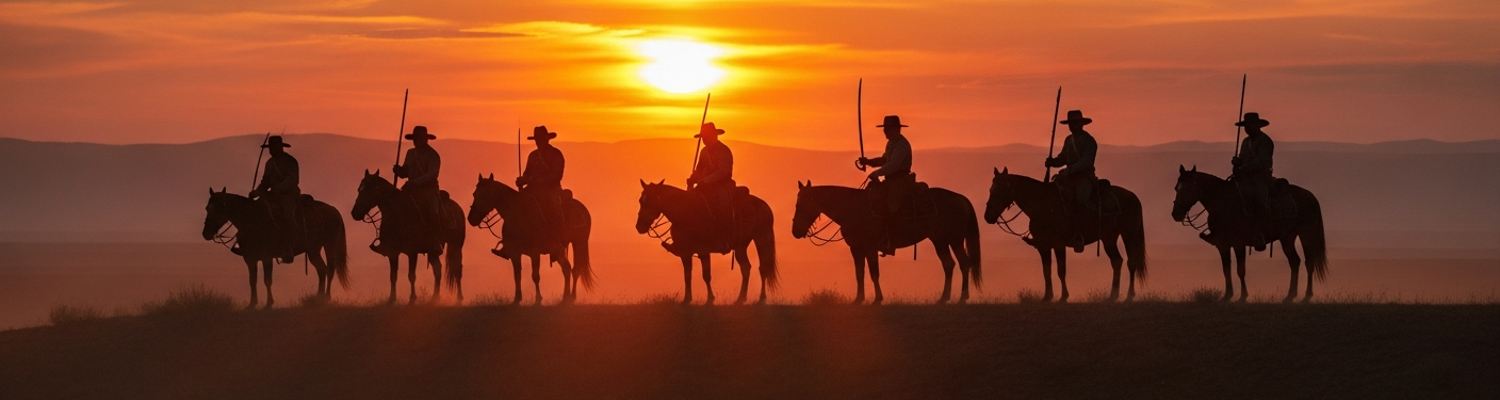
The United States Army, after the War of 1812, found itself responsible for a rapidly expanding and volatile frontier. Its infantry regiments were ill-suited for the vast distances of the American West. Encounters with mounted Native American tribes consistently demonstrated the severe limitations of foot soldiers who could be easily outmaneuvered. A stopgap measure, the Battalion of Mounted Rangers authorized in 1832, proved the concept of a mobile force but lacked the formal discipline, standardized training, and permanence required for sustained operations. Congress addressed this critical capability gap with an Act approved on March 2, 1833, which authorized the formation of the United States Regiment of Dragoons. This was not a simple cavalry unit in the European tradition of shock charges. The American dragoon was a purpose-built hybrid, a soldier designed specifically for the unique challenges of the North American continent. He trained to fight from the saddle with a pistol and the formidable Model 1840 Cavalry Saber, a heavy weapon nicknamed the "Old Wristbreaker" for its punishing weight. His primary function, however, was to ride to the point of conflict, dismount, and fight as a stable infantryman with his carbine. This dual capability offered commanders immense tactical flexibility, providing both the strategic reach of cavalry and the sustained, accurate firepower of infantry formations.
The regiment’s mandate was clear and multifaceted. Dragoons were to patrol the immense frontier, secure the burgeoning commercial arteries like the Santa Fe and Oregon Trails, enforce federal law, and manage the tense boundaries of the so-called "Permanent Indian Frontier." This policy, established by the Indian Intercourse Act of 1834, theoretically created a boundary between American settlement and designated Native American territories. This placed the dragoons in a morally and operationally complex position. They were the direct agents of westward expansion, yet also a constabulary force tasked with keeping peace between encroaching settlers and Native American tribes, including those forcibly relocated from the east under the Indian Removal Act. The ethical tightrope was starkly evident in the orders given to commanders like Colonel Stephen W. Kearny. He was instructed to conciliate local populations and project an image of American justice, while simultaneously being prepared to unleash overwhelming force if they resisted federal authority. Recruitment for this new unit, headquartered at Jefferson Barracks, Missouri, deliberately sought "healthy, active, respectable men of the country," a conscious effort to create a more professional and reliable force than the infantry ranks, which were often filled by recent immigrants and the urban poor. Officers were a mix of career army professionals like Kearny and experienced frontiersmen like Colonel Henry Dodge, the regiment’s first commander. Their initial equipment included the single-shot Johnson Model 1836 flintlock pistol and the innovative Hall Model 1833 breech-loading carbine. The Hall, the first breech-loader adopted by the U.S. mounted service, offered a higher rate of fire but was also known for gas leaks at the breech that could startle horses and burn a shooter's face. The dragoons were equipped to be the long arm of federal authority, a projection of military power into territories where the nation’s claim was still being violently negotiated.
Campaigns in Swamp and Desert
The dragoons' versatility was first severely tested in the Second Seminole War, a brutal, protracted conflict that began in 1835. The Florida swamps, a landscape of dense hammocks, sharp sawgrass, and malarial wetlands, seemed an entirely unsuitable environment for mounted troops. Many senior officers doubted their utility in such terrain. Yet, the 2nd Regiment of Dragoons, formed in 1836 to augment the 1st, adapted its tactics to the unforgiving environment. Instead of waiting passively inside fortified positions to be attacked, they took the fight to the Seminole warriors. This represented a significant shift in strategy, as they began actively hunting their elusive adversaries through the Everglades. The dragoons learned to operate with stealth, dismounting to surround villages and conduct swift raids, a tactic that directly countered the Seminoles' own effective guerrilla methods. They also embraced new technology to gain an edge. In 1838, the regiment acquired fifty Colt Patterson revolving carbines. These five-shot repeaters, while fragile and complex, gave small groups of sharpshooters a significant firepower advantage in the sudden, close-quarters ambushes that characterized the conflict. The war in Florida was a grueling affair of attrition, disease, and frustration. It was a harsh lesson in counter-insurgency that hardened the dragoons into an adaptable and resilient force.
This hard-won adaptability proved indispensable during the Mexican-American War from 1846 to 1848. Dragoons served in every major theater of the war, demonstrating their dual-role capabilities on a grand scale. At the Battle of Resaca de la Palma, a mounted charge by Captain Charles A. May’s squadron of the 2nd Dragoons crashed through dense chaparral to overrun a Mexican artillery battery, shattering the enemy's line and morale. Conversely, at the Battle of Buena Vista in 1847, dragoons under Colonel Charles A. May and Captain Enoch Steen fought dismounted alongside volunteer infantry units like the Mississippi Rifles. They repeatedly plugged critical gaps in the American line, using their carbines to repel attacks from a numerically superior Mexican force under General Antonio López de Santa Anna. The most significant dragoon operation of the war was led by Colonel Stephen W. Kearny, who was promoted to Brigadier General and given command of the "Army of the West." This force, with a core of five companies of the 1st Dragoons, marched over 850 miles from Fort Leavenworth, Kansas, to seize Santa Fe in August 1846, accomplishing the mission without firing a shot. Kearny then pushed on to California with a smaller contingent of 100 dragoons. Near San Diego, his exhausted men, their powder damp from winter rains, encountered a force of Californio lancers at the Battle of San Pasqual on December 6, 1846. In a bloody, chaotic engagement, the dragoons' sabers proved a poor match for the Californios' long lances in a mounted melee. The unit suffered heavy casualties, and Kearny himself was wounded. The battle was a stark reminder of the effectiveness of traditional cavalry and the dangers of campaigning at the end of a long, tenuous supply line. Despite the tactical defeat, Kearny’s combined forces, later reinforced by sailors and marines, ultimately secured California for the United States, showcasing the dragoons' capacity for long-range strategic operations far from any established base.
Mapping an Empire
The Dragoons’ most enduring legacy was written not just in battle, but across the physical landscape of the American West. They were a primary instrument of Manifest Destiny, serving as explorers, surveyors, engineers, and armed diplomats. Long before the Mexican-American War, dragoon expeditions pushed deep into unmapped territory. In 1835, Colonel Dodge led a 1,600-mile march from Fort Leavenworth, traveling as far as the Rocky Mountains and making first contact on behalf of the U.S. government with several Plains tribes, including the Pawnee, Arikara, and Cheyenne. Lieutenant Enoch Steen, a dragoon officer on the expedition, produced a detailed map of their route, one of many vital cartographic contributions made by the unit. These were not mere patrols. They were systematic explorations intended to document resources, establish lines of communication, and impress upon Native American tribes the reach and power of the United States. The expeditions were exercises in logistics, discipline, and armed negotiation, all conducted hundreds of miles from support.
A decade later, in 1845, Colonel Kearny led a 2,000-mile, 99-day expedition with five companies of dragoons from Fort Leavenworth to South Pass in the Rocky Mountains and back. This was the first time a U.S. military force had traveled west of the Continental Divide, a clear signal of national intent. Such expeditions provided armed escorts for civilian wagon trains on the Oregon and Santa Fe trails, making westward migration safer and encouraging settlement. The dragoons established and garrisoned a network of crucial military outposts, including Fort Leavenworth itself, which grew from a simple cantonment into a major logistical hub and eventually the "Intellectual Center of the Army." It became home to the School of Application for Cavalry and Infantry, the forerunner of the modern Command and General Staff College. These forts were not just defensive structures. They were nodes of federal power and logistical centers that facilitated further expansion.
The actions of the dragoons directly shaped the U.S. Army’s frontier doctrine. They proved the absolute necessity of a mobile, self-reliant force capable of operating independently over vast distances. Their blend of mounted and dismounted tactics became the foundation upon which future U.S. cavalry doctrine was built. While the ethical record of their mission is inseparable from the complexities and violence of conquest, the foundational service of the dragoons created a framework for military operations in the West. It provided hard-won lessons in logistics, inter-cultural engagement, and combined-arms tactics. The regiment was officially redesignated the 1st Cavalry Regiment in 1861, marking the end of an era, but their influence persisted. They had laid the organizational and doctrinal groundwork for the cavalry that would fight the Civil War and complete the Army's long campaign across the frontier.