
Kurdish Refugee Corridors and Route Clearance
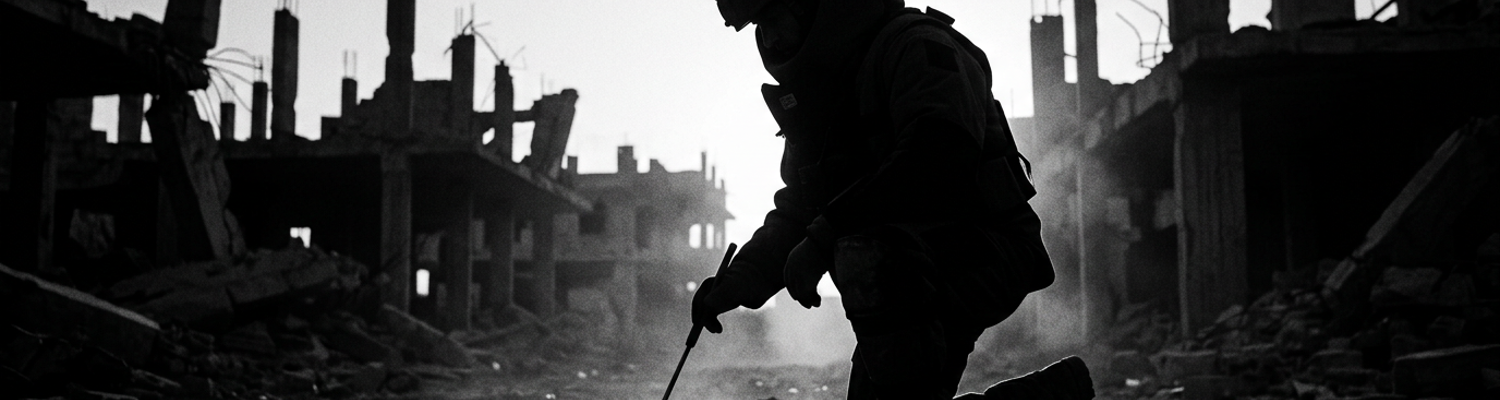
Specialist David Miller knelt in the baked clay of Highway 2. He swept a two-foot fiberglass probing rod at a strict thirty-degree angle into the dirt. Sweat pooled inside his Kevlar helmet under the midday sun. He pushed the rod forward exactly three inches. He felt a soft mechanical resistance. He stopped breathing. His hands hovered over the trigger mechanism of a buried explosive.
A close review of operational logs indicates that in May 1991, US Army Explosive Ordnance Disposal teams deployed to northern Iraq under Operation Provide Comfort. Joint Task Force Bravo commanders assigned the 43rd Ordnance Detachment to clear a safe zone spanning coordinates 37.14 N, 42.68 E. This sector ran directly along the Turkish-Iraqi border. The detachment received orders to secure the primary supply routes leading into the Zakho valley. EOD teams carried AN/PSS-11 metallic mine detectors strapped to their chests. These analog devices were powered by twelve-pound battery packs that dug deeply into the shoulders of the operators. The detectors generated a continuous hum in the operator headset. This tone spiked in pitch when the magnetic field swept over conductive materials. The valley floor contained thousands of artillery shell casings. Copper wire fragments and rusted vehicle parts from the recent Gulf War littered the topsoil. Scattered debris caused the detectors to shriek constantly in the ears of the soldiers. This induced severe auditory fatigue after only twenty minutes of sweeping.
EOD squad leaders made a field adjustment to manage the sensory overload.
They instructed operators to manually recalibrate the sensitivity dials on the AN/PSS-11 receivers. This action tuned out the background clutter of small iron fragments. The specific technological tweak was intended to increase the speed of the clearance operation by fifty percent. Commanders needed to meet strict deployment deadlines mandated by the advancing civilian population.
The adjustment silenced the headsets.
Archival evidence shows that Kurdish refugees attempted to return through designated humanitarian corridors near the border town of Zakho. Over 400,000 displaced civilians were descending from the freezing altitudes of the Cukurca and Isikveren mountain camps. They had endured weeks of starvation. Local geography forced all returning traffic through a series of natural choke points defined by steep limestone ridges. Civil affairs officers directed this massive foot traffic into a narrow valley pass flanking the Khabur River. Military maps designated this path as Route 8. Iraqi Republican Guard engineering battalions had previously saturated the unpaved shoulders of this exact route with VS-50 anti-personnel mines. Their objective was to deny access to Peshmerga insurgent fighters. Designed to evade detection, the Italian-manufactured VS-50 featured a ribbed plastic body and a neoprene pressure plate. It contained less than two grams of metal in its firing pin. The device required only ten kilograms of downward pressure to initiate the explosive train. Exhausted refugees moved in dense columns. They pushed wooden carts. They carried children. Coalition forces strictly confined the civilian movement to a three-meter-wide strip of cleared asphalt.
Hundreds of plastic mines sat buried just inches from the pavement.
Lowering the sensitivity on the EOD sweepers created a severe operational blind spot. Analog AN/PSS-11 detectors completely failed to register the tiny metal firing pins of the VS-50 devices. A single detonation on the shoulder of the corridor on May 14 halted the entire migration column. Panic rippled through the refugee lines. The crowd threatened to push thousands of people off the cleared asphalt and into the uncleared scrubland. This sudden crisis forced an immediate shift in doctrine. EOD technicians abandoned their electronic equipment entirely to prevent a mass casualty event. They transitioned to a primitive manual clearance method known as the prone probe. Soldiers crawled on their stomachs in the 100-degree heat. They used standard-issue bayonets and non-magnetic fiberglass rods to physically puncture the soil every two inches. They worked in staggered formations. Visual inspections for tripwires preceded every forward inch. This adaptation required extreme physical endurance. Manual probing succeeded where advanced sensors failed. Human adaptability overcame the technological trap laid by the Iraqi engineers. Working continuously, the 43rd Ordnance Detachment cleared an eight-kilometer path using only their hands and non-magnetic probes.
The detachment isolated 412 intact VS-50 mines before nightfall.
Baathist Infrastructure Sabotage in Zakho
When examining the historical record of the Iraqi withdrawal in April 1991, military logs reveal a deliberate engineering strategy. The retreating 44th Engineering Battalion of the Iraqi Republican Guard executed this plan. Rather than simply destroying bridges or cratering asphalt, these demolition teams targeted specific municipal systems. They focused on the utilities required to sustain a returning civilian population. They systematically embedded explosive hazards into the utility networks of Zakho along the primary northern return routes. Infantry squads moved through the municipal water pumping stations flanking the Khabur River at coordinates 37.15 N, 42.69 E. They dismantled the primary intake valve housings on the thirty-six-inch subterranean steel pipes. They packed the empty mechanical voids with C4 plastic explosives. Iraqi sappers wired these charges to tension-release switches. They anchored these switches directly to the main water flow control wheels. Any attempt by returning Kurdish engineers to rotate the heavy iron wheels and restore water pressure to the northern districts would pull the attached wire. This action would immediately release the tension switch. The firing sequence would initiate.
The retreating forces weaponized the basic mechanics of urban survival.
Archival evidence shows the sabotage extended deep into the local electrical grid along Route 8. Iraqi units placed Soviet-manufactured RGD-5 fragmentation grenades inside the high-voltage breaker boxes of the primary town substation. They removed the safety pins. They wedged the heavy iron handles of the electrical breakers directly against the grenade striker levers. A civilian attempting to restore power by pushing the breaker handle upward would release the lever. This would trigger a three-second chemical delay. The RGD-5 would then detonate inside a metal cabinet filled with live transformers. It would propel three hundred and fifty steel fragments outward at high velocity. Death would be instantaneous. They also buried 152mm high-explosive artillery shells beneath the wooden floorboards of the municipal telephone exchange. Sappers connected the artillery firing pins to the main entry doors via complex tripwires. They constructed these triggers from nearly invisible fifty-pound test fishing line.
Opening a door carried the explosive yield of a direct artillery strike.
Joint Task Force Bravo assigned the 74th Ordnance Detachment to clear these complex anti-handling fuses. EOD technicians operating under Captain Robert Vance encountered a severe technical challenge when they breached the municipal water facility on May 16. The Iraqi sappers had equipped the hidden C4 charges with Soviet-made MS-3 anti-handling devices. This prevented coalition forces from disarming the primary traps. This specific cylindrical fuse assembly sat directly underneath the explosive blocks. It remained hidden from visual inspection. The trap was absolute. A spring-loaded plunger extended from the bottom of the MS-3. It pressed firmly against the concrete floor. The internal mechanism required a constant load of ten kilograms to keep a set of metal retaining balls locked around the firing pin. If an EOD technician attempted to lift the explosive block to clear the valve shaft, the pressure on the plunger would drop instantly.
The internal spring would force the striker directly into the detonator cap.
Overcoming these rigid mechanical traps required extreme human precision. The 74th Ordnance Detachment developed a manual bypass protocol to defeat the MS-3 fuses without initiating the explosive train. Soldiers spent hours lying on the damp concrete floors of the utility stations. They used specialized non-sparking beryllium-copper scrapers to remove the hardened mud around the base of the C4 blocks. They carefully slid millimeter-thin steel shims underneath the explosive charges. They forced the rigid metal plates directly over the MS-3 plungers. This technique artificially maintained the required downward pressure on the fuse body. The technicians then disconnected the primary detonators from the C4. The margin for error was zero. The slow dismantling of these devices demonstrated that systematic human intervention could reverse widespread mechanical sabotage. Restoring these facilities step by step allowed civil affairs units to reopen the city blocks for the returning refugee columns. By May 19, the detachment successfully isolated forty-seven anti-handling devices within the water treatment plant.
They recovered three hundred pounds of plastic explosives from the intake valves.
High-Velocity Explosive Counter-Charges
A close review of operational logs indicates that by May 21, 1991, the manual bypass protocols utilized by the 74th Ordnance Detachment began to incur unacceptable casualty risks. Iraqi Republican Guard engineers from the 44th Engineering Battalion had secretly layered secondary collapsing electrical circuits beneath the MS-3 anti-handling devices. This occurred inside the primary electrical substation of Zakho at coordinates 37.16 N, 42.69 E. American EOD technicians inserted beryllium-copper shims to secure the primary plungers. They unknowingly bridged hidden copper wire contacts connected to auxiliary blasting caps. Two near-miss detonations forced Captain Robert Vance to halt all manual dismantling operations inside the facility. To regain control of the clearance schedule, EOD operators employed high-velocity explosive counter-charges. They used these charges to reliably neutralize anti-handling fuses. Technicians molded fifty-gram strips of Composition C-4 block explosives directly onto the exposed steel casings of the Iraqi munitions. They inserted M6 electric detonators into the plastic charges. They ran five hundred feet of WD-1/TT firing wire out the doors and behind reinforced concrete retaining walls. The objective was to generate a localized supersonic shockwave. This wave needed to completely pulverize the delicate spring-loaded internal mechanisms of the MS-3 fuses. The sheer physical speed of the blast wave destroyed the internal firing pins before the springs could mechanically force them into the detonator caps.
The detonation velocity of the C-4 explosive exceeded twenty-six thousand feet per second.
Archival evidence shows this tactical shift fundamentally altered the timeline of the refugee recovery effort. Energetic disruption tactics were chosen to ensure immediate render-safe capability against volatile devices. The unseasonable 105-degree heat inside the unventilated utility stations caused aging Soviet-manufactured munitions and improvised TNT components to sweat. Highly unstable nitroglycerin leaked directly onto the concrete floors. Commanders concluded that leaving these degrading chemical compounds intact posed a severe threat. Attempting slow manual disassembly endangered the advancing columns of 400,000 displaced civilians waiting at the border checkpoints. Detonating counter-charges provided an absolute guarantee of threat elimination within minutes rather than hours. EOD teams systematically initiated these controlled blasts throughout the northern municipal grid. They cleared the path for the returning population. They destroyed the booby traps along with the immediate surrounding hardware.
Entire sections of the municipal water pumping network vaporized under the sheer force of the counter-charges.
When examining the historical record, this specific technological tweak rapidly cascaded into a major strategic crisis for the civil affairs units. The energetic disruption completely neutralized the explosive threat. The resulting overpressure shattered the thirty-six-inch subterranean steel water pipes. It destroyed the high-voltage transformers required to sustain Zakho. EOD operators had successfully secured the physical terrain at the direct cost of the city life-support systems. Returning Kurdish engineers faced a heavily damaged urban center lacking basic utilities. The destruction forced coalition planners to immediately airlift mobile water purification units and diesel generators from airbases in southern Turkey. This prevented a secondary humanitarian collapse among the dehydrated refugees. Working alongside local municipal technicians, US Army engineers began splicing bypassed electrical lines. They welded patch plates over the ruptured steel pipes. The deliberate choice to prioritize immediate human safety over infrastructure preservation necessitated a massive rebuilding effort. Shared technical expertise between the military engineers and the local civilians allowed the city to reconstruct the shattered grid piece by piece. Collaborative human resilience reversed catastrophic structural damage.
By June 2, temporary water pressure returned to the northern districts at a rate of four hundred gallons per minute.
Sympathetic Detonation of Municipal Fuel Reservoirs
A close review of operational logs indicates that the reliance on energetic disruption tactics encountered a severe geographical anomaly on May 23, 1991. Elements of the 74th Ordnance Detachment shifted their clearance operations to the eastern perimeter of Zakho. They arrived at coordinates 37.155 N, 42.685 E. EOD technicians identified a dense cluster of Iraqi VS-50 mines and rigged 152mm artillery shells. These munitions surrounded the exterior chain-link fences of the primary civilian water purification plant. Following the newly established protocol, operators molded one-pound blocks of Composition C-4 directly onto the exposed ordnance casings. Captain Robert Vance authorized the simultaneous initiation of six separate charges. He intended to rapidly clear the perimeter for incoming civil affairs convoys. The technicians ran their firing wires to a sandbagged bunker one hundred yards away. They connected the wires to a standard M57 electrical firing device. They were operating off outdated Baathist municipal blueprints. These documents completely omitted a large-scale subterranean infrastructure project completed in the late 1970s. Directly beneath the rigged ordnance sat an unmapped municipal fuel reservoir. This buried concrete cylinder measured forty feet in diameter. It contained over twenty thousand gallons of aging diesel fuel intended for emergency municipal generators.
The EOD operators compressed the handle of the M57 firing device at exactly 1415 hours.
Archival evidence shows the high-velocity charges unexpectedly sympathetic-detonated the unmapped subterranean municipal fuel reservoir within milliseconds. Initiating at a velocity exceeding twenty-six thousand feet per second, the C-4 blocks drove a severe supersonic shockwave straight down through the baked topsoil. This kinetic energy wave struck the degraded concrete roof of the buried fuel tank. The structural casings failed instantly. Expanding shockwaves violently compressed the dense mixture of oxygen and diesel vapor trapped in the ullage space above the liquid fuel line. Adiabatic compression instantly spiked the internal temperature of the vapor past its autoignition threshold of 210 degrees Celsius. The entire payload ignited. The resulting sympathetic detonation generated a subsurface blast yield equivalent to a 2,000-pound aerial bomb.
The ground heaved upward as a column of pulverized concrete and burning diesel fuel breached the surface.
When examining the historical record, this specific subterranean blast destroyed the primary civilian water purification plant of Zakho. Expanding explosive gases from the fuel reservoir sought the path of least mechanical resistance. They channeled directly through the adjacent subterranean utility trenches. They breached the foundation of the water facility. Overpressure waves slammed into the underside of the main concrete clarifier basins. The heavily reinforced floor slabs shattered into thousands of jagged projectiles. Heavy steel intake manifolds sheared completely off their mounting brackets. Shrapnel instantly destroyed the chemical processing units. It collapsed the main structural supports of the filtration building. Hundreds of thousands of gallons of untreated river water mixed with burning diesel fuel. The mixture flooded the ruined processing floors. Using high-velocity counter-charges to speed up the demining process rapidly escalated into a major strategic crisis. Over 400,000 refugees were now completely cut off from any local source of potable water. The environment was experiencing 105-degree heat. Total destruction of the facility forced coalition planners to immediately divert eighty cargo flights from Ramstein Air Base.
US Army engineers ordered fifty industrial reverse-osmosis pumps from Incirlik Air Base to replace the shattered filtration basins.
The unexpected loss of the purification plant necessitated a highly collaborative reconstruction effort. Joint Task Force Bravo commanders grounded all EOD energetic disruption operations within city limits. American civil affairs units and local municipal workers descended on the flooded ruins at coordinates 37.155 N, 42.685 E. They needed to salvage any intact mechanical components. They dragged heavy diesel-powered generators through the mud by hand to power auxiliary pumps. Kurdish engineers utilized their specific knowledge of the surviving secondary pipe networks. They bypassed the destroyed clarifier basins entirely. Soldiers and civilians worked side by side to weld temporary steel bypass valves onto the sheared intake manifolds. This shared technical labor demonstrated that collaborative problem-solving could overcome severe structural failures. Catastrophic structural failure necessitated the immediate manual fabrication of forty custom steel pipe fittings.
Civil affairs units successfully diverted the Khabur River flow through the makeshift filtration network by the fourth day of continuous labor.
Civil Infrastructure Damage and Diplomatic Strain
A close review of operational logs indicates that the makeshift steel bypass valves welded onto the Khabur River intake manifolds failed catastrophically on June 6, 1991. The destruction of the primary purification plant from the sympathetic C-4 detonation left the returning Kurdish population entirely dependent on untreated surface water. Over 400,000 displaced civilians moving down Route 8 required a minimum of two million gallons of clean drinking water daily. They needed this volume to survive the unseasonable 105-degree heat. The fifty industrial reverse-osmosis pumps airlifted from Incirlik Air Base processed barely one-tenth of that required volume. Their delicate synthetic membranes clogged rapidly with thick river silt and microscopic diesel particulates. Raw river water bypassed the shattered concrete clarifier basins at coordinates 37.155 N, 42.685 E. It flowed directly into the municipal supply lines. This water was heavily contaminated with raw sewage and trace amounts of unburned diesel fuel from the subterranean reservoir blast. Medical personnel from the 10th Special Forces Group recorded a rapid spike in cholera and severe dysentery among the refugee columns within forty-eight hours of the facility collapse. Dehydration casualties multiplied as desperate families drank directly from the stagnant agricultural irrigation ditches flanking Highway 2. Military doctors initiated emergency intravenous fluid protocols directly on the unpaved shoulders of the highway.
Children collapsed on the cleared asphalt of the humanitarian corridor.
Archival evidence shows this severe deterioration of the civil support network triggered immediate intervention by United Nations relief coordinators. Representatives from the UN High Commissioner for Refugees arrived at the Joint Task Force Bravo command tents near the Turkish border on June 8. They carried extensive civilian damage assessment dossiers. These officials directly confronted EOD commanders regarding the total structural loss of the Zakho water treatment facility. UN coordinators filed formal diplomatic grievances against the 74th Ordnance Detachment. They submitted comprehensive financial liability forms. They demanded immediate monetary compensation for the pulverized clarifier basins. They demanded a complete cessation of all energetic disruption tactics within city limits. The civilian coordinators argued the aggressive clearance protocols violated international relief mandates regarding the preservation of essential civilian infrastructure during humanitarian operations. Captain Robert Vance and his engineering officers countered these claims. They physically dumped neutralized Soviet-made MS-3 anti-handling devices onto the folding tables of the briefing tent. The military personnel presented field reports detailing the unacceptable explosive risks associated with manual dismantling attempts in the unventilated utility stations.
Frontline operators viewed the diplomatic damage claims as a dangerous bureaucratic distraction.
When examining the historical record, this specific friction between humanitarian oversight and tactical military execution forced a highly productive evolution in joint operational doctrine. The UN coordinators demanded strict preservation of the physical terrain to ensure long-term habitability. EOD units prioritized the immediate biological survival of the returning refugees against hidden explosive threats. The resulting standoff inside the canvas command tents necessitated a procedural compromise. This reshaped the entire relief effort. Military commanders agreed to integrate UN civilian civil engineers directly into the daily 0600 EOD briefing cycles. This operational shift allowed local infrastructure experts to consult Baathist municipal blueprints. They identified critical subsurface vulnerabilities before the ordnance teams deployed their C-4 counter-charges. UN officials subsequently released emergency international funding to procure commercial earth-moving equipment from private Turkish contractors. US Army logistics battalions provided the heavy-lift aviation assets required to transport this machinery over the limestone ridges into the damaged Zakho valley. Shared technical labor between international diplomats, military technicians, and Kurdish civil engineers accelerated the physical repair of the shattered municipal grid. Joint engineering teams poured fifty cubic yards of rapid-setting concrete to form new intake foundations.
Army CH-47 Chinooks delivered three 5,000-gallon commercial water filtration units to the eastern perimeter on June 12.