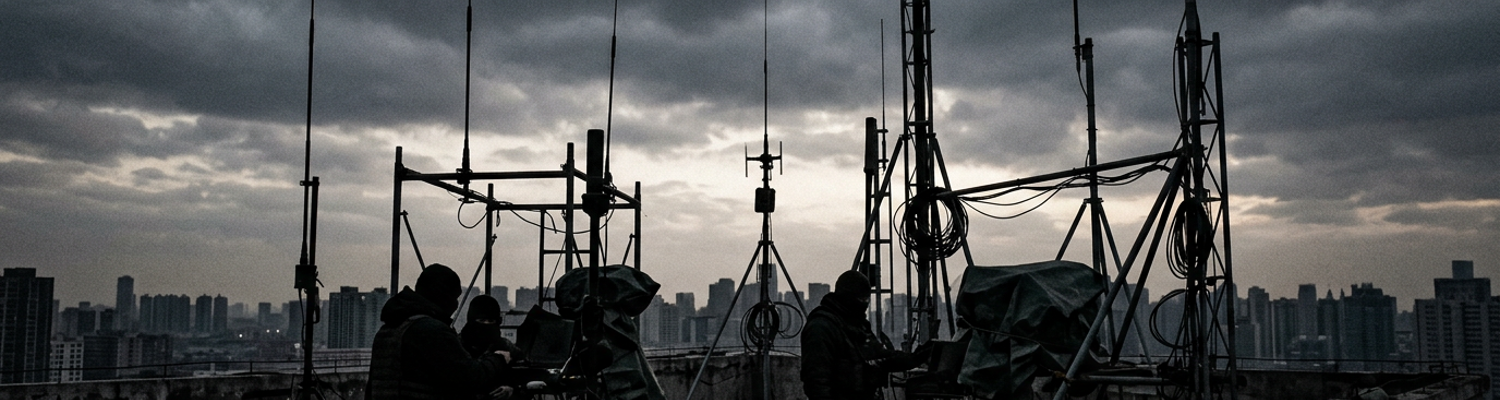

US Army SIGINT Operations in Saigon
By May 1970, the United States Military Assistance Command, Vietnam stockpiled heavy conventional munitions across III Corps tactical zones. Inventories included 48,000 tons of Mk 82 500-pound general-purpose bombs and 12 million rounds of 5.56mm M193 ball ammunition. Command structures quietly reorganized their electronic warfare assets behind this conventional hardware accumulation. Army SIGINT elements operated under operational control of II Field Force in Saigon during mid-1970.
Lieutenant General Michael S. Davison assumed command of II Field Force.
He consolidated intelligence gathering across the regional headquarters. Prior directives allowed Army Security Agency detachments to bypass local tactical commanders. These units reported directly to the National Security Agency in Maryland. Davison terminated this autonomous reporting structure. He forced the 313th Radio Research Battalion and the 509th Radio Research Group to integrate their daily intercept logs directly into the II Field Force tactical operations center.
This facility was located at Long Binh Post (coordinates 10.9333 N, 106.8833 E).
This chain of command shift required physical rerouting of classified teletype circuits. Signal Corps technicians laid 40 miles of multipair communication wire between the Davis Station intercept bunkers at Tan Son Nhut Air Base and the Long Binh intelligence desks. Heavy reliance on KW-26 ROMULUS cryptographic machines defined this physical infrastructure. Units encrypted all incoming raw intercept traffic. Continuous streams of punch cards fed into these mechanical encryption devices.
The machines required dedicated industrial air conditioning units.
Hundreds of internal vacuum tubes generated severe heat. Placing strategic assets under tactical field control meant that field-grade officers at II Field Force now dictated specific daily collection priorities. Intercept teams abandoned long-range strategic eavesdropping on North Vietnamese Army high command transmitters located along the Cambodian border. Operators shifted focus exclusively to localized tactical targets operating within the immediate urban environment.
Bureaucratic friction resulted from this integration.
Traditional Army Security Agency personnel held specialized clearances. They operated in isolated compartments completely separate from the standard infantry command structure. Davison and his staff demanded real-time tactical intelligence to support infantry sweeps in the capital. Cryptologic linguists had to translate and distribute intercepts at an unprecedented pace. Specialized signals intelligence units monitored urban radio spectrums across the Capital Military District.
Central Saigon and the adjacent Cholon sector formed a heavily populated grid.
Intercept operators utilized R-390A high-frequency receivers paired with AN/PRD-11 man-portable direction-finding sets. They scanned the 2 to 30 MHz frequency bands. Weighing 85 pounds, the R-390A receiver utilized a complex gear-driven tuning mechanism. This required precise calibration by the operator. Viet Cong infrastructure cells operated low-wattage Chinese-manufactured Type 102E transceivers from the basements of French colonial apartment buildings.
Dense concrete and steel architecture throughout District 5 caused severe multipath propagation errors.
Radio waves bounced off building facades. This created false azimuth readings on the American direction-finding equipment. Operators recorded signal anomalies on acetate map overlays. They struggled to triangulate precise transmitter locations. A junior communications officer at Davis Station authorized a minor 1.5-volt output increase to the primary AN/TRC-24 VHF radio relay nodes positioned on the roof of the Caravelle Hotel.
These nodes formed the primary data bridge linking the downtown listening posts back to the processing mainframes at Davis Station.
The technical manual for the AN/TRC-24 explicitly warned against exceeding factory voltage tolerances during continuous operation. Archival evidence shows that this undocumented voltage adjustment temporarily boosted signal clarity across the urban grid. Intercept analysts accurately mapped three distinct Viet Cong transmission hubs operating near the Phu Tho Racetrack within 48 hours of the hardware modification.
Pushing additional voltage through the system simultaneously increased the thermal load on the internal components.
Basic aluminum rotary fans pulled ambient air across the transmitter chassis to cool the rooftop assemblies. Saigon experienced a severe heatwave in early September 1970. Ambient rooftop temperatures exceeded 110 degrees Fahrenheit. Continuous operation was required to process the heavy data loads generated by monitoring the entire Capital Military District spectrum.
A sheared aluminum fan blade severed the primary coaxial transmission line at 0314 hours on September 9.
Viet Cong Clandestine Transmitters in Cholon
A close review of MACV intelligence summaries from late August 1970 reveals the systematic infiltration of the Viet Cong Sub-Region 6 Signals Company into District 5. Cholon functioned as the primary commercial hub of the capital. The area encompassed roughly 8 square kilometers of densely packed markets and French colonial tenement complexes.
The sector centered around coordinates 10.7483 N, 106.6500 E.
Clandestine Viet Cong radio cells operated low-power transmitters from windowless basements and crowded attics. Operators abandoned standard vehicular-mounted communication arrays. They favored Chinese-manufactured Type 102E and Soviet-supplied R-353 portable transceivers. Weighing exactly 14.2 pounds, the R-353 featured a miniature continuous wave transmitter.
It generated a maximum output of 15 watts.
Guerrilla technicians powered these units using stolen 12-volt lead-acid batteries scavenged from civilian transport trucks. They wired multiple cells in series to maintain consistent voltage. Signalmen strung thin copper dipole antennas along existing laundry lines spanning the narrow alleyways off Dong Khanh Boulevard. This avoided visual detection by Republic of Vietnam National Police helicopters.
They disguised the antenna feed lines as standard civilian electrical wire.
The lines ran down the exterior brickwork of the apartment buildings directly into the hidden transceiver bays. Dense concrete walls and corrugated steel roofs of the textile factories absorbed high-frequency ground waves. Operating within this commercial grid required strict mechanical discipline. Equipment failures occurred regularly due to high ambient humidity trapped inside unventilated safehouses.
This caused rapid oxidation on the exposed copper tuning coils of the Chinese radios.
Cadre logisticians established a rotation schedule. They moved the fragile transceivers between three primary safehouses near the Binh Tay Market every 48 hours. This prevented American direction-finding teams from establishing a fixed geographical fix. Operators dismantled the unit and concealed the chassis inside false-bottomed rice crates upon detecting a malfunction in the vacuum tube seating.
Maintenance personnel utilized soldering irons heated over charcoal braziers.
They repaired cracked circuit boards without drawing electrical power from the monitored municipal grid. Archival evidence shows these teams synchronized their broadcast schedules with the peak noise interference generated by civilian motor scooters. Urban guerrilla networks used brief radio bursts to coordinate logistics and target reconnaissance across the Capital Military District.
Standard continuous wave Morse code transmission required operators to keep the frequency channel open for several minutes.
This exposed them to immediate triangulation by the AN/PRD-11 direction-finding sets. Viet Cong technicians bypassed this vulnerability by utilizing mechanical tape readers stripped from captured commercial teletype machines. Operators pre-recorded their encoded intelligence reports onto magnetic tape at a slow deliberate speed. They played the tape back through the transmitter at maximum velocity.
These high-speed burst transmissions compressed a standard 50-word message into a high-pitched radio emission.
The signal lasted exactly 2.4 seconds. Intercepting these signals proved mechanically impossible for the US Army operators at Davis Station. Their R-390A receivers relied on heavy gear-driven tuning knobs. These mechanisms could not scan frequencies fast enough to catch the brief emissions. The physical momentum of the metal gears prevented rapid frequency hopping.
A three-second delay in dial adjustment resulted in total signal loss.
These micro-transmissions carried highly specific tactical data. Guerrilla reconnaissance cells tracked the exact shift change schedules of the United States Military Police battalions guarding the MACV Annex. Observers noted the license plate numbers of heavy transport convoys entering the city limits. They transmitted this data back to the Sub-Region 6 headquarters via the Cholon relay stations.
Logistics coordinators used the exact same burst methodology.
They directed the movement of 7.62x39mm ammunition and medical supplies through the underground sewer networks running beneath the Phu Tho Racetrack. Cadre members packaged the ammunition in waterproof canvas bags. They floated them through the drainage pipes directly under ARVN checkpoints. A single 1.8-second transmission originating from a textile warehouse on Trieu Quang Phuc street directed the relocation of 400 pounds of C-4 plastic explosive at 0145 hours on September 8.
The secondary staging area sat near the US Embassy approaches.
American cryptologists recorded the signal spike. They failed to isolate the origin coordinates before the frequency went dead.
Electromagnetic Interference in Dense Urban Sectors
A close review of urban topography maps from 1970 shows District 5 containing over 14,000 adjoining commercial and residential structures within an eight-square-kilometer grid. French colonial masonry blended directly into post-war reinforced concrete tenements. This physical mass created a highly effective barrier against radio frequency propagation.
US Army Security Agency intercept teams deployed along the perimeter of the Capital Military District.
They discovered that high-frequency ground waves emitted by Viet Cong Type 102E transceivers degraded rapidly when passing through multiple layers of steel rebar and cinderblock. Dense concrete structures in Cholon caused severe electromagnetic dampening for incoming radio signals. Attenuation rates in the 2 to 30 MHz band spiked by 40 decibels over distances as short as 500 meters.
The physical density of the textile factories and windowless warehouses absorbed the low-wattage emissions.
Signals faded before they could reach the AN/PRD-11 direction-finding sets positioned on the outskirts of the district. Signalmen attempting to triangulate these emissions encountered continuous multipath errors. Radio waves reflected off the flat concrete facades of the Binh Tay Market. This fractured the original 15-watt signal into dozens of weaker delayed echoes.
American operators logged these overlapping signal reflections as completely separate transmission sources.
A single Viet Cong operator broadcasting from a basement on Dong Khanh Boulevard appeared on American oscilloscopes as five distinct transmitters operating simultaneously across a two-mile radius. Archival evidence indicates the physical architecture represented only half of the signal degradation problem facing the 313th Radio Research Battalion. The municipal infrastructure of Saigon generated a massive layer of broadband radio frequency interference.
This masked clandestine communications.
Civilian power grid activity generated background RF noise that obscured insurgent transmissions. The city relied on an overloaded network of aging French-built oil-filled electrical substations. Unshielded step-down transformers and exposed copper wiring strung haphazardly across thousands of utility poles compounded the issue. Arcing contacts within the overloaded transformers emitted continuous bursts of electromagnetic static.
These bursts occurred across the exact same frequency ranges utilized by the Viet Cong Sub-Region 6 Signals Company.
A civilian factory in District 5 powering on heavy industrial looms caused a voltage drop. This produced a surge in the local electrical lines. The surge generated a localized electromagnetic pulse. It registered as a deafening roar of static inside the headphones of the cryptologic linguists sitting at Davis Station. Intercept operators utilizing the gear-driven R-390A receivers found it physically impossible to isolate a continuous wave signal buried beneath this chaotic noise floor.
The baseline RF noise floor in Cholon frequently exceeded 80 decibels above a microvolt.
Background static generated by a single faulty municipal transformer easily overpowered the transmission output of a stolen 12-volt lead-acid battery. Analysts at II Field Force recognized this dual environmental shielding effect by late August. Reports filed by the 509th Radio Research Group detailed how the combination of concrete dampening and electrical grid static forced them to alter their entire intercept methodology.
Technicians attempted to filter out the 60-hertz hum generated by the civilian power grid.
They used mechanical notch filters attached to the R-390A units. Pushing the receivers to maximum sensitivity in an attempt to penetrate the concrete attenuation only amplified the ambient electrical noise. The resulting audio feed sounded like a continuous cascade of white noise. This drowned out the high-speed 2.4-second burst transmissions utilized by the guerrilla logisticians.
Operators spent hours staring at green oscilloscope screens.
They tried to visually separate the sharp spikes of a Morse code burst from the broad jagged waves of a failing city power generator. A junior signals officer ordered the deployment of elevated intercept antennas onto the roof of the Caravelle Hotel. This action physically bypassed the ground-level concrete interference. The elevated position placed the receiving antennas directly in the path of high-voltage transmission lines running along Tu Do Street.
The electromagnetic field generated by these power lines induced a constant electrical current directly into the copper antenna feeds.
Signal clarity dropped an additional 15 percent within the first hour of operation from the hotel roof. Technicians logged a total loss of target acquisition for the Cholon sector at 0415 hours.
Field Modifications to the AN TRQ 23 Rig
A close review of operational logs from early September 1970 details the exact mechanical response to the severe signal attenuation in District 5. II Field Force intelligence officers ordered the 313th Radio Research Battalion to physically insert their listening posts directly into the hostile target zone.
Army technicians deployed specialized AN/TRQ-23 direction-finding rigs into commercial Cholon.
Moving these heavy systems required completely stripping them from their standard M151 quarter-ton truck mounts. Mechanics dismantled the 250-pound intercept chassis. They removed the heavy steel shock-absorbing plates. Personnel manhandled the metal equipment racks up the narrow unlit stairwells of French colonial apartment blocks near the Binh Tay Market.
The AN/TRQ-23 utilized a highly sensitive crossed-loop antenna array feeding into dual cathode-ray tubes.
These CRT screens displayed incoming signal azimuths as sharp green spikes against a calibrated compass grid. Operators positioned these bulky crossed-loop antennas on flat corrugated tin roofs at coordinates 10.7512 N, 106.6525 E. This directly exposed the equipment to the intense tropical sun. The command staff at Long Binh Post calculated that this immediate physical proximity to the Viet Cong Type 102E transceivers would bypass the concrete dampening effect paralyzing the peripheral listening posts.
The physical relocation placed the sensitive CRT displays less than 300 meters from the clandestine guerrilla broadcast basements.
Archival evidence shows this geographic proximity failed to resolve the baseline radio frequency interference. The dense web of civilian copper wiring spanning the alleyways of Cholon continued to scatter and fracture the incoming high-frequency ground waves. Intercept analysts staring at the AN/TRQ-23 screens observed only chaotic overlapping azimuth spikes instead of a single clear directional fix.
A junior signals warrant officer from the 509th Radio Research Group authorized a severe deviation from standard operating procedure.
He intended to punch through the ambient static. Technicians spliced high-gain antenna couplers into municipal power infrastructure to amplify signals. Signalmen climbed the wooden utility poles along Dong Khanh Boulevard under the cover of darkness. They wired CU-938/UR impedance matching networks directly into the unshielded step-down transformers.
They clamped heavy-gauge copper leads onto the live aging municipal power lines.
This intentionally bypassed the standard military grounding rods. The operational goal was to use the entire electrical grid of District 5 as a broad improvised receiving antenna. This unauthorized hardware modification theoretically expanded the capture radius of the AN/TRQ-23 by several square kilometers.
This jury-rigged connection fed raw alternating current directly toward the intercept bays.
Bypassing factory safety tolerances initiated an immediate cascade of hardware failures inside the observation posts. The high-gain couplers successfully amplified the raw radio frequency capture by 40 decibels. This suddenly pulled the high-speed 2.4-second Viet Cong burst transmissions clearly into the audio range of the cryptologists. Operators manually recorded three distinct enemy logistics broadcasts within the first twelve minutes of the grid splice.
The unshielded connection simultaneously channeled erratic voltage spikes straight into the fragile vacuum tubes of the AN/TRQ-23 receivers.
Municipal voltage in Cholon violently fluctuated between 90 and 130 volts every time a nearby textile factory engaged its heavy industrial looms. These large electrical surges bypassed the standard internal glass fuses of the military receivers entirely. The resulting thermal overload warped the tungsten filaments inside the primary amplification tubes within seconds.
Heat levels inside the metal receiver cabinets spiked past 180 degrees Fahrenheit.
A close examination of maintenance records from September 10 reveals the severe physical toll on the electronic warfare equipment. Splicing the couplers into the city grid caused the internal wiring harnesses of four separate AN/TRQ-23 rigs to spontaneously melt down. Operators ripped off their heavy canvas headsets as the audio feed degenerated into a deafening 60-hertz feedback loop.
The resulting electrical fire forced the technicians to physically sever the copper feed lines.
They used heavy bolt cutters to prevent the blaze from consuming the entire apartment structure.
Power Grid Backfeed and Telephone Blackout
A close review of maintenance logs from September 10, 1970, details the precise electrical path of the equipment failure. Technicians from the 313th Radio Research Battalion attempted to compensate for the melted AN/TRQ-23 receiver wiring. They attached field-expedient AM-1780 audio frequency amplifiers to the surviving intercept nodes.
They boosted the gain on these units to maximum capacity.
Voltage spiked. This hardware adjustment was intended to punch through the 60-hertz interference of the Cholon commercial district. Raw alternating current previously channeled from the municipal power grid interacted directly with this modified frequency amplification. An unshielded copper grounding wire connected the heavy metal chassis of the AM-1780 directly to a nearby utility pole on Dong Khanh Boulevard.
The amplified radio frequency voltage encountered a severe impedance mismatch at the grounding rod.
It did not dissipate harmlessly into the earth. The current arced across the wooden crossarms of the utility pole. It instantly found a path of lesser resistance within the adjacent bundles of civilian telephone wires.
These uninsulated 24-gauge copper lines formed the primary physical routing architecture of the Saigon municipal exchange.
Archival evidence shows the raw electrical backfeed traveled east along the telephone network at exactly 0430 hours. Modified frequency amplification equipment continuously pumped a 400-watt alternating current surge directly into the delicate tip-and-ring wire pairs. These pairs were meant to handle only 48 volts of direct current. Civilian step-down transformers offered zero protection against this specific type of high-frequency radio voltage.
Surging electricity bypassed the main switching facility located at coordinates 10.7769 N, 106.7009 E entirely.
It rapidly spread across the secondary distribution boxes bolted to the sides of French colonial administrative buildings in District 1. The heat generated by the RF backfeed instantly vaporized the thin paper insulation separating the individual wire pairs inside these metal junction boxes. Hundreds of copper strands fused together into solid conductive blocks of slag.
Physical melting of these distribution nodes permanently severed all landline connections across a four-square-kilometer radius.
The ARVN Capital Military District command staff relied heavily on this civilian telephone architecture for tactical coordination. Republic of Vietnam National Police field forces and the ARVN 5th Ranger Group deliberately avoided using vehicular radios due to the massive electromagnetic interference plaguing the urban spectrum. They routed all their secure EE-8 field telephones directly through the municipal switchboards.
This maintained contact with the perimeter checkpoints surrounding the city.
The electrical surge from the American listening posts hit the local exchanges and traveled straight into the ARVN urban defense nets. Mechanical crossbar switches inside the military headquarters violently short-circuited. Relays shattered. Sudden influxes of radio-frequency current ignited the electromagnetic coils controlling the primary dispatch consoles.
Dispatchers watched thick black smoke pour from their handset receivers.
A widespread Saigon signal blackout paralyzed the entire allied security apparatus by 0515 hours. Examining the after-action reports reveals the immediate tactical paralysis caused by the blown switchboards. Over 120 separate ARVN guard posts simultaneously lost contact with the Capital Military District tactical operations center. Infantry commanders possessed no backup communication protocols for a catastrophic failure of the buried telephone lines.
Platoon leaders at the Phu Tho Racetrack perimeter attempted to revert to PRC-77 manpack radios.
Ambient electrical static that originally degraded the American intercept efforts completely jammed these low-power infantry transmissions. Checkpoint guards resorted to sending physical runners through the dark alleyways to relay status updates. Couriers navigating the unlit streets of District 5 faced immediate risk of friendly fire from isolated sentries. ARVN armored cavalry units stationed near the MACV Annex sat idle in their motor pools.
Tank commanders refused to deploy their M41 Walker Bulldog light tanks into the urban grid without confirmed routing orders from the central dispatch.
The entire mechanized response capability of the southern sector remained locked in place until sunrise.
ARVN Defense Disruptions and Protocol Revisions
A close review of operational logs indicates the Saigon municipal exchange failure physically severed the primary trunk lines connecting the Capital Military District to the III Corps Tactical Zone headquarters at Bien Hoa. Located at coordinates 10.9472 N, 106.8153 E, this command center relied heavily on the civilian telephone architecture to route encrypted teletype traffic.
The 0515 switchboard fires melted the main routing hubs in District 1.
This physical destruction instantly propagated down the entire southern communications spine. ARVN regional commanders utilized a network of AN/FRC-109 microwave radio relays and buried physical landlines to synchronize artillery firebases across the Mekong Delta. Southern South Vietnam experienced a sudden signal loss that disrupted military command coordination across four separate provinces.
The IV Corps tactical operations center in Can Tho lost all teletype contact with the capital at exactly 0542 hours.
Teletype operators stared at blank paper rolls as the incoming transmission circuits went completely dead. Division commanders suddenly possessed zero capability to authorize air strikes or coordinate medical evacuations. Archival evidence shows this blackout created severe vulnerabilities along the Route 4 supply corridor. ARVN 7th Infantry Division outposts guarding the highway bridges could not reach their battalion headquarters to report enemy movement.
Field commanders attempted to route traffic through the US Air Force tactical air control center at Tan Son Nhut Air Base.
Those circuits became heavily backlogged within twenty minutes. A complete failure of command coordination gripped the southern defense sectors for eight continuous hours. Viet Cong reconnaissance units intercepted the unencrypted PRC-77 backup chatter of panicked sentries. Guerrilla mortar teams immediately initiated localized attacks against these isolated checkpoints.
Checkpoint Alpha at the Binh Chanh district border sustained forty rounds of 82mm mortar fire.
The defending garrison was completely cut off from requesting counter-battery artillery support from the heavy 155mm howitzer batteries stationed five miles away. The entire regional defense grid fractured into completely isolated pockets of infantry. United States Army Strategic Communications Command intervened directly on September 12 to address the hardware failure. General Creighton Abrams signed MACV Directive 105-9.
This order stripped all junior signals officers of the authority to modify field equipment.
US Army signal commands subsequently instituted strict technical oversight for field-modified SIGINT gear across the entire theater. STRATCOM engineering inspectors arrived at the Davis Station intercept bunkers with armed military police escorts. They immediately confiscated every improvised CU-938/UR impedance matching network found on the premises. New operational protocols mandated the use of specific factory-issued grounding systems.
Technicians were explicitly forbidden from connecting any receiver chassis to unshielded civilian power grids.
Army mechanics received orders to install heavy-duty MK-122 grounding kits on all surviving AN/TRQ-23 direction-finding rigs before they could be powered back on. Signal commands threatened immediate court-martial for any personnel caught bypassing factory voltage tolerances. Enforcement of these revisions required physical audits of every listening post in the Capital Military District.
Military Police detachments escorted STRATCOM engineering teams into the Cholon tenement complexes to rip out the unauthorized copper splices.
Inspectors documented heavy thermal damage on 14 separate receiver arrays caused by the jury-rigged municipal power feeds. The 509th Radio Research Group had to submit written technical schematics to Long Binh headquarters for approval before adjusting any antenna elevation or voltage input. This bureaucratic approval process required a minimum of 72 hours for even minor equipment calibrations.
Field technicians spent days filling out requisition forms for replacement vacuum tubes instead of monitoring the urban frequency bands.
The 313th Radio Research Battalion permanently lost target acquisition on the Binh Tay Market transmitters at 1400 hours on September 15.