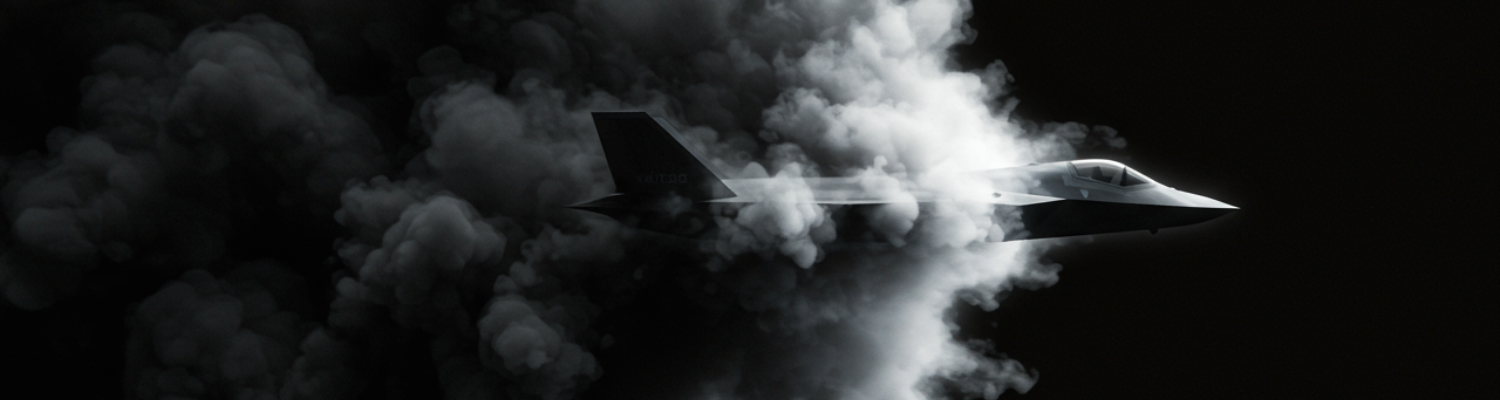
The F-47 represents what the U.S. considers the world's first crewed sixth-generation fighter. Key expected capabilities include:
Enhanced Stealth:
Builds on technologies from previous stealth aircraft (F-22, F-35, B-21).
Designed with "next-generation stealth" for operation in highly contested environments.
Renderings suggest potential features like a blended wing body, recessed engine inlets, and possibly reduced/absent vertical tails (though initial renderings show tails and distinctive canards).
Advanced Sensors and AI:
Sensor fusion and artificial intelligence are expected to be central.
Potential capability to act as a command node in the battlespace.
Increased Range and Performance:
Will have "significantly longer range" than the F-22, crucial for theaters like the Pacific.
Expected to feature powerful engines from the Next Generation Adaptive Propulsion (NGAP) program (GE Aerospace vs. Pratt & Whitney).
Potential for supercruise (sustained supersonic flight without afterburners).
Adaptability:
Designed using digital engineering and open-systems architecture.
Allows for easier and faster upgrades to software, sensors, and systems.
Canard Design:
Renderings reveal canards (small forward wings).
This feature sparks discussion about potential trade-offs between maximum stealth and aerodynamic performance.
Beyond the Jet: The NGAD Ecosystem
It's crucial to understand that NGAD is more than just the F-47 aircraft; it represents a "family of systems":
A key component is the development of autonomous drone wingmen: Collaborative Combat Aircraft (CCAs).
CCA Roles: These uncrewed platforms are expected to fly alongside the F-47 to:
Extend sensor range.
Carry additional weapons.
Perform tasks like electronic warfare or reconnaissance.
Increase the lethality and survivability of the manned fighter.
The Geopolitical Context: A Race for the Skies
The unveiling of the F-47 occurs amid intensifying global competition:
Driven by concerns over the rapid modernization of China's air force, including its potential sixth-generation fighters (tailless prototypes possibly dubbed J-36 reported late 2024).
Russia is also pursuing advanced fighter concepts.
The F-47 is the U.S. Air Force's bid to maintain a decisive technological edge.
Boeing's Landmark Win
Securing the F-47 contract is a major victory for Boeing's defense division, following recent setbacks and the nearing end of its F/A-18 production line.
This win positions Boeing alongside Lockheed Martin (F-35) and Northrop Grumman (B-21) at the forefront of advanced U.S. combat aircraft manufacturing.
Boeing has reportedly invested significantly in its St. Louis facility for production.
Global Sixth-Generation Efforts
The U.S. is not alone in pursuing sixth-generation capabilities:
U.S. Navy F/A-XX: The Navy's separate NGAD program for a carrier-based fighter to complement the F-35C and replace the F/A-18E/F Super Hornet. (Competitors: Boeing, Northrop Grumman).
Global Combat Air Programme (GCAP): A UK, Japan, and Italy collaboration (merging UK's Tempest and Japan's F-X). Aims for 2035 service; demonstrator flight planned ~2027.
Future Combat Air System (FCAS/SCAF): A France, Germany, and Spain initiative including a Next-Generation Fighter (NGF), remote carriers, and a combat cloud. Aims for ~2040 service; demonstrator flight planned ~2029.
The Road Ahead
Timeline: The F-47 is still years from operational service, likely entering service in the 2030s.
Challenges:
Managing the estimated high cost (potentially ~$300 million per aircraft plus development).
Integrating the complex technologies involved.
Significance: The unveiling signals a clear direction for the future of American air power in a complex global security environment.
Boeing F-47: US 6th-Gen Fighter Unveiled

USMilitaryArchive
Published on
2473
Views
3
Likes
Text Size
Preserve the Legacy of Service
History isn't just written in textbooks�it is preserved by family members, researchers, and veterans who ensure the details are never lost. Join our community to bookmark records, build custom reading collections, and share stories.