
Mythology of Tactical Intelligence and Cold War Realities
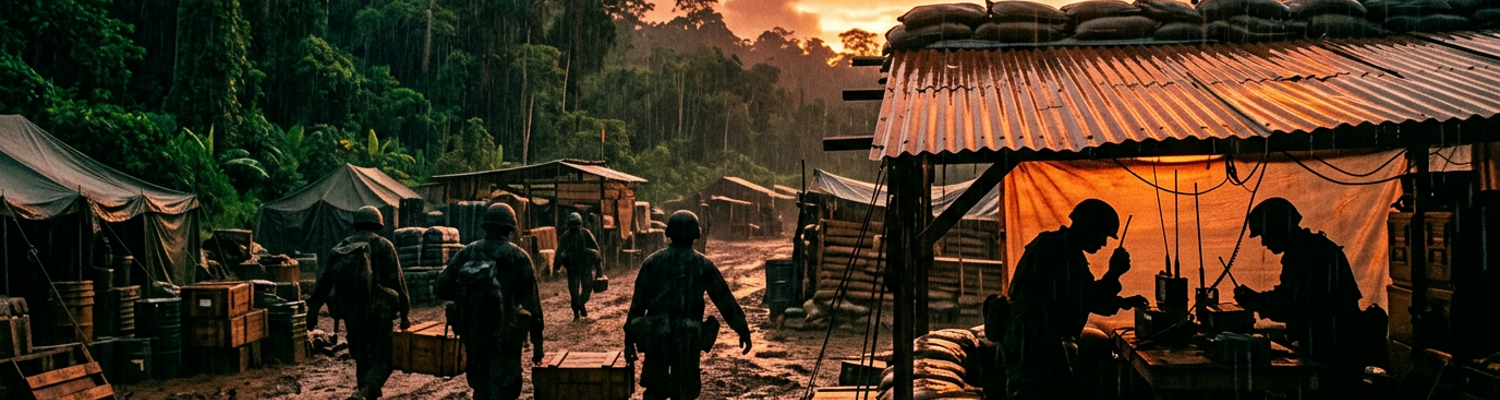
Rainwater poured through the sandbagged timber roof of the 4th Infantry Division tactical operations center at Camp Enari as field radios crackled with frantic reports of an ambushed patrol west of Pleiku. The operational plan for an orderly sweep failed immediately when the scout team encountered an entire North Vietnamese Army regiment instead of the predicted small local guerrilla band. Analysts scrambled across damp plywood floors to check the latest order of battle files, searching for how the estimate had failed. Cinema screens would later depict lone American spies operating as solitary commandos in the jungle, slipping across borders with silenced weapons to dismantle enemy command posts alone. The physical truth inside the division perimeter involved no such rogue heroics, but rather twenty-four exhausted young men in sweat-stained fatigues frantically cross-referencing paper casualty reports, grid coordinates, and patrol logs under buzzing fluorescent bulbs. They had to match bloodied map coordinates against carbon-copied patrol logs before artillery batteries could fire defensive barrages into the darkness.
Artillery shells hammered into the tree line five miles west, shaking the plywood drafting tables where intelligence specialists struggled to fix the true location of the enemy unit. This grueling clerical scramble formed the true core of division-level intelligence work across the Central Highlands. The 4th Military Intelligence Detachment did not function as an independent agency of secret agents, but as the specialized tactical processing unit for the 4th Infantry Division Assistant Chief of Staff for Intelligence. Detachment soldiers staffed the order of battle desks, interrogation cages, imagery interpretation light tables, and captured document processing stations clustered inside the base camp at Dragon Mountain. Staff officers directed the broader collection priorities, while detachment specialists translated waterlogged enemy diaries, scrutinized wet film negatives, and typed standardized intelligence summaries on manual typewriters. Carbon paper smudged across their fingers as they filed index cards documenting the infiltration routes of North Vietnamese regiments across the border.
Infiltration routes matched the grid coordinates stored inside olive-drab steel footlockers, exposing the dangerous flaw in the morning operational plan. Hollywood films routinely showed rogue agents who extracted instant coordinates through unauthorized interrogations or advanced gadgets, yet real tactical intelligence depended on days of slow cross-referencing. Interrogators from the detachment questioned captured soldiers in timber holding pens, recording family backgrounds and supply shortages onto mimeographed questionnaires rather than obtaining dramatic confessions. Photo analysts squinted through optical stereoscopes at rolls of black-and-white aerial film, hunting for faint footpaths beaten through the jungle grass or broken branches along mountain streams. Each small piece of evidence went into the daily intelligence summary, which staff officers compiled to predict where the next ambush would strike. Human exhaustion regularly threatened this paper-driven system as clerks typed through the night by kerosene lantern, drinking cold coffee while water pooled around their boots.
Water pooling on the bunker floor mixed with sweat and condensation dripping from the corrugated metal ceiling onto the freshly typed intelligence summary as the operations officer signed the revised enemy estimate. The officer immediately carried the damp paper across the sandbagged corridor to the division commander, who used the coordinates to alter the route of a mechanized relief battalion heading toward the trapped patrol. Drivers cranked the diesel engines of armored personnel carriers outside, their steel tracks churning the red volcanic mud into deep ruts as artillery illumination flares drifted across the sky above Pleiku. The survival of the men in the jungle did not hinge on daring exploits by secret agents, but on whether tired detachment analysts had correctly matched map grids and radio traffic logs before the enemy overran the perimeter. Relief columns pushed through the darkness toward the sound of automatic rifle fire, guided entirely by the grease-pencil marks plotted on the master situation map.
Integration at Camp Enari Base Camp
Plexiglas situation maps stood at the center of the intelligence complex at Camp Enari, where staff officers and field analysts worked together in sandbagged timber bunkers at the base of Dragon Mountain. Military planners had deliberately collocated the 4th Military Intelligence Detachment directly beside the command section to bridge the gap between field collection and command decisions. Red volcanic dust blew through wire window screens during dry periods and turned into thick mud under floorboards during monsoons, forcing specialists to protect delicate carbon papers and acetate sheets under heavy canvas tarps. Radio operators, couriers, and staff sergeants constantly shuttled through the narrow timber corridors, carrying fresh reports from forward fire support bases straight to analytical desks. Base camp security bunkers and coiled concertina wire encircled the intelligence compound, keeping analysts within earshot of outgoing artillery blasts while they processed incoming frontline reports.
Reports from the frontline arrived at plywood partitions separating the daily technical workflow between the Order of Battle section, the Interrogation of Prisoners of War section, and the Imagery Interpretation section. Interrogators worked in guarded timber holding cages near the base airfield, questioning captured North Vietnamese soldiers and local guerrillas about trail networks, food caches, and radio call signs before transferring their translated notes to standardized forms. Order of Battle analysts cross-referenced these prisoner statements with radio direction findings and patrol logs, methodically updating casualty records and enemy unit rosters in steel filing cabinets. Photo interpreters in an adjoining blackout tent placed aerial reconnaissance negatives over fluorescent light tables, using dual-lens stereoscopes to detect hidden trench lines and freshly camouflaged artillery revetments. Clerks collected the verified findings from each specialized team every evening, assembling them into standardized intelligence summaries for the division leadership.
Specialists combined these intelligence summaries with raw sensor logs, captured enemy materiel, and aerial photography to generate actionable targeting packages for mobile maneuver brigades. Acoustic and seismic sensors air-dropped along the Ho Chi Minh Trail transmitted electronic beeps when foot columns or supply trucks passed, producing rolls of stamped paper tape that analysts matched against terrain contour lines. Materiel experts examined captured mortar shells, rice sacks, and foreign rifles delivered by infantry scouts, noting manufacturing lot numbers and factory stamps to trace supply lines running eastward from the border. Photogrammetrists then took the coordinates from the sensor tape and weapon recoveries, aligning them over recent aerial film to pinpoint the exact forest clearings where enemy supply caches lay hidden. Analysts assembled these matched coordinates, terrain photos, and estimated troop strengths into sealed manila folders designed for rapid use in the field.
Couriers hand-carried these completed folders directly to the flight lines and command posts of the mobile maneuver brigades. Brigade commanders used the annotated coordinates and photo overlays to redirect airmobile infantry companies and heavy artillery batteries toward active enemy assembly areas before the hostile units could disperse. Radio operators transmitted the verified target grids directly to helicopter gunships idling on the refuel pads, giving aircrews exact flight headings toward suspected mortar positions. Mechanized task forces cranked their diesel engines and moved out of their forward perimeters based on the precise grid bearings calculated in the Camp Enari drafting rooms. Forward spotters reported artillery detonations impacting directly on the designated jungle grid coordinates.
Plei Trap Corridor Exploitation and Interrogations
Detonations from the artillery batteries sheared through the bamboo canopy of the Plei Trap Valley, clearing paths for airmobile infantry squads to push directly into the smoking impact craters. Soldiers moving along the dense border screening line secured four surviving People Army of Vietnam soldiers who had survived the blast inside an earthen bunker. Popular war movies often depicted front-line interrogators using extreme physical force or screaming threats to gain immediate intelligence from captives, but detachment procedures required strict discipline and calm handling. The soldiers immediately bound and blindfolded the captives, administered basic field bandages to wounds, and separated the squad leader from the enlisted privates to prevent them from coordinating alibis. Field handlers tagged each prisoner with waterproof plastic tags indicating the time and exact map coordinates of capture. Detachment interrogators assigned to the forward screen began questioning a dazed North Vietnamese sergeant about trail waypoints and food caches using standard bilingual question cards.
Interrogators held those bilingual question cards while examining the captured soldiers inside temporary sandbag bunkers, working in pairs to prevent discrepancies in translation. Army field manuals governed every stage of the tactical interrogation, directing specialists to offer clean drinking water and rations to build rapport with exhausted enemy soldiers. The interrogators focused entirely on perishable tactical facts, asking simple questions about the number of days spent marching from Cambodia, the locations of camouflaged stream crossings, and how much rice each soldier carried. Popular fiction treated these interviews as philosophical battles of will, yet the actual dialogue centered on practical realities such as dysentery outbreaks, weapons shortages, and daily trail routines. Interrogators verified each answer against known terrain features on tactical maps, identifying where the platoon had split off from its parent battalion. Guards gathered handwritten notebooks and satchels recovered from the pockets of the prisoners, passing the wet materials directly to detachment linguists at an improvised field desk.
Linguists blotted the soaked pages with paper towels and spread the captured papers across folding field tables under a canvas fly. Detachment specialists began rapid field exploitation of the haul, categorizing personnel records, communications logs, and official unit manifests before the paper could disintegrate in the humid air. The linguists carefully read through water-stained personnel rosters, identifying full names, home provinces, and military ranks of an entire North Vietnamese infantry company that had crossed the border three days earlier. Communications logs revealed specific radio frequencies, assigned operating hours, and rotating numerical call signs used by enemy forward observers along the valley floor. Unit manifests documented ammunition distributions and mortar tube counts, proving to division staff that a full regular regiment was operating in the sector rather than an understrength local guerrilla cell. Translators deciphered a handwritten communications log showing the operational schedule for an enemy resupply column scheduled to cross the Nam Sathay River before nightfall.
Radio operators encoded the translated river crossing coordinates and transmitted the flash message directly to brigade headquarters. Staff officers routed the intelligence straight to air cavalry commanders, who diverted helicopter gunships away from routine perimeter patrols toward the identified river ford. Mechanics on the forward refuel pads disconnected fuel hoses as flight crews strapped into their seats, lifting off within ten minutes of receiving the decoded grid coordinates. The resulting tactical ambush did not rely on lone scout snipers or dramatic espionage, but on the systematic translation of wet paperwork and disciplined prisoner questioning conducted inside a muddy valley outpost. Artillery batteries adjusted their elevation screws toward the river crossing, firing a timed volley into the valley to shatter the enemy supply line before the column could reach the eastern ridge.
Attrition Claims and Saigon Bureaucratic Friction
Smoke from the shattered supply line drifted across the eastern ridge as field analysts cataloged the recovered documents from the ambush site. Detachment clerks stacked captured North Vietnamese logistics ledgers onto folding tables back at Camp Enari. Translators read through the damp pages, discovering precise inventory counts that contradicted the optimistic attrition reports generated by higher headquarters in Saigon. Regional command briefings frequently claimed that American bombing campaigns had destroyed enemy supply networks along the border. The recovered ledgers proved instead that the North Vietnamese Army maintained massive, untouched logistical staging areas just across the Cambodian border.
Sanctuaries across the Cambodian border provided the enemy with safe zones to stockpile thousands of tons of rice, mortar shells, and medical supplies. Analysts at Camp Enari mapped these hidden depots using the captured inventory lists, plotting exact grid coordinates where the enemy stored their reserves. Staff officers carried these updated maps into division briefing rooms, presenting the stark reality of the entrenched enemy supply chain to maneuver commanders. The tactical intelligence directly challenged the prevailing bureaucratic narrative that the enemy was starving and running out of ammunition. Friction grew between the field analysts processing raw documents and the operational planners in Saigon who relied on statistical models to measure progress.
Models created by statisticians failed to account for the continuous flow of replacement troops documented in the captured personnel rosters. Detachment linguists translated diaries and unit manifests showing that fresh North Vietnamese battalions crossed the border weekly to replace combat losses. Order of battle specialists updated their index cards with these new unit designations, proving the enemy retained the capacity to launch major offensives. Division commanders used this concrete data to justify keeping heavy mechanized brigades positioned along the border screening line. The raw intelligence forced military leaders to abandon their assumptions of an exhausted enemy and prepare for sustained combat operations in the Central Highlands.
Combat operations intensified along the border as infantry patrols encountered the fresh North Vietnamese units identified in the translated rosters. Firefights erupted daily in the dense jungle, validating the detachment analysts who had warned of the enemy buildup. The 4th Military Intelligence Detachment continued to process the resulting stream of captured documents, weapons, and prisoners under grueling conditions. Clerks typed updated intelligence summaries on manual typewriters, distributing the verified threat assessments to forward firebases. Base commanders used these assessments to reinforce their defensive perimeters with additional sandbags and heavy machine guns before the monsoon storms arrived.
Relocation to Camp Radcliff and Strategic Drawdown
Storms from the monsoon battered the analysts loading metal footlockers full of disputed casualty figures, patrol maps, and classified target folders onto cargo trucks as strategic redeployment orders emptied the operations rooms at Camp Enari. Popular cinema portrayed military movements as rapid, clean airlifts directed by high-ranking commanders from distant war rooms, but the late transfer of the 4th Military Intelligence Detachment required weeks of grinding physical labor. Soldiers wrapped delicate stereoscopic lenses, photographic enlarging cones, and teletype printers in heavy canvas tarps and waterproof poncho liners to protect the fragile optics from gravel and rain. Convoys rolled east along Route 19, crawling through the dangerous mountain terrain of the Mang Yang Pass where North Vietnamese ambushes remained a constant threat. Drivers gripped steering wheels through blinding showers and axle-deep ruts, nursing overheated diesel engines while detachment guards kept their rifles aimed out the open canvas truck beds at the surrounding jungle ridges. Mechanics tightened loose tie-down straps at roadside checkpoints whenever jarring potholes threatened to shake the sensitive cryptographic transmitters and drafting kits off the wooden truck beds.
Trucks with wooden cargo beds rolled through the fortified perimeter wire of Camp Radcliff at An Khe, bringing the detachment personnel and their battered equipment into the sprawling plateau base camp. Specialists immediately carried the crated technical gear into aging wooden barracks, working through the night to wire field generators to tactical light tables and acetate drafting boards before division operations resumed. Mold and damp rot coated the interior timbers of the abandoned buildings, forcing intelligence clerks to scrape plywood workbenches clean and replace decayed screening before unrolling master situation maps. Radio technicians restrung long-wire antennas between sandbagged perimeter towers to establish secure communications lines with forward brigades scattered across the Central Highlands. Staff officers pinned fresh terrain maps to the damp bunker walls, officially reopening the intelligence center even as division strength dwindled under the earliest withdrawal mandates issued by Washington.
Mandates for withdrawal forced advisors from the detachment to reorganize their analytical sections to train counterparts from the Army of the Republic of Vietnam. Early Vietnamization directives required the 4th Infantry Division to prepare the South Vietnamese 22nd Infantry Division to assume full responsibility for Central Highlands border defense. Detachment analysts sat side by side with South Vietnamese officers at shared drafting tables, attempting to teach complex Order of Battle indexing and aerial photographic analysis across profound language barriers. Bilingual field manuals and qualified military interpreters were in extremely short supply, turning simple instructional sessions on grid coordinates and terrain overlays into exhausting translation exercises. South Vietnamese intelligence lieutenants brought valuable personal knowledge of local mountain terrain and regional dialects, but their units lacked the high-altitude reconnaissance aircraft and modern darkroom labs that American specialists took for granted.
Specialists from the detachment processed film rolls from aerial reconnaissance sorties bearing strict security stamps that prevented them from handing raw prints directly to their South Vietnamese counterparts. Detachment personnel spent hours redacting technical sensor coordinates and tracing simplified topographic sketches onto cleared acetate sheets to satisfy restrictive military disclosure regulations. Joint planning conferences inside the Camp Radcliff bunkers frequently broke down over conflicting tactical doctrines, because American officers favored rapid air strikes directed by radio intercepts while South Vietnamese commanders preserved their scarce artillery shells for defensive outpost protection. Distrust deepened when classified patrol routes shared during morning briefings leaked to civilian markets outside the base perimeter, prompting detachment officers to restrict the flow of perishable human intelligence. Detachment teams finalized joint target folders by trimming back sensitive source notes, then physically delivered the sanitized map sheets to the South Vietnamese infantry companies coordinating joint border screening patrols.
Commendations and Historical Assessment
Infantry companies from the South Vietnamese army carried those delivered map sheets into the western jungle, positioning blocking forces along known infiltration trails near the Cambodian border. Popular screenplays often reduced wartime military intelligence to dramatic rogue missions, depicting lone scouts hunting through enemy base camps with silenced carbines. The operational reality inside the Central Highlands depended instead on a relentless, methodical bureaucratic machine operated by dozens of overworked soldiers in stifling canvas tents. Detachment specialists worked continuous twelve-hour shifts at Camp Radcliff, logging radio intercepts, verifying grid references, and cataloging documents taken from captured North Vietnamese packs. These analysts constantly matched water-damaged personal letters, payroll rosters, and ammunition counts against division charts to identify troop movements weeks before hostile regiments massed for an assault. Division clerks bundled these daily intelligence summaries, target folders, and patrol logs into heavy wooden crates as the command prepared its official operational records.
Officers on the Army staff evaluated those operational records in Washington and promulgated Department of the Army General Orders 39 in 1970, formally citing the 4th Military Intelligence Detachment for exceptional performance. This formal action confirmed United States Army Vietnam General Orders 846, conferring the Meritorious Unit Commendation on the small unit for its work in the Central Highlands. The official citation criteria recognized sustained tactical intelligence support across the II Corps Tactical Zone throughout 1968 and 1969. Rather than rewarding an isolated commando raid or Hollywood-style exploit, the citation highlighted fifteen consecutive months of continuous technical production under austere and perilous field conditions. Detachment linguists had interrogated hundreds of enemy captives, photo interpreters had examined thousands of meters of aerial reconnaissance film, and order-of-battle specialists had drafted vital target studies to guide combat operations. Supply clerks received the formal order at An Khe, stamping the official award entries into detachment personnel records and preparing the unit guidon for the presentation of the award streamer.
Guidon bearers attached the red Meritorious Unit Commendation streamer to the detachment staff during base ceremonies, yet the physical legacy of the unit remained anchored in analytical paperwork rather than public celebration. Popular wartime narratives persistently portrayed military intelligence through romanticized depictions of covert commandos, masking the true historical nature of the intelligence campaign in Vietnam. Concrete military records proved that the real achievements of the 4th Military Intelligence Detachment centered on disciplined, collective data processing carried out amid monsoon dampness, fungal rot, and recurring enemy mortar barrages. Analysts spent years cross-referencing dry sensor activations, captured diaries, and artillery spotter reports to protect combat soldiers from surprise ambushes across rugged highland plateaus. Field commanders utilized these detailed intelligence estimates to reposition artillery batteries, shift convoy schedules, and deploy mechanized reaction forces before hostile regiments could isolate remote outposts.
Commanders at remote outposts called for fire support as artillery gunners loaded high-explosive shells into howitzer breeches across the Central Highlands to strike the coordinates identified in those analytical estimates. Mechanized units drove their armored personnel carriers out of forward perimeters along Route 19, following patrol routes carefully cleared by detachment photo overlays and sensor logs. Detachment specialists remained at their An Khe drafting boards and light tables, plotting fresh target coordinates on acetate overlays even as the division prepared for its final withdrawal from Vietnam. Radio operators transmitted the verified grid bearings directly to forward firebases, where tactical batteries swung their gun barrels west to fire final defensive barrages into the surrounding ridges.