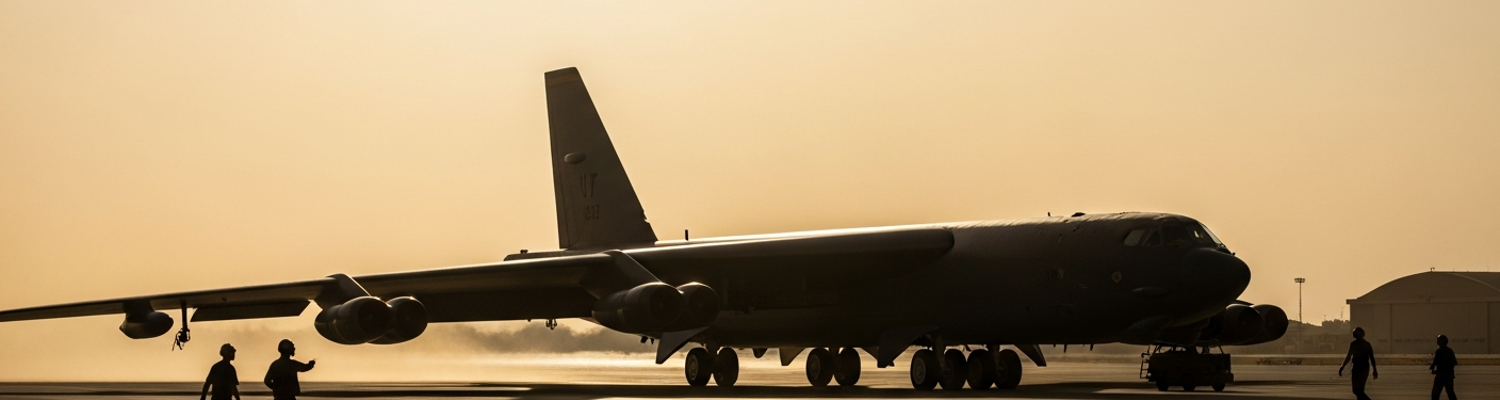

The final strike package for Exercise Desert Serpent never left the ground. On the sun-baked tarmac of Diego Garcia, two squadrons of B-52G Stratofortress bombers sat fully armed and fueled. Their mission, developed by CENTCOM’s nascent air staff, was to practice interdiction profiles against simulated Soviet Kresta II and Kara-class cruisers in the Arabian Sea. The stand-down order came not from enemy action, but from a terminal diagnosis of the exercise itself. The entire architecture of long-range power projection, a complex web of technology and supply, had failed.
The autopsy of Desert Serpent begins with a severed cable. Deep beneath the Indian Ocean, an unmapped undersea seismic event ruptured the primary fiber optic link connecting Diego Garcia to CENTCOM headquarters in Bahrain. Technicians at the naval communication station watched their data streams flatline. The conduit for high-bandwidth reconnaissance imagery and real-time intelligence was gone.
For the next 48 hours, command and control regressed two decades. Planners reverted to congested FLTSATCOM channels and encrypted high-frequency radio for text-only burst transmissions. A single high-resolution image file that the fiber link could transfer in seconds would now take hours to trickle through the choked satellite network. Mission planners on Diego Garcia, tasked with targeting the simulated Soviet naval force, were left operating from a 72-hour-old intelligence picture. They were effectively blind. The exercise commanders were forced to operate on outdated intel, planning strikes against targets that had long since moved. The flow of information, the central nervous system of the operation, had been severed.
Another failure point materialized thousands of miles away, over the open ocean. A C-141B Starlifter, flying a critical logistics sortie to Diego Garcia, suffered a catastrophic engine failure. This was no routine transport. Its cargo hold contained a shipment of specialized, high-value spares for the B-52G’s AN/ALQ-117 electronic countermeasures (ECM) system. These were not common parts. They were sensitive signal processors and modulator couplers (P/N 405988-1) needed to replace units that had already failed in the punishing local environment. The crippled Starlifter diverted, taking the mission-essential components out of the theater of operations. This single incident created an immediate logistical bottleneck. Without the spares, a portion of the B-52G fleet was rendered non-mission capable. The strike package was downsized before a single plane could taxi, revealing a brittle interdependency between a single transport aircraft and the strategic viability of the entire bomber wing.
The environment itself became an active adversary. The staging area at Diego Garcia was a crucible of 45-degree Celsius heat, corrosive salt spray, and extreme humidity. This combination proved ruinous for the advanced technology of the 1980s. The B-52G’s AN/ALQ-117 ECM systems, the bomber’s primary shield against radar-guided missiles, began to fail systematically. Maintenance logs from the exercise (archived under NARA Record Group 218) document a consistent pattern of heat-induced component stress. The system's traveling-wave tubes would heat soak on the tarmac, their delicate internal structures degrading before power was even applied. Once airborne, the rapid transition to the cold of high altitude caused condensation to form inside unsealed circuit boards and waveguide assemblies. This moisture caused electrical shorts and signal attenuation. Post-mission analysis revealed a 30 percent degradation in overall ECM effectiveness. The electronic shield was compromised.
This environmental assault extended to the bombers’ offensive payload. The exercise was a proving ground for the newly integrated AGM-86B Air-Launched Cruise Missile (ALCM). Its revolutionary guidance unit, pairing a Litton inertial navigation system with a terrain contour-matching (TERCOM) package, was exceptionally vulnerable. The extreme thermal cycling between the hot ground and cold upper atmosphere threw the sensitive gyroscopes and accelerometers out of their fine calibration. Ground crews reported a high rate of Built-In Test failures. The missile’s radar altimeter, essential for TERCOM to read the ground, was also susceptible to moisture ingress. Condensation forming on the altimeter’s electronics at altitude would blind the missile. The result was a 20 percent targeting lock failure rate across the ALCM inventory. One in five of the primary standoff munitions were inert before launch, their advanced guidance systems defeated by a film of water.
Even visual intelligence gathering was compromised. Combat photographers on board reconnaissance assets flying in support of the exercise struggled constantly. Their camera lenses fogged over in the high humidity, and powerful heat distortion rising from the sea surface warped post-strike assessment imagery. The ability to visually confirm the effects of the few simulated strikes that were conducted was severely hampered, adding another layer of uncertainty to the already compromised intelligence picture.
The foundation for this chain reaction of failures was laid months earlier, in the planning phase. The entire exercise was built upon the intelligence assessment from Special National Intelligence Estimate 11/32-81. The SNIE projected a low-intensity threat, leading planners to discount the possibility of a systemic threat to the long logistical lines. Based on this, CENTCOM’s air staff projected a need for a 72-hour sustained operational tempo, requiring a 150 percent increase in fuel and ordnance resupply rates to Diego Garcia. This logistical strain was modeled and simulated. The final assessment deemed the plan acceptable with 80 percent confidence. That 20 percent margin for error was attributed almost exclusively to direct enemy action, like a submarine attack on a tanker. The simulation never accounted for the brittle interdependencies of the system itself. It never modeled the possibility that a single engine failure, a severed cable, or a humid day could unravel the entire operation. The exercise was stood down, a casualty of its own complexity.