
The Human Sensor
The battlespace was the primary antagonist. During the Powder River campaign, weather dictated all movement. Freezing rain turned trails into impassable clay slicks. A sudden blizzard could bury a column of men and animals in minutes. In the Arizona Territory, heat radiated from canyon walls, turning the sun into an element of attrition. Information superiority was not a technological function. It was a contest of endurance and ground-truth knowledge. Before any tactical decision could be made, before a quartermaster could calculate forage for a week’s march, a commander had to see.
Seeing was everything.
Into this information void stepped the human sensor. Operational logs from the Department of Arizona (Record Group 393) show a recurring pattern. Commanders waited. Columns were held in place, sometimes for days, awaiting the return of scouts like Ko-Koom. These men, often Apache or Shoshone, were not guides. They were predictive analysts. Their reconnaissance went beyond identifying trails. They could discern the number of horses in a party from scattered tracks invisible to a soldier's eye. The moisture content of animal dung provided a precise timeline, indicating if a trail was hours or days old. Scouts could determine if women and children were present in a moving band based on the pattern of horse urine in the tracks, a key indicator distinguishing a non-combatant family group from a war party. This was granular, actionable intelligence. General Crook’s own field reports credit his Apache scouts with being more valuable than all other troops combined for their ability to force the surrender of hostile bands. Their knowledge of every trail, water hole, and hideout was something no map could contain.
The Army’s own technologies were brittle. The Military Telegraph Corps, effective in the Civil War, faced insurmountable challenges on the frontier. A single iron wire strung across an unforgiving landscape was the system’s greatest vulnerability. High winds and ice frequently snapped the lines. Repair involved sending patrols to inspect miles of wire to find a single break. Sabotage was simpler. A small party could cut the wire, remove a section, or splice the line with a strip of rawhide, rendering the entire system useless while making the break nearly impossible to locate. The heliograph system, deployed with great hope by General Nelson Miles, was a fair-weather instrument. Dependent on a clear line of sight and uninterrupted sunlight, its utility was negated by dust storms, rain, and simple cloud cover. During the five-month campaign leading to Geronimo's final surrender, the extensive heliograph network was directly responsible for the successful interception of a hostile party exactly once. A flash from a mirror could transmit a simple code, but it could not convey context. It could signal the presence of a group, but not their morale, the condition of their mounts, or their probable intent. Ko-Koom could.
The Bureaucracy of Failure
A systemic disconnect existed between the Quartermaster Department’s procurement structure and the needs of its most effective intelligence gatherers. The department, under Montgomery C. Meigs for much of this period, was organized to equip large, conventional formations with standardized gear. This created a persistent challenge when outfitting the small, non-standard scout detachments essential to General George Crook’s campaigns. Requisition forms (Q.M.D. Form 18) show a system geared toward bulk orders of heavy wool tunics and leather Brogan boots. For a regular soldier at a fixed garrison, this was adequate. For an Apache scout tracking a hostile band across the Sierra Madre, it was a liability. The scouts required moccasins for stealth, lightweight clothing that wouldn’t snag in dense brush, and specific rations that could be carried for long periods. These items were not on standard-issue lists. Obtaining them required special requisitions that were often delayed or rejected by a bureaucracy that prioritized uniformity over operational requirements.
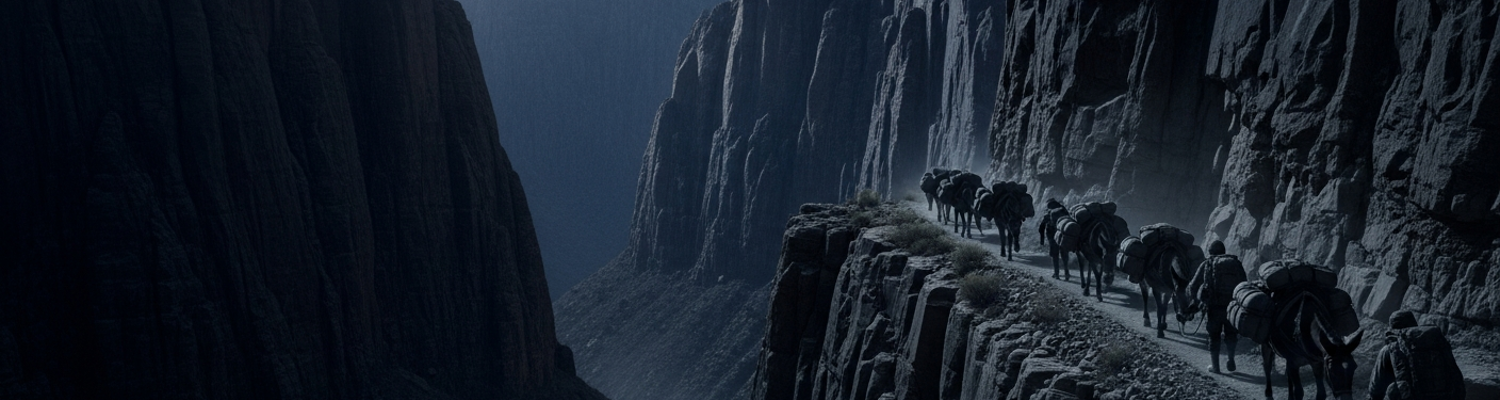
This institutional friction was compounded by physical bottlenecks. Even when specialized equipment was approved, its journey from a depot to the field was slow. The primary logistical hubs, such as Fort Laramie, were hundreds of miles from forward operating posts like Fort Bowie. From there, the final leg to a detachment in the field was the true test. Civilian contractors, often using slow-moving ox teams to deter raiders, handled much of the transport between major posts. A single wagon train could take weeks to cover the distance. Once at a forward fort, supplies were broken down into smaller pack mule trains. Records from Crook’s 1883 expedition into Mexico detail a force accompanied by five pack trains totaling two hundred and fifty mules, a massive logistical tail for a force reliant on speed. A sudden downpour could turn a trail into an impassable bog, halting the flow of medical equipment or forage for the animals, effectively grounding the entire operation.
The operational impact of these failures was severe. The inability to consistently supply scouts with appropriate footwear is a recurring theme in after-action reports. Scouts forced to wear standard-issue army boots were louder, slower, and suffered debilitating foot injuries. An 1886 report from Lieutenant Charles Gatewood’s pursuit of Geronimo highlights the constant strain on scout resources. When resupply of specialized rations failed, scouts were forced to dedicate more time to hunting for themselves, time subtracted from their primary mission. This reduced the operational tempo of the entire column. A scout detachment returning to post ahead of schedule because their gear had failed was a common occurrence, leaving commanders blind to enemy movements.
The Chemistry of Defeat
Ordnance reports from the period reveal a crisis in ammunition supply that originated thousands of miles from the front. The journey of a single .45-70 Government cartridge from the Frankford Arsenal in Philadelphia to a soldier’s belt in Arizona was a gauntlet of failure points. After rail transport to depots, the ammunition was transferred to vulnerable wagon trains. Exposed to the elements, wooden crates would swell and rot. The intense heat of the desert could degrade the stability of the black powder propellant inside. The final leg via pack mule was the most precarious. A mule losing its footing on a narrow mountain trail could send thousands of rounds of irreplaceable ammunition into a canyon, an event recorded in multiple unit logs. This fragile supply chain forced commanders to ration ammunition, limiting marksmanship practice and creating constant anxiety about running dry in a sustained engagement.
Getting cartridges to the field was only half the problem.
The true threat lay inside the cartridge case. Early smokeless powders, which began to appear during this era, burned hotter and generated significantly higher chamber pressures than the black powder they replaced. In the extreme heat of the Southwest, these pressures became dangerously unpredictable. More insidiously, the chemical composition of early mercuric primers left behind a thick, corrosive fouling. Unlike black powder residue, this fouling, when combined with the high heat of firing, could effectively weld a spent brass or copper cartridge case into the chamber of a rifle. For a soldier armed with a single-shot Springfield Model 1873, the infamous Trapdoor, this was a catastrophic failure. A jammed case, impossible to remove without a cleaning rod or knife blade, turned a rifle into a useless club. This specific failure mode, stuck case extraction, is a recurring entry in after-action reports and was a known and feared defect.
These failures of procurement and chemistry had a direct effect on the scouts. A man like Ko-Koom, operating far ahead of the main column, could not afford an equipment failure. A rifle that jammed after a single shot was a liability. This forced many scouts to rely on their own personally maintained weapons, often of a different caliber than standard army issue. This created a new logistical problem. A scout carrying a non-standard rifle required non-standard ammunition, a request the rigid Quartermaster system was ill-equipped to handle. Requisitions were frequently lost, delayed, or filled with commercially purchased ammunition of dubious quality. When resupply failed, the scout’s information-gathering radius shrank. He was forced to be more cautious and return to the main column sooner. The information advantage, bought with the scout's skill, could be nullified by a poorly made cartridge.
The War Against Decay
After-action reports and scout logs show that the environment itself was a primary source of attrition. Unpredictable weather sabotaged missions before they made contact. A scout detachment in the northern plains could depart under clear skies only to be caught in a violent blizzard hours later. Visibility dropped to near zero, making it impossible to follow tracks. Wind-driven snow obliterated any sign of a trail within minutes. Scouts were forced to halt, seek shelter, and burn through rations while their quarry moved on. In the desert Southwest, flash floods born from distant thunderstorms could turn a dry arroyo into a deadly torrent, cutting off a scout’s route of return and forcing lengthy detours. These environmental disruptions directly translated into intelligence failures.
Disease was a predictable drain on manpower. Field sanitation was frequently nonexistent in temporary camps. Medical logs from the period (Surgeon General's Office, Circular No. 8) show a consistent pattern of sickness from poor hygiene. Latrines were dug too close to water sources. The basic practice of boiling water was inconsistently applied, leading to widespread outbreaks of dysentery. These ailments were debilitating. A man suffering from acute intestinal infection could not march, stand guard, or perform the duties of a long-range scout. While regular soldiers in a large column suffered, the impact on a small scout detachment was magnified. The loss of one or two men to sickness could compromise the entire unit, forcing a premature return.
The very tools of war were prone to failure. The Springfield Trapdoor rifle possessed a well-documented defect. The early copper-cased .45-70 cartridges were susceptible to metallurgical failure. The heat from firing, combined with high ambient temperatures, could cause the soft copper case to expand and stick in the chamber. The extractor claw on the breechblock would then tear through the soft rim of the stuck case, leaving it hopelessly jammed. For a lone scout, it was a potential death sentence. His only option was to pry the case out with a knife or find a cleaning rod, all while under immediate threat. This mechanical flaw could nullify a man’s skill and courage in an instant.
The Price of an Invoice
Attrition models focused on enemy contact were fundamentally flawed. The terrain inflicted casualties through a process of slow decay. In humid zones, rotting vegetation formed a thick mire that clung to men and equipment. Standard-issue leather Brogan boots, designed for dry plains, became saturated within hours. The leather would soften, rot, and tear, leading to debilitating foot injuries. The muck was a breeding ground for bacteria. Every cut or abrasion was an invitation for infection in a pre-antibiotic era. The water, contaminated by the cycle of decay, was a vector for disease. This environmental attrition was not dramatic. It was a quiet failure of the human body and its equipment, a direct result of being deployed into a theater for which the Army’s logistical system was unprepared.
An event involving a two-man reconnaissance team from the Seminole-Negro Indian Scouts operating out of Fort Clark, Texas, illustrates the point. Dispatched on a five-day patrol, the men were equipped with standard cavalry gear, an oversight for a mission demanding stealth. Three days into their patrol, a prolonged, cold rain began. Their heavy wool uniforms became water-logged, offering no insulation. One scout, identified in post records as Pompey, developed violent, uncontrolled shivering, a sign of advancing hypothermia. His partner was forced to abort the mission. The return journey was a four-day ordeal. The scout’s condition worsened, his feet becoming numb and discolored from immersion foot inside his rotting boots. He survived, but a medical report (filed 1881) confirms he was unfit for duty for six weeks and suffered permanent nerve damage. The intelligence they were sent to gather was never obtained. A hostile raiding party they were tasked to locate moved through the sector unobserved.
This was not a failure of courage. It was a failure of equipment. A failure of procurement that originated on a form, in an office, hundreds of miles away. The Quartermaster Department was structured to purchase massive quantities of standardized goods. A request for fifty pairs of deer-hide moccasins for an Apache detachment was an anomaly in a system built to process orders for ten thousand pairs of identical leather boots. These requests were often delayed, filled incorrectly, or rejected by supply officers who saw them as frivolous. The operational consequence was that the Army’s most effective assets were consistently sent into the field with substandard gear. They were forced to improvise. When resupply of their preferred high-energy, low-weight rations failed, they had to spend mission-critical time hunting, reducing their reconnaissance range and increasing their risk of detection. Every hour spent foraging was an hour not spent tracking the enemy. This forced attrition, through sickness and equipment failure, slowed the pace of entire campaigns, a direct result of a supply chain that was disconnected from the operational needs of its most specialized units.