
The Frontier’s Material Reality
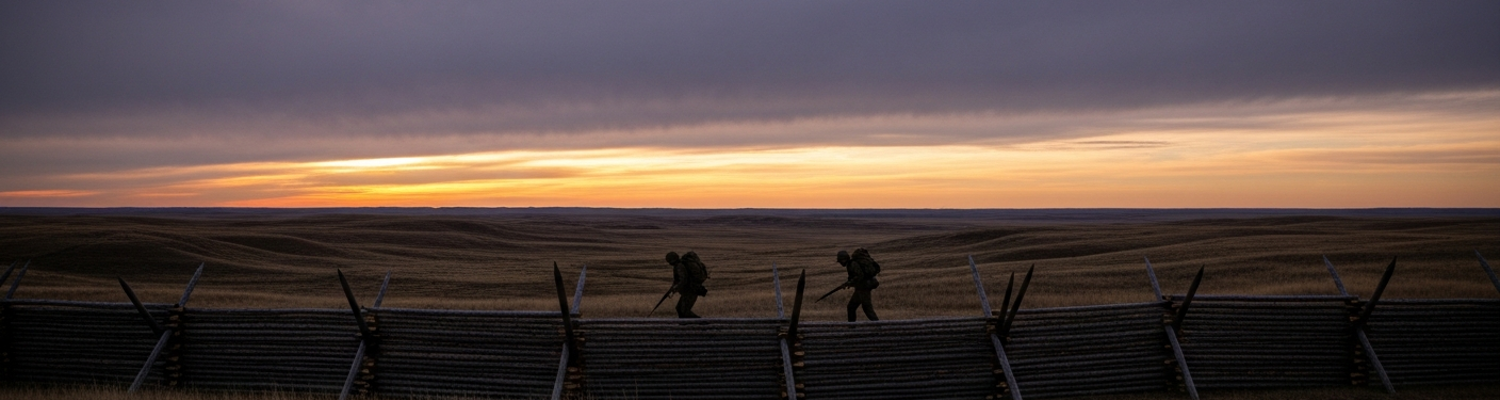
After the War of 1812, the United States Army pivoted from conventional battlefields to the immense task of policing a rapidly expanding frontier. This strategic shift created a unique military environment defined by small, isolated garrisons scattered across thousands of square miles of unforgiving territory. These outposts, often just clusters of rough-hewn buildings clinging to the edge of the known world, became the crucibles where the 19th-century regular army forged its character. The frontier soldier was rarely a combatant in the Napoleonic sense. He was a laborer, a sentinel, and a survivor, locked in a constant struggle against distance, disease, and a crushing monotony. A close examination of daily existence within forts like Laramie and Snelling reveals fundamental truths about military readiness, logistical strain, and human psychology under pressure. These historical realities offer durable lessons for modern military planning, especially concerning troop welfare in isolated postings, the necessity of expeditionary construction skills, and the management of a diverse force.
The Psychological Siege
The most persistent adversary for the frontier soldier was not an external foe but the internal pressure of extreme isolation and the grinding sameness of daily duties. Garrisons typically numbered between 50 and 200 men, stationed at posts that were often weeks or months of hard travel from established settlements. Life at a post like Fort Laramie settled into a rigid, almost monastic routine governed by the bugle call. The day began before dawn with reveille, followed by sick call, guard mounting, drill, and endless fatigue details. These details involved everything from cutting firewood and hauling water to tending the post garden and repairing structures. The repetitive cycle, broken only by the changing seasons or the rare arrival of a supply wagon, exacted a significant psychological toll.
Boredom and a profound sense of detachment were pervasive. Alcoholism became a widespread coping mechanism, a social lubricant and anesthetic that contributed heavily to disciplinary problems and undermined unit readiness. The most definitive measure of this low morale was the desertion rate. Between 1820 and 1860, the army’s desertion rate averaged nearly 15 percent annually, spiking to over 30 percent in some years. This mass departure was a direct response to scanty diets of salt pork and hardtack, harsh discipline that included flogging and branding, and the simple desire to escape a life of punishing labor. Disease was an even more tangible threat. Poor sanitation, contaminated water, and limited medical knowledge made forts breeding grounds for cholera, dysentery, and scurvy. The initial construction of what would become Fort Snelling saw thirty deaths in the first winter from exposure and scurvy alone. This environment underscores a timeless military principle.
The mental and physical health of soldiers in desolate stations is not a secondary concern but a primary component of operational effectiveness.
Modern forces in long-duration deployments, whether in arctic outposts, desert bases, or submarines, confront similar challenges of maintaining morale and preventing the erosion of readiness caused by psychological and environmental stressors.
The Soldier as Laborer
The U.S. government expected its frontier army to be a self-sufficient force, a policy rooted in fiscal austerity. This translated into a dual role for the common soldier as both a fighting man and a laborer. Congress provided minimal funds for civilian contractors, expecting troops to build and maintain the very forts they occupied. This policy effectively turned infantrymen and dragoons into masons, carpenters, and quarrymen. A common complaint among soldiers and officers alike was that the men became more proficient with a pick and shovel than a rifle, degrading their core military skills.
The construction of Fort Snelling, beginning in 1820 under Colonel Josiah Snelling, exemplifies this reality. Soldiers of the 5th U.S. Infantry quarried local limestone and felled timber to erect the imposing structure. On the Great Plains, where timber was scarce, garrisons built forts from cut sod or adobe bricks. When the army purchased the trading post of Fort Laramie in 1849, the garrison was immediately put to work cutting timber, quarrying stone, and burning lime to construct new barracks, stables, and officers' quarters. This work was physically demanding and often dangerous. The men performing these tasks were not skilled artisans but regular soldiers, working with limited tools and often racing against the onset of winter. This reliance on soldier labor held down construction costs but also detracted from military training and placed immense physical strain on the troops. This historical precedent contains clear lessons for expeditionary military operations. The ability of a force to build and sustain its own infrastructure is a key element of power projection. The 19th-century experience demonstrates that this capability requires specialized training, proper equipment, and a command structure that can balance construction demands with military readiness. The U.S. Army learned through hardship that turning soldiers into laborers without adequate support was an inefficient, if necessary, solution to securing a frontier, a lesson that led to the modern emphasis on dedicated engineering units.
The Garrison's Social Fabric
The enlisted ranks of the frontier army were a complex mix of individuals that reflected the changing demographics of 19th-century America. For much of the period, native-born Americans were a minority in the regular army. The force depended heavily on a constant influx of European immigrants, particularly from Ireland and Germany, who were often fleeing famine, poverty, or political turmoil. In 1858, of soldiers with prior military experience who enlisted, only 21 percent were American-born, while 37 percent were Irish and 28 percent were German. For many of these men, the army offered steady pay, food, and a structured path to Americanization.
This created unique social dynamics within the enclosed world of the fort. Language barriers could complicate training and daily operations, while nativist sentiments from some American-born officers and NCOs created friction. A rigid social hierarchy separated the enlisted men from the officer corps, who were typically native-born, educated, and from a higher social class. The fort was a small, self-contained community. This community included official and unofficial members, such as the laundresses on "Suds Row," who were the only women officially recognized by the army. Often married to enlisted men, they received rations and housing for washing the company’s clothes, a physically arduous task. They also served as nurses, midwives, and a vital part of the fort's social economy. The presence of Black Americans, though formalized in segregated regiments after the Civil War, was a reality long before. Free Black men worked as teamsters, blacksmiths, cooks, and personal servants to officers, occupying an ambiguous but essential position in the fort's ecosystem. Managing this diverse human landscape was a constant leadership challenge. Building a cohesive unit from men of different nationalities, languages, and backgrounds is a core function of military leadership, as relevant today in multinational coalitions as it was in the 1840s.
Echoes in Modern Doctrine
The experience of the U.S. Army on the 19th-century frontier offers more than a collection of historical anecdotes. It provides a foundational case study in the elements of military power. The challenges faced by the soldiers of the long watch, from the psychological strain of their environment to the physical demands of their labor, highlight enduring principles of military operations. The well-being and mental resilience of personnel in isolated and high-stress environments are direct inputs to combat readiness, a lesson that informs modern personnel support systems. The logistical and engineering capacity for a force to sustain itself far from its industrial base is fundamental to projecting and maintaining influence, shaping the doctrine of expeditionary warfare. Finally, the ability of leaders to mold a cohesive and effective team from a diverse collection of individuals remains a constant and critical task. The dusty, windswept forts of the American West were not just points on a map. They were the schools where the U.S. Army learned hard lessons about the human and material costs of securing a nation, lessons that continue to resonate in its doctrine and structure today.