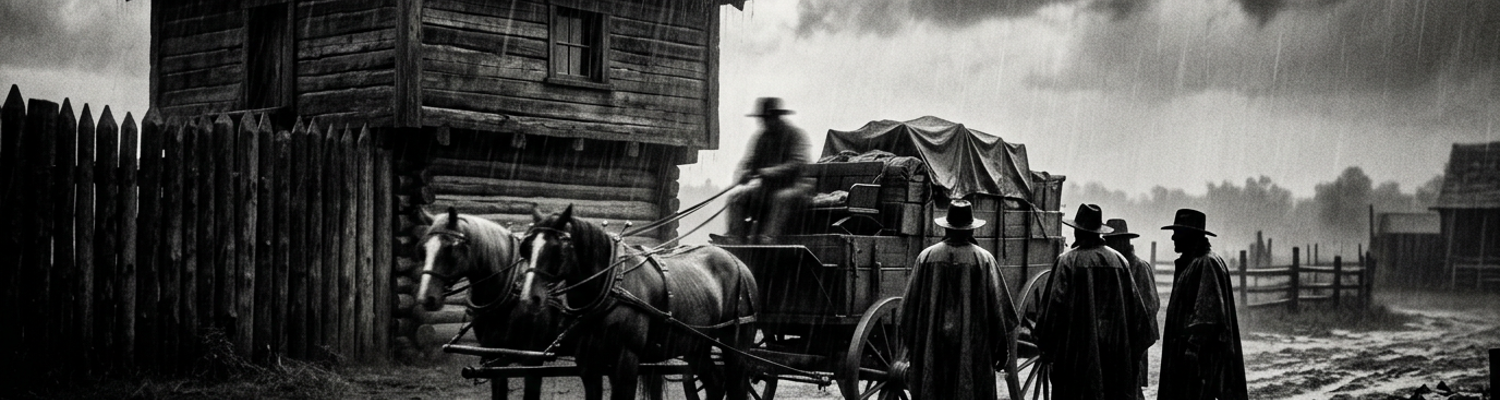

Military Information Division Infiltration of Matanzas Province
03 July 1897. 0418 hours. Coordinates 22°59'14'N, 81°12'05'W.
Two plainclothes reconnaissance officers slipped past an armed Spanish railroad handcar near Jovellanos. They secured photographic proof of troop movements along the Matanzas interior rail corridor.
A close review of operational logs indicates the War Department Military Information Division launched this covert field reconnaissance between July 1 and July 5. Personnel routed through the commercial port of Cárdenas under civilian cover. Operatives traveled without military credentials. They carried concealed Eastman pocket folding cameras (Model 1895), pocket transit compasses, and cipher pads bound into standard merchant ledgers.
Commercial steamships originating in Key West bypassed the naval scrutiny applied to military vessels.
Disguised as agricultural buyers inspecting damaged sugarcane processing infrastructure, the officers established a field base inside an abandoned warehouse adjacent to the Cárdenas rail yard. Field intelligence personnel systematically tracked Spanish unit movements. They mapped rail choke points and noted troop distributions within the regional command of General Arsenio Linares. Primary communication relied on encrypted dispatches hand-carried to coastal fishing vessels running north toward Florida.
This five-day window marked the first systematic ground-level intelligence collection operation executed by American staff officers directly inside an active Spanish defensive zone.
Detection meant immediate trial by drumhead court-martial.
Archival evidence shows the team focused their daily surveillance on the enforcement machinery behind Governor-General Valeriano Weyler and his reconcentration orders. Decrees issued from Havana mandated all rural inhabitants abandon their farms, livestock, and ancestral lands within eight days. They had to report to Spanish-held garrison towns. Armed sweeps carried out by infantry and mobilized volunteer battalions destroyed rural dwellings. They slaughtered untagged cattle and burned standing crops to establish free-fire zones along the central rail corridors.
Fortification rings sealed towns like Jovellanos, Limonar, and Colón behind barbed wire lines, trench networks, and timber blockhouses positioned five hundred yards apart. Anyone discovered traveling outside these perimeter wire belts without an authorized military pass faced summary execution.
Surveillance logs recorded twenty-four outposts surrounding Jovellanos alone.
Garrison troops seized incoming market vegetables while turning back starving peasant families.
No provisions had been stockpiled.
Survey reports compiled across the surrounding sugar estates revealed absolute physiological collapse among the concentrated populations. At facilities such as Central Conchita and the Álava estate, industrial boiling houses and open bagasse sheds functioned as confinement paddocks for thousands of displaced noncombatants. Spanish authorities allocated zero rations to these encampments. They assumed displaced civilians could survive by cultivating bare dirt within five hundred yards of the blockhouse lines.
The designated strip contained no edible vegetation.
Field observers documented a rapid daily death toll driven directly by nutritional edema, bacillary dysentery, and enteritis. Emaciated bodies lay along the drainage ditches of the mills. Stagnant waste contaminated the only drinking water. Dispatches sent to Washington recorded over forty percent of the rural civilian population across the central Matanzas sugar belt died of starvation and disease before the middle of July 1897.
Equipment Degradation and the July 8 Communications Blackout
The field communications array brought by the reconnaissance detachment broke down under the heat of the Matanzas interior within seventy-two hours of deployment.
Signal Corps personnel relied on experimental dry-cell telegraphic batteries encased in thin celluloid jackets. These units were designed for northern garrison duty rather than the saturated microclimate of the central sugar lowlands. Relative humidity consistently exceeded ninety-two percent at temperatures above ninety-six degrees Fahrenheit.
The chemical stability of the celluloid shells degraded rapidly.
Moisture permeated the exterior seams. It reacted with the internal ammonium chloride paste and zinc casings to produce an accelerated corrosive discharge (zinc chloride buildup). Operatives stationed inside the sweltering loft of an abandoned sugar warehouse two miles outside Jovellanos observed the battery housings softening. They swelled and cracked along their stamped edges. Leaking electrolyte fluid etched directly through the copper terminal screws. This dissolved the contact threading and generated high electrical resistance across the primary key circuits.
By noon on July 6, the three portable telegraph batteries allocated to the Jovellanos observation post failed. They could no longer maintain the minimum twelve-volt output needed to drive an impulse through a five-mile telegraph loop.
The chemical paste ate straight through the pine floorboards.
Physical wire infrastructure suffered an equally catastrophic failure as July tropical squalls struck the Yumurí and San Juan river valleys. Reconnaissance personnel had tapped into existing civilian rail lines using lightweight copper-sheathed field wire (No. 14 gauge) insulated with early gutta-percha compounds. They draped emergency runs along fence posts and track embankments between Jovellanos and Limonar.
The torrential afternoon downpours of July 7 saturated the entire corridor with over four inches of rainfall in under two hours.
Runoff flooded the track ballast. It fully submerged low-hanging splices where the protective gutta-percha had developed micro-fissures from intense sun exposure during the preceding days. Water seeped through the braided outer sheath. This created direct ground faults into the iron-rich red clay soil. Current bled continuously into the mud instead of reaching the receiver coils.
Signalmen attempting to send test pulses noted the signal register armatures dropped dead. Their magnetic cores failed to trip even when local operators applied maximum battery series. Line crews moving along the trackbed found insulation strips sloughed off in ribbons.
Raw copper wire lay exposed to the saturated brush.
Every wet embankment became a permanent electrical ground.
This hardware disintegration culminated in a total communications blackout on July 8. Consul-General Fitzhugh Lee maintained a dedicated telegraph receiver at the United States consulate on Obispo Street in Havana. He expected scheduled status transmissions from the interior at 0800, 1200, and 1700 hours.
None arrived.
Regional transmission records demonstrate the circuit between the Havana exchange and the Matanzas city rail terminal failed completely at 0643 hours. Line faults compounded with deliberate Spanish counter-reconnaissance sweeps. Spanish telegraph inspectors discovered spliced copper drop-cables near the Ceiba Mocha switch. They severed the connection with wire clippers and grounded both ends into track ballast.
Operatives in Jovellanos found themselves fully isolated from external diplomatic channels. They were unable to transmit reports regarding camp mortality or receive extraction orders. Couriers traveling with cipher pads on the afternoon train to Havana faced three armed inspection checkpoints at Empalme, Güines, and San José de las Lajas.
Trocha Checkpoint Confrontation at the Plantation Perimeter
At 1338 hours on 09 July 1897, the undercover intelligence team approached the western defensive sector of the Jovellanos trocha cordon.
Coordinates 22°48'50'N, 81°10'15'W.
Spanish engineers had spent four months constructing this fortified barrier. They anchored it around dual tiers of galvanized steel four-point barbed wire strung across heavy pitch-pine pickets. Ground clearings thirty paces deep stretched ahead of the outer apron. These areas were deliberately stripped of all scrub brush and sugarcane stalks to deprive infiltrators of visual shelter.
Entanglements were anchored directly into stone-filled timber cribs. Low field parapets and interlocking traverse trenches dug four feet into the heavy clay flanked the wire.
Two hundred yards to the northwest, Spanish engineers had positioned Blockhouse Number 14. This elevated two-story octagonal cedar blockhouse was garrisoned by regular troops. It was reinforced with double-planked pine sidings packed with crushed coral limestone to absorb rifle ballistics. The plainclothes officers drove an open two-wheeled mule carriage along the single rutted cart road bisecting this barrier line. They carried disguised survey notes hidden beneath the floorboards.
Tripwires ran directly from the lower fence wire into friction primers wired to black powder canister mines.
At 1341 hours, an armed sweep patrol of the Spanish Wad-Ras Infantry Regiment No. 50 stepped from behind the brick chimney base of the abandoned Santa Amalia sugar mill. Eight Spanish colonial infantrymen deployed into a double-rank skirmish line across the narrow track. They blocked all passage toward the mill yard. Corporal Manuel Enríquez led the section. He chambered a 7x57mm Spanish Mauser cartridge and signaled his men to lock their fixed knife bayonets onto their muzzle lugs.
Heat haze rose from the iron machinery and the collapsed bagasse drying sheds. Three hundred reconcentrados huddled there under armed guard. Sweat soaked the ticking of the infantrymen rayadillo uniforms as they leveled their rifles directly at the approaching carriage axle.
The team had no alternate approach route through the surrounding mudflats.
The Spanish patrol held the high ground at twelve yards.
This encounter brought the plainclothes American intelligence detachment within seconds of direct tactical engagement against garrison infantry. Both officers carried concealed six-shot Colt Model 1892 double-action revolvers beneath their unbuttoned linen plantation coats. Each weapon was loaded with .38 Long Colt cartridges. Drawing those sidearms against an eight-man Mauser rifle squad armed with clip-fed bolt actions meant immediate death at point-blank range. Initiating gunfire would trigger signal gongs at Blockhouse Number 14. That would mobilize forty additional troops from the central mill garrison.
Operational logs record the senior American officer kept both hands resting exposed on the carriage rail. He held a forged civil transit salvoconducto stamped with the counterfeit seal of the military governor of Matanzas.
The Spanish corporal kept his thumb pressed across his Mauser cocking piece while inspecting the document edge.
One wrong twitch of the reins meant a full rifle volley.
The corporal lowered his rifle muzzle after ninety seconds. He stamped the forged paper with the Santa Amalia mill clearance seal. He ordered the carriage through the gate barrier at 1345 hours.
Five Critical Minutes at the Outpost Gate
On 09 July 1897, at 1410 hours, the intelligence team stood across an untreated pine table from Captain Joaquín de la Pezuela. They were inside the guard tent of Outpost Number 4.
The senior American officer opened a black oilcloth merchant binder. He laid handwritten caloric rationing ledgers directly across the map board. These field accounting pages itemized the physiological collapse of twelve hundred reconcentrados penned inside the boiling sheds of the Santa Amalia mill. Ink notations recorded precise daily subsistence rations. Ninety grams of salted beef scrap. Forty grams of dried chickpeas. Eleven grams of unrefined sugar per adult.
That intake yielded barely four hundred calories against a basal metabolic maintenance floor of sixteen hundred.
Pezuela commanded the second company of the Wad-Ras Infantry Regiment No. 50. He held defensive authority over the Jovellanos rail junction. His desk fan sat unpowered due to a snapped copper belt. The tent remained stagnant at ninety-nine degrees.
Four hundred civilians had died behind the mill within two weeks.
An armed standoff developed between 1411 and 1413 over transit authorization and noncombatant relief permits. The American operative presented a stamped municipal pass authorized by the civil governor of Matanzas. He placed it alongside an emergency cargo manifest for three wagonloads of split peas and grain flour.
Pezuela rejected the paperwork immediately.
He rested his left hand on the steel hilt of his Model 1887 officer saber. He cited the fourth martial edict of General Valeriano Weyler which suspended all civilian transit across garrison borders. Outside the tent flaps, four Spanish infantrymen raised their Model 1893 Mausers to port arms. Their leather cartridge belts creaked in the heat. Both plainclothes Americans maintained hand placement on the table surface. They were conscious their unbuttoned waistcoats concealed six-shot Colt double-action revolvers chambered in .38 Long Colt.
Drawing those handguns against sixteen armed soldiers stationed within fifteen paces guaranteed immediate death.
One armed move meant an immediate firing squad.
The confrontation turned on jurisdictional friction between the colonial military high command and local municipal administrators. The relief permits carried an official violet wax seal from the Matanzas Board of Charities. This granted transit rights to deliver emergency dry goods directly to civilian concentration huts. Pezuela challenged the legality of that civil seal against his standing regimental orders. He argued moving provisions into the mill complex violated the free-fire perimeter established along the track bed.
Ten paces to the north, a Spanish corporal stood over the tripwire connecting the perimeter fence to a buried canister of black powder and scrap iron.
The intelligence officers pointed to ledger columns recording bacillary dysentery deaths. These threatened to infect his own garrison lines. Contagion from the open latrines had already incapacitated eleven soldiers in the third squad of the Wad-Ras company.
Disease was crossing the trench lines faster than rebels.
At 1415 hours, Pezuela made the tactical decision to endorse passage rather than initiate combat. Detaining the wagon team or opening fire required filing an immediate report to brigade headquarters in Colón. This would trigger an inspection exposing unauthorized civilian death rates in his sector.
The captain unscrewed an ebony dip pen. He checked the nib and applied iron-gall ink to the base of the municipal clearance form. His flourish granted the relief column safe passage through the perimeter wire. It designated the provisions as noncombatant rations under direct quartermaster supervision. He returned the bound ledgers to the intelligence officers without looking up from his daily muster sheet.
Outside the timber palisade, two sentries pulled the counterweight ropes on the counter-balanced pine barrier gate. They swung the spiked timber frame upward to open the interior rail spur.
The carriage rolled over the iron switch track into the mill compound at 1416.
Manual Logistics Tables and Clandestine Aid Distribution
The relief wagons reached the Santa Amalia boiling house platform at 1422 hours.
The field detachment immediately established a three-mile transit corridor linking the Jovellanos rail siding directly to the squalid concentration barracks behind the sugar mill. Operatives routed three two-wheeled cart teams along an abandoned narrow-gauge tramway road. They avoided the main military highway to minimize exposure to roving cavalry scouts.
The cargo consisted of forty-eight barrels of kiln-dried wheat flour. These were packed in triple-ply canvas liners to resist the eighty-five percent humidity. The wagons also carried eighty pounds of unrefined cornmeal and fifty cases of condensed milk.
Medical supplies occupied the center wagon under heavy tarpaulins. They packed three thousand five-grain doses of quinine sulfate, two hundred glass vials of tincture of iodine, and twenty gallons of liquid carbolic acid for disinfecting open sewage gutters. Team personnel measured out ground corridors at four-hundred-yard intervals. They stationed trusted local municipal clerks at two intermediate drainage culverts to monitor wagon axle loads. This ensured cart drivers did not veer into unmapped sugarcane tracks. Every crate was stamped with violet aniline dye indicating humanitarian delivery under the auspices of the Matanzas Board of Charities.
Starvation had made food more dangerous than ammunition.
Preventing food diversion required an uncompromising manual accounting grid developed inside the Jovellanos warehouse the previous midnight. Operatives drew cross-ruled tally charts across sixty sheets of bond ledger paper. They divided civilian recipients into family clusters cross-referenced by municipal baptismal registries and parish burial books.
Each family head received a stamped manila card marked with an indelible aniline pencil cipher matching an entry in the master ledger.
Distribution personnel used calibrated iron scoops engineered to hold exactly two hundred and twenty grams of raw flour per adult (3.5 inch diameter bowl). They dispensed dry rations twice daily to prevent stockpiling or theft. Spanish garrison quartermasters frequently attempted to skim bulk grain supplies for their own half-starved company messes. Insurgent supply runners from the nearby Pedro Betancourt brigade regularly pressured camp families to slip rations across the perimeter trench lines.
Operatives stopped both leaks by requiring each recipient to consume an initial four-ounce ration of boiled flour gruel on-site at the mill boiler floor before receiving dry rations. Inspectors checked fingers for silver nitrate stains (two percent solution) applied to recipients upon receipt. They instantly detected anyone attempting to cycle back through the distribution line a second time.
A single diverted sack of grain would shut down the entire corridor.
Maintaining absolute tactical neutrality was the only condition preventing the Spanish garrison from seizing the depot and arresting the operational team. Captain Joaquín de la Pezuela stationed six armed sentries from the Wad-Ras Infantry Regiment No. 50 directly over the weighing scales. Their 7x57mm Mausers were loaded with five-round stripper clips.
American operatives submitted duplicate wagon manifests to the Spanish commandancia twelve hours prior to each delivery. This allowed Spanish non-commissioned officers to check tare weights and prod wagon beds with three-foot steel bayonet probes. Operatives avoided all direct eye contact. They refused clandestine overtures from local Cuban revolutionary sympathizers.
Two disguised scouts from the rebel Fourth Corps approached the mill perimeter ditch at 1605 hours seeking medical narcotics. The field team turned them away without acknowledgment. They adhered strictly to the non-interference clauses governing their municipal transit pass. American personnel carried no military sidearms while working the distribution tables. They wore unadorned cotton drill suits and communicated exclusively in commercial Spanish.
By 1730 hours, twelve hundred civilians had passed the inspection tables without a single Spanish soldier raising a rifle bolt.
Early Civil Affairs Doctrine and Strategic Reconnaissance Impact
At 0520 hours on 10 July 1897, the field team routed courier dispatches through the Empalme rail junction to circumvent the severed wire network.
Operatives concealed sixteen pages of micro-inscribed demographic tables, perimeter sketches of Blockhouse Number 14, and caloric ledgers within the hollowed double floorboards of a wicker poultry hamper. They loaded it aboard the morning passenger train. Senior courier agent Tomás Estrada traveled with merchant credentials issued by the Havana Chamber of Commerce. He carried additional cryptographic sheets stitched directly into the buckram lining of his woolen traveling waistcoat.
Spanish military police boarding at Güines conducted bayonet searches of passenger baggage cars. They probed flour sacks and fruit crates without dismantling the false wicker framing.
Estrada cleared the final armed checkpoint at San José de las Lajas at 1145 hours. He delivered the uncompromised intelligence package directly to the United States Consulate on Obispo Street in Havana by 1315 hours. Fitzhugh Lee received raw casualty data documenting twenty-two daily civilian deaths per thousand inside the Jovellanos cantonment. He also received exact defensive measurements of forty-six Spanish breastworks along the Matanzas-Cárdenas corridor. Cipher clerks spent nine hours translating the pencil entries into five-digit numerical groups for transmission over the undersea telegraph cable to Key West.
Paper hidden in poultry crates replaced lost telegraph wire.
By 14 July 1897, these interior dispatches arrived at the War Department Military Information Division in Washington. Analysts under Major Arthur L. Wagner integrated the field intelligence into existing strategic estimates for the Caribbean theater. Staff officers transferred the Matanzas mortality data directly onto regional operations maps. They charted how Weyler reconcentration edicts had converted fertile agricultural acreage into an epidemic-ridden wasteland incapable of foraging support.
Wagner combined the Jovellanos field reports with sanitary assessments from the office of the Surgeon General to construct the first systematic epidemiological profile of western Cuba.
Analysts noted five Spanish regular infantry battalions quartered in Matanzas suffered forty percent non-effective rates. These were caused by endemic yellow fever and bacillary dysentery contracted from the open latrines of adjacent civilian enclosures. Calculating army sustainment requirements, War Department planners revised down their projections for localized procurement. They determined an expeditionary force invading western Cuba would require complete sea-based caloric and water provisioning from state depots in Tampa and New Orleans.
Strategic war plans drafted during the autumn of 1897 utilized these precise Jovellanos railway sketches. They identified the Matanzas-Havana junction as a critical interdiction target for naval bombardment and amphibious isolation.
Every planned landing brigade now required dedicated bulk flour ships.
The Jovellanos operation established foundational organizational frameworks for twentieth-century Army civil affairs and noncombatant relief operations. Field methodologies devised at the Santa Amalia boiling sheds shifted military doctrine beyond the punitive constraints of General Orders No. 100 (Lieber Code). That order had governed operational conduct since the American Civil War without detailing technical administrative mechanisms for noncombatant survival.
The manual accounting grids, verified caloric allocations, and chemical verification markers deployed in Matanzas demonstrated managing starving civil populations was inseparable from front-line tactical control. McKinley administration planners incorporated these procedural logistics directly into the humanitarian relief mandates of General Order No. 101 during the summer of 1898. Military governors John R. Brooke and Leonard Wood later expanded the Jovellanos distribution templates across all six Cuban provinces. They used identical municipal registration cards and dual-ration monitoring tables to distribute over five million pounds of emergency flour and bacon to displaced rural civilians.
Medical officers subsequently codified the sanitary cordon procedures tested around Jovellanos into formal Field Service Regulations. They transformed emergency quarantine and noncombatant feeding into standard military operational responsibilities later utilized in the Philippines, Boxer Rebellion expeditions, and European reconstruction commands.
Captain Joaquín de la Pezuela received a formal reprimand from brigade headquarters in Colón on 19 July for issuing unauthorized municipal cargo clearances.