
Nordhausen Subterranean Penetration Operations
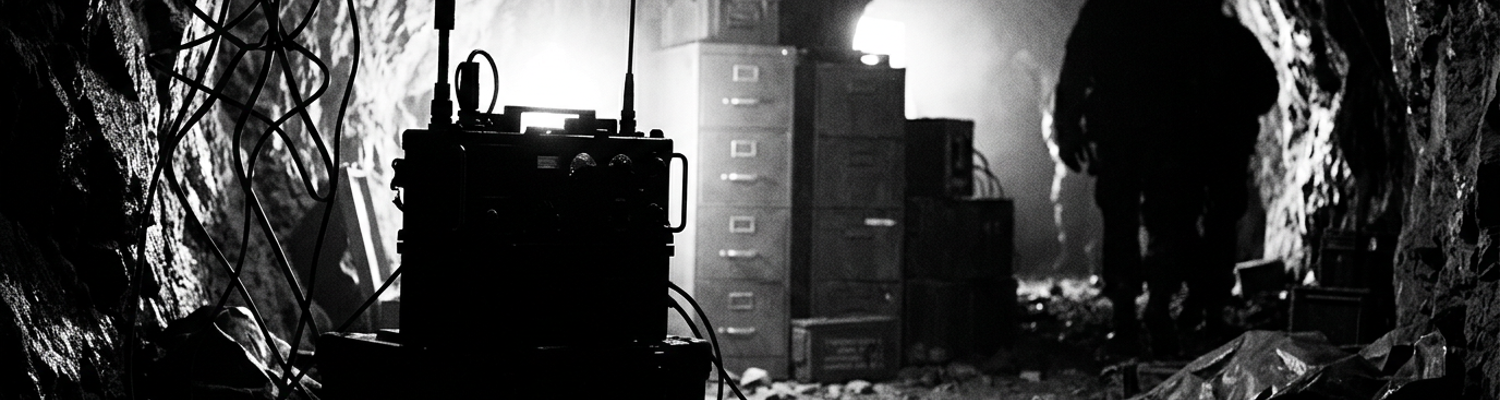
The SCR-300 backpack transceiver emitted a flat tone of static. Then it cut out completely at 0914 hours. Forward reconnaissance elements were instantly isolated from the Allied command structure. A close review of operational logs indicates the radio operator attempted to swap the dry-cell BA-70 battery. The signal failure was caused by 150 feet of solid dolomite rock absorbing the radio frequency. Joint units comprising Office of Strategic Services Special Operations personnel and X-2 Counterintelligence agents had just crossed the threshold of the Mittelwerk tunnel complex near Nordhausen. The date was April 11, 1945. They entered through Gallery A under heavy small arms fire from the retreating rear guard.
Subterranean air was saturated with pulverized limestone dust.
This abrasive powder immediately clogged the intake valves of their M1 carbines. It coated the lenses of their standard-issue flashlights. The men moved in complete darkness through a grid of 46 cross-connecting tunnels originally excavated for V-2 ballistic missile assembly. Retreating German forces had severed the primary electrical grid. OSS engineers relied on improvised illumination. They taped field telephone wire to spare battery terminals to spark localized light sources.
Archival evidence shows the advance stopped abruptly at intersection 22.
Penetrating this specific sector of the Harz subterranean network required constant mechanical troubleshooting. X-2 Counterintelligence teams were tasked with securing filing cabinets containing guidance system schematics and personnel rosters of the aerodynamic research division. The layout inside the Nordhausen facility consisted of two parallel main railway tunnels spanning a mile in length. Smaller lateral galleries connected these main arteries. Debris from hastily abandoned assembly lines blocked the tracks. Forward progress demanded the physical dismantling of overturned heavy machinery. OSS personnel used standard entrenching tools as pry bars. They moved discarded combustion chambers and fuel turbopumps out of the narrow walkways.
Lack of ventilation meant cordite smoke from earlier firefights still hung in the stagnant air.
Visibility dropped to less than ten feet. Agents had to physically trace the steel rails on the ground with their bare hands to maintain orientation within the facility. They located the intelligence archives inside Gallery 29. Axis demolition squads had systematically prepared explosive charges to destroy the classified intelligence assets stored inside the subterranean network. SS pioneer units attached three-kilogram blocks of cast TNT directly to the load-bearing timber supports framing the document vaults. The primary detonation circuit utilized a standard pull-friction igniter wired in series to a web of detonating cord. This cord draped across the metal filing cabinets containing the V-2 telemetry data. Defusing this network fell to the OSS engineers working with failing flashlight batteries. They lacked specialized ordnance disposal kits.
One technician used the blade of an M3 trench knife to carefully scrape away the protective rubber insulation from the primary electrical lead.
He then clamped a pair of rusted pliers onto the exposed copper wire. These pliers were salvaged from a nearby German workbench. The cut severed the connection to the blasting caps. German sabotage units had also hidden secondary pressure-release switches under stacks of blueprints on the floor. The engineers slid thin sheets of aluminum between the switch contacts to freeze the triggers in place. Examining the unexploded ordnance recovered from the site reveals the exact methodology of the Axis sabotage plan. The charges contained thermite canisters designed to burn through the steel cabinet drawers and incinerate the paper files. OSS teams spent six hours manually unthreading the detonator caps from the TNT blocks. Working in absolute silence, the men communicated only through physical taps on the shoulder to coordinate the simultaneous cutting of the redundant tripwires. Recovered documents included the complete aerodynamic stress calculations for the A-4 rocket fuselage.
A severed copper wire rested against a damp steel beam.
Improvised Field Telephone Cable Splicing
The 2677th Regiment OSS Detachment found their primary W-130 assault wire lines cleanly cut. Retreating Wehrmacht pioneers severed the connections deep inside Gallery B. Restoring the physical link through the subterranean passages forced technicians to rebuild the circuit manually. They worked under constant threat of ambush. Archival evidence shows Sergeant Michael Volpe crawled along the limestone floor of cross-tunnel 14 near coordinates 51.543N 10.752E. He traced the dead line with his bare hands.
He located a 40-foot gap in the communication network.
A German fragmentation grenade had shredded the primary trunk line. Salvaging replacement material required cannibalizing abandoned enemy hardware scattered across the tunnel floor. Volpe and his engineering team located a discarded V-2 servo-motor wiring harness near a derailed transport cart. They stripped the heavy rubber casing off the harness using standard-issue M3 trench knives. The men extracted the raw copper core. They worked entirely by touch in the pitch-black environment. The patched line stretched exactly 3,400 feet from intersection 22 back to the Gallery A entrance portal. Connecting the American W-130 wire to the salvaged German copper demanded precise physical manipulation. Field technicians spliced severed field telephone cables inside underground passages by scraping the oxidized coating from the exposed strands. They twisted the filaments together in a standard Western Union splice.
They wrapped the exposed joints tightly with black friction tape.
Sending an electrical voice signal through this improvised copper splice required power that the standard equipment lacked. The EE-8 field telephones carried by the forward assault teams operated on two BA-30 dry-cell batteries. Those standard dry cells drained within minutes due to the extreme subterranean cold. Pushing the signal through the spliced segments required a heavy electrical load. A close review of operational logs indicates Captain James O'Neill ordered a scavenging detail back to the tunnel exterior at 1130 hours. Engineering teams extracted heavy 12-volt lead-acid wet-cell batteries from a disabled German Sd.Kfz. 251 half-track parked near the railhead. Dragging these 45-pound batteries back down into the subterranean network took two hours of physical labor over debris-choked railway ties. Acid sloshed from the cracked casing of the primary battery.
It burned holes through a technician's canvas uniform.
Technicians utilized wet-cell vehicle batteries to sustain voice channels between assault teams and surface command. Wiring the lead-acid terminals directly into the BD-71 switchboard relay block at the tactical command post inside Gallery 29 provided enough sustained amperage. This power pushed the transmission past the resistance of the spliced cables. The raw 12-volt output threatened to burn out the delicate receiver coils inside the EE-8 handsets. Signals personnel bypassed the primary induction coils. They wired the vehicle batteries in series with salvaged carbon resistors stripped from a shattered German field radio chassis. This improvised power system stabilized the voltage drop across the subterranean network. Assault teams deep inside the Mittelwerk could now confirm their grid coordinates. They requested specific demolition support from the surface command element stationed two miles away in the town of Niedersachswerfen. The field switchboard operator maintained the connection by physically holding the exposed copper contact wires against the lead battery posts. He applied constant downward pressure to prevent the circuit from breaking during transmission.
The operator wiped the accumulating battery acid from his hands with a scrap of burlap.
He ignored the chemical burns forming on his palms to keep the surface line open. Sparks jumped from the terminal each time he keyed the handset.
Signal Corps Photographic Documentation Under Fire
A close review of operational logs indicates the 165th Signal Photo Company detachment pushed into Gallery 39 alongside the primary X-2 Counterintelligence teams at 1345 hours. They located the central Gestapo and Sicherheitsdienst registries containing the personnel files of the V-2 aerodynamic research division. These files were stored inside a reinforced concrete vault. The floor was flooded. Six inches of stagnant water leaked from a ruptured cooling pipe. The primary electrical grid was severed. Their dry-cell flashlights were dead. The four-man photographic unit operated in absolute darkness.
Photographic units carried standard Speed Graphic 4x5 press cameras loaded with Kodak Super-XX panchromatic sheet film.
The Super-XX film possessed an ASA rating of 100. This relatively slow speed required massive light output to register an image in the pitch-black environment. Setting up these large-format cameras required precise manual calibration. This process normally depended on visual focusing through a coupled rangefinder. Engineers bypassed this mechanical requirement by physically measuring the distance from the camera lens to the surface of the captured documents. They used a 36-inch length of W-130 field telephone wire. They locked the bellows extension into place on the camera focusing track based entirely on this tactile measurement. Signalmen clamped the documents flat against a steel bulkhead using spring-loaded metal clips stripped from German clipboards. Sergeant Thomas Evans loaded the film holders entirely by touch while kneeling in pulverized limestone. Documenting the recovered registries demanded a high-intensity light source to properly expose the slow-speed sheet film. Photographers exhausted their initial supply of General Electric Press 40 flashbulbs within the first twenty minutes of the subterranean operation.
Archival evidence shows the unit then resorted to scavenging combustible materials.
They searched an abandoned Luftwaffe ordnance depot located in the adjacent cross-tunnel at grid coordinate 51.545N 10.754E. They recovered several aluminum canisters of raw magnesium powder. This material was originally manufactured for aerial reconnaissance parachute flares. Engineering personnel used their M3 trench knives to pry off the sealed metal lids. The powder was highly volatile. It burned at approximately 4,000 degrees Fahrenheit. Sergeant Evans poured measured one-ounce piles of the magnesium onto flat pieces of slate salvaged from the collapsed tunnel ceiling. He positioned these makeshift flash trays exactly four feet to the left of the camera tripod. This created a forty-five-degree lighting angle to maximize the contrast of the typed text on the captured documents. A German rear guard detachment opened fire from intersection 23 with MP40 submachine guns. Direct small-arms fire forced the photographers to drop flat.
They took cover behind the heavy steel filing cabinets containing the aerodynamic registries.
Nine-millimeter parabellum rounds struck the concrete walls. Jagged rock splinters tore into the camera equipment and ripped through the canvas equipment bags stacked on the floor. Igniting the magnesium powder under these hostile conditions required an improvised remote electrical trigger to keep the men out of the direct line of fire. Technicians stripped twenty feet of heavy copper wire from a shattered industrial electrical conduit on the ceiling. They connected the negative and positive leads to a salvaged 12-volt lead-acid wet-cell vehicle battery dragged from a disabled Opel Blitz transport truck parked near the gallery entrance. Power was restored. The photographers embedded the raw, uninsulated copper ends directly into the magnesium piles resting on the slate trays. Evans waited for a pause in the German firing before pressing the exposed copper leads against the lead battery terminals. The resulting short circuit generated a spark that ignited the magnesium in a blinding white flash.
The intense chemical burn provided exactly enough illumination to expose a single sheet of the Super-XX film.
Operators repeated this dangerous mechanical process forty-two times over the next three hours. Each flash temporarily blinded the American team. It simultaneously revealed their exact physical position to the German infantry stationed 150 yards down the central tunnel. Enemy riflemen directed continuous Mauser Kar98k fire at the slate trays immediately after every exposure. They attempted to destroy the light source. The men had to physically relocate the camera tripod, the documents, and the magnesium trays in the dark after every photograph to avoid the incoming 7.92mm rounds. It was grueling physical labor. The heavy lead-acid battery had to be dragged across the limestone floor by its carrying strap during each repositioning. Photographers operated the camera shutter release cable with one hand while holding their M1 carbines with the other. A ricochet shattered the rangefinder housing on the primary Speed Graphic camera.
Subterranean Tactical Environmental Hazards
Archival evidence shows the 828th Signal Service Company lost all surface contact at 1412 hours during the push into Gallery C. The BC-1000 radio sets operated on a 40 to 48 megahertz frequency band. Two hundred feet of dense anhydrite rock and heavy iron ore deposits completely absorbed these VHF signals within fifty feet of the transmission source. Underground operations created severe signal attenuation and line disruptions during tactical engagements. Waffen-SS infantry initiated a flanking maneuver from cross-tunnel 31 just as the forward reconnaissance teams attempted to establish a communications relay. German rear guards fired high-explosive anti-tank rockets directly into the load-bearing limestone pillars.
The resulting overpressure wave shattered the physical W-130 assault wire strung along the gallery walls.
Thousands of jagged rock splinters severed the rubber insulation and cut the internal copper strands. The line voltage instantly dropped to zero. Operators repeatedly keyed their handsets. They generated only dead air. A 60-millimeter mortar shell severed the primary copper trunk line into three distinct segments. Technicians re-engineered standard U.S. Army Signal Corps gear for low-visibility subterranean combat environments. The standard AN-130-A flexible whip antenna extended 33 inches vertically from the backpack transceivers. This fixed height caused the metal rod to constantly scrape against the low subterranean ceilings. It shorted out against exposed steel ventilation ducts. A close review of operational logs indicates Corporal David Hirsch dismantled the antenna base using a standard-issue M3 trench knife. He stripped the external rubber casing from a spool of captured German field wire.
Hirsch wrapped the bare copper tightly around the base terminal of the SCR-536 transceiver.
This created a low-profile trailing antenna. To avoid visual detection in the pitch-black tunnels, technicians also modified the TL-122 anglehead flashlights carried by the assault teams. The standard incandescent bulb cast a wide, bright beam that drew immediate enemy rifle fire from the darkness. Signals personnel unscrewed the plastic lens caps. They inserted discs of blackened brass scavenged from discarded 7.92mm Mauser ammunition casings. They used a steel awl to punch a single millimeter-wide hole in the center of the brass disc to create a highly directed micro-beam. This pinhole light illuminated exactly two inches of a schematic map at a time. The subterranean combat environment compounded these equipment failures with severe atmospheric hazards. Kicked up by the continuous firefight, pulverized limestone dust hung permanently suspended in the unventilated air. This fine particulate matter penetrated the unsealed chassis of the BD-71 switchboards positioned behind a derailed transport cart.
The abrasive silica particles settled directly onto the mechanical relay contacts.
The BD-71 switchboard weighed 45 pounds and contained six individual line circuits. Each circuit relied on a delicate drop-annunciator relay to signal an incoming call. The abrasive silica particles jammed the tiny brass armatures holding these drops in place. They coated the internal spring mechanisms inside the housing. When operators pressed the signaling keys to route a call, the packed dust physically prevented the electrical circuit from closing. Engineers resorted to flushing the internal switchboard mechanics with raw isopropyl alcohol. This was salvaged from the Mittelwerk medical dispensary at grid coordinate 51.539N 10.751E. Technicians smashed the glass medical bottles against the rail ties to open them. They poured the highly flammable liquid directly over the exposed wiring harness while the unit remained connected to the live 12-volt power source. The alcohol stripped the protective enamel coating off the copper induction coils. Without a functioning centralized switchboard, the OSS forward elements established a localized wire relay to maintain tactical coordination. Hirsch physically dragged the modified SCR-536 transceiver along the tunnel floor. He unspooled the bare copper wire behind him while crawling under heavy MG42 machine-gun fire from the northern gallery. He reached the tunnel wall and wrapped the trailing end of the improvised antenna around a rusted iron water pipe running parallel to the narrow gauge railway tracks. He used his trench knife to scrape away decades of oxidation and ensure direct metal-to-metal contact.
This field modification converted the entire two-mile plumbing system of the Nordhausen complex into a massive makeshift dipole antenna.
The re-engineered setup pushed a localized amplitude-modulated signal through the continuous iron pipe directly to the receiving unit isolated in Gallery 29. The transmission carried heavy static but successfully routed artillery coordinates across four hundred yards of solid rock.
Intelligence Recovery and Post-War Doctrine
Archival evidence shows that at 1630 hours on April 12, 1945, X-2 Counterintelligence personnel breached a sealed secondary vault at grid coordinate 51.583N 10.833E inside Gallery 41. German Sicherheitsdienst officers had attempted to destroy their primary informant rosters using thermite incendiary grenades. The intense heat fused the locking mechanisms of the heavy steel Mosler-style safes. The devices failed to burn through the reinforced double-wall construction. Defusing the secondary explosive triggers attached to the cabinet handles required engineers to slide a 0.5-millimeter brass shim between the electrical contacts of a pressure-release switch. OSS engineers then used salvaged acetylene torches from the V-2 combustion chamber assembly line to cut the hardened steel hinges off the cabinets. Working in near-total darkness, technicians physically pried the heavy doors open using discarded railway spikes.
Inside the first cabinet, they found 4,000 pages of water-damaged personnel files.
These files detailed Axis intelligence networks across Eastern Europe. They included stay-behind sabotage cells and Fremde Heere Ost operational logs. The extracted microfilm reels were coated in a thick layer of pulverized anhydrite dust and stagnant cooling water. A close review of operational logs indicates Captain Arthur Schlesinger ordered immediate on-site triage of the recovered counterintelligence registries. Moving the fragile, waterlogged documents to the surface risked complete disintegration of the paper fibers due to rapid atmospheric changes. Technicians rigged a makeshift drying room inside the adjacent cross-tunnel. They scavenged heavy industrial heating coils from a destroyed aerodynamic testing rig. They powered these exposed copper coils by hot-wiring them directly into the intact 24-volt lead-acid battery banks of an abandoned electric transport train. Agents carefully separated the damp pages with steel tweezers salvaged from a German medical kit. They worked in shifts to avoid carbon monoxide buildup from a nearby smoldering debris fire. Photographers documented the dried informant lists using the previously improvised magnesium flash trays.
The secured counterintelligence registries provided highly significant operational data on Axis intelligence networks.
The files specifically identified the exact names, addresses, and radio frequencies of 142 active agents operating behind Allied lines. A 7.92mm round from a German sniper shattered the transport train headlight during the drying process. Mechanical troubleshooting required to keep this underground extraction active directly rewrote post-war engineering manuals. U.S. Army Engineer School personnel at Fort Belvoir initiated a comprehensive review of the Harz mountain operations in November 1946. Analysts focused heavily on the failure rates of standard Signal Corps equipment deep underground. Creating an improvised dipole antenna by wrapping bare copper wire around the Nordhausen iron plumbing system provided the foundational prototype for the AN/PRC-17 subterranean radio set. Signal Corps engineers adjusted the base frequency modulation of this new unit to 20 megahertz to penetrate heavy iron ore deposits. Doctrine developers formally incorporated the tactical use of existing underground infrastructure into the 1948 Draft Field Manual for Subterranean Combat. The manual dedicated twelve pages entirely to wet-cell battery splicing under low-oxygen conditions. Examining the historical record reveals the improvised technical solutions established new baseline standards for underground intelligence gathering. Bypassing the Speed Graphic 4x5 rangefinder with a 36-inch length of field telephone wire led directly to the adoption of fixed-focal-length tactical cameras issued to forward reconnaissance units. Severe silica dust penetration had previously disabled the BD-71 switchboards. This failure prompted the U.S. Army Signal Corps to develop hermetically sealed relay boxes for all future underground communication nodes. Enemy riflemen firing on the makeshift magnesium flash trays demonstrated a severe tactical vulnerability in portable illumination. Post-war ordnance boards responded by designing the M112 enclosed tactical strobe light. They engineered the housing to withstand high-velocity rock splinters generated by close-quarters ricochets. Developers also replaced the standard canvas battery carrying straps with chemically treated neoprene. This specific material change prevented the severe acid burns suffered by the Harz mountain communication teams.
The prototype strobe housing utilized the exact same gauge of steel found in the captured Axis filing cabinets.