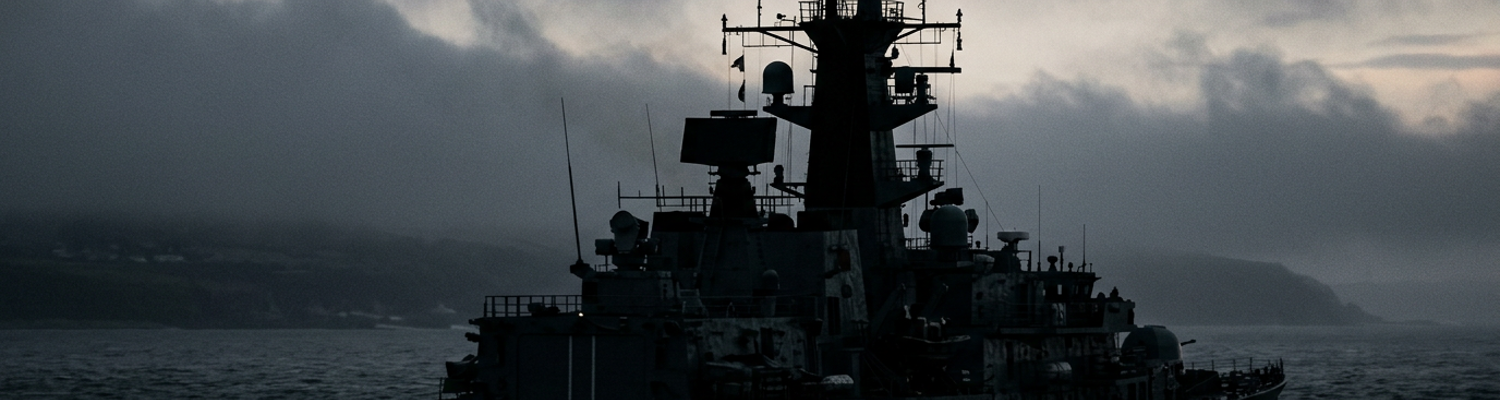

Civilian Dhow Engagement in the Assab Roadstead
On July 12, 1999, armed security personnel stationed aboard the chartered supply vessel MV Danakil detected a small wooden contact on their Raytheon surface-search radar.
The incident occurred at exactly 0214 hours near coordinate 12 degrees 59 minutes North, 42 degrees 45 minutes East. The target approached from the southeast at a speed of six knots. Exhausted radar operators failed to correlate this speed with typical local fishing patterns. Deck officers assumed the contact was a hostile fast-attack craft attempting to infiltrate the anchorage under the cover of darkness. The Danakil carried four thousand tons of high-explosive munitions bound for the inland front. Security protocols required the deck guards to engage any unidentified vessel closing within a one-thousand-yard exclusion zone. The wooden dhow crossed that specific coordinate line at 0217 hours.
Four crewmen manned a twin-barreled 23mm ZU-23-2 anti-aircraft cannon bolted to the aft deck.
The fatal engagement resulted from a misinterpreted tactical radio warning combined with blinding surface illumination flares. Port authority dispatchers broadcast a standard maritime advisory on VHF Channel 16 regarding inbound shallow-draft vessels moving through the eastern channel. Heavy atmospheric static corrupted the transmission. The radioman aboard the Danakil logged the message as a confirmed warning of hostile torpedo boats entering the roadstead. This radio operator relayed the garbled warning to the aft gun deck via a hardwired field telephone. The gun captain requested immediate area illumination from the harbor defense battery stationed on the nearby Haleb Peninsula. Shore-based mortar teams fired three 81mm M301 illumination rounds directly over the roadstead. These projectiles burst at an altitude of one thousand feet.
Each flare ignited a magnesium payload.
When examining the historical record, it becomes clear that this intense artificial light ruined the natural night vision of the deck gunners. The glare cast elongated shadows across the ocean surface. These optical distortions made the low-profile civilian fishing dhow appear much larger and faster than its actual dimensions. Believing they were under imminent attack, the gunners depressed the barrels of the ZU-23-2 and opened fire. Armor-piercing incendiary rounds penetrated the wooden superstructure of the dhow at a rate of four hundred rounds per minute. The concentrated heavy machine gun fire instantly ignited the onboard fuel tanks. Secondary explosions broke the wooden hull into three distinct sections.
Debris from the shattered vessel sank in forty feet of water within ninety seconds of the initial burst.
Commanders at the regional headquarters had received a rigid seventy-two-hour operational window on July 9 to establish a secure deep-water anchorage. Military planners mandated that all supply ships drop anchor and commence offloading cargo before the heavy mechanized brigades arrived at the coastal staging areas. This compressed schedule forced harbor security teams to skip standard nighttime reconnaissance patrols and immediately deploy into defensive screen formations. A ticking clock dictated every deployment decision across the anchorage. Watch commanders ordered their crews to maintain continuous high-alert postures without implementing standard shift rotations. The primary deck guards stood at their posts for forty-eight consecutive hours.
A close review of operational logs indicates this extreme sleep deprivation directly degraded target identification protocols across the entire fleet.
Red Sea Show of Force Mandate
Archival evidence shows that United States Naval Central Command issued a direct interdiction order to the USS Trenton on July 13, 1999.
The Austin-class amphibious transport dock received instructions to execute a strained show-of-force blockade in the contested waters of the Red Sea. Post-Cold War budget drawdowns had severely reduced the number of available destroyer squadrons in the Fifth Fleet area of operations. Planners forced the Trenton to fill a tactical gap well outside its primary amphibious assault design parameters. The ship steamed toward coordinate 13 degrees 35 minutes North, 42 degrees 39 minutes East. It positioned itself directly across the primary shipping lanes approaching the Bab-el-Mandeb strait. Regional tensions stemming from the active border war between Eritrea and Ethiopia threatened to spill into the maritime domain. Naval intelligence tracked suspected arms smuggling vessels originating from the Yemeni coast and moving toward the Assab roadstead. The Trenton was tasked with intercepting, boarding, and searching any shallow-draft cargo vessels crossing the twenty-nautical-mile exclusion line.
The physical presence of the gray-hulled warship was intended to deter regional arms brokers.
A close review of operational logs indicates that Fleet Command attached highly demanding operational mandates to this deployment. Orders required the Trenton to maintain continuous station-keeping directly in the center of the shipping channel. The ship had to execute tight, repetitive figure-eight patrol patterns at a constant speed of twelve knots. This specific maneuvering profile demanded rapid throttle changes and continuous rudder adjustments to counteract the strong southern surface currents. Engineering protocols for this type of sustained high-readiness posture required both main propulsion boilers to remain online and cross-connected twenty-four hours a day. The engineering department could not secure either boiler for standard preventative maintenance or fireside cleaning.
The thirty-year-old steam engineering plant experienced severe mechanical degradation under the continuous operational load.
The Trenton relied on two Foster Wheeler D-type boilers operating at 600 pounds per square inch of steam pressure. Decades of deferred maintenance during the post-Cold War fleet reduction left the propulsion systems highly vulnerable to thermal stress. Archival engineering records detail a cascading series of mechanical failures beginning deep inside the forward fire room. High-pressure steam leaks developed around the deteriorated flange gaskets of the main feed pumps. These leaks vented directly into the enclosed engineering spaces. Ambient temperatures on the lower deck plates reached 132 degrees Fahrenheit. Without functioning blowers to push oxygen into the combustion chambers, the boiler fires burned heavily and coated the water tubes with thick layers of carbon soot. This soot buildup destroyed the thermal efficiency of the entire steam plant. The ship burned through its marine diesel fuel reserves at twice the normal rate. Supply officers transmitted urgent requisition requests for replacement bearings, high-pressure valves, and gasket material. Shore-based supply depots in Bahrain rejected the requests due to fleet-wide parts shortages. The engineering crew resorted to cannibalizing non-essential equipment to keep the main propulsion shafts turning.
A catastrophic failure occurred within the flash-type distilling plants.
These evaporators required a steady supply of low-pressure auxiliary steam to convert seawater into potable water for the crew and the boilers. The massive steam leaks in the main plant deprived the evaporators of their required operating pressure. Fresh water production dropped from twenty thousand gallons a day to less than three thousand. The chief engineer ordered the immediate rationing of all potable water to prioritize boiler feed requirements over crew hydration. Sailors working in the extreme heat of the engineering spaces suffered severe dehydration.
At 1430 hours on July 18, a ruptured boiler tube forced the immediate shutdown of the number one propulsion plant.
The sudden loss of steam pressure tripped the main electrical breakers. Primary electrical panels across the forward bulkheads went completely dark. The SPS-40 surface search radar console on the bridge powered down instantly. The massive amphibious transport dock lost all forward momentum and began drifting south toward the contested Hanish Islands at a rate of two knots.
Freshwater Generator Failures and Environmental Strain
Archival evidence shows that by July 19, the ambient air temperature above the Assab roadstead stabilized at 114 degrees Fahrenheit with ninety-two percent relative humidity.
This extreme surface climate transferred massive heat loads directly through the uninsulated steel hull of the USS Trenton. Down in the forward and aft main machinery rooms, the mechanical breakdown of the ship's two Aqua-Chem flash-type distilling plants created a severe operational crisis. These desalination units relied on a delicate vacuum to lower the boiling point of seawater. They utilized excess auxiliary steam to flash the brine into pure condensate. Decades of continuous operation in high-salinity littoral waters had severely degraded the cupronickel heat exchanger tubes. Calcium sulfate scale coated the internal piping. This hardened white mineral deposit choked the flow of cooling water and destroyed the thermal transfer efficiency of the entire system. Engineering watchstanders attempted to manually chip the scale away using pneumatic needle guns during brief operational pauses.
The primary air ejector nozzles eroded completely.
A close review of operational logs indicates that the loss of this internal vacuum caused the boiling point inside the flash chambers to spike well beyond the temperature of the available auxiliary steam. Fresh water production plummeted instantly. The ship required twenty thousand gallons of distilled water daily just to maintain basic boiler feed levels and support the crew of four hundred sailors. Output dropped to less than two thousand gallons per day. The Chief Engineer issued an immediate directive to secure all potable water access across the vessel. Damage control teams physically padlocked the valves leading to the crew showers, the galley dishwashing stations, and the laundry facilities. Maintenance personnel bolted steel plates over the handles of the drinking fountains in the main passageways. Watch commanders restricted each sailor to a daily ration of thirty-two ounces of drinking water.
Commanders prioritized the mechanical survival of the propulsion boilers over the hydration needs of the crew.
The high ambient Red Sea temperatures compounded this engineering strain by accelerating the rate of fluid loss among the engineering watchstanders. Temperatures on the lower deck plates of the fire room reached 138 degrees Fahrenheit during the midday watches. Sailors manning the main feed pumps and the forced draft blowers sweat heavily into their fire-retardant coveralls, losing up to two liters of fluid per hour. The strict thirty-two-ounce daily water ration proved entirely inadequate for the physical demands of operating a failing steam plant. Fire room personnel began experiencing the early stages of heat exhaustion. Shipboard medical personnel established a triage station directly outside the main deck engineering access hatches to monitor the crew returning from their shifts.
Corpsmen depleted their entire inventory of one-liter Lactated Ringer intravenous fluid bags within seventy-two hours.
Maintenance teams attempted a desperate repair on the secondary distilling plant at 0400 hours on July 21. Machinists disassembled the primary brine overboard pump to replace a seized impeller shaft that was preventing the system from discharging highly concentrated salt waste. The heavily corroded bronze housing cracked down the center line as sailors applied torque to the retaining bolts. Saltwater flooded the lower pump room bilge at a rate of fifty gallons per minute until damage control personnel hammered wooden wedges into the ruptured intake pipe. This catastrophic housing failure permanently disabled the secondary evaporator for the remainder of the deployment. The ship lost all redundant water production capability.
Supply clerks confirmed that replacement bronze pump housings were entirely unavailable within the regional distribution network.
Diego Garcia Supply Line Vulnerabilities
Archival evidence shows that supply officers aboard the USS Trenton transmitted a Priority One casualty report at 0615 hours on July 20.
They requested the immediate airlift of replacement bronze pump housings and cupronickel heat exchanger tubes. The requisition pinged the central server at Naval Support Facility Diego Garcia. This base was located roughly two thousand five hundred nautical miles southeast of the Assab roadstead. Base commanders operated a sprawling forward supply depot on the British Indian Ocean Territory atoll, stockpiling heavy engineering components for the entire Fifth Fleet. Warehouse technicians located the specific 600-psi flange gaskets and main feed pump bearings in Building 419 within four hours of the initial transmission. Forklift operators loaded the wooden crates onto standardized 463L aluminum cargo pallets. They secured the load with heavy nylon netting and steel tie-down chains. Loadmasters then staged the two thousand pounds of cargo on the concrete tarmac of the primary military airfield, expecting an immediate departure via heavy airlift.
A localized Indian Ocean monsoon front grounded all outbound military transport aircraft for thirty-six consecutive hours.
When examining the historical record, this initial weather delay triggered a severe backlog of high-priority cargo flights across the regional theater. Two C-5 Galaxy transport planes scheduled to carry the engineering components sat idle on the runway while torrential rain flooded their exposed avionics bays. Flight line coordinators eventually transferred the crates to a smaller C-130 Hercules turboprop on the morning of July 22 to clear the congestion. This specific aircraft lacked the fuel capacity to fly directly to the Red Sea operational zone with a maximum payload. Navigators plotted a mandatory refueling stop at Thumrait Air Base in southern Oman. This stop added nine hours to the transit schedule and required a complex diplomatic clearance protocol for the military cargo.
The aircrew discovered a severe hydraulic fluid leak in the port side landing gear upon touchdown in Omani territory.
Friction compounded rapidly as the repair parts stalled in transit. The Trenton drifted off the coast of Eritrea at coordinate 13 degrees 31 minutes North, 42 degrees 41 minutes East. Its engineering department stripped valves from auxiliary systems to keep a single steam boiler lit. Supply chain managers in Bahrain attempted to bypass the grounded C-130 by rerouting the cargo through a civilian freight hub in the Republic of Djibouti. Contracted local stevedores unloaded the military pallets from a chartered commercial flight at Djibouti-Ambouli International Airport on July 24. Standard operating procedures required Helicopter Mine Countermeasures Squadron 15 to transport the crates using MH-53E Sea Dragon helicopters from the tarmac directly to the flight deck of the warship. Heavy seasonal haboob sandstorms swept across the Horn of Africa that afternoon. These storms reduced horizontal visibility to less than fifty feet and buried the flight line in fine desert silica.
Airborne particulate matter threatened to erode the unprotected compressor blades inside the turbine engines of the heavy transport helicopters.
A close review of operational logs indicates that squadron commanders officially canceled all ship-to-shore flight operations until the atmospheric dust settled. The replacement bearings and pump housings sat sealed inside their shipping containers on the edge of the civilian runway. Two military police officers guarded the crates. Port security details recorded surface temperatures of 122 degrees Fahrenheit baking the metal crates throughout the afternoon. Down in the Red Sea, the chief engineer of the Trenton logged the complete failure of the last functional main feed pump at 1940 hours.
The starboard propulsion shaft stopped rotating entirely.
Degraded Navigation Radar in Dense Coastal Fog
Archival evidence shows that by 2000 hours on July 25, the drifting USS Trenton initiated a mandatory dark-ship status.
This protocol was designed to conceal its crippled profile from coastal artillery batteries. The loss of main steam propulsion forced the engineering department to engage the emergency diesel generators. These backup units provided highly unstable 400-hertz electrical power to the bridge consoles. The voltage fluctuations immediately compromised the AN/SPS-64(V)9 navigation radar system. Technicians had previously submitted three separate requisition forms for a replacement Varian coaxial magnetron tube. Those requests went unfulfilled during the supply backlog at Diego Garcia. The degraded magnetron now emitted less than twenty percent of its rated fifty-kilowatt output. The waveguide piping connecting the transmitter to the antenna array suffered from severe saltwater corrosion. The radar antenna, spinning at thirty-three revolutions per minute atop the main mast, broadcast an extremely weak signal pulse across the Assab roadstead. Return echoes from surrounding landmasses barely registered on the cathode-ray tube displays in the Combat Information Center.
The primary radar operator logged a complete loss of surface tracking capability at 2034 hours.
A close review of operational logs indicates that the dark-ship protocols compounded this electronic failure. Emission control mandates required technicians to power down the secondary surface-search arrays to minimize the ship's electromagnetic signature. The bridge crew relied entirely on the failing SPS-64 to monitor their unpowered drift vector toward the jagged basalt outcroppings of the Hanish Islands. Unfiltered power surges from the diesel generators caused the radar scope to bloom with heavy static interference. False ghost contacts populated the screen, masking the actual radar returns of the approaching rocky shoals. Operators could not differentiate between the cresting waves of the agitated Red Sea and the physical mass of the approaching islands. The display refresh rate slowed from two seconds to eight seconds.
Watchstanders lost the ability to track any target moving faster than four knots.
Without active electronic guidance, the Officer of the Deck ordered the quartermaster to plot manual bearing fixes using the ship's alidade and coastal landmarks. A sudden drop in barometric pressure over the Red Sea neutralized this visual backup plan. The khamsin desert winds that normally kept the coastal atmosphere dry had stalled completely earlier that afternoon. The ambient air temperature plummeted from 114 degrees Fahrenheit to 88 degrees within twenty minutes. This rapid cooling over the warm surface waters triggered a massive advection fog bank rolling off the Eritrean landmass at coordinate 13 degrees 34 minutes North, 42 degrees 40 minutes East. Airborne moisture condensed into a thick, low-hanging maritime cloud that enveloped the entire anchorage.
Surface visibility deteriorated from six nautical miles to less than forty yards in exactly eleven minutes.
When examining the historical record, the thick coastal fog physically trapped the bridge watchstanders in a state of total sensory deprivation. The Quartermaster of the Watch strained through 20x120mm mounted binoculars on the port bridge wing. Airborne moisture droplets reflected the ship's red instrument lights directly back at the glass lenses. This backscatter effect completely blinded the lookouts to the outside environment. Standard protocol required the Officer of the Deck to post additional lookouts on the forward bow. These sailors stood completely blind at the edge of the forecastle, unable to see the water directly below their boots. The heavy atmospheric density of the fog physically muffled the sound of waves breaking against the nearby island cliffs. The crew lost all spatial orientation regarding their proximity to the twenty-nautical-mile exclusion line.
Watch commanders ordered a designated sound-signal operator to blast the ship's pneumatic whistle every two minutes.
The echo return off the unseen island cliffs indicated a drift speed exceeding three knots. Electronics technicians attempted a desperate bypass of the burnt voltage regulators on the SPS-64 console using spare copper wire. The makeshift repair caused a localized electrical short behind the primary display screen. Acrid electrical smoke filled the enclosed bridge compartment. The Officer of the Deck ordered the heavy watertight doors propped open to vent the toxic fumes. Dense fog immediately poured into the navigation space, coating the paper nautical charts and manual plotting instruments in a slick layer of saltwater condensation. Water pooled on the glass surface of the primary compass binnacle.
The quartermaster wiped smeared wet ink from the primary chart table at 2142 hours.
Naval Logistical Post-Mortem and Tactical Lessons
When examining the historical record, the official Naval Board of Inquiry convened at Naval Support Activity Bahrain on August 12, 1999.
The board aimed to dismantle the exact sequence of mechanical breakdowns across the Red Sea theater. Investigators focused entirely on how isolated component shortages cascaded directly into catastrophic tactical miscalculations during the Assab roadstead deployment. The panel reviewed over four thousand pages of engineering logs from the USS Trenton and the chartered MV Danakil. Analysts traced the entire operational collapse back to three specific missing inventory items within the Fifth Fleet supply chain. The Trenton required a single Varian coaxial magnetron tube for its SPS-64 radar and two cupronickel heat exchanger tube bundles for its desalination plant. Shore-based inventory software had automatically classified these parts as routine maintenance items rather than combat-essential hardware. This coding error prevented the supply clerks at Diego Garcia from loading the components onto the first available C-5 Galaxy transport aircraft. The resulting delay forced the amphibious transport dock to operate blind in a dense coastal fog bank while drifting without main steam propulsion.
The missing electronic and mechanical components weighed a combined total of forty-six pounds.
Archival evidence shows this specific supply chain failure directly degraded the regional command's situational awareness. Because the Trenton lost its primary surface-search radar capability, the warship could not provide over-the-horizon tracking data to the anchored supply vessels in the roadstead. The Danakil security teams relied entirely on their own short-range commercial Raytheon displays. The Board of Inquiry determined that a functional SPS-64 radar on the Trenton would have tracked the wooden fishing dhow from its port of origin near coordinate 12 degrees 52 minutes North, 42 degrees 48 minutes East. The system would have established its slow speed and civilian trajectory long before it entered the exclusion zone. Instead, the localized radar blind spot forced the exhausted deck gunners to interpret a corrupted radio broadcast as an imminent threat. The lack of functioning tactical data links between the crippled warship and the civilian charter vessel created an information vacuum. Watch officers aboard the Danakil had no external validation for the targets appearing on their screens.
Investigators confirmed the 23mm anti-aircraft shells fired by the Danakil crew destroyed a civilian vessel that never exceeded six knots.
A close review of operational logs indicates that Fleet Command immediately rewrote the rules of engagement for all littoral blockade operations following the publication of the inquiry report. Admirals mandated that all deck watches operating within twenty nautical miles of a contested coastline must achieve positive visual identification through forward-looking infrared thermal imaging before chambering ammunition. Radar proximity alone no longer authorized lethal force against unidentified shallow-draft contacts. Planners integrated the AN/TAS-4A thermal imaging system into the required loadout for all harbor security detachments. Gun captains received strict orders to physically record the thermal silhouette of any approaching vessel to verify the presence of weapons or military-grade propulsion systems. If atmospheric conditions like the heavy Red Sea advection fog prevented clear thermal imaging, the revised directives required security teams to fire warning shots using non-lethal tracer ammunition at a minimum distance of two thousand yards.
Deck officers lost the authority to initiate direct destructive fires based solely on unverified VHF radio transmissions.
Planners also overhauled the regional supply prioritization protocols to prevent future component bottlenecks during coastal interdictions. Supply officers established a new requisition category designated as Littoral Emergency Readiness, utilizing the alphanumeric routing code Uniform-Kilo-9. This protocol required warehouse technicians to bypass standard pallet staging and load designated electronic components directly onto fast-attack helicopters within two hours of a casualty report. Supply chain managers permanently moved a stockpile of high-pressure flange gaskets, bronze pump housings, and Varian magnetron tubes from the distant Diego Garcia depot to a forward staging warehouse located at Camp Lemonnier in Djibouti. This geographic shift reduced the physical supply line from two thousand five hundred nautical miles to less than one hundred and forty. Aviation coordinators permanently assigned two MH-60S Knighthawk helicopters to the Djiboutian flight line, keeping them fueled and on standby specifically to run replacement parts to ships operating in the Bab-el-Mandeb strait.
Forklift drivers transferred four hundred wooden crates of engineering parts into Building 7 at Djibouti-Ambouli International Airport on September 4.