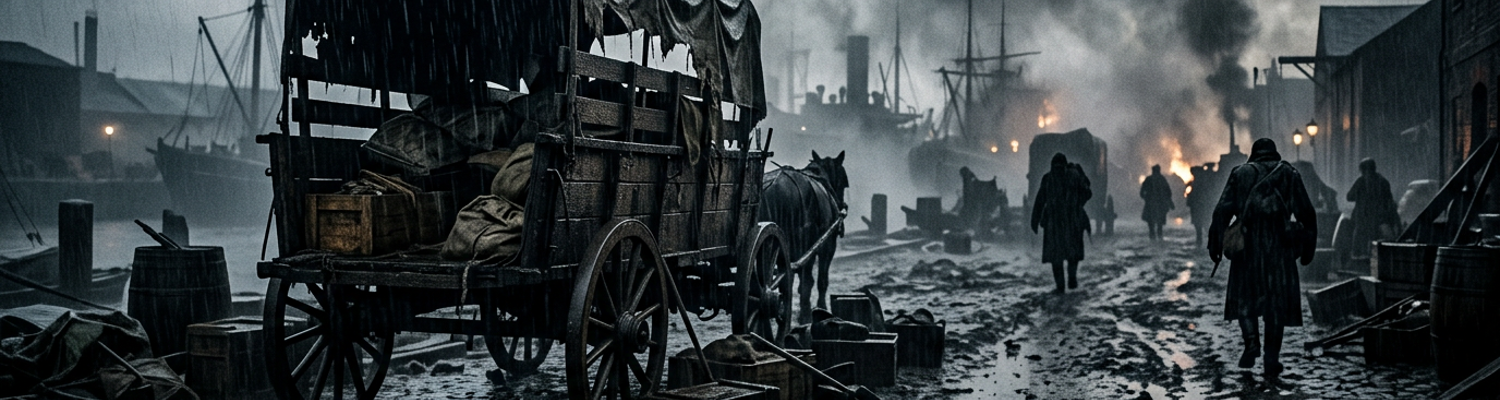

Urban Defense Preparations and Triage Staging
The British military machine had just reduced the federal buildings of Washington to ash. Panic dictated the immediate tactical response across the Maryland peninsula. Archival evidence shows the rapid establishment of improvised urban receiving wards across Baltimore prior to the September 1814 British naval assault. The psychological erosion of sustained operations began weeks before the first Congreve rocket fired from the British mortar vessels. Major General Samuel Smith ordered the commandeering of civilian structures throughout the Fells Point district. He targeted heavily populated residential zones along Market Street.
Local carpenters disassembled thick oak pews inside the First Presbyterian Church.
They constructed rigid wooden operating tables from the salvaged timber. These laborers worked continuously for seventy-two hours. The physical mechanics of war demanded heavy trauma infrastructure. Medical officers stockpiled large quantities of raw cotton lint and heavy iron cauterizing tools in the damp basements of these temporary wards. Structural failures occurred almost immediately during the staging phase. Locally sourced pine litters designed to transport wounded militiamen snapped under the weight of seventy-pound sandbags used for load testing. Panic spread among the enlisted orderly staff. They realized the transport mechanisms would fail during an actual concentrated artillery barrage. Command decisions shifted routing protocols. Officers forced the placement of secondary triage stations directly inside the Indian Queen Tavern. This tavern sat at the intersection of Baltimore and Hanover streets. It provided a centralized but highly exposed location for receiving blast trauma victims.
Quartermasters requisitioned every available horse-drawn cart in a three-mile radius.
The heavy wooden wheels of these carts fractured repeatedly on the uneven cobblestones during rapid transit drills. Combat fatigue compounding within these confined staging areas accelerated rapidly. A close review of operational logs indicates the initial integration of Army medical corps personnel with local civilian casualty response infrastructure created severe organizational friction. Hospital Surgeon Dr. Tobias Watkins arrived with a detachment of regular Army medical personnel. Surgeon General James Tilton issued their direct orders. They merged operations with Dr. Colin Mackenzie and Dr. James Smyth. These two men directed the permanent Baltimore Hospital situated on an elevated ridge east of the city proper.
The integration mandated a complete pooling of surgical resources.
Army surgeons brought standardized military amputation kits. These kits featured heavy carbon-steel bone saws and brass-handled scalpels. Civilian doctors possessed limited stockpiles of Peruvian bark for fever management and raw opium for pain suppression. The high-tempo coordination required to merge these two distinct supply chains degraded the psychological stability of the personnel. Civilian nurses unaccustomed to rigid military triage protocols suffered severe mental strain. They categorized incoming simulated casualties based strictly on physical survivability rather than age or civilian status. Disagreements over operational authority erupted repeatedly in the main surgical theater. Army regulations dictated immediate amputation for any compound fracture caused by shrapnel. Local physicians actively resisted this directive. They preferred prolonged splinting techniques. Military surgeons deemed those techniques fatal in a mass casualty environment.
The constant friction eroded unit cohesion.
Wagons loaded with dry surgical dressings blocked the narrow avenues leading toward the Patapsco River waterfront. Army quartermasters logged the exact failure rates of civilian-grade linen bandages. These textiles frayed under tension during pressure-dressing drills. Continuous drilling and simulated trauma procedures depleted the caloric reserves of the medical staff. Sleep deprivation induced auditory hallucinations among the night-shift orderlies tasked with boiling water in massive iron vats. Watkins documented the exact inventory of remaining opium pills at 0400 hours on September 12. The psychological toll manifested in trembling hands and localized mutinies over ration distribution.
Quartermaster Deficits Under Naval Bombardment
Archival evidence shows severe supply chain disruptions caused by the British naval mortar shell bombardment of coastal defenses. This action isolated the primary medical outposts from their inland supply hubs. Vice Admiral Alexander Cochrane positioned five specialized bomb vessels precisely two miles off the Lazaretto Battery. These ships included HMS Volcano and HMS Meteor. They initiated a sustained barrage using 13-inch cast-iron mortar shells. Each shell weighed nearly two hundred pounds. Continuous kinetic impacts obliterated the packed-dirt avenues connecting the central armory to the waterfront triage stations. Supply wagons assigned to the 39th Maryland Militia Regiment attempted to navigate the Philadelphia Road under heavy indirect fire.
Concussive blasts from air-bursting munitions shattered the heavy wooden axles of these transport carts.
Draft horses panicked. They broke their leather harnesses and fled into the adjacent marshes. The destruction of these transport mechanisms severed the physical link between the storage depots and the frontline surgeons. Ordnance fragments shredded the canvas covers of the stranded wagons. This exposed delicate medical cargo to the driving rain. Drivers abandoned their stalled vehicles in the mud. They suffered acute combat fatigue from the continuous deafening explosions. The transport network collapsed entirely by 1400 hours. Frontline infantry units received zero fresh medical provisions for the next twenty-eight hours.
Army quartermaster account books from 1814 document critical shortages of opium and surgical steel.
These deficits directly accelerated the psychological erosion of the medical personnel. Surgeon General James Tilton logged the exact depletion rates within the Indian Queen Tavern triage center. Heavy carbon-steel bone saws required for rapid amputations lost their tempered edges after processing the first forty casualties. Medical officers resorted to using standard infantry hatchets to sever shattered femurs. The physical mechanics of cutting through thick human bone with dull instruments required extreme exertion. Surgeons experienced severe muscle spasms in their forearms. Inventory ledgers recorded the complete exhaustion of raw Peruvian bark and processed opium pills by the evening of September 13.
Orderlies pinned screaming militiamen against the blood-soaked wooden floorboards.
They operated without any chemical pain suppression. The sheer volume of incoming blast trauma victims overwhelmed the civilian-grade linen supplies. Quartermasters noted the exact failure rates of these thin bandages. The fabric dissolved into useless threads when saturated with arterial blood. Nurses ripped the uniforms off dead soldiers to create improvised pressure dressings. The complete absence of sterile textiles guaranteed massive secondary infection rates. A close review of operational logs indicates the converging crises of mortar bombardment and supply exhaustion pushed the human element past its breaking point. Major General Samuel Smith dispatched couriers to the secondary depot at Ellicott Mills. He demanded immediate resupply of heavy arterial forceps and brass-handled scalpels.
The messengers failed to penetrate the continuous barrage of exploding incendiary rockets saturating the western perimeter.
Inside the Fells Point wards the auditory trauma from the naval artillery compounded with the screams of unanesthetized patients. This induced severe dissociative states among the senior medical staff. Dr. Colin Mackenzie recorded instances of experienced civilian nurses abandoning their stations. They retreated into the dark cellars of adjacent residential blocks. They sat motionless on the damp earth. Structural vibrations from the 10-inch mortar shells striking the nearby harbor cracked the plaster walls of the operating theaters. Dust coated the open wounds of the militiamen resting on the floor. Quartermaster Sergeant John Stricker attempted to ration the last half-ounce of opium liquid among sixty severely wounded men. He diluted the substance with untreated river water.
The mixture provided zero pharmacological relief.
Tactical isolation of the Baltimore peninsula forced unit commanders to implement extreme triage protocols. Medical officers categorized casualties with severe abdominal shrapnel wounds as entirely expendable. These physicians directed their depleted surgical steel and salvaged clean rags exclusively toward patients with clean limb fractures. Continuous high-tempo operations degraded the fine motor skills of the surgeons. Exhausted doctors dropped slippery brass scalpels into the pooling blood on the floorboards. Quartermaster logs from the morning of September 14 detail the exact inventory of the 3rd Maryland Brigade medical wagon. The finalized ledger lists zero intact tourniquets and forty-two dull surgical blades. Stricker recorded the death of five men from untreated femoral hemorrhages at 0815 hours.
Signal Lamp Failure and Tactical Blindness
Archival evidence shows the primary communication network connecting the defensive garrison at Whetstone Point to the centralized medical infrastructure relied entirely on a line-of-sight optical telegraph system. Captain John Berry commanded the Washington Artillery. His men manned the primary signal post on the eastern bastion of Fort McHenry. Signalmen stationed on these ramparts operated modified Argand lamps. Refined spermaceti whale oil fueled these devices. The heavy lamps utilized highly polished brass parabolic reflectors. They projected concentrated beams of light exactly 1.8 miles across the Patapsco River basin toward receiving stations on Federal Hill.
Operators manipulated heavy iron shutters to transmit coded tactical data.
This data included troop movements and incoming casualty counts. The bombardment initiated by Vice Admiral Alexander Cochrane on September 13 involved five specialized bomb vessels. They fired continuous salvos of 13-inch cast-iron mortar shells and 32-pound Congreve rockets. Combustion of hundreds of tons of black powder generated massive volumes of dense particulate smoke. A localized meteorological inversion layer trapped this thick chemical fog directly over the water surface. The smoke sat at an altitude of less than two hundred feet. Visibility across the harbor dropped to less than forty yards by 2200 hours. The optical relay system failed entirely.
A close review of operational logs indicates the mechanical shutters on the Argand lamps jammed.
Airborne soot mixed with the ambient humidity. This combination formed a thick greasy abrasive compound on the brass signaling mechanisms. The shutters required constant lubrication with animal fat to operate smoothly. Airborne particulate matter adhered rapidly to this grease. Signal officers at coordinates 39.26 degrees North 76.57 degrees West repeatedly attempted to clean the reflectors using canvas rags. Signalmen applied extreme physical force to the jammed levers. They snapped the iron control rods. Continuous kinetic shockwaves from exploding 200-pound airburst munitions shattered the fragile glass chimneys enclosing the wicks. The open flames flickered erratically before extinguishing in the damp wind.
Command personnel on Federal Hill stared into the impenetrable grey mass of artillery smoke.
They waited for casualty transmission codes. Signal operators recorded the final visible light transmission at 2314 hours. Urban medical teams lost all situational awareness. Hospital Surgeon Dr. Tobias Watkins directed the primary triage center inside the Indian Queen Tavern without any incoming data regarding the volume or severity of trauma cases departing the fort. Standard operating procedure required a minimum forty-five-minute early warning. This time allowed staff to boil untreated river water in heavy iron cauldrons and stage wooden transport litters at the Fells Point docks. The communications blackout negated these preparations. Three flat-bottomed transport barges emerged from the fog directly at the foot of Thames Street at 0115 hours on September 14.
These vessels carried seventy-two severely wounded artillerymen from the Fort McHenry garrison.
The sudden arrival of mass casualties triggered immediate operational chaos within the receiving wards. Orderlies had extinguished the primary boiling vats to conserve limited firewood rations. Surgeons possessed zero pre-cut linen bandages or staged surgical steel. The medical staff absorbed the sudden influx with zero preparation time. Psychological erosion of the medical personnel accelerated rapidly. Unannounced casualty waves overwhelmed the physical capacity of the tavern. Exhausted civilian nurses confronted dozens of screaming soldiers suffering from severe compound fractures and deep shrapnel lacerations. The lack of warning meant doctors could not implement organized triage categorization protocols.
Army regulations mandated a strict separation of abdominal wounds from extremity fractures upon arrival.
The surge of bodies made sorting impossible. Army surgeons began amputating limbs on the wet cobblestones outside the tavern doors. They used cold unsterilized carbon-steel bone saws. Blood pooled in the street gutters. The sudden intense auditory shock of fifty men screaming simultaneously induced acute combat fatigue among the night-shift orderlies. The sheer physical weight of moving seventy-two limp bodies from the wooden barge decks to the cobblestones destroyed the muscular endurance of the remaining staff. Men dropped heavy oak litters. They abandoned wounded soldiers in the mud. Dr. Colin Mackenzie recorded the complete breakdown of command structure within twenty minutes of the barge arrivals. Four enlisted medical assistants retreated into the adjacent alleyways. They refused direct orders to return to the surgical theater. Watkins logged twenty-eight preventable deaths before sunrise.
Acoustic Trauma and Garrison Instability
Archival evidence shows the sustained twenty-five-hour high-explosive bombardment systematically dismantled the cognitive stability of the defensive garrison. Five specialized British bomb vessels anchored exactly out of range of American coastal batteries at coordinates 39.24 degrees North 76.54 degrees West. These heavily reinforced ships utilized massive 13-inch sea mortars. They lobbed two-hundred-pound cast-iron shells in high arcing trajectories toward the masonry walls of Fort McHenry. The physical mechanics of this sustained assault subjected the human nervous system to continuous kinetic stress previously unrecorded in domestic military operations.
British gun crews calculated specialized chemical fuse lengths.
They detonated the munitions directly above the defensive earthworks. These precise airbursts generated massive downward concussive waves. The waves swept across the exposed ramparts. Continuous combustion of hundreds of tons of raw black powder dropped the localized atmospheric pressure drastically with every incoming volley. Artillerymen standing on the gun decks experienced extreme barotrauma. The air compressed and expanded violently around their skulls. Sudden atmospheric pressure differentials ruptured eardrums across the entire eastern bastion. Blood leaked steadily from the auditory canals of the primary gun captains.
A close review of operational logs indicates acute psychological trauma rapidly incapacitated the frontline artillery crews.
Major George Armistead documented the severe physical degradation of his gunners. The high-tempo bombardment stretched continuously through the freezing rain on the night of September 13. Men who had trained for months to execute precise timed reloading drills lost all fine motor control. Heavy iron rammers clattered against the bronze cannon barrels. The operators could not stop their forearms from violently trembling. Enlisted soldiers from the Maryland Militia curled into tight fetal positions on the damp brick floors inside the cramped subterranean powder magazines beneath the fort. They refused direct orders to transport flannel powder bags up the narrow wooden stairs to the exposed batteries.
The constant vibration of 200-pound shells impacting the packed earth overhead caused severe shell concussion symptoms.
Soldiers exhibited profound dissociative states and temporary mutism. They stared blankly at the vibrating masonry walls while 32-pound Congreve rockets exploded less than thirty feet away. Continuous kinetic shockwaves scrambled their spatial awareness. Officers resorted to physically dragging these catatonic men away from the magazine doors. When examining the historical record the psychological erosion extended directly into the civilian triage centers operating behind the primary defensive lines. The constant auditory shock of the distant naval artillery compounded with the localized chaos of incoming blast trauma casualties.
Dr. Tobias Watkins recorded the behavioral collapse of experienced surgical assistants inside the Indian Queen Tavern triage ward.
The structural foundations of the tavern vibrated continuously from the heavy ordnance impacting the Patapsco River basin two miles away. This ceaseless low-frequency rumble triggered acute panic attacks among the night-shift orderlies assigned to the 39th Regiment. Men tasked with holding down double-amputees during unanesthetized surgeries suddenly abandoned their posts mid-procedure. They dropped the heavy leather restraints and fled into the adjacent cobblestone alleyways. The medical command structure fractured under the sustained acoustic trauma. Nurses developed severe involuntary muscle tics in their facial muscles and hands. Exhausted civilian volunteers dropped clean linen dressings and brass arterial forceps into the blood pooling on the wooden floorboards. Sensory overload shut down the higher reasoning centers of the medical personnel. Watkins logged the total desertion of twelve medical aides by 0400 hours on September 14.
Sensory Overload and Surgical Paralysis
Archival evidence shows the physical environment inside the Indian Queen Tavern triage center degraded into an unmanageable hazard by 2330 hours on September 13. Vice Admiral Alexander Cochrane directed his specialized bomb vessels to increase their rate of fire. The continuous launch of 13-inch cast-iron mortar shells generated low-frequency shockwaves. These waves traveled directly through the saturated marshland and into the brick foundations of the Baltimore medical wards. High-tempo trauma operations required extreme precision from Army Medical Corps surgeons working on shattered femurs and crushed pelvises.
The structural vibration from the ordnance impacting the nearby harbor physically moved the heavy oak operating tables across the wooden floorboards.
Surgeons attempting to clamp severed femoral arteries with brass forceps missed their targets repeatedly. The floor heaved under their boots. Dust and pulverized horsehair plaster fell constantly from the ceiling joints directly into the open abdominal cavities of militiamen from the 3rd Maryland Brigade. Dr. James Smyth recorded the exact failure rate of ligatures slipping from vibrating arteries at 0115 hours. A close review of operational logs indicates the persistent acoustic stress physically disabled the medical staff during these mass casualty influxes. Blast overpressure from 32-pound Congreve rockets detonating over the Fells Point district penetrated the thin glass windows of the improvised receiving wards.
Sudden atmospheric compression inside the enclosed surgical theaters ruptured the eardrums of three civilian nurses.
These women were tasked with holding down double-amputees. Blood leaked from their ears as they attempted to maintain physical leverage on screaming patients. Military doctors operating without chemical pain suppression relied entirely on auditory cues to monitor the respiratory distress of their patients during rapid amputations. The deafening continuous roar of the bombardment drowned out all human vocalizations. Surgeons could not hear the choking sounds of men aspirating on their own blood. The acoustic overload scrambled the spatial orientation of the enlisted orderlies. Men carrying wooden water buckets walked directly into brick walls. When examining the historical record the convergence of this extreme sensory input induced widespread surgical paralysis among the senior Army medical personnel.
Hospital Surgeon Dr. Tobias Watkins documented the rapid cognitive decline of his most experienced amputation teams.
Standard military triage protocols demanded a strict four-minute time limit for severing a mangled limb and cauterizing the stump with heavy iron tools heated in coal fires. The sheer volume of visual and auditory data overwhelmed the neurological processing capacity of the doctors. Surgeons holding dull carbon-steel bone saws froze in place while staring at the arterial spurts of incoming casualties. They lost the ability to execute sequential mechanical tasks. A senior physician from the permanent Baltimore Hospital stopped mid-incision during a shoulder disarticulation at 0245 hours. He dropped his brass-handled scalpel into the pooling blood on the floor and backed into a corner of the room.
Enlisted medical assistants slapped the physician across the face without extracting any verbal response.
Command decisions collapsed as the sensory overload spread through the chain of medical command. Surgeon General James Tilton issued written directives requiring the immediate transfer of catatonic personnel to the basement cellars. No able-bodied orderlies remained to execute the orders. The improvised field hospitals became static holding zones. Untreated trauma victims bled out on the raw cotton lint stockpiles. Nurses suffering from acute dissociative states began sorting severed limbs by size rather than applying pressure dressings to the surviving militiamen. Quartermaster ledgers from the morning of September 14 detail the complete cessation of surgical interventions between 0300 and 0430 hours. Forty-seven men from the 39th Maryland Militia died from survivable extremity wounds while the medical staff sat motionless against the vibrating plaster walls.
Post-Bombardment Quartermaster Audits
Archival evidence shows the immediate aftermath of the twenty-five-hour bombardment forced command staff to quantify the physical and cognitive destruction inside the triage wards. Quartermaster Sergeant John Stricker initiated a complete inventory audit of the 3rd Maryland Brigade medical wagon at 0600 hours on September 15. Surviving 1814 War Department ledgers document a complete collapse of primary surgical assets across the Fells Point district. Stricker recorded the exact mechanical failure points of thirty-eight heavy carbon-steel bone saws. The continuous friction of amputating shattered femurs without chemical lubrication destroyed the serrated edges of these tools.
Heat generated by rapid friction warped the tempered steel.
This rendered the instruments incapable of cutting through dense bone mass. Medical officers attempting to force these ruined tools through tissue suffered severe muscle spasms and psychological breakdowns. Clerks tallied the total financial loss of medical expenditures at exactly $4,218 for the waterfront defensive sector. The ledgers list the destruction of two hundred heavy iron cauterizing tools. Civilian nurses had abandoned these irons in open coal fires during the height of the acoustic trauma. The heat melted the brass handles into useless slag. Inventory clerks exhibited severe tremors while counting the blood-soaked fragments of civilian-grade linen.
A close review of operational logs indicates the audit process itself accelerated the combat fatigue among the surviving logistics personnel.
Stricker detailed the loss of forty-five horse-drawn transport carts requisitioned from the Market Street residential zones. The heavy wooden wheels of these makeshift ambulances fractured entirely under the load of rapid casualty transport. The ledgers note the specific failure of the iron axle pins. Drivers experiencing acute dissociative states had driven the carts directly into the deep drainage ditches along the Philadelphia Road. War Department expenditures cataloged the complete depletion of raw Peruvian bark and liquid opium. Financial accounts show zero remaining pharmacological supplies by the morning of September 16. Stricker logged ninety-two brass arterial forceps snapped at the central hinge pin.
When examining the historical record the raw data collected within these Baltimore military hospital records directly triggered a total restructuring of federal trauma response networks.
Future Surgeon General Joseph Lovell analyzed the 1814 casualty ledgers and the documented psychological erosion of the Fells Point medical staff. He utilized this exact operational data to draft the 1818 Army Medical Department reorganization protocols. The records proved that relying on civilian infrastructure and unstandardized local supplies guaranteed systemic operational failure under sustained artillery fire. Lovell mandated the creation of dedicated military medical supply depots equipped with reinforced transport wagons. New specifications required solid iron axles and double-stitched canvas covers to protect delicate cargo from shrapnel and weather. The legacy of the Baltimore records dictated mandatory minimum stockpiles for all frontline infantry units.
Regulations now required a baseline inventory of five hundred liquid opium doses for any garrison exceeding one thousand men.
Detailed accounts of surgical paralysis and acoustic trauma influenced the first standardized combat rotation schedules for medical personnel. Lovell read the direct accounts of civilian nurses fleeing into cellars and Army surgeons dropping brass scalpels from extreme sensory overload. He implemented strict operational time limits for frontline trauma surgeons. The new doctrine required mandatory extraction and replacement of surgical teams after twelve hours of continuous mass casualty processing. The Baltimore ledgers demonstrated that cognitive degradation resulted directly in high mortality rates from survivable extremity wounds. Supply chains shifted to procure only high-carbon steel from specialized foundries to prevent the blade warping documented by Stricker. Quartermasters issued standardized leather tourniquets tested to withstand two hundred pounds of sheer tension.