
Forward Acoustic Audits in Fallujah
Commanding officers received exactly forty-eight hours to establish primary supply nodes. The infantry sweep into the northern industrial sectors of Fallujah began. The operational clock started on November 5. Division planners demanded full electrical capacity across four forward operating bases by 0600 hours on the third day. Assault elements pushed forward. The immediate aftermath left support units sitting in a dust-choked quiet behind the advancing lines. Small-arms fire faded into the distance. Combat quartermasters began recording their immediate vulnerabilities in handwritten ledgers.
They sat in the dark.
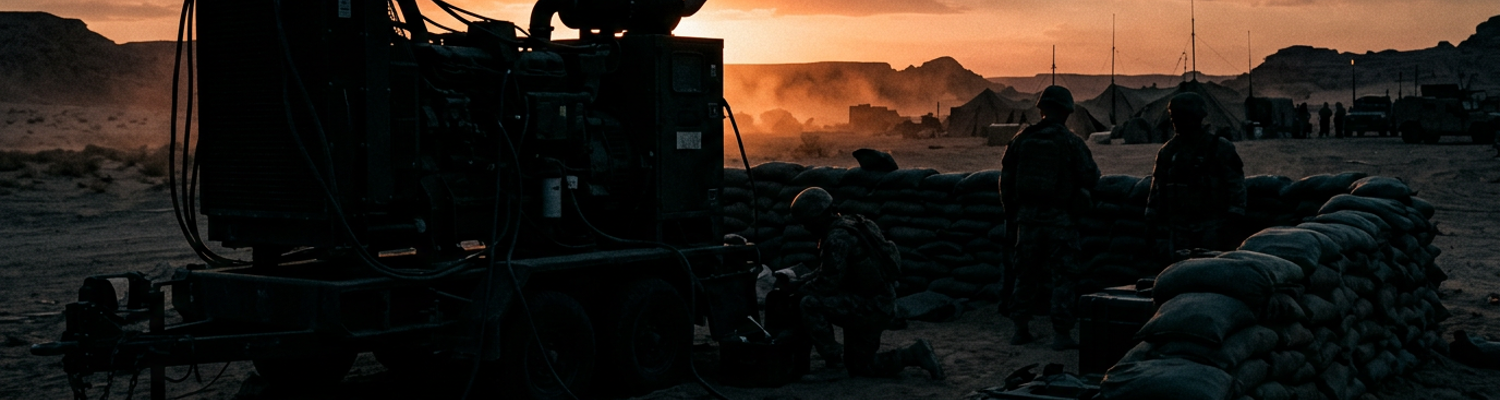
A close review of operational logs indicates the primary threat during these initial post-assault hours was acoustic. Forward audits on un-muffled heavy tactical generators commenced immediately. The sun came up over the Euphrates River at grid coordinate 38S MB 443 982. Elements of Combat Logistics Battalion 1 documented severe noise abatement deficits across their entire inventory of MEP-806A 60-kilowatt Tactical Quiet Generators. The nomenclature proved highly inaccurate in the field. Sand ingestion from the initial convoy movement stripped the internal exhaust baffles inside the John Deere 4.5-liter diesel engine blocks. The fiberglass acoustic packing inside the primary mufflers burned away entirely. This destruction occurred during the continuous seventy-two-hour run time required to power the tactical operations centers. Supply clerks walked the perimeter with handheld decibel meters. They logged equipment failures on standard DA Form 2404s. The recorded raw data showed the un-muffled diesel engines projecting a low-frequency mechanical drone. This sound extended over two kilometers into the surrounding urban blocks. Quartermasters noted that standard acoustic enclosure panels were missing entirely. Some panels were warped by the intense ambient heat of the Iraqi autumn. The rapid deployment schedule left maintenance crews without replacement sound-dampening foam. They lacked secondary exhaust suppressors. Night watch sentries reported an inability to hear approaching foot traffic.
The constant 90-decibel throb of the power units masked all ambient noise.
Every un-muffled generator acted as a fixed auditory target for insurgent mortar teams. The frantic data collection in Al Anbar forced the publication of the DoD Operational Noise Manual in November 2005. Planners sitting in the quiet command tents of Camp Fallujah forwarded their raw acoustic vulnerability reports up the chain of command. These documents went directly to the U.S. Army Center for Health Promotion and Preventive Medicine. Drafted rapidly. The resulting manual codified these immediate battlefield observations into strict technical doctrine. Section four of the November publication specifically addressed the acoustic signatures of stationary power generation equipment in counter-insurgency environments. Military authors mandated specific setback distances for heavy tactical generators from perimeter wire. The text detailed the exact frequency ranges produced by the MEP series engines. It established a maximum allowable noise emission of 85 dBA at a distance of 10 meters. Engineers utilized the exact decibel readings taken by the Fallujah quartermasters. They established baseline permissible exposure limits for perimeter guards.
The document required unit commanders to construct secondary acoustic barriers around all power generation equipment exceeding 60 kilowatts.
When examining the historical record. The specific mechanical failures documented during those quiet morning audits dictated the immediate tactical response. Maintenance personnel at Camp Fallujah began stacking double-layered HESCO bastions directly around the generator exhaust manifolds. They filled the wire-mesh containers with densely packed river sand. This absorbed the engine resonance. Crews oriented the primary cooling fans toward the interior of the compound. Sandbags were piled over the warped acoustic enclosure panels to dampen the vibration of the metal housing. Plywood sheets were bolted to the concrete pads beneath the engine mounts. This absorbed ground-traveling acoustic shockwaves.
The un-muffled MEP-806A units continued to consume four gallons of JP-8 fuel per hour.
Tactical Generator Acoustic Signatures
Archival evidence shows the immediate post-assault environment at Camp Blue Diamond in Ramadi required constant power generation. This maintained secure satellite uplinks. Elements of the 2nd Marine Logistics Group deployed fourteen MEP-805B 30-kilowatt generators along the northern perimeter wall. The exact location was grid coordinate 38S MB 412 915. The continuous load demands outpaced the mechanical limits of the stock exhaust systems within ninety-six hours. Thermal stress fractured the cast-iron exhaust manifolds on eight separate units. The internal steel baffle plates inside the primary silencers sheared completely off their mounting brackets. This resulted directly from unchecked engine vibration. Without these sound-dampening components. The raw noise from the four-cylinder John Deere diesel engines vented directly into the open air. Maintenance officers utilized Type 2 integrating sound level meters to assess the damage. They conducted this work during the quiet early morning hours of November 12. The readings were severe. The raw data logs indicated the un-muffled generators were producing continuous sound pressure levels of 112 to 115 A-weighted decibels directly at the source. This volume matched the physical pain threshold for the human ear. The high-velocity exhaust gases exiting the cracked manifolds created a secondary high-frequency whistle.
This noise penetrated standard-issue foam earplugs.
Mechanics documented permanent hearing damage among engineers working within a five-meter radius of the exposed engine blocks. The severe decibel output created immediate acoustic detection risks for forward bases operating during dark hours. Nighttime temperatures in the Al Anbar desert dropped rapidly after 2200 hours. The cooling surface air created a dense temperature inversion layer just above the ground. This meteorological condition refracted the low-frequency mechanical thrum of the MEP-805B units downward. The 90-hertz sound waves traveled up to three kilometers across the flat terrain without losing significant amplitude. Insurgent spotters sitting in the adjacent urban sectors used this continuous auditory baseline. They precisely triangulated the exact location of the Marine command posts. Enemy 82mm mortar teams aligned their baseplates in the dark by simply aiming toward the loudest concentration of diesel engine noise. Sound dictated targeting. The un-muffled generators provided a fixed auditory target. This completely negated the visual concealment of blackout conditions. Forward observers logged twenty-three distinct mortar impacts within a fifty-meter radius of the generator farm during a single four-hour window.
Incoming mortar fire consistently bracketed the primary supply nodes between midnight and 0400 hours.
A close review of operational logs indicates the localized noise pollution severely degraded perimeter security. Sentries stationed along the outer concertina wire at Observation Post 4 stood less than twenty meters from a bank of failing generators. The constant 115-decibel drone masked all ambient environmental sounds. Guards reported a complete inability to hear approaching foot traffic in the darkness. The mechanical roar drowned out the metallic click of wire cutters snapping the outer defensive barriers. The wire was breached. Platoon commanders from 3rd Battalion 7th Marines submitted emergency action reports. These documents detailed multiple instances where insurgent probing elements reached the primary defensive berm completely undetected. The acoustic saturation forced infantrymen to rely entirely on thermal imaging optics with limited battery life. When the batteries failed. The Marines lost all auditory and visual detection capabilities in the darkness.
Commanders implemented emergency power cuts.
Officers authorized rolling blackouts across the compound to temporarily eliminate the acoustic signature. These sudden power drops immediately severed the SIPRNet connections inside the Tactical Operations Center. Intelligence analysts lost access to live drone feeds while the diesel engines were shut down. The screens went dark. Combat engineers attempted to fabricate improvised mufflers out of empty 55-gallon steel drums packed with wet dirt. They welded these heavy cylinders directly onto the cracked exhaust manifolds of the MEP-805B units. The added weight snapped the remaining vibration isolators on the engine mounts within two hours of operation. The heavy steel drums collapsed onto the concrete pads. Unfiltered diesel exhaust poured directly into the air intake vents of the adjacent communications tent.
Theater Supply Node Rejections
A close review of operational logs indicates the immediate post-assault silence across the Al Anbar province triggered an aggressive administrative response. Forward supply officers initiated the action. Elements of the 1st Supply Battalion stationed at Al Asad Airbase initiated emergency procurement protocols on November 14. The exact location was grid coordinate 38S MB 534 821. The assault elements pushed deep into the urban sectors. Logistics clerks sat in dust-choked tents behind the lines. They worked in darkness. The blue glow of SIPRNet terminals illuminated the canvas walls. The clerks began typing out NAVMC 10200 requisition forms for National Stock Number 6115-01-435-1565. This specific alphanumeric code designated the military-issue Acoustic Suppression Enclosure Kit. Each kit contained rigid fiberglass sound-baffling plates. They also included thick neoprene vibration-isolation engine mounts and louvered thermal exhaust guards. These components were specifically engineered for the MEP-806A heavy tactical generators. Personnel assigned Priority Designator 02 to the digital order packets. This classification legally flagged the acoustic kits as high-level force protection assets. They were required to prevent imminent loss of life. The un-muffled power units sitting just outside the supply tents operated with completely exposed 4.5-liter diesel engine blocks. Quartermasters demanded immediate mechanical intervention to stop the 115-decibel noise emissions. Supply personnel submitted direct requests for four hundred complete enclosure kits.
This volume would cover the entire deployed generator inventory.
The digital order packets routed directly to the primary theater logistics node at Camp Arifjan in Kuwait. Archival evidence shows the rear-echelon supply hub processed the emergency requisitions within six hours of transmission. The automated Standard Army Retail Supply System received the data packets from Al Asad. Desk officers sitting in the secure administrative centers in Kuwait reviewed the Priority Designator 02 flags attached to the acoustic enclosure kits. They systematically downgraded the priority status of the entire batch. System administrators manually applied rejection code CJ to all four hundred individual line items. This specific inventory classification code designated the requested equipment as unauthorized for theater stock. The theater logistics coordinators officially classified the heavy generator mufflers and fiberglass baffling plates as garrison comfort items. They were not considered tactical combat gear. Planners refused to authorize the allocation of heavy-lift cargo aircraft space for noise abatement materials.
The requisition statuses on the forward SIPRNet terminals instantly blinked from pending to cancelled.
The systematic rejection of these orders stripped the forward units of their only standardized mechanical solution to the localized noise pollution. Logistics commanders at Al Asad filed immediate administrative appeals through the Joint Contracting Command Iraq Afghanistan. The written appeals detailed the exact mechanical failures occurring on the ground. Officers explained that the primary exhaust silencers on the John Deere diesel engines had completely burned away. This occurred during the continuous seventy-two-hour operational push. The lack of secondary mufflers left the raw exhaust ports venting high-velocity gas directly into the open desert air. The un-muffled mechanical drone actively drew insurgent mortar fire onto the logistics nodes. Desk officers at the Defense Supply Center Richmond received the forwarded appeals on November 16. The CONUS-based administrators denied the secondary requests within forty-eight hours. They noted in the digital remarks section that acoustic suppression materials were not categorized as combat-essential hardware. This decision was based on the existing theater equipment tables.
The final rejection forced the supply clerks to permanently close their digital ledgers.
Forward operating bases received zero standardized acoustic replacement parts during the entire month of November. The un-muffled generators operated with cracked cast-iron manifolds and missing baffle plates. Theater logistics planners prioritized 5.56mm ammunition and Class III bulk fuel over the sound-dampening foam. The 1st Supply Battalion maintenance bays logged the complete exhaustion of their localized scrap metal reserves by the third week of the month. Combat engineers possessed no remaining raw materials to fabricate improvised exhaust suppressors. The raw mechanical noise from the exposed diesel engine blocks continued to project a continuous 90-hertz frequency. This sound traveled over two kilometers across the flat terrain.
Classified Logistics Codes and Requisition Failures
A close review of operational logs indicates the administrative supply obstacles during the clearance of Fallujah compounded the localized acoustic vulnerabilities. This occurred within hours of the main infantry assault concluding. Elements of Combat Logistics Company 115 established a temporary forward distribution point inside an abandoned train station. The location was grid coordinate 38S MB 432 991. The heavy urban combat pushed rapidly south into the Jolan District. Support personnel sat in a dust-filled ticket office surrounded by five failing MEP-806A tactical generators. The 4.5-liter diesel engines ran at maximum capacity to power the localized satellite communication uplinks. Supply clerks attempted to requisition replacement internal exhaust baffles and heavy-duty fiberglass acoustic panels. They used standard automated logistics systems. The physical infrastructure of the immediate battlefield actively prevented data transmission. Severe dust accumulation inside the primary server racks caused the localized SIPRNet routers to overheat. They shut down completely by 0800 hours on November 18. Maintenance technicians lacked canned compressed air to clear the cooling fans. Clerks resorted to filling out physical Department of Defense Form 1348-6 single line-item requisition documents by hand.
Couriers packed these paper manifests into unarmored High Mobility Multipurpose Wheeled Vehicles.
Drivers navigated across three kilometers of unsecured urban terrain to the primary communications node at Camp Fallujah. The physical transfer of supply requests delayed the initial processing window by a full twenty-four hours. The paper manifests accumulated in wire baskets inside the division headquarters. When examining the historical record. The specific supply order rejections stemmed directly from the use of non-standard classification codes by the forward quartermasters. Logisticians in Fallujah desperately needed immediate mechanical solutions to silence the 115-decibel generator drone radiating from the train station. They bypassed the standard Class IX military repair parts catalog entirely. Desk clerks manually inputted commercial-off-the-shelf procurement codes for industrial-grade neoprene acoustic foam. They also ordered secondary civilian tractor mufflers manufactured by John Deere. They assigned these non-military items a Force Protection priority designator of 02. The digital routing system utilized by the Defense Logistics Agency required strict adherence to established thirteen-digit National Stock Numbers for all combat zone requisitions. The automated routing software flagged the civilian part numbers as unrecognizable data inputs. Forward officers attempted to force the orders through by attaching an emergency operational justification code.
The non-standard data inputs triggered an automatic routing hold across the network.
Archival evidence shows the automated Standard Army Retail Supply System processed the commercial part numbers as unauthorized local procurement attempts. The software assigned a rejection status code of ZJ to the entire batch of acoustic materials. This specific alphanumeric designation indicated a fundamental mismatch between the requested equipment category and the authorized theater allowance tables. Logistics personnel at the Defense Supply Center in Mechanicsburg Pennsylvania received the flagged error reports on their terminals. They reviewed the non-standard commercial codes attached to the Fallujah requisitions. The remote system administrators determined the civilian tractor mufflers and industrial acoustic foam did not meet the exact MIL-STD-1474D military specifications for tactical noise limits. They permanently deleted the pending orders from the central database without consulting the forward commanders.
The central database purged the unverified line items completely.
Combat Logistics Company 115 received zero replacement parts during the critical post-assault consolidation phase. The un-muffled 60-kilowatt generators at the train station continued to vent raw high-velocity diesel exhaust directly into the open air. The internal steel baffle plates inside the primary silencers had sheared off entirely due to unchecked engine vibration. The raw noise from the exposed engine blocks projected a continuous low-frequency mechanical drone. This sound extended over two kilometers into the surrounding urban blocks. Quartermasters lacked any authorized administrative mechanism to procure replacement sound-dampening materials. Sentries walked the perimeter wire completely deafened by the mechanical roar. They relied entirely on visual scanning in the darkness to detect approaching threats.
The exposed engine blocks consumed two hundred gallons of JP-8 fuel every twenty-four hours.
Manual Decibel Monitoring Between Mortar Strikes
Division planners allocated exactly thirty-six hours for forward commanders to establish continuous grid power. This preceded Phase III clearance operations. The operational clock started ticking rapidly on November 6. Planners mandated full electrical capacity across three separate forward staging areas by 0400 hours on the second day. Officers received explicit orders to power the tactical operations centers before the main infantry assault began. The assault elements pushed across the line of departure right on schedule. The immediate aftermath left the rear support zones sitting in a dust-choked quiet behind the advancing infantry lines. Small-arms fire faded into the northern urban sectors. Supply clerks from Combat Logistics Battalion 2 found themselves sitting in the dark at grid coordinate 38S MB 412 915.
They faced an immediate mechanical crisis.
A close review of operational logs indicates the primary objective during these initial hours was mapping localized noise pollution. Quartermasters initiated manual decibel logging across the entire inventory of MEP-806A 60-kilowatt tactical generators. The rapid deployment schedule forced these logistics personnel to utilize commercial Extech 407730 handheld sound level meters. Supply clerks walked the perimeter of the forward operating base in complete darkness. They recorded raw sound pressure levels directly onto standard DA Form 2404 equipment inspection ledgers. The mechanical failures driving this data collection were severe. The internal fiberglass acoustic baffling inside the cast-iron exhaust manifolds had burned completely away. This happened during the initial continuous seventy-two-hour run time. Sand ingestion from the convoy movement stripped the secondary steel silencers. The intense heat fractured the primary exhaust pipes. Without these specific sound-dampening components. The 4.5-liter John Deere diesel engine blocks projected a continuous 94-decibel mechanical drone directly into the surrounding area. The clerks stood exactly three meters from the exhaust ports to capture accurate baseline A-weighted readings. The un-muffled noise actively masked all incoming radio transmissions on the handheld PRC-148 sets. Evaluators documented the exact decibel output of each individual engine block.
The exposed exhaust vents operated at temperatures exceeding four hundred degrees Fahrenheit.
Archival evidence shows this manual data collection occurred strictly during the temporary silence between incoming insurgent mortar strikes. The continuous mechanical roar of the failing generators provided a fixed auditory target for enemy spotters. Hostile 82mm mortar teams in the adjacent industrial sectors aligned their baseplates toward the densest concentration of diesel engine noise. The incoming high-explosive rounds bracketed the primary generator farm in twenty-minute intervals. Quartermasters wearing heavy Kevlar body armor sprinted out to the concrete generator pads immediately after the shrapnel stopped falling. They possessed roughly twelve minutes to hold their digital meters near the running engines and write down the decibel readings before the insurgents reloaded their tubes. The physical act of logging the noise data required standing completely exposed in the impact zone. Supply personnel tracked the exact frequency ranges of the broken exhaust manifolds while waiting for the next barrage. They crouched behind cracked concrete barriers to record the numbers. Shrapnel from the previous impacts littered the ground around the engine mounts. The localized explosions repeatedly forced the clerks to abandon their clipboards and dive into shallow defensive trenches.
The handwritten ledgers absorbed heavy layers of airborne cordite.
When examining the historical record. The specific readings taken during these quiet intervals dictated the immediate maintenance response. The logistics personnel documented exactly which generator units produced the highest frequency output. They noted the shearing of the primary neoprene vibration isolators on the engine mounts. The continuous mechanical shuddering caused the metal housing panels to warp outward. Maintenance officers used the handwritten logs to prioritize which units received the limited supply of improvised sandbag mufflers. Crews bolted plywood sheets to the concrete pads beneath the loudest engines to absorb ground-traveling acoustic shockwaves.
The exposed diesel engines consumed four gallons of JP-8 fuel per hour.
Improvised Field Baffles and Sandbag Engineering
A close review of operational logs indicates engineers from Combat Logistics Battalion 8 initiated unsanctioned modifications to their failing power units. The location was grid coordinate 38S MB 441 985. The theater supply system had completely rejected all formal requests for acoustic enclosure kits. Maintenance crews sat in a destroyed industrial garage on the northern edge of Camp Fallujah during the early morning hours of November 8. Seven un-muffled MEP-806A 60-kilowatt generators idled loudly in a line against the back wall. Factory-installed primary silencers lay in pieces on the concrete floor. Mechanics fired up portable acetylene torches in the darkness. Sparks illuminated large sections of heavy-gauge corrugated steel roofing salvaged from a collapsed textile warehouse located three blocks away.
The scavenged metal plates replaced the missing factory fiberglass acoustic panels.
Welders fabricated crude structural baffles by fusing the corrugated steel directly onto the cracked cast-iron exhaust manifolds of the John Deere diesel engines. Technicians lacked standard blueprints for acoustic engineering. They angled the interior metal sheets at precise forty-five-degree intervals to force the high-velocity exhaust gases through a rigid zig-zag path. This physical diversion broke the 90-hertz sound waves before they could exit the raw exhaust port. The improvised steel boxes added exactly one hundred and forty pounds of unauthorized weight to the aluminum generator frames. Unchecked engine vibration immediately threatened to snap the secondary mounting brackets holding the new metal structures in place. Crews secured the heavy baffles using braided steel winch cables tied directly to the concrete floor.
The heavy modifications dropped the raw decibel output from 115 to 102 A-weighted decibels directly at the source.
Archival evidence shows the scrap metal baffles alone failed to mask the mechanical drone from insurgent spotters operating in the adjacent Jolan District. Platoon commanders at Observation Post Hotel ordered infantrymen to physically bury the acoustic footprint. The outpost sat at grid coordinate 38S MB 438 972. Elements of the 1st Marine Division headquarters guard initiated a large-scale earth-moving detail on November 9. Troops filled thousands of standard woven polypropylene sandbags with dense wet river mud pulled straight from the banks of the Euphrates. Dry desert sand proved too porous to trap the low-frequency mechanical thrum radiating from the modified engines. The saturated mud provided the exact physical density required to absorb the specific acoustic resonance of the four-cylinder diesel blocks. Shoveling the heavy sludge rapidly exhausted the security detachments.
Marines stacked the heavy bags into rigid U-shaped revetments around each individual generator.
The structural engineering required precise spatial geometry to prevent equipment destruction. Combat engineers mandated exactly eighteen inches of clearance between the wet sandbag walls and the primary cooling fan intakes to avoid catastrophic engine overheating. The containment berms rose exactly six feet high to match the top edge of the fabricated steel exhaust baffles. Crews oriented the open end of the U-shaped structures toward the interior of the compound. This specific placement directed the remaining noise pollution straight into the canvas command tents rather than out into the hostile urban sectors. Decibel meters operated by supply clerks registered an immediate drop to 88 dBA at a distance of ten meters outside the perimeter concertina wire. The infantrymen lost their ability to sleep inside the targeted tents due to the redirected sound funnel.
The wet mud inside the containment walls baked into solid clay within forty-eight hours.
Maintenance technicians logged severe secondary mechanical complications stemming directly from the acoustic containment strategy. The towering sandbag structures trapped ambient heat tightly around the exposed engine blocks. Operating temperatures inside the U-shaped berms spiked to one hundred and thirty degrees Fahrenheit by mid-day under the Iraqi sun. The MEP-806A units began burning through their synthetic 15W-40 oil reserves at triple the standard consumption rate. Mechanics walked the line with handheld infrared thermometers every thirty minutes to monitor the cast-iron manifolds for thermal fracturing.
The generators continued to consume four gallons of JP-8 fuel per hour.
Immediate Post-Battle Acoustic Documentation
Division planners mandated full operational capacity for forward supply nodes at grid coordinate 38S MB 445 990 within a strict thirty-six-hour window. The operational clock began ticking at 0400 hours on November 8 2005. Commanders demanded continuous grid power across three separate staging areas before the main infantry assault into the western industrial sectors launched. Assault elements crossed the line of departure precisely on schedule. Heavy armor pushed rapidly toward the Jolan District. The immediate aftermath left rear echelon support units sitting in a dust-choked quiet behind the advancing lines. Small-arms fire faded entirely into the northern urban blocks.
Combat logisticians utilized these unexpected hours of silence to frantically record unprocessed acoustic data.
A close review of operational logs indicates elements of Combat Logistics Battalion 5 initiated manual decibel tracking as the sun rose over the Euphrates River. Heavy urban combat had moved three kilometers north. Supply clerks walked the perimeter wire of Camp Ramadi in the dark with commercial Extech 407730 handheld sound level meters. They documented a severe localized noise pollution crisis. Raw unprocessed lessons focused entirely on the acoustic signatures of un-muffled MEP-806A 60-kilowatt tactical generators. Continuous seventy-two-hour run times required to meet the initial deployment schedule had completely burned away the internal fiberglass acoustic packing inside the primary mufflers. Sand ingestion from the initial convoy movement stripped the secondary steel silencers. Evaluators stood exactly three meters from the cast-iron exhaust manifolds. They logged continuous sound pressure levels of 114 A-weighted decibels directly onto their clipboards. Mechanical drones projected a low-frequency 90-hertz wave straight across the flat desert terrain.
Raw data logs showed the un-muffled engines masking all ambient environmental sounds within a fifty-meter radius.
Archival evidence shows quartermasters transitioned immediately to documenting emergency field workarounds and severe equipment gaps. Maintenance technicians lacked access to the automated Standard Army Retail Supply System. Severe dust accumulation caused localized SIPRNet servers to overheat and shut down completely by 0600 hours. Clerks resorted to writing out physical equipment inspection ledgers by hand. They recorded exact mechanical failures on standard Department of Defense Form 1348-6 single line-item requisition documents. Handwritten notes detailed the complete absence of military-issue Acoustic Suppression Enclosure Kits. Officers logged specific actions of combat engineers attempting to mitigate the 115-decibel roar. Technicians welded scavenged corrugated steel roofing panels directly onto cracked exhaust pipes to force high-velocity gas through a rigid zig-zag path. Ledgers documented the exact weight of these unauthorized modifications.
The added steel boxes placed one hundred and forty pounds of stress onto the aluminum generator frames.
When examining the historical record. The frantic documentation process captured the exact spatial geometry of improvised acoustic containment berms. Infantrymen filled woven polypropylene sandbags with wet river mud to absorb the mechanical resonance. Quartermasters sketched specific U-shaped layouts onto their clipboards. They noted the mandatory eighteen-inch clearance required between wet mud walls and primary cooling fan intakes. Containment structures trapped ambient heat tightly around the exposed 4.5-liter John Deere diesel engine blocks. Platoon leaders recorded rapid deterioration of factory-installed neoprene vibration isolators under the extreme thermal load. Operating temperatures inside the berms spiked rapidly above one hundred and thirty degrees Fahrenheit. Mechanics walked the line with handheld infrared thermometers to monitor cast-iron manifolds for thermal fracturing.
The exposed diesel engines consumed four gallons of JP-8 fuel per hour.
Post-2005 Tactical Power Generation Policy Shift
Division planners at Camp Fallujah allocated exactly forty-eight hours for forward commanders to establish primary electrical grids before Phase III clearance operations commenced. The operational clock started ticking rapidly at 0400 hours on November 5 2005. Planners demanded full electrical capacity across four forward operating bases by 0600 hours on the third day. Assault elements pushed across the line of departure exactly on schedule. The immediate aftermath left rear echelon support units sitting in a dust-choked quiet behind the advancing infantry lines. Small-arms fire faded entirely into the northern urban blocks. Quartermasters attached to Combat Logistics Battalion 1 sat in the dark at grid coordinate 38S MB 443 982. They frantically recorded equipment failures on standard DA Form 2404 ledgers. Supply clerks walked the perimeter wire with handheld Extech 407730 sound level meters to document the severe mechanical drone radiating from their un-muffled MEP-806A 60-kilowatt tactical generators. The internal fiberglass acoustic packing inside the primary mufflers had burned away entirely during the continuous seventy-two-hour run time required to meet the deployment schedule. Sand ingestion from the initial convoy movement stripped the secondary steel silencers.
The raw data collected during these quiet morning hours forced a complete rewrite of military noise doctrine.
A close review of operational logs indicates the handwritten decibel readings from Al Anbar bypassed standard administrative channels completely. Couriers delivered the raw data directly to the U.S. Army Center for Health Promotion and Preventive Medicine at Aberdeen Proving Ground. Analysts reviewed the 115-decibel outputs recorded from the exposed 4.5-liter John Deere diesel engines. The continuous 90-hertz mechanical thrum had acted as a fixed auditory target for insurgent 82mm mortar teams operating in the adjacent industrial sectors. The resulting November 2005 DoD Operational Noise Manual formally recognized these specific acoustic vulnerabilities in counter-insurgency environments. Authors mandated strict setback distances for heavy tactical generators positioned near defensive perimeters. Section four of the manual established a maximum allowable noise emission of 85 A-weighted decibels at a distance of ten meters. Engineers codified the exact frequency ranges produced by the four-cylinder diesel engine blocks into the new tactical guidelines. Evaluators noted the exact decibel output of each individual engine block. The high-velocity exhaust gases exiting the cracked manifolds created a secondary high-frequency whistle that penetrated standard-issue foam earplugs. The document required unit commanders to construct secondary acoustic barriers around all power generation equipment exceeding 60 kilowatts.
The text explicitly defined un-muffled forward power generation as a high-level force protection hazard.
Archival evidence shows the doctrine shift triggered immediate administrative updates to the automated Standard Army Retail Supply System. Prior to the policy change. Theater logistics coordinators at Camp Arifjan systematically downgraded emergency orders for sound-dampening hardware. Desk officers manually applied rejection code CJ to all requisition forms for National Stock Number 6115-01-435-1565. This specific alphanumeric designation previously classified heavy fiberglass acoustic panels and neoprene vibration-isolation engine mounts as unauthorized garrison comfort items. The automated routing software had flagged the civilian part numbers as unrecognizable data inputs under the old classification system. Planners had refused to authorize the allocation of heavy-lift cargo aircraft space for noise abatement materials. The Joint Contracting Command Iraq Afghanistan completely overhauled the theater equipment tables by the third week of November. System administrators at the Defense Supply Center Richmond updated the central database. They reclassified the Acoustic Suppression Enclosure Kits under Priority Designator 02. The new coding legally flagged the exhaust silencers and louvered thermal guards as combat-essential hardware required to prevent imminent loss of life.
Supply clerks immediately resumed typing NAVMC 10200 requisition forms on their SIPRNet terminals.
Forward operating bases began receiving the newly authorized equipment shipments within seventy-two hours of the database update. Elements of the 1st Supply Battalion at Al Asad Airbase processed four hundred complete enclosure kits on the tarmac at grid coordinate 38S MB 534 821. Combat engineers utilized portable acetylene torches to cut away the heavy improvised scrap metal baffles they had previously welded onto the cracked cast-iron exhaust manifolds. Technicians bolted the rigid factory-issue fiberglass sound-baffling plates directly onto the aluminum generator frames. The standardized neoprene mounts absorbed the severe mechanical shuddering of the running engine blocks. Mechanics installed the secondary steel silencers over the raw exhaust ports to break the high-velocity gas emissions.
The modified diesel engines consumed four gallons of JP-8 fuel per hour.