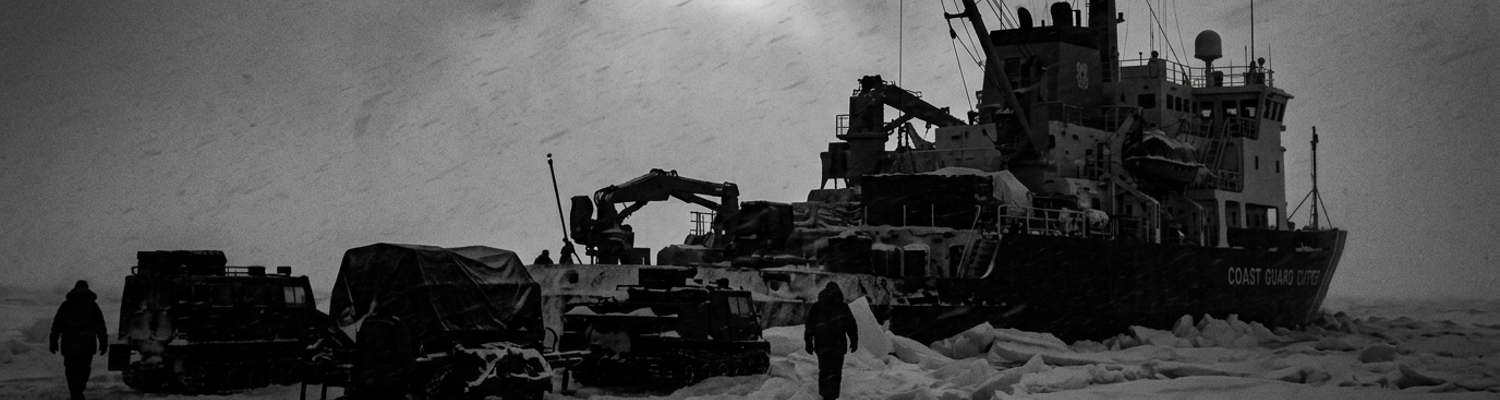

Early 1980 North Atlantic Embargo Patrols
Deploying unarmored vessels into the Greenland-Iceland-United Kingdom gap during the winter of 1980 resulted in immediate mechanical failure. Archival evidence shows that United States Coast Guard Hamilton-class cutters operated directly within the northern littoral sectors bordering the Norwegian and Barents Seas. These 378-foot high-endurance ships were designed for open-ocean weather stations. They were not built to break sea-ice at latitude 70 degrees North. Sub-zero surface temperatures degraded the unarmored hulls of vessels like the USCGC Morgenthau and USCGC Boutwell. Brash ice up to three feet thick clogged the main sea-water suction strainers located below the waterline. The resulting blockage caused the Fairbanks-Morse opposed-piston diesel engines to overheat. The engines automatically shut down within minutes due to a complete lack of cooling flow.
Engine room crews spent 18-hour shifts standing in freezing bilge water.
They manually disassembled the heavy bronze strainer housings using oversized chain wrenches. The engineers deployed high-pressure steam lances to clear the solid ice blocks plugging the intake pipes before the primary generators tripped offline. A close review of operational logs indicates that the pneumatic control lines for the variable-pitch propellers began freezing solid by the second week of January.
The ship lost all astern propulsion capability.
Moisture inside the copper air lines crystallized. Engineers wrapped the exposed pneumatic tubing with improvised heat trace cables stripped directly from the electrical junction boxes of the galley ovens. They insulated the makeshift repairs using asbestos lagging torn from redundant exhaust piping deep in the aft steering compartment. This field modification kept the propeller pitch controls functioning just long enough to prevent the 3,000-ton ship from striking the coastal ice shelves near the Svalbard archipelago. Down in the auxiliary machinery rooms, the ship evaporators failed entirely to produce fresh water. The intake temperature of the ocean dropped below 29 degrees Fahrenheit. This caused the brine pumps to cavitate violently.
Mechanics cannibalized localized heating elements from the crew showers.
They used these elements to pre-heat the evaporator feed lines. Cutter crews enforced strict maritime embargo surveillance amidst heightened Cold War tensions following the December 1979 Soviet military incursion into Afghanistan. The United States government halted grain and high-technology shipments to the Soviet Union. Coast Guard boarding teams received orders to intercept and physically inspect suspicious Soviet-flagged merchant freighters. Vessels belonging to the Far Eastern Shipping Company attempted to navigate the obscured shipping lanes along the jagged ice edge. The sub-zero climate heavily degraded standard interception protocols. Surveillance operations required continuous surface search radar coverage to differentiate between drifting icebergs and 500-foot cargo ships. The extreme cold caused the heavy lubricating grease inside the SPS-64 radar antenna pedestals to solidify into a rigid block.
Electronics technicians climbed the icy mainmast in 50-knot gale winds.
They lacked authorized safety harnesses. The technicians applied handheld butane blowtorches directly to the rotating gearboxes. They melted the frozen grease just enough to allow the antenna to complete a few sluggish rotations before freezing again. Down in the combat information center, operations specialists plotted the intercepted Soviet cargo vessels on paper maneuvering boards using wax pencils. The early automated tracking computers constantly short-circuited from condensation dripping off the uninsulated bulkheads.
The boarding parties departed the cutter in 26-foot motor surfboats.
They carried M1911 sidearms stripped of all internal lubricating oil. This prevented the firing pins from freezing in the open position.
Intelligence Tracking of European Terror Networks
Assigning a Coast Guard cutter to hunt domestic European insurgents through a Category 3 Arctic hurricane using electronics designed for tropical latitudes pushed the equipment beyond its design limits. By late January 1980, the United States Coast Guard embargo patrols directly coincided with highly classified North Atlantic intelligence tracking of West German neo-Nazi terror networks. Archival evidence shows that elements of the outlawed Wehrsportgruppe Hoffmann had begun utilizing civilian fishing trawlers. They used these vessels to smuggle stolen Belgian FN FAL rifles and military-grade hexogen explosives out of Bremerhaven. These 60-foot wooden-hulled vessels attempted to bypass standard customs checkpoints by sailing straight into the severe winter storm systems blanketing the Faroe Bank Channel near coordinates 61 degrees 20 minutes North, 5 degrees 0 minutes West.
United States European Command ordered the USCGC Gallatin to intercept a specific suspected smuggling trawler designated Target 404.
The cutter engineering department suddenly found themselves responsible for maintaining the delicate electronic surveillance suite required to find a tiny wooden boat hiding inside thirty-foot sea swells. The primary AN/SPS-40 air-search radar transmitter immediately failed when the ambient temperature inside the unheated mast house dropped to nine degrees Fahrenheit.
The freezing temperatures caused the dielectric fluid inside the high-voltage capacitors to thicken into a useless paste.
Electronics technicians stripped the faulty capacitors from the transmitter cabinet. They carried them down to the main boiler room. They rested the metal components directly on the high-pressure steam lines to liquefy the internal fluid. Once the fluid reached operating viscosity, the technicians sprinted up five decks to reinstall the parts before the arctic air could freeze them again. This cycle repeated every forty-five minutes for three consecutive days just to keep the radar emitting a weak pulse. The neo-Nazi smuggling vessels utilized the heavy sea clutter on the radar scopes to mask their movements toward the Shetland Islands. Coast Guard operations specialists had to manually tune the receiver gain dials continuously to filter out the false returns generated by massive ice floes.
A single missed radar sweep meant losing the target vessel in the blizzard.
Hunting these specific political extremists required continuous data streams from shore-based listening posts. Tactical radio links maintained real-time coordination with Allied intelligence monitoring maritime routes. The cutter relied on the AN/WSC-3 UHF satellite communications transceiver to receive encrypted target updates from the British Government Communications Headquarters facility in Cornwall and the West German Bundesnachrichtendienst. The incoming transmissions contained precise coordinate geometry calculated by Royal Air Force Nimrod maritime patrol aircraft flying high above the storm layer. Maintaining this secure link proved exceptionally difficult as heavy rime ice accumulated on the ship OE-82 satellite antenna radomes.
The three-inch-thick ice layer severely attenuated the incoming ultra-high-frequency signals.
Radiomen first noticed the problem when the KW-7 cryptographic teletype machines began printing pages of garbled characters. A close review of operational logs indicates that the mechanical components of the cryptography gear also succumbed to the extreme environment. Processing the daily decryption keys required the KW-7 units to pull brittle Mylar punch tape through a series of fast-moving mechanical relays. The unheated crypto room sat directly against the ship exterior steel bulkhead. The ambient cold caused the tape to snap repeatedly under the tension of the feed rollers. Every time the tape broke, the entire decryption sequence aborted. This forced the radiomen to request a full retransmission of the target data from the shore stations. Communications technicians completely disassembled the feed mechanisms. They bypassed the tensioning springs using rubber bands scavenged from office supplies.
They stood next to the machines for twelve-hour shifts.
They manually fed the fragile tape through the reader heads to prevent tearing. Up on the weather deck, damage controlmen attached climbing harnesses to the main superstructure. They leaned out over the freezing ocean with heavy wooden mallets. They physically smashed the ice buildup off the satellite antennas every hour. The resulting clear signal allowed the Allied intelligence coordinators to vector the Gallatin directly into the path of Target 404 just as the trawler engine failed off the coast of the Faroe Islands.
The boarding team seized four hundred rifles stored in uninsulated fish holds.
Arctic Gale Operations and Pack Ice Damage
Archival evidence shows that on February 14, 1980, a sudden collapse in barometric pressure over the Norwegian Basin generated an unforecasted severe gale. Sustained winds of sixty-five knots pushed massive concentrations of multi-year pack ice southward from the Barents Sea directly into the established Coast Guard embargo patrol grid. The USCGC Chase was actively conducting surveillance tracks near coordinates 65 degrees 15 minutes North, 4 degrees 30 minutes East when the storm front hit. Radar operators monitoring the AN/SPS-64 surface search scopes watched as heavy ice floes measuring up to two acres across converged on the cutter position at a drift rate of three knots.
The ship commanding officer ordered an immediate course reversal.
He signaled the engine room for full ahead flank speed to escape the converging ice field. Steering away from the hazard proved impossible. Escape routes vanished. The dense brash ice completely choked the open water within forty-five minutes. It packed tightly around the rudder and propeller shafts. Heavy ice floes physically wedged against the twin rudders. This caused the hydraulic steering rams in the aft steering compartment to blow their high-pressure seals. Hydraulic fluid sprayed across the deck plates. The helmsman had to shift control to the emergency manual steering wheel. Twin Fairbanks-Morse diesel engines strained against the sudden resistance. The main reduction gears vibrated violently enough to shatter the glass gauge covers in the main control booth.
The unarmored 378-foot vessel was trapped inside a grinding field of frozen seawater.
A close review of operational logs indicates that ambient temperatures plummeted to negative twenty-two degrees Fahrenheit as the storm intensified. Extreme winds ripped across the exposed forecastle. They immediately threatened both the vessel hull integrity and all topside deck equipment. Constant physical impacts from the heavy pack ice began buckling the transverse steel framing along the ship waterline near the forward peak tank. The cutter hull consisted of three-eighths-inch high-tensile steel designed for slicing through open ocean swells. It offered almost no resistance against thousands of tons of wind-driven ice. Sea water leaked through the compromised hull plating. It immediately froze upon contact with the interior bulkheads in the forward berthing compartments.
The metal warped.
Down in the forward damage control locker, engineers worked frantically to shore up the failing steel plates. Shoring teams had to measure and cut the timbers by hand using crosscut saws. The electrical outlets in the forward compartments had shorted out from the saltwater intrusion. Working by the light of battle lanterns, the men stood in knee-deep freezing water to position the shoring bats. Damage controlmen braced heavy 4x4 Douglas fir timbers against the buckling frames. They drove wooden wedges into the splitting weld seams using heavy steel mauls. They attempted to distribute the kinetic force of the ice impacts across the ship internal skeletal structure.
The freezing water steadily filled the lower chain locker.
The primary submersible dewatering pumps short-circuited in the subzero temperatures. Topside conditions deteriorated just as rapidly under the punishing weather. The Welin-MacLachlan gravity davits securing the cutter primary motor surfboats froze completely solid. Heavy lubricating grease inside the mechanical gearboxes turned into a rigid block. This prevented the davit arms from swinging outward. The gears seized. The anchor windlass brake bands crystallized in the extreme cold. They shattered into jagged pieces under the tension of the heavy anchor chain. Without the brake bands, the starboard anchor chain began paying out uncontrollably. Heavy sparks flew across the forecastle as the metal links ground against the hawsepipe.
To stop the runaway anchor chain, deckhands had to manually engage the chain stoppers using sledgehammers.
They physically struck the pelican hooks into place while dodging the wildly whipping steel links. Machinery technicians tied safety ropes to the superstructure and crawled out onto the ice-covered weather decks carrying oxy-acetylene cutting torches. Keeping the torch strikers lit in sixty-five-knot winds required the technicians to shield the spark assemblies inside their heavy foul-weather parkas. They applied the open flames directly to the cast-iron gear casings of the boat davits to liquefy the frozen grease inside. The intense heat differential between the arctic air and the cutting torches caused several of the cast-iron housings to crack open with loud metallic fractures.
The technicians wrapped the fractured metal casings with heavy canvas straps.
They continued heating the internal gears just enough to lower the rescue boats to the main deck level.
Primary Antenna Shear and Tactical Communications Failure
Attempting to maintain high-frequency radio links while trapped inside a collapsing ice field presented severe mechanical challenges. Archival evidence shows that on the evening of February 14, the USCGC Chase suffered catastrophic topside structural damage. Multi-year pack ice converging near coordinates 65 degrees 15 minutes North, 4 degrees 30 minutes East did not just compress the lower hull plates. Massive frozen slabs began overriding the ship port quarter as the cutter rolled thirty degrees under the weight of the encroaching floes. A three-hundred-ton block of blue ice rode up over the low freeboard of the helicopter flight deck.
This solid mass slammed directly into the AS-2537/SRK high-frequency antenna array mounted along the portside railing.
Shifting pack ice sheared the cutter primary HF antenna array during storm conditions. It ripped the hardware completely off its heavy steel deck mounts. Thirty-five-foot fiberglass whip antennas snapped cleanly at their ceramic base insulators. Shards of shattered fiberglass and jagged copper radiating elements scattered across the freezing deck plates. The ice block continued its forward momentum. It crushed the heavy steel brackets flat against the ship aluminum superstructure. Primary transmission cables were carrying high-voltage radio frequency energy at the exact moment of impact. When the array sheared off, the exposed RG-213 coaxial feed lines short-circuited against the wet steel deck. High-amperage electrical arcs discharged across the aft weather decks.
Sparks fell continuously until the automated safety relays in the main radio room finally tripped the Collins 208U-10 kilowatt power amplifiers offline.
The cutter went completely dark across all long-range tactical frequencies. The physical destruction of the antenna array completely severed long-range command communications. A close review of operational logs indicates that the radiomen instantly lost all contact with Naval Communications Station Keflavik and Coast Guard Atlantic Area headquarters in Portsmouth. URC-9 transceivers emitted only static. Severed transmission lines meant the ship could not broadcast distress signals or send encrypted situation reports regarding their trapped status in the Norwegian Basin. The ship commanding officer ordered the communications division to establish an emergency long-wire antenna immediately. Electronics technicians broke into the main electrical locker on the second deck. They requisitioned eight hundred feet of insulated copper grounding wire.
Crew members carried the heavy spools into the radio transmitter room.
Technicians used wire strippers to expose the raw copper core. They spliced the wire directly into the surviving output ports on the back of the dead power amplifiers. They bypassed the destroyed coaxial connectors using heavy electrical tape and steel hose clamps. Rigging the makeshift external antenna required the crew to crawl out onto the exposed weather decks in sixty-five-knot winds. Petty officers tied the copper wire around their waists and climbed the icy vertical ladders toward the mainmast. Severe storm conditions coated the metal rungs in three inches of hard rime ice. Technicians used heavy steel marlinspikes to chip away the frozen buildup just to secure their handholds. They anchored the forward end of the copper wire to the highest steel halyard on the mast house.
A second team dragged the remaining spool of wire aft toward the helicopter netting.
Freezing seawater washed over the port rail continuously. Heavy waves knocked the men onto their hands and knees as they worked. They lashed the aft end of the wire to the steel flight deck stanchions using nylon parachute cord scavenged from emergency survival kits. Down in the radio room, radiomen attempted to tune the transmitters to match the improvised antenna electrical impedance. Operators manually adjusted the heavy ceramic tuning coils inside the transmitter cabinets while staring at the standing wave ratio meters. The severe mismatch in electrical resistance caused the internal vacuum tubes to glow white-hot inside their glass casings.
The glass envelopes on two of the primary tubes shattered from the extreme heat.
Communications personnel immediately initiated a hot-swap procedure to replace the destroyed components. They pulled spare vacuum tubes from the padded storage lockers. They seated them into the scorched sockets using thick leather welding gloves to avoid burning their hands. Technicians bypassed the automated safety interlocks on the Collins amplifiers by wedging wooden pencils into the mechanical relay switches. This forced the transmitters to broadcast at maximum power despite the dangerous impedance mismatch. The improvised wire antenna began radiating a weak radio-frequency signal through the blizzard. That signal barely reached the receiving stations in Iceland. Shore-based operators reported the transmission quality as heavily degraded and barely legible.
Radiomen on the cutter manually keyed the Morse code telegraph pad to transmit their exact latitude and longitude coordinates.
Subzero Frontline Triage of Injured Cutter Crew
Archival evidence shows that the structural collapse of the USCGC Chase forward hull plating on February 14 resulted directly in mass casualties. When the transverse steel framing buckled under the kinetic force of the multi-year pack ice at coordinates 65 degrees 15 minutes North, 4 degrees 30 minutes East, the interior shoring systems failed explosively. Heavy 4x4 Douglas fir timbers snapped under the external pressure. Jagged steel shrapnel tore through the forward peak tank. Two damage controlmen sustained immediate compound fractures to their lower extremities when a primary transverse support beam gave way. The collapsing steel pinned their legs directly against the freezing deck plates.
Up on the exposed forecastle, deckhands attempting to manually engage the shattered anchor windlass chain stoppers in negative twenty-two-degree Fahrenheit temperatures suffered severe blunt force trauma.
A wildly whipping steel anchor link struck a petty officer in the left side of his chest.
The impact fractured three ribs and punctured his lung. The extreme cold inflicted equally severe physiological damage. Machinery technicians working to cut the frozen boat davits with oxy-acetylene torches had removed their heavy insulated gloves to operate the small brass striker wheels. Bare skin exposure to the sixty-five-knot gale winds caused rapid tissue freezing within sixty seconds. Ice crystals formed inside the cellular structure of their fingers. Blood flow to the extremities ceased entirely as their circulatory systems shunted warmth to core organs. By the time the technicians retreated to the interior passageways, their hands were completely rigid and gray. Shipboard medical personnel suddenly faced an influx of seven critically injured crew members.
The standard casualty collection point in the forward wardroom was already flooding with subzero seawater from the hull breaches.
Corpsmen relocated the triage center to the aft chief petty officer mess. They dragged the wounded men up two steep incline ladders on rigid wire-basket Stokes litters. The severed high-frequency antenna array left the medical team completely isolated. A close review of operational logs indicates that all attempts to establish a tactical radio link for shoreside surgical guidance failed. Without the Collins 208U-10 kilowatt power amplifiers, the corpsmen could not transmit distress signals to the duty flight surgeons at Naval Communications Station Keflavik. They lost all access to the Armed Forces Radiobiology Research Institute trauma consultation network. Standard Coast Guard doctrine required real-time physician authorization before independent corpsmen could perform invasive procedures like chest tube insertions or complex orthopedic reductions.
The medical team had to bypass these regulations.
They managed internal hemorrhaging relying solely on outdated physical field manuals. The ship primary electrical grid fluctuations caused the sickbay autoclave to short-circuit. This eliminated their ability to sterilize surgical instruments using pressurized steam. The senior corpsman requisitioned portable butane stoves from the aviation survival lockers. He boiled water in deep stainless steel galley pots. He submerged hemostats, scalpels, and large-bore needles into the rolling boil for twenty minutes. To treat the compound tibia fractures, the medical team scavenged rigid aluminum angle iron from the damaged helicopter netting. They cut the metal with heavy hacksaws to fashion improvised traction splints. Securing the shattered bones required tearing heavy canvas seabags into strips to use as compression bandages.
Treating the petty officer with the tension pneumothorax demanded immediate invasive action without any anesthetic support.
The senior corpsman utilized a sterilized fourteen-gauge intravenous needle to puncture the patient chest wall through the second intercostal space. This manual decompression released the trapped air cavity pressing against the sailor heart. Managing the severe frostbite casualties required equally desperate mechanical improvisation. Standard rapid rewarming protocols dictate submerging the affected tissue in circulating water heated precisely to 104 degrees Fahrenheit. The ship hot water heaters in the aft auxiliary spaces had failed hours earlier when the brine pumps cavitated. Engineers tapped directly into the low-pressure steam lines running beneath the mess deck. They bled off trace amounts of hot vapor into a fifty-gallon plastic trash can filled with freezing seawater. A machinery technician stood next to the barrel with a bimetallic industrial thermometer.
He manually opened and closed the brass steam valve every three minutes to regulate the water temperature.
The corpsmen submerged the technicians rigid hands into the heated barrel. As the necrotic tissue thawed, extreme pain registered in the reanimated nerve endings. The medical personnel broke open the controlled substance safes using a steel pry bar because the combination dials had jammed in the cold. They administered ten milligrams of morphine sulfate intramuscularly to each frostbite victim using pre-filled glass syrettes.
Improvised Engineering and Aircraft Battery Splicing
Attempting to rewire a 3,000-ton cutter primary electrical grid during a Category 3 Arctic hurricane pushed the engineering staff to their absolute physical limits. Archival evidence shows that by the early hours of February 15, the USCGC Chase suffered a total ship-wide blackout. The 450-volt main power buses located in the forward auxiliary machinery space short-circuited when freezing seawater breached the buckled hull plates at coordinates 65 degrees 15 minutes North, 4 degrees 30 minutes East. Saltwater intrusion caused a massive electrical arc across the primary switchboard. All three Fairbanks-Morse diesel generators tripped offline instantly to prevent catastrophic engine fires.
The automated breakers locked open.
Restoring propulsion and internal heating required routing auxiliary power past the flooded compartments. Electricians mates climbed out onto the exposed weather decks carrying thick coils of 400-amp emergency shore power cables over their shoulders. These heavy black cables usually connected the ship to pier-side generators during in-port maintenance at warm-water naval bases. Ambient temperatures hovered at negative twenty-two degrees Fahrenheit. The men crawled on their stomachs across the ice-coated steel plates to reach the aft emergency power distribution panels. Technicians worked on open decks to bypass damaged main power buses while sixty-five-knot winds threatened to blow them over the port railing. They had to physically drag three hundred feet of the heavy line along the portside weather deck. They wove it through the steel safety stanchions to prevent the cables from washing overboard.
The heavy rubber insulation on the emergency cables turned completely rigid in the subzero wind.
Technicians used heavy steel hacksaws to cut through the frozen rubber casing just to expose the internal copper wiring. The low temperatures caused the rubber to fracture into rigid shards beneath the saw blades. Stripping the thick cables required the electricians to remove their insulated winter gloves. The men manipulated the stiff copper strands with bare hands as freezing waves crashed continuously over the starboard quarter. Deck crews unbolted the heavy brass covers of the aft exterior junction boxes using oversized pipe wrenches. Working by the dim light of handheld battle lanterns, the sailors manually bolted the raw copper ends of the bypass cables directly onto the live busbars of the emergency diesel generator.
One electrician held the exposed wires in place.
Another tightened the steel retaining nuts with a half-inch drive socket wrench. This unprotected external connection restored alternating current to the aft steering gear within forty minutes. Restoring direct current for the ship emergency medical equipment and tactical navigation systems demanded entirely different field modifications. A close review of operational logs indicates that the internal 24-volt battery banks located in the main gyrocompass room had shattered during the initial kinetic impact of the pack ice. Acid leaked across the steel deck. Without direct current, the helmsman had no heading indicator. The aft triage center lost all surgical lighting just as the corpsmen began treating the compound fractures. The engineering officer ordered aviation machinist mates to cannibalize the HH-52A Seaguard helicopter lashed to the aft flight deck.
Maintenance personnel climbed up the side of the aircraft.
They physically ripped open the aluminum fuselage battery compartments using steel pry bars. They extracted two heavy 24-volt nickel-cadmium aviation batteries from the aircraft avionics bay. These specific power units were designed strictly for starting the helicopter General Electric T58 turboshaft engine. The aviation mechanics dragged the eighty-pound battery cells across the heaving, ice-covered flight deck toward the ship aft superstructure. Freezing rain coated the exposed metal battery terminals in a thick layer of rime ice. Aviation personnel carried the units down two steep incline ladders into the unheated gyrocompass room. Engineers exposed to freezing conditions spliced aircraft battery leads directly into ship power lines.
Bypassing the standard voltage regulators entirely allowed the crew to force the raw current directly into the dead systems.
The ship direct-current circuitry utilized thick braided copper wire that did not match the aircraft pin-connector leads. Technicians used heavy steel slip-joint pliers to crimp the helicopter aluminum battery terminals onto the ship copper distribution wires. Wrapping the exposed connections in standard gray duct tape was necessary because their supply of vinyl electrical tape had lost all adhesive properties in the extreme cold. The men stood in two inches of standing freezing water while handling the live electrical components. An electrician monitored the raw voltage output continuously using a handheld analog multimeter. The spliced aviation batteries provided exactly enough direct current to illuminate the overhead surgical lamps in the chief petty officer mess.
Salvage of Short-Range UHF Radio Relays
Coordinating a multi-ship medical evacuation through a Category 3 Arctic hurricane without line-of-sight radio transmitters required completely rebuilding the communication architecture from scratch. Archival evidence shows that by 0400 hours on February 15, the USCGC Chase lacked any capacity to guide incoming rescue aircraft toward coordinates 65 degrees 15 minutes North, 4 degrees 30 minutes East. The three-hundred-ton ice block that previously sheared the portside HF array had also crushed the primary AS-1735 UHF antennas mounted on the lower mast yardarms. The AS-1735 antennas were tuned specifically for the 225 to 400 megahertz military aviation band. Without them, the ship was electronically invisible to incoming pilots.
Norwegian Air Force Westland Sea King helicopters from Rescue Squadron 330 were already airborne from Station Banak.
They flew blindly into the Norwegian Basin storm sector to retrieve the seven critically injured Coast Guardsmen. Shipboard electronics technicians had to salvage the short-range UHF relays before the aircraft exhausted their aviation fuel searching the dense blizzard. Personnel broke into the forward damage control lockers and confiscated heavy-duty 120-volt rubber extension cords normally used for portable dewatering pumps. They used steel wire cutters to sever the molded plug ends. Operating entirely in the dark, the men stripped away the thick rubber casing to expose the braided copper cores. Two petty officers tied the extension cords to their web belts and scaled the secondary mast above the helicopter hangar. Sixty-five-knot winds battered them against the steel structure as they spliced the exposed copper directly into the crushed coaxial cable stumps protruding from the sheared yardarms.
Technicians wrapped the spliced connections in self-amalgamating silicone tape.
The adhesive properties degraded rapidly in the negative twenty-two-degree Fahrenheit air. The exposed internal copper wiring immediately began oxidizing as freezing saltwater spray coated the secondary mast. A close review of operational logs indicates that this improvised external wiring solved only half the mechanical failure. Down in the primary radio room, the ship main AN/URC-9 UHF transceivers were completely inoperable. Saltwater from the compromised forward hull plating had leaked through the overhead cableways. It short-circuited the internal power supplies of the heavy transmitter cabinets. High-voltage capacitors inside the AN/URC-9 chassis had exploded when the seawater bridged their terminals. This left charred carbon scoring across the internal circuit boards.
The ship possessed a crude external antenna but lacked any hardware to generate a radio frequency signal.
The engineering officer ordered a team of aviation electronics technicians back out to the frozen flight deck. They cannibalized the lashed HH-52A Seaguard helicopter. Mechanics used flathead screwdrivers to pry open the aircraft center avionics console. Extracting the AN/ARC-51 UHF receiver-transmitter unit from the dashboard required physically shattering the plastic instrument panel. The cold metal of the avionics box instantly froze to the mechanics bare hands during the extraction. The technicians unbolted the heavy aluminum mounting brackets. They dragged the forty-pound avionics box across the ice-covered flight deck toward the aft superstructure. They carried the unit down steep incline ladders into the aft steering compartment where the medical triage center operated.
Engineers re-established emergency tactical links using these modified aircraft avionics components.
Powering the salvaged helicopter radio required specific electrical parameters that the crippled cutter could no longer provide. The AN/ARC-51 unit operated exclusively on 28-volt direct current. Electricians tapped directly into the raw power lines they had previously spliced from the extracted nickel-cadmium aviation batteries. The aircraft radio rear panel featured complex multi-pin military connectors designed to plug into a specialized wire harness. Shipboard technicians lacked the mating connectors. They inserted standard steel paperclips directly into the individual pin receptacles on the back of the radio chassis. Personnel wrapped the other ends of the paperclips with the stripped copper wire leading from the improvised extension cord antenna.
Securing the entire makeshift assembly required heavy gray duct tape.
This prevented the vibrating deck plates from shaking the metal pins loose. Transmitting radio frequency energy through unshielded paperclips and 120-volt extension cords created a severe impedance mismatch. This electrical resistance caused the ARC-51 internal amplifier stages to rapidly overheat. An aviation machinist mate manually depressed the internal relay switches using a wooden tongue depressor scavenged from the medical supplies. The radio unit powered on. A radioman connected a standard pilot headset to the front panel jack and began broadcasting a continuous homing tone on the international distress frequency of 243.0 megahertz. The incoming Norwegian Sea King picked up the localized signal at a distance of fourteen nautical miles.
Helicopter Medevac Extractions and Mission Recovery
Archival evidence shows that an HC-130 Hercules aircraft from Coast Guard Air Station Keflavik arrived over the Norwegian Basin at 0515 hours on February 15. The four-engine patrol plane circled at ten thousand feet to avoid the severe icing conditions near the surface. Down below, the USCGC Chase was broadcasting its 243.0 megahertz homing tone through the paperclip-spliced ARC-51 radio unit. The signal strength fluctuated wildly due to the unshielded connections. An aviation machinist mate standing in the flooded aft steering compartment had to physically hold the stripped copper extension cord against the radio makeshift antenna terminal.
The metal wire burned his bare fingers.
Radio frequency energy generated localized induction heating. Coast Guard aviators aboard the high-altitude Hercules utilized their AN/ARC-164 UHF radios to detect this degraded transmission. They immediately initiated a two-way voice relay. They translated the weak, static-filled coordinates into standardized approach vectors for the incoming Norwegian Air Force Westland Sea King helicopters. The high-altitude relay bypassed the cutter destroyed line-of-sight antennas. A close review of operational logs indicates that the makeshift UHF link allowed the Coast Guard flight crews to transmit precise meteorological data directly to the Norwegian pilots. The HC-130 navigator read off the barometric pressure drops and wind shear alerts over the open frequency.
Down on the cutter, the engineering officer keyed the salvaged helicopter microphone to report the ship physical status.
The 378-foot vessel was trapped in shifting pack ice at coordinates 65 degrees 15 minutes North, 4 degrees 30 minutes East. It listed heavily to port with a thirty-degree roll. The flight deck was covered in a three-foot layer of blue ice. Re-established UHF relays allowed Coast Guard aviators to coordinate precision medevac extractions by feeding these exact deck-pitch measurements to the approaching Sea King. The Norwegian pilot adjusted his fuel mixture and turbine RPM based on the real-time wind speed data relayed through the paperclip-rigged avionics box. The Sea King broke through the storm clouds at two hundred feet. Extracting seven critically injured personnel from a rolling, unpowered ship required mechanical precision under extreme physical duress.
The Westland Sea King hovered forty feet above the cutter aft flight deck.
Twin Rolls-Royce Gnome turboshaft engines strained to maintain a stable hover over the shifting ice. Rotor downwash accelerated the sixty-five-knot ambient gale winds. It drove the negative twenty-two-degree air directly into the exposed faces of the deck crew. Helicopter crews successfully extracted frostbitten and critically injured personnel from the ice floe zone using an external hydraulic rescue hoist. The Sea King flight mechanic lowered a heavy steel rescue hook attached to a three-eighths-inch braided steel cable. Down on the ice-covered flight deck, shipboard corpsmen struggled to maintain their footing while dragging the rigid wire-basket Stokes litters out from the aft superstructure. They had strapped the two damage controlmen with compound tibia fractures into the baskets using heavy canvas seabag strips.
The swinging steel hoist hook struck the ship portside railing twice before a deckhand caught it.
Documentary records confirm that the loading sequence took forty-five minutes. The corpsmen attached the Stokes litter O-rings directly to the spring-loaded safety latch on the rescue hook. The helicopter hoist operator engaged the 28-volt electric winch. He pulled the first fracture patient up through the freezing rain. The cable snapped taut as the ship rolled violently underneath the hovering aircraft. To load the petty officer suffering from the tension pneumothorax, the medical team had to keep the improvised chest tube completely vertical. The manual decompression needle protruding from his second intercostal space threatened to dislodge during the vertical lift. Four machinery technicians suffering from severe frostbite had to be hoisted using standard heavy-duty rescue strops.
The necrosis in their extremities prevented any tactile feedback.
They could not grip the canvas slings. Deckhands physically shoved the frozen technicians arms through the armholes and locked the friction buckles tightly across their chests. The hoist winch pulled the last man into the helicopter cabin just as the ARC-51 radio unit in the aft steering compartment permanently short-circuited. The raw current from the spliced aviation batteries melted the internal circuit boards.