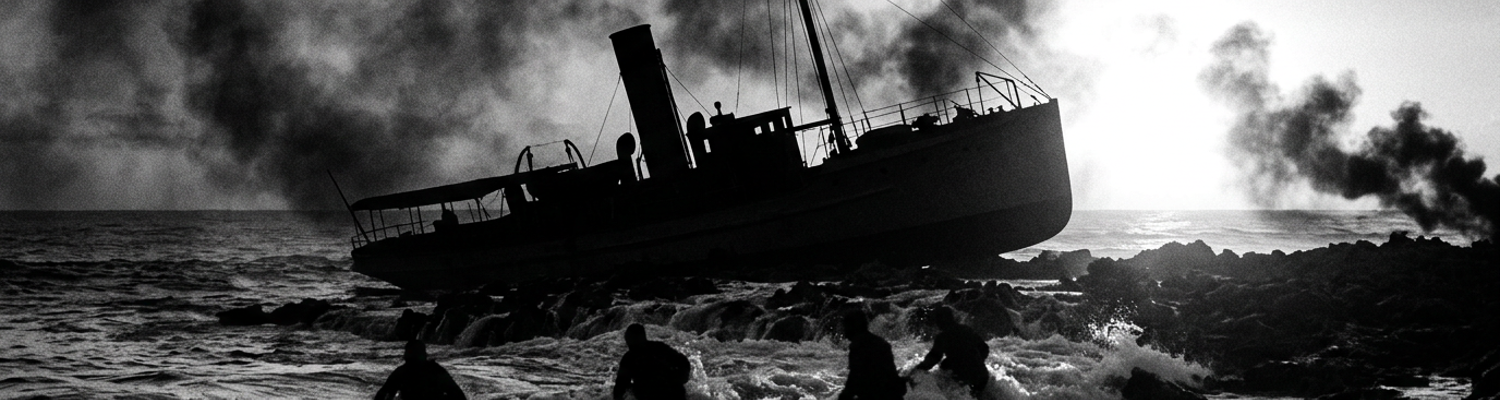

Joint Expeditionary Forces and Sulu Archipelago Operations
Before a single shot cracked over the Sulu Sea, heat exhaustion and dysentery had already hollowed out the ranks. Men dragged heavy Krag-Jorgensen rifles through knee-deep mud. Their cotton uniforms were caked in dried sweat and river silt after seventy-two continuous hours without restful sleep. Hardtack rations grew moldy in the damp air of the Sulu Archipelago. Soldiers subsisted on foul water boiled over smoking fires and scraps of dry meat. Blistered feet rubbed raw against regulation leather boots along relentless marches through sharp cogon grass and coastal mangrove swamps.
Exhaustion broke men before the enemy ever appeared.
When examining the historical record preserved in naval archives, Asiatic Station Area 9 dispatches recorded the March and April 1908 expedition targeting Datu Jikiri on Patian Island. Operating across the Sulu Archipelago roughly six miles south of Jolo, Jikiri had established a reputation for maritime raids and violent resistance against American territorial governance. Naval telegraph wires from the station headquarters at Cavite carried urgent requests for gunboat patrols to isolate the island and cut off supply proas. Dispatch binders from Area 9 reveal that naval officers tracked small-craft movements day and night. They charted tidal patterns around the volcanic periphery of Patian to prevent the band from slipping across the Basilan Strait. These operational cables recorded escalating skirmishes throughout late March. Constant coastal harassment failed to pin down the Moro fighters. Army district headquarters in Zamboanga coordinated with naval planners to assemble a formal joint strike before seasonal monsoons shut down inter-island water travel. Signal officers logged every sighting of smoke along the ridgelines. They translated sightings into coordinate reports for pending troop movements. (NARA Record Group 395, Entry 44).
Archival evidence shows the assembled assault element merged diverse branches into an ad-hoc expeditionary command. The joint force combined elements of the 6th Cavalry, Philippine Scouts, and the gunboat USS Quiros. Dismounted cavalrymen of the 6th Cavalry swapped their horses for naval cutters. They carried .30-40 Krag-Jorgensen carbines, canvas bandoliers holding one hundred rounds each, and heavy entrenching picks. Beside them stood indigenous soldiers of the Philippine Scouts. These were veteran bush fighters selected for their jungle tracking skills and knowledge of regional dialect. Providing direct heavy fire support was the USS Quiros. This 350-ton Spanish gunboat was captured during the conflict of 1898 and recommissioned into the American navy. Tasked to suppress shoreline defense positions, the vessel mounted six-pounder rapid-fire guns, one-pounder deck weapons, and Hotchkiss revolving cannons along its deck railings. Gun crews on the Quiros maintained continuous watch on the jagged coastal elevations. They stood by their breeches to deliver covering fires whenever troop transports neared the shallow shoals.
The gunboat dropped anchor just two hundred yards off the coral barrier.
A close review of operational logs indicates that commanders prioritized rapid amphibious access to neutralize fortified cottas along the shoreline. Tausug defenders had built these redoubts out of dense coral rock and thick coconut timber. They packed wet earth between double-walled timber parapets to absorb incoming artillery rounds. Concealed embrasures inside the cottas housed brass lantakas. These muzzle-loading swivel cannons were capable of sweeping landing beaches with scrap metal, stones, and lead shot. American officers believed that landing troops immediately through the surf would pin down defenders before they could abandon their fortifications and withdraw into the volcanic craters of the interior. To achieve that beachhead speed, tactical leaders ordered standard wooden longboats to bypass marked deep-water channels. They ran straight across the exposed coral shelf during the morning high tide. That minor navigational shortcut unraveled the entire landing plan. Flat-bottomed rowboats and steam launches struck jagged submerged reefs fifty yards offshore. This wedged the infantry directly within pre-sighted fields of lantaka fire.
Water rushed through splintered planks as defenders opened fire from the parapets.
The 6th Cavalry detachment consisted of Troop K and Troop M. These units had spent the previous eight months conducting pacification patrols across the interior of Mindanao. Their equipment was heavily worn. Canvas haversacks were frayed at the seams. Brass grommets on their cartridge belts were oxidized green from constant exposure to salt spray. The decision to employ dismounted cavalry for an amphibious assault stemmed from a severe shortage of available regular infantry battalions within the Department of Mindanao. Major General Leonard Wood had previously authorized the reassignment of these cavalry troops to coastal garrison duty. This administrative shift forced cavalry officers to rapidly adapt to naval terminology and small-boat handling procedures. They conducted dry-run boarding drills on the docks of Zamboanga for three days prior to embarkation.
These hurried preparations proved entirely inadequate for the physical conditions of the Patian reef.
The Philippine Scouts assigned to the expedition belonged to the 47th Company. Commanded by American regular army officers, the enlisted ranks comprised local recruits intimately familiar with the treacherous currents of the Sulu Sea. They wore distinctive blue denim fatigue uniforms and wide-brimmed campaign hats. Each Scout carried a standard issue bolo knife alongside their rifle. These heavy blades were intended for clearing dense jungle undergrowth. They would soon be used in a desperate attempt to chip away at solid coral rock under heavy enemy fire. The integration of these indigenous troops provided the American command with essential linguistic capabilities and topographical intelligence.
They knew the tides.
The USS Quiros operated under the command of Lieutenant Commander Frank L. Chadwick. The vessel had a draft of ten feet. This relatively shallow draft allowed the gunboat to approach much closer to the shoreline than standard cruisers or battleships. The engineering spaces of the Quiros housed two horizontal compound steam engines. These power plants generated enough thrust to push the iron-hulled ship at a maximum speed of eleven knots. Coal bunkers on board held eighty tons of bituminous coal. Stokers worked in temperatures exceeding one hundred and twenty degrees Fahrenheit to maintain boiler pressure during the transit from Cavite. The ship carried a crew of fifty-eight enlisted sailors and four officers.
Every man on board understood the tactical objective.
They had to destroy Datu Jikiri.
Fringing Reef Bathymetry and Improvised Demolition Tactics
Archival evidence shows that the western shoreline of Patian Island was ringed by an unbroken calcified fringing barrier reef. This geological formation extended between eighty and one hundred and twenty yards seaward from the high-water mark. During the ebb phase of the Sulu Archipelago diurnal tide cycle, water depth across this limestone shelf dropped to less than eighteen inches. Loaded wooden cutters from the naval squadron and standard Army flatboats required an operational draft of at least thirty-six inches. They needed this clearance to carry assault parties across without scraping bottom. Dismounted cavalrymen of the 6th Cavalry and infantrymen of the Philippine Scouts weighed down each hull with full field gear. They carried heavy ammunition boxes and iron tools. Landing officers faced an unyielding physical obstacle. Grounding on the sharp coral heads fifty yards out would leave assault craft immobilized directly under the pre-sighted embrasures of coastal cottas.
A comprehensive review of operational logs from the Department of Mindanao confirms that shallow bathymetry completely barred conventional access to the beachhead during low water.
Low tide left the grounded boats exposed directly to Tausug rifle fire.
Faced with this barrier, combat engineers attached to the expedition improvised an aggressive technical remedy. Tactical planning records show that the detachment drew regulation explosive stores from ordnance lockers. These stores consisted of rectangular two-and-a-half-pound blocks of compressed nitrocellulose guncotton. Each block was fitted with naval electrical detonators. Standard War Department demolition doctrine mandated setting these heavy charges at a depth of six to eight feet beneath the surface. The overlying water column would act as a natural tamp. This would direct the downward energy of the blast into the rock. Because the shallow reef shelf provided only eighteen to twenty-four inches of water, the engineers manually altered the mechanical assembly of the firing trains. Technicians shortened the insulated copper firing cables. They removed regulation iron sinkers. They lashed clusters of wet guncotton blocks directly to split-bamboo poles using tarred hemp line.
By reducing the counterweight and repositioning the fulminate-of-mercury caps closer to the top face of each charge, they altered the designated detonation depth to less than two feet.
Their operational objective was simple.
They intended to cut a straight twelve-foot-wide boat flume through the coral shelf. This would allow steam launches to motor straight to dry sand.
Nobody tested the altered explosives against the island.
When examining the historical record preserved in the Engineer Department files, these reconfigured charges were deployed along the reef line without any prior hydrographic surveying. There were no test shots against local marine stone. The engineering staff operated under the flawed theoretical premise that tropical coral possessed the physical density of domestic granite or quarry limestone. Geological records confirm that the Patian shelf possessed an entirely different internal structure. It consisted of a porous matrix of aragonite, fragile staghorn formations, and loose layers of calcified marine sediment. This matrix was riddled with subterranean drainage voids and air pockets. When the engineers fired the electrical circuits from their offshore longboats, the blast energy failed to cut downward. Without sufficient water depth to contain the detonation, the explosive force escaped straight up into the air. The horizontal shockwaves shattered the brittle aragonite into thousands of loose limestone slabs.
Instead of excavating a navigable channel, the detonation churned the sea floor into an impassable barricade of sharp stone shards.
Pulverized coral boulders blocked the approach entirely.
Every assault launch ground to an immediate halt against the newly formed field of jagged limestone rubble.
The engineering detachment consisted of one lieutenant and twelve enlisted men. They had received their primary training at the Engineer School at Washington Barracks. Their curriculum focused heavily on bridge construction and railroad demolition. Amphibious obstacle clearance was largely theoretical in 1908. The manuals provided by the War Department contained extensive tables on the explosive yields required to sever structural steel beams. They offered zero guidance on the behavior of nitrocellulose when detonated against living coral reefs. The lieutenant in charge made a calculated guess based on his experience blasting granite in the Potomac River valley.
He assumed the coral would pulverize into fine sand.
He was entirely wrong.
The guncotton blocks were manufactured at the Naval Torpedo Station in Newport. Each block was stamped with a distinct lot number. (Ordnance Bureau File 119, Lot 44-B). They were shipped across the Pacific in zinc-lined wooden crates to prevent moisture degradation. Despite these precautions, the tropical humidity of the Philippines had begun to affect the chemical stability of the nitrocellulose. Several blocks exhibited slight discoloration along their edges. The engineers ignored these warning signs. They wired twenty-two individual charges in a series circuit using fourteen-gauge insulated copper wire. The power source was a standard magneto exploder box positioned in the stern of a naval cutter. The plunger mechanism required a forceful downward thrust to generate the necessary electrical current.
Aragonite Fragmentation and Landing Craft Groundings
Detonation clouds cleared over Patian to reveal an engineering disaster.
Archival evidence shows that the modified guncotton assemblies failed to displace the calcified shelf outward into open water. When the electrical impulse triggered the twenty-two linked charges along the outer margin, the lack of an overhead hydro-tamp directed the unconstrained blast energy upward through the shallow surface foam. Downward displacement forces shattered rather than liquefied the geological substructure. Instead of carving a clean trough with defined retaining walls, the shockwaves fractured the porous aragonite and brain-coral colonies into millions of razor-sharp limestone shards. These calcified blocks ranged from hand-sized splinters to three-foot calcified boulders. They settled instantly back into the blast depression. Heavy sulfur smoke drifted across a six-hundred-foot zone of pulverized debris. This debris choked the natural gaps in the shelf. Engineer officers peering through binoculars from naval gigs watched the blast plume drop tons of broken calcium carbonate directly across the intended vector of advance.
The seabed had turned into a chaotic field of sharp limestone stakes and unyielding rock scree.
The blasted channel was entirely impassable.
A close review of operational logs indicates that the naval steam launch towing the first echelon of flat-bottomed wooden landing lighters surged forward immediately following the blast signals. Coxswains guided the heavy lighters directly toward the coordinates marked by surface marker buoys. These lighters were packed with dismounted soldiers of Troop K, 6th Cavalry. As the lead craft passed three hundred yards seaward of the shoreline cottas, the underwater terrain shelved abruptly upward. Displaced rubble from the shallow blast had formed an underwater berm two feet higher than the original reef crown. The first wooden lighter drove hard into this hidden berm at five knots. Iron-shod keels struck the limestone debris with enough deceleration to pitch soldiers forward over their wooden thwarts. Ammunition cartons spilled across the decking. Secondary lighters swung broadside in the coastal current. They slammed their pine hulls onto jagged coral spikes that gouged through hull planking. Propeller shafts on the towing launches fouled against submerged stone blocks. This sheared their bronze cotter pins and disabled the steering gear.
Every attempt to reverse the craft wedged the keels deeper into the shifted limestone scree.
Nine lighters sat dead in the water.
When examining the historical record from the Asiatic Station, hydrographic tables for Patian Island on that morning mapped an aggressive diurnal ebb tide. This tide was running seaward toward the Basilan Strait. Water depth across the intertidal reef shelf fell at an operational rate of four inches every fifteen minutes. Within thirty minutes of the initial groundings, the receding water stripped away the buoyancy of every flatboat and naval cutter trapped along the artificial bar. The assault force lay stranded between three hundred and fifty and four hundred yards off the landing beach. They were completely separated from the high-water berm by an exposed plain of razor-sharp coral heads and wet limestone craters. Soldiers who climbed over the gunwales to manually heave the wooden hulls free sank waist-deep into sediment-filled sinkholes. They sliced through regulation leather boots against jagged aragonite ridges. The falling tide exposed the dark hulls against white surf. This presented static silhouettes directly in front of the Moro earthworks. Defending riflemen along the coconut-log parapets leveled their weapons over the parapet embrasures. They aimed at an immobilized target line completely unable to advance or retreat.
Tausug lantaka crews on the heights opened fire on the grounded lighters with scrap iron and lead balls from three hundred yards.
The wooden lighters were constructed at the Cavite Navy Yard specifically for shallow water operations. They measured twenty-eight feet in length and featured a broad beam to maximize troop capacity. The hull planking consisted of Philippine mahogany. This wood was resistant to rot but highly susceptible to impact fracturing. The iron keel plates were secured with galvanized lag bolts. These bolts sheared off under the severe friction of the coral heads. As the hulls ground against the reef, the caulking between the planks gave way. Seawater poured into the bilges. Soldiers desperately bailed the incoming water using their canvas campaign hats and empty ammunition tins.
It was a losing battle against the ocean.
The steam launches providing the towing power were thirty-foot naval picket boats. They were powered by coal-fired vertical compound engines. When the propeller shafts fouled on the coral, the sudden cessation of rotational movement caused the steam pressure within the boilers to spike dangerously. Engineer petty officers had to manually vent the excess steam through safety valves to prevent a catastrophic boiler explosion. The shrieking sound of venting high-pressure steam completely drowned out the shouted orders of the cavalry officers. The thick white vapor added to the visual confusion on the reef. It obscured the shoreline cottas from the view of the supporting gunboat.
Brass Lantaka Emplacements and Intertidal Crossfire
Splintered oak hulls offered zero protection against cast ordnance.
Archival evidence shows that Datu Jikiri and his gunners manned five heavy brass lantakas mounted on swivels along the upper parapets of the western cotta. They aimed directly down the surveyed approach channel. These muzzle-loading smoothbores were cast from alloyed brass. They ranged from one to three inches in bore diameter. The gunners fired pre-packaged charges of coarse black powder. They ignited these charges via touchholes with glowing smoldering matches. Rather than conventional round shot, the defenders loaded their chambers with irregular scrap. They used forged iron nails, rusted ship spikes, chopped telegraph wire, and lead musket balls packed inside raw hemp wadding. When the wooden lighters grounded along the blasted coral berm, Tausug gun crews depressed the gun tubes toward the exposed waterline. They fired in sustained volleys. Dense clouds of sulfur smoke billowed from the coconut-log embrasures with every discharge. Jagged metal fragments ripped through the three-quarter-inch pine gunwales of the transport boats. This sent wood splinters into the tightly packed ranks of soldiers huddled beneath the thwarts.
Mauser and Remington rolling-block rifles kept up continuous aimed fire between lantaka blasts. They targeted any officer attempting to signal the fleet with hand flags.
Men threw themselves over the sides straight into eighteen inches of seawater.
A close review of operational logs indicates that dismounted troopers of Troop K, 6th Cavalry, along with thirty-five indigenous riflemen of the 47th Company, Philippine Scouts, were trapped across two hundred yards of exposed tidal flats. Moving forward was impossible. Jagged aragonite formations and deep underwater crevasses sliced through uniforms and skin. Crossfire from fortified secondary trenches swept the intertidal flat at knee height. Soldiers attempting to crawl across the limestone shelf found their .30-40 Krag carbines choked with wet carbonate sand. This caused the bolt extractors to jam on expanded brass casings. Scout soldiers used their heavy bolos to chop shallow depressions into the softer coral heads. They tried to create improvised firing rests. The receding tide steadily lowered the water level. This stripped away what little visual cover remained. Wounded men lay half-submerged on the sharp reef floor. They were unable to pull their bodies out of the line of fire without drawing concentrated small-arms salvos from the surrounding volcanic ridges. Field officers lost tactical command. Rising waves of spray and gunsmoke blocked visual communication with the offshore command cutters.
The entire landing party sat trapped in an open kill zone.
When examining the historical record preserved in Asiatic Station logbooks, Lieutenant Commander Frank L. Chadwick aboard the USS Quiros ordered the gunboat to clear for action at an anchor range of eight hundred yards offshore. Deck divisions swung the vessel six-pounder rapid-fire guns and Hotchkiss revolving cannons toward the high stone revetments of the cotta. Gunners adjusted their elevation screws to drop high-explosive common shell directly onto the embrasures. Lantaka flash signatures continued to erupt through the smoke at these locations. Quiros discharged its port and starboard batteries in rapid succession. They used smokeless powder charges that drove steel fragmentation shells into the double-walled coconut timber logwork at a rate of twenty rounds per minute. Impacting shells detonated against the volcanic stone base. This dismounted two brass swivel guns and threw pulverized earth across the Tausug rifle trenches. One-pounder deck guns swept the upper parapet walkways with continuous canister and solid steel projectiles. This forced defenders to withdraw their weapons into interior bombproof shelters.
This steady barrage laid down an overhead screen of fire. It prevented the cottas from delivering plunging shots into the grounded lighters. This allowed stranded crews to begin hauling wounded soldiers over the sterns of the broken hulls.
Quiros sustained its covering salvos until naval ammunition lockers ran low on six-pounder charges.
The lantakas utilized by the Tausug defenders were not crude improvised weapons. They were highly crafted pieces of regional artillery. Many had been cast in Brunei or Sulu foundries decades prior. They featured intricate geometric patterns along their barrels. The swivel mounts allowed for rapid traversing fire across a wide arc. This made them exceptionally lethal against the linear formation of the grounded landing craft. The use of chopped telegraph wire as shrapnel demonstrated a sophisticated understanding of anti-personnel ballistics. The irregular shapes of the wire created horrific tearing wounds that the expedition medical officers were ill-equipped to treat on the reef.
Medical supplies consisted primarily of iodine and cotton bandages.
The Krag-Jorgensen carbines carried by the cavalrymen proved highly susceptible to the harsh marine environment. The side-loading magazine mechanism was prone to jamming when exposed to fine coral sand. Troopers had to manually pry stuck casings from the breeches using their cleaning rods. This exposed them to enemy fire for agonizing seconds. The Philippine Scouts fared slightly better with their Springfield Model 1892 rifles. These weapons possessed a more robust extraction system. The sheer volume of incoming fire forced the Scouts to keep their heads down behind the inadequate cover of the coral heads.
They fired blindly toward the shoreline.
Amphibious Breaching Doctrine and Post Action Analysis
Blood seeped into the shallow reef pools for four hours while the assault force waited for the tide to turn.
A close review of operational logs indicates that the stranded landing detachment sustained eleven wounded and two dead before the flood tide restored twelve inches of water over the pulverized limestone shelf. Men of Troop K, 6th Cavalry, and the 47th Company, Philippine Scouts, lay prone under direct sun. They used the iron keel plates of the shattered lighters to shield their torsos from snipers along the ridge. Salt brine entered open shrapnel wounds. Heat exhaustion disabled five additional soldiers who ran out of fresh canteen water. When the rising sea lifted the grounded flatboats off the jagged aragonite heads, naval cutters from the USS Quiros towed three functional hulls forward under a renewed barrage of one-pounder canister fire. Dismounted cavalrymen jumped into waist-deep water fifty yards out. They fixed Krag-Jorgensen bayonets and advanced in three-man rushes through the remaining surf. Scout riflemen swung wide around the northern flank to suppress the outer rifle pits with rapid carbine volleys. American troops breached the low revetments at one o'clock in the afternoon. They found the coastal cottas abandoned. Tausug defenders had withdrawn into the volcanic interior carrying their wounded.
The dead lay face down in the surf.
Archival evidence shows that subsequent engineering reports submitted to the Department of Mindanao documented severe structural hazards in deploying improvised guncotton assemblies against marine reefs. Lieutenant engineers who examined the blast zone recorded that the twenty-two nitrocellulose pole charges produced an upward venting pattern. This blew eighty percent of the explosive energy into the open atmosphere. Porous coral calcium carbonate lacked the mass required to resist high-velocity gas expansion. It shattered into an irregular debris barrier instead of forming a clean open flume. The post-action survey noted that the displaced rubble raised the floor of the approach route by nearly eighteen inches. This created a submerged obstacle far more hazardous to flat-bottomed craft than the original unbroken reef. Ordnance officers confirmed that unconfined surface detonations against tropical aragonite created razor-sharp limestone flakes. These flakes instantly cut through canvas supply bags, severed hemp towlines, and ruined vulcanized rubber boots.
Field evaluations concluded that blasting coral in active tidal zones required pre-drilled boreholes at least six feet deep. Heavy mechanical tamping was necessary to prevent shockwaves from pulverizing the surrounding sea floor into unnavigable scree.
No standard manual explained how to blow up a living barrier reef.
When examining the historical record from the General Board of the United States Navy, the tactical failures at Patian directly influenced early twentieth-century doctrine governing hydrographic reconnaissance and amphibious engineering. Planners analyzing the after-action reports recognized that small-boat landings across coral atolls could not succeed without preliminary bathymetric surveys and strict synchronization with regional tide tables. Naval war colleges in Newport and Washington incorporated the Sulu Archipelago engagement into fleet landing exercises. They argued that assault echelons required specially designed shallow-draft landing lighters rather than standard wooden cutters towed behind steam launches. Joint Army and Navy Board directives drafted between 1910 and 1914 mandated that combat engineers map reef structures. They were required to measure diurnal water fluctuations and calculate explosive weight requirements before committing troops to shore assaults. The War Department transferred the Patian engineering reports to naval ordnance bureaus to develop specialized underwater demolition charges equipped with delayed mechanical fuses. (General Board File 425).
The operational charts drafted at Jolo were filed into the permanent archives at the Cavite Navy Yard.