
Establishment of PWTE A-3 at Bad Kreuznach
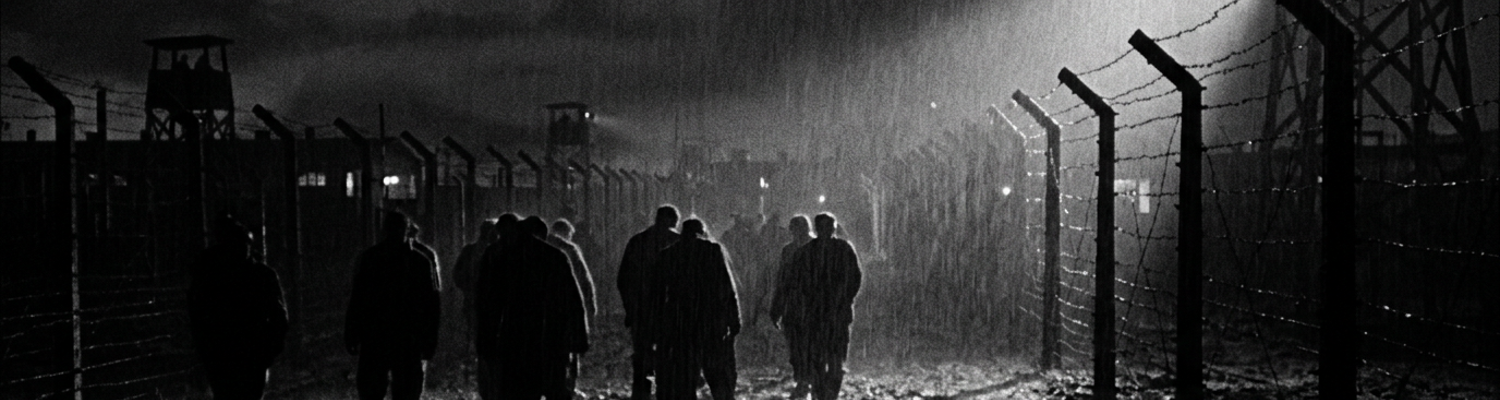
Freezing rain saturated the low-lying clay basins of the Nahe River valley throughout the opening weeks of May 1945. Unpaved ground turned into a knee-deep mire. Daytime temperatures climbed into oppressive humidity. Thick mud accumulated along the riverbanks. Drainage channels paralyzed heavy wheeled transport. Open agricultural tracts became slick quagmires. Allied authorities directed the establishment of Prisoner of War Temporary Enclosure A-3 across open farmland between Bad Kreuznach and Bretzenheim. Over 100,000 surrendering German personnel were compressed into open-air mud enclosures. No permanent buildings existed. Drainage ditches and surface grading were completely absent. Captives stood shoulder to shoulder across barbed-wire compounds. Standing water pooled into gray troughs contaminated with excrement. Exposure claimed hundreds during the first weeks. Night temperatures plunged near freezing. Soaked uniforms stiffened against the skin of men sleeping upright in waterlogged soil.
Men dug into the wet silt with their bare hands.
Not to hide.
Just to escape the wind.
Archival evidence shows the 106th Infantry Division received direct responsibility for securing the camp perimeter. Units including the 424th Infantry Regiment manned the concertina wire borders with skeletal troop complements. They faced severe shortages of tentage, rations, and water purification units. Gasoline-powered water distillation sets failed repeatedly. Intake valves choked on silt dragged from the Nahe River. Rations arrived irregularly on two-and-a-half-ton trucks. These vehicles required winching assistance to traverse the unpaved approach roads. Perimeter sentries monitored miles of wire using erratic carbon-arc searchlights. These lights were wired to overburdened portable generators. The power cut out during nightly rain squalls. Medical officers documented an immediate collapse of basic field sanitation. Trench-digging tools were unavailable. Engineering assets lacked timber to shore up collapsed latrine pits.
Supreme Headquarters Allied Expeditionary Force formally classified these captives as Disarmed Enemy Forces.
This administrative designation bypassed standard Geneva Convention protections. Initial logistical allotments were severely limited. Allied authorities were legally exempt from providing rations equivalent to base garrison troops. Supplying shelter, standard medical kits, and postal access was not required. Communications Zone supply manifests confirm daily food allocations dropped well below basic survival baselines. Captives received captured Wehrmacht tinned meats and moldy rye bread stored in damaged railheads. Theater directives explicitly forbade the transfer of standard Army rations or blanket reserves to holding areas classified under the new status. Requisitions for standard canvas tarpaulins and corrugated sheet metal were repeatedly canceled at the theater level.
A close review of operational logs indicates perimeter guards managed holding pens containing up to fifteen thousand men per sub-enclosure. They did this with fewer than forty armed infantrymen per shift. Drilling detachments attempting to sink shallow tube wells hit impenetrable limestone beds at twenty-four feet. Ninety percent of the enclosure remained dependent on contaminated surface run-off. This water was carted in rusted fifty-five-gallon petroleum drums. By mid-May, the Bretzenheim sector held 103,000 registered individuals. They lived in open slit trenches excavated into water-saturated clay.
Combat Exhaustion and Perimeter Security Pressures
Field medical personnel of the 106th Infantry Division recorded a severe operational breakdown across administrative sections within weeks of occupying PWTE A-3. More than forty percent of field-grade and enlisted administrative personnel exhibited symptoms of debilitating somatic combat exhaustion. Soldiers assigned to process detainee intakes collapsed under relentless duty schedules. These men had just endured winter combat in the Schnee Eifel. Battalion surgeons documented severe involuntary motor tremors. Unremitting gastrointestinal cramps and intractable insomnia plagued desk sergeants. Profound cardiac irregularities appeared among processing officers. Intake stations operated around the clock inside drafty pyramidal canvas shelters. Clerks attempted to produce individual detainee records on field typewriters. Frozen fingers and failing carbon ribbons made the work nearly impossible. Medical officers noted administrative soldiers frequently lost the ability to speak coherently. Some could not hold a pen after thirty-six consecutive hours of processing incoming columns.
European theater demobilization directives prioritized combat veterans for immediate return to the United States.
Points dictated the exit.
This prevented seasoned noncommissioned officers from rotating out. Skeleton staffs absorbed escalating processing quotas. Riflemen stood forty-eight-hour watches in waterlogged foxholes. No relief. No dry clothing.
Boundary containment along the unpaved outer ditch lines relied on fragile electrical and pyrotechnic warning systems. Sentry squads utilized carbon-arc searchlights and white phosphorus trip flares. They maintained containment across pitch-black, rain-swept wire boundaries. Technical detachments deployed General Electric sixty-inch anti-aircraft searchlights mounted on mobile trailers. Heavy power cables ran to gasoline-driven generator sets. These engines choked on low-octane fuel blends. Torrential downpours cracked glowing carbon rods through rapid thermal shock. Explosive sparks generated as illumination extinguished across entire perimeter sectors. Sentries positioned on wooden watchtowers watched the perimeter descend into absolute darkness. Rain drowned generator exhaust stacks. Combat engineers rigged M49A1 surface trip flares alongside modified M15 white phosphorus grenades. They placed these along the bottom wires of the concertina entanglements to counter blind spots. Infiltration attempts by desperate captives triggered tension wires. Detonating canisters hurled burning phosphorus particles across three-hundred-foot radii. Dense chemical smoke screens followed. Perimeter machine gunners fired blind three-round bursts through the smoke whenever a flare ignited.
Perimeter wire coils shifted continuously.
Drainage banks collapsed into the mud.
Archival evidence shows guard units faced severe security disruptions originating from outside the camp perimeter. Civilian refugees and family members repeatedly swarmed the outer concertina wire barriers. They sought missing Wehrmacht soldiers. Displaced persons from the eastern territories joined local residents from Bad Kreuznach and Bretzenheim. They gathered along the perimeter roads by the thousands to scan the crowded pens. Women shouted individual names, military ranks, and serial numbers through the razor-wire obstacles. They hoped to identify relatives among the masses huddled in the open ditches. Crowds repeatedly pressed against the outer wire coils. They tossed wrapped packets of bread, raw potatoes, and clothing into the isolation zones. This triggered stampedes among the starving captives within. Enclosure commanders feared these unvetted contacts concealed weapon drop-offs. Forged identity documents and coordination for planned mass escapes were constant threats. Sentry squads responded with fixed bayonets and tear gas canisters. Patrol jeeps mounted with M1919A4 machine guns swept the approach lanes. They forced crowds backward into the surrounding vineyards. Provost Marshal directives banned all civilian pedestrian traffic within five hundred yards of Enclosure A-3 on May 18.
Logistical Collapse and Rhine Camp Attrition
Torrential May downpours washed human waste across the low-gradient Bretzenheim basin. Unpaved holding enclosures transformed into breeding pools for pathogenic bacteria. Dense alluvial clay prevented natural drainage. Thousands of gallons of foul effluent trapped across the floor of the pens. Captives stood in standing liquid mixed with human waste. Engineer units had excavated latrine trenches uphill from the main living sectors. Chlorination kits and fuel to boil standing water were nonexistent. Men drank directly from perimeter run-off pools. Shigella dysentery tore through the enclosures within forty-eight hours of occupation. Localized outbreaks of epidemic typhus followed. Body lice proliferated unchecked inside waterlogged Wehrmacht greatcoats. Detainees could neither wash nor remove these garments. Divisional medical detachments possessed zero stocks of dusting powder to decontaminate incoming formations during the initial two weeks. Autopsies recorded by division surgeons confirmed hemorrhagic intestinal lesions. Secondary pulmonary infections appeared in hundreds of recovered bodies.
Lice infested every layer of wool within seventy-two hours.
A close review of operational logs indicates mobile water purification units assigned to the 106th Infantry Division suffered constant mechanical failure. High suspended sediment in the Nahe River caused the breakdowns. Silt ground down the impellers of trailer-mounted centrifugal pumps. The mechanical intake valves seized every four hours. Requisitions for replacement filter cartridges and canvas distribution tanks sat unfilled at Communications Zone depots in Nancy. Supply trucks delivered less than one pint of potable liquid per captive each day. Detainees excavated the ground to capture ground seepage and escape wind-driven rain. Captives used mess-kit lids, steel helmet shells, and scavenged food tins. They carved out subterranean slit trenches and burrow-style crawlspaces directly into the saturated clay banks. These shallow earth burrows routinely caved in under sustained downpours. Weakened men were buried beneath heavy clay before comrades could scrape them free. By May 20, the floor of PWTE A-3 was pitted with thousands of these crude earthen burrows. Entire battalions were trapped in water-filled holes.
Cave-ins smothered dozens of trapped occupants in their sleep.
Allied garrison personnel suffered severe physiological degradation that mirrored the sanitary collapse inside the pens. Enlisted riflemen of the 424th Infantry Regiment stood twelve-hour security details in standing mud. They lacked dry socks, replacement boots, or rubber overshoes. Constant immersion in contaminated rainwater produced epidemic rates of trench foot across the sentry line. Peripheral nerve damage, blackened dermal tissue, and open ulcerations became common. Field hospital sick bays admitted dozens of American soldiers daily. They suffered from high fevers, chronic bronchitis, and advanced lobar pneumonia. Heavy woolen uniforms stayed soaked for days in unheated perimeter shanties. Fuel stoves lacked coal. Exhausted guards collapsed on watchtower platforms from numb extremities. Accidental discharges of Browning Automatic Rifles occurred frequently. Perimeter sectors remained unmanned for hours at a time. Quartermaster supply manifests confirm replacement footwear for the 106th Infantry Division did not reach the Bad Kreuznach rail siding until the first week of June. Company morning reports recorded operational sick-call rates exceeding twenty-five percent of effective rifle strength across the enclosure perimeter by late May. Guard companies lacked dry bivouac areas. Replacement troops slept on damp straw mats spread directly over unpaved ground inside supply tents.
Adjusted Service Rating Protocols and Guard Attrition
Archival evidence shows War Department Circular No. 347 initiated the rapid implementation of the Adjusted Service Rating system on May 12, 1945. Discharge points were assigned based on length of service, months spent overseas, campaign participation stars, and combat awards. Veterans of the 106th Infantry Division holding eighty-five points or higher were pulled from duty rosters. They were reassigned to staging camps in Le Havre for repatriation. Seasoned administrative noncommissioned officers vanished from the Bretzenheim enclosures within forty-eight hours of the order. These men had mastered intake processing, ration distribution tables, and camp discipline. First sergeants and supply sergeants from the 424th Infantry Regiment packed their barracks bags. They vacated company command posts before their replacements could be briefed on basic camp procedures. Intake stations disintegrated into administrative disarray. Incoming replacement clerks could neither operate damaged field typewriters nor decipher German Wehrpass identification booklets. Manifest sheets were lost inside water-damaged filing crates. Thousands of incoming captives remained completely unregistered on daily accounting tallies.
Intake clerks boarded transport trucks for France while ink dried on unfinished prisoner rosters.
These rapid redeployments gutted garrison strength at PWTE A-3 just as surrendering Wehrmacht columns reached their highest intake volume. The European theater replacement system funneled eighteen-year-old conscripts directly from training facilities in the United States. They arrived in the mud of the Nahe River valley without orientation or tactical integration. Sentry companies suffered severe manpower shortages. Small details of green riflemen managed sprawling holding sectors containing dense, hostile prisoner populations. In the isolated western mud pens adjacent to the Bretzenheim rail junction, detainee-to-guard ratios spiked past one thousand to one. Solitary guards armed only with standard M1 rifles and two eighty-round canvas bandoliers stood watch. Enclosures were packed with twelve hundred hardened combat veterans from the 6th SS Mountain Division Nord and the 2nd Panzer Division. Relief detachments routinely failed to arrive on schedule. Motor pools lacked replacement tires and transmission fluid. Individual sentries manned open watchtowers for twenty consecutive hours in freezing downpours.
A single inexperienced sentry stood watch over fifteen hundred men along the lower wire ditch.
A close review of operational logs indicates camp command structures fragmented completely under the pressure of concurrent administrative duties. Captains and majors were evacuated to rear-area hospitals with acute dysentery. Others were reassigned to nascent Military Government detachments in Frankfurt. This stripped the holding enclosure of experienced operational leadership. Second lieutenants and junior reserve officers with less than six months of active service were forced to manage perimeter security, sanitation details, and intelligence taskings concurrently. A single junior officer routinely found himself directing machine gun emplacements along the north wire at dawn. By midday, he organized burial squads for thirty dead captives. By nightfall, he oversaw Counter Intelligence Corps screenings. Company-grade leaders were required to cross-examine hundreds of suspected Gestapo operatives, Waffen-SS enlisted personnel, and Nazi Party functionaries. They lacked German-language interpreters, printed translation guides, or functioning field telephones. Verifying credentials against Central Registry of War Criminals and Security Suspects databases was impossible. Screening paperwork accumulated in unsorted canvas sacks inside leaky command tents. The identification of high-value detainees stalled. Sanitation trenches overflowed directly into the sentry firing lanes. By May 25, the 424th Infantry Regiment reported an administrative backlog of nine thousand unexamined security files at Bretzenheim alone.
OSS Screening and Intelligence Operations in the Basin
Ad hoc Special Operations field teams from the Office of Strategic Services deployed directly into the open mud compounds of PWTE A-3 during the third week of May 1945. Operating under Seventh Army intelligence oversight, these small groups bypassed the flooded administrative shanties along the Bretzenheim perimeter. Teams of two to four multilingual officers walked directly down into the wire pens holding up to twenty thousand men. They were armed with Colt M1911A1 pistols and carried waterproof canvas map cases. No physical separation barriers existed between the interrogators and the captive masses huddled in the trenches. Agents worked on foot in the Nahe River silt. They waded into the sub-enclosures to conduct immediate tactical debriefings of captured German officers. They set up makeshift inspection points beside open drainage ditches. Surrendering Wehrmacht personnel were questioned while standing ankle-deep in human waste and rain run-off. Tables, chairs, and dry staging areas did not exist. Personnel conducted cross-examinations while leaning against overturned wooden ammunition crates. Sometimes they used the hoods of mud-spattered Willys MB jeeps parked against the interior wire line.
Interrogation teams worked without armed escorts inside the deepest trenches.
These OSS teams prioritized the systematic unmasking of concealed personnel from the Schutzstaffel, Gestapo, and Abwehr. These targets were actively discarding uniforms to blend into common Wehrmacht units. Senior intelligence directives demanded the immediate isolation of security service operatives before they could organize resistance cells or melt into civilian discharge streams. Field agents forced thousands of soaking wet soldiers to strip down to the waist in cold rain squalls. They inspected left armpits for the standard blood group tattoo that marked members of the Waffen-SS. Searching hands tore rank insignias and felt the lining seams of Heer wool tunics. They looked for concealed Abwehr cipher keys, counterfeit civilian travel permits, and forged Wehrmacht paybooks. Suspects attempted to conceal their true identities by claiming membership in regular infantry regiments wiped out during the Ruhr pocket collapse or on the Eastern Front. Interrogators cross-checked individual claims against captured personnel files from the Reichssicherheitshauptamt and name rosters prepared by the Counter Intelligence Corps. When a Gestapo officer or SS noncommissioned officer was positively identified, agents physically hauled the detainee out of the mud pit. They moved him to an isolated barbed-wire enclosure guarded by heavy machine guns.
SS identification books lay buried beneath six inches of wet silt.
Persistent precipitation and all-pervading mud routinely destroyed classified screening paperwork. Special agents attempted to record interrogations on standard War Department Form 19-B questionnaires and carbon duplicate rosters. Relentless downpours turned the lightweight paper stock into sodden mush within minutes. Keys on portable Royal and Corona typewriters jammed continuously. Airborne river grit settled into the mechanical segments. Agents recorded biographical notes by hand with indelible pencils that smeared across soaked sheets. Completed suspect rosters stored in corrugated cardboard boxes dissolved when standing groundwater seeped up through the floorboards of canvas command shelters. Driving rain squalls tore through open intake stations. Intelligence files soaked through. Ink signatures washed out before detainee files could be matched against Central Registry of War Criminals lists. Wind gusts swept unfiled arrest warrants and interrogation notes directly into the perimeter mud. Tracked M29 Weasels and supply trucks trampled the paper into unrecognizable sludge. Intelligence detachments lost hundreds of completed dossiers containing detailed confessions, order-of-battle diagrams, and verified locations of underground Werwolf caches. On May 28, a sudden flash flood in the eastern gully drowned four crates of unread Abwehr dossiers.
Night Interrogations and Field Triage Challenges
Screening detachments belonging to the 106th Counter Intelligence Corps Detachment and the 424th Infantry Regiment maintained continuous night intake schedules under improvised illumination. Sentry posts and interrogation pens relied on trailer-mounted Onan gasoline generator sets. These drove strings of auxiliary incandescent work lamps suspended from raw pine poles. These low-output two-stroke generators seized every few hours. Maintenance squads fed them contaminated, water-heavy motor pool fuel. When the circuits shorted out during midnight downpours, field technicians ignited tripod-mounted magnesium-sulfur flares to keep the processing lines visible. Yellow-green sulfur smoke drifted directly into the examination tents. The chemical cloud choked interrogation personnel and seared their eyes while they tried to read stamped identification books. Rain-drenched electrical lines snaked through knee-deep mud. Violent electric shocks hit technicians attempting to replace shattered carbon filaments. Intakes never halted. Intelligence officers forced newly arrived captive columns directly into the illuminated mud lanes to identify command staff before dawn.
Generator exhausts coughed black soot across the intake lanes throughout the night.
Allied screening teams operated without working copies of the Central Registry of War Criminals and Security Suspects card-index files. Shipping manifests confirm master CROWCASS registries remained impounded in transit crates at communications depots near Paris throughout late May. Interrogation officers processed tens of thousands of men with zero access to centralized biographical files, theater cross-reference rosters, or captured Nazi Party membership records. Interrogators adapted by instituting rapid physical inspections inside three-sided wooden chutes. Screeners forced every captive to strip off his greatcoat and raise his left arm to expose the inner armpit. Enlisted examiners scraped away dried river mud and body lice with dull mess blades. They hunted for the telltale green blood group tattoo marking enlisted and officer cadres of the Waffen-SS. Men displaying fresh, jagged surgical scars or third-degree acid burns along the inner bicep were pulled out of line immediately. German troops increasingly excised these ink markings using razor blades or burning motor oil. Examiners also checked collar lines for removed collar tab stitch points. They examined groin creases for concealed gold coins. Unit identities were verified by matching Heer paybook stamps against field dental charts.
Razor cuts across the armpit brought automatic detention in the maximum-security pen.
Acute physical starvation combined with severe linguistic barriers to paralyze technical intelligence operations. Intelligence detachments lacked trained German linguists fluent in specialized military, ballistic, or industrial terminology. Camp commanders assigned young American enlisted men with elementary German or Yiddish backgrounds to conduct deep interrogations of captured rocketry technicians, synthetic fuel chemists, and Luftwaffe communications specialists. These ad hoc interpreters failed to comprehend regional accents from East Prussia, Silesia, and the Austrian Alps. This produced garbled interrogations that missed key tactical data. Captives brought to the interrogation tables were emaciated and dehydrated from weeks on reduced rations. Detainees suffering from advanced Shigella dysentery, circulatory collapse, and typhus-induced delirium experienced severe cognitive impairment. They lost consciousness mid-sentence or offered incoherent replies to technical questionnaires. Starving prisoners fabricated operational answers simply to obtain an open tin of rations from interrogators. They pointed to non-existent arms caches in the surrounding Nahe hills. Special agents from the European theater intelligence staff routinely terminated debriefings when prospective informants collapsed face down onto the muddy floorboards. On May 29, technical debriefing reports at Enclosure A-3 recorded twenty-eight consecutive interrogation attempts abandoned due to subject starvation collapse.
Administrative Transition and Legacy of the Rheinwiesenlager
Elements of the French First Army assumed physical control of the Bad Kreuznach compounds as the US Army reorganized its occupation sectors along the Rhine. General Jean de Lattre de Tassigny directed French administrative units to absorb the Bretzenheim facility. The objective was to secure industrial labor details for coal basins in the Saar and reconstruction projects in eastern France. American soldiers of the 106th Infantry Division, stripped to minimal operational strength by discharge orders, turned over watchtowers, perimeter lighting rigs, and seventy-five thousand remaining captives. Handover inspectoral teams discovered over twenty percent of the transferred captives were medically unfit for manual labor. They showed signs of untreated nutritional edema, active dysentery, and advanced skin ulcerations. French supply officers refused to sign property slips for hundreds of bedridden German soldiers lying in flooded slit trenches. American medical detachments were forced to establish temporary field clinics in nearby Bretzenheim barns. French guards armed with MAS-36 rifles replaced American sentries along the concertina wire ditches. They immediately cut daily carbohydrate rations to align with domestic French civilian rationing baselines of nine hundred calories.
Supply receipts show fifty-two thousand men transferred across the wire before American quartermaster trucks pulled out of the valley.
The institutional failure at Bad Kreuznach triggered formal investigations by the General Board of the United States Forces, European Theater. Study Number 86 of the Provost Marshal Section identified profound deficiencies in pre-war planning tables. These tables had projected detainee intake rates based on First World War capture patterns rather than the simultaneous collapse of entire army groups. Field Manual 19-40, governing the handling of captured enemy personnel, underwent extensive revisions. These changes were based directly on the sanitary collapses and water shortages documented at PWTE A-3. New War Department specifications eliminated open-air field pens devoid of timber or prefabricated shelter. Canvas tentage and graded drainage trenches became mandatory prior to any mass detainee reception. Supply planners threw out the five-hundred-milliliter daily emergency fluid baseline. They replaced it with an enforceable field standard of five gallons of potable water per captive per day. This was guaranteed through dedicated mobile engineering battalions rather than ad hoc division mechanics.
General Board investigators determined division-level assets could never sustain mass internment sectors without theater-level supply reserves.
PWTE A-3 became the foundational case study at the Command and General Staff College at Fort Leavenworth for administrative breakdown under conflicting theater directives. Instruction modules highlighted how the War Department implemented the Adjusted Service Rating system on May 12, 1945. This withdrew veteran quartermaster officers and intake clerks precisely when four million Wehrmacht soldiers were moving into Western Allied holding zones. Operations researchers at the Army War College traced how the simultaneous loss of administrative noncommissioned officers and the arrival of forty thousand daily surrenders created systemic gridlock. This severed basic inventory control. Analysis of the 106th Infantry Division records demonstrated logistical throughput failed not from lack of theater resources, but because railhead distribution networks had no designated personnel to offload boxcars once frontline units began point-based demobilization. Fort Leavenworth curriculum panels categorized the Rhine enclosure records as an operational breakdown where demobilization timetables nullified field logistics. On November 2, 1945, the Provost Marshal General issued revised detainee staging annexes barring the rapid redeployment of intake cadres during ongoing surrender phases.