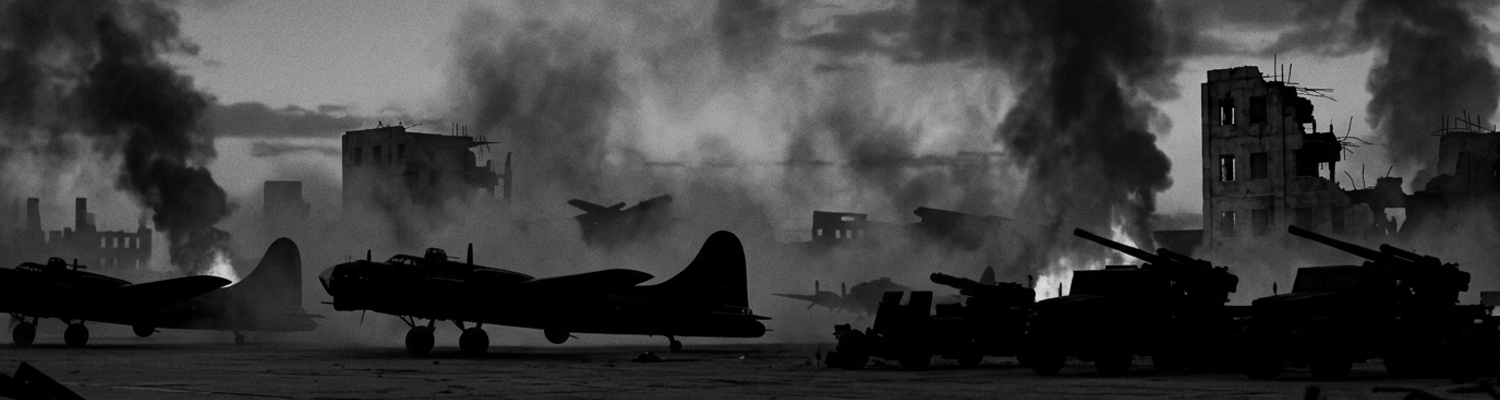

Merseburg Leuna Synthetic Fuel Defense
Declassified signal logs reveal that Eighth Air Force planners worked against a thirty-day deadline in the spring of 1944. Supreme headquarters designated late May as the hard cutoff point. Strategic heavy bombers had to turn their full attention toward softening up the French coastline for Operation Overlord. General Carl Spaatz knew he had mere weeks to prove that striking synthetic fuel would break the German military faster than hitting rail yards. Target analysts at High Wycombe singled out the I.G. Farben industrial facility at Merseburg-Leuna.
This facility sat south of Halle at coordinates 51 degrees 19 minutes North and 12 degrees 00 minutes East.
Leuna transformed brown coal into high-octane aviation fuel using the Bergius hydrogenation process. This output supplied direct fuel to Jagdwaffe fighter wings defending the Reich. Eighth Air Force operational orders directed hundreds of B-17 Flying Fortresses to wipe out these distillation plants. National Archives and Records Administration files indicate that Armaments Minister Albert Speer understood the danger within hours of the first high-explosive hits on May 12. Speer warned the high command that the loss of synthetic production would ground the Luftwaffe. He enacted the emergency Geilenberg Program under industrialist Edmund Geilenberg. Over twenty thousand forced laborers and technical specialists converged on the smoking ruins along the Saale River.
Construction battalions poured three-meter-thick concrete splinter walls around the hydrogenation chambers.
Workers buried replacement steam manifolds deep under blast-hardened trenches. When examining the historical record of Luftflotte Reich, the anti-aircraft defense arrayed across the Merseburg plain was heavily saturated. Flak-Regiment 33 controlled dozens of hardened firing positions circling the factory perimeter. They deployed 8.8 cm Flak 37 batteries beside twin-barrel 12.8 cm Flakzwilling 40 installations mounted on concrete towers. Fire direction depended on FuMG 65 Würzburg-Riese gun-laying radars. These units tracked targets with 7.4-meter parabolic reflector dishes operating at 560 megahertz.
Radar teams locked onto the lead combat wings through artificial acid-smoke screens.
They fed azimuth and elevation data straight into analog Kommandogerät 40 mechanical directors. These computers transmitted calculated firing solutions directly to the gun mounts via electrical cable. Crews set clockwork projectile fuses that detonated timed flak walls directly in the flight paths of incoming bombers.
A single flak shell severed the wing of a lead Fortress at twenty-six thousand feet.
Allied Electronic Countermeasure Implementations
Post-action reports confirm that the Eighth Air Force modified dozens of B-17 Flying Fortresses across the 1st Bombardment Division during the second week of May 1944. Ground crews at Eighth Air Force sub-depots fitted AN/APT-1 Carpet noise jammers directly into the forward radio compartments of combat wing lead ships. Designed at the Harvard Radio Research Laboratory, each forty-pound transmitter unit contained an internal 931-A photomultiplier tube. This tube linked to a pair of 832A dual-tetrode push-pull output tubes.
Radio operators adjusted the manual frequency dials while standing in unheated fuselage walkways.
Technicians wired these transmitters to downward-facing quarter-wave antenna blades bolted directly through the duralumin skin. When switched into broad-band noise mode, the units pushed fifteen to twenty watts of continuous thermal noise straight into the tracking arcs of Flak-Regiment 33. Mechanical components regularly failed under flight stresses. Sub-zero temperatures at twenty-six thousand feet caused glass vacuum tube envelopes to crack. Heavy vibration from four Wright R-1820 radial engines knocked the delicate tuning capacitors off their calibrated settings.
Cold air cracked the tuning tubes inside twenty minutes.
Operational planners directed every Carpet unit to flood the 560 megahertz operating spectrum. Telefunken tracking systems operated within a defined frequency band between 553 and 575 megahertz. They utilized a 53.6-centimeter wavelength to capture radio-wave reflections off aluminum airframes. Allied signals intelligence teams from the 803rd Bombardment Squadron Provisional determined that jamming this exact slice of the spectrum prevented German gun directors from separating aircraft echoes from artificial interference.
Blanketing 560 megahertz with high-frequency electronic noise degraded the circular cathode-ray tube displays.
German technicians monitoring the fine-range scopes watched clean signal spikes dissolve into broad bands of static grass. They lost the ability to determine the precise range and elevation of the incoming formations. Without these coordinates, analog Kommandogerät 40 mechanical computers could not generate synchronized fire solutions. Allied command synchronized these Carpet transmissions with systematic drops of RAF Window chaff. Lead navigators used strict stopwatch timing to coordinate the release of metallized paper packets precisely four minutes prior to reaching the initial point at Bad Dürrenberg. Crew members shoved bundles of aluminum foil strips down through gravity chutes cut into the radio compartment floor.
Ground handlers had cut each strip of Window to twenty-seven centimeters.
This matched exactly half the 53.6-centimeter operational wavelength of the 560 megahertz Würzburg signal. Thousands of foil ribbons scattered into the sub-zero prop wash. Synchronizing the active electronic emissions of the Carpet units with these expanding chaff corridors produced a solid electronic wall across a ten-mile front along the Saale River. Deprived of target-tracking data, German flak commanders abandoned individual fire direction. They instituted emergency barrage protocols known as the box barrage. Flak-Regiment 33 ordered all heavy batteries to fire timed salvos at predetermined grid squares along the bomber approach route.
Battery crews pumped two thousand high-explosive rounds into the empty clouds of foil every three minutes.
Tactical Frequency Shifts in the Combat Theatre
Maintenance records show that by late May 1944, technicians attached to Flak-Regiment 33 had begun circumventing the blanket noise jamming. Inside the mobile control trailers of FuMG 65 Würzburg-Riese stations ringing Merseburg, German radar crews pulled maintenance panels. They altered the baseline frequency settings of their transmitters. Telefunken engineers had equipped these radar sets with adjustable coaxial cavity resonators driven by LD1 and LS180 triode tubes.
Ground personnel used hand tools to loosen locking collars on the transmitter tank circuits.
They shifted the operational frequency downward to 536 megahertz and upward into the 584-megahertz range. This emergency modification moved their tracking pulses entirely outside the narrow ten-megahertz suppression band of the American AN/APT-1 Carpet units. German operators watched their circular cathode-ray screens clear as the artificial grass receded. Echo returns from oncoming B-17 airframes reappeared as sharp spikes on the fine-range displays. This restored direct electrical feeds to the Kommandogerät 40 range computers stationed beside the flak batteries.
Battery commanders regained firing solutions inside forty-eight hours.
Eighth Air Force headquarters at High Wycombe learned of the tactical shift through urgent electronic intelligence intercepts. Signal officers realized that the bombers were flying into defended corridors with noise jammers radiating into empty radio spectrum. Allied leadership issued an emergency fleet-wide directive. They ordered every active heavy bomber wing across the 1st and 3rd Bombardment Divisions to retune their AN/APT-1 transmitters within twenty-four hours.
Ground crews worked throughout the night inside unlit fuselage radio compartments.
Technicians hauled portable TS-174 heterodyne frequency meters and insulated alignment screwdrivers from plane to plane across rain-soaked dispersal pads. Radio repairmen dismantled the protective covers of hundreds of Carpet units. They manually adjusted the tuning slugs on the push-pull output tank assemblies to match the newly reported German operating frequencies. Flight-line mechanics lacked standardized calibration benches for the rush order. Individual technicians had to guess the correct torque settings on the delicate split-stator capacitors.
Wrenched copper screws stripped under heavy mechanical pressure.
When examining the historical record of subsequent strike runs over central Germany, this hurried field recalibration produced unintended technical chaos. Retuning the local oscillator stages beyond their factory tolerances destabilized the push-pull circuit balance between the 832A output tetrodes. The overworked transmitter tubes generated severe parasitic oscillations. Destructive harmonic bleed poured across dozens of neighboring radio frequencies.
The second and third harmonics of these errant emissions cut directly into the VHF operating channels of airborne SCR-522 command radios.
These radios operated between 100 and 156 megahertz. Bomber pilots flying lead positions found their headsets flooded with deafening static. This destroyed voice communications with accompanying P-51 Mustang escort groups from the 357th Fighter Group just as German interceptors made contact. Spurious radiation also saturated the sensitive radio frequency coils of onboard Gee blind-positioning receivers.
Flight pathfinders lost their fix fifteen miles west of the target.
Electromagnetic Interference with Tactical Beacon Networks
Flight telemetry data indicates that harmonic spillover from modified AN/APT-1 Carpet units generated an immediate crisis over the North Sea corridor. On the afternoon of May 28, battered B-17 Flying Fortresses from the 1st Bombardment Division withdrew from Merseburg-Leuna. Dozens of aircraft shed altitude with feathered propellers and pierced crankcases. Radio operators in unpressurized cabins pushed emergency switches on their SCR-522 transceivers. They attempted to broadcast distress calls across the designated 116.1-megahertz Channel B VHF air-sea rescue frequency.
The modified Carpet jamming transmitters flooded VHF air-sea rescue channels with severe white-noise interference.
Field-altered 832A dual-tetrode circuits radiated errant parasitic emissions directly across the low-VHF band. High-amplitude electrical hash drowned out weak amplitude-modulated voice transmissions from low-flying planes attempting to reach safety. Royal Air Force Air-Sea Rescue marine craft and High-Speed Launch crews stationed at Felixstowe heard continuous electronic shrieks across their headphone sets. Rescue launches stayed tied to their piers. Ditching aircrews sank into the freezing waters twenty miles off the West Frisian Islands at coordinates 53 degrees 35 minutes North and 05 degrees 12 minutes East.
Not a single emergency distress call penetrated the saturated radio channels.
This uncontrolled radiation stripped bomber crews of the navigational references needed to reach emergency recovery strips. Inside shot-up flight decks, pilots struggled with dead engines and shattered windshields. Interference severed communication between crippled bombers and forward tactical radio-navigation beacons. Wideband Carpet noise blotted out the reception coils of airborne radio direction-finding equipment.
This included standard SCR-269 and BC-433 automatic compass receivers operating in conjunction with VHF navigational aids.
Navigators watched their bearing needles spin in continuous 360-degree rotations. They could not lock onto the fixed continuous-wave identification signals sent by coastal guidance stations. Flight crews operating on two running engines could neither track mainland homing markers nor establish their drift against thirty-knot crosswinds blowing off the Dutch coast. Blinded by cloud cover over the German Bight, pilots were unable to determine whether their airframes were tracking toward safe recovery fields in East Anglia or drifting south into German anti-aircraft positions.
Four damaged bombers strayed directly over German flak batteries on Walcheren Island and were destroyed.
When examining the historical record of Allied communications infrastructure, the operational breakdown spread across the English Channel. Forward mobile direction-finding units deployed by tactical air commands monitored emergency frequencies from vehicle-mounted radio shelters. RAF and Ninth Air Force emergency homing stations across the European mainland were rendered completely unreadable. Signal operators stationed inside IX Tactical Air Command SCR-575 direction-finding trailers near forward landing strips watched their cathode-ray indicators blur into useless green smears.
Incoming VHF radio carriers were buried under the continuous roar of thermal noise.
Ground controllers at forward tracking posts could not resolve bearings or identify aircraft call signs. They could not calculate magnetic steer headings for pilots seeking emergency landings in zero visibility. Technicians pulled their headsets off to escape the piercing hum of Allied transmitters blinding their own directional nets.
Cathode-ray indicator needles pinned against their mechanical stops and stayed frozen for four hours.
Crippled Bomber Returns and Lost Navigation
Squadron diaries reveal that during the autumn 1944 attrition raids against Merseburg, dozens of damaged B-17 Flying Fortresses from the 381st Bombardment Group struggled westward across liberated Belgium. B-24 Liberators from the 44th Bombardment Group followed closely behind them. German anti-aircraft fragments from Flak-Regiment 33 had severed electrical conduits and ripped open wing tanks over the Saale River valley. Navigation officers seated behind frosted plexiglass attempted to fix their coordinates using onboard Gee Mk II hyperbolic units and BC-348 radio receivers.
The equipment failed completely.
Parasitic harmonic bleed from the modified AN/APT-1 jammers in nearby aircraft flooded the low-frequency and medium-frequency radio bands. This saturated sensitive tuning coils with continuous feedback. Heavy cloud decks blotted out visual reference points along the Meuse River between Liege and Namur. Flight crews crossing coordinates 50 degrees 38 minutes North and 04 degrees 40 minutes East found their radio direction-finding needles spinning aimlessly across thirty-degree arcs. Ground transmitters operating from newly established Ninth Air Force tactical stations near Brussels could not cut through the screeching static haze.
Every cockpit compass swung wildly across empty radio space.
This communications breakdown turned troop compartments into flying trauma wards cut off from ground medical support. In the unpressurized waists of damaged bombers, crew members held compression bandages against arterial wounds caused by twenty-millimeter cannon shells. Morphine syrettes froze solid in ambient temperatures of minus thirty degrees Celsius. Severed interphone cables prevented waist gunners from speaking directly to the cockpit. Up front, radio operators repeatedly threw the toggle switches on their SCR-522 command transmitters.
They attempted to broadcast distress prefixes across the standard 116.1-megahertz emergency channel to summon field ambulances.
Electronic interference from uncalibrated jammers turned the transmissions into unrecognizable audio squeals. Emergency landing grounds across liberated Belgium received no advance coordinates or casualty manifests. This included Advanced Landing Ground A-92 at St. Trond and ALG A-84 at Chievres. Flight surgeons attached to the 67th Evacuation Hospital waited beside silent telephone switchboards while bombers orbited in blind drizzle overhead. Pilots fired red star shells from hand-held M8 pyrotechnic pistols through the cockpit roof ports.
Dense cloud layers swallowed the magnesium flares at seven hundred feet.
Mechanical exhaustion eliminated every remaining flight option as fuel gauges dropped toward empty. Punctured self-sealing cells and severed gravity-feed lines drained high-octane aviation gasoline across horizontal stabilizers. Flak-damaged Pratt and Whitney R-1830 and Wright R-1820 radial engines threw cylinder heads and seized. Pilots feathered dead propellers to reduce drag. Failing vacuum pumps quickly caused directional gyros to tumble inside their instrument cases.
Running on five gallons of reserve fuel and single engines, aircraft commanders pushed control yokes forward.
They dropped through low-hanging fog over Wallonia without runway alignments or glide-path instructions. Liberators and Fortresses dropped into muddy farm ground and crashed into Belgian sugar-beet fields outside Sint-Truiden at one hundred and twenty miles per hour. Those attempting wheels-up landings on unfinished steel-mat runways ground along pierced-steel planking until their wing spars snapped on perimeter drainage ditches.
Nine bombers broke their main wing spars across the frozen earth of Chievres airfield before sundown.
Airfield Collisions and Emergency Crash Landings
Base operations logs confirm that the sudden arrival of thirty-ton strategic heavy bombers overwhelmed forward Ninth Air Force tactical strips across northern France and eastern Belgium. Advanced Landing Grounds like ALG A-92 at Sint-Truiden and ALG A-84 at Chievres had been constructed specifically for single-engine P-47 Thunderbolts and twin-engine B-26 Marauders. These fields operated with minimum dispersal space and short runways laid with pierced steel planking. Without operational radio receivers or functioning blind-landing instruments, disoriented pilots from the 91st and 381st Bombardment Groups let down blindly through five-hundred-foot cloud ceilings.
They dropped directly into congested tactical approach corridors.
Aircraft commanders could not coordinate traffic patterns with local mobile tower trailers. Flight crews broke out of the overcast with feathered props, burning nacelles, and shot-away rudder cables. They lined up on whichever cleared patch of mud or steel mesh appeared through their broken cockpit glass. P-47 pilots from the 368th Fighter Group taxiing out for tactical close-support missions scrambled to clear the active runway. Four-engine bombers dropped straight onto their taxiways without clearance flares or radio warning.
Three heavy bombers entered the same traffic pattern simultaneously from opposing compass headings.
When examining the historical record of these emergency recoveries, the physical limitations of tactical airstrips transformed mechanical emergencies into multi-aircraft disasters. Tactical landing grounds possessed runway lengths between 3600 and 5000 feet. This provided adequate stopping distance for light tactical fighters but offered almost no safety margin for combat-loaded B-17s suffering hydraulic system failures. Shrapnel punctures from 8.8 cm flak over Merseburg had emptied hydraulic reservoirs.
This prevented flight crews from lowering landing flaps to bleed off airspeed.
Aircraft touched down at excessive speeds exceeding one hundred and thirty miles per hour. This immediately overstressed the steel locking clips of the pierced-steel planking. Steel runway mats tore loose under thirty tons of dynamic weight. They curled into jagged barriers that ripped off landing gear struts. Stripped of braking friction, runaway bombers slid across the end of the runway, plowed through earthen drainage berms, and sheared through lines of fully fueled P-47s parked in adjacent revetments.
A skidding B-17 from the 303rd Bombardment Group crushed four parked fighters.
Fuel leaks and trapped high explosives rapidly shut down emergency medical extraction efforts. Ruptured rubber fuel cells dumped hundreds of gallons of volatile 100-octane aviation gasoline over red-hot turbocharger casings and glowing brake drums. This triggered high-temperature chemical fires within seconds of structural impact. Ninth Air Force ground personnel had only light Class 135 and Class 155 crash trucks on site. These carried limited carbon dioxide cylinders and low-volume water-fog nozzles built for small fighter fires.
Fire crews faced heavy thermal barriers as they tried to reach trapped pilots through crushed nose compartments.
Inside jammed bomb bays, armed five-hundred-pound AN-M64 general-purpose bombs hung by damaged release shackles above pools of burning fuel. Their heat-sensitive nose fuses were subjected to direct open flame. Rescuers using axes and pry bars on the warped waist hatches had to abandon pinned crewmen when thermal cook-offs began detonating unfired fifty-caliber ammunition boxes in rapid succession. At Chievres, two five-hundred-pound bombs ruptured under heat stress fifteen minutes after impact.
The explosion killed nine ground personnel and destroyed the airfield fire truck.
Trauma Overload at the 67th Evacuation Hospital
Medical unit histories document that the 67th Evacuation Hospital received no advance notification before waves of field ambulances arrived from the crash sites at Sint-Truiden and Chievres. The hospital operated under canvas pavilions at Verviers near coordinates 50 degrees 35 minutes North and 05 degrees 51 minutes East. Between 1600 and midnight on May 28, three-quarter-ton Dodge WC-54 ambulances delivered over two hundred casualties directly to the receiving ward. Severely burned and mangled aircrews rapidly overwhelmed personnel at the 67th Evacuation Hospital.
Flight personnel arrived coated in atomized 100-octane aviation fuel and sprayed hydraulic fluid.
Both fluids had ignited when punctured wing cells struck the ground. Orderlies cut shredded, frozen sheepskin flight suits away from third-degree burns that extended across entire torsos, faces, and hands. Hospital stocks of sterile petrolatum gauze, sulfadiazine ointment, and liquid plasma dried up within ninety minutes of the initial intake. Ward tents intended to process forty patients held ninety-five men packed shoulder to shoulder on canvas cots and bare wooden floorboards. Scores more were laid on unheated ground outside the admissions tent as shock cases mounted.
Blood soaked through the duck-cloth stretchers before litter bearers could cross the admission threshold.
Surgeons faced unprecedented triage demands characterized by high volumes of traumatic amputations and compound trauma. Ten surgical teams operated continuously across thirty-six hours using folding wooden tables lit by sputtering gasoline lanterns. Flak bursts from 8.8 cm shells over Merseburg and violent airframe structural disintegrations produced horrific wounds rarely seen in regular infantry engagements. High-velocity shrapnel had driven jagged chunks of duralumin skin and shattered plexiglass deep into pelvic cavities, compound fractures of the femur, and open abdominal wounds.
Waist gunners and navigators spent hours at sub-zero altitudes with field tourniquets tied around severed limbs.
They arrived with dead, frozen extremity tissue that rendered limb preservation impossible. General surgeons utilized open circular guillotine amputations to rapidly sever necrotic limbs above knees and elbows. This left wounds open to drain and prevent secondary gas gangrene infections. Operating rooms depleted their local stocks of ether anesthesia and intravenous sodium pentothal. Anesthesiologists had to ration oxygen tanks while nurses manually pumped rubber suction units to clear airways filled with vomited blood and airway soot.
Staff surgeons performed fifty-four major amputations without an operational sterilizer.
The electronic blinding of field airfields and the resulting medical crisis forced an immediate shift in theater-wide air operations. The disaster spurred immediate Allied protocols to enforce rigid frequency separation between electronic warfare and emergency medical channels. Investigations conducted jointly by the Eighth Air Force Signal Section and Supreme Headquarters Allied Expeditionary Force revealed that parasitic harmonics from altered AN/APT-1 transmitters had directly crippled both air-sea rescue frequencies and ground aeromedical dispatch nets. Command issued emergency directive Technical Order 31-1-12 to all bomber wings across the United Kingdom and northern Europe.
This order prohibited any flight-line modification or unauthorized manual tuning of broadband noise jammers.
Technicians instituted a mandatory twenty-megahertz buffer zone between active jamming bands and the 116.1-megahertz VHF distress band. Maintenance depots received crystal-calibrated frequency monitors to inspect every local oscillator circuit before combat missions departed. This permanently re-established clean spectrum allocations for tactical homing transmitters and hospital advance notification networks.
Ninth Air Force signal officers permanently grounded thirty-two modified B-17 jammers at Bassingbourn the following morning.