
Postwar Ejection Dogma and Holloman Laboratory Origins
Mechanics hauled bent steel brackets and salvaged electrical wiring through choking dust storms, enduring blistering daytime heat and freezing desert nights on the remote New Mexico salt flats. Ration cutbacks, constant supply delays, and chronic shortages of heavy machine tools forced ground crews to hand grind replacement fittings from scrap metal while fighting round the clock physical exhaustion. Battered canvas tents offered little protection against the blowing gypsum sand that fouled carburetors, ruined optical sensors, and gummed up precision measuring equipment. The Air Research and Development Command established the Aeromedical Field Laboratory at Holloman Air Force Base to resolve critical pilot survival questions in supersonic aircraft. Military aviators were regularly dying during emergency bailouts at transonic speeds, leaving flight surgeons and high command strategists without practical answers for cockpit escape designs. Air Force leadership urgently needed concrete survival parameters before industry contractors finalized production lines for the next generation of jet interceptors. Engineers required exact mathematical data to build ejection seats that would not kill the pilots they were designed to save.
Contractors built early supersonic cockpits around deeply flawed medical assumptions rather than verified experimental evidence. Prevailing aeromedical dogma during the early nineteen fifties asserted that human physiological tolerance ended at eighteen gravities of deceleration. Civilian medical textbooks and senior military flight surgeons insisted that deceleration forces above eighteen gravities would inevitably crush the human chest wall, burst blood vessels, and tear organs from the skeletal frame. Manufacturers accepted this rigid theoretical barrier as established fact, designing pilot seats, floor mounts, and safety belts that snapped at minimal impact pressures to save cockpit weight. Crash investigations repeatedly revealed that downed pilots died not from insurmountable deceleration trauma, but from flimsy safety harnesses that broke and hurled aviators against instrument panels. Investigators found broken seat brackets and severed canvas belts in the wreckage of otherwise survivable crash sites, proving that theoretical paper calculations were actively sabotaging the safety of frontline pilots.
Lieutenant Colonel John Paul Stapp structured the program around empirical human biodynamics rather than these speculative theoretical thresholds. Stapp gathered a specialized cadre of mechanics, photographers, and physicians at the Holloman outpost, turning away from academic lecture halls to establish a rigorous testing facility right on the desert floor. Mechanics laid heavy steel railroad rails across thousands of feet of concrete bedding, aligning the tracks with microscopic precision to eliminate lethal track vibration during high speed rocket runs. Engineers fitted the experimental track with mechanical tripwires, high speed camera stations, and telemetry cables to record exact shock waves and biological stresses in real time. Laboratory personnel initially ran trials using anthropomorphic test dummies, but the artificial mannequins yielded ambiguous data that failed to satisfy the skeptical medical establishment. The wooden and metal joints of the dummies could not replicate the complex muscular responses of a living human body bracing for impact.
Physicians in military flight commands demanded undeniable biological proof that living tissue could endure violent mechanical stops without fatal damage. Stapp volunteered to become the primary research subject, arguing that a trained flight surgeon in the seat could provide instant physiological feedback that dummy sensors could never duplicate. Ground crews welded specialized chest harnesses, reinforced leg restraints, and bolted heavy steel braces across a rocket sled chassis named the Sonic Wind Number One. Technicians filled water braking troughs between the rails and installed curved metal scoops beneath the sled frame to produce controlled, violent deceleration profiles. Stapp strapped himself into the rigid steel cockpit, checked the high tensile harness tension against his chest, and signaled the countdown bunker to arm the solid fuel rocket battery.
Engineering Architecture of Sonic Wind Number One
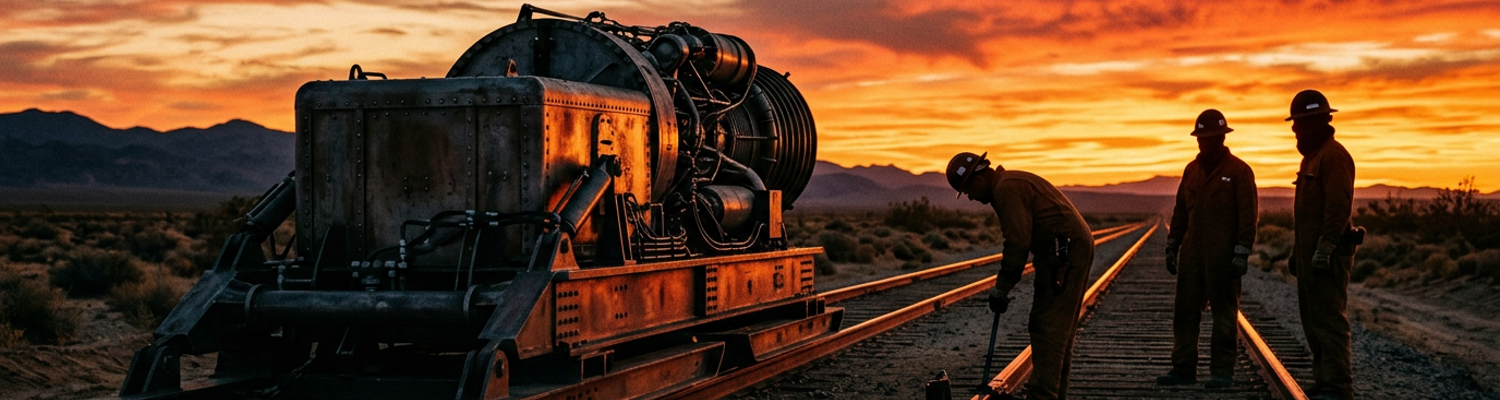
Bunker technicians completed the final circuit continuity check across the vehicle undercarriage, confirming that the entire assembly was locked securely onto the desert track. Northrop Aircraft built the Sonic Wind Number One rocket sled chassis specifically designed to withstand structural loads up to one hundred gravities on the Holloman High Speed Test Track. Popular media later claimed that the sled was a crude collection of scrap parts assembled by reckless mechanics, but the vehicle was actually engineered with extreme mathematical precision. Northrop draftsmen constructed the main frame out of heavy gauge chrome molybdenum steel tubing, reinforcing each structural joint with thick gusset plates so the cockpit cell would never collapse inward during violent mechanical stops. Base mechanics spent long shifts filing and polishing the hardened steel slippers that gripped the parallel rails, removing minute burrs that could generate friction and derail the sled. Ground crews adjusted the clamping clearance of each slipper down to fractions of an inch, preventing high speed flutter from throwing the heavy carriage off the tracks.
Rocket motor bays mounted directly behind the cockpit provided the violent driving force required to push the chassis down the ironway. Propulsion was supplied by nine solid propellant rockets generating forty thousand pounds of total thrust along the thirty five hundred foot rail course. Ordnance specialists loaded each cylindrical motor into a heavy steel thrust cage, securing the rocket nozzles with reinforced retaining rings designed to channel the hot exhaust clear of the cockpit. Ground engineers originally battled severe ignition synchronization failures during static test stand trials, discovering that an electrical delay of even ten milliseconds in a single rocket would yank the sled violently sideways. Technicians solved this dangerous balance problem by installing heavy gauge copper busbars and redundant electric squibs, ensuring that all nine propulsion units fired in unison. Rocket exhaust temperatures rapidly exceeded three thousand degrees during ignition, threatening to melt the aft frame tubes and forcing maintenance crews to weld thick asbestos lined steel heat shields across the rear bulkheads.
Steel heat shields absorbed the tremendous chemical thermal blast during the initial acceleration phase, but bringing the high speed vehicle to a complete stop presented an even greater engineering challenge. Deceleration was accomplished through a mechanical water brake system utilizing track mounted water troughs and sled scoops rather than standard friction braking. Conventional brake pads made of bronze, asbestos, or cast iron were completely useless because the extreme kinetic energy of the speeding sled would vaporize ordinary friction linings in fractions of a second. Engineers solved this stopping problem by installing concrete troughs down the center of the track, filling the channels with precise water volumes divided by lightweight Masonite plastic dams. Curved alloy scoops bolted underneath the sled frame dropped into the standing water at hundreds of miles per hour, scooping the liquid upward and turning it through one hundred eighty degrees. Water plumes shot sixty feet into the desert air as the fluid mass resisted the moving scoops, transferring the immense kinetic momentum of the sled into displaced liquid in less than one second. The violent displacement of thousands of gallons of water absorbed the kinetic energy without generating the catastrophic friction heat that would have melted conventional braking mechanisms.
Water levels inside the concrete troughs determined the exact peak deceleration profile that the sled and its human occupant would experience. Technicians used metal rulers and graduated depth gauges to measure every water pool along the final braking zone, varying the water depth inch by inch to control the rate of physical deceleration. Flight surgeons calculated that shifting a single Masonite dam could increase deceleration forces by five gravities, turning a survivable deceleration run into a fatal impact. Telemetry crews wired pressure transducers and mechanical accelerometers through the cockpit walls, connecting high speed galvanometer recorders that preserved every millisecond of force data on photo sensitized paper. Armature technicians verified the final continuity lights on the main bunker console, clearing all ground personnel from the track apron as the firing countdown reached its final mechanical sequence. The launch director confirmed the clear track status and initiated the automated firing timer.
Deceleration Telemetry of the December Nineteen Fifty Four Run
Timers triggered the electrical firing circuit, igniting the nine solid propellant rockets behind the seat in a single violent detonation of orange flame and gray smoke. Stapp attained a top speed of six hundred thirty two miles per hour in five seconds on December 10, 1954, reaching Mach point nine. Popular newsreels later framed the run as a reckless thrill ride staged by a fearless daredevil, but the vehicle was actually operating as a calibrated mobile laboratory collecting aerodynamic data that flight surgeons had deemed unattainable. Telemetry lines transmitted continuous acceleration curves back to the concrete blockhouse while high speed optical instruments measured rail friction and vehicle sway along the steel alignment pins. Wind pressure slammed against the exposed face of the pilot at twenty eight pounds per square inch, flattening his nose, peeling back his lips, and testing the limits of his protective helmet. High speed tracking cameras along the railbed filmed the carriage hurtling past the thirty one hundred foot marker as the undercarriage scoops aligned with the concrete water channel ahead.
Alloy scoops plunged directly into the standing water barriers at full track velocity, scooping up tons of liquid and hurling massive spray plumes sixty feet into the desert sky. The water brake impact arrested the sled in one point four seconds, subjecting the occupant to an unprecedented peak of forty six point two gravities with an onset rate of roughly fourteen hundred gravities per second. Restraint webbing pressed against his collarbones with four tons of mechanical force, proving that reinforced Dacron straps could anchor a pilot against violent forward velocity changes without snapping. Established aeromedical doctrine had claimed for a decade that eighteen gravities represented the fatal boundary of human tissue tolerance, insisting that higher loads would rupture the heart and tear internal organs from the thoracic wall. Instrumented recording drums mounted inside the chassis registered every fraction of a millisecond during the stop, providing indisputable physical proof that improper harness design rather than human fragility had caused previous cockpit fatalities. Accelerometers recorded the final kinetic shudder as the sled ground to a complete halt along the southern track extension, leaving the cockpit shrouded in drifting steam and falling water. The massive deceleration forces bent the heavy steel chassis and warped the mounting brackets, but the structural integrity of the pilot cell remained intact.
Rescuers rushed from the trackside medical vehicle to the smoking rails, unlatching the bent restraint buckles to assess the vital signs of the test subject. Physical consequences were characterized by extensive ocular hemorrhaging, extreme circulatory pooling, and bilateral retinal vein occlusions that caused temporary blindness. Sensational post trial rumors asserted that Stapp had permanently lost his eyesight or sustained irreversible brain trauma during the violent mechanical stop, but detailed clinical assessments told a very different story. Rapid deceleration had forced his circulatory volume forward into his skull, producing widespread capillary bursting across his eyelids, conjunctiva, and nasal mucosa without causing structural fractures or retinal tears. Stapp remained conscious throughout the emergency evacuation, speaking clearly through badly swollen facial tissue to describe the dense red curtain obscuring his visual field. Medics lifted the injured officer from the metal seat into a waiting field ambulance, dispatching the vehicle to the Holloman station hospital for immediate therapeutic intervention.
Physicians administered continuous oxygen and cold compresses in the Holloman recovery ward, tracking the rapid clearance of vascular blockages over the subsequent eight hours. Stapp regained his normal visual acuity by the following morning, walking out of the ward under his own power and proving that the ocular occlusions were completely reversible. Technicians recovered the high speed film magazines and telemetry coils from the charred sled carriage, developing thousands of feet of visual and mechanical evidence for review by military flight surgeons. Deceleration plots demonstrated that an aviator strapped into a properly supported harness could safely survive emergency bailouts at transonic velocities and high altitudes. Air Force safety boards immediately forwarded these finalized deceleration charts to aircraft contractors, mandating that all future jet fighters incorporate backward facing seats, reinforced tie downs, and forty gravity safety harnesses. Engineers integrated these structural requirements into the blueprints for the next generation of supersonic interceptors.
Technical Realities Versus Popular Daredevil Mythology
Contractors based these mandatory cockpit overhauls on restraint concepts developed on the Holloman test track, where researchers had rejected standard equipment that allowed pilots to jackknife forward during sudden crashes. The trials replaced standard aviation lap belts with specialized inverted V leg restraints and reinforced chest harnesses designed to prevent fatal forward torso rotation. Technicians fabricated these wide shoulder straps and crotch anchored tie downs from experimental high tensile nylon webbing capable of bearing thousands of pounds of mechanical pull without stretching. Ground crews hand fitted each strap to the torso and thighs of the test subject, adjusting forged alloy buckles to lock his pelvic bones directly into the reinforced seat bucket. Base machinists spent hours redrilling the steel seat anchor points to ensure the straps distributed stopping loads across the strongest skeletal structures of the human body. This rigid anchoring held the spine flat against the steel seatback during the sudden deceleration phase, keeping the ribcage upright and preventing the head from whipping forward into the cockpit structure.
Accelerometers mounted directly behind the shoulders captured this upright physical response, turning what sensational press accounts treated as a daredevil stunt into a structured laboratory trial. Media dramatizations obscured the meticulous instrumentation protocols, which utilized synchronized high speed cameras, strain gauges, and chest accelerometers to measure directional loads. High speed cameras running at thousands of frames per second sat in reinforced concrete bunkers along the rails, documenting the millimeter by millimeter flex of the sled frame and the physical displacement of the protective helmet. Strain gauges bonded to the harness mounting brackets recorded how dynamic kinetic energy transferred through the woven straps into the chrome molybdenum chassis. Galvanometer recorders wired inside the vehicle chassis plotted the exact three way directional forces striking the torso, proving that human tissue could survive violent mechanical shocks when supported correctly. Photographic plates and calibrated electronic traces gave aeromedical researchers reproducible mathematical data instead of subjective pilot impressions.
Steel rails and electronic timers had to maintain absolute precision to generate these mathematical data plots, but the harsh desert environment constantly threatened test operations. Extreme desert temperatures and blown sand repeatedly compromised track timing switches and track alignment, necessitating constant mechanical recalibrations. Blistering midday heat expanded the thirty five hundred foot ironway, warping the heavy steel out of plumb and eliminating the tiny clearances needed for the sled slippers to glide freely. Wind gusts drove fine, abrasive gypsum dust straight past the protective seals of the trackside trip switches, fouling the electrical contacts that triggered high speed cameras, telemetry recorders, and braking monitors. Survey crews walked the entire rail line before every firing, peering through optical transit scopes and driving steel shims beneath the tie plates to muscle the warped tracks back into true mechanical alignment. Technicians opened every electrical switch box along the gravel ballast, scrubbing gritty dust off the copper contacts with solvent brushes to guarantee clean circuit closures before clearing the apron for the next rocket run. Maintenance teams replaced frayed wiring harnesses and tightened grounding straps to prevent static electricity from triggering the rocket igniters prematurely.
Blockhouse consoles registered these cleaned circuits through underground cables, enabling launch engineers to verify trigger timing down to fractions of a millisecond. Ground crews loaded uncrewed test sleds with instrumented anthropomorphic dummies and solid fuel rocket clusters for preliminary verification runs, testing track alignment and electronic switch triggers under live dynamic loads. Project engineers analyzed each high speed film roll and oscillograph chart to confirm that rail friction, slipper clearance, and water braking scoops performed within narrow mathematical margins. Flight surgeons reviewed the mechanical data before approving human runs, requiring indisputable instrumented proof that the restraint harnesses and vehicle deceleration profiles behaved predictably. Technicians torqued the final harness bolts and closed the telemetry access panels on Sonic Wind Number One, arming the electronic track triggers for the scheduled rocket launch. The firing sequencer engaged the primary ignition relays to send the vehicle down the rails.
Project Manhigh and High Altitude Life Support Transition
Data banks captured the dynamic impact loads from these sled runs, providing base physicians with the exact mechanical baseline needed for extreme altitude survival systems. The Aeromedical Field Laboratory channeled sled biodynamics into sealed capsule life support systems for the Project Manhigh stratospheric balloon flights. Postwar popular culture often promoted the idea that human spaceflight hardware emerged overnight during the nineteen sixties space race, but Holloman technicians had already solved the basic engineering equations using empirical sled data. Technicians adapted the wide nylon webbing, rigid body braces, and impact resistant seat angles from Sonic Wind Number One directly into a sealed, eight foot tall aluminum cylinder designed for solitary balloon pilots. Base mechanics installed potassium hydroxide canisters to scrub carbon dioxide, packed liquid oxygen converters to replenish breathable air, and mounted mechanical cabin valves to hold internal pressure against the lethal void of the stratosphere. Ground crews winched the completed cylinder onto transport trucks, hauling the hardware to remote staging sites for high altitude operational tests.
Polyethylene balloons expanded across the desert floor as launch crews pumped thousands of cubic feet of helium into the translucent envelopes. Pilots strapped into the sealed capsules rode these fragile gas bags past one hundred thousand feet, hovering above ninety nine percent of the atmosphere to test life support functioning in direct space equivalent conditions. Sensational press releases framed these ascents as solitary feats of human bravery, yet the flights functioned strictly as airborne physical laboratories measuring pilot pulse, core body temperature, and cabin oxygen stability. High altitude cold tested the mechanical limits of the capsule, freezing battery banks and challenging the electrical circuits that powered the internal air blowers and carbon dioxide scrubbers. Solitary pilots managed the cabin atmosphere by hand when automated valves jammed, maintaining proper pressure ratios until ground controllers approved the descent sequence back toward the desert floor. Parachute recoveries brought the capsules down through turbulent lower air currents, proving that a closed loop mechanical environment could preserve human physiological functions for over thirty hours on the threshold of space.
Aerobee suborbital rocket launches operated alongside these balloon capsule tests to gather physiological data far above the reach of any balloon. Concurrent Aerobee suborbital rocket launches exposed biological subjects to cosmic radiation and brief zero gravity intervals at altitudes exceeding one hundred thousand feet. Popular accounts routinely claimed that weightlessness and deep space radiation remained completely unknown scientific terrors until the late nineteen fifties, but Holloman teams were already measuring these exact environmental stresses in live tissue. Launch crews placed mice, primates, and specialized photographic emulsion packs inside pressurized nose cones to monitor cellular damage and nervous system performance during rapid velocity changes. Rocket boosters hurled the biological payloads through the lower stratosphere, cutting engine power at peak altitude to subject the animals to three minutes of suborbital free fall. Recovery teams tracked the falling capsules across the desert terrain, retrieving undamaged recording equipment and live test subjects to prove that brief zero gravity exposure caused no catastrophic cardiovascular failure.
Telemetry records recovered from these desert capsules gave base flight surgeons concrete proof that living tissue could withstand the extreme transitions of spaceflight. Biodynamic telemetry collected at Holloman preserved essential human factors data despite chronic Pentagon budget constraints and administrative indifference before the launch of Sputnik. Conventional military histories often depicted early aerospace research as a well funded national priority, yet high ranking defense officials consistently dismissed space medicine initiatives as costly science fiction that drained resources from frontline bomber programs. Program officers fought constant funding cancellations and supply rejections by scrounging surplus aircraft instruments, rewiring discarded sensors, and storing test graphs in unheated base sheds. Air Force leadership ignored these comprehensive deceleration and life support findings until Soviet satellite telemetry forced an immediate national reappraisal of human space capabilities. Pentagon planners then turned directly to the filing cabinets at Holloman, using the deceleration charts and sealed capsule designs to establish the baseline parameters for Project Mercury. Engineers incorporated the Holloman restraint harnesses and atmospheric scrubber designs directly into the first generation of orbital space capsules.