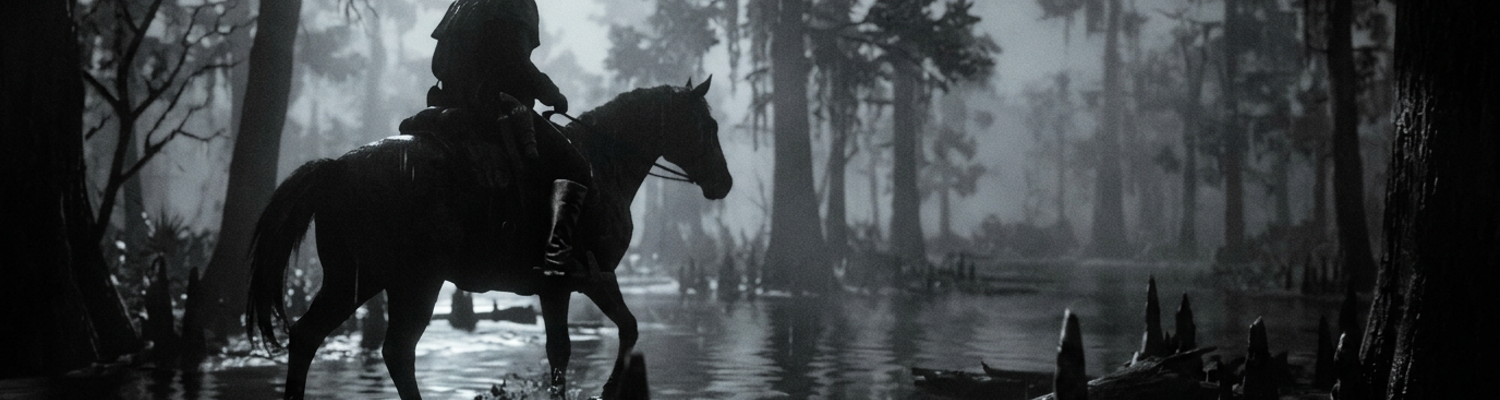

Strategic Isolation at the Hillsborough Command Post
Moving irregular militiamen through the flooded South Carolina Lowcountry required precise localized intelligence. The Continental Army command post lacked this data entirely. Archival evidence shows that senior officers made strategic decisions miles away from active swamp operations. They remained completely detached from the physical conditions of the front. Major General Horatio Gates established his primary operational headquarters in Hillsborough North Carolina. Major General Nathanael Greene later utilized Charlotte. These command posts sat at a high elevation. They were far removed from the dense malarial environments of the Pee Dee and Santee River basins.
Officers working inside dry tents drafted campaign maneuvers on parchment maps.
These documents lacked basic topographic data regarding the ever-changing waterways of the coastal plains. They ordered frontline partisan units to interdict British supply lines along the Wateree River based on static intelligence gathered weeks prior. Generals calculated march rates using standard European infantry metrics on dry roads. This math failed immediately in the South. The Continental command staff completely misunderstood the physical mechanics of moving through a flooded coastal forest.
A close review of operational logs indicates that Greene frequently directed partisan commanders to secure specific river crossings. He did not know if those fords were currently under ten feet of seasonal floodwater. Orders dispatched from Charlotte instructed militia leaders to fortify positions geographically unsuited for defense. Officers in the headquarters bubble assumed frontline units possessed standard military engineering tools. Francis Marion's men possessed only hunting rifles and whatever rations they could carry in their pockets.
Water levels in the Black River could rise three feet in a single afternoon.
Communication delays created severe strategic disconnects between senior officers and frontline partisan units. Couriers riding from Continental headquarters to partisan camps faced severe geographic obstacles. Dispatch riders had to travel over one hundred and fifty miles of hostile territory. Banastre Tarleton's British dragoons heavily patrolled these routes. Written orders took anywhere from ten to fourteen days to reach frontline units operating near Georgetown or Snow's Island.
The intelligence expired in transit.
Greene regularly ordered assaults on British supply convoys that had already passed the designated ambush sites five days before the courier even arrived at the partisan camp. The physical environment directly degraded the messages themselves. High humidity and constant rain caused wax seals to melt. Ink bled into illegibility on the paper dispatches. Couriers often memorized operational directives only to be killed by Loyalist patrols before reaching their destinations.
Frontline units frequently had to abandon headquarters directives entirely to survive.
Thomas Sumter and Francis Marion operated under continuous threat of encirclement by British regulars. They broke camp daily. A courier arriving at a designated coordinate would find an empty swamp. The rider then had to spend another three days tracking the partisan force through the wilderness. By the time the orders reached the militia commanders the dates for coordinated strikes with Continental regulars had already expired. During the campaign to retake Fort Watson Marion initiated the siege using his own tactical assessment. He had received no updated instructions from Greene in over three weeks. The partisan forces constructed a wooden Maham Tower to fire down into the British stockade without any engineering support from the high command. Greene eventually learned of the fort's capture via a dispatch that arrived at his North Carolina headquarters twelve days after the British garrison had surrendered.
Biological Toll of Broadside Distribution Networks
When examining the historical record of the 1780 British southern offensive a profound disconnect emerges between the Continental high command and the physical execution of their propaganda strategy. Following the fall of Charleston in May British commanders issued strict pacification orders requiring South Carolinians to swear allegiance to the Crown. Officers sitting in the North Carolina headquarters bubble responded by ordering a massive counter-information campaign. They mandated that South Carolina militia couriers distribute political broadsides deep behind enemy lines.
Archival evidence shows these partisan riders carried heavy stacks of printed parchment.
The documents detailed Continental Congress resolutions and localized calls to arms. The command staff in Charlotte envisioned a neat distribution network across the parishes. They ignored the active presence of British Major Patrick Ferguson's Loyalist militias patrolling the exact crossroads where these documents were supposed to be posted. Couriers riding out of the Williamsburg District loaded their leather saddlebags with hundreds of these thick sheets.
The sheer weight of the damp paper bogged down the horses in the thick coastal mud.
A close review of operational logs reveals a complete command blindness regarding the biological toll of this assignment. Officers in the high-elevation headquarters ordered riders to cover sixty miles a day through the flooded Santee River basin to deliver these political tracts. They failed to calculate the extreme summer heat dominating the lowcountry between June and August of 1780. Temperatures frequently exceeded ninety-five degrees in the shaded cypress swamps. Humidity levels trapped the stagnant air directly under the dense forest canopy. The couriers wore standard wool militia coats and thick leather breeches. This clothing trapped body heat and caused severe friction wounds during continuous bareback riding.
Men dehydrated within hours of leaving their base camps on Snow's Island.
Desperation drove these isolated messengers to consume water directly from the stagnant pools of the lower Pee Dee River. This biological exposure triggered severe outbreaks of dysentery among the entire courier network. Eighteenth-century medical records describe the condition as the bloody flux. The bacterial infection stripped the intestinal lining and caused violent continuous diarrhea. Riders lost consciousness in the saddle from rapid fluid loss. The disease destroyed their core physical strength while they traversed routes choked with submerged briars and deep pluff mud. A militia rider attempting to reach a rural distribution point near Georgetown would spend days vomiting over the neck of his horse while actively evading Banastre Tarleton's dragoons.
The high command expected a rapid synchronized dissemination of political broadsides across the southern theater.
They received no notification when couriers collapsed and died of bacterial dehydration in the middle of a flooded cane brake. The printed declarations simply rotted inside the saddlebags of the dead men. Headquarters officers stationed two hundred miles away interpreted the lack of coordinated civilian uprisings as a failure of partisan morale. They drafted angry dispatches demanding faster broadside distribution across the coastal parishes. General Horatio Gates ordered partisan leaders to send more men into the swamps with fresh stacks of printed propaganda. These directives required sick partisan units to divert their limited manpower away from ambushing British supply trains. Francis Marion had to pull riflemen off the frontline to act as paperboys for a high command that had never stepped foot in a lowcountry swamp. The replacement couriers rode out carrying the exact same heavy paper loads into the exact same disease vectors.
Board of War Procurement Failures
Equipping a mobile guerrilla force operating deep within a flooded subtropical basin from a congressional chamber six hundred miles away was functionally impossible. Archival evidence shows that the Continental Congress Board of War managed procurement through a slow localized committee system. The politicians seated in Philadelphia completely ignored the geographic isolation of the southern theater. They debated requisitions for basic infantry equipment while Major General Nathanael Greene's Continental regulars starved in the North Carolina piedmont. Requisitions for replacement Charleville musket flints took up to four months to process before the items even left Pennsylvania. Standardized lead balls and dry gunpowder faced similar delays.
Wagon trains departed Philadelphia overloaded with heavy iron cannonballs instead of the lightweight cartridge boxes requested by frontline officers.
The physical transit degraded whatever supplies actually cleared the administrative hurdles. Civilian teamsters contracted by the congressional supply board drove heavy Conestoga wagons down the rutted Great Wagon Road through the Shenandoah Valley. Wooden wheel spokes shattered against exposed granite outcroppings near the Roanoke River crossing. Iron axles snapped under the weight of poorly packed supply crates.
Entire shipments of black powder arrived in Charlotte ruined by rainwater.
A close review of quartermaster logs indicates that the Continental Congress supply board caused severe material delays for southern army units across the entire operational theater. Greene's quartermasters received only a fraction of the requested canvas tents and leather marching shoes during the winter of 1780. Continental soldiers wrapped their bleeding feet in raw cowhide to march through the freezing mud. The supply collapse cascaded directly down the chain of command to the irregular partisan brigades operating in the South Carolina swamps. Commanders sitting in the headquarters bubble expected Francis Marion's Williamsburg militia to execute synchronized flanking maneuvers against British outposts along the Santee River. The politicians in Philadelphia assumed these local militias could supply themselves through local foraging.
British dragoons had already stripped the coastal plantations of all usable livestock and grain.
Resource shortages severely hampered partisan coordination prior to major field engagements against Lord Charles Cornwallis's forces. Prior to the spring offensives of 1781 Continental officers ordered partisan commanders to mass their forces for joint strikes against fortified British garrisons at Camden and Ninety-Six. The militia units lacked the basic mechanical components necessary to sustain a prolonged siege or execute a coordinated assault. Partisan fighters carried a mismatched assortment of civilian fowling pieces and captured British Brown Bess muskets. They also carried long rifles requiring dozens of different caliber lead balls. Without a steady supply of raw lead or bullet molds from the congressional supply board militiamen resorted to melting down pewter spoons and plates plundered from abandoned Loyalist homesteads.
The lack of standardized ammunition meant men frequently jammed their weapons on the firing line during active skirmishes.
A musket flint became completely useless after twenty strikes against the steel frizzen. When examining the historical record of the maneuvering before the Battle of Hobkirk's Hill the operational friction caused by these shortages becomes highly visible. Thomas Sumter's state troops refused to march to the designated rendezvous coordinates because they lacked camp kettles to boil stagnant swamp water. Dysentery tore through the isolated partisan camps. Without paper to roll pre-measured powder cartridges militiamen had to pour loose powder directly from horns into their musket pans during active combat under heavy rain. The moisture instantly neutralized the priming powder. Greene dispatched urgent couriers demanding Sumter's immediate arrival to secure his eastern flank against a British counterattack. Sumter replied that his men could not traverse the thirty miles of flooded terrain without replacement horseshoes and basic rations. The congressional delays left the partisan units physically anchored to their isolated swamp hideouts. Greene engaged the British regulars on April 25 without his requested partisan cavalry screen.
He lost the field and retreated three miles north.
He left his dead on the ridge.
Jurisdictional Fractures Under Governor Rutledge
When examining the historical record of July 1780 a fractured command structure actively dismantled the South Carolina partisan network. Governor John Rutledge operated as an executive-in-exile out of a high-elevation headquarters in Hillsborough North Carolina. He drafted civilian orders that directly contradicted the military directives issued by Major General Horatio Gates. Rutledge commanded Brigadier General Thomas Sumter to independently assault British outposts along the Catawba River. He wrote these mandates on heavy vellum in a dry office two hundred miles away from the humid frontline.
The governor demanded simultaneous unsupported strikes on the fortified garrisons at Rocky Mount and Hanging Rock.
Gates had just issued completely separate orders requiring all local militia commanders to halt their independent raids. The Continental general wanted the partisans to consolidate their forces with his advancing regulars near the Peedee River. Couriers carrying these incompatible instructions arrived at Sumter's camp in the Catawba basin on the exact same afternoon. The arrival of contradictory paperwork triggered immediate operational paralysis among the militia officers. Sumter's men sat encamped in the dense wet underbrush. They lacked the basic cornmeal rations required to wait for clarification from headquarters.
A close review of operational logs shows that Rutledge's dispatches explicitly ordered militia captains to seize local cattle to sustain their independent strikes.
Gates's orders strictly forbade local foraging to preserve civilian goodwill. Partisan officers read the conflicting documents by firelight and broke into immediate factional disputes over jurisdiction. Unit commanders loyal to the civilian governor began preparing their men for the localized assaults. Other captains packed their canvas bedrolls and marched their companies east to join the regular army. The unified partisan brigade physically fractured into isolated bands wandering through the river swamps without a clear objective.
Dozens of riflemen simply abandoned the encampment and walked back to their flooded farms.
The structural damage caused by these disjointed orders physically dismantled the American battle lines leading into the second week of August. Gates marched his army south toward the British garrison at Camden expecting a large-scale influx of partisan reinforcements. Rutledge had already redirected those exact reinforcements away from the primary theater of operations. The governor sent fresh dispatches on August 12 ordering Sumter to take four hundred seasoned militiamen and intercept a British supply convoy at Wateree Ferry. Sumter obeyed the civilian directive over the military one. He marched his men along with a brass three-pounder field piece completely out of the operational sector. They dragged the artillery through deep mud and submerged cypress roots. They moved laterally away from Gates's line of advance.
The partisan forces disappeared into the Wateree swamp just as Lord Cornwallis moved his regular infantry into blocking positions at Saunders Creek.
Archival evidence indicates that Gates deployed his forces on the night of August 15 completely blind to Sumter's departure. The Continental command staff calculated their defensive frontage assuming the partisan riflemen would secure their vulnerable left flank. Rutledge's administrative interference had stripped the field army of its most experienced irregular fighters. When the British 33rd Regiment of Foot advanced through the humid predawn fog on the morning of August 16 they hit a physical gap in the American alignment. Unseasoned Virginia militia units held the flank instead of Sumter's hardened veterans. The British fired a single synchronized volley of one-ounce lead musket balls. They immediately charged through the gun smoke with eighteen-inch steel bayonets fixed to their muzzles. The raw American recruits broke formation before the British infantry even made physical contact.
The left side of the Continental line disintegrated into the surrounding pine trees.
British dragoons rode down the fleeing infantrymen across three miles of muddy scrubland.
Intelligence Blackouts Prior to Saunders Creek
Coordinating an offensive strike across two hundred miles of flooded coastal plains using handwritten paper dispatches carried by horseback was a mathematical impossibility. Archival evidence shows that Major General Horatio Gates marched his Continental forces south from Hillsborough entirely blind to British troop movements. The intelligence infrastructure relied exclusively on local swamp couriers riding out of the Santee and Pee Dee river basins. These dispatch riders had to navigate a network of heavily patrolled checkpoints controlled by Lord Rawdon's Loyalist dragoons.
A localized militia scout observing British regular infantry massing near the Wateree River had to write his findings on parchment.
He then sealed it in a leather pouch and handed it to a rider tasked with covering over one hundred and fifty miles of hostile terrain. Summer thunderstorms frequently washed out the primary wagon roads. Horses sank to their knees in the dense coastal mud. This reduced travel speeds to less than ten miles a day. The physical environment actively destroyed the messages before they could reach the high command. High humidity and constant rain exposure caused the iron gall ink to bleed across the paper. This rendered specific troop coordinates completely illegible. Command staff sitting in high-elevation headquarters waited weeks for updates that never materialized.
Couriers routinely arrived at the North Carolina camp carrying blank waterlogged sheets of pulp.
When examining the historical record of late July 1780 the delayed intelligence directly caused severe strategic miscalculations. Gates assumed the British garrison at Camden contained roughly seven hundred men. He based this calculation on a localized partisan dispatch written three weeks prior. The Continental commander possessed no real-time data indicating that Lord Charles Cornwallis had force-marched heavy reinforcements up from Charleston to fortify the position. Officers in the headquarters bubble drafted their approach vectors on a static map inside a dry tent. They ordered their men to march directly down the primary wagon road toward Saunders Creek. Frontline partisan units embedded deep in the Wateree swamps spotted the British column moving north. They lacked any mechanical means to transmit an immediate warning to the advancing Continental regulars. A militia courier attempting to relay this immediate update was intercepted and killed by Banastre Tarleton's cavalry patrols near Rugeley's Mill.
The intelligence network completely severed right as the two armies closed within striking distance.
Gates walked his army straight into a reinforced British concentration of over two thousand regular infantrymen. The total absence of real-time battlefield communication facilitated the immediate collapse of the Patriot line on the morning of August 16. Both armies collided in the darkness during a blind night march at two in the morning. Officers on both sides halted their columns and waited for sunrise to deploy their formations. A close review of operational logs reveals that Gates placed his unseasoned Virginia and North Carolina militia on his left flank without establishing any localized signaling system. The thick pine forest and heavy morning fog completely obscured visual contact between the American center and the outer flanks.
When the British 33rd Regiment of Foot initiated their bayonet charge through the mist the Continental command staff had no mechanism to issue defensive adjustments.
The roar of close-range volley fire instantly drowned out the traditional drum signals used to maneuver infantry blocks. Staff officers could not see past twenty yards through the dense humid gun smoke hanging low in the tree canopy. Company captains commanding the raw militia units received no orders to hold their ground or adjust their firing lines to meet the British surge.
The entire American left flank dissolved into a panicked retreat before the high command even realized the British attack had commenced.
Gates mounted his horse and rode north toward Charlotte. He left his disorganized infantry to be run down by British dragoons in the muddy scrubland.
Pension Files and Bureaucratic Erasure
Archival evidence shows that the administrative detachment of the Continental high command outlasted the cessation of hostilities by over fifty years. When Congress passed the Pension Act of 1832 federal clerks in Washington assumed the role previously held by the isolated officers in Hillsborough and Charlotte. These government reviewers evaluated the combat claims of southern irregulars using standard European military frameworks. Pension files such as S. 16736 document the post-war bureaucratic struggles of partisan veterans.
The applicant within this specific dossier had to prove his continuous service under Francis Marion's brigade in the South Carolina lowcountry.
Reviewers in the capital demanded written discharge papers and signed muster rolls. They required continuous timelines of deployment. They failed to understand the physical mechanics of guerrilla warfare in the Pee Dee River basin. Partisan companies broke camp daily to evade Banastre Tarleton's dragoons. Militia captains did not carry heavy parchment ledgers to record daily attendance while navigating through ten feet of seasonal floodwater. Men received verbal discharges in the middle of submerged cypress swamps so they could return to their farms for the autumn harvest.
The War Department immediately flagged these undocumented service gaps as desertion.
A close review of the S. 16736 file indicates that the veteran had to reconstruct his entire operational history from memory to satisfy clerks sitting in dry offices six hundred miles away. He detailed specific tactical engagements. He described the exact caliber of captured British muskets used during the ambush at Parker's Ferry. He listed the specific coordinates of the partisan hideouts along the Black River where his unit repaired shattered wagon axles. The federal bureaucracy ignored these technical combat accounts. The pension office required sworn affidavits from commanding officers confirming the exact dates of enlistment and discharge. Most of those officers had died from bacterial dysentery or British bayonet charges decades earlier during the bloody offensives of 1781. The burden of proof forced men in their seventies to travel across the state on horseback. They spent months attempting to locate surviving witnesses from their specific localized militia detachments who could testify before a county judge.
Dozens of applications were rejected simply because the presiding local magistrate forgot to affix a wax federal seal to the outside of the envelope.
This same headquarters mentality controlled the distribution of physical property. Decades of administrative oversight delayed promised military bounty land warrants for former militia couriers. The Continental Congress had originally incentivized hazardous duty by guaranteeing 160 acres of western territory to men who served through the end of the conflict. The process required exact route logs and chain-of-command verification to secure the land scrip. Couriers who rode bareback through the Santee River basin carrying heavy stacks of political broadsides possessed no written proof of their orders. General Nathanael Greene's command staff never recorded the names of the individual riders who memorized operational directives and swallowed paper dispatches to avoid capture by Loyalist patrols.
Paperwork bottlenecked inside the General Land Office for thirty years.
Government bureaucrats demanded cross-referenced verification from the quartermaster corps regarding the exact dates these riders drew rations. Couriers operating out of Snow's Island never drew official rations from Continental supply depots. They survived by drinking stagnant swamp water and foraging for wild game in the flooded cane brakes while actively evading hostile cavalry screens. Men who survived malaria and friction wounds from continuous riding in wet leather breeches now faced continuous administrative rejections. Archival records from the land office reveal that clerks frequently misspelled the names of rural South Carolina parishes. This caused automatic file dismissals based entirely on clerical errors made in Washington. Former partisan riders traveled to regional courthouses multiple times a year to submit secondary affidavits confirming their identities. They dictated highly specific geographic descriptions of the submerged trails they navigated between Georgetown and Camden to prove their operational presence.
The federal reviewers ignored the physical scars of saddle sores and saber cuts.
They wanted standard regimental stamps on intact vellum sheets. By the time the government finally authorized the land scrip in the mid-nineteenth century the original claimants were largely gone. The physical toll of their wartime service had severely shortened their lifespans. Widows and orphaned children inherited the bureaucratic fight. They often lacked any knowledge of the specific geographic coordinates where their husbands and fathers had operated. Federal agents eventually mailed the approved land deeds to the empty homesteads of dead men.