
Discovery of Trapdoors in the Ho Bo Woods
Radio operators hunched over their AN PRC 25 sets heard urgent clicks over the net when a point squad spotted fresh footprints cutting across a red dirt trail. Captains and platoon leaders immediately halted the advance to call in grid coordinates, ordering the line companies to deploy into defensive perimeters along the tree line. Soldiers of the 1st Battalion 28th Infantry Regiment had just entered the defoliated rubber plantations and tangled jungle of the Ho Bo Woods in Binh Duong Province during Operation Crimp in January 1966. Platoon sergeants distributed extra ammunition magazines and filled canteens from water cans while waiting for the order to move. Infantrymen expected conventional ambushes from trenches or bunkers along the trails, but sudden sniper fire cracked from patches of dry grass and then abruptly stopped. Company commanders ordered their platoons forward to sweep the clearing on foot, pushing rifle squads through the blackened brush to locate the unseen shooters.
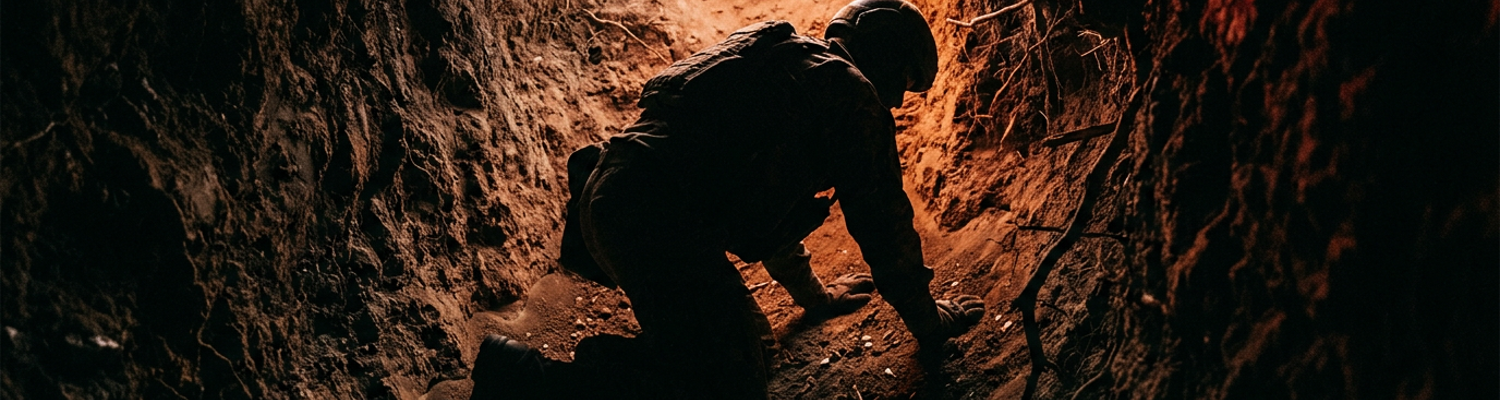
Riflemen sweeping the brush tripped over hidden roots and kicked aside thick layers of dead vegetation where the sniper fire had originated. Infantrymen discovered concealed spider holes dug vertically into the hard red soil, each narrow opening disguised with woven straw mats and loose dirt. Soldiers clearing the surrounding ground found flush mounted wooden trapdoors resting mere inches below the leaf litter, built with local timber and secured with rope latches. Camouflaged lids opened directly into the vast multi level underground complex of Viet Cong Military Region 4, an installation containing miles of interconnected passages, field hospitals, and supply rooms. Squad leaders dropped to their knees to pry at the damp wooden edges with their bayonets, exposing narrow vertical shafts that dropped straight down into total darkness.
Flashlights clicked on as squad leaders leaned over the openings to inspect the wooden framing inside the vertical shafts. Riflemen peered past the exposed trapdoors and realized that throwing fragmentation grenades down the holes would fail, because small blast baffles and tight right angle turns blocked the explosive shockwaves from traveling deeper. Platoon leaders radioed battalion headquarters to report that standard infantry weapons could not neutralize enemy soldiers who vanished beneath their boots. Officers on the surface recognized that detonating heavy explosives on the trapdoors would only collapse the upper entrances while leaving the lower bunkers completely functional. Battalion staff ordered the companies to secure every visible hole, mark the openings with white engineer tape, and prepare volunteer riflemen to crawl downward into the passages.
Volunteers stripped off their heavy web gear, steel helmets, and canvas packs to squeeze their shoulders through the narrow entryways. Soldiers armed themselves with standard issue Colt forty five caliber pistols, angled army flashlights, and lengths of field telephone wire tied around their boots so comrades on the surface could pull them back out if they were wounded. Riflemen positioned around the perimeter maintained outward security against snipers while the first scout slid headfirst past the wooden trapdoor frame. Small puffs of dry dust billowed up into the jungle air as the crawling soldier forced his way past the initial corner of the shaft. Men on the surface held the loose wire taut in their hands, waiting for the physical tugs that would signal either safe passage or an ambush in the dark.
Equipment of Early Tunnel Clearance Teams
Spools of field telephone wire turned slowly in the hands of top side soldiers who managed improvised lifeline communications, feeding raw insulated cable into the shaft because the military had issued no communication gear or formal doctrine for fighting underground. Infantrymen tied the thin black cable around the lead scout combat boot or waist harness, agreeing on simple physical signals where one yank meant stop, two yanks meant feed more line, and three violent pulls meant drag the man out immediately. Sharp stones and jagged roots along the unmapped passage walls caught the insulation, creating friction that made it difficult for surface handlers to tell the difference between an urgent distress tug and a snagged knot. Heavy field radio sets could not transmit through several feet of dense red clay, leaving the crawling volunteer cut off from all outside voice contact the moment his boots disappeared beneath the entrance frame. Soldiers on the surface could only crouch by the rim with fingers wrapped tightly around the vibrating copper strands, waiting for muffled sounds from the opening.
Flashlights of the battery operated anglehead pattern provided the only illumination as clearance teams navigated total darkness inside the unmapped passages below. Volunteers held the olive drab plastic casings in their left hands or clamped them beneath their chins, trying to keep both palms free to crawl forward over packed clay floors strewn with scorpions, centipedes, and sharp bamboo stakes. Moisture inside the unventilated tunnels condensed against the plastic lenses, fogging the glass and scattering the narrow beam into a dim haze that barely lit three feet of tunnel ahead. Corrosion caused by tropical humidity and leaking dry cell batteries frequently caused the bulbs to flicker or die without warning, plunging the crawling soldier into pitch blackness. Scouts wrapped black friction tape around the flashlight lenses, leaving only a tiny pinhole of light exposed so enemy sentries waiting at tunnel junctions could not spot the direct glare of the bulb.
Colt M1911A1 forty five caliber pistols remained drawn and cocked in right hands, serving as the primary weapon for volunteer tunnel rats who entered unmapped passages lacking specialized subterranean equipment or formal doctrine. Riflemen quickly discovered that their standard M16 rifles were far too long and clumsy to maneuver around tight ninety degree dirt corners, forcing them to rely solely on the heavy seven round automatic handgun. Firing the heavy forty five caliber round inside the sealed earth generated a blinding muzzle flash in the enclosed space while scorching the shooter unprotected hands with burning powder. Concussion waves from the large caliber weapon rebounded off the solid clay walls with violent force, rupturing eardrums, causing intense disorientation, and threatening to shake loose the unreinforced dirt ceilings. Reloading the weapons in total darkness required soldiers to drop the empty magazines into the mud and fumble for fresh rounds by touch.
Bayonets gripped in blackened knuckles probed the packed red earth ahead of each crawl, giving scouts a silent way to detect booby traps without firing their sidearms and filling the crawl space with smoke. Point men slid forward on their bellies with calloused fingertips skimming the floor, searching by touch for taut tripwires, hidden drop pits, and sharpened punji stakes planted in the clay. Sweat poured from their foreheads into their eyes and mixed with stinging red dust as temperatures inside the unventilated chambers climbed past one hundred degrees. Surface squads constantly rotated their crawling scouts after fifteen minutes of forward movement, hauling exhausted riflemen back up through the trapdoor before heat stroke and bad air could claim them. Squad leaders at the surface checked the tension on the field telephone wire, handed fresh magazines to the next volunteer, and lowered another soldier into the shaft.
Hazards Beneath the Laterite Clay
Scouts dropped onto the damp earth floor and squeezed their torsos directly into unreinforced narrow crawlways carved into hard red laterite clay. Solid laterite walls left barely two feet of clearance from shoulder to shoulder, forcing men to drag themselves forward on their stomachs without body armor or web belts. Temperatures inside the cramped tunnels hovered above one hundred degrees, creating suffocating humidity that soaked uniforms in sweat and made the air feel thick and heavy. Oxygen deprivation set in within minutes of advancing past the main vertical entrance because the underground complex had few surface ventilation vents to cycle clean air. Soldiers gasped for shallow breaths against the dense hot subterranean atmosphere while loose dirt crumbled from the unlined ceiling into their hair and eyes. Each labored breath pulled red dust into parched throats, forcing point men to pause every few yards to steady their shaking hands and clear their blurred vision.
Fingertips coated in red grime skimmed the uneven floor to feel for physical obstacles before the crawling men placed their full body weight down on the packed clay. Hidden drop pits cut into the floor concealed sharpened bamboo punji stakes that could impale a soldier forearms, knees, or chest in the dark. Guerrillas had hardened these bamboo spikes with fire and coated the tips with animal dung or river mud to cause severe rapid infections in any flesh they punctured. Crawling infantrymen scraped their bayonet blades across every square inch of earth, tapping lightly against the dirt to identify concealed pit covers made of thin wicker and dry grass. Point scouts who located the edge of a pit had to freeze in place, carefully maneuvering their bodies along narrow lip ledges carved into the sidewalls to bypass the deadly stakes without falling into the hole.
Tripwires stretched across the cramped passage directly beyond these bypassed pits, rigged to detonate concealed fragmentation grenades if snagged by an advancing boot or shoulder. Enemy defenders anchored these thin wires to bamboo pins driven into the clay, running the lines across bends and low crawlways where crawling scouts had minimal visibility. Riflemen relied on light finger pressure to trace taut cords through the blackness, locating Soviet and Chinese stick grenades wired inside hollowed out pockets in the laterite walls. Sweating scouts clamped pliers onto the trigger mechanisms or slid safety pins through grenade levers to disarm each explosive charge without producing sparks that could trigger early blasts. Cleared explosive devices were passed back hand to hand along the tunnel line, allowing the lead scout to resume his crawling advance toward the next junction.
Vipers hung from exposed jungle roots and hollowed clay pockets directly in the path of the advancing lead scout. Viet Cong fighters had tied these venomous snakes with thin string to root systems or concealed aggressive scorpions inside hollow bamboo tubes placed where crawling Americans would strike them with their elbows and hands. Venomous bites in the confined subterranean crawlway meant excruciating pain, rapid tissue swelling, and fatal venom spread, with no immediate medical evacuation possible through the tiny trapdoor. Crawling soldiers swept their dim flashlight beams over every overhead root and floor crevice, crushing scorpions with their bayonet pommels and pinning snakes behind their heads before cutting them. Lead scouts then gave three sharp tugs on the field telephone wire tied to their boots, directing the surface team to haul them back through the red dirt shaft for relief and replacement.
Combat in Confined Underground Bunkers
Infantrymen hauled the exhausted lead scouts up through the wooden frame of the shaft and sent fresh volunteers sliding down the wire to push into the expanding bunker complex. Soldiers encountered entrenched Viet Cong personnel defending blind corners, blast baffles, and flooded water traps built to protect lower headquarters levels. Viet Cong defenders had excavated sharp ninety degree turns along the subterranean corridors, neutralizing straight lines of sight and creating protected alcoves for riflemen armed with submachine guns. Earthen blast baffles absorbed explosive force and allowed guerrillas to fire point blank at approaching Americans before vanishing into secondary crawlways. Crawling point men could not maneuver long rifles through the cramped angles, leaving them with no choice but to reach around corners with heavy sidearms and fire blindly into the darkness before exposing their heads to defensive fire.
Discharging pistols and fragmentation grenades in enclosed spaces generated acoustic shockwaves that ruptured eardrums and caused acute concussive disorientation. Massive overpressure trapped inside the unvented clay chambers struck the crawling soldiers with crushing force, bleeding their ears and shattering their equilibrium. Dense clouds of hot powder gas and pulverized dirt filled the narrow tunnels within seconds, blinding the point men and snuffing out their angled flashlights. Shrapnel from defensive grenades bounced violently off the clay baffles, wounding volunteers who had no room to raise their arms or shield their faces. Groping forward through the suffocating haze, wounded scouts cleared jammed weapon slides by touch and dragged their torsos across dead enemy fighters to reach the edge of a flooded trench.
Water filled these traps completely up to the tunnel ceiling, creating an airtight barrier that prevented tear gas, smoke, and blast pressure from penetrating into the command complex below. Point men paused at the water edge to strip away canteen pouches and strap their pistols tightly to their wrists before plunging into the murky pool. Volunteers took deep breaths of stale air, forced their heads beneath the black surface, and swam blindly through the submerged clay siphon where roots snagged on their clothing. Men kicked their legs in the tight underwater canal without knowing if the passage opened on the other side or terminated in a drowned dead end. Breaching the surface on the far side of the water trap, gasping soldiers hauled themselves up onto a dry clay ledge that led into an operational enemy bunker.
Bunker walls in this lower headquarters were reinforced with heavy bamboo logs and fitted with storage shelves, medical cots, and field telephone lines. Enemy commanders had fled moments earlier through hidden escape hatches, leaving behind mimeograph machines, cipher books, and marked maps showing troop positions across the Ho Bo Woods. Point men swept the underground command room with their dim flashlights, cutting booby trap wires attached to document chests and setting security over the open exit tunnels. American squads shouted status reports back through the flooded siphon, signaling the surface teams to feed more telephone wire and send demolition crews down into the lower level. Soldiers stacked the captured enemy documents into waterproof bags and rigged satchel charges against the central bunker pillars to collapse the underground complex permanently.
Triage Challenges at Surface Aid Stations
Litter bearers rushed limp clearance scouts toward the battalion aid station set up under the rubber trees as demolition squads pulled the final teams from the shafts to fire the charges. Battalion aid stations treated casualties pulled from shafts suffering from closed space blast lung trauma, lethal carbon monoxide inhalation, and profound claustrophobic shock. High pressure shockwaves from grenades and satchel charges detonated inside the confined clay walls had crushed the delicate air sacs of the scouts lungs without piercing their outer skin, leaving men gasping for air while spitting bloody foam. Explosives and subterranean fires had consumed all clean air within the unventilated chambers, saturating the tunnels with lethal carbon monoxide that turned the victims skin bright cherry red and rendered them comatose. Other soldiers emerged physically whole but entirely paralyzed by profound claustrophobic shock, shaking violently, babbling incoherently, and fighting off their rescuers after hours of being trapped in pitch black tunnels barely two feet wide. Medics cut away soaked combat fatigues with trauma shears to inspect the trembling bodies for hidden wounds and chemical burns.
Powder from riot control tear gas canisters coated the wet skin of these clearance volunteers, clinging to the thick layer of sweat that covered their bare chests and limbs. Underground use of riot control tear gas canisters produced caustic chemical skin burns where the fine micro pulverized agent mixed with body moisture and trapped heat inside unventilated tunnels. Soldiers who crawled across floors dusted with gas crystals developed severe blistering burns across their necks, armpits, and groins that peeled away strips of outer skin. Sweat washed the reactive chemicals directly into open scrapes and insect bites, turning minor abrasions into deep painful chemical lesions that would not stop burning in the open air. Medics flushed the blistering chemical paste with bottled sterile saline and water, releasing concentrated plumes of vapor into the confined treatment area.
Doctors and corpsmen immediately experienced secondary respiratory distress among treating medical personnel as liberated gas particles rose from the damp litters into the stagnant aid station air. Unmasked medics began coughing uncontrollably, weeping from severe eye irritation, and gasping for breath as they attempted to cut away contaminated uniforms and start life saving intravenous lines. Staff members scrambled to pull on bulky protective gas masks, but the thick rubber facepieces instantly fogged in the oppressive jungle heat and made it almost impossible to find collapsed veins. Corpsmen fitted positive pressure oxygen resuscitators over the mouths of unconscious soldiers suffering from lethal carbon monoxide inhalation and closed space blast lung trauma to force vital oxygen back into damaged bloodstreams. Aid men secured rubber oxygen masks over the faces of the worst blast lung cases, wrapped the shivering soldiers in canvas blankets, and lined the litters up along the landing zone perimeter.
Helicopters flared over the red dirt clearing to extract these lined up casualties from the battalion aid station. Rotor wash whipped up red dust and blew residual chemical residue across the landing strip as litter bearers sprinted toward the open helicopter cargo doors. Medics hoisted stretchers carrying the comatose blast victims and burned tunnel scouts onto cabin floor brackets while flight medics checked chest tubes and saline drips. Pilots pulled maximum collective pitch to lift the overloaded helicopters above the sniper infested tree canopy, clearing the Ho Bo Woods on direct flight corridors toward surgical hospitals at Cu Chi and Long Binh. Battalion surgeons returned to the canvas aid tents to prepare fresh plasma bottles and decontaminate empty litters for the next wave of subterranean casualties.