
The Dawn of Modern Warfare and the Shock of 1939
The invasion of Poland in September 1939 changed the world forever. For military historians and tacticians around the globe, this violent event marked the birth of a completely new way of fighting. The German military introduced a battlefield concept that relied heavily on incredible speed, total surprise, and overwhelming concentrated force. People soon began calling this terrifying lightning war by a famous German name, which was Blitzkrieg. While the European powers watched the destruction of Poland with deep fear, observers across the Atlantic Ocean were busy taking extensive notes. The United States was not yet directly involved in the global conflict, but American military intelligence officers knew they had to immediately understand this new mechanized threat. Today, historians and tactical scholars can look back at the declassified US Army analysis of the 1939 Blitzkrieg tactic to see exactly what American generals thought about this new form of combat. These old classified documents provide a fascinating window into how the United States War Department frantically tried to decode the secrets of German battlefield success. We will deeply explore the tactical details found in these recently declassified intelligence reports and discover how early American observations of the Polish invasion ultimately shaped the United States military preparations for World War II.
Understanding the Military Mindset Before the Lightning War
To truly appreciate the massive shock caused by the 1939 invasion, we must first understand the global military mindset of the era. Prior to the outbreak of the conflict in Poland, the vast majority of military commanders around the globe were still mentally trapped in the past. They looked back at the grueling trench warfare of the First World War and naturally assumed the next major global conflict would be fought exactly the same way. The French military had invested massive amounts of national treasure into the Maginot Line, which was an enormous static defense system made of concrete bunkers and heavy artillery emplacements. British generals also firmly believed that modern defense systems and deep trenches would always hold back an attacking army. War was widely expected to be slow, muddy, and focused entirely on grinding down the enemy over months or even years of static combat. When the German army smashed through the Polish borders, they completely shattered these outdated beliefs in a matter of hours. Instead of digging defensive trenches, the attacking armored forces kept moving aggressively forward. They bypassed established strong points and left defending Polish armies entirely surrounded and confused. The declassified US military intelligence reports reveal that American observers were initially stunned by this rapid pace. They quickly realized they had to throw away their old military textbooks and figure out how a modern fighting force could move so incredibly fast across open terrain.
The Vital Role of US Military Intelligence Gatherers in Europe
The United States was officially a neutral nation when the war began in Europe. However, this political neutrality absolutely did not mean the American military was simply ignoring the raging conflict. The US War Department had numerous military attachés stationed in embassies all across the European continent. These military officers were essentially legal intelligence gatherers, specifically tasked with collecting as much open source and secret battlefield intelligence as possible. When the invasion of Poland officially started, these American attachés immediately began sending urgent telegrams and reports back to Washington. They interviewed fleeing Polish troops, spoke with neutral European observers, and gathered local field reports to piece together a clear picture of the chaotic battlefield. The resulting declassified US Army analysis of the 1939 Blitzkrieg tactic is heavily based on these frantic early dispatches. The intelligence officers deployed in Europe had an incredibly difficult job. The sheer speed of the German mechanized advance meant that the active front lines were changing every single hour. By the time an intelligence report was drafted and sent over the telegraph wire, the German tank columns had often moved another fifty miles deep into Polish territory. Despite these immense logistical challenges, the American intelligence network successfully managed to identify the core components of the new lightning war strategy. Their early analysis quickly became the foundational bedrock for everything the American military would do to prepare for their eventual entry into the Second World War.
Unveiling the Secrets of the Declassified US Army Documents
For many decades following the end of the global conflict, the detailed reports sent back from Europe in 1939 remained locked away in highly classified government vaults. Military historians always knew these documents existed, but the general public had absolutely no access to the raw intelligence gathered during the early days of the war. Once these historical files were finally opened to academic researchers, a wealth of incredible tactical information came to light. The declassified US Army analysis of the 1939 Blitzkrieg tactic reads like a real time historical mystery novel. The documents vividly show American analysts struggling to find the right military vocabulary to describe the chaos unfolding in Eastern Europe. They often used clunky terms like mechanized envelopment and rapid armored penetration to explain what we now simply call the Blitzkrieg. The unsealed files include hand drawn tactical maps showing the exact movements of German Panzer divisions as they violently sliced through traditional Polish defensive lines. They also contain translated radio intercepts and intelligence summaries of German military propaganda broadcasts. What makes these declassified files so incredibly important for historical research is the raw honesty found in the writing. The American military officers did not try to hide their total surprise. They openly admitted to their superiors that the German military had achieved something completely unprecedented in the long history of human conflict. These raw military assessments highlight the terrifying efficiency of the German war machine and showcase the urgent need for America to rapidly modernize its own armed forces.
Mechanized Warfare and the Terrifying Speed of Battle
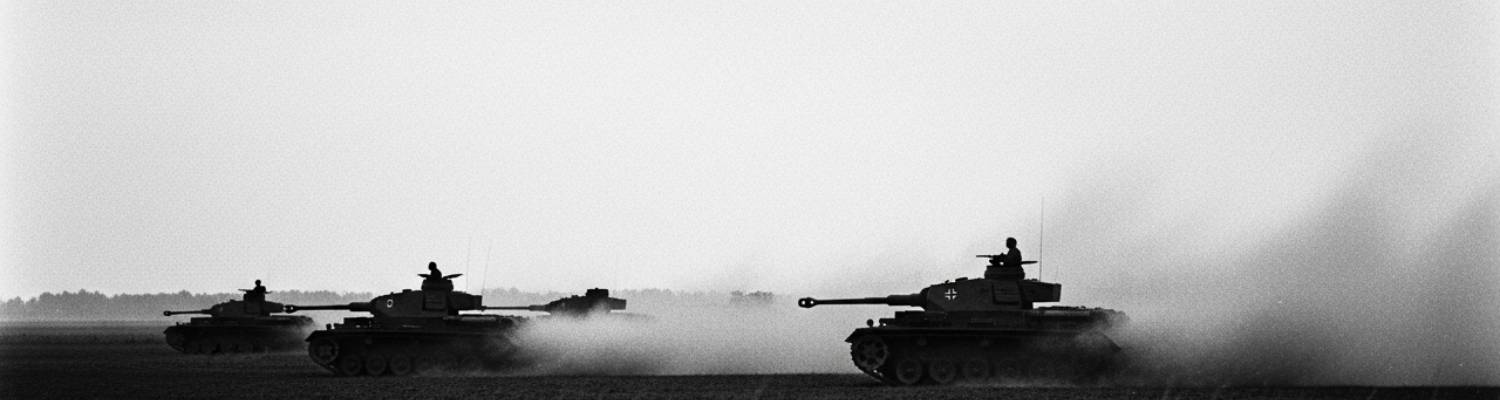
The central pillar of the German offensive strategy in 1939 was the brilliant and highly concentrated use of armored vehicles. The American intelligence analysts spent a massive amount of time entirely dissecting the structure of the German Panzer divisions. Before this specific conflict, military tanks were generally used strictly as infantry support weapons. They were historically treated as slow moving metal shields that walked at the exact same pace as the foot soldiers in the mud. The German high command flipped this traditional tactical concept completely upside down. They deliberately grouped all of their fast tanks together into massive and highly concentrated armored fists. The American intelligence reports noted that these Panzer units were specifically designed to punch a very narrow hole directly through the enemy lines. Once the tanks violently broke through the initial defense, they absolutely did not stop to secure the surrounding area. Instead, they raced deep into the vulnerable rear zones of the Polish army. This strategy created massive psychological panic. Polish combat commanders suddenly found German tanks twenty miles behind their own front lines, actively destroying supply depots and cutting critical telegraph wires. The US Army analysts were deeply fascinated by this unique focus on deep mechanized penetration. They fully realized that the sheer speed of the tanks was essentially a powerful weapon itself. By moving much faster than the enemy could ever react, the attacking German forces completely paralyzed the defending generals. This vital observation would eventually lead the United States War Department to build its own highly mobile and incredibly powerful armored divisions.
Air Superiority and the Revolutionary Integration of Close Air Support
Tanks were only one half of the terrifying tactical equation observed in Eastern Europe. The declassified US Army analysis of the 1939 Blitzkrieg tactic also placed a very heavy emphasis on the dominating role of the German air force. The Luftwaffe proved to be a critically essential component of the entire lightning war strategy. Before the German ground troops even crossed the physical border, massive squadrons of bomber aircraft were already flying deep into Polish airspace to systematically destroy airfields, bridges, and civilian railroad junctions. This early devastating strike guaranteed total air superiority for the invading ground forces. However, what truly shocked the observing American military attachés was the revolutionary concept of close air support. The German military utilized a specific type of terrifying aircraft known universally as the Stuka dive bomber. These loud planes acted exactly like highly mobile flying artillery pieces. Whenever the advancing German tank columns ran into a surprisingly difficult defensive position, they did not wait for traditional heavy artillery to be brought up from the rear. Instead, the tank commanders used two way radios to instantly call in a precision strike from the circling Stuka bombers. The planes would scream directly out of the sky and obliterate the enemy concrete bunkers in a matter of minutes. The American military intelligence files contain numerous pages detailing this incredible tactical coordination between the flying air forces and the rolling ground forces. The US Army clearly recognized that integrating airplanes directly into ground combat was a revolutionary modern tactic that required immediate study and rapid replication by American engineers.
The Unseen Weapon of Real Time Radio Communication
It is always very easy for historians to focus exclusively on the massive metal tanks and the screaming dive bombers when discussing World War II battlefield tactics. However, the declassified US Army analysis points out a much quieter piece of technology that made the entire Blitzkrieg offensive functionally possible. That critical piece of hidden technology was the two way radio. The German military high command completely understood that armored speed and battlefield coordination required instant communication at all times. Therefore, they went to great financial lengths to install a working radio transmitter inside almost every single tank in their armored divisions. This was a massive and radical departure from the standard military practices of other powerful nations. Many contemporary armies still relied heavily on colorful signal flags or human runners to pass vital messages between vehicles on a noisy battlefield. The US Army intelligence officers quickly realized that the German radio network was the actual central nervous system of their entire military machine. Because every single tank commander could easily talk to his superiors and his wingmen in real time, the Panzer divisions could instantly react to rapidly changing battlefield conditions with incredible agility. If a German armored attack ran into unexpected heavy resistance, the frontline commander could instantly redirect his trailing forces to attack a much weaker spot down the road. The detailed American reports strongly emphasized the absolute necessity of reliable radio communications in any future modern warfare scenario. This vital piece of intelligence prompted the United States military to rapidly expand its own radio manufacturing capabilities in the frantic years leading up to their direct entry into the global war.
Evaluating the Role of Mobile Artillery in the Lightning War
Another highly critical component found within the declassified US Army analysis of the 1939 Blitzkrieg tactic involves the rapid evolution of battlefield artillery. Historically speaking, artillery batteries were incredibly heavy, extremely slow, and required massive amounts of time to properly set up and calibrate before firing. During the brutal trench warfare of the previous generation, massive artillery barrages would often last for several days or even weeks before an actual infantry attack was launched. The American military observers stationed near Poland quickly noticed that the German military had completely discarded this old artillery method. Because the entire lightning war concept relied on constant forward momentum, the traditional heavy artillery simply could not keep up with the fast advancing Panzer tanks. To brilliantly solve this logistical problem, the German military attached highly motorized artillery units directly to the fast armored divisions. These lighter artillery pieces were either towed by fast trucks or mounted directly onto tracked vehicle chassis. The intelligence reports carefully noted that these mobile guns would rapidly deploy, fire a brief but highly concentrated barrage to quickly suppress enemy bunkers, and then immediately pack up and continue moving forward with the tanks. The US Army analysts realized that artillery was no longer just a static bombardment tool used for long sieges. It had officially become a highly mobile suppression weapon designed specifically to keep the enemy soldiers hiding in their trenches just long enough for the tanks to violently break through the defensive line. This specific tactical observation heavily influenced the rapid development of American self propelled artillery units during the war.
How Regional Geography and Terrain Influenced the 1939 Campaign
Military strategy is almost always dictated by the natural geography of the specific battlefield. The declassified US military intelligence documents paid very close attention to how the physical landscape of Poland actively facilitated such a rapid and destructive invasion. Poland in the late summer of 1939 was largely characterized by wide open plains, massive flat agricultural fields, and a relatively dry seasonal climate. The American intelligence officers intelligently recognized that this specific type of open terrain was absolutely perfect for mechanized armored warfare. The flat ground easily allowed the German Panzer divisions to fan out and maneuver freely without being heavily restricted to paved civilian roads. When brave Polish defenders attempted to successfully block a main highway, the German tanks simply drove directly through the open farmland to bypass the defensive roadblock entirely. The American intelligence reports carefully noted that the massive success of the lightning war was at least partially due to this highly favorable regional geography. The American analysts hypothesized that the exact same armored tactics might heavily struggle in densely forested areas, high mountainous regions, or deep winter mud. This geographical analysis was incredibly vital for the US War Department planners. It actively forced American generals to start critically thinking about how they would eventually need to adapt their own armored forces for vastly different types of environments, ranging from the hot sandy deserts of North Africa to the dense green hedgerows of Western Europe.
Logistics and the Hidden Vulnerabilities of the German Advance
While the massive German offensive appeared completely invincible on the surface to casual observers, the American intelligence gatherers were highly trained to look for hidden weaknesses. The declassified US Army analysis of the 1939 Blitzkrieg tactic contains some incredibly fascinating observations regarding the failures of German logistics. Moving thousands of heavy tanks and transport trucks across hundreds of miles actively requires a staggering amount of liquid fuel, heavy ammunition, and mechanical spare parts. The intelligence reports clearly noted that the fast moving Panzer spearheads frequently outran their own slow supply lines. The German military simply did not possess enough motorized transport trucks to constantly keep up with the advancing armored tanks. As a direct result of this shortage, the vast majority of the regular German infantry soldiers and supply trains still relied entirely on old horse drawn carts. The observing American attachés quickly recognized this massive tactical contradiction. The very front edge of the German attacking army was fully mechanized and incredibly fast, but the long logistical tail dragging behind it was extremely slow and technologically outdated. The US Army analysis logically concluded that this glaring logistical gap was a major strategic vulnerability. If a defending army could somehow manage to actively avoid the initial armored punch and selectively attack the highly vulnerable horse drawn supply lines, the entire Blitzkrieg offensive would eventually run out of gas and violently grind to a halt. This crucial piece of battlefield intelligence gave the American generals immense hope and heavily influenced their strategic defensive planning for future combat operations against German ground forces.
The Terrifying Psychological Impact of Lightning War Tactics
Modern warfare is not just about moving metal machines on a paper map. It is also a deeply intense battle of human endurance and mental psychology. The declassified US Army documents dedicated a very significant amount of space to analyzing the massive psychological shock that the Blitzkrieg tactics inflicted upon the defending Polish forces. The entire German attack strategy was specifically designed to create maximum chaos, total confusion, and utter human despair. By attacking with extreme speed and utilizing terrifying new weapons like the screaming Stuka dive bombers, the German military actively sought to completely break the enemy morale before a major ground battle even officially began. The American intelligence officers privately interviewed Polish military survivors who described the absolutely paralyzing fear of being entirely surrounded by unseen enemy forces within the first few days of the war. The traditional military command structures completely collapsed because regional generals simply could not get accurate information from the collapsing front lines. The constant intentional bombing of civilian population centers and fleeing refugee columns further added to the complete and total breakdown of social order. The US Army analysts realized that psychological terror was being successfully weaponized on a scale never before seen in human history. They rightfully concluded that modern American soldiers would absolutely need completely different psychological training to withstand this type of relentless and terrifying onslaught. This dark realization directly led to massive changes in American military training programs, focusing very heavily on maintaining strict discipline and unit cohesion even when young troops were completely cut off from their central command headquarters.
Analyzing the Polish Defense Strategy and Allied Blind Spots
To properly frame the intelligence found in the declassified US Army analysis of the 1939 Blitzkrieg tactic, we must also deeply look at how the American analysts viewed the defeated Polish defenders. The old American military files openly reveal a deep sense of sympathy for the brave Polish army, but this sympathy is heavily coupled with a very harsh professional critique of their initial defensive posture. Poland possessed a very large and highly proud military force, but it was largely designed and trained to fight the slow wars of the past. The Polish high command had mistakenly spread their available troops very thin along the entire massive length of their national border. They desperately wanted to defend every single inch of their sovereign national territory. The American analysts clearly noted that this was a fatal strategic mistake when facing a highly concentrated mechanized attack. Because the Polish troops were spread out in a very thin static line, the massive German armored spearheads easily and quickly broke through the weakest points. Once the German tanks were fully behind the Polish defensive lines, the defending troops were completely cut off from their vital supply depots and regional command centers. The US military reports pointed out that this static border defense strategy was completely useless against a lightning war attack. Furthermore, the sharp analysts warned their superiors that the major Allied powers, specifically France and Great Britain, were currently making the exact same defensive mistakes. The American officers loudly warned that relying on static border defenses like the French Maginot Line would ultimately lead to total disaster if the German military suddenly decided to turn their Panzer tanks toward the west.
Traditional Intelligence Gathering Techniques in the 1930s
How exactly did the United States successfully gather this highly detailed tactical information decades before the modern era of spy satellites and digital drones? The declassified US Army analysis of the 1939 Blitzkrieg tactic relied almost entirely on traditional human intelligence gathering methods. In the late 1930s, American military attachés were essentially given diplomatic immunity to casually attend foreign military parades, read local foreign newspapers, and speak directly with military officials from other European nations. During the bloody invasion of Poland, American diplomats and military observers who were physically stationed near the conflict zones worked around the clock to gather clues. They utilized very basic tools like optical binoculars, verbally translated radio broadcasts, and intercepted civilian telegraph messages to paint a picture of the war. Some brave intelligence officers actually drove their cars directly out to the borders of neutral countries to personally interview exhausted refugees who were fleeing from the rapid German advance. These traumatized refugees often provided the very first eyewitness accounts of the terrifying Stuka dive bombers and the massive endless lines of Panzer tanks. The dedicated analysts back in Washington then had the incredibly difficult administrative task of piecing all these random informational puzzle pieces together into a highly coherent tactical picture. They carefully cross referenced civilian eyewitness accounts with official Polish military broadcasts and boastful German propaganda releases. This painstaking and tedious process of intelligence gathering highly praises the incredible dedication of the American officers. Without the luxury of any modern digital technology, they successfully managed to accurately reverse engineer the most complex military strategy of their time using nothing but basic human observation, critical analytical thinking, and sheer determination.
Early Misconceptions and Fierce Internal US Military Skepticism
It is highly important for historical accuracy to note that the tactical intelligence gathered in 1939 was not instantly accepted by everyone in the American military establishment. The declassified US Army analysis deeply reveals a fierce and bitter internal debate among high ranking American officers in Washington. Some veteran generals were highly skeptical of the wild reports coming back from the European continent. They simply refused to believe that armored vehicles could ever win massive battles entirely on their own. A very vocal faction within the War Department stubbornly argued that the speedy German victory was absolutely not due to brilliant new military tactics, but rather the direct result of an incredibly weak and poorly equipped Polish army. These skeptics firmly believed that the Polish military was badly led and essentially doomed to fail regardless of what specific tactics the invading Germans used. They stubbornly insisted to the intelligence officers that the true definitive test of mechanized warfare would only happen when the Germans eventually faced a massive and powerful western army like the French military. Unfortunately, this lingering skepticism caused some dangerous delays in how quickly the United States adapted to the new realities of global war. The internal classified memos found within the declassified files clearly show younger, forward thinking officers desperately trying to convince the older generals that the Blitzkrieg was a very real and highly existential threat to global security. It would tragically take the dramatic and shocking fall of France in the following year to completely shatter this lingering skepticism and finally force the entire American military establishment to fully embrace the bloody lessons learned from the 1939 invasion of Poland.
How Blitzkrieg Intelligence Changed Global Military Budgets
When the highly detailed declassified US Army analysis of the 1939 Blitzkrieg tactic finally reached the highest political levels of the United States government, it sent massive shockwaves directly through the political establishment. National military budgets in the quiet years following the First World War had been drastically and continuously reduced by politicians. The American public was largely isolationist in their political views and absolutely did not want to spend millions of taxpayer dollars on heavy tanks and expensive bomber aircraft. However, the raw battlefield intelligence from the Polish campaign definitively proved that the global security landscape had completely and violently changed. The detailed military reports showing the terrifying speed and highly destructive power of the German war machine provided the necessary political proof to convince politicians that American rearmament was a matter of urgent national survival. Members of Congress who were previously very reluctant to increase military spending were quietly given classified intelligence briefings based directly on these exact military documents. As a direct result of these early tactical observations, the United States officially began to dramatically increase federal funding for military weapons research, the mass production of armored vehicles, and the massive expansion of the army air corps. The dark intelligence gathered from the burning ashes of Poland served as a massive early wake up call for the entire American industrial base. Civilian factories that were happily building passenger cars immediately began drawing up blueprints to transition to heavy tank production. The deep tactical analysis of the Blitzkrieg essentially kickstarted the massive engine of the American arsenal of democracy long before the very first American combat soldier even set foot on a European battlefield.
Shaping American Military Doctrine for a Global War
Despite the initial stubborn resistance from some old school commanders, the raw intelligence gathered during the Polish campaign eventually sparked a massive tactical revolution within the United States military. The declassified US Army analysis of the 1939 Blitzkrieg tactic essentially became the master blueprint for American military modernization. Once the War Department finally accepted the terrifying reality of the lightning war, they began a drastic and total reorganization of their own ground forces. The United States officially created the Armored Force in 1940, completely centralizing their tank development programs and permanently shifting away from the outdated idea that tanks were merely slow infantry support weapons. American military engineers frantically began designing much faster and highly reliable medium tanks, which would eventually lead to the creation of the highly iconic Sherman tank used extensively throughout the entire war. Furthermore, the army completely rewrote its official field manuals from scratch. The brand new military doctrine focused very heavily on vehicular mobility, highly aggressive offensive actions, and deeply integrated combined arms operations. American combat commanders quickly learned that they absolutely had to integrate their field artillery, close air support, and heavy armored units into a single cohesive fighting force. The extensive intelligence notes regarding German radio communication also prompted the US military to mandate outfitting their own combat vehicles with highly advanced communication gear. By the time the United States officially entered the Second World War after the tragic attack on Pearl Harbor, their entire tactical playbook had been completely rewritten. They had successfully taken the terrifying lessons of the enemy Blitzkrieg and used them to forge an unstoppable military machine of their own.
The Enduring Value of Learning from the Enemy
One of the most deeply fascinating aspects of studying military history is observing exactly how defending armies learn, adapt, and evolve based on the actions of their adversaries. The declassified US Army analysis of the 1939 Blitzkrieg tactic definitively proves that the American military was actively trying to decode the deep secrets of German battlefield success from the very first tragic shots of the war. The United States military did not simply sit back in isolated geographical ignorance. Instead, they aggressively deployed highly intelligent observers, frantically gathered hard data, and deeply analyzed the tactical shifts that were violently changing the world order. The American intelligence officers correctly and accurately identified the most crucial elements of modern mechanized warfare. They recognized the concentrated use of heavy armor, the vital integration of close air support, the absolute necessity of wireless radio communication, and the devastating psychological impact of extreme battlefield speed. They also successfully identified the hidden logistical flaws involving horse drawn supply lines that would ultimately contribute heavily to the eventual downfall of the German war machine. These old declassified documents serve as a incredibly powerful historical reminder of the immense importance of military intelligence gathering and continuous tactical evolution in the face of new global threats.
Conclusion: Preserving the Vital Lessons of History
Today, these historic military documents provide far more than just interesting trivia for history buffs. They offer highly invaluable insights directly into the minds of the men who were actively tasked with protecting the free world during its absolute darkest hour. For anyone deeply interested in World War II history, modern military strategy, or the complex art of intelligence gathering, the declassified US Army analysis of the 1939 Blitzkrieg tactic remains an absolutely essential subject of academic study. By carefully reading the raw and unedited thoughts of American intelligence officers observing the brutal invasion of Poland, we can truly understand the terrifying and chaotic dawn of modern mechanized warfare. The violent transition from the static muddy trenches of the First World War to the blazing vehicular speed of the Second World War was incredibly chaotic and deeply bloody. However, thanks entirely to the diligent and tireless work of American intelligence analysts in 1939, the United States was able to successfully crack the tactical code of the lightning war. They completely absorbed the harsh and bloody lessons of the European battlefield and aggressively used that specialized knowledge to build the incredibly powerful military force that would eventually help liberate the continent of Europe and secure total victory for the Allied forces. The profound historical legacy of these declassified intelligence files lives on in the modern military doctrines of today, conclusively proving that deeply understanding the military tactics of the past is always the absolute best way to properly prepare for the unknown challenges of the future.