
A Naval Infantry Force Confronts Industrialized War
Before 1918, the United States Marine Corps was an organization defined by the sea. It functioned as the U.S. Navy’s infantry, a force of disciplined riflemen for shipboard security and small-scale colonial interventions. Its operational history was written in the tropics, during the so-called “Banana Wars” in places like Panama, Cuba, Haiti, and the Dominican Republic. This experience bred a cadre of tough, professional officers and non-commissioned officers skilled in counter-insurgency and constabulary duties. They were experts in small wars, not in the massive, industrialized ground combat that had defined the Western Front for four bloody years. The Corps that deployed to France with the American Expeditionary Forces was proficient in marksmanship and imbued with an aggressive spirit, but it was entirely unprepared for the tactical realities of trench warfare, massed artillery, chemical agents, and peer-on-peer conflict. Its doctrine, centered on individual discipline, was about to collide with the meat grinder of modern war.
The strategic situation deteriorated rapidly in the spring of 1918. Germany, freed from its eastern front by Russia’s collapse, transferred dozens of divisions west for Operation Michael, a massive offensive designed to shatter the Allied lines before American manpower could tip the scales. The German advance tore through French defenses along the Aisne River, and by late May, their stormtroopers were within 45 miles of Paris. The French government prepared for evacuation. Into this desperate gap, the U.S. 2nd Division was rushed. The division included the 4th Marine Brigade, an organization comprising the 5th and 6th Marine Regiments and the 6th Machine Gun Battalion. On June 1, 1918, the Marines arrived near the Marne River, moving past streams of retreating, exhausted French soldiers who urged them to turn back. The response from Captain Lloyd Williams of the 2nd Battalion, 5th Marines, became legend: “Retreat, hell! We just got here!” The Marines, under the command of Army Brigadier General James G. Harbord, began digging shallow fighting scrapes along the Paris-Metz highway. Ahead of them lay a one-square-mile patch of woods, a former hunting preserve known as the Bois de Belleau.
A Brutal Education in the Woods
The Battle of Belleau Wood, which raged from June 1 to June 26, 1918, was the defining event for the 20th-century Marine Corps. It was a savage, close-quarters fight that exposed the Corps’ tactical deficiencies while simultaneously forging its modern identity in fire. The initial actions were disastrously costly. On June 6, General Harbord, anxious to seize the initiative, ordered a counteroffensive to clear the woods. The plan was rudimentary, calling for a daylight assault by the 5th and 6th Marines across a wide, open wheat field, directly into the interlocking fields of fire from deeply entrenched German Maxim MG 08 machine-gun nests. Reconnaissance was poor, and coordinating artillery support was almost nonexistent. The attack was an act of raw courage untempered by tactical sense.
The first waves of Marines were annihilated. The wheat field became a killing ground as German gunners methodically traversed their weapons across the advancing lines. The 3rd Battalion, 5th Marines, and 3rd Battalion, 6th Marines, suffered immense losses. It was here that Gunnery Sergeant Dan Daly, already a two-time Medal of Honor recipient, reportedly rallied his men with the shout, “Come on, you sons of bitches, do you want to live forever?” By the end of the day, the 4th Marine Brigade had sustained 1,087 casualties, the highest single-day loss in Marine Corps history up to that point. The attack was a failure, a grim lesson that aggression alone could not overcome prepared defenses. A small foothold was gained at the southern edge of the woods, but the price was staggering.
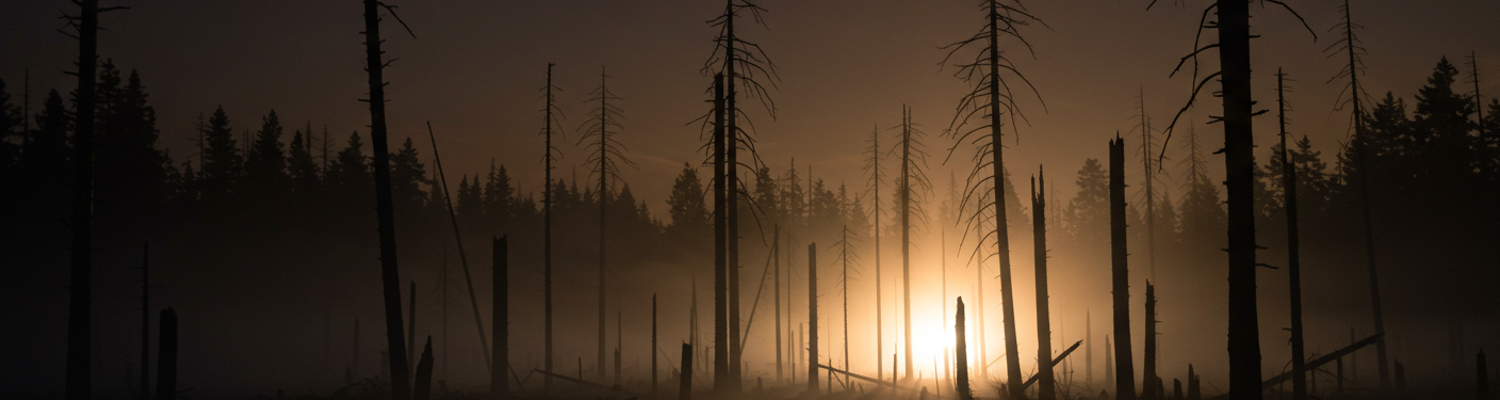
What followed was a three-week ordeal of attritional combat. The battle devolved into a series of disconnected small-unit actions. The terrain itself was a formidable enemy. The woods were a labyrinth of thick undergrowth, massive boulders, and deep ravines that made command, control, and communication nearly impossible. Platoons and squads became isolated, fighting their own separate wars. Leadership devolved to corporals and sergeants as officers became casualties at an alarming rate. These junior leaders learned and adapted under fire. They developed rudimentary fire-and-maneuver tactics, with some men using their M1903 Springfield rifles to provide suppressing fire while others crawled forward to assault German gun positions with grenades and bayonets. The fighting was intimate and vicious, often decided with trench knives and fists in struggles for shell craters and rocky outcrops. The woods, shattered by constant shelling from both sides and laced with German mustard gas, became a hellscape of splintered trees and concealed death.
The German defenders, elements from at least five different veteran divisions, were skilled and determined. They launched numerous counterattacks to dislodge the Marines, but the Marines refused to yield ground. This relentless tenacity gave rise to their famous nickname. German reports allegedly referred to the attacking Marines as “Teufel Hunden,” or “Devil Dogs.” While the exact origin is debated by historians, with some suggesting it was a creation of American war correspondents, the name perfectly captured the ferocity the Marines displayed. On June 26, after weeks of brutal, yard-by-yard clearing operations, Major Maurice E. Shearer of the 3rd Battalion, 5th Marines, sent the simple message: “Woods now U.S. Marine Corps entirely.” The victory was absolute, but the cost was horrific. The 4th Marine Brigade suffered nearly 10,000 casualties, with 1,062 killed in action, representing more than half its initial strength.
Forging Doctrine from Belleau's Fire
Belleau Wood was a tactical crucible that forced a painful but necessary institutional reckoning. The catastrophic casualty rates, especially on June 6, provided undeniable proof that the Corps’ pre-war emphasis on marksmanship and offensive spirit was dangerously insufficient against a modern, entrenched enemy. The frontal assault across the wheat field was a bloody monument to the consequences of inadequate fire support and poor operational planning. The chaotic, decentralized combat inside the woods, however, provided the blueprint for the Corps’ future. The battle proved the absolute necessity of effective small-unit leadership. It demonstrated that in the fog of war, corporals and sergeants must be empowered to take initiative and make decisions. The hard-won, practical knowledge of fire and maneuver, learned while crawling toward machine guns, became a foundational principle of Marine infantry tactics.
In the interwar years, the lessons of Belleau Wood directly shaped the evolution of the Marine Corps. Visionary leaders, many of them veterans of the battle, sought a unique mission to justify the Corps’ existence in an era of shrinking military budgets. Major General John A. Lejeune, who assumed command of the 2nd Division shortly after the battle and later became Commandant, was the primary architect of this transformation. He, along with future commandants like Wendell Neville, Thomas Holcomb, and Clifton Cates, understood that the Corps needed to specialize. That specialty became amphibious warfare.
The development of the Tentative Manual for Landing Operations in the 1930s was a direct intellectual descendant of the fighting in France. The manual codified the need for overwhelming, coordinated fire support from naval guns and aircraft to suppress and destroy shore defenses, a direct lesson from the slaughter before Belleau Wood. It stressed the importance of well-led, aggressive small units for seizing beachheads and pushing inland, a reflection of the successful but costly tactics used to clear the woods. The chaos of command and control in the forest underscored the need for meticulously planned, phased assaults with clear objectives for every platoon. The establishment of the Fleet Marine Force in 1933 provided the organizational structure to execute this new doctrine. Belleau Wood solidified the Marine Corps’ identity, transforming it from a naval constabulary into an elite, expeditionary force-in-readiness. The battle, entered with more bravery than tactical sophistication, provided the bloody education that defined the United States Marine Corps for the Second World War and beyond.