
Mediterranean Escalation and the DEFCON Alert
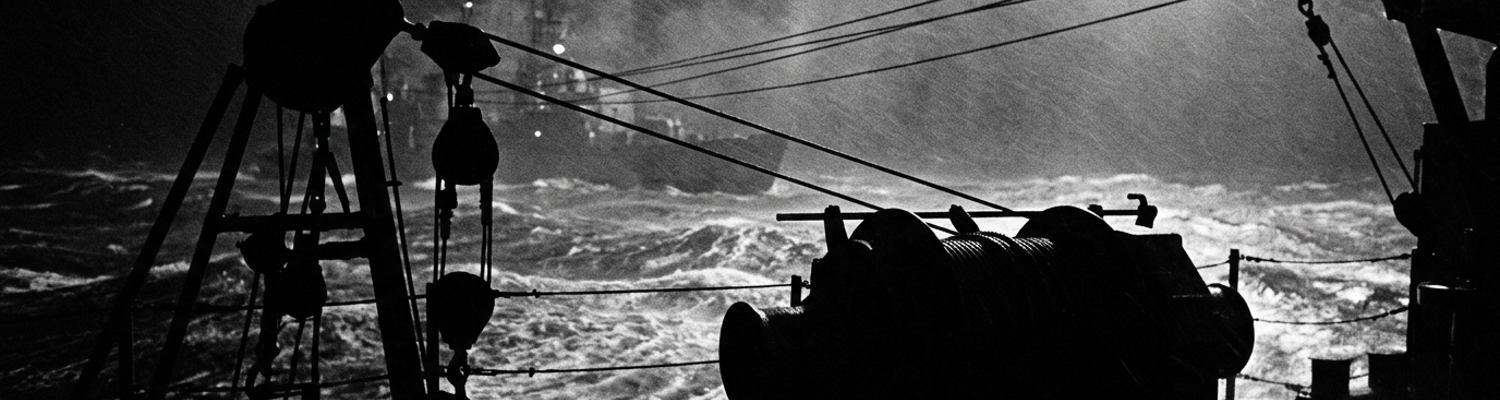
Freezing rain battered the steel decks of naval vessels operating in the North Atlantic and Mediterranean throughout October 1973. Salt spray froze on contact with exposed winch gears, lifelines, and deck plating. Heavy ice accumulation threatened to destabilize smaller escorts. Below deck, engineers worked inside confined boiler rooms. Ambient temperatures exceeded 120 degrees Fahrenheit. The air smelled heavily of sulfur and burned ozone. Mechanics waded through ankle-deep mixtures of seawater and leaked bunker oil to reach failing steam valves. Heavy ocean swells continuously threw 10,000-ton ships off their axes during routine transits. Crew members braced themselves against bulkheads just to stand upright.
Archival evidence shows this physical punishment formed the baseline operating condition before higher command issued any combat alerts.
A close review of operational logs indicates the structural shift in global military posture occurred late on October 24 during the final stages of the Yom Kippur War. Israeli Defense Forces crossed the Suez Canal and fully encircled the Egyptian Third Army. Soviet Premier Leonid Brezhnev sent a direct communication to Washington indicating a readiness to deploy airborne divisions to the Sinai Peninsula. The objective was to rescue the trapped Egyptian units. The United States National Security Council convened in the White House Situation Room just before midnight to formulate a response. Chairman of the Joint Chiefs of Staff Admiral Thomas Moorer transmitted an emergency action message via secure teletype to all global commands at 2341 hours Eastern Standard Time.
The U.S. military entered a DEFCON 3 posture.
Strategic Air Command dispersed B-52 bombers to secondary airfields and loaded live nuclear weapons into bomb bays. Intercontinental ballistic missile silos initiated pre-launch cryptographic key verifications. Aboard deployed naval vessels, klaxons sounded general quarters. Cryptographers decoded the flash-override messages using physical AN/UGC-25 punch-tape machines and KW-7 encryption devices (NARA Record Group 313).
Sailors physically stripped non-essential combustible materials from the bulkheads. They secured heavy hatches to prepare for incoming anti-ship missiles.
The U.S. Sixth Fleet mobilized rapidly in the Mediterranean Sea to balance Soviet naval positioning. The Soviet Navy 5th Eskadra surged its surface and submarine presence to a record 96 vessels in the region. Task Force 60 steamed east toward geographic coordinates south of Crete to block access to the Dardanelles chokepoints. This force centered around the aircraft carriers USS Independence and USS John F. Kennedy. Soviet Kynda-class cruisers and Echo II-class guided-missile submarines shadowed the American formations at distances of less than 2,000 yards. These Soviet vessels carried SS-N-3 Shaddock anti-ship missiles capable of carrying nuclear warheads.
Fire control radars on both sides actively painted opposing hulls.
Sonar operators utilizing AN/SQS-26 arrays aboard American destroyers recorded the acoustic signatures of Soviet torpedo tube outer doors opening and closing. Boiler technicians aboard the JFK pushed their 1,200-psi steam plants to maximum output. They maintained a constant 30-knot speed for F-4 Phantom and A-6 Intruder flight operations. Aviation fuel and bunker oil reserves dropped to tier-one emergency levels within forty-eight hours of continuous high-speed maneuvering.
To sustain this high-tempo deployment, the Department of Defense activated Naval Reserve personnel to crew auxiliary oilers including USS Canisteo (AO-99). The aging Cimarron-class fleet oiler required immediate manning to replace active-duty vessels undergoing scheduled depot-level maintenance. Selected Reserve Machinist Mates and Boiler Technicians boarded the Canisteo in Norfolk and immediately took the ship to sea to join the replenishment rotation. The technical troubleshooting required to keep the oiler functioning during underway replenishment was constant and entirely improvised. High-pressure steam lines powering the tensioning winches developed severe stress fractures under the load of continuous operations. Reserve engineers used brass shims and heavy-duty pipe clamps to seal leaking flanges. The winches actively transferred 7-inch diameter refueling hoses to alongside destroyers on a taut 3/4-inch steel cable.
During a nighttime replenishment evolution off the coast of Sicily, a primary transfer pump armature burned out.
Two reserve Electrician Mates bypassed the destroyed control circuit using heavy-gauge copper wiring stripped from a broken public address system. They manually engaged the heavy 440-volt contactors with wooden broom handles to restore the 3,000-gallon-per-minute fuel flow to the receiving ship.
Encrypted Radiogram Queues and Supply Bottlenecks
When examining the historical record of Naval Communications Station Rota in Spain, the mechanical limits of 1970s cryptography become immediately apparent. The DEFCON 3 alert generated thousands of Flash and Immediate precedence messages detailing Soviet submarine coordinates, nuclear weapons release protocols, and carrier strike group deployment orders. High-priority operational communications clogged encrypted radiogram queues during the surge. Radiomen working in secure, windowless compartments aboard Sixth Fleet vessels processed this incoming traffic using KW-7 and KW-37 cryptographic devices.
These specific machines relied on mechanical relays, 12AX7 vacuum tubes, and perforated paper tape to decipher incoming radioteletype signals over high-frequency bands.
The sheer volume of incoming flash-override traffic forced automated routing systems to dump lower-priority messages into holding buffers. Operators physically carried spools of punched paper tape across the deck to manual transmission bays. The AN/UGC-25 teletypewriters clattered at a maximum speed of one hundred words per minute. Cryptographic technicians worked twenty-four-hour shifts under red battle-lantern illumination just to keep the primary broadcast channels clear.
The backlog grew by hundreds of messages per hour.
A close review of operational logs indicates this data bottleneck directly degraded fleet readiness. Requisitions for tensioned high-line span wires stalled in communication backlogs. Supply officers aboard auxiliary ships drafted Military Standard Requisitioning and Issue Procedures requests to replace these 7/8-inch, 900-foot steel cables. The heavy cables formed the physical bridge between ships during the Standard Tensioned Replenishment Alongside Method. Continuous refueling of Task Force 60 destroyers in heavy seas caused severe metal fatigue, saltwater corrosion, and broken strands in the wire rope.
Winch operators reported visible fraying along the outer jackets of the wires after forty-eight hours of continuous tension.
Replenishment teams physically could not rig the fuel hoses without these primary load-bearing cables safely secured to the receiving ship pelican hooks. A snapped span wire under 10,000 pounds of tension would whip across a deck and destroy equipment or kill personnel instantly. Logisticians typed the replacement orders using standard Priority routing indicators. They translated 80-column punch card data into five-level Baudot code on paper tape. Command protocols during DEFCON 3 dictated that any message lacking a combat-action or intelligence precedence code automatically dropped to the bottom of the transmission queue.
Spools of perforated tape containing the span wire requisitions sat untouched in wire baskets next to the transmitters for up to seventy-two hours.
USS Canisteo experienced severe replenishment delays due to missing replacement hardware. The aging fleet oiler operated south of Crete. It received orders to refuel the destroyer screen guarding the aircraft carrier USS John F. Kennedy. Deck crews required specialized hydraulic seals and bronze slip rings for the massive ram tensioner winches located on the portside replenishment stations. This specific hardware absorbed the shock of the ocean swells and kept the high-line cables taut while the ships steamed at twelve knots just one hundred feet apart.
The 10,000-ton oiler lacked the onboard machining tools to fabricate replacement components from raw brass stock.
Supply officers never received the parts at the forward depot in Souda Bay. The original radiogram requisition sat trapped in the Mediterranean communications backlog (Message Traffic Log 73-1104). Reserve engineers aboard the Canisteo attempted to pack the leaking hydraulic cylinders with cut strips of rubber gasket material and heavy grease.
The improvised seals failed after twenty minutes of operation under Sea State 4 conditions.
High-pressure hydraulic fluid at 3,000 pounds per square inch sprayed across the winch control platforms and coated the steel decks in a slick, flammable film. The oiler had to abort the refueling evolution and break away from the receiving destroyer. USS Claude V. Ricketts dropped back into the formation with its aviation fuel bunkers sitting at less than forty percent capacity. The destroyer commander ordered a reduction in boiler firing rates to conserve remaining fuel. This effectively limited the ship ability to sprint and prosecute active sonar contacts against shadowing Soviet Echo II-class submarines.
Night Underway Replenishment for Sixth Fleet Carriers
Freezing rain and icy saltwater spray whipped across the pitch-black decks of Task Force 60 at forty knots. The precipitation blinded deckhands and froze into a slick glaze over the steel plating. The Mediterranean Sea violently heaved in twenty-foot swells, slamming against the hulls and sending aggressive shudders through the lower boiler rooms. Ambient temperatures in those spaces hovered near 115 degrees Fahrenheit.
A close review of operational logs indicates Sixth Fleet aircraft carriers depended entirely on continuous nighttime underway transfers to sustain their combat air patrols in these conditions.
USS Independence and USS John F. Kennedy burned through hundreds of thousands of gallons of JP-5 aviation fuel daily launching A-6 Intruders to deter shadowing Soviet surface action groups. Planners scheduled resupply evolutions strictly between 2300 and 0400 hours under total Emission Control blackouts to evade Soviet Echo II submarines. Ship commanders extinguished all exterior lighting. Helmsmen maintained a separation distance of exactly one hundred and twenty feet from the fleet oilers using only the faint, shielded glow of red-lens flashlights held by signalmen on the bridge wings.
A single degree of steering error in the heavy swells risked a major collision in the dark.
Archival evidence shows this hostile environment inflicted severe mechanical strain on the shipboard winches responsible for transferring heavy stores and fuel. The Standard Tensioned Replenishment Alongside Method utilized massive ram tensioners to keep the 7/8-inch high-line cables suspended between the plunging ships. Sea State 5 conditions violently pitched the 80,000-ton aircraft carriers and the 10,000-ton auxiliary oilers in opposite directions. The tensioning winches absorbed shock loads exceeding twenty thousand pounds per square inch. The continuous, jarring pull of the cables warped steel drive shafts and shredded the asbestos brake bands inside the winch housings.
Hydraulic fluid boiled inside the reservoirs from the nonstop friction of compensating for the extreme vertical ship movements.
High-pressure hoses ruptured under the cyclic loading. This sprayed hot oil across the exposed winches and rendered the manual control wheels too slippery to grip. Deck crews heard the planetary gears grinding against each other as metal shavings contaminated the lubricating grease. Metal shards stripped from the main drive gears accumulated rapidly at the base of the winch housings.
To prevent the carriers from running dry and dropping out of formation, hastily mobilized reserve crews worked around the clock to sustain these refueling operations. Selected Reserve Boatswain Mates and Machinist Mates aboard auxiliary oilers like USS Marias stood thirty-six-hour continuous watches on the open decks. The blackout conditions forced these sailors to troubleshoot failing equipment completely by touch and sound.
A primary winch brake failed during a fuel transfer to the USS Independence.
Reserve mechanics crawled under the actively spinning drum in pitch darkness. They bypassed the sheared hydraulic lines by manually forcing the brake calipers closed with steel crowbars and heavy chain falls. Seawater and leaked bunker oil soaked their foul-weather jackets as they wedged their bodies against the vibrating deck plates to gain leverage.
They held the improvised chain tension manually for four straight hours. The carrier pumped aboard one million gallons of aviation fuel.
When examining the historical record of these specific night evolutions, the physical toll on the reservists is heavily documented (Medical Log, USS Marias, October 26). Men suffered crushed fingers from slipping cables and chemical burns from hydraulic fluid exposure in the dark. Without the ability to use floodlights, engineers diagnosed ruptured steam valves by listening for the high-pitched hiss of escaping pressure over the roar of the ocean. They wrapped the leaking pipes with canvas rags and safety wire. They worked blindly while heavy cargo nets swinging overhead threatened to knock them overboard. The improvised repairs held just long enough to complete the transfer before the carriers detached and accelerated back to thirty knots.
Improvised Engineering and Scrap Brass Machining
A close review of operational logs indicates the breakdown of the Sixth Fleet supply chain forced auxiliary crews into unauthorized mechanical fabrication. The aging fleet oilers operating south of Crete sustained severe damage to their ram tensioner winches during the first week of the DEFCON 3 alert. Standard naval supply doctrine dictated engineering officers submit formal Bureau of Naval Personnel paper requisitions to replace destroyed internal components. Supply clerks normally typed DD Form 1348-1A requests in sextuplicate and routed them physically through the forward logistics depot at Souda Bay via carrier onboard delivery flights.
The cryptographic communication backlog and the complete suspension of routine supply flights trapped these orders in administrative holding buffers.
Reserve engineers aboard the USS Canisteo recognized this delay would leave the carrier strike groups completely without aviation fuel within forty-eight hours. They deliberately bypassed the formal Bureau of Naval Personnel requisition system to address the mechanical failures directly. The primary point of failure centered on the factory-issued bronze bushings inside the main winch drive shafts. Continuous shock loads from Sea State 5 conditions exerted over twenty thousand pounds of lateral force on the winch drums. These extreme pressures caused the factory-machined cylinders to fracture, deform, and eventually disintegrate into the gear assemblies.
Metal-on-metal friction locked the heavy winch drums completely solid.
Archival evidence shows shipboard personnel resorted to machining custom replacement winch bushings out of scrap brass while actively underway. The 10,000-ton auxiliary vessel lacked any raw industrial brass stock in its lower storage holds. Selected Reserve Machinist Mates scoured the lower engineering spaces and forward pump rooms for any compatible metal. Gathering cracked pipe flanges, discarded high-pressure steam valve housings, and spent 5-inch artillery shell casings transferred previously from the screening destroyers, the men built a stockpile of raw material.
Two reservists hauled this heavy collection of scrap metal into the ship cramped machine shop located directly above the vibrating main engine shafts.
The mechanics utilized a pre-World War II South Bend engine lathe to cut the salvaged brass down to exact operational dimensions. The ship violently rolled up to twenty degrees port and starboard during the fabrication process. Lathe operators braced their hips against the heavy iron workbench to steady their hands. They manually fed the high-speed steel cutting tools into the spinning metal. Sulfur-based cutting fluid applied to the brass prevented the cutting bits from overheating and shattering at 800 revolutions per minute. The machinists measured the inner and outer diameters of the newly formed 4.5-inch cylinders to tolerances of three-thousandths of an inch using manual micrometers.
Hot brass shavings covered the steel deck grating.
Carrying the freshly machined bushings up four flights of ladders, the engineers reached the exposed portside replenishment stations in the middle of the night. They ignored standard safety tag-out procedures to rapidly reassemble the tensioning winches under strict Emission Control blackout conditions. The mechanics hammered the custom bushings directly into the planetary gear housings using heavy grease, spanner wrenches, and brass drifts. Blinded by the darkness, they tightened the heavy exterior retaining bolts entirely by feel while freezing ocean spray coated the steel control platforms.
The repair team manually realigned the hydraulic brake calipers and cracked open the primary steam supply valves to test the rotation.
These improvised repairs immediately restored high-line tensioning capability during active carrier refueling. USS Independence maneuvered alongside the oiler at fifteen knots and fired a shot line across the hundred-foot gap separating the hulls. Deckhands hauled the heavy 7/8-inch steel span wire across the water and locked it securely into the receiving pelican hooks. The newly repaired winches engaged instantly under the sudden load. Custom brass bushings absorbed the heavy rotational friction without binding or overheating. Hydraulic rams automatically adjusted the cable tension to compensate for the twenty-foot ocean swells pitching the two massive vessels in opposite directions.
This specific mechanical stabilization allowed the safe transfer of the 7-inch diameter rubber hoses suspended between the ships. The receiving carrier pumped aboard 800,000 gallons of JP-5 aviation fuel before sunrise.
Radiogram Priority Protocols and Logistics Misrouting
When examining the historical record of the Naval Audit Service investigations conducted in January 1974, the structural failure of the Automated Digital Network becomes clear. Post-crisis fleet audits revealed that radiogram priority protocols misrouted essential logistical data throughout the entire October deployment. The sudden shift to a DEFCON 3 alert triggered hardwired precedence algorithms at the Naval Communications Area Master Station Atlantic in Norfolk.
These sorting algorithms automatically read the routing indicators punched into incoming five-level Baudot paper tape.
Supply data meant for the Naval Supply Depot at Naples, located at geographic coordinates 40.83 N, 14.25 E, carried standard routing codes. Automated mechanical relays inside the AN/FGC-73 terminal switches misread these specific headers during the massive surge in message traffic. The machines could not differentiate between routine peacetime stocking requests and emergency combat replacements. Requisitions for replacement 1,200-psi steam flange gaskets and heavy-duty winch brake linings bypassed the Mediterranean logistics hubs entirely.
The primary switching center physically misrouted these supply orders to Rota, Spain.
Spools of perforated tape containing emergency ship repair orders accumulated on the concrete floor of the wrong communications vault. A close review of operational logs indicates supply requests were systematically deprioritized behind administrative and tactical communications. Command protocols dictated immediate FLASH precedence for tactical intelligence regarding Soviet 5th Eskadra submarine movements. Flawed communication doctrine caused severe secondary effects. Routine administrative messages retained higher automated queue positions than mechanical repair components.
Sixth Fleet daily muster reports processed faster than emergency orders for boiler feed pump impellers.
Aboard the combat stores ship USS Sylvania (AFS-2), engineering officers required Class 3300 bronze globe valves to repair a ruptured main steam line. Two mechanics suffered severe burns during the blowout. The logistics officer entered the requisition into the transmission queue as a PRIORITY message at 0800 hours on October 25. The automated cryptographic relays held the valve request in a secondary buffer for eighty-six hours while transmitting standard administrative personnel transfer orders.
Paper-based requisition frameworks proved inefficient during rapid nuclear readiness surges.
Supply clerks aboard deployed Sixth Fleet destroyers manually typed DD Form 1348-1A requests in sextuplicate. They used heavy manual typewriters. This physical paperwork required hand-delivery up multiple decks to the ship secure communication center. Radiomen then translated the 80-column alphanumeric data from the carbon copies into punched paper tape using AN/UGC-20 teletypewriters. The DEFCON 3 alert forced ships to maintain strict Emission Control blackouts. Soviet electronic direction-finding equipment actively hunted their signals.
This tactical restriction severely limited high-frequency transmission windows.
When a brief transmission window finally opened, communication officers prioritized the backlog of tactical data over the stacks of paper supply forms. Ship commanders attempted to bypass the radio silence by ordering helicopters to physically fly the paper forms across the Mediterranean to forward logistics bases. Heavy weather grounded the CH-46 Sea Knight detachments for three consecutive days.
Archival evidence from the USS Savannah (AOR-4) shows the direct mechanical result of this paper-based delay. The replenishment oiler suffered a major failure of its starboard main engine lubricating oil pump off the coast of Malta during a high-speed transit. Engineering officers submitted a NAVSUP Form 1250 for a replacement rotary gear shaft. The physical paper form sat in the supply officer inbox awaiting a mail flight while the ship operated on a single boiler. The massive vessel lost fifty percent of its propulsion capability.
Mechanics manually lubricated the surviving engine bearings using handheld grease guns every fifteen minutes.
They worked in 110-degree heat to maintain a minimal station-keeping speed of ten knots. The replacement gear shaft sat in a Norfolk warehouse until the deployment ended.
Post-Crisis Fleet Audits and Reserve Integration Lessons
When examining the historical record of the Naval Audit Service investigations published in February 1974, the exact mechanical disconnect between mobilization planning and active fleet execution becomes visible. The audits exposed structural vulnerabilities in integrating reserve personnel into active-duty supply chains during the forty-day DEFCON 3 surge. Selected Reserve Boiler Technicians from Naval Reserve Center Richmond flew via commercial charters to Naples, Italy, to augment the crew of the USS Marias (AO-57) operating near geographic coordinates 34.50 N, 21.00 E.
They arrived carrying only standard summer-weight dungarees.
The forward supply chain completely failed to equip these incoming units with the heavy foul-weather jackets required for open-ocean replenishment in freezing Mediterranean autumn storms. A deeper equipment mismatch occurred below the waterline. Active-duty fleet oilers had recently upgraded their main boiler control consoles to utilize automated pneumatic regulators. The shore-based reserve training centers still instructed mechanics on manual Bailey meters from the Korean War era. The active-duty supply framework required standardized Naval Supply Systems Command clearance codes to access the specialized tool cribs holding pneumatic calibration equipment.
Mobilized reservists possessed outdated identification cards that the shipboard automated mechanical punch-card readers rejected outright.
Engineers resorted to breaking the brass padlocks off the tool cribs with heavy steel fire axes to access the required spanner wrenches. A close review of operational logs indicates the rapid escalation to a nuclear readiness posture fractured the standard top-down engineering command structure. The crisis highlighted the necessity of decentralized technical troubleshooting during wartime operations. Peacetime naval engineering regulations required shipboard mechanics to send damaged high-tolerance components back to intermediate maintenance activities ashore for depot-level repair.
The October surge trapped the auxiliary ships at sea under strict radio silence.
This physically cut them off from technical assistance. Aboard the fleet oiler USS Waccamaw (AO-109), the main forced-draft blower turbines suffered a major bearing failure while steaming at 33.20 N, 30.15 E. The factory-issued labyrinth seals inside the turbine housings shattered under the continuous vibration of high-speed transit. Shore command protocols offered no immediate solution other than ordering the ship to maintain its position in the formation. Reserve Machinist Mates dismantled the 5,000-RPM turbines directly on the steel deck plates of the lower boiler room.
They lacked factory schematics. The mechanics reverse-engineered the required seal tolerances using manual dial indicators and heavy steel calipers.
The mechanics cut replacement packing rings from bulk sheets of Teflon-impregnated asbestos using heavy shears and standard pocket knives. The unauthorized field repair held the blower shaft vibrations below three mils while operating under full 600-psi steam pressure. Archival evidence shows these specific ground-level mechanical improvisations directly forced a rewrite of Cold War auxiliary operations. Lessons from the 1973 surge led to modernized replenishment doctrine across the Cold War auxiliary fleet.
The Chief of Naval Operations issued a new technical directive in late 1974 mandating the creation of self-contained Flyaway Kits for all selected reserve engineering units.
These heavy aluminum transit cases contained standardized micrometers, portable hydraulic crimping tools, and high-temperature gasket material designed to bypass the traditional supply chain entirely. The Bureau of Naval Personnel overhauled the Standard Tensioned Replenishment Alongside Method manuals to include emergency mechanical bypass procedures for destroyed ram tensioners. Active-duty repair depots in Norfolk and San Diego retrofitted the entire Cimarron-class and Ashtabula-class oiler fleet during their next scheduled drydock availabilities. Shipyard workers stripped out the fragile factory-issued bronze winch bushings that had failed off the coast of Crete.
They replaced the internal drive components with self-lubricating, high-impact polymer bearings designed to survive Sea State 5 shock loads without requiring constant grease application. Shipyards permanently welded 2-inch thick steel backup mounting brackets adjacent to the primary hydraulic lines to accommodate manual chain falls.