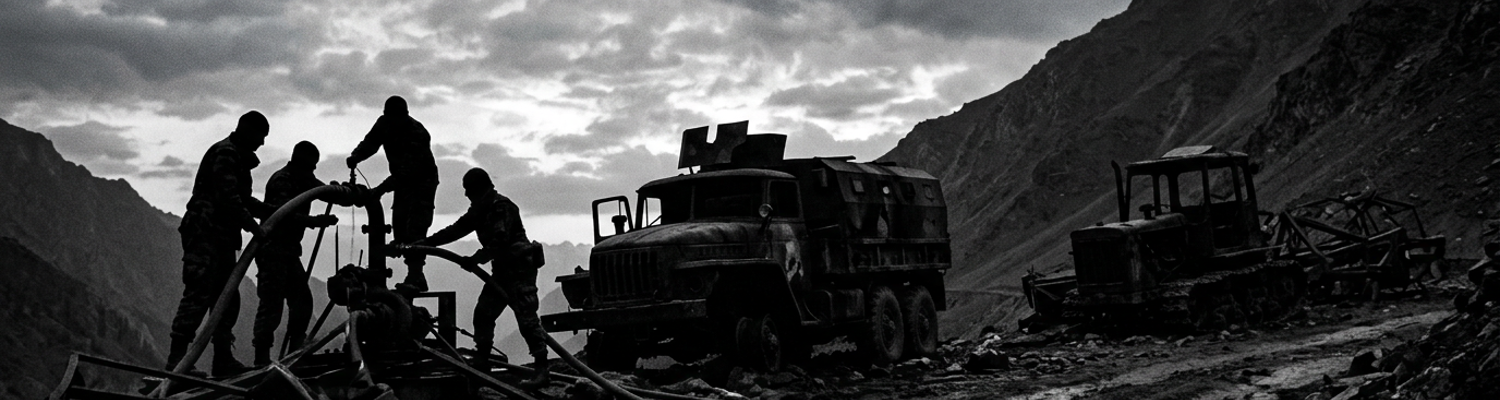

Deployment Mandates and Heavy Armor Friction
Manifest records from Bagram Airfield on February 12, 2009, show a payload heavily weighted toward kinetic destruction rather than agronomy. Cargo pallets contained hundreds of thousands of 5.56mm M855 ball cartridges. Crates of M67 fragmentation grenades sat alongside AT4 unguided anti-armor weapons and spare barrels for M240B medium machine guns. Sling-loads of 40mm High Explosive Dual Purpose rounds shared space with reinforced steel undercarriage plating for Mine-Resistant Ambush Protected vehicles. This raw stockpile of explosive capability belonged to the 32nd Infantry Brigade Combat Team Agribusiness Development Team. They arrived in Kunar Province in early spring. Their designated sector spanned the steep ridges of the Hindu Kush mountains. Operations centered around Forward Operating Base Wright near the provincial capital of Asadabad. Command elements expected these National Guard soldiers to transition immediately from standard infantry operations into specialized agricultural liaisons.
Archival evidence shows the immediate physical friction of moving heavy armor through the Pech River Valley.
Drivers attempted to navigate twenty-ton MaxxPro MRAPs along crumbling cliffside paths originally cut for pack animals. Suspensions snapped under the weight of the up-armored chassis. Transmission fluids boiled as engines redlined on the steep inclines. Axles ground to a halt as narrow dirt roads collapsed into the river below. Recovery teams exposed themselves to plunging rifle fire from the high ground while winching disabled vehicles out of the mud. The 32nd IBCT ADT found their mobility restricted before they even reached their designated agricultural zones. Planners at higher headquarters mapped out crop rotation schedules without accounting for the inability of standard military convoys to transport heavy irrigation piping up a forty-degree mountain slope.
They carried enough firepower to level a ridgeline. They could not move a single commercial water pump past the valley floor.
Commanders faced a mandatory 72-hour timeline to operationalize civilian extension hubs. Directives issued from Regional Command East mandated that once the 32nd IBCT ADT secured a village district, they had exactly three days to construct a fortified agricultural center. These hubs required the manual assembly of hundreds of wire-mesh HESCO barriers filled with local earth. Soldiers poured concrete foundations for seed storage sheds. They established secure perimeters for civilian agronomists to conduct seminars on watershed management. Troops coordinated the delivery of bulk winter wheat seed and veterinary antibiotics while actively defending against rocket-propelled grenade attacks from adjacent tree lines.
Concrete requires at least forty-eight hours to cure properly in optimal conditions.
Temperatures in Kunar routinely dropped below freezing at night during the early spring months. The chemical reaction needed to harden the Portland cement foundations of the extension hubs stopped in the cold air. Platoon leaders watched the mandated 72-hour window expire while standing over pools of wet freezing sludge. Convoys carrying construction materials frequently took small arms fire on Route Rhode Island. This delayed the arrival of bulldozers and front-end loaders by several days. Local contractors hired to expedite the earth-moving process abandoned the job sites when mortar shells impacted near the perimeter wire. Unit commanders documented the failure to operationalize the hubs on schedule in their daily situation reports. They transmitted the delays over secure SIPRNet channels back to Bagram.
The unhardened extension hub in the Shigal Valley collapsed entirely when a sudden snowmelt washed away the unsecured topsoil on March 14.
Pentagon Doctrine Failure in the Pech River Valley
A close review of operational logs indicates that the 32nd Infantry Brigade Combat Team ADT operated under inflexible directives drafted thousands of miles away. Official Civil Affairs doctrine mandated rigid agricultural guidelines. These guidelines completely disregarded the topographic and climatic constraints of the Hindu Kush. Department of the Army Field Manuals dictating crop substitution programs required the implementation of mechanized farming techniques modeled entirely on industrial Midwestern agriculture. Staff officers at Bagram Airfield distributed mandatory planting schedules. These schedules dictated the introduction of genetically modified soybean seeds and commercial urea-based fertilizers. These instructions forced local Afghan farmers to abandon centuries-old winter wheat terracing in favor of flat-field row cropping. Bagram planners authorized the procurement of heavy John Deere rotary tillers and diesel-powered irrigation pumps to fulfill specific command quotas.
Wisconsin guardsmen received direct orders to track the distribution of these machines down to the district level. They recorded serial numbers in daily situation reports.
Attempting to maneuver a two-ton diesel tiller up a forty-five-degree mountainside path constructed of loose shale proved physically impossible. Platoon leaders repeatedly filed deficiency reports. They noted that the required soy crops withered under the intense ultraviolet exposure of the high-altitude valleys. The heavy machinery sank into the mud of the lower river basins.
The Department of Defense crop substitution metrics failed to account for a growing season sixty days shorter than the Virginia baseline used by the strategic planning staff.
Executing these flawed agricultural mandates required a supply chain that could not survive the local security environment. Active insurgent corridors severely restricted initial team movement throughout the primary deployment phase. Enemy fighters belonging to Hezb-e Islami Gulbuddin and local Taliban shadow governments controlled the high ground overlooking the Pech and Korengal valleys. Hostile groups utilized established ratlines flowing directly from the Nawa Pass on the Pakistani border. They funneled personnel and munitions into fortified ambush positions along Route Rhode Island. The Wisconsin ADT attempted to move civilian flatbed trucks loaded with the mandated urea fertilizer and seed pallets. They drove directly into overlapping fields of plunging fire. Insurgents positioned 12.7mm DShK heavy machine guns in caves carved into the granite cliffs. They engaged the slow-moving convoys at ranges exceeding 1,200 meters. Standard military cargo vehicles lacked the ballistic protection to survive these sustained attacks. Shrapnel from rocket-propelled grenades shredded the bags of fertilizer in the cargo beds. The chemical compounds scattered across the dirt roads.
Drivers abandoned disabled flatbeds in the kill zones. They sought cover behind the armored hulls of the escorting MRAPs.
Commanding officers eventually ordered a halt to all unarmored movements carrying agricultural supplies through the Pech River Valley choke points. This tactical decision completely severed the physical supply chain required to meet the Pentagon farming quotas. Without the delivery of the mandated seed pallets and diesel pumps, the newly constructed extension hubs sat entirely empty. Engineers attached to the ADT attempted to bypass the road ambushes by airlifting the cargo using CH-47 Chinook helicopters. Rotary-wing aviation units at Bagram denied these flight requests. The sling-loaded farming equipment created excessive drag profiles. Sluggish helicopters carrying oversized civilian tractors presented highly vulnerable targets to the DShK emplacements dominating the valley ridges.
The mandated agricultural implements rusted in holding yards at Forward Operating Base Wright (Inventory Log 44-A).
Afghan Poppy Syndicates and Local Barter Systems
When examining the historical record, the primary civilian engagement strategy of the 32nd Infantry Brigade Combat Team ADT hinged on a Pentagon-drafted crop substitution mandate. Civil Affairs officers carried laminated charts into village shuras throughout the Pech and Korengal valleys. They instructed local farming syndicates to alternate between genetically modified soybeans and winter wheat. Regional elders commanding these agricultural networks outright rejected the directives. The proposed rotation required heavily regulated irrigation cycles and specific synthetic nitrogen fertilizers. The US military could not reliably transport these materials past insurgent blockades. Syndicate leaders recognized that the mandated soybean crops demanded excessive water extraction from the already depleted Pech River tributaries. Afghan farmers refused to accept the 50-pound burlap sacks of American-supplied seed pallets delivered to the district centers. Civil Affairs teams attempted to force compliance by withholding access to military-funded medical clinics. The local agricultural heads simply boycotted the US-constructed extension hubs entirely.
Entire shipments of modified wheat germinated and rotted in the sun on the concrete landing pads at Forward Operating Base Wright.
A close review of operational logs indicates that the syndicates actively prioritized the cultivation of Papaver somniferum across the terraced mountainsides. This specific plant thrived in the thin alkaline topsoil of the Hindu Kush at elevations exceeding 2,500 meters. Poppies demonstrated high drought resistance. They reached maturity rapidly in the abbreviated mountain growing season. The crop required none of the heavy diesel-powered water pumps mandated by Bagram planners. Cultivators employed a specialized multi-bladed tool to vertically lance the swollen seed pods during the late afternoon. Harvesters returned the following morning with flat iron scoops to scrape the oxidized dark brown raw opium paste into plastic bags. The physical weight-to-profit ratio of this narcotic resin completely outclassed any legitimate agricultural product the Wisconsin guardsmen attempted to introduce into the sector. Ten kilograms of raw opium paste could easily fit into a standard 7.62mm ammunition can. A pack mule could carry this can across the narrow mountain switchbacks. Transporting an equivalent monetary value of winter wheat required two unarmored flatbed trucks vulnerable to daily ambush.
Local farmers harvested the poppy fields twice a year. The American agricultural liaisons documented zero viable soybean yields in their reporting metrics.
Syndicate heads utilized the resulting opium paste to establish sophisticated bazaar barter systems entirely disconnected from the Afghan national currency. At the central commercial hub in Nangalam, farmers bypassed US-subsidized markets. They traded raw narcotic resin directly for essential commodities. Hawala brokers operating out of windowless mud-brick storefronts weighed the paste on mechanical brass scales. They converted the unrefined opium into untraceable credit chits. Tribal networks used these specific chits to procure 55-gallon drums of black-market diesel fuel smuggled across the Durand Line from Pakistan. Mechanics in the bazaars accepted the raw paste as direct payment for replacing shattered axles on Toyota Hilux pickup trucks. Both farmers and hostile fighters used these vehicles. The attempt to build a localized cash-based farming economy collapsed. The district markets reverted completely to this opium-backed trade network. Insurgent commanders belonging to the Taliban shadow government actively taxed these transactions at checkpoints along Route Rhode Island.
Tax collectors extracted a flat twenty percent yield of the raw paste from every farmer passing through the Shigal Valley choke points.
Intelligence reports filed by the 32nd IBCT ADT detailed how this shadow economy directly funded the kinetic strikes against their own agricultural convoys. Brokers in Asadabad bundled the collected tax paste and shipped it to processing laboratories in Nangarhar Province. Chemists converted it into high-grade heroin base. The laboratories paid the Kunar syndicates in military-grade hardware rather than cash. This closed-loop barter system bypassed international financial tracking networks entirely. Wisconsin guardsmen attempting to survey potential irrigation sites frequently found themselves pinned down by weapons purchased directly with the opium yields they were deployed to eradicate.
Confiscated ledgers from a raid on a hawala storefront (May 22, 2009) showed one local syndicate trading forty kilos of opium paste for three crates of Russian-manufactured PKM machine gun ammunition.
Environmental Incompatibility of Mandated Row Crops
Archival evidence shows that the standard Army doctrine deployed in Kunar entirely ignored the physical geography and established trade networks of eastern Afghanistan. Planners at the Pentagon drafted agricultural revival strategies using rigid templates derived from Field Manual 3-05.40. They treated the Hindu Kush mountains as if they possessed the flat loamy topsoil of an industrial farming sector. The 32nd Infantry Brigade Combat Team ADT received pallets of genetically modified corn and soybean seed. These crops required deep-tilling machinery and hundreds of gallons of sustained daily irrigation. Soldiers unloaded these supplies at Forward Operating Base Wright. Jagged granite peaks rising 10,000 feet into the thin air surrounded the installation. The actual arable land in districts like Shigal and the Korengal consisted of narrow ancient terraces manually carved into forty-five-degree cliff faces. Moving a standard military-issue rotary tiller or a heavy diesel water pump to these plots required hauling the cast-iron equipment up goat paths constructed of crumbling shale.
The local economic incentives actively worked against the introduction of these American row crops.
Afghan farmers operating in the Pech River Valley already possessed a highly lucrative low-weight cash crop network. Cultivating the mandated American soybeans required a farmer to transport hundreds of pounds of synthetic nitrogen fertilizer through active Taliban checkpoints. The resulting crop possessed zero trade value in the local Nangalam bazaar.
The heavy bags of US-supplied urea fertilizer frequently ended up repurposed as the primary explosive charge for improvised explosive devices buried under the dirt tracks of Route Rhode Island.
The official Department of Defense crop substitution metrics demanded a flat-field agricultural output that the terrain physically could not support. Winter temperatures in the upper elevations of the Hindu Kush froze the ground solid. The brief summer growing season baked the alkaline soil under intense ultraviolet radiation. The genetically modified seed varieties shipped from the United States lacked the necessary environmental adaptations to survive these extreme temperature fluctuations without massive artificial chemical intervention. Entire distributions of the mandated corn seed failed to sprout in the rocky terraces above Asadabad.
A close review of operational logs indicates a complete administrative paralysis within the Civil Affairs chain of command regarding these failing agricultural directives. Civil Affairs detachments attached to the Wisconsin ADT recognized the incompatibility of the Pentagon mandates within their first weeks of deployment. Ground-level personnel drafted detailed memorandums requesting permission to abandon the soybean initiative entirely. They proposed reallocating the unit funds to repair existing micro-hydroelectric dams and rehabilitate terraced pomegranate orchards. Soviet artillery strikes in the 1980s had damaged these orchards. Brigade commanders stationed at Bagram Airfield summarily rejected these requests. The overarching operational orders issued by Combined Joint Task Force 82 strictly forbade local command elements from altering the top-down agricultural quotas. Officers in the field lacked the administrative authority to shift operational funds from the mandated seed distribution program to more practical infrastructure projects.
The daily situation reports transmitted over secure SIPRNet terminals required platoon leaders to specifically quantify the exact tonnage of American seed handed out to local village elders.
Success metrics tracked the physical distribution of the burlap sacks. The reports entirely ignored whether the seeds actually germinated or provided any caloric value to the local population. Ground units found themselves locked into a rigid bureaucratic cycle. Civil Affairs teams drove armored MaxxPro MRAPs into the Shura meetings in the Korengal Valley carrying the laminated Pentagon crop charts. Tribal elders pointed out that the proposed irrigation schedules would drain the local watershed and kill their existing winter wheat. The American soldiers had no authorization to negotiate or modify the timeline.
They read the prescribed talking points detailing the benefits of mechanized row cropping to a room of men who plowed their fields with wooden yokes and oxen.
The local agricultural heads simply walked out of the engagements. Attempting to force compliance, higher headquarters ordered the Wisconsin guardsmen to withhold military-funded veterinary antibiotics for local livestock until the farming syndicates accepted the soybean pallets. Soldiers had to verify the planting of the American seeds before they could distribute de-worming medication for the local sheep and goat herds.
Herds of livestock died from preventable parasitic infections while the unplanted American seeds rotted inside shipping containers at the district centers (NARA Record Group 338).
Scavenged Engine Components and Micro-Irrigation
A close review of operational logs indicates a complete breakdown of mechanized water delivery systems within the first month of the 32nd Infantry Brigade Combat Team ADT deployment. Pentagon planners originally mandated the installation of 500-gallon-per-minute diesel centrifugal pumps to support the introduced soybean crops. These commercial units weighed over four hundred pounds dry. Transporting them up the forty-degree inclines of the Pech River Valley proved physically impossible for unarmored transport teams taking plunging fire from DShK emplacements. Ground-level technicians attached to Company B of the Wisconsin National Guard recognized the impending crop failure. They abandoned the heavy machinery rusting at Forward Operating Base Wright. They initiated localized engineering efforts to build improvised micro-irrigation networks capable of operating on the steep terraced topography. The agricultural specialists mapped out existing gravity-fed karez water channels carved into the granite cliffs near the village of Shigal at coordinates 34.86N 71.15E.
The standard military supply chain provided zero materials for this unauthorized hydraulic construction.
Archival evidence shows that the technicians systematically stripped their own medical and vehicle maintenance supply stockpiles to source the necessary conduit. Soldiers requisitioned hundreds of yards of quarter-inch polyurethane surgical tubing directly from the battalion aid station. They punched millimeter-wide holes into the plastic lines using sewing needles heated over Zippo lighters to create crude low-pressure drip emitters. Engineers laid these modified medical lines across the narrow rocky terraces. They connected them to larger sections of scavenged corrugated PVC pipe sourced from a destroyed Soviet-era drainage culvert. This gravity-fed system required precise pressure regulation to prevent the surgical tubing from bursting under the hydraulic head generated by the steep mountain drop. Platoon mechanics fabricated inline flow restrictors by compressing the PVC joints with standard steel hose clamps and wrapping the connections in industrial aviation tape. Commanding officers at Bagram initially threatened non-judicial punishment for the unauthorized destruction of medical supplies. They dropped the charges after receiving the daily situation reports documenting the first successful water delivery. The resulting micro-irrigation network successfully delivered a steady measured drip of water directly to the root systems of the mandated row crops without requiring a centralized power source.
Water pressure dropped to zero when the mountain streams dried up during the late July heat wave.
When examining the historical record, the loss of natural gravity-fed water pressure forced the engineering section to manufacture mechanical lift solutions using local scrap. The American troops lacked the heavy lift aviation support to air-drop replacement civilian water pumps into the hostile valleys. Engineers scavenged local engine components from the Nangalam bazaar to construct functional water pumps from scratch. Mechanics purchased a cracked 2.4-liter inline-four diesel engine block extracted from a destroyed 1990s-era Toyota Hilux pickup truck. They traded three surplus vehicle batteries to a local scrap dealer to secure the hardware. They transported the rusted block back to the fortified extension hub in the Korengal and stripped it down to the bare crankshaft and flywheel. Using a portable oxyacetylene torch, the technicians welded the Hilux flywheel to the impeller housing of a defunct Soviet BTR-60 armored personnel carrier water pump found abandoned in a nearby ravine.
They linked the two mismatched assemblies using a frayed alternator belt tensioned with a steel crowbar.
Running this hybrid pumping mechanism required constant physical intervention and highly volatile fuel mixtures. The scavenged Hilux engine lacked a functional radiator. Soldiers manually poured canteens of river water over the exposed cylinder head to prevent catastrophic overheating. Operating at a redline of 4000 revolutions per minute, the unbalanced engine block violently shook the concrete pad. Four soldiers physically pinned the chassis to the ground with heavy sandbags. Technicians powered the improvised device using black-market diesel procured from local hawala brokers mixed with standard JP-8 aviation fuel siphoned from their own Mine-Resistant Ambush Protected vehicles. This unrefined fuel mixture caused heavy carbon buildup on the fuel injectors. The engineering team disassembled and cleaned the entire intake manifold every four hours of continuous operation. The cobbled-together pump successfully lifted water up a thirty-foot vertical incline at a rate of roughly forty gallons per minute.
An unguided 82mm mortar shell fired by insurgent spotters on the adjacent ridgeline impacted directly into the pumping station on August 14.
PKM Plunging Fire and Static Security Footprints
Archival evidence shows that the 32nd Infantry Brigade Combat Team ADT operated under a constant barrage of 7.62x54mmR plunging fire during every civilian engagement. Enemy fighters affiliated with local Taliban cells occupied established fighting positions along the 7000-foot granite peaks overlooking the Shigal Valley extension hubs. These insurgents utilized pre-registered range cards. They fired Russian-manufactured PKM medium machine guns from defilade positions concealed by the heavy timberline. At elevations exceeding 2000 meters above the valley floor, hostile spotters possessed a completely unobstructed line of sight down onto the American agricultural sites. The daily situation reports logged by Company A detail a rigid chronological pattern of attacks. Harassment fire routinely commenced at exactly 1430 hours every afternoon. High-velocity armor-piercing tracer rounds impacted at a forty-five-degree downward trajectory. They struck the tops of the unarmored civilian tractors parked near the district center. Standard military Kevlar helmets and ceramic SAPI plates offered minimal ballistic protection against heavy machine gun rounds striking from directly above. Company A commanders recorded multiple instances where PRC-119 radio antennas were sheared off by incoming fire. This severed tactical communications with the battalion operations center.
Riflemen took cover in muddy irrigation ditches while fractured MRAP ballistic glass scattered across the dirt roads.
A close review of operational logs indicates that completing any agricultural directive required a massive static security footprint. Platoon leaders deployed three-quarters of their available manpower strictly to maintain an outward-facing defense perimeter. Infantry squads established interlocking sectors of fire using tripod-mounted M240B machine guns positioned behind hastily filled sandbags. Spotters scanned the adjacent tree lines with Raytheon thermal optics and standard-issue Trijicon ACOG rifle scopes. They searched for muzzle flashes against the grey shale cliffs. Security elements established these perimeters at dawn. They anchored their flanks against the Pech River to prevent flanking maneuvers by insurgent fire teams. Staff sergeants walked the lines. They physically adjusted the bipod legs of squad automatic weapons to ensure overlapping coverage of the primary ambush avenues. This heavy security posture left only a fraction of the unit available to execute the mandated civilian labor.
Technicians physically laid down their M4 carbines in the dirt to swing steel pickaxes into the frozen topsoil.
The physical mechanics of constructing the agricultural centers forced the Wisconsin guardsmen into highly vulnerable static positions. Soldiers assigned to the engineering detachments manually assembled triple-stacked HESCO wire-mesh barriers to protect the planned winter wheat storage sheds. Filling a single standard barrier required moving three cubic yards of earth using hand shovels and five-gallon plastic buckets. Engineers mixed Portland cement by hand in wheelbarrows. They poured the slurry into wooden forms to create reinforced flooring for the mandated soybean threshing machines. Technicians wore seventy pounds of modular tactical body armor while executing this intense manual labor in temperatures exceeding one hundred degrees Fahrenheit. Platoon medics treated dozens of heat casualties during the first week of July 2009. The agricultural specialists collapsed from dehydration next to the half-finished concrete foundations. When the PKM machine gun fire erupted from the high ground, the working parties dropped their shovels and sprinted across open terrain to reach the armored hulls of the security vehicles. The infantrymen manning the perimeter could rarely suppress the incoming fire effectively. Engaging targets positioned 1500 meters up a sheer cliff face required elevating their weapon barrels past the maximum mechanical traverse limits of the standard vehicle turrets.
Gunners resorted to unpinning their machine guns from the pintle mounts and firing from their shoulders while balancing on the vehicle hoods.
Commanding officers at Forward Operating Base Wright logged severe delays in the construction schedules due to this daily kinetic friction. A specific incident on July 18 demonstrates the complete breakdown of the farming initiatives under fire. Agricultural technicians attempting to manually bury a two-inch PVC irrigation line near coordinate 34.88N 71.13E took sustained sniper fire from an SVD Dragunov rifle positioned across the Pech River. The security detail expended 4000 rounds of 5.56mm ammunition and called in two 155mm artillery strikes from a nearby fire base just to extract the engineering team from the trench.
The abandoned PVC piping shattered into hundreds of plastic fragments when a mortar shell landed directly inside the excavated ditch (Incident Report 09-442).
Discarded Field Manuals and Ad-Hoc Chemical Procurement
A close review of operational logs indicates that ground-level commanders within the 32nd Infantry Brigade Combat Team completely discarded Department of the Army Field Manual 3-05.40 Civil Affairs Operations within their first six weeks in theater. This 400-page document dictated rigid protocols for agricultural assistance. It required platoon leaders to conduct formal village assessments using standardized PowerPoint presentations and laminated flowcharts. Chapter four of the text instructed units to establish local agricultural steering committees comprised of democratically elected village representatives. The manual mandated that soldiers organize these town hall meetings in secure climate-controlled environments to discuss long-term crop rotation strategies. Executing these instructions proved physically impossible in the Pech River Valley. The designated meeting zones at coordinates 34.91N 71.10E lacked basic electrical grids to power the required multimedia projectors. Infantry units attempting to set up the mandated folding tables and presentation boards in open village squares immediately drew RPG-7 fire from the surrounding ridges. Company A leadership recognized the hazard. They explicitly ordered their non-commissioned officers to stop carrying the heavy useless binders on dismounted patrols.
The burn pits at Forward Operating Base Wright consumed dozens of unread civil assistance manuals by late June.
Archival evidence shows that the official Pentagon reporting protocols broke down completely alongside the discarded physical manuals. Higher headquarters at Bagram Airfield required the daily transmission of complex spreadsheet files detailing the exact germination rates of the mandated American seed pallets. Platoon leaders operating out of the Chapa Dara district center lacked the satellite bandwidth to upload these heavy data files over their PRC-117F tactical radios. The transmission rate maxed out at 56 kilobits per second on a clear day. They frequently aborted the data transfers to call in medical evacuation flights for casualties taking shrapnel from 82mm mortar strikes. The rigid bureaucratic requirements demanded that civil affairs officers verify the serial numbers on every piece of distributed farming equipment before releasing funds to local contractors. Ground units taking sustained PKM machine gun fire simply stopped filling out the mandatory compliance forms.
Sergeants falsified the digital agricultural tracking logs to prevent brigade staff officers from halting tactical operations.
When examining the historical record, the 32nd IBCT ADT systematically replaced the failing Pentagon civil assistance protocols with unauthorized ad-hoc mechanical solutions. Official doctrine required the unit to purchase heavy earth-moving equipment strictly through approved defense contractors vetted by the Department of State. These authorized vendors operated out of Kabul. They refused to transport civilian bulldozers into the active combat zones of Kunar Province. Facing a hard deadline to clear irrigation trenches before the winter freeze, engineering detachments scavenged destroyed military hardware to build field-expedient plows. Mechanics assigned to the motor pool at Forward Operating Base Wright dragged the shattered chassis of an M1114 Humvee out of the scrap yard. They used portable angle grinders to cut away the twisted ballistic steel doors and heavy suspension coils. Technicians welded these three-quarter-inch rolled homogeneous armor plates directly onto the front bumpers of their MaxxPro Mine-Resistant Ambush Protected vehicles using oxyacetylene torches powered by scavenged gas cylinders.
This improvised armor attachment functioned as the primary earth-moving implement for the entire Shigal Valley agricultural project.
The formal protocols dictating the distribution of synthetic chemical fertilizers suffered a similar operational collapse. Pentagon directives mandated the exclusive use of imported urea compounds delivered via secure convoys from Bagram. Insurgent ambushes severed this supply line. The agricultural specialists developed unapproved local chemical procurement systems. Soldiers established a direct barter network with Pashtun scrap dealers operating out of the Nangalam bazaar. Wisconsin guardsmen traded spent 155mm brass artillery casings and shredded Humvee run-flat tires in exchange for bulk quantities of goat manure and crushed limestone. The agricultural technicians utilized this raw material to treat the highly alkaline topsoil on the mountain terraces. The crushed limestone neutralized the soil acidity while the goat manure provided the missing nitrogen. They lacked the motorized chemical mixers required by the official civil assistance guidelines.
Infantrymen manually blended the animal waste and crushed rock inside empty 5.56mm ammunition crates using folding entrenching tools.
Decentralized Authority and Unauthorized Retaining Walls
A close review of operational logs indicates a complete fracture between the agricultural directives drafted at United States Central Command and the physical terrain of Kunar Province. Pentagon planners issued standardized blueprints for regional crop storage facilities modeled on industrial Midwestern cooperatives. These schematics required the construction of forty-by-sixty-foot climate-controlled warehouses featuring reinforced steel I-beams and six-inch-thick poured concrete foundations. Staff officers at Bagram Airfield mandated the completion of three such facilities in the Shigal Valley by September 15, 2009. The designated construction zones sat at coordinates 34.90N 71.11E. This area consisted entirely of thirty-degree mountain slopes covered in loose shale. Executing the top-level military strategy required engineering detachments to blast flat terraces into the granite cliff faces using C4 plastic explosives. The 32nd Infantry Brigade Combat Team ADT lacked the heavy earth-moving equipment necessary to clear the resulting debris. Transporting the mandated structural steel from Forward Operating Base Wright required heavy-lift rotary aviation support flying through narrow mountain passes dominated by Taliban shadow government forces.
A CH-47 Chinook helicopter dropped six tons of prefabricated steel framing directly into the Pech River to evade incoming 12.7mm anti-aircraft fire on September 12.
Archival evidence shows that this specific supply chain collapse forced a total abandonment of the centralized construction strategy. The gap between the Pentagon planners looking at two-dimensional satellite imagery and the troops operating on the ground proved insurmountable. Command directives from Combined Joint Task Force 82 strictly prohibited local units from altering the warehouse blueprints to fit the terrain. The official engineering guidelines required specialized concrete pump trucks to pour the foundations. These vehicles physically could not navigate the crumbling single-lane dirt tracks of Route Rhode Island. The Wisconsin guardsmen attempted to mix the concrete manually using wheelbarrows. The high-altitude nighttime temperatures dropped below freezing and shattered the curing cement. Platoon leaders transmitted deficiency reports detailing the geographical impossibility of the mission up the chain of command over secure SIPRNet terminals. Brigade commanders at Bagram responded by ordering the ground units to increase their civilian labor hiring quotas to meet the original September deadline.
The mandated climate-controlled storage silos never advanced past the initial excavation phase.
When examining the historical record, the survival of the agricultural assistance mission relied entirely on ground-level commanders seizing decentralized operational authority. Junior officers assigned to Company B recognized the impending failure of the warehouse project. They systematically bypassed the rigid Commander Emergency Response Program funding rules. Official doctrine required a multi-tiered approval process routed through Regional Command East for any expenditure exceeding five hundred dollars. First lieutenants operating out of the Chapa Dara district center deliberately ignored this protocol. They diverted unit funds originally earmarked for the purchase of commercial tractor diesel to instead hire local Safi tribe laborers. The Wisconsin guardsmen abandoned the Pentagon warehouse blueprints entirely. They directed the Afghan workers to repair ancient gravity-fed terrace retaining walls. This unauthorized engineering project utilized locally sourced river stones and scavenged HESCO barrier wire instead of the mandated imported Portland cement. The agricultural technicians paid the local laborers directly in cash at the end of each shift.
Platoon commanders documented these unauthorized labor expenditures using handwritten paper receipts stuffed into empty ammunition cans.
This localized adaptation demonstrated that executing any functional civilian assistance in the Hindu Kush required severing the bureaucratic tethers to higher headquarters. The 32nd IBCT ADT officers stopped uploading the mandatory daily digital spreadsheets detailing their progress on the defunct steel warehouses. They established an ad-hoc supply chain operating entirely outside the visibility of the brigade staff at Bagram. Engineering detachments traded surplus military rations to local hawala brokers to procure raw timber and mud-brick for small-scale decentralized root cellars built directly into the mountainsides. These smaller structures bypassed the need for heavy machinery. They blended into the local architecture. This made them immune to the targeted insurgent mortar strikes that plagued the large-scale American construction sites. The Wisconsin guardsmen successfully provided the local farming syndicates with viable winter wheat storage without requiring a single piece of steel I-beam.
A brigade staff officer at Bagram officially reprimanded the detachment commander on October 4 for failing to upload the structural engineering compliance forms (File Ref: 09-B-774).