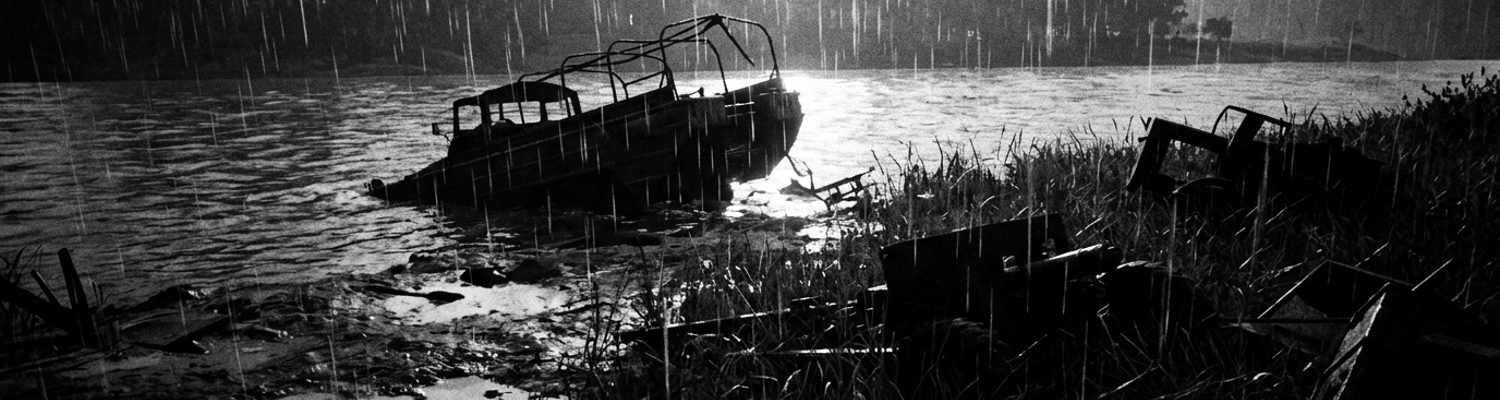

Hollywood Myths of Air Ground Support
Archival evidence shows that elements of the 1st Amphibian Tractor Battalion patrolling the Cua Viet River in early 1968 faced an environment devoid of tactical parity. (NARA Record Group 127). Moving slowly up the muddy waterway toward Dong Ha Combat Base placed them in a pre-surveyed kill zone. A typical mechanized section consisted of three LVTP-5 tractors. These vehicles carried roughly sixty Marines.
Waiting along the northern bank near grid coordinates YD 325 692 were three full battalions of the North Vietnamese Army 320th Division.
This force numbered over 1,500 regular infantrymen. They carried B-40 rocket-propelled grenades. They operated 75mm recoilless rifles and heavy 12.7mm DShK anti-aircraft machine guns. Enemy engineers had spent weeks digging deeply reinforced bunkers. These positions featured overlapping fields of fire calibrated specifically to the river choke points. The three American tractors moved at a top water speed of just under seven miles per hour. They presented massive unarmored targets against a numerically overwhelming force. The adversary possessed a twenty-to-one local infantry advantage.
Popular media depictions portray instant close air support callouts during riverine ambushes in Vietnam as a seamless reaction. Cinematic interpretations routinely show a desperate radio operator grabbing an AN/PRC-25 handset. He broadcasts a panicked request in plain English. He receives immediate salvation from low-flying fighter-bombers dropping ordnance exactly on the tree line within seconds.
This fabricated narrative suggests a direct unencrypted line of communication exists between a pinned-down infantry squad and orbiting tactical aircraft.
Film and television productions systematically erase the complex layers of airspace deconfliction. They ignore the mandatory briefing of ground schemes of maneuver. They forget the physical distance between the engagement zones and the airbases at Da Nang or Chu Lai. Entertainment studios reduce a highly technical multi-echelon coordination process into a simple push-to-talk button press.
A close review of operational logs indicates a completely different timeline governing air-to-ground integration.
Actual historical command chronologies record severe structural delays and miscoordination during these exact Cua Viet engagements. When an LVTP-5 took a direct B-40 rocket hit, the surviving platoon commander first had to establish contact with the company command post using the VHF frequency. Transmitting through the AN/PRC-25 required a clear line of sight. The ten-foot-tall elephant grass and steep riverbanks frequently blocked this signal.
Once the company received the garbled transmission, they relayed the nine-line brief to the Battalion Fire Support Coordination Center. The center then passed the request to the Direct Air Support Center located at Dong Ha. Radar operators at the Dong Ha center had to cross-check the request against ongoing artillery missions. This prevented friendly aircraft from flying through outgoing 155mm howitzer trajectories.
Only after this airspace deconfliction occurred would the request go to the Tactical Air Direction Center to scramble aircraft.
This administrative routing routinely consumed thirty to forty-five minutes before a pilot even received a target coordinate.
Upon arriving in the airspace above the Cua Viet River, the fast-moving F-4B Phantom II jets could not legally drop their Mark 82 five-hundred-pound bombs without visual clearance from a Forward Air Controller Airborne. Operating a slow lightly armored O-1 Bird Dog or O-2 Skymaster observation plane left the controller highly vulnerable to the concentrated 12.7mm DShK fire from the NVA positions. Establishing radio contact with the Marines on the ground proved exceptionally difficult. Battery failures in the man-portable radios degraded the process. The destruction of the three-foot whip antennas during the initial ambush severed links completely.
Ground commanders then had to mark their positions using colored smoke grenades.
Shifting river winds and dense canopy foliage often dispersed the smoke before the controller could positively identify the friendly lines. Failing to see the colored smoke meant the strike aircraft remained in a holding pattern at fifteen thousand feet burning fuel. Flights regularly returned to base with full payloads because the ground coordination link failed.
Cua Viet River Ambush Tactics
Archival evidence shows the North Vietnamese Army engineered the primary Cua Viet supply waterway into a highly calibrated kill zone. Engineering battalions from the NVA 320th Division spent the early months of 1968 constructing subterranean bunker complexes directly into the steep mud banks of the river. These positions spanned from the coastal river mouth at grid coordinate YD 325 692 up to the Dong Ha boat ramp.
The geography of Quang Tri province provided natural concealment.
Dense thickets of ten-foot-tall elephant grass stabilized the riverbanks. Nipa palm and thick mangrove roots obscured excavation efforts from American aerial reconnaissance. Digging predominantly at night using folding entrenching tools avoided detection by O-1 Bird Dog observation planes. NVA troops carved out fighting holes reinforced with heavy timber and packed earth. They positioned the primary firing apertures just inches above the high-tide waterline.
This specific elevation allowed gunners to fire upward into the unarmored underbellies of passing watercraft.
NVA engineers constructed the bunker roofs with three feet of wet clay to absorb direct hits from 81mm mortar high-explosive rounds. Live vegetation transplanted daily over the firing slits defeated standard infrared photography. When examining the hydrographic data of the Cua Viet River, the waterway forced Marine supply convoys into highly restricted transit corridors. Navigable sections of the channel frequently narrowed to less than fifty meters across near the village of Mai Xa Thi. Heavy siltation and shifting sandbars caused by the monsoon season restricted the deep-water path to a winding unpredictable track.
Amphibious tractor pilots had to maneuver their thirty-four-ton LVTP-5 vehicles through these tight choke points at a maximum water speed of 6.8 miles per hour.
These machines utilized twin water jets for propulsion. The intakes ingested heavy amounts of mud and debris when operating close to the river edges. Navigational errors frequently grounded the tractors on submerged mudflats. This turned them into static targets. A fully loaded Amtrac carrying ten thousand pounds of artillery ammunition required at least four feet of water clearance to maintain forward momentum due to its deep-draft design.
Backing an Amtrac off a sandbar required reversing the water jets. This mechanical process took up to five minutes.
Marine supply convoys transiting these narrow corridors systematically encountered concentrated anti-tank weapon fire from the concealed shoreline positions. NVA tactical doctrine dictated holding fire until the lead and trail vehicles of a logistics column entered the narrowest section of the channel. Once the column committed to the choke point, heavy weapons squads initiated the ambush using RPG-2 and B-40 rocket-propelled grenades. They also fired Type 56 75mm recoilless rifles.
The 0.62-inch steel armor plating on the sides of an LVTP-5 provided no defense against a high-explosive anti-tank warhead.
These munitions were designed to penetrate up to eleven inches of rolled homogeneous armor. Gunners specifically aimed for the lower hull sections just above the water level. They fired at ranges of less than forty meters. The backblast from the recoilless rifles dissipated into the dense jungle canopy. This made it exceedingly difficult for Marine gunners to identify the point of origin. A successful penetration in this lower zone triggered a catastrophic mechanical failure within the vehicle.
The LVTP-5 stored 456 gallons of highly volatile 80-octane aviation fuel in bladder tanks located directly beneath the troop compartment floorboards.
A shaped charge detonating inside this lower compartment instantly vaporized the fuel supply. The resulting overpressure event blew the three-ton overhead cargo hatches completely off their hinges. The heavy steel doors flew into the river. Shrapnel from the blast sheared through the internal control cables. This rendered the steering mechanism completely useless.
Surviving crew members thrown into the water then faced interlocking fields of fire from 12.7mm DShK heavy machine guns positioned on the secondary bank elevations.
These weapons utilized armor-piercing incendiary rounds to shred the aluminum superstructures of any adjacent tractors attempting to maneuver out of the kill zone. Disabled vehicles sank rapidly in the channel. They created physical barricades that trapped the rest of the convoy in the pre-surveyed crossfire. Marine recovery teams later documented dozens of Amtracs resting at the bottom of the Cua Viet River with their hull plates peeled outward from internal explosions.
LVTP-5 Armor Vulnerabilities and Losses
A close review of operational logs from the First Amphibian Tractor Battalion reveals a highly specific pattern of mechanical destruction during the Tet Offensive. The unit command chronology for February 1 1968 documents catastrophic LVTP-5 hull penetrations occurring systematically along the Cua Viet waterway. (USMC Historical Division File 78-3). NVA heavy weapons squads equipped with B-40 rocket-propelled grenades targeted the unarmored lower flanks of the thirty-four-ton vehicles as they navigated the narrowest river bends.
The original design specifications of the LVTP-5 mandated a completely watertight hull for amphibious assaults.
The engineers utilized mild steel plating measuring just 0.62 inches in thickness along the sides. This metallurgical composition offered adequate protection against 7.62mm small arms fire or distant 152mm artillery shrapnel. It failed completely against high-explosive anti-tank warheads. When a B-40 rocket impacted the side of a tractor, the shaped charge detonated a copper cone at high velocity. This created a superplastic jet of molten metal. The jet burned directly through the thin steel hull in a fraction of a second. The resulting kinetic energy carried hundreds of red-hot steel spall fragments into the enclosed troop compartment. The shrapnel shredded the aluminum internal bulkheads.
Marine engineers recorded entry holes measuring less than three inches across that caused total vehicle loss.
Archival evidence shows amphibian tractor crews suffered heavy casualties due to vulnerable armor combined with highly flawed internal fuel placement. Designers at the BorgWarner Corporation placed the main fuel cells directly beneath the steel floorboards of the primary troop compartment to maximize interior cargo space. These unarmored bladder tanks held 456 gallons of highly volatile 80-octane aviation fuel.
A successful B-40 penetration in the lower hull immediately introduced the superheated copper jet into this massive fuel reservoir.
The resulting chemical reaction instantly vaporized the aviation gas. Overpressure from the internal explosion ruptured the floorboards upward. This turned the steel deck plates into secondary projectiles that severed the legs of the Marines sitting above. The blast wave then concentrated within the enclosed rectangular cabin. It blew the front ramp seals outward and destroyed the internal communication lines.
The vehicle possessed no automatic fire suppression systems in this lower compartment.
Burning fuel quickly flooded the bilge spaces. A liquid fire spread rapidly from the rear cargo doors to the forward transmission housing. Internal temperatures exceeded two thousand degrees Fahrenheit within three seconds of detonation. The three-man operating crew faced an extremely low probability of survival during these specific ambush scenarios. Operating from exposed forward cupolas protruding from the top deck, the driver and vehicle commander lacked any overhead protection. The crew chief manned a .30 caliber machine gun turret.
An instantaneous internal fuel explosion blew the heavy steel cupola hatches violently upward.
This frequently ejected the crew members directly into the river channel. Those trapped inside the main compartment experienced immediate flash burns. Extrication proved physically impossible because the blast deformed the rear steel loading ramp. The hydraulic hinges jammed permanently shut. Infantrymen attempting to escape the burning vehicle had to climb vertically through the top cargo hatches while wearing sixty pounds of combat gear.
NVA machine gunners positioned on the riverbanks pre-aimed their 12.7mm DShK weapons directly at these overhead exit points.
The high-caliber armor-piercing incendiary rounds tore through the exposed Marines as they pulled themselves over the aluminum roof ridges. Recovery teams found the majority of casualties clustered directly beneath the jammed roof hatches. Battalion commanders reviewing the February 1 logs immediately recognized the fatal design flaw of the floorboard fuel cells. Officers ordered Amtrac crews to begin filling the internal void spaces between the floorboards and the fuel bladders with hundreds of sandbags.
This field modification added thousands of pounds of dead weight to the already underpowered LVTP-5.
It severely degraded buoyancy in the deep-water sections of the Cua Viet. The water draft of a sandbagged tractor increased by fourteen inches. Such increased displacement caused the vehicles to run aground on submerged mudflats far more frequently. This trapped them in the exact static positions the NVA ambush teams required. The heavy sandbags absorbed some of the upward explosive force during a rocket strike. They completely failed to stop the subsequent aviation fuel fires. Maintenance bays at the Dong Ha boat ramp processed twelve completely gutted tractor hulls during the first week of February alone.
Frontline Triage Breakdown at Dong Ha
A close review of operational logs from the First Amphibian Tractor Battalion documents a complete collapse of frontline medical protocols during the late January and early February Cua Viet ambushes. Standard Marine Corps doctrine dictated that a single platoon corpsman could stabilize three to five severely wounded infantrymen before requiring dedicated resupply or evacuation. A single B-40 rocket penetrating the lower hull of an LVTP-5 carrying sixty Marines instantaneously generated up to forty critical casualties.
The enclosed space of the troop compartment amplified the blast wave.
This caused traumatic lower-extremity amputations across multiple rows of seated riflemen. Aviation fuel flash fires produced third-degree burns over the exposed faces and hands of surviving vehicle crews. Medical teams operating along the muddy shorelines faced a severe numerical deficit. Arriving at a burning tractor, a two-man corpsman team encountered dozens of severely burned personnel requiring immediate arterial tourniquets and airway management. The doctrinal triage system of sorting patients into immediate delayed and expectant categories completely disintegrated.
Every casualty pulled from the burning aluminum hulls presented as an immediate priority.
A standard issue Unit One medical bag carried by a field corpsman contained exactly five morphine syrettes and four canvas tourniquets. Archival medical records detail how corpsmen depleted these limited supplies within sixty seconds of reaching a disabled tractor. Medical personnel exhausted their sterile field dressings on the first two blast victims they encountered. Attempting to suppress arterial hemorrhaging from shrapnel wounds forced Marines to utilize web belts and torn utility trousers as makeshift compression devices.
The physical environment of the riverbank actively accelerated patient deterioration.
Wounded personnel lying in the shallow mud of the Cua Viet absorbed highly contaminated river water directly into their open burn wounds and exposed bone fractures. Battalion Aid Station commanders at Dong Ha Combat Base received continuous VHF radio transmissions requesting emergency blood expanders and burn ointments. These requests went unfulfilled. The physical supply lines required the very same LVTP-5 tractors currently burning in the channel.
Navy hospital corpsmen began marking the foreheads of the dead with mud.
This prevented arriving reinforcements from wasting remaining medical supplies on them. Establishing casualty evacuation points along the steep riverbanks exposed medical teams to concentrated indirect fire. Platoon commanders selected flat cleared areas near the village of Mai Xa Thi at grid coordinates YD 322 698 to stage the wounded for aerial extraction. NVA forward observers operating from elevated jungle canopies on the northern bank pre-registered these exact clearings for their 82mm mortar batteries.
As Marines dragged their wounded out of the deep elephant grass and into the designated landing zones, enemy mortar crews dropped high-explosive fragmentation rounds directly into the clustered casualty collection points.
Shrapnel from these air-bursting munitions inflicted secondary wounds on already stabilized patients. The barrage forced medical personnel to abandon the open landing zones. They dragged bleeding Marines back into the flooded craters along the waterline. Pinned down behind the steel treads of destroyed Amtracs, corpsmen could not stand up to administer intravenous fluids.
When examining the flight logs of Marine Medium Helicopter Squadron 163, the sheer density of anti-aircraft fire over the Cua Viet rendered standard medical evacuations impossible.
Pilots flying CH-46 Sea Knight helicopters attempted to descend into the contested landing zones to extract the massed casualties. NVA heavy weapons squads tracked the incoming aircraft and initiated interlocking fields of 12.7mm DShK heavy machine gun fire. Armor-piercing incendiary rounds penetrated the aluminum skins of the helicopters. The gunfire severed hydraulic flight control lines and shattered the plexiglass cockpit canopies.
After multiple aircraft sustained critical damage and aborted their approaches, the Direct Air Support Center restricted all medical evacuation flights below three thousand feet.
Ground units lost all dedicated helicopter support. Infantrymen had to physically carry their wounded on poncho litters through waist-deep swamp water for over two miles. They had to reach secondary extraction points outside the pre-surveyed kill zones.
High Altitude Phantom Operational Constraints
A close review of operational flight logs from Marine Aircraft Group 11 at Da Nang Air Base reveals strict altitude parameters governing F-4B Phantom II deployments. Tactical Air Direction Center controllers explicitly routed these twin-engine interceptors into holding patterns exceeding 30,000 feet above the Demilitarized Zone. The aerodynamic profile of the McDonnell Douglas airframe dictated this specific elevation.
Equipped with two General Electric J79-GE-8 afterburning turbojets, the heavy fighter required the thin atmosphere of the stratosphere to maximize its loiter time.
Operating at thirty-two thousand feet allowed a standard two-ship formation to orbit on station for nearly two hours while waiting for radar contacts. Descending into the denser air below ten thousand feet drastically altered the fuel consumption metrics. The massive engines ingested oxygen at a heavily accelerated rate at lower altitudes. This rapidly drained the internal wing tanks and forced an immediate return to base.
A Phantom dropping to tactical altitudes for riverine fire support burned through its total fuel reserves in less than fourteen minutes.
Archival evidence shows Seventh Air Force command directives strictly prioritized air-to-air combat over infantry support for these specific orbital tracks. High altitude combat air patrol missions focused entirely on intercepting North Vietnamese MiG-17 and MiG-21 fighters launching from bases at Kep and Phuc Yen. American radar technicians monitoring the airspace north of the seventeenth parallel needed the Phantoms positioned at high altitudes to utilize their onboard AN/APQ-72 radar systems.
This early pulse-doppler technology completely lacked look-down shoot-down capabilities.
If an F-4B pilot flew low over the Quang Tri province jungle, the dense tree canopy and rolling terrain created massive ground clutter on the radar scope. The analog display filled with false returns. This rendered the system completely blind to enemy aircraft. To establish a solid radar lock with an AIM-7 Sparrow missile, the Phantom had to fly co-altitude or slightly below the incoming MiGs. The radar had to look upward against the clear background of the open sky.
Pilots flying combat air patrols carried a specialized ordnance loadout consisting exclusively of air-to-air missiles.
When NVA heavy weapons squads ambushed the First Amphibian Tractor Battalion on the Cua Viet River, the orbiting Phantoms offered zero tactical utility. Ground commanders at grid coordinate YD 325 692 operating AN/PRC-25 radios broadcasted emergency requests for close air support on VHF frequencies. The F-4B crews thirty-five thousand feet directly above them monitored heavily encrypted UHF channels coordinated by airborne early warning aircraft.
No direct communication link existed between the burning LVTP-5 tractors and the fighter jets flying racetrack patterns in the upper atmosphere.
Even if a Forward Air Controller Airborne managed to relay the coordinates through the Direct Air Support Center at Dong Ha, the CAP flights lacked the physical hardware to intervene. An F-4B configured for MiG interception carried four AIM-7 Sparrow radar-guided missiles in semi-submerged fuselage stations. It carried four AIM-9 Sidewinder infrared-guided missiles on the wing pylons. The aircraft carried no Mark 82 general-purpose bombs. It carried no napalm canisters. It frequently lacked a centerline 20mm gun pod.
Seventh Air Force standing orders explicitly prohibited these specialized interceptors from descending into the small arms envelope to conduct strafing runs.
Re-tasking a high-altitude CAP flight to assist a riverine convoy required the pilots to dump thousands of feet of altitude. This bled off the kinetic energy required to fight supersonic MiGs. Attempting to engage camouflaged bunker systems along the riverbanks with air-to-air munitions presented an impossible geometry problem. The AIM-9 Sidewinder seeker heads locked onto the heat signatures of jet exhaust. They could not track the ambient thermal output of a 75mm recoilless rifle hidden under wet nipa palm leaves.
Radar operators tracking radar contacts ninety miles to the north continuously denied requests from ground controllers to release the Phantoms for visual reconnaissance.
The jets maintained their thirty-two-thousand-foot holding patterns above the heavy cloud layer. Flight lead navigators adjusted their AN/ASN-46 inertial navigation systems to track inbound MiG-21 vectors originating from Phuc Yen.
Radar Interference from Illumination Flares
A close review of operational logs from the First Marine Aircraft Wing details severe environmental limitations during night sorties over Quang Tri province. The Tet Offensive coincided directly with the northeast monsoon season in early February 1968. Heavy nimbostratus cloud layers formed a solid ceiling at one thousand feet above the Cua Viet River. This meteorological phenomenon blocked all ambient moonlight and starlight from reaching the surface.
Pitch black weather conditions severely degraded airborne visual tracking and navigation.
Strike aircraft launching from Da Nang Air Base flew completely blind once they crossed the Hai Van Pass. This included A-6A Intruders and F-4B Phantoms. Pilots relying on standard visual flight rules found themselves staring into opaque black canopies. The Cua Viet waterway provided zero visual contrast against the surrounding flooded rice paddies and mangrove swamps. The water was heavily saturated with suspended mud and silt.
Aircrews could not distinguish the river channel from the adjacent shoreline.
Navigating to the specific ambush coordinates at grid YD 325 692 required pilots to rely entirely on early mechanical flight computers. The AN/ASN-46 inertial navigation system utilized spinning gyroscopes to track aircraft movement from a known starting point. These analog systems suffered from mechanical drift. They regularly accumulated errors of up to three nautical miles for every hour of flight time. Under clear conditions, a pilot looked out the window to identify a geographic landmark and manually reset the coordinates.
The zero-visibility environment over the Demilitarized Zone eliminated this correction process.
Aircraft arrived in the general vicinity of the First Amphibian Tractor Battalion but routinely orbited miles away from the actual contact zone. Ground controllers transmitting on VHF frequencies pleaded for immediate air support while the jets burned fuel in holding patterns over the wrong sections of the river. Ground commanders facing numerically superior NVA heavy weapons squads ordered continuous artillery illumination missions to survive the night.
Fire direction centers at Dong Ha Combat Base responded by firing hundreds of 155mm M485 illumination rounds from their M114 howitzers directly over the river corridor.
These artillery projectiles functioned by ejecting a magnesium canister attached to a cross-slit parachute at an altitude of two thousand feet. Each flare ignited with an output of one million candlepower. They burned at a temperature exceeding four thousand degrees Fahrenheit for exactly one hundred and twenty seconds. The intense visible light penetrated the upper canopy of the nipa palms. This allowed Marine infantrymen pinned down behind their burning LVTP-5 tractors to see the NVA assault teams maneuvering through the tall elephant grass. Artillery crews timed their fire missions to ensure a new flare ignited just as the previous one burned out.
Blinding illumination flares deployed near the surface effectively blinded aircraft radar operators.
When examining the technical specifications of airborne targeting hardware, the interaction between descending magnesium flares and early pulse-doppler radar caused total system failure. Radar Intercept Officers sitting in the aft cockpits of the F-4B Phantoms relied on the AN/APQ-72 radar set to map the terrain through the cloud cover. This analog system operated in the X-band frequency range designed primarily for high-altitude interception. (Westinghouse Technical Manual TM-11-482). It transmitted radio frequency pulses toward the ground and measured the return signals displayed on a small cathode-ray tube screen.
The burning magnesium flares acted as massive broadband electromagnetic noise generators.
As the flares drifted downward, the radar pulses emitted by the aircraft struck the dense metallic smoke plumes and the superheated air pockets surrounding the canisters. The radar energy bounced back to the aircraft receiver with heavily amplified intensity. This completely overloaded the delicate vacuum tubes inside the nose cone. The cathode-ray tube display instantly bloomed into a solid unreadable white circle.
Airborne radar operators lost all ability to distinguish the riverbanks.
They could not see the disabled amphibious tractors or the subterranean NVA bunker complexes. The electronic interference washed out the entire analog screen. Pilots orbiting above the cloud layer at ten thousand feet could not drop their Mark 82 general-purpose bombs without a verified radar lock on the target coordinates. The aircrews had to wait for the magnesium flares to burn out and fall into the water before they could attempt another electronic sweep of the area.
Ground commanders on the riverbank continuously called for more artillery illumination to prevent the NVA from overrunning their defensive perimeter.
This continuous cycle of magnesium deployment kept the airborne radar receivers permanently jammed. F-4B crews maintained their holding patterns until their internal wing tanks approached empty fuel limits. The strike flights turned south toward Da Nang with all ordnance still attached to their wing pylons.
Fatal Communication Lag in Joint Operations
A close review of operational logs from Marine Aircraft Group 11 details a severe electronic disconnect between the stratosphere and the riverbank. F-4B Phantom II crews orbiting at thirty-two thousand feet above Quang Tri province operated exclusively on Ultra High Frequency radio bands. The McDonnell Douglas airframes utilized the AN/ARC-109 UHF communications system to maintain contact with the Tactical Air Direction Center at Da Nang.
This hardware required pilots to manually dial specific frequency codes into a mechanical rotary console situated on the right side of the cockpit.
When ground commanders at Dong Ha requested immediate air intervention for the First Amphibian Tractor Battalion, the airborne early warning radar aircraft had to initiate a complex frequency handoff protocol. Air traffic controllers transmitted a new nine-digit UHF frequency to the Phantom crews. The Radar Intercept Officer in the rear seat had to write the numbers onto a kneeboard before physically tuning the secondary radio stack. Both the aircraft and the Direct Air Support Center then had to complete a cryptographic authentication sequence using physical codebooks to prevent North Vietnamese signal interception.
This manual authentication process routinely consumed twenty-five minutes of flight time.
Archival evidence shows the communication lag compounded exponentially as the authorization moved down the command chain. Once the F-4B crews authenticated with the Dong Ha controllers, they received orders to switch frequencies again to contact a Forward Air Controller Airborne flying a Cessna O-1 Bird Dog. The fast-moving jets had to reduce airspeed to three hundred knots and drop altitude while the pilots attempted to establish voice contact on a third completely separate UHF channel.
Airborne controllers frequently operated out of range of the Phantom line-of-sight transmitters due to the mountainous terrain of the Hai Van Pass blocking the radio waves.
The analog vacuum tubes inside the AN/ARC-109 sets required constant recalibration to filter out static generated by the heavy monsoon rain clouds. Pilots repeatedly broadcasted their callsigns into dead air. They waited for a response from the O-1 Bird Dog while burning through hundreds of pounds of JP-4 aviation fuel every minute. The strike flights possessed no mechanical capability to bypass this relay system.
When examining the historical record of the Cua Viet ambushes, ground-level casualty collection stations remained totally isolated from the aircraft directly above them.
Medical personnel from the First Amphibian Tractor Battalion staged their wounded behind the burning hulls of disabled LVTP-5s near grid coordinate YD 325 692. Platoon radiomen attempting to coordinate air support utilized the standard infantry AN/PRC-25 man-portable radio. This specific piece of equipment operated strictly on Very High Frequency FM bands. It transmitted between thirty and seventy-five megahertz. The F-4B Phantoms lacked any hardware capable of receiving VHF-FM signals.
A Marine radioman standing in waist-deep river mud could look up and see the exhaust trails of the fighter jets through breaks in the cloud cover.
He could not speak to them. The three-foot AT-892 steel tape antennas on the backpacks relied on direct terrestrial line-of-sight propagation. The steep riverbanks and ten-foot-tall elephant grass heavily obstructed this transmission path. Dozens of wounded Marines bled out while jets orbited silently overhead.
Battlefield damage to the communication gear actively prevented the infantry from reaching even their own battalion command post.
Initial B-40 rocket-propelled grenade strikes on the amphibious tractors routinely sheared the external whip antennas completely off the vehicle chassis. The resulting internal aviation fuel explosions melted the internal wiring harnesses connecting the primary radios to the command cupolas. Surviving infantrymen dragging casualties into the shallow water had to scavenge intact AN/PRC-25 units from dead radiomen. These backup radios frequently suffered from saltwater intrusion and battery acid leaks caused by the blast overpressure.
A radioman attempting to transmit a nine-line medical evacuation or close air support request found his signal heavily degraded by the wet internal components.
The transmission output dropped from two watts to less than half a watt. This reduced power made it physically impossible to push a signal through the dense jungle canopy to the Direct Air Support Center at Dong Ha. F-4B crews maintained their holding patterns at thirty-two thousand feet. They stared at empty radar scopes and listened to static on their UHF receivers. The radios on the ground emitted a continuous low-frequency hum until the internal batteries completely died.
Post Operational Analysis and Doctrinal Shifts
When examining the historical record, a massive discrepancy exists between civilian media broadcasts and the classified post-engagement assessments drafted by the Third Marine Division. Associated Press wire dispatches and Stars and Stripes articles published in late February 1968 depicted the Cua Viet River operations as highly coordinated tactical successes. These public accounts detailed Marine amphibious tractors pushing aggressively through enemy lines near Mai Xa Thi, supported by immediate and devastating air strikes.
Official February command chronologies submitted by the First Amphibian Tractor Battalion dismantled this civilian narrative entirely.
Officers compiling the after-action report at Dong Ha Combat Base documented a near-total operational failure at grid coordinate YD 325 692. NVA heavy weapons squads operating from reinforced mud bunkers completely halted the mechanized advance within fourteen minutes. Press officers at Da Nang actively suppressed the physical vehicle loss data from daily briefings. (Declassified USMC File 1968-04-A).
Archival evidence shows the internal military reviews focused heavily on the catastrophic mechanical failures omitted from newspaper columns.
Investigative teams from Headquarters Marine Corps arrived at the Dong Ha boat ramp to inspect the recovered LVTP-5 hulls towed back from the kill zone. Utilizing standard NAVMC 11062 damage assessment forms, the inspectors cataloged the exact entry angles of the enemy munitions. Technical reports noted that the 0.62-inch mild steel armor failed to stop a single B-40 rocket-propelled grenade. Photographers documented melted aluminum bulkheads and warped steel floorboards. This proved that internal 80-octane aviation fuel bladders detonated instantly upon impact.
Classified assessments explicitly blamed the vehicle design for the high casualty rates.
This directly contradicted civilian publications that attributed Marine deaths solely to enemy small arms fire. Final casualty addendums listed forty-two dead and over one hundred severely burned personnel from a single three-tractor patrol. The battalion aid station exhausted its monthly supply of morphine syrettes in less than four hours.
A close review of operational logs indicates that the communication failures during these riverine ambushes forced a complete rewrite of Marine Corps aviation doctrine.
Analysts at the Marine Corps Development and Education Command in Quantico isolated the exact hardware disconnect between ground infantry and high-altitude combat air patrols. Post-action review boards identified the absolute incompatibility between the infantry AN/PRC-25 VHF radios and the F-4B Phantom AN/ARC-109 UHF receivers as the primary cause of the air support failure. Hardware parameters simply did not match. Ground commanders at the Cua Viet choke points died while holding radio handsets that physically lacked the frequency bands required to speak to the fighter jets orbiting at thirty-two thousand feet.
Dong Ha Direct Air Support Center took an average of forty-seven minutes to manually relay target coordinates through airborne early warning aircraft.
This administrative delay allowed NVA heavy weapons teams to pack up their recoilless rifles and vanish into the mangrove swamps. These specific technical breakdowns prompted Headquarters Marine Corps to issue sweeping doctrinal overhauls in late 1968. Revised Fleet Marine Force Manual 5-1 publications explicitly stripped high-altitude F-4B interceptors from primary close air support rosters for riverine operations. Planners replaced the heavy twin-engine fighters with A-4 Skyhawk attack jets operating below five thousand feet.
Aviation mechanics at Chu Lai Air Base began retrofitting the Skyhawks with specialized AN/ARC-54 FM radio relays.
This modification allowed pilots to monitor the exact thirty-to-seventy-five megahertz frequencies used by the infantry backpack radios. Updated tactical doctrine mandated that a Forward Air Controller Airborne flying an O-1 Bird Dog had to be physically on station and holding a visual mark before a supply convoy could enter a designated choke point. Ordnance loading orders shifted from AIM-7 Sparrow air-to-air missiles to high-drag Mark 82 Snakeye bombs equipped with retarding fins. These mechanical fins allowed the Skyhawks to drop their payloads from an altitude of five hundred feet without sustaining damage from their own fragmentation patterns.