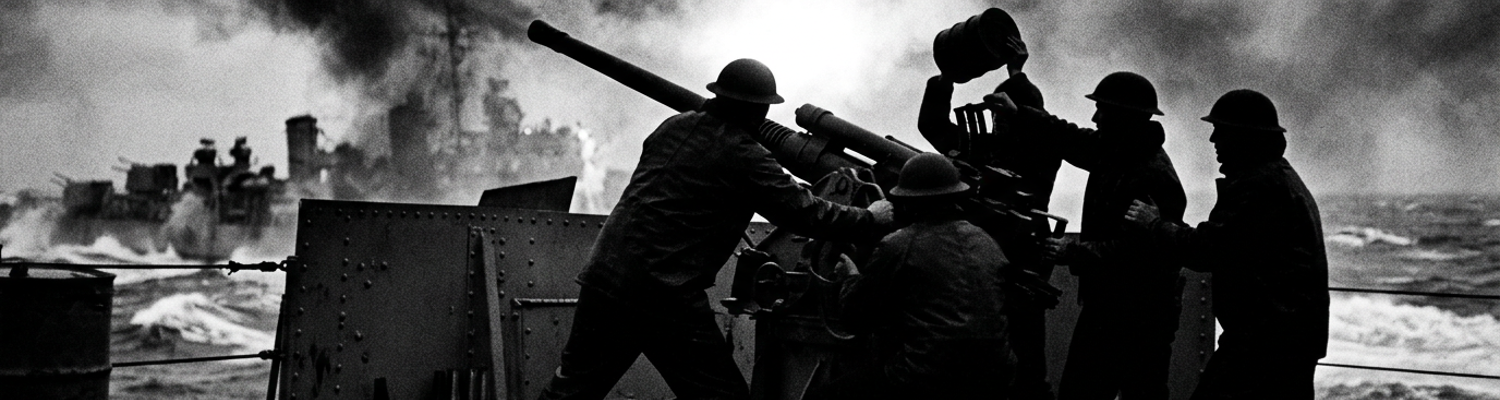

Task Force 58 Screening Operations off Kyushu
When examining the historical record of the United States Fifth Fleet off the Japanese home islands, official action reports confirm a specific deployment. The battlecruiser USS Alaska (hull designation CB-1) moved directly into the screening forces of Task Force 58 on March 19, 1945. The vessel positioned itself one hundred miles off the coast of Kyushu. Attached to Rear Admiral Arthur W. Radford and Task Group 58.4, the heavy warship moved at twenty-three knots through waters designated by naval intelligence as high threat corridors. Heavy sea swells and low cloud layers obscured visual horizon tracking. This weather condition forced radar operators aboard Alaska to rely exclusively on SK-1 air search arrays and Mk 12 fire control radar to track incoming low altitude contacts.
The operational layout placed Alaska on the outer surface ring.
Naval planners designated this position as Circle Six. The ship sat exactly six thousand yards from the central carrier core.
A close review of operational logs indicates that Alaska was built specifically as a large cruiser. The ship carried nine 12-inch 50 caliber Mark 8 main guns and twelve 5-inch 38 caliber dual purpose guns. Fifty-six 40mm Bofors anti-aircraft mounts and thirty-four 20mm Oerlikon cannons supplemented the primary battery. The tactical necessity for deploying CB-1 in the screening envelope centered on its high speed of thirty-three knots and its heavy anti-aircraft projectile weight. Naval architects designed this armament layout to shield fleet carriers from aggressive Japanese aerial tactics. Positioned at coordinates thirty-two degrees north by one hundred thirty-two degrees east, the ship maintained continuous readiness in Cruising Formation 5-VD. This tight tactical circle concentrated interlocking anti-aircraft fire over the fleet core.
High pressure boilers consumed thousands of gallons of heavy fuel oil per hour.
Turbine engines maintained rapid speed changes to match carrier evasive turns. Fire control directors Mk 37 worked continuously. These analog computers calculated lead angles for 5-inch proximity fuzed Mark 32 shells designed to detonate within seventy feet of targeted enemy aircraft. The ship held battle stations for over seventy-two consecutive hours without a secure tactical pause.
Archival evidence shows that the primary mission of Task Force 58 during this specific operational window focused entirely on screening fast carrier strike groups. These groups conducted heavy pre invasion air strikes against Japanese airfields on Kyushu. Sweeps of F6F Hellcat fighters and SB2C Helldiver dive bombers launched from the flight decks of USS Yorktown, USS Intrepid, USS Enterprise, and USS Franklin. They bombarded Japanese army and navy air facilities at Usa, Oita, and Saeki. Destroying these specific shore installations was necessary to neutralize land based air divisions. Japanese naval aviation units were preparing suicide attack waves prior to the scheduled amphibious invasion of Okinawa under Operation Iceberg.
Kyushu airfields contained fortified revetments.
These structures held hundreds of Yokosuka D4Y Judy dive bombers and Mitsubishi A6M Zeke fighters ready for instant dispersal. Carrier strikes targeted runways, fuel depots, and repair hangars with thousand pound general purpose bombs to paralyze enemy launch cadences. Because the carriers operated within striking range of land based Japanese aviation, screening units like Alaska were forced to absorb continuous retaliatory counter strikes while keeping carrier flight decks operational.
At zero seven zero eight hours, a single Yokosuka D4Y Judy pierced the inner screen undetected.
The aircraft dropped two five hundred pound armor piercing bombs onto the flight deck of USS Franklin. Explosions ruptured gasoline mains and detonated ready ordnance on the hangar deck. The blast killed over eight hundred sailors instantly. The fleet carrier lost propulsion and drifted dead in the water. Task Force 58 commanders immediately detached Alaska alongside her sister ship USS Guam, the heavy cruiser USS Pittsburgh, and Destroyer Squadron 47 to form emergency Task Unit 58.2.9. This improvised surface screen received orders to cover the crippled carrier as it limped southward at six knots toward Ulithi Atoll. A Japanese D4Y bomber made a low level strafing run at Franklin during the evacuation sequence. This attack prompted Alaska and her 5-inch battery to open fire at a slant range of four thousand yards. A near miss blast from one of Alaska and her forward 5-inch mounts sent high velocity flash burns across crew members staffing adjacent 40mm tubs.
Escalating Kamikaze Tactics and Fleet Air Defense
Naval radar operators off the coast of Kyushu logged over thirty separate enemy contacts within sixty minutes.
A close review of operational logs indicates that the Japanese Fifth Air Fleet under Vice Admiral Matome Ugaki executed a dual layered strike doctrine. This strategy was designed specifically to breach American outer screening circles. High altitude Mitsubishi G4M3 Betty bombers and Yokosuka P1Y1 Ginga twin engine aircraft approached at twenty thousand feet. They dropped thousands of aluminum foil chaff strips known as Window to saturate the SK-1 air search radar scopes of escorting cruisers. American combat air patrols of F6F-5 Hellcats climbed to intercept these high altitude radar decoys. Meanwhile, low altitude attack waves slipped underneath effective surface radar coverage.
Low level strike groups consisted of Yokosuka D4Y3 Judy dive bombers and Nakajima B6N2 Tenzan torpedo planes.
These aircraft skimmed the wave tops at altitudes under one hundred fifty feet. By maintaining flight paths beneath the sixty-five foot sea clutter blind spot of the Mk 12 fire control radar, these low flying aircraft bypassed outer destroyer pickets without triggering proximity alarms. Upon reaching the inner screening perimeter six thousand yards from the carrier core, Japanese pilots pulled up abruptly into high angle dives. Other pilots initiated straight line horizontal ramming runs against surface targets.
Japanese aviation units launched these coordinated sorties directly from underground hangars at Kanoya Air Base.
Archival evidence shows that Task Force 58 faced continuous asymmetric air strikes between March 18 and March 19, 1945. Enemy command designated fleet carriers as primary target priorities. Waves of suicide aircraft targeted the vulnerable flight decks of USS Enterprise, USS Yorktown, USS Wasp, and USS Intrepid across a forty mile operational zone. At zero seven two five hours on March 19, a single Yokosuka D4Y Judy executed a steep dive through heavy overcast above Task Group 58.2. The aircraft dropped two five hundred pound semi armor piercing bombs onto USS Wasp. The ordnance pierced the flight deck and exploded on the hangar deck among fully fueled F4U Corsairs. This detonation caused seventy-three fatalities.
Simultaneous attacks hit USS Enterprise.
A zero degree dive by an A6M5 Zeke kamikaze resulted in a near miss explosion. The blast damaged the forward elevator structure and sheared off anti-aircraft mounts. Fire control directors aboard surrounding escorts logged over four hundred continuous anti-aircraft engagements within a twelve hour window. This volume of fire overwhelmed mechanical tracking computers and overheated barrel assemblies across the fleet.
The anti-aircraft screen expended more than ten thousand rounds of five-inch shells during a single four hour tactical window.
When examining the historical record, American fleet air defense doctrine struggled to counter this saturation strategy due to physical limitations in radar guided director response times. Target tracking computers aboard ships like USS Alaska required twelve to fifteen seconds of stable radar lock to generate fire control solutions for incoming contacts moving at three hundred knots. Low altitude kamikaze strikes reduced engagement windows to less than eight seconds from visual identification to impact. Outer screening ships fired five-inch Mark 32 proximity fuzed shells blindly into low altitude threat sectors. This tactic created dense concentrations of shrapnel to physically destroy incoming airframes before impact. The heavy expenditure of ammunition depleted ready use magazines aboard Task Group 58.4 escorts. Crew members were forced to manually hoist seventy pound projectile cases from deep magazines while operating under continuous general quarters conditions.
High firing rates caused gun barrels to reach temperatures exceeding eight hundred degrees Fahrenheit.
This thermal stress led to premature ammunition detonations in dual purpose five-inch mounts. Task Group 58.4 maintained defensive formation 5-VD while steaming at twenty-six knots toward designated retirement coordinates.
Devastation of USS Franklin and Mass Casualties
A close review of operational logs indicates that at zero seven zero seven hours on March 19, 1945, a single low flying Yokosuka D4Y Judy dive bomber penetrated the screen of Task Group 58.2. The formation was roughly fifty miles off the Japanese coast. Armor piercing ordnance fell from the sky before escorting fighters shot the attacker down. Initial impact saw one five hundred pound bomb strike the flight deck centerline near the island. The bomb punched through three-inch structural steel plate to detonate inside the crowded hangar deck. Detonation of the second bomb occurred further aft. This explosive penetrated two deck levels down into the chief petty officers quarters.
Ready for launch, thirty-one fully fueled aircraft sat parked wingtip to wingtip on the hangar deck.
These planes carried thirty-six thousand gallons of high octane aviation gasoline and thirty tons of heavy munitions. Mechanical shock from the primary blast sheared off elevator cables. The force lifted the thirty-two ton forward elevator structure six feet into the air. High pressure aviation fuel lines ruptured instantly. Liquid fuel poured across mess halls where hundreds of crewmen stood in morning chow lines.
Secondary explosions tore through the hangar deck within ninety seconds of the initial strike.
Archival evidence shows that weapon stores on the hangar deck turned the interior of the Essex class carrier into a continuous chain of detonating ordnance. Twelve-inch wide Tiny Tim air to surface rockets mounted on heavy ordnance carts ignited. The rocket motors sent five hundred pound warheads through steel bulkheads into adjacent compartments. Aerial bombs, five-inch anti-aircraft shells, and thousands of fifty caliber machine gun rounds detonated sequentially. The blasts tore ten foot ruptures in the flight deck overhead. Structural fires reached temperatures exceeding two thousand degrees Fahrenheit. The heat melted aluminum aircraft frames and caused structural steel bulkheads to buckle.
Saltwater lines failed after a major gas line explosion along the aft deck ruptured the primary fire mains.
This failure dropped water pressure across all forward firefighting stations to zero. Electrical generators failed three minutes after the second blast. The power loss plunged interior spaces into pitch darkness and killed power to auxiliary ventilation blowers. Toxic carbon monoxide and vaporized aviation fuel pulled rapidly through elevator shafts. The fumes suffocated engine room personnel and fire control crews deep within lower engineering spaces.
Dense black smoke filled the lower decks.
When examining the historical record, the physical devastation directly crippled the ship and its medical infrastructure. Situated two decks beneath the hangar bay, central sickbay sustained direct blast damage from the second bomb. The compartment instantly filled with suffocating smoke. Lieutenant Commander George William Fox stayed at his post in the forward dressing station to administer morphine and tourniquets until toxic fumes killed him. Fire destroyed primary medical supply lockers. The flames consumed blood plasma supplies, surgical instruments, and burn dressings.
Trapped alongside three hundred crewmen in the warrant officers wardroom, senior medical officers Lieutenant Commander James Fuelling and Commander Francis Smith were locked behind jammed steel doors for over twelve hours.
Direct impacts wiped out flight surgeon stations along the superstructure. Surviving corpsmen established improvised casualty clearing areas on the exposed fantail while secondary explosions continued to detonate around them. Light cruiser USS Santa Fe (hull designation CL-60) pulled alongside the burning carrier. The cruiser came within twenty feet of the hull to receive over eight hundred casualties across temporary wooden catwalks.
Official casualty reports compiled after the battle confirmed eight hundred twenty-four fatalities and four hundred eighty-three wounded sailors.
This event marked the heaviest loss of life on a single surviving warship in American naval history. Hundreds of survivors suffered severe full body thermal burns. Flying propeller fragments caused compound fractures. Blast overpressure ruptured eardrums across the crew. Counter flooding measures prevented the carrier from capsizing as the hull listed thirteen degrees to starboard. Damage control teams manually rolled unexploded five hundred pound bombs over the side into sea swells. Escort ships surrounded the burning hull. Tugboats secured tow cables to pull the damaged vessel away from the mainland. Deprived of internal communications, Captain Leslie E. Gehres relied on runner couriers to deliver hand written damage control directives to surviving engineering spaces.
Damage control parties fought fires continuously for thirteen straight hours.
Improvised Deckside Triage aboard USS Alaska
A close review of operational logs indicates that following the catastrophic bombing of USS Franklin on March 19, 1945, Vice Admiral Marc Mitscher detached the large cruiser USS Alaska (CB-1) from Task Group 58.4. The cruiser formed emergency Task Unit 58.2.9. Assigned alongside her sister ship USS Guam, heavy cruiser USS Pittsburgh, and Destroyer Squadron 47, the heavy battlecruiser assumed direct responsibility for escorting the burning aircraft carrier. The unit moved away from the coast of Kyushu toward the naval anchorages at Ulithi Atoll and Guam.
Steaming at a meager six to eight knots, Franklin was completely incapable of launching defensive air patrols.
The carrier could not maneuver against submarine attacks while positioned barely fifty miles from major Japanese airfields at Kanoya and Oita. Alaska circled the crippled carrier in close proximity. The cruiser utilized her nine 12-inch main guns and twelve 5-inch dual purpose guns to maintain an aggressive anti-aircraft perimeter against incoming air attacks. High pressure steam turbines aboard the cruiser burned thousands of gallons of fuel oil. Gunners tracked low altitude Japanese Yokosuka D4Y Judy dive bombers attempting to finish off the carrier. During one chaotic gunnery engagement, the muzzle blast from Alaska and her forward 5-inch Mount 51 generated high velocity flash burns across crewmen staffing adjacent 40mm anti-aircraft tubs. This friendly fire incident added local casualties to the mounting operational pressure.
Naval destroyers maneuvered through heavy ocean swells to ferry hundreds of severely injured sailors away from the carrier.
Archival evidence shows that screening escorts like the destroyer USS Hunt (hull designation DD-674) pulled alongside Franklin and her burning superstructure. Deck crews hauled survivors directly from sea swells and scorched lower deck compartments. Sickbay spaces aboard Franklin were obliterated by secondary bomb detonations and choked with carbon monoxide fumes. Escorts transferred scores of critically injured survivors directly to Alaska via highline breeches buoy rigs and wooden stretchers suspended over open ocean water.
Alaska took on board dozens of casualties suffering from traumatic blast injuries.
Medical personnel treated compound fractures and extensive full body thermal burns caused by vaporized aviation gasoline. Transfer cables swung wildly in heavy chop. The motion threatened to drop wounded sailors into the sea before deck crews hauled them onto Alaska and her main deck. Shipboard corridors quickly became impassable. Line officers and uninjured bluejackets carried litters down narrow ladders. This influx overwhelmed the cruiser and her primary surgical ward within minutes of the initial intake.
Interior medical compartments reached total capacity before half the transferred casualties were brought aboard.
When examining the historical record, the sudden influx of burn casualties forced Alaska and her medical officer to improvise emergency triage stations. The crew set up these stations directly on the open teak deck planks and sheltered catwalks along the superstructure. Sailors stripped canvas boat covers, wooden mess tables, and spare cots to construct makeshift treatment stations. These areas were protected from wind spray and active gun blast overpressure. Corpsmen worked under continuous general quarters conditions while anti-aircraft batteries fired at Japanese reconnaissance aircraft. Medical staff classified patients into priority categories using colored chalk marked on forehead skin.
Medical personnel administered large doses of morphine syrettes to suppress neurogenic shock.
Corpsmen wrapped third degree flash burns in vaseline gauze and applied plasma transfusions hung from overhead cabling. Battle dress crews utilized emergency damage control lockers to retrieve additional blankets and surgical shears. They cut away charred uniform fabric embedded in melted skin. Engine room personnel rigged temporary electrical leads to power portable inspection lights across the open weather deck as night fell over the Pacific.
Medical log entries recorded fifteen critically burned survivors receiving continuous intravenous blood plasma on Alaska and her weather deck.
The task unit reached safe waters off Ulithi on March 22.
Thermal Expansion in 40mm Bofors Quad Mounts
Continuous anti-aircraft fire pushed the ship and its light gun mounts past extreme temperature thresholds.
A close review of operational logs indicates that Task Unit 58.2.9 fought off successive waves of Japanese suicide bombers off the coast of Kyushu on March 19, 1945. During this engagement, the fifty-six 40mm Bofors cannons mounted across fourteen quadruple Mark 2 assemblies aboard USS Alaska (CB-1) fired without interruption for hours. Engineers designed these weapons to throw four round clips of high explosive 40x311mmR shells at a combined rate of six hundred rounds per minute per quad mount. These air cooled and water assisted barrels relied on rapid heat dissipation to maintain structural tolerances. Operating at coordinates thirty-two degrees north by one hundred thirty-two degrees east, gun crews fed clip after clip into the top mounted loading trays. Low flying Yokosuka D4Y3 Judy dive bombers glided beneath fleet radar screens.
Thermal stress mounted rapidly inside the alloy steel barrel sleeves.
Internal metal temperatures pushed past nine hundred degrees Fahrenheit within minutes of sustained barrage fire. The extreme heat caused the physical steel of the barrels to undergo rapid thermal expansion. This process widened internal bore diameters while simultaneously elongating the outer barrel tubes by fractions of an inch. Water jacket cooling reservoirs boiled dry under the thermal load. Gunnery officers were left unable to cool the weapons between combat contacts.
Barrels expanded past their engineered mechanical tolerances.
Archival evidence shows that rapid barrel expansion instantly compromised the tight mechanical fits of the Mark 3 recoil mechanisms and breech casing slides. The steel barrels expanded outward and lengthened. The tight clearances between the barrel assembly, the barrel casing, and the breech housing vanished entirely. Recoil springs failed to push the overheated barrels fully back into battery after each discharge. This failure caused the automatic breechblock mechanism to drop prematurely or misalign with incoming ammunition clips.
Hot 40mm brass cartridge cases expanded inside the distorted chambers.
The brass bound firmly against the inner chamber walls during extraction cycles. Spent casings torn apart by automatic ejector claws left sheared brass collars stuck inside the hot bores. This instantly caused catastrophic weapon jams across multiple quad mounts. The mechanical degradation spread across Alaska and her port and starboard broadside batteries. Entire four gun mounts seized up simultaneously during sustained kamikaze defense runs. Gun captains attempting to manually operate the hand actuated breech levers found the metal components completely frozen in place by thermal friction.
Red hot steel seized the sliding breechblocks inside their housings.
When examining the historical record, gunners mates aboard Alaska were forced to execute emergency barrel swaps on exposed open deck tubs. They performed this maintenance while under direct aerial attack from the Japanese Fifth Air Fleet. Ordnance manuals prescribed changing air cooled barrels after every one hundred rounds of continuous fire. The relentless density of incoming kamikaze waves made scheduled maintenance impossible. Crew members wearing asbestos mittens attempted to unlock hot barrel locking rings using heavy spanner wrenches. They found the threads fused tight by extreme heat and metal deformation.
Cold seawater splashed onto the mounts to speed cooling caused sudden thermal shock.
This rapid temperature change cracked the outer barrel jackets and permanently warped the precision rifling inside the bores. Out of fourteen quad mounts aboard Alaska, nearly half suffered severe mechanical degradation or complete firing failure during the most intense ninety minutes of the engagement. The loss of rapid fire 40mm projectile weight forced the cruiser to rely increasingly on single shot 20mm Oerlikons and five-inch dual purpose mounts. These secondary weapons were required to keep suicide aircraft away from the burning hull of USS Franklin.
Gun crews racked spent brass casings across the steel deck plates as temperature gauges pegged past maximum limits.
Compromised Anti Aircraft Defense during Escort Operations
A close review of operational logs indicates that Task Unit 58.2.9 fought to escort the stricken USS Franklin off the coast of Kyushu. Heat saturation across USS Alaska and her primary light anti-aircraft batteries degraded fleet intercept effectiveness. Continuous barrage fire from fourteen Mark 2 quadruple 40mm Bofors mounts generated extreme thermal expansion inside gun chambers. Internal metal temperatures pushed past nine hundred degrees Fahrenheit. Internal bore rifling warped under severe thermal stress. This deformation caused outgoing 40x311mmR high explosive shells to destabilize immediately upon exiting the muzzles.
Wide dispersions and erratic projectile trajectories eroded the ship and its protective flak density.
The degraded accuracy created gaps in the screening perimeter six thousand yards out from the crippled carrier. Interlocking arcs of defensive fire collapsed as individual quad mounts experienced thermal seizure. Incoming Japanese aircraft flew unmolested during low altitude attack runs. Weapon overheating reduced USS Alaska and her effective anti-aircraft firepower. This mechanical failure weakened the defense umbrella surrounding USS Franklin at the precise moment Japanese air fleets launched concentrated saturation strikes.
Gun crews watched defensive flak curtains dissolve into wide erratic shell bursts.
Archival evidence shows that mechanical failures across damaged quad mounts rapidly stripped Alaska of her medium range interception capabilities. Thermal expansion jammed recoil mechanisms within individual 40mm gun tubs. The heat locked breechblocks tight inside their casings and snapped automatic ejector claws against swollen brass cartridge walls. Hot brass casings bound tightly against chamber walls. Gun captains were forced to take entire four gun mounts offline while under active air attack.
The operational failure of damaged quad mounts forced reliance on secondary 20mm cannons and 5-inch dual purpose guns.
Single 20mm Mark 4 Oerlikon mounts fired 20x138mmB solid rounds at four hundred fifty rounds per minute. These light weapons lacked the range and explosive destructive force needed to disintegrate fast moving airframes before impact. Gun captains directed Mk 37 fire control directors to engage incoming suicide bombers at point blank range using heavy 5-inch 38 caliber dual purpose mounts. Firing proximity fuzed Mark 32 shells at slant ranges under two thousand yards, five-inch gun crews threw heavy metal fragments across sea swells. High minimum engagement envelopes left close in fleet protection severely compromised.
Overheated barrels sheared extraction claws off jammed shell casings across every broadside tub.
When examining the historical record, this tactical shift forced Alaska and her gunners to operate far outside established air defense doctrine. Secondary 20mm Oerlikons mounted along the battlecruiser and her superstructure possessed an effective range under eighteen hundred yards. Gunners had to wait until enemy aircraft entered final suicide dives before opening fire. Single barrel 20mm mounts lacked automatic director control. They relied entirely on visual lead estimation by individual gunners wearing shoulder harnesses on open catwalks.
Incoming Japanese pilots took advantage of reduced flak density between two thousand and four thousand yards.
The attackers slipped through the fragmented screen to target Franklin and her burning flight deck. Alaska and her main 5-inch battery expended hundreds of Mark 32 proximity fuzed rounds into low altitude threat sectors. High firing rates caused powder cook offs inside twin Mark 32 gun houses. Severe recoil stress from continuous five-inch broadsides knocked out delicate alignment gears in local fire control directors. This mechanical shock further reduced the battlecruiser and her tracking accuracy.
Single 20mm cannons could not stop three ton suicide bombers moving at three hundred knots.
Operational records from Task Group 58.4 confirm that by sixteen hundred hours on March 19, 1945, Alaska had expended over eight thousand rounds of 40mm ammunition and eleven hundred five-inch shells. Weapon failures across the screen left Task Unit 58.2.9 struggling to maintain a cohesive air defense umbrella. Japanese reconnaissance aircraft continued tracking the damaged fleet sixty miles off the coast of Kyushu.
Tactical Lessons from the Kyushu Escort Mission
Over sixty continuous hours of high intensity combat off Kyushu pushed men, guns, and administrative doctrines past their structural breaking points.
A close review of operational logs indicates that the chaotic intake of over eight hundred casualties onto ships like USS Alaska (CB-1) exposed severe operational limits in large cruiser design. Designed around heavy offensive air defense throw weight, the Alaska class battlecruisers featured spacious weather decks but restricted interior passageways. These narrow corridors choked under mass casualties. Medical corpsmen attempting to transport shattered crewmen down three foot wide ladders to lower sickbays found compartments blocked. Armed battle dress personnel were running ammunition clips to 40mm tubs through the same access hatches.
Continuous sustained firing cycles over a seventy-two hour engagement window strained the mechanical integrity of the ship and its dual purpose gun mounts.
High firing cadences generated severe recoil vibrations. These shocks knocked local Mk 57 radar directors out of alignment. Thermal expansion jammed ammunition feed tracks across multiple quad Bofors assemblies. Operating at coordinates thirty-two degrees north by one hundred thirty-two degrees east, gun captains were forced to split director control between individual twin 5-inch 38 mounts as tracking computers overheated. The simultaneous failure of internal transit corridors and outer gun line mechanical integrity forced Task Force 58 commanders to recognize a specific tactical reality. Large cruisers could not simultaneously function as primary casualty triage centers and heavy anti-aircraft screens while under continuous enemy air attack.
Hot metal and crowded decks demanded immediate institutional reform across the Pacific Fleet.
When examining the historical record, the chaos surrounding the evacuation of USS Franklin forced Commander in Chief Pacific Fleet to completely rewrite emergency medical transfer protocols for surface task forces. Prior to the Kyushu engagement, transfer doctrine relied heavily on highline breeches buoys and improvised wooden stretchers rigged between moving warships in open sea swells. Heavy Atlantic style transfer gear frequently dropped wounded sailors into thirty-two degree sea water. The equipment slammed casualties against steel hulls during rapid fleet maneuvers.
Following action report reviews from Task Unit 58.2.9, command mandated the universal adoption of standardized Stokes metal litter baskets.
These baskets were fitted with quick release floatation collars across all fast carrier screens. Command directives established mandatory casualty screening centers aboard broad deck fleet auxiliaries and repair ships rather than combat cruisers. This shift freed screening warships to keep primary anti-aircraft batteries fully manned. Naval medical officers instituted standardized color coded casualty tag systems directly on open deck receiving stations. This procedure streamlined surgical priorities before wounded sailors entered crowded interior hatches.
Gunnery officers faced an equally severe mechanical crisis across all broadside batteries.
Archival evidence shows that extreme barrel temperatures recorded off Kyushu spurred an immediate overhaul of gunnery cooling procedures for heavy anti-aircraft armaments throughout the United States Navy. Operating under continuous air attack, 40mm Bofors quad mounts routinely exceeded nine hundred degrees Fahrenheit. Barrel tubes expanded, warped, and seized inside recoil slide housings. Ordnance officers had previously relied on informal water bucket dousing or erratic fire hose sprays. This practice caused violent thermal shock that cracked barrel sleeves and ruined precision rifling.
Revised Fleet Gunnery Circulars strictly banned raw seawater dousing on hot gun barrels.
The Navy implemented mandatory rotational firing schedules. This doctrine forced gun captains to swap 40mm barrel assemblies after every ninety rounds of continuous fire. Naval Ordnance yards issued specialized heat resistant asbestos mitten kits and high torque spanner wrenches directly to gun tubs. These tools cut barrel replacement times from four minutes down to forty-five seconds. On 5-inch 38 dual purpose mounts, revised battle doctrines mandated high pressure freshwater circulating pumps plumbed directly into gun house water jackets. This mechanical adjustment prevented powder cook offs in overheated chambers. These mechanical adjustments doubled sustained fire endurance during subsequent kamikaze defense operations off Okinawa during Operation Iceberg.