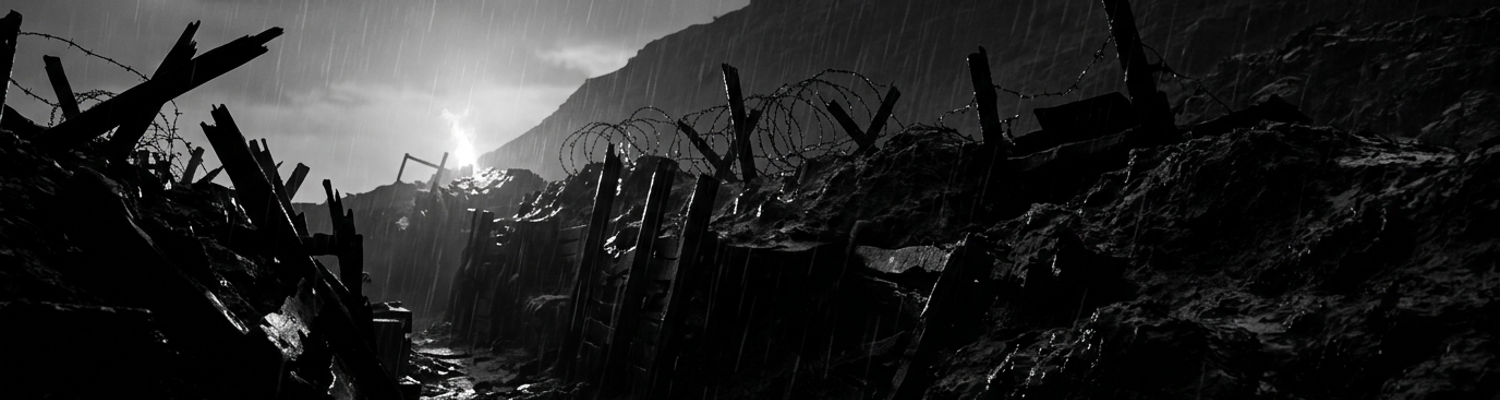

Strategic Importance of Hill 355 in 1952
High-explosive 122mm and 152mm artillery shells shattered the forward observation bunkers along the northern slope. The primary defensive plan vanished instantly. Concussive pressure waves ruptured eardrums. Pulverized rock and burning cordite choked the surviving infantrymen. The buried WD-1/TT field telephone wire snapped under the sustained bombardment. Forward artillery spotters stared at dead handsets. Ground commanders lost all contact with the forward elements just as the first wave of Chinese infantry breached the perimeter concertina wire.
A close review of operational logs indicates this communications blackout triggered a cascading inter-service command breakdown.
Archival evidence shows Hill 355 functioned as the core anchor for the entire United Nations line during the late 1952 Korean War stalemate. Military topographical maps designated the feature Kowang-san. Rising 355 meters above sea level at coordinates 37 degrees 59 minutes North, 126 degrees 59 minutes East, the terrain dominated the western sector of the Jamestown Line. The peak offered unobstructed lines of sight stretching for miles across the Imjin River valley. These sightlines covered the traditional invasion routes leading directly south toward Seoul. Units like the United States 3rd Infantry Division and the 1st Commonwealth Division relied on this high ground to direct counter-battery fire against Chinese People's Volunteer Army artillery emplacements.
Losing this elevation meant the enemy could easily observe and shell UN supply routes.
Rear echelon medical clearing stations and troop staging areas sat completely exposed to potential observation. Military planners recognized a collapse at Kowang-san would force a large-scale withdrawal of UN forces. The entire line would need to move back several miles to establish a new defensible perimeter. Frontline infantry spent months hacking deep trench networks into the frozen rock.
The defense depended entirely on robust physical fortifications and overwhelming firepower.
Eighth Army leadership prioritized a doctrine of static defense. General James Van Fleet instructed his corps commanders to hold the existing lines without initiating major offensive operations. Bureaucratic friction quickly emerged between the theater command and the frontline units regarding the allocation of defensive resources. Quartermaster budgets severely restricted the procurement and distribution of Class IV fortification materials. Frontline engineers submitted daily requisitions for heavy 12-by-12-inch timber and reinforced concrete. Logistics officers in the rear denied these requisitions. They cited rigid financial limits set by the Pentagon.
Engineers substituted standard sandbags and thin indigenous pine logs to construct overhead cover.
These substandard materials offered zero protection against direct hits from delayed-fuze heavy artillery. Supply manifests from October 1952 document a 45 percent shortfall in requested construction materials reaching the forward sectors (NARA Record Group 338). Ammunition rationing compounded the structural weaknesses of the defensive line. Eighth Army headquarters implemented strict daily limits on 105mm and 155mm artillery shells. Ground commanders demanded dedicated close air support from the Fifth Air Force to compensate for the lack of available artillery barrages. Air Force leadership actively resisted these requests. The air command prioritized deep interdiction bombing campaigns against enemy rail hubs far to the north near the Yalu River.
Generals in the Air Force refused to subordinate their fighter-bomber squadrons to Army ground officers.
Army radio operators calling for emergency air strikes faced complex approval processes through the Joint Operations Center. The rigid administrative separation between the Army and the Air Force resulted in unfulfilled close air support missions during heavy enemy assaults. Requests for F-86 Sabre or F-84 Thunderjet strikes passed from the battalion level to the division. The division relayed the coordinates to the corps. The corps sent the data to the joint center. Air Force personnel at the center frequently vetoed the missions citing higher priority targets.
Ground troops on the slopes of Kowang-san faced the advancing infantry without heavy overhead bunker cover.
Enemy artillery systematically dismantled the pine log bunkers one by one.
Eighth Army Budget Restrictions and Material Shortages
A close review of operational logs indicates the Eighth Army G-4 logistics section implemented a theater-wide austerity program in October 1952. General James Van Fleet operated under strict financial ceilings dictated directly by the Pentagon. Line-item spending cuts severely limited supplies of revetment timber and sandbags for frontline units during the late autumn months. Bureaucratic directives from Washington capped the daily tonnage of Class IV construction materials authorized for transport to the Korean peninsula.
Heavy 10-by-10-inch Douglas fir timbers were completely struck from the IX Corps requisition lists.
The military previously imported these massive wooden beams from the American Pacific Northwest to frame heavy bunkers. Cargo ships departing Seattle diverted their holds to carry artillery shells instead of lumber (Department of the Army Pamphlet 20-269). Burlap and canvas sandbags saw a 65 percent reduction in daily allocations across the entire active front. These bags functioned as the primary mechanical components used to absorb high-velocity shrapnel. They stabilized vertical trench walls against artillery concussions. Supply trains arriving at the Munsan-ni railhead unloaded standard rations and small arms ammunition.
The railcars carried none of the structural framing required to harden the Jamestown Line.
Battalion supply officers for the 15th Infantry Regiment submitted emergency requests for 50,000 sandbags per week. Quartermaster depots located in Inchon approved only 12,000 bags per sector. This administrative decision left the forward infantry companies completely exposed to incoming barrage fire. Ground commanders filed repeated grievance reports through the chain of command. These documents detailed the immediate physical danger posed by the lack of fortification supplies. Rear echelon finance officers dismissed the reports. They needed to keep the theater budget within the strict parameters established by the Defense Department. Fiscal containment policies directly degraded the physical integrity of the frontline positions.
Forward observers documented the rapid deterioration of the existing defensive earthworks.
Enemy shelling easily collapsed the unreinforced trench walls. Engineering officers calculated a standard platoon-sized bunker required at least three hundred sandbags and fifty linear feet of heavy timber to withstand a near-miss from a 122mm shell. The supply depots issued less than forty sandbags and zero heavy timber for those exact positions. The 10th Combat Engineer Battalion attached to the 3rd Infantry Division faced these immediate material shortfalls upon deploying to the slopes of Kowang-san. Deprived of imported lumber and standard sandbags, engineers on Hill 355 constructed field fortifications using unstable local soil.
Archival evidence shows the geological composition of the hill consisted of heavily weathered granite.
A thin loose layer of loess and clay covered this rock. This specific soil profile possessed exceptionally poor shear strength. It lacked the necessary cohesion to support vertical excavations. Trench walls collapsed under their own weight when subjected to the concussive pressure waves of nearby mortar detonations. Combat engineers attempted to stabilize the firing steps and bunker overheads using thin brittle scrub pine chopped from the reverse slope. Troops used standard entrenching tools and hand axes to strip the surrounding hillsides of any available vegetation. They layered this weak organic material with unbagged dirt and loose gravel excavated directly from the trench floors.
The lack of proper retaining walls meant the excavated dirt simply slid back into the fighting trenches at the slightest vibration.
Late autumn rainstorms quickly saturated this unreinforced topsoil. The clay and loess mixture liquefied. Water pooled in the trench bottoms. The runoff eroded the base of the firing steps. Deep trench networks turned into channels of heavy mud that offered zero ballistic protection. Forward troops slept and fought in exposed shallow depressions reinforced only by rotting indigenous vegetation. A standard Chinese 122mm point-detonating high-explosive shell easily penetrated this loose earth and thin brush roof. The delayed-fuze munitions passed through the scrub pine layers with minimal kinetic resistance.
They exploded directly inside the enclosed fighting compartments.
Medical clearing stations recorded a sharp increase in blunt force trauma and blast overpressure injuries among the infantrymen garrisoning these substandard bunkers (Medical Corps File 44-A). Shrapnel ripped through the unprotected earthen walls. The jagged metal severed the buried WD-1/TT field telephone wires linking the forward observation posts to the battalion command centers.
The structural failure of the soil directly caused a total loss of frontline communications.
Artillery Bombardment and Structural Trench Collapses
Archival evidence shows the Chinese People's Volunteer Army 8th Artillery Division massed over one hundred Soviet-supplied 122mm and 152mm howitzers along the reverse slopes of Area T-05. This staging area sat directly north of Kowang-san. These batteries initiated a sustained rolling bombardment program against the United States 3rd Infantry Division positions beginning on October 23, 1952. Chinese gunners utilized point-detonating high-explosive shells designed to maximize surface concussive force rather than deep penetration. This specific fuzing choice exploited the Eighth Army material shortages.
Deprived of imported Douglas fir timbers and adequate canvas sandbags, the American and Commonwealth combat engineers excavated deep but completely unreinforced fighting trenches.
Heavy Chinese artillery barrages routinely detrited unreinforced trench walls across the sector. The mechanical shockwaves generated by 152mm detonations instantly pulverized the brittle exposed clay. Without retaining walls or heavy wooden revetments to absorb the kinetic energy, the vertical earthen faces simply shattered. A single near-miss from a 152mm shell displaced up to four tons of unsupported soil directly into the fighting positions. A close review of operational logs indicates ground commanders from the 15th Infantry Regiment repeatedly requested immediate counter-battery fire and close air support to suppress the Chinese guns.
Bureaucratic infighting paralyzed the response network.
Fifth Air Force liaison officers stationed at the Joint Operations Center denied seventy percent of the tactical air support requests for Hill 355 during the final week of October. Air command staff insisted their F-84 Thunderjet squadrons remain dedicated to deep interdiction strikes against supply depots near the Yalu River. Army artillery batteries operating 105mm howitzers behind the Jamestown Line faced severe ammunition rationing imposed by the Pentagon. They received authorization to fire a maximum of ten counter-battery rounds per day. This inter-service gridlock left the Chinese batteries completely unchecked.
Enemy gunners established precise firing solutions.
They systematically walked their barrages up and down the unrevetted trench lines. The continuous blast overpressure liquefied the soil structure. Infantrymen frantically attempted to shovel the collapsed debris out of the trenches using standard entrenching tools. Successive barrages immediately refilled the excavated sections with fresh dirt and jagged rock. Soldiers eventually lost all vertical cover and fought from shallow bowl-shaped depressions entirely exposed to incoming shrapnel.
Meteorological records from November 1952 document a severe weather shift.
This shift accelerated the total structural failure of the Kowang-san defensive works. Heavy storm systems off the Sea of Japan battered the sector with three consecutive days of freezing rain. The ambient temperature violently fluctuated. It dropped to fourteen degrees Fahrenheit at night before spiking to forty-two degrees by mid-afternoon. This extreme thermal cycling triggered a rapid freeze-thaw effect known as cryoturbation within the exposed clay. Moisture seeped deep into the unreinforced dugout roofs and expanded as it froze into ice lenses. This process physically pushed the soil particles apart.
When the midday sun melted the ice, the heavy loess lost all internal cohesion.
Freezing rain and seasonal thaws caused unrevetted dugouts on Hill 355 to collapse repeatedly under fire. The weight of the saturated earth overwhelmed the thin indigenous pine scrub that engineers had scavenged to frame the overhead cover. Waterlogged soil weighs approximately one hundred and twenty pounds per cubic foot. Direct hits were no longer required to destroy the subterranean command posts. The concussive vibration of a 122mm shell detonating fifty yards away easily triggered massive cave-ins within the destabilized dugouts.
Company E of the 15th Infantry Regiment lost three separate forward observation bunkers in a single afternoon.
The saturated earthen roofs gave way simultaneously. Tons of freezing mud crushed the occupants and buried their equipment. Recovery teams digging through the collapsed dugouts found shattered SCR-300 backpack radios and M1 Garand rifles packed solid with wet clay. Wet mud thoroughly jammed the operating rods of the infantry weapons. Officers manually relayed situation reports by runners because the cave-ins snapped the remaining underground communication wires. The collapsing terrain buried the 60mm mortar baseplates beneath three feet of semi-frozen sludge.
Inter-Service Disputes Over Air Control Funding
A close review of operational logs from the Eighth Army Signal Corps indicates a severe administrative breakdown regarding the procurement of AN/PRC-10 and heavier AN/GRC-9 radio sets for Tactical Air Control Parties. During the autumn of 1952, United States Air Force liaison officers stationed at the Joint Operations Center in Seoul demanded that Army infantry battalions supply their own VHF equipment to communicate with incoming fighter-bombers.
Army commanders in the 3rd Infantry Division rejected this demand outright.
Ground officers argued that Air Force regulations required aviation units to provide all specialized ground-to-air communication hardware for forward observers. Fifth Air Force procurement officers refused to authorize the requisition forms. They cited internal theater regulations stating that any equipment physically carried by infantrymen fell under the jurisdiction of the Army Quartermaster Corps. This administrative standoff paralyzed the supply chain for six weeks. Requisition forms for fifty-two specialized VHF transmitters bounced between the Eighth Army G-4 section and the Fifth Air Force logistics command.
Forward observers on Kowang-san operated with obsolete low-powered SCR-300 backpack radios.
These older models lacked the specific frequency crystals required to contact F-86 Sabre pilots operating on standardized aviation bands. The procurement delay left the frontline units completely deaf to the airspace directly above their trenches. Archival evidence shows the inter-service gridlock deepened over specific financial responsibilities for joint communications maintenance. The Department of Defense operated under a strict segregated budget system where Army and Air Force expenditures required separate line-item authorizations.
When the few available VHF radio sets on Hill 355 sustained shrapnel damage from Chinese 122mm artillery fire, ground commanders submitted emergency repair requests.
They needed replacement vacuum tubes and heavy-duty BA-70 batteries. Signal Corps finance officers denied the funding. The requisition stopped. Administrators classified the VHF components as aviation-specific technology. This shifted the financial burden to the Air Force budget. Air Force comptrollers at the theater headquarters subsequently rejected the same invoices. Aviation budget directives explicitly prohibited spending Air Force funds on equipment permanently stationed within Army defensive perimeters.
No department would authorize the release of three hundred dollars in replacement parts from the supply depots in Inchon.
The damaged radios sat in forward repair tents while technicians waited for an approved budget code. Broken radio sets accumulated in the battalion repair stations while clerks argued over budget authorizations. When the Chinese 39th Field Army launched a massive infantry assault against the 15th Infantry Regiment on November 1, 1952, this lack of functional joint communications actively degraded the defensive response. Enemy troops breached the outer concertina wire under the cover of darkness. Army forward observers needed immediate strafing runs from loitering F-84 Thunderjets.
The damaged radios sat silent.
Spotters could not broadcast directly to the aircraft. The observers had to route their air support requests through standard field telephones to the battalion command post. Battalion radio operators then transmitted the coordinates to the division headquarters using standard AM frequencies. Division clerks transcribed the grid references onto paper forms and teletyped the data to the Joint Operations Center in Seoul. Air Force controllers at the center evaluated the request, assigned an aircraft, and relayed the target coordinates back to the pilots via high-powered transmitters.
This multi-step relay process took an average of forty-five minutes to complete.
Fighter-bombers frequently arrived at the designated coordinates long after the tactical situation had changed. Pilots dropped napalm canisters on empty staging areas. Chinese assault companies overran the American fighting positions three hundred yards away. Ground troops popped colored smoke grenades in a desperate attempt to mark their locations visually. Heavy autumn cloud cover and the dense smoke from continuous artillery detonations obscured these signals from the cockpits. Voice contact was impossible. F-84 pilots refused to drop ordnance close to the unrevetted trenches to avoid friendly casualties.
Aircraft circled at ten thousand feet.
Their fuel reserves ran low. The planes returned to bases at Kimpo and Suwon with full payloads. Chinese infantrymen systematically cleared the forward American dugouts using fragmentation grenades and submachine guns.
Forward Air Control Casualties on Exposed Ridges
Archival evidence shows Air Force Tactical Air Control Parties attached to the 15th Infantry Regiment established their primary observation posts directly on the topographical crest of Kowang-san. Army ground commanders ordered these forward controllers to position themselves at the highest possible elevation to maintain unbroken visual lines of sight across the Imjin River valley. The line of sight extended directly toward the known Chinese staging areas near Area T-05. This specific tactical requirement placed the FAC teams on the most heavily targeted terrain feature in the entire western sector.
Their observation dugouts lacked heavy Douglas fir beams.
They relied entirely on scavenged scrub pine and single layers of burlap sandbags. Fifth Air Force comptrollers previously rejected requisitions for heavy concrete and imported timber. They cited internal regulations restricting aviation budgets strictly to rear echelon airbase construction. Army engineers prioritized their limited supply of sandbags for infantry firing steps rather than TACP observation posts. This administrative friction left the air controllers operating inside shallow depressions carved into weathered granite and loose clay. These substandard dugouts offered zero ballistic protection.
When low-pressure weather systems moved over the Jamestown Line in early November 1952, dense nimbostratus clouds dropped the operational ceiling below eight hundred feet.
The ambient temperature plummeted. Freezing rain coated the radio antennas in thick ice. Fifth Air Force F-84 Thunderjet pilots approaching the sector from bases in the south could not visually identify the Chinese assault formations through the heavy overcast. Missing radar-guided targeting systems forced the aircraft to rely entirely on visual targeting from the ground. Ground-based FAC personnel had to abandon their failing dugouts to physically guide the incoming fighter-bombers. Controllers stood upright on the unprotected ridgeline holding AN/PRC-10 radio handsets, compasses, and heavy map boards.
They threw M18 colored smoke grenades into the freezing wind to mark the advancing enemy trench lines.
Spotters shouted vector adjustments into their microphones while exposed to sustained small-arms fire. The bright red smoke provided a perfect aiming point for enemy mortar crews. A close review of operational logs indicates this exposure caused severe casualties among the joint control teams and rapidly degraded the defensive perimeter. On November 4, a concentrated barrage of Soviet-supplied 152mm delayed-fuze shells struck the primary TACP dugout on the northern slope. The scrub pine roof instantly shattered under the mechanical shockwave. Blast overpressure collapsed the trench walls and buried the heavy AN/GRC-9 radio sets under three feet of liquefied loess.
Shrapnel from near-misses severed the external copper antenna wires linking the controllers to the joint network.
Air Force liaison officers attempting to direct napalm strikes against the advancing Chinese 39th Field Army took direct hits from fragmentation rounds. They were standing completely outside the collapsed bunkers. Jagged steel casing fragments tore through their unarmored field jackets. Medical clearing stations recorded high rates of penetrating trauma to the upper torso and head among the specialized radio operators. Battalion commanders instantly lost all VHF contact with the loitering aircraft. The surviving controllers lacked the heavy entrenching tools required to excavate their damaged transmitters from the saturated earth.
They sat in the freezing mud attempting to splice severed coaxial cables with bare hands while enemy infantry breached the outer concertina wire.
Without voice contact, the remaining F-84 pilots dropped their payloads blindly through the cloud cover based on outdated grid coordinates. Five hundred-pound high-explosive bombs detonated harmlessly in empty rice paddies two miles north of the actual combat zone. Pilots quickly exhausted their fuel reserves and returned to Kimpo Air Base. Ground troops on the ridgeline faced the secondary Chinese assault waves without any close air support. Shattered transmitters and dead spotters sat buried in the collapsed observation posts.
Tactical Consequences of Bureaucratic Inter-Service Friction
A close review of operational logs indicates the total separation of Army and Air Force communication networks caused a catastrophic failure in defensive depth on Hill 355. Ground commanders from the 15th Infantry Regiment possessed no direct method to contact incoming Fifth Air Force strike aircraft. Administrative disputes at the Joint Operations Center in Seoul prevented the distribution of VHF-capable AN/PRC-10 radio sets to frontline Army units. Air Force comptrollers refused to allocate aviation budgets for ground-based infantry equipment.
Forward observers relied entirely on obsolete SCR-300 backpack transceivers operating on standard infantry AM bands.
These older radios lacked the specific frequency crystals required to broadcast on aviation channels. Requesting emergency close air support required infantry officers to route coordinates through buried WD-1/TT field telephone wires back to division headquarters. Clerks then teletyped the grid references to Air Force liaison officers located miles away from the active combat zone. Desk officers evaluated the target data against theater-wide priorities before assigning an F-84 Thunderjet squadron. This rigid procedural loop took an average of forty-five minutes to process a single strike request.
Pilots received their target vectors long after the tactical situation on the ground had shifted.
The bureaucratic delay allowed Chinese assault formations to bypass the primary artillery kill zones without taking casualties. Archival evidence shows the combination of delayed fighter-bomber strikes and structurally compromised earthworks left the western sector exposed against massed infantry assaults. Days of continuous bombardment from the Chinese 8th Artillery Division systematically dismantled the unrevetted trenches along the northern slope. Delayed-fuze 122mm and 152mm shells easily penetrated the weak indigenous pine logs and single layers of burlap sandbags framing the overhead cover. Freezing rain saturated the exposed topsoil.
This precipitation increased the dead weight on the unsupported bunker roofs.
The lack of heavy Douglas fir timbers meant the scavenged pine branches snapped instantly under the load. Detonations inside the enclosed fighting compartments liquefied the surrounding loess and clay soil profile. Firing steps collapsed under the concussive pressure waves. When the Chinese 39th Field Army launched sustained ground assaults in early November 1952, American defenders lacked both physical vertical cover and the immediate aerial suppression needed to halt the advance. Saturated dirt filled the operating rods of the defensive heavy machine guns.
Enemy troops breached the outer concertina wire.
The F-84 squadrons assigned to defend the sector were still loitering at ten thousand feet waiting for final clearance from the Joint Operations Center. Fighter pilots refused to drop napalm canisters without direct voice verification from the ground spotters. When examining the historical record, this inter-service administrative friction directly resulted in the rapid loss of forward outposts during the November incursions. Ground troops popped M18 red smoke grenades to mark the advancing Chinese trench lines. Heavy autumn cloud cover and dense cordite smoke obscured these visual signals from the cockpits above.
Pilots exhausted their aviation fuel reserves circling the sector and returned to Suwon Air Base with full payloads.
Below the cloud deck, Chinese infantrymen systematically cleared the ruined American dugouts using PPSh-41 submachine guns and fragmentation grenades. The breach compromised three successive lines of defensive trenches. Forward platoons from Company E were isolated and destroyed in detail. Ground commanders lost all capacity to coordinate a tactical withdrawal. Shrapnel from the initial artillery barrages severed the underground communication wires linking the forward positions to the battalion command posts. The tactical air controllers sat trapped in collapsed observation bunkers beneath three feet of semi-frozen sludge. Recovery teams advancing up the ridgeline days later found the sector completely overrun.
Dead radio operators lay buried in the collapsed trenches with their hands still gripping shattered SCR-300 handsets.