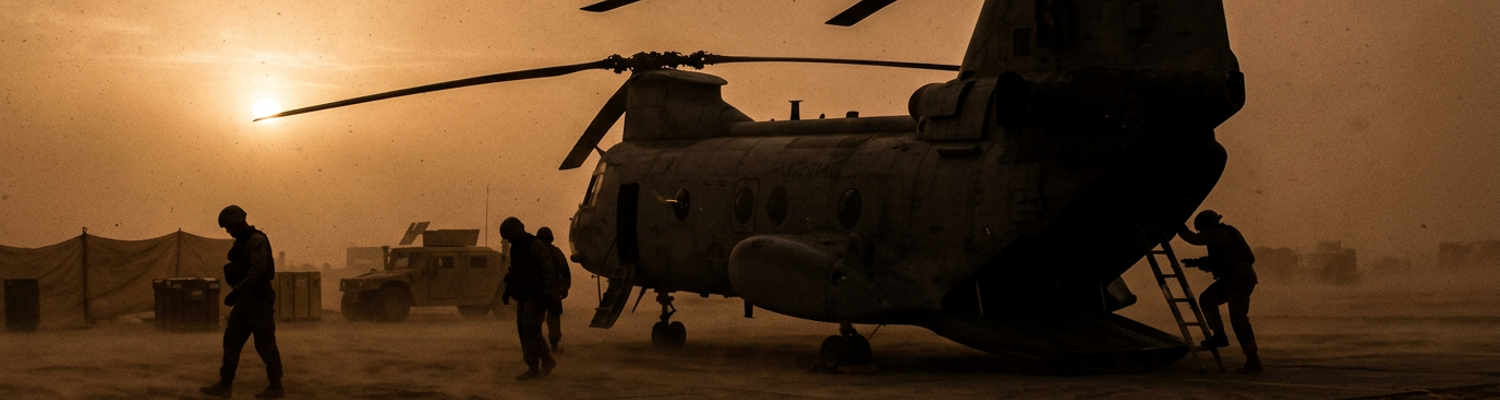

Mesopotamian Haboob Environmental Conditions
Heavy stillness settled over the staging areas of Southern Iraq. Enlisted crew chiefs from Marine Medium Helicopter Squadron 268 sat beside their CH-46E Sea Knights. They listened to the quiet of a grounded flight line. A massive front of dark brown particulate accelerated toward their position.
Meteorological logs from Forward Operating Base Jalibah at coordinates 30 32 N 46 05 E detail a rapid barometric pressure drop. Sustained shamal winds exceeding fifty knots followed immediately. Thermal drafts lifted millions of tons of pulverized Mesopotamian topsoil into the upper atmosphere. This created a weather system that enveloped the entire theater. Blinding sandstorms reduced atmospheric visibility to zero across Southern Iraq in late March 2003. Enlisted Marines caught on the tarmac experienced immediate sensory deprivation.
The airborne silicate density reached levels where sunlight failed to penetrate the dust cloud.
Daytime staging areas went completely dark.
Ground personnel attempting to secure the flight line linked arms. They crawled on their hands and knees to navigate the thirty feet between aircraft. Breathing became a forced effort. Micro-fine sand bypassed standard neck gaiters. It quickly coated the throats and lungs of mechanics trying to tie down rotor blades. The abrasive wind deafened the troops. Line non-commissioned officers could not be heard. Large static electricity charges shocked anyone touching grounded metal.
Flashlights pressed directly against the aluminum fuselage yielded less than two inches of beam penetration.
Archival evidence shows the immediate physical threat shifted to the General Electric T58-GE-16 turboshaft engines. Fine dust particles penetrated aircraft engine bays. This necessitated field-improvised dust-intake shrouds for the CH-46E helicopters. Factory-standard Engine Air Particle Separators were engineered to filter standard desert environments. The high volume of suspended Iraqi fine dust overwhelmed the centrifugal filtration tubes. Mechanics opening the aft cowling doors found thick layers of packed dirt. It accumulated directly on the ten-stage axial compressor blades and deep inside the combustion chambers.
This contamination posed a high probability of glassification.
Silicates melt at 1400 degrees Celsius inside the engine core. This coats turbine blades in liquid glass and causes catastrophic inflight engine shutdown. The CH-46E relies on two of these engines mounted in the aft pylon. The loss of both meant an unrecoverable drop from the sky. Enlisted airframes mechanics and flightline troubleshooters initiated unauthorized field modifications.
Maintenance manuals contained no procedures for an environmental anomaly of this magnitude.
Squadron maintenance chiefs authorized their subordinates to scavenge available materials. They built secondary filtration layers over the vulnerable air intakes. Maintainers cut apart canvas tent halves and spare uniform trousers. They stretched these over the primary engine openings located near the rear rotor mast. They secured these field-improvised dust-intake shrouds using industrial aviation safety wire and standard olive-drab duct tape. Every exposed gap on the CH-46E airframe received a layer of taped down fabric to block the invasive particulate.
Ground crews worked entirely by touch in the blackout conditions.
They ran their bare hands along the skin of the helicopters to ensure the makeshift filters sat flush against the intake screens. The physical toll on the enlisted men was severe. They cleared their eyes with saline drops every few minutes just to keep working on the flight line.
The improvised canvas barriers required replacement every four hours.
Fabric pores completely packed with wet mud formed by atmospheric humidity and dust. Marine mechanics logged the static engine test temperatures at exactly 650 degrees Celsius to verify airflow through the scavenged materials.
HMM-268 Sorties and the 15th MEU
A close review of operational logs indicates Marine Medium Helicopter Squadron 268 launched tactical air assault missions directly into the haboob. Flight schedules for March 21 dictated an aggressive push north from Assembly Area Coyote. The target was captured objective facilities near An Nasiriyah at coordinates 31 02 N 46 15 E. The CH-46E Sea Knights sat on the tarmac with their twin rotors turning at one hundred percent rpm. This mechanical action generated massive downward thrust. Suspended silicate kicked back into the air. The flight line went blind.
Landing gear buried itself in shifting sand.
Infantrymen from Battalion Landing Team 2/1 crouched on canvas troop seats inside the unarmored cabins. Each Marine carried over sixty pounds of combat gear. They pressed their knees into the backs of the men sitting opposite them in the narrow fuselage. Severe vibration of the aging airframes transferred directly through their ceramic body armor plates and into their spines. Enlisted crew chiefs wearing night vision goggles saw only static green interference. They attempted to guide the pilots via intercom.
The heavily loaded helicopters lifted off into zero-visibility airspace at exactly 0200 hours.
Pilots flew entirely on instruments. They relied on the radar altimeter to maintain a clearance of fifty feet above the desert floor. The ground-level environment presented an immediate threat of unobserved enemy ground fire from Iraqi irregulars positioned along Highway 8. Standard doctrine required crew chiefs to visually acquire and suppress anti-aircraft threats using door-mounted XM218 .50 caliber machine guns. The density of the sandstorm negated all standard visual scanning techniques. Airborne particulate packed into the receiver groups of the weaponry. It mixed with standard CLP lubricant to form a thick abrasive paste.
Gunners found their weapons jamming after firing three to five rounds.
Factory-issued pintle mounts locked up completely as wet mud filled the swivel bearings. Aircrews utilized field-improvised weapon mounts to maintain defensive suppression capabilities through dense sandstorms. Aviation ordnancemen stripped the seized factory bearings from the CH-46E forward window frames using heavy steel mallets. They replaced the rigid mounting brackets with heavy-duty cargo ratchet straps and heavy-gauge bungee cords scavenged from logistical supply pallets.
This unauthorized suspension system allowed the ninety-pound XM218 machine guns to hang freely within the aperture.
Enlisted gunners physically wrenched the hot barrels downward to clear jammed receiver linkages without fighting a seized metal swivel. The flexible mounting absorbed the severe vibrations of the airframe battling turbulent shamal winds. It prevented the weapon from locking in a fixed firing angle. Crew chiefs secured these elastic mounts directly to the internal bulkheads using aviation safety wire and steel carabiners.
The physical toll on the enlisted gunners becomes apparent in the historical record.
The men stood tethered to the floor by standard monkey harnesses. They leaned entirely out of the aircraft into the fifty-knot abrasive slipstream to acquire targets. They fired short bursts into the brownout conditions below. They aimed strictly by the estimated angle of incoming enemy tracer fire. The free-floating bungee mounts required the gunners to absorb the recoil of the heavy machine gun directly into their shoulders. Spent brass casings ejected into the cabin. They rolled across the non-skid decking and burned the knees of the 15th MEU infantrymen packed tightly on the floor. Gun smoke trapped inside the fuselage by the external air pressure choked the troops.
Oxygen levels inside the unpressurized cabin dropped as the turboshaft engines consumed the available clean air.
Maintainers back at the staging areas inspected the returning aircraft twelve hours later. They found the improvised cargo straps frayed to their breaking points from the constant friction of the suspended machine guns. The barrel rifling on the XM218s had been worn completely smooth by the high-velocity sand passing through the muzzle with every fired round.
CH-46E Sea Knight Brownout Landings
Historical data shows the physical dynamics of the CH-46E Sea Knight turned the environment against the crew during approach. HMM-268 approached designated landing zones on the outskirts of An Nasiriyah at coordinates 31 02 N 46 15 E. The aircraft utilizes two tandem fifty-foot-diameter rotors turning in opposite directions to generate lift. During the final descent phase the tactical approach profile required a rapid deceleration from one hundred knots of forward airspeed to a zero-groundspeed hover.
The radar altimeter passed below one hundred feet.
These rotating blades directed a sustained seventy-knot column of heavy downward thrust directly into the Mesopotamian topsoil. Kinetic impact from this concentrated air column instantly pulverized the dry alluvial crust. Millions of microscopic silicate particles rushed outward along the desert floor. They hit the ambient shamal wind and recirculated aggressively upward into the rotor system. This localized weather event completely engulfed the aluminum fuselage in a dense sphere of swirling mud and sand.
External visual horizons ceased to exist.
Mechanically generated by the helicopter itself this severe brownout condition stripped the aircrew of all outside situational awareness. Enlisted crew chiefs positioned at the forward starboard personnel door and the aft ramp attempted to verbally guide the pilots down via the internal communication system. Sheer density of the recirculating dust blinded the men leaning out into the slipstream on their heavy nylon monkey harnesses. Forward visibility dropped drastically. Crewmen could not see the aircraft rear landing gear struts located less than ten feet away.
Abrasive particulate stripped the anti-reflective coating off their protective flight visors.
Airborne dirt packed directly into the crew chiefs unprotected eyes as they shouted distance estimates over the intercom. A close review of operational logs indicates the total loss of external visual references triggered acute spatial disorientation among the aviators attempting to hold a steady low-altitude hover. The human vestibular system relies heavily on the eyes resolving a fixed horizon to maintain physical equilibrium. Deprived of this input the inner ears of the pilots began feeding their brains conflicting data regarding the aircraft pitch and roll attitude.
Unmapped Iraqi desert terrain below them offered zero distinct geographical features.
Aviators gripping the cyclic control stick experienced the somatogravic illusion. They physically felt as though the aircraft was banking sharply to the right or pitching backward when the attitude indicator showed perfectly level flight. The physiological urge to input aggressive corrective cyclic movements to counter these false sensations became physically painful to resist. HMM-268 aircraft commanders ordered their copilots to lock their eyes strictly on the analog dashboard instruments. Copilots read out a continuous rapid-fire stream of radar altimeter numbers and artificial horizon angles over the intercom.
Commanding pilots kept their heads up.
They stared into the blinding brown dust column to search for any shadow of the ground. Severe vibrations from the hovering Sea Knight complicated the instrument scan. Dial needles on the vertical speed indicators bounced erratically under the severe mechanical stress of the twin T58-GE-16 engines operating at maximum continuous power. The helicopters drifted laterally through the dust cloud at ten feet above the unseen deck. Infantrymen from the 15th MEU strapped into the troop seats felt the sudden violent shifts in momentum as the disoriented aviators fought the flight controls.
Unsurveyed elevation data caused the radar altimeter readings to fluctuate wildly as the aircraft drifted over hidden sand dunes.
Pilots had no way to determine if the surface below them was flat or sloped or filled with deep craters. A single rear landing wheel struck the uneven desert crust at twenty knots of lateral drift. Kinetic energy from the impact violently jolted the airframe. The heavily geared Marines were thrown against their canvas restraint belts. Aviators immediately bottomed out the collective pitch lever to pin the forty-six-foot fuselage to the dirt before the rotor system could bounce the aircraft back into the blinding sand cloud.
Loose dirt continued to pour through the open crew doors.
It buried the non-skid aluminum floor plates in three inches of shifting sand.
Rotor-Wash Hard Landings and Airframe Impacts
Flight telemetry from HMM-268 on March 24 reveals final approach vectors near An Nasiriyah deteriorated into uncontrolled vertical drops. Aviators battling the spatial disorientation of the brownout could not accurately judge their closure rate with the ground at coordinates 31 02 N 46 15 E. The standard CH-46E Sea Knight tactical manual dictates a gradual reduction in collective pitch. This settles the aircraft gently onto its landing gear at a descent rate not exceeding three hundred feet per minute.
Pilots blinded by the recirculating silicate instead maintained a high hover power setting.
They held this until their analog radar altimeters read zero. The lag in these barometric instruments meant the aircraft were often still suspended ten to fifteen feet above the uneven desert floor. Pilots executed a sudden violent reduction of engine power to pin the helicopter to the deck. Gravity immediately seized the twenty-four-thousand-pound machines. The resulting zero-visibility descent vectors caused the helicopters to plummet straight down through the opaque dust column.
Downward velocity exceeded one thousand feet per minute at the exact moment of terrain contact.
These violent hard landings severely compromised the structural integrity of the CH-46E landing gear systems. The aircraft utilizes a fixed tricycle gear configuration equipped with pressurized oleo shock struts designed to absorb standard impact forces. The kinetic energy of the haboob blind drops instantly over-compressed these dual-chamber hydraulic cylinders. Internal strut seals ruptured under the severe spike in fluid pressure. Red MIL-PRF-83282 hydraulic fluid sprayed across the blowing sand.
With the shock absorbers completely blown out the raw physical force transferred directly into the aluminum mounting trunnions.
Aviation mechanics inspecting the recovered airframes at Forward Operating Base Jalibah documented sheared locking pins and bent steel wheel axles on the rear main gear. High-speed impacts fractured the cast magnesium wheel hubs. This caused the heavy-duty aviation tires to instantly deflate. Heavy vertical impacts drove the rigid strut housings upward through their structural limits. This buckled the internal aluminum bulkheads at station 410 and permanently warped the lower fuselage skins.
The airframe absorbed the initial mechanical shock.
The kinetic energy continued moving upward into the unarmored troop cabin. Inside the rear cargo holds the sudden impact forces unleashed immediate physical chaos among the embarked infantrymen of Battalion Landing Team 2/1. Thirty combat-loaded Marines sat shoulder-to-shoulder on red canvas troop seats. These were suspended by thin aluminum pipe frames running along both sides of the narrow fuselage. Standard lap belts provided their only restraint system.
The hard landings slammed the men downward with enough G-force to shear the mounting bolts holding the seat frames to the cabin walls.
Entire rows of infantrymen collapsed simultaneously. Marines wearing sixty pounds of Kevlar body armor and ceramic SAPI plates hit the non-skid aluminum floor plates in total darkness. The violent jolt ripped unsecured combat equipment from the center cargo rings and threw it violently across the enclosed space. Fifty-pound steel ammunition cans and heavy ALICE packs became high-velocity projectiles bouncing off the interior bulkheads.
Archival evidence details the physical toll of these unsecured loads during the uncontrolled touchdowns.
Standard 81mm mortar baseplates dislodged from their nylon cargo netting near the forward transmission housing. They skipped across the metal deck and struck several Marines directly in their lower extremities. Enlisted crew chiefs standing near the open aft ramp were thrown completely off their feet. They were left hanging horizontally by their nylon monkey harnesses while the aircraft bounced heavily on its ruined magnesium wheel hubs. M16A4 service rifles tore out of the troops hands and jammed into the exposed electrical wiring bundles running along the lower cabin walls.
The infantrymen suffered compressed spinal disks and blunt force concussions.
Medics evaluating the BLT 2/1 Marines at the dusty rally point recorded twelve distinct head injuries. These were caused entirely by loose radio batteries and water cans striking Kevlar helmets during the initial ground impacts.
Emergency Triage Inside Sand-Flooded Cabins
Medical logs from Battalion Landing Team 2/1 detail a chaotic triage environment inside the ruined airframes following the HMM-268 hard landings. Navy Hospital Corpsmen strapped into the aft sections of the CH-46E Sea Knights unclipped their harnesses. They crawled across non-skid aluminum floor plates now buried under three inches of shifting Mesopotamian topsoil. Ambient shamal winds continued driving pulverized silicate through the open personnel doors and the dropped rear ramp at fifty knots.
Total darkness inside the fuselage forced the medical personnel to evaluate massive blunt-force trauma entirely by touch.
Corpsmen ran their bare sand-coated hands over the Kevlar body armor of the infantrymen. They located arterial bleeding and displaced bone fractures caused by the unsecured eighty-one-millimeter mortar baseplates. The red tactical overhead lighting systems had shattered during the high-velocity ground impact at coordinates 31 02 N 46 15 E. Medics squeezed small plastic penlights between their teeth to illuminate the pooling blood mixing with the dry dirt on the deck.
Archival evidence shows the immediate physical difficulties of executing standard trauma protocols within these heavily contaminated cargo cabins.
Enlisted corpsmen attempting to apply Combat Application Tourniquets to crushed lower extremities found the nylon straps slipping. Uniforms were saturated with MIL-PRF-83282 hydraulic fluid and fine clay. They used standard titanium trauma shears to cut away the heavy fabric of the desert utility uniforms. Ripping open vacuum-sealed packages of QuikClot hemostatic combat gauze exposed the sterile medical supplies to the haboob.
The airborne particulate instantly coated the white bandages in a thick layer of brown dust before the corpsmen could pack them into the open wounds.
Medical personnel pressed their knees directly into the chests and groins of the injured Marines to maintain pressure on severed arteries. The physical space restrictions of the forty-six-foot fuselage meant the corpsmen had to work while piled on top of uninjured infantrymen who were pinned against the aluminum bulkheads. The vibrations of the twin T58-GE-16 engines still idling on the tarmac shook the entire airframe.
A secondary immediate threat to the casualties emerged as the pulverized desert crust entered their respiratory systems.
Injured infantrymen hyperventilating from the pain of compound fractures drew massive volumes of suspended microscopic silicate directly into their throats. The dust mixed with human saliva and blood to form a dense hardening mud that blocked the trachea. Medical personnel abandoned lower-extremity bleeding control to manage these severe airway obstructions. Corpsmen inserted standard twenty-eight-French nasopharyngeal airways into the nasal cavities of unconscious Marines.
The high particulate density in the cabin air immediately clogged these rubber tubes.
Medics deployed V-VAC manual suction units to clear the accumulating mud from the patients mouths. Platoon commanders from BLT 2/1 physically held the thrashing casualties down on the sand-flooded deck. Medical personnel attempted to secure the compromised breathing passages. The internal plastic suction catheters packed solid with wet dirt after two mechanical pumps. Enlisted corpsmen resorted to using their bare unwashed fingers to scoop the heavy clay out of the casualties upper airways.
Marines suffering from maxillofacial trauma caused by flying radio batteries required emergency surgical cricothyroidotomies directly on the floor plates.
Performing this invasive procedure involved slicing through the cricothyroid membrane of the neck with a standard number ten scalpel blade. The blowing haboob heavily contaminated the open surgical sites with unsterile soil the exact millisecond the tissue was incised. Medics attempting to flush the airways with sterile saline squeeze bottles inadvertently manufactured more mud deep inside the lungs of the infantrymen. The lack of standard oxygen tanks on the assault configuration of the CH-46E meant the medical personnel had to rely entirely on standard bag-valve masks.
They forced ambient heavily contaminated air into the chests of the dying men.
Tolland-Class Cargo Load-Out Doctrines
Combat Cargo Officers attached to the 15th Marine Expeditionary Unit at Assembly Area Coyote faced an unprecedented physics problem inside the CH-46E Sea Knight cargo bays. The extreme atmospheric density of the March 2003 Mesopotamian haboob completely altered the standard aerodynamic profile of the helicopters. Suspended silicate particles striking the frontal aluminum skin at one hundred and twenty knots of forward airspeed generated high levels of parasitic drag.
This resistance forced the twin General Electric T58-GE-16 turboshaft engines to operate at maximum continuous power just to maintain forward momentum.
Fuel burn rates doubled. Operational planners examining flight telemetry from March 22 realized standard weight distribution models were causing the airframes to pitch upward uncontrollably. To counter this mechanical instability these planners adapted historic attack cargo load-out doctrines derived directly from World War II Tolland-class ships like the USS Lenoir. Naval architects in 1945 designed the USS Lenoir to combat-load heavy mechanized equipment while maintaining strict internal ballast control to prevent capsizing during rapid amphibious offloads.
Combat manuals from the Pacific theater detailed a specific grid-matrix system to balance heavy munitions along a strict longitudinal axis.
Planners applied this exact naval architecture model to the twenty-four-foot internal cabin of the Sea Knight. A close review of operational logs indicates enlisted Landing Support Specialists implemented the USS Lenoir doctrine by completely stripping the aircraft interiors at coordinates 30 32 N 46 05 E. Standard operating procedure typically dictated loading infantrymen first and stacking their heavy equipment in the center aisle for rapid egress. The 1945 Tolland-class doctrine reversed this sequence by establishing a rigid centerline gravity trench.
Logisticians loaded wooden crates of 5.56mm ammunition and eighty-one-millimeter mortar shells directly over the forward transmission housing at station 210.
They secured these dense heavy items using heavy-duty ratchet straps anchored to the primary ten-thousand-pound deck rings. The webbing held tight. Infantrymen from Battalion Landing Team 2/1 then squeezed into the remaining outward space. They pressed their ceramic body armor plates against the bare aluminum fuselage ribs. This configuration forced the heaviest combat payloads precisely beneath the forward rotor mast.
Logistics specialists redistributed cargo weight specifically to preserve the helicopter center-of-gravity during the extreme dust drag of the shamal winds.
Wet mud formed by atmospheric humidity and pulverized topsoil accumulated rapidly on the aft pylon and the rear rotor head mechanism. This localized dirt buildup added roughly four hundred pounds of uncalculated weight to the extreme rear of the aircraft. The sudden shift in mass pushed the center of gravity dangerously close to the aft limit of 395.5 inches from the reference datum line. Pilots attempting to fly with an aft-heavy load in fifty-knot headwinds found the cyclic control stick hitting its forward physical stops.
The aircraft refused to pitch down.
Aviators had zero mechanical authority left to push the nose of the helicopter forward. Enlisted loadmasters countered this inflight mechanical threat by ordering the embarked Marines to physically unclip their heavy ALICE packs and slide them across the non-skid deck toward the cockpit bulkhead. Crew chiefs monitored the analog pitch indicators to verify the exact moment the aircraft nose dropped back into a level flight attitude. Shifting the internal cargo mass forward restored the necessary aerodynamic leverage to the rear rotor system.
Infantrymen sat in total darkness with their knees pulled tight to their chests to make room for the relocated ammunition crates.
The logisticians continually recalculated the internal weight distribution every time a helicopter landed to refuel at Forward Operating Base Jalibah. They logged these rapid center-of-gravity adjustments on standard yellow legal pads using grease pencils. The abrasive airborne sand coated the paper within seconds of exposure on the flight line. Ground crews used standard olive-drab duct tape to secure the completed load-out manifests directly to the starboard avionics access panels.
Balancing Ammunition and Trauma Supplies
Enlisted quartermasters at Forward Operating Base Jalibah confronted an immediate physical space crisis inside the CH-46E Sea Knight cargo bays on March 25. Severe mechanical attrition from the previous twenty-four hours of haboob-induced hard landings drastically reduced the number of operational airframes available to Marine Medium Helicopter Squadron 268. Combat Cargo Non-Commissioned Officers faced conflicting demands from the front lines near An Nasiriyah.
Infantry battalions from the 15th Marine Expeditionary Unit taking direct fire along Highway 8 requested immediate resupply of high-volume 40mm ammunition for their Mk 19 automatic grenade launchers.
Medical personnel treating the growing number of crush-injury casualties at the rally points demanded emergency surgical kits. The CH-46E assault configuration offered a maximum internal payload capacity of just four thousand pounds under the extreme density altitude conditions of the sandstorm. Quartermasters physically balanced the dense heavy crates of 40mm high-explosive dual-purpose rounds against bulky rigid cases containing sterile trauma surgical supplies. The heavy payload dropped the aircraft skids three inches closer to the tarmac.
A single standard pallet of Mk 19 ammunition weighed over two thousand pounds and consumed half the available floor space.
Enlisted Marines wearing night vision goggles that displayed only heavy static interference worked blind on the tarmac. They used heavy steel pry bars to break down factory-banded ammunition pallets into individual PA120 metal cans. Loading crews manually carried these sixty-pound containers up the aft ramp of the idling helicopters. The physical exertion in the fifty-knot sandstorm caused the loaders to hyperventilate. Airborne particulate packed into their respiratory tracts while wrestling the heavy ordnance into the narrow twenty-four-foot cabin.
Every cubic inch of internal space held direct tactical value.
Loadmasters secured the loose ammunition using heavy-duty nylon cargo nets anchored to the primary ten-thousand-pound deck rings. The abrasive shamal winds packed wet mud into the steel ratchet strap mechanisms within seconds of exposure. Cargo priorities were dynamically re-adjusted inside the staging area to ensure immediate medical resupply capability. Initial flight manifests generated at 0400 hours dictated a one-hundred-percent lethal payload consisting strictly of ordnance and water for the push into An Nasiriyah.
Radio reports detailing the mass casualties from the rotor-wash hard landings reached the Jalibah flight line at 0515 hours.
Combat Cargo Officers immediately voided the printed load plans. Platoon sergeants ordered their loading crews to physically unclip the secured cargo netting and remove exactly half of the 40mm ammunition cans from the fuselage. They replaced the heavy ordnance with specialized Forward Resuscitative Surgical System kits. These medical packages contained glass vials of lactated Ringers solution and vacuum-sealed chest tubes. Temperature-sensitive blood expanders packed in rigid Pelican cases sat beside them.
The rigid plastic cases could not compress to fit the rounded contours of the aluminum fuselage ribs.
Quartermasters adapted to this spatial limitation by building a secondary floor layer entirely out of the medical supply boxes. They laid the flat Pelican cases directly over the non-skid aluminum deck plates. Enlisted loaders strapped the remaining 40mm ammunition cans directly on top of the surgical kits. This field-expedient stacking method distributed the heavy weight of the ordnance across the reinforced plastic lids of the medical cases.
Ground crews verified the structural integrity of this improvised cargo stack by physically kicking the metal ammunition cans in the total darkness of the haboob.
The shifting cargo mass required the flight engineers to constantly recalculate the longitudinal balance of the airframe using standard grease pencils on yellow legal pads. Aircraft commanders signed off on the revised manifests by verifying the payload weight against the analog engine temperature gauges. The twin General Electric T58-GE-16 turboshaft engines consumed maximum continuous power to lift the densely packed airframes off the Jalibah tarmac. Ground personnel linked arms and crawled away from the rotor wash.
The helicopters disappeared into the brownout layer at exactly 0630 hours.