
Hague Convention Protocols and Illumination Directives
Freezing rain swept across thirty-foot North Atlantic swells. Exterior bulkheads crusted with brittle salt ice. Ocean squalls obliterated horizon visibility across the western approaches. Below the waterline, boiler spaces sweltered in damp heat exceeding one hundred and ten degrees Fahrenheit. Coal smoke vented into gale-force winds that shoved seawater through deck scuppers. Sub-zero spray lashed bare metal plating. When examining the historical record, this hostile marine environment formed only the baseline threat for unarmed naval hulls operating along transatlantic shipping tracks during the autumn of 1918.
Dense fog banks routinely blinded watchstanders.
Inside the Navy Department, an administrative battle erupted over whether hospital ships could survive these waters without concealment. Archival evidence shows that the Navy General Board demanded these vessels abandon separate non-combatant status. Planners wanted hulls repainted in dull Standard Navy Gray No. 5. They ordered ships to run completely blacked out. The board wanted medical vessels integrated into armed transatlantic troop convoys under destroyer screen protection. Admiral Charles J. Badger and fleet planners maintained that German torpedo crews made no practical distinction between passenger liners and hospital carriers in low-visibility sectors.
Surgeon General William C. Braisted and the Bureau of Medicine and Surgery insisted on strict adherence to the 1907 Hague Convention X.
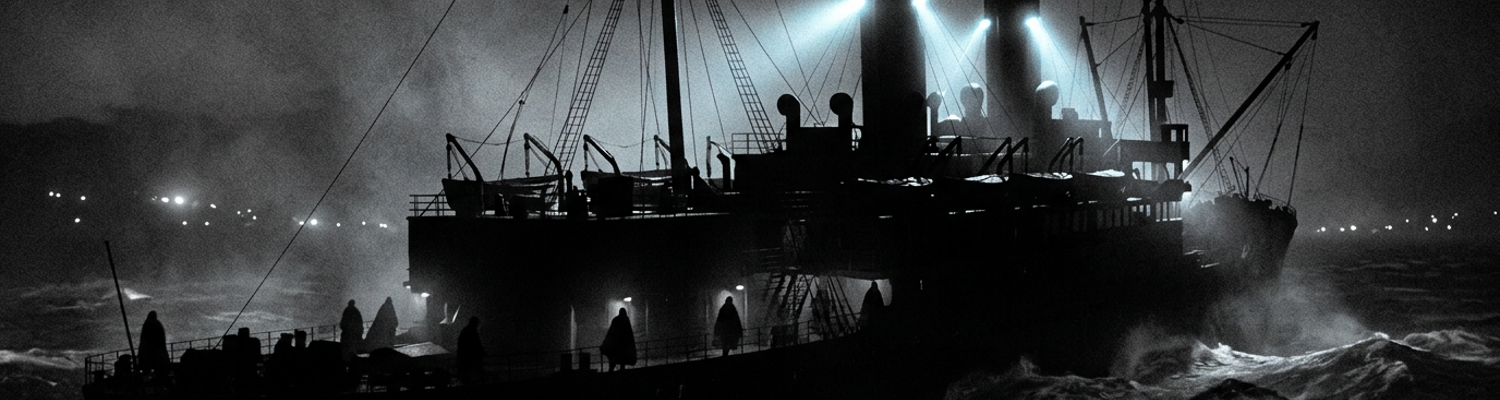
Braisted argued that mounting deck guns or running dark automatically stripped the vessel of international legal immunity. This converted the ship into a legitimate target of opportunity. Under medical corps doctrine, ships like USS Comfort had to display pure white hulls. They required a continuous green longitudinal band. Elevated Red Cross insignias had to be brightly illuminated by exterior electrical floodlights from dusk until dawn.
Fleet tacticians viewed a glowing hull in submarine territory as suicide.
German operational doctrine gave little reason to trust treaty protections. Under the revised submarine protocols authorized on February 1, 1917, the German Imperial Admiralty enforced unrestricted commerce destruction. This applied throughout designated barred zones surrounding the British Isles, France, and the Mediterranean. Berlin explicitly accused the British Admiralty of using white-painted hospital transports to secretly shuttle munitions, staff officers, and healthy combat units back across the English Channel. Kaiserliche Marine directives instructed U-boat commanders that any Allied vessel discovered within the war zone faced torpedo attack without warning.
The sinking of the British hospital ship HMHS Rewa in January 1918 demonstrated this policy.
The Canadian hospital ship HMHS Llandovery Castle was sunk off southern Ireland in June 1918. Exterior Red Cross markings could not prevent a submarine commander from firing an explosive torpedo spread into unescorted medical tonnage. A close review of operational logs indicates that the final tactical decision fell to Secretary of the Navy Josephus Daniels in early 1918. Daniels rejected the General Board recommendations for convoy camouflage. He ruled that American hospital vessels would test the full legal protections of the Hague Convention. They would sail entirely unarmed. They would detach from destroyer escorts. They would run fully illuminated at sea.
USS Comfort was a converted 410-foot passenger steamer displacing roughly 7,500 tons.
Shipwrights wired the hull with an elaborate array of carbon-filament incandescent lamps. These were bolted along her hull, superstructure, and smoke funnels. This extensive lighting matrix depended completely on the ship auxiliary steam dynamo flat. It drew heavy electric amperage through copper switchboards. The system projected bright green and red cross emblems miles across the surface of the pitch-black ocean.
Commercial Liner Conversion at New York Navy Yard
Archival evidence shows that conversion work began in the dry docks of the New York Navy Yard in Brooklyn during January 1918. Naval constructors took over the 410-foot commercial passenger liner SS Havana from the Ward Line. Shipyard mechanics dismantled luxury staterooms. They ripped out wooden bulkheads, carpets, and passenger lounges. Welders fused together sterile clinical spaces across three interior decks. The engineering plant underwent heavy structural modification.
Steamfitters retrofitted the hull with five hundred hospital beds, autoclaves, and laboratory benches.
Two surgical operating suites were positioned deep amidships to minimize pitch and roll. Yard teams installed auxiliary dynamo machinery along the lower decks. They wired hundreds of exterior illumination fixtures to the ship direct-current electrical distribution system. The hull could project its non-combatant status across nocturnal waters. The Navy formally commissioned the refitted hull as USS Comfort on March 18, 1918. Civilian passenger luxury had been replaced by cold marine steel and industrial hospital berths.
When examining the historical record, supply officers faced severe equipment hurdles.
They had to stock the vessel for catastrophic battlefield trauma arriving from the Western Front. Navy medical requisitions prioritized dozens of Carrel-Dakin wound irrigation apparatuses. These required specialized rubber delivery tubing, pinch cocks, and calibrated glass distribution manifolds. The system was designed to drip sodium hypochlorite solution continuously into open shrapnel wounds. This halted anaerobic bacterial infection. Procuring these delicate glassware sets proved difficult due to wartime laboratory glass shortages across the northeastern seaboard.
Chemical safety presented an even greater hazard.
Medical stores loaded hundreds of pounds of bulk surgical ether in sealed metal canisters. They packed the volatile solvent into damp hold spaces located directly forward of the primary coal bunkers. Shipboard surgeons recognized that ether vapors were heavier than air. These vapors could leak along the lower bilges toward the boiler room fireboxes. The hospital ship risked internal detonation if ventilation blowers failed in heavy seas. One errant spark in the lower compartments would destroy the ship from the inside out.
A close review of operational logs indicates that internal friction quickly paralyzed daily command interactions.
This occurred between Navy Line officers and the Bureau of Medicine and Surgery. Navy regulations traditionally gave Line officers total authority over ship movements, seamanship, navigation, and lower-deck discipline. Medical officers viewed a Hague-protected hospital ship as an isolated treatment facility. They believed it should answer exclusively to its senior medical director. Commander Charles M. Oman headed the medical detachment aboard USS Comfort. He clashed repeatedly with the vessel assigned Line navigators over vessel control, watch schedules, and tactical procedures.
Line commanders resisted Bureau directives.
These directives gave surgeons the power to dictate routing speeds, port departures, and exterior lighting configurations during wartime transit. Navigators feared that medical officers lacked formal seamanship training. They believed medical staff could not safely maneuver an unescorted vessel through high-density shipping lanes. They doubted their ability to execute evasive turns when lookouts reported torpedo tracks. Secretary Daniels eventually forced a split-command compromise. He placed navigation in Line hands. He granted Oman total control over patient wards, medical personnel, and internal clinical sanitation. The compromise left both factions arguing over who held the final legal right to shut off the switchboard lamps if a submarine attacked.
Influenza Quarantine and Medical Embarkation Procedures
Contagion struck before the ship cleared New York Harbor.
Archival evidence shows that during the third week of October 1918, USS Comfort berthed at Pier 98 in the North River. The ship embarked specialized medical teams earmarked for the American Expeditionary Forces in western France. Commander Oman received seventy-five reserve physicians and eighty members of the Navy Nurse Corps. These personnel were assigned to reinforce overflowing shore facilities at Naval Base Hospital No. 1 in Brest and Naval Air Station Rochefort. They carried specialized chest surgery kits, autoclaves, and crates of Dakin antiseptic concentrate. These supplies were meant to stabilize severe shrapnel wounds across the Meuse-Argonne offensive.
Embarkation logs record that as nurses reported up the gangway on October 20, several exhibited early symptoms of acute nasopharyngitis.
They presented with spiking body temperatures. Medical officers recognized the pathogen as the lethal second wave of the influenza strain spreading across the Third Naval District. Third Naval District headquarters ordered the vessel into the Atlantic on October 21. Oman was instructed to manage infections while underway. The ship had to meet the urgent surgical staffing shortfalls in Brittany.
Three nurses collapsed with pulmonary edema twenty-four hours past the Ambrose Lightship.
When examining the historical record, Oman responded to the spreading contagion by converting the aft hospital section on C-deck into an emergency quarantine sector. Ship carpenters erected temporary wooden frames across the deck spaces. They hung heavy canvas partition sheets soaked in a five-percent phenol solution. This was done to halt airborne droplets between berths. Hospital corpsmen arranged eighty bunks so that patients slept head-to-foot. They spaced the frames six feet apart in accordance with wartime Bureau directives.
Ventilating this enclosed hold proved hazardous.
Shutting the overhead mushroom ventilators kept Atlantic gale spray out of the ward. This trapped exhaled viral aerosols inside the stagnant air. Interior humidity rose to ninety percent. Orderlies distributed zinc sputum cups and paper spittoons. These had to be collected twice daily. They were dumped into boiling salt water inside the galley incinerators. As temperatures rose above one hundred and four degrees, patients developed heliotrope cyanosis along their lips and earlobes. They drowned in pulmonary fluid. Medical staff administered subcutaneous injections of camphorated oil and digitalis to combat total circulatory collapse.
The medical department ran low on dry masks by the fourth day out.
A close review of operational logs indicates that Commander Oman and the Line officers instituted rigid internal boundary controls. These protected the engineering watchstanders operating forty feet below the hospital decks. Coal passers, boiler firemen, and dynamo room electricians were strictly forbidden from entering any passageway forward of Frame 82. They could not ascend above the lower berthing deck. Line officers stationed armed Marine sentries at the base of every main companionway ladder. They turned away any sailor lacking a red-waxed sanitary pass signed by the senior medical officer.
Deckhands who swabbed the external superstructure entered the living spaces through separate ladders on the weather decks.
They stripped their outer wool dungarees and washed their skin with bichloride of mercury solution before drawing rations. Food rations for the infected isolation wards traveled up dedicated dumbwaiters. This prevented mess attendants from interacting with contaminated ward trays. Engine room personnel remained locked in their machinery flats. They breathed dry air forced down through dedicated forward draft blowers. These blowers bypassed the hospital intake trunking. The men running the boilers and auxiliary electrical dynamos avoided the respiratory crisis suffocating the deck above.
Auxiliary Dynamo Failure in the Western Approaches
Archival evidence shows that by the night of October 28, 1918, USS Comfort steamed into the outer edges of the Western Approaches. The ship cut through grid sectors southwest of Fastnet Rock toward the French port of Brest. Commander Charles M. Oman held the vessel to a steady twelve knots. The ship tracked along nautical coordinates fifty degrees north, twelve degrees west. German submarine flotillas actively swept this transit corridor. Unterseeboots operated on standing orders to interdict Anglo-American maritime traffic. This traffic converged on the English Channel and the Bay of Biscay.
Standard troop transports sailed within thirty-ship formations.
These formations were ringed by four-stack destroyers dropping depth charges. Comfort traveled alone. Daniels had barred any naval escort from screening the ship. The Navy Department reasoned that accompanying armed destroyers would forfeit the non-combatant status established by the 1907 Hague Convention. The vessel maintained a direct, solitary heading without zigzagging maneuvers. It held its course over an ocean basin where German submarine commanders had sunk over one hundred thousand gross tons of Allied shipping during the preceding four weeks.
Unarmed hulls survived in these waters only if their markings stayed visible across miles of open ocean.
A close review of operational logs indicates that the crisis began at 2114 hours. The primary marine switchboard inside the auxiliary dynamo flat suffered an electrical surge. This equipment was located on the lower platform deck beneath the waterline. Two reciprocating steam-driven dynamos generated direct current at one hundred and ten volts. Heavy vibration from thirty-foot Atlantic swells loosened a slate mounting bracket on the main distribution busbar. This caused an electrical arc. The arc instantly vaporized copper terminal lugs and tripped the main circuit breaker.
Down in the forward sound room, the hydrophone operator using an SC-tube acoustic device detected high-frequency propeller cavitation.
The sound originated off the port quarter at a relative bearing of two hundred and twenty degrees. The submerged contact closed range rapidly. Dense ozone filled the dynamo compartment as smoke poured from blistered rubber insulation. An electrician third class and the watch engineer bypassed the charred busbar by hand. They worked with insulated wrenches under dim emergency oil lanterns. They bridged the disconnected primary leads using heavy-gauge copper bypass jumpers. They completed the physical splice within four minutes and twenty seconds. Engine-room telegraphs signaled maximum auxiliary boiler pressure to stabilize the fluctuating generator RPM.
A complete electrical failure would make the vessel indistinguishable from an unescorted British merchantman.
When examining the historical record, this mechanical breakdown threatened the specialized exterior illumination circuit. This circuit guaranteed the ship legal immunity under maritime law. Hundreds of sealed thirty-two-candlepower carbon-filament bulbs traced the longitudinal five-foot green hull band. They formed fifteen-foot Red Cross insignias positioned across the funnels and bridge wings. If the auxiliary switchboard stayed dead for more than five minutes, the lamps would exhaust the emergency wet-cell accumulator batteries. This would plunge the entire exterior hull into total blackness.
U-boat commanders observing a vessel suddenly dousing its lights inside a barred war zone treated the blackout as an evasive military action.
German torpedo crews had sunk the hospital vessel HMHS Llandovery Castle under similar visibility conditions off southern Ireland just four months earlier. The engineering crew reset the mechanical breaker. They bolted the copper jumper directly across the live knife-switch terminals at 2119 hours. They restored ninety-eight amperes of direct current to the exterior wiring harness. This arrested the voltage dip before the glass incandescent bulbs fully faded along the water line. The green stripe and illuminated red crosses snapped back to full brilliance across the surface of the swells. At 2123 hours, the acoustic sound operator reported the distant hydrophone contact turning south. The submarine lost track of the ship against the open horizon.
Brest Debarkation and Westward Casualty Evacuation
Archival evidence shows that USS Comfort dropped anchor in the Brest roadstead on November 5, 1918. The ship immediately began offload operations to relieve Naval Base Hospital No. 1. Port tenders pulled alongside the hull through heavy Brittany drizzle. They received dozens of Navy Nurse Corps personnel and seventy-five reserve physicians transferred directly from shipboard quarantine. Below the weather decks, working parties hauled hundreds of wooden packing crates out of the forward cargo holds. Winches swung crated Carrel-Dakin glass manifolds, high-pressure autoclaves, and surgical bone saws down onto harbor lighters.
Concentrated sodium hypochlorite canisters were bound for the quays of the Penfeld River.
Brest functioned as the primary debarkation hub for the American Expeditionary Forces. Its shore infirmaries were breaking under thousands of respiratory cases and trauma patients flooding westward from frontline railheads. The medical detachment transferred fresh medical personnel and sterile operating theater equipment directly into the base hospital complex at Pontanezen Barracks. This injected essential clinical resources into a port network handling upwards of forty thousand troop arrivals and evacuations each week. Mud-soaked dockside ambulances queued for miles along the stone jetties of the inner harbor.
When examining the historical record, the primary mission shifted within forty-eight hours.
The ship transitioned from cargo delivery to the reception of catastrophic combat trauma from the Meuse-Argonne offensive. Shipboard hoists lowered metal basket stretchers directly onto the decks of incoming barges. They lifted four hundred and eighty-six bedridden casualties through the side shell doors into the lower ward flats. Navy hospital corpsmen processed soldiers suffering from extensive chemical trauma. This trauma was caused by German mustard gas attacks along the Aire River valley. Many casualties arrived with severe ocular ulceration. They exhibited deep epidermal burns across their armpits and groins.
Necrotic tracheobronchial mucosa caused continuous choking spells.
Surgeons organized dedicated irrigation teams on C-deck to manage these wounds during the westward Atlantic transit. They fitted wounded limbs with rubber instillation tubes that delivered continuous Carrel-Dakin drips to halt anaerobic gangrene. Orderlies scrubbed chemical-soaked uniform residue off incoming patients using dilute bleach baths. They worked rapidly to isolate men whose exhaled sulfur fumes threatened to poison the closed recirculating air shafts. Mustard gas residue lingering in wet wool tunics contaminated the C-deck companionway within an hour of boarding.
A close review of operational logs indicates that the westward evacuation voyage validated the controversial doctrine regarding unescorted hospital ship operations.
Convoy planners on the General Board had insisted that uncamouflaged medical vessels would serve as defenseless targets for the Kaiserliche Marine. Comfort crossed the war zone without destroyer screens, depth charges, or deck guns. Commander Charles M. Oman kept the hull bathed in high-intensity electric light throughout every nocturnal run. Direct current generated by the repaired dynamo flat powered hundreds of thirty-two-candlepower carbon-filament bulbs. These traced the five-foot green longitudinal hull band and illuminated fifteen-foot red cross markers atop the deckhousing.
German submarine flotillas operating across the English Channel approaches observed the distinct Hague markings.
They let her pass unmolested. This operational success proved Secretary Daniels thesis. Absolute compliance with Hague Convention X, combined with continuous high-visibility illumination, provided genuine tactical security for dedicated hospital tonnage. This was achieved without diverting combat destroyers from primary transport escort screens. On December 9, 1918, the vessel tied up at Pier 59 in the North River of New York. The ship discharged hundreds of recovering soldiers. The hull had not suffered a single scratch or hostile submarine torpedo launch across two thousand miles of open water.