
The Illusion of Instant Airpower
The public narrative of 1964 was simple. American airpower was absolute. Carrier groups were seen as invincible platforms, capable of projecting force anywhere on the globe without hindrance. The expectation, shaped by a decade of Cold War cinema, was that jets could be summoned from the sky at a moment’s notice to annihilate any target.
This was a fiction.
The actual mechanism for delivering air support from a carrier task force like Task Force 77, operating from the position known as Yankee Station in the Gulf of Tonkin, was a fragile, complex, and dangerously slow process. It was not a simple matter of a ship’s captain requesting air cover and jets appearing overhead. The entire system depended on a specialized and highly susceptible asset: the carrier-based Forward Air Controller, or FAC.
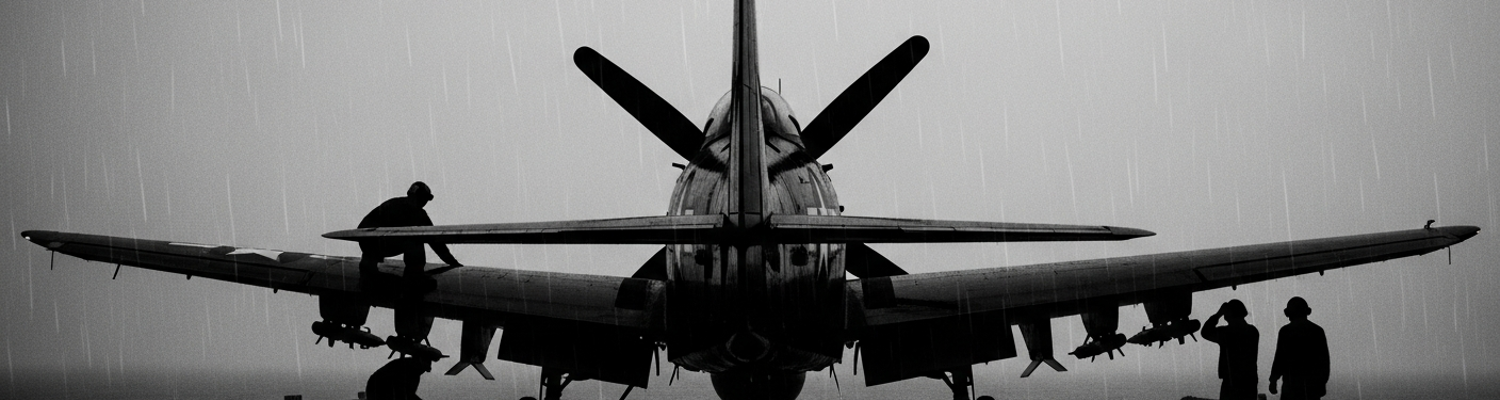
For the Navy during this period, the role was often filled by the Douglas A-1 Skyraider. A propeller-driven, single-engine attack aircraft, it was in many ways an anachronism in an age of jets. The A-1’s advantage was its capacity to loiter over a battlefield for extended periods, carrying a huge ordnance load and absorbing significant punishment. Its operational sequence was methodical. A call for support from a vessel like the USS Maddox would first be relayed to its parent carrier, the USS Ticonderoga. An A-1 FAC, either already airborne or scrambled from the deck, would then have to transit to the destroyer’s position.
The FAC pilot’s job was to fly low and slow. He had to visually acquire the target, in this case small and fast-moving torpedo boats, and then coordinate the strike. This involved communicating with both the ship requesting support and the incoming jet fighters, such as F-8 Crusaders, launched from the carrier. The FAC marked the target, typically with white phosphorus rockets, creating a visible smoke signature for the faster-moving jets to aim at. Each step in this chain, from initial request to the FAC’s arrival, target identification, and finally the strike itself, was filled with potential delays and communication challenges.
This entire sequence was hostage to the weather. The Gulf of Tonkin is notorious for its tropical monsoon climate. It alternates between two major seasons: the southwest monsoon from May to September and the northeast monsoon from October to March. The events of August 1964 occurred during the southwest monsoon, a period characterized by warm, moist air flowing from the Indian Ocean. This led to frequent precipitation and low visibility. It was also typhoon season. The approach of a major storm could disrupt all air operations for days. Extensive low stratus clouds, reduced visibility from frequent showers, and severe turbulence associated with towering cumulonimbus clouds were common. For carrier operations, a minimum cloud ceiling and visibility were non-negotiable for safe launch and recovery. Heavy rain and low-lying clouds could, and often did, shut down flight operations entirely. The Hollywood image of jets screaming off the deck into any fray was a fantasy; the operational tempo was dictated by humidity, cloud ceilings, and the ever-present threat of tropical storms that could render the world’s most powerful navy helpless.
The War Against Corrosion and Decay
The salt-saturated humidity of the Gulf of Tonkin did not just obscure targets. It actively destroyed the aircraft. Material decay accelerated at a systemic level. A close review of V-2 Division maintenance logs (BuAer Form 73A) from carriers at Yankee Station documents a mechanical catastrophe. Readiness rates of key aircraft, particularly the propeller-driven A-1 Skyraider, plummeted during monsoon seasons. The Skyraider’s massive Wright R-3350 Duplex-Cyclone engine, a notoriously complex 18-cylinder radial powerplant, was especially susceptible. This engine required careful management of cylinder head temperatures even in ideal conditions. The high ambient heat and humidity of the tropics pushed these engines past their operational limits, leading to overheating and thermal stress. Maintenance crews documented recurring issues with magnetos and ignition systems fouled by moisture (reported under code 34B), leading to rough-running engines and a high rate of aborted sorties. Similarly, the OV-10 Bronco, a twin-turboprop aircraft used by Marine detachments and Navy squadron VAL-4 for observation and light attack, suffered its own catalog of environmentally induced failures. The Bronco’s Garrett T76 turboprop engines were not immune to the climate. Reports from land-based Marine units noted persistent problems with compressor stalls and flameouts caused by the massive amounts of water ingested during takeoff and low-level flight in heavy rain.
The mechanical battle was fought on the hangar decks.
This problem extended far beyond engines. The combination of prolonged exposure to salt spray and near-100% humidity created a perfect environment for corrosion that attacked every facet of the airframes and their internal systems. For squadron maintenance personnel, the fight against this decay was a constant, labor-intensive effort. The aircraft of the 1960s were products of a vulnerable technological transition, a hybrid of older mechanical systems and new, sensitive electronics. Avionics bays, packed with a mix of vacuum tubes and early-generation solid-state transistors, were particularly susceptible. When an aircraft launched from the hot, humid deck and climbed rapidly to freezing temperatures at high altitude, then descended back into the dense, moist air, massive amounts of condensation would form inside unsealed electronic compartments. This water pooled directly on circuit boards and wiring harnesses. The result was electrical shorts that crippled navigation, communication, and targeting systems. Maintenance logs are filled with reports of phantom issues in the fire-control systems of F-8 Crusaders and A-4 Skyhawks that were traced back to moisture-induced failures.
The physical structure of the aircraft was also under direct assault. The airframes, primarily constructed of aluminum alloys, began to show widespread signs of galvanic corrosion, especially where different metals were joined. Saltwater acted as an electrolyte, accelerating the corrosive process at joints, rivet lines, and hinges. Wing-fold mechanisms and landing gear assemblies, with their complex array of moving parts, were areas of extreme concern. Deck crews performed continuous freshwater wash-downs to rinse away the salt, but the pervasive moisture would seep into crevices and under skin panels, initiating corrosion that was invisible from the outside. This forced maintenance teams into time-consuming inspections, often requiring the partial disassembly of components to check for structural decay. The situation became so severe that the Navy instituted the Specialized Techniques for the Repair and Analysis of Aircraft Damage (STRAAD) program, partly to deal with the backlog of aircraft rendered non-operational not just by battle damage, but by the grinding effects of the environment itself.
The Sky is Closed: Weather and CAS Denial
A close review of after-action reports from late 1968 through early 1969 reveals a consistent and often decisive factor in ground combat: the denial of Close Air Support (CAS) due to weather. This period, dominated by the northeast monsoon, saw a dramatic increase in precipitation and low cloud cover. This directly grounded air assets or rendered them ineffective. Archival evidence from the 9th Marine Regiment’s Operation Dewey Canyon in the A Shau Valley (NARA Record Group 127) provides a clear case study. Beginning in late January 1969, the operation was immediately hampered as monsoon conditions delayed the initial helicopter insertions for nine straight days. This allowed North Vietnamese Army (NVA) defenders additional time to fortify their positions within Base Area 611. Transcripts and logs from units like the 3rd Battalion, 9th Marines, document repeated, urgent calls for air support against entrenched NVA artillery that went unanswered. Rain, heavy clouds, and dense fog kept both fixed-wing aircraft from carriers on Yankee Station and helicopters at nearby firebases from launching. In one instance in late February, after four days of continuous combat and with dead and wounded to evacuate, a brief break in the weather was the only reason Marine helicopters could fly in to perform a desperately needed resupply and MEDEVAC under fire.
For a carrier-based pilot in an A-4 Skyhawk or F-4 Phantom, a call for CAS during the monsoon presented a cascade of impossibilities. The first obstacle was the weather over the carrier itself. Heavy seas and rain could restrict or halt launch and recovery operations entirely. Even if a pilot could launch from Yankee Station, the transit to the operational area in I Corps was a flight through instrument meteorological conditions. Upon arriving over land, the pilot confronted the true challenge: locating and engaging a target he could not see. The dense, triple-canopy jungle, already a challenge for Forward Air Controllers, became an impenetrable green wall when shrouded in fog and low clouds. Reports from FAC pilots flying OV-10 Broncos and O-2 Skymasters describe cloud ceilings at or below the level of the mountainous terrain, a condition known as a zero-visibility ceiling. Flying below this ceiling was suicidal, risking controlled flight into terrain. Flying above it made target acquisition impossible. Heavy convection associated with thunderstorms created violent updrafts and downdrafts that could exceed the control authority of the aircraft, while torrential rain could cause engine flameouts, particularly in the early jet engines of the era. Crosswinds whipping through narrow valleys and over ridgelines made low-altitude weapons delivery dangerously unpredictable, with a high probability of napalm or bombs missing their targets and striking friendly troops.
Radio logs from this period document the cycle. A Marine company makes contact, requesting an immediate strike on an NVA machine gun bunker. The call routes through a Direct Air Support Center (DASC). DASC tasks an airborne FAC. But the FAC, circling helplessly above a solid layer of clouds, sees nothing. He cannot acquire the target. He cannot mark it for the inbound fighters. The strike jets, already low on fuel from their transit and holding pattern, would often be forced to divert to alternate targets or jettison their ordnance into the sea and return to the carrier. During Operation Dewey Canyon, the weather repeatedly severed this link, forcing Marine battalions to fight their way out of ambushes with only their organic mortars and direct fire weapons. The NVA, keenly aware of these limitations, expertly used the monsoon season as a force multiplier, initiating attacks and moving supplies with near impunity, knowing that the Americans’ most powerful weapon was neutralized by the clouds. The official report for the operation noted that while Marine aircraft flew 461 CAS missions over the 56-day period, these were clustered in the rare moments of clear weather, leaving ground units dangerously exposed for days at a time.
The Agony of the Airborne Controller
There was a uniquely stressful posting for a small subset of aviators: the Marine Forward Air Controller assigned to a Navy carrier. These were often Marine aviators, trained to live and fight with ground units, temporarily detached to the alien world of a supercarrier on Yankee Station. They were a cultural and operational island in a sea of Navy blue. Their entire professional existence revolved around acting as the link for Marines fighting ashore, yet they were physically and psychologically separated from them, living within the rigid, unfamiliar hierarchy of a naval vessel. This separation created a specific and corrosive form of psychological strain. Post-tour debriefings and oral histories document feelings of intense isolation and a divided sense of duty, caught between the culture of the carrier air wing and the desperate radio calls from their brethren in the jungle.
The core of the FAC’s mission was to fly low and slow, visually acquiring the enemy and guiding ordnance from fast-moving jets onto targets mere yards from friendly positions. During the monsoon season, this became a near-impossible task that placed a severe mental weight on the controller. The pilot would launch from the carrier into the humid air, transiting toward the coast only to be met by a wall of impenetrable cloud and rain. Radio logs from the period document the grim dialogue: a Marine company, pinned down and taking casualties, would transmit its position, their voices strained over the FM radio. The FAC, circling in an OV-10 Bronco or similar observation aircraft, could hear every word but could see nothing but a solid grey floor of clouds below him. He was the designated savior, the man who controlled the thunder, but he was rendered impotent by the weather, forced to listen to the battle unfold without him.
These aborted missions, or dry runs, became a recurring feature of monsoon operations. A typical sortie involved a launch from the carrier, a climb through scattered squalls, and then a descent toward the target area in I Corps. The pilot, flying in near-instrument conditions, would find the target area completely obscured. The cloud ceilings were often below the peaks of the jungle-covered karst topography, making any attempt to fly under them a suicidal act of potential terrain collision. The aircraft of the day, including the rugged OV-10, lacked the sophisticated terrain-following radars that would later allow for true nap-of-the-earth flight in poor visibility. The pilot’s primary tool was his own eyes. They were useless. Heavy rain would drum against the canopy, causing fogging, while the high water ingestion rates in the dense clouds posed a constant risk of compressor stalls or engine flameouts. The FAC would be forced to make a decision. He could orbit for hours, burning fuel and hoping for a break in the weather that would likely never come, all while monitoring the ground unit’s increasingly desperate calls. More often, the mission was scrubbed. The airborne controller would key his UHF radio and inform the orbiting strike fighters, A-4 Skyhawks or F-4 Phantoms, that he could not mark the target. The fighters, low on fuel, would be forced to jettison their bombs into the South China Sea and return to the carrier. The FAC, his own fuel state critical, would then turn back, leaving the Marines on the ground to their fate.
The Cold Arithmetic of Naval Aviation
The narrative of overwhelming, instantaneous American airpower disintegrated against the physical constraints of carrier operations at Yankee Station. Flight logs and readiness reports from Carrier Air Wing 16 aboard the USS Oriskany reveal the brutal arithmetic of sustained combat. During its 1967-68 deployment, the air wing lost half its assigned aircraft and a third of its pilots in just 122 days of combat. The public image of jets launching in an endless, technologically perfect stream was a fiction. The operational tempo was a grinding cycle of launch, recovery, and frantic maintenance, all dictated by a fragile sequence of events. A single sortie for an A-4 Skyhawk involved a pre-flight inspection, ordnance loading that could take over an hour, engine start, a taxi to the catapult, and the violent launch. Upon return, the aircraft required immediate post-flight inspection, refueling, and often extensive repairs before it could be considered ready again.
A single failed catapult, a fouled arresting gear, or a minor hydraulic leak could create a backlog on the flight deck, delaying subsequent launches and recoveries. The North Vietnamese Army understood this. Archival analysis shows NVA and Viet Cong forces consistently chose to initiate ambushes and major movements during the peak of the monsoon season. They used the predictable periods of heavy rain and low cloud cover as a force multiplier, knowing that the carriers’ ability to project power was severely degraded. A ground unit’s desperate call for air support was not met with an immediate, thunderous response. It was instead the first link in a long, precarious chain, and the enemy knew exactly which links to attack: the weather and the clock.
The consequences for ground troops were direct and severe. The monsoon season, particularly the northeast monsoon from October to March, brought persistent low clouds, fog, and torrential rain that could shut down air operations for days. Records of the 9th Marine Regiment during Operation Dewey Canyon in early 1969 show the operation’s start was delayed for nine consecutive days by weather. This allowed NVA defenders in the A Shau Valley to heavily fortify their positions. After-action reports document repeated instances of Marine companies in heavy contact, requesting air strikes against artillery positions that were shelling them, only to be denied because aircraft could not fly. In one engagement, a company from the 2nd Battalion, 9th Marines, was locked in a four-day battle, running low on ammunition and unable to evacuate their dead and wounded. Only a brief, chance break in the weather allowed helicopters to make a hazardous resupply and MEDEVAC run under fire.
This was not a failure of will. It was a confrontation with physics. A pilot in an F-4 Phantom launched from Yankee Station would often arrive over the target area only to find a solid ceiling of clouds below the mountain peaks, a condition that made visual target acquisition impossible. Flying below the cloud deck risked a fatal collision with unseen terrain. The electronic systems of the era offered little help. The North Vietnamese were masters of exploiting this, initiating contact and then melting back into the jungle, aware that by the time a targeting solution could be found, if ever, they would be long gone. For the Marines on the ground, the silence from the sky was a recurring, deadly feature of combat in the monsoon, forcing them to fight and survive with only the weapons they could carry.